Tag: terrorism in Pakistan

  • Nine years pass after APS attack

    Nine years pass after APS attack

    Today Pakistan is observing the ninth anniversary of the terrorist attack on the Army Public School Peshawar which took the lives of 144 people, mostly students.

    The heinous attack happened in 2014 and is widely described as Pakistan’s 9/11 for the shockwaves it created nationally and internationally. Schools were shut down in the country due to the security risk whereas vigils were held all over the world.

    Tehreek-e-Taliban Pakistan claimed responsibility for the attack.

    Following the attack, Pakistan’s military and civil leadership sat down to formulate a National Action Plan which primarily aimed at curbing the menace of terrorism. Different military operations were launched to root out several militant elements in the country. The most prominent operations were Zarb-e-Azab and Radul Fassad.

    Pakistan stands out as one of the worst victims of terrorism with over 80,000 lives lost and economic loss surpassing $150 billion.

    However, the menace is resurfacing with Pakistan a considerable increase in terror activities in recent months, especially in KP and Balochistan, after TTP ended its ceasefire with the government in November last year.

    Pakistan Institute for Conflict and Security Studies (PICSS) in a report showed that the country experienced a 34 percent increase in anti-state violence last month.
  • Pakistan’s security forces lost 386 personnel in 2023: report

    Pakistan’s security forces lost 386 personnel in 2023: report

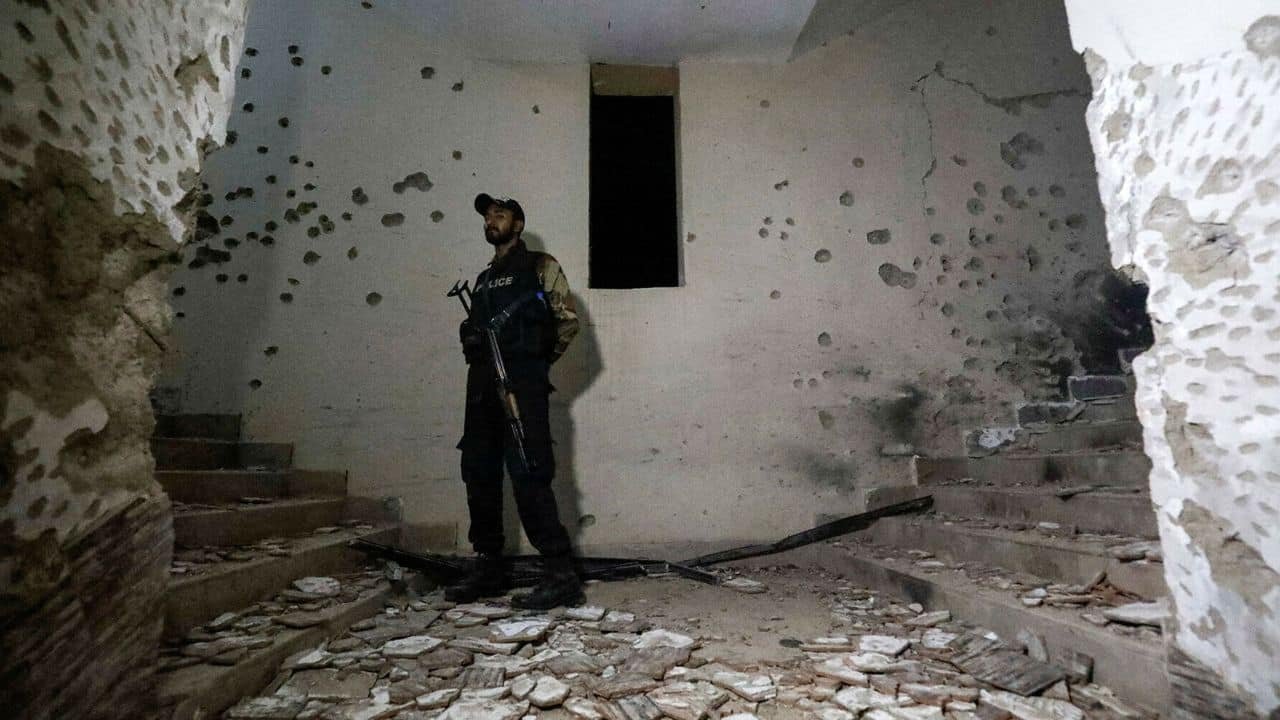
    A recent Security Report released by the Center for Research and Security Studies (CRSS) reveals that Pakistan’s security forces lost at least 386 personnel, including 137 army soldiers, in the first nine months of the ongoing year, marking an eight-year high as the country continues to battle militant violence.

    The Islamabad-based think tank’s report states, “Over the past five years, there has been a consistent and alarming surge in violence in Khyber Pakhtunkhwa (KP) and Balochistan provinces. Equally greater concern is the collective percentage of violence-related fatalities recorded in these two provinces which indicates a disturbing upward trend over the last five years; together, they suffered 72% of all fatalities in 2019, and this unsetting figure surged to a staggering 92% in the first 9 months of 2023.”

    There has been a trend of brutal attacks against religious congregations in the country, with more than 60 people losing their lives in two separate bombing incidents at a mosque and a gathering to mark the Prophet Muhammad’s (PBUH) birth anniversary on Friday.

    “Pakistan’s security forces lost at least 386 personnel, 36 percent of all fatalities – including 137 army and 208 police personnel – in the first 9 months of 2023, marking an eight-year high as the country continues to battle proxy terrorism, largely in Khyber Pakhtunkhwa and Balochistan,” the Center for Research and Security Studies (CRSS) said in its report released on Saturday.

    “With 1087 violence-related fatalities recorded so far during the year, the outlaws suffered 368 (34 percent), followed by civilians with 333 (31 percent) fatalities,” it added.

    The CRSS maintained there had been a consistent and alarming increase in violence in the two Pakistani western provinces over the past five years.

    Experts attribute the recent increase in militant violence and security forces casualties in Pakistan to the change of government in neighboring Afghanistan, saying it emboldened militant groups in Khyber Pakhtunkhwa and fueled separatist violence in Balochistan.

  • Terrorist attacks increased by 79% in Pakistan in first six months of 2023: report

    Terrorist attacks increased by 79% in Pakistan in first six months of 2023: report

    According to a recent report from the Pakistan Institute for Conflict and Security Studies (PICSS), terrorist activities in the country have risen by 79 per cent in the first half of 2023.

    The report highlights that during this period, there were approximately 271 militant attacks in the country, leading to the loss of 389 lives and injuring 656 individuals.

    In the first six months of last year, there were 151 attacks resulting in 293 fatalities and 487 injuries.

    The statistics indicate a significant rise of 79% in militant attacks during the initial half of this year as compared to the same period of the previous year.

    During the first half of this year, Khyber Pakhtunkhwa experienced the highest impact, with a total of 174 recorded militant attacks. These attacks led to the loss of 266 lives and left 463 people injured.

    Out of the reported incidents, 100 attacks occurred in mainland KP, resulting in 188 fatalities and 354 injuries. Additionally, 74 attacks took place in the tribal districts (formerly known as FATA), causing 78 deaths and 109 injuries.

  • In aftermath of policeman opening fire on school van, psychological reviews to be conducted every 6 months

    In aftermath of policeman opening fire on school van, psychological reviews to be conducted every 6 months

    A police constable on Tuesday opened fire on a school van in Swat District, killing at least one student and injuring six others.

    The deceased was identified as seven-year-old Aisha.

    The suspect named Alam Khan was arrested on the spot with an FIR registering against him immediately. Alam Khan was posted on security duty of the school since the past three months. The suspect has admitted his crime in front of a court.

    The residents of the area staged a protest against the incident on Wednesday.

    Journalist Iftikhar Firdous has tweeted that after the tragic incident, the Home and Tribal Affairs Department of Khyber Pakhtunkhwa has ordered that psychological reviews of security guards be conducted every six months.

  • No more deals with TTP; army determined to get rid of terrorism

    The army’s top brass has vowed to eliminate terrorism, extremism and instability in Pakistan by following a “whole-of-the-system” approach which was approved by the government on Friday.

    In a Corps Commanders’ Conference held in Rawalpindi, Chief of Army Staff (COAS) General Asim Munir said that military leadership is cognizant of the full spectrum of the challenges posed by terrorism and it “resolves to shoulder its constitutionally mandated responsibilities with the support of the resilient people of Pakistan”.

    The top tier of the army reiterated the commitment of military forces to fully support national responses against internal and external threats. 

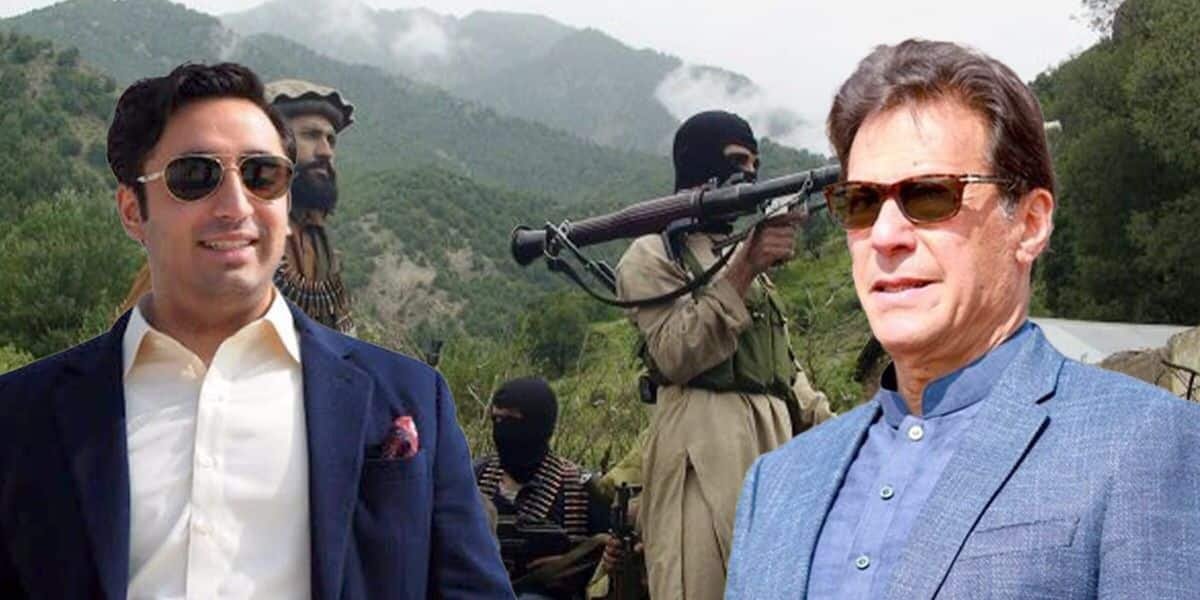
    A day earlier, in a briefing given to the members of the National Assembly (NA), COAS Munir said that negotiations with militants in the past helped terrorists regroup in the country, referring to the Imran Khan government that signed a ceasefire with Tehreek-e-Taliban Pakistan (TTP).

    Earlier, National Security Committee (NSC) also decided to kickstart an all-out comprehensive operation against militant outfits. 

    Since government talks with the TTP broke down in November, the militant group has intensified its attacks across Pakistan including attacks on the police.

  • TTP uses US weapons left behind in Afghanistan for terrorism in Pakistan, claims report

    TTP uses US weapons left behind in Afghanistan for terrorism in Pakistan, claims report

    Military weapons worth $7 billion that were left behind by the United States (US) after its exit from Afghanistan are being used by banned Tehreek-e-Taliban Pakistan (TTP) and Baloch separatist groups for terrorism in Pakistan, claimed a report by Radio Free Europe.

    The report said that the US left behind firearms, communications gear and armored vehicles which gave the militants a “vast war chest”.

    The Taliban government has rejected claims that it has supplied TTP fighters with US weapons and equipment, however, the report stands contrary to their assertion.

    Abdul Sayed, a Sweden-based researcher who tracks the TTP, said the group’s access to sophisticated combat weapons has had a “terrifying” impact, especially on the lesser-equipped police force in Pakistan.

    Since government talks with the TTP broke down in November, the militant group has intensified its attacks across Pakistan including attacks on the police.

    According to statistics released by the Pakistan Institute for Conflict and Security Studies (PICSS), January 2023 remained one of the deadliest months for terrorism since July 2018.

  • Will summon Faiz Hameed in Parliament, says Khawaja Asif

    Defence Minister Khawaja Asif has said that he will demand in the parliament that former Inter-Services Intelligence (ISI) Director-General (DG) Lieutenant General (retd) Faiz Hameed should be summoned to the floor.

    Speaking on Mohammad Malick’s show “Breaking News” on 92 News, he alleged that Hameed brought Tehreek-e-Taliban Pakistan (TTP) back to the country. Referencing to Hameed’s visit to Kabul in 2022 asked why Hameed gave out assurances that everything would be okay.

    It is pertinent to mention here that the former spy chief went to Kabul following the withdrawal of United States (US) troops from Afghanistan.

    He was expected to discuss border management and the overall security issue — to ensure that spoilers and terrorist organisations do not take advantage of the situation — with the Taliban.

    Further lashing out at Hameed, the federal minister said that hundreds of thousands of Afghanis are still in Pakistan and put the blame for the recent extreme episodes of terrorism on the former spy chief’s head.

    He also pointed out that terrorism incidents in the country did not increase just within six to eight months.

    Since government talks with the TTP broke down in November, the militant group has intensified its attacks across Pakistan including attacks on the police.

    According to statistics released by the Pakistan Institute for Conflict and Security Studies (PICSS), January 2023 remained one of the deadliest months since July 2018.

    In January, more than 100 people lost their lives in a suicide attack at a mosque in Peshawar’s Police Lines. The TTP initially claimed responsibility for the attack, however, it later backtracked and claimed that it did not perpetrate the bombing.

    TTP is also responsible for the recent attack on Karachi police chief’s office which took place on February 17.

  • Military, civilian leadership has put full stop on Khan’s appeasement policy on terrorists: Bilawal

    Military, civilian leadership has put full stop on Khan’s appeasement policy on terrorists: Bilawal

    Foreign Minister Bilawal Bhutto-Zardari has said that negotiating with those people who don’t accept Pakistan and its constitution is not in favour of the country or it’s people.

    In an interview with German broadcaster DW Urdu, the foreign minister said that the previous government was asking the interim Afghan government to facilitate reconciliation with the Tehreek-e-Taliban Pakistan (TTP) and had plans to resettle the militants in Pakistan.

    “Every Pakistani was saying that terrorists who were involved in heinous attacks such as the Army Public School massacre could never be our friends”, said Bilawal.

    Earlier in an interview with CNBC, Bilawal said, “Unfortunately, following the fall of Kabul, the government that preceded ours started negotiating with these very same terrorist groups and without preconditions such as disarming.”

    The foreign minister said that the Pakistan Democratic Movement (PDM) coalition government and military leadership have “put a full stop to the policy of appeasement”.

    Citing the porous border with Afghanistan, the Foreign Minister said that the new government doesn’t have the capacity to man it.

    “We are confident that we’ll be able to take on the terrorist groups that are functioning within Pakistan,” he said.

    Discussing Pakistan Tehreek-e-Insaf (PTI) Chairman Imran Khan, Bilawal said that if he strives to pursue a democratic path and commits to play a constitutional role, he can have a future, adding that Khan’s ouster through a vote of no-confidence motion was the first time parliament removed a prime minister in a democratic way.

    However, since his ouster, Khan has been asking the army for help in getting back to power, the foreign minister alleged.

     “If the military says it wants to change its controversial conduct constitutionally, it should be welcomed.”

    While responding to a question regarding the statement about Pakistan’s bankruptcy made by Defence Minister Khawaja Asif, Bilawal said: “He was talking in a political context at a political gathering and he was referring to the harsh economic times rather than speaking technically. He was talking in the overall context of the country.”

  • US sees TTP as a threat to Pakistan

    US sees TTP as a threat to Pakistan

    Counselor of the United States (US) State Department, Derek Chollet, has said that his country sees the outlawed Tehreek-e-Taliban Pakistan (TTP) as a threat to Pakistan.

    While talking to ARY, Chollet said, “We have seen [TTP] in a terrible way a threat to Pakistan. The US considers any terrorist act as unexpectable.”

    The Counselor will pay an important visit to Pakistan during the ongoing week to explore possibilities of coordinating efforts to combat terrorism.

    He was also of the view that there is a great opportunity to further improve the relationship between Washington and Islamabad.

    The US diplomat said that Pakistan and US are working together to deal with the threats of terrorism.

    Since government talks with the TTP broke down in November, the militant group has intensified its attacks across Pakistan including attacks on the police.

    According to statistics released by the Pakistan Institute for Conflict and Security Studies (PICSS), January 2023 remained one of the deadliest months since July 2018.

    Most recently, more than 100 people lost their lives during a suicide attack at a mosque in Peshawar’s Police Lines. The TTP initially claimed responsibility for the attack, however, it later backtracked and claimed that they did not perpetrate the bombing.

  • TTP directly threatens PM Shehbaz and FM Bilawal

    The outlawed Tehreek-e-Taliban (TTP) has announced that it is considering taking concrete steps against the two major parties of the current ruling coalition— the Pakistan Peoples Party (PPP) and Pakistan Muslim League-Nawaz (PML-N).

    In a notification, released on Wednesday, TTP claimed that the whole world is aware that the “Jihadi field of TTP is only Pakistan and their target is the security agencies occupying the country.”

    The banned organisation has also mentioned the names of Foreign Minister Bilawal Bhutto-Zardari and Prime Minister (PM) Shehbaz Sharif as both of them have talked against TTP and warned the terrorists.

    The notification further reads that it has not taken action against any political party for a long time but “unfortunately Bilawal gave the United States (US) the status of mother to quench the thirst of his mother’s love”, adding that by doing so “he openly declared war against TTP”.

    “Although Bilawal is still young, this poor man has not yet witnessed the state of war,” the statement added.

    The TTP further said that Sharif has also “pushed the whole party into this war going against TTP for the sake of pleasing the US”.

    A statement issued by the TTP said that “if these two parties remain firm on their position and continue to be slaves of the army, then action will be taken against their leading people.”

    The statement by TTP comes just a day after FM Bilawal’s comment that the incumbent government would quit “the policy of appeasement” of terrorists, unlike the previous government of Pakistan Tehreek-e-Insaf (PTI).

    Moreover, PM Shehbaz earlier this week had chaired a National Security Committee (NSC) meeting in which it was decided that Pakistan would adopt a zero tolerance policy against terrorism.

    In November, the TTP announced that they have called off a ceasefire with the federal government and since then they have been attacking across the country.