Tag: terrorism

  • ‘Do I look like a terrorist to you,’ Nadeem Malik responds to FIA

    ‘Do I look like a terrorist to you,’ Nadeem Malik responds to FIA

    The Counter-Terrorism Wing of the Federal Investigation Agency (FIA) has summoned SAMAA TV’s senior anchorperson Nadeem Malik and asked him to disclose his sources in the Judge Arshad Malik video leak scandal case.

    Nadeem Malik has said that he will not appear. “The notice has been issued by the terrorism wing. Do I look like a terrorist to you?”

    The notice demands that Malik reveal his sources. “There is no law across the globe that can force a journalist to quote their sources,” the anchorperson said.

    On April 28, Nadeem Malik during his show ‘Nadeem Malik Live’ said that he had a chance to meet with two members of the FIA team that was investigating the video leak scandal against late accountability court judge Arshad Malik.

    “It could be perceived from what they [members of the FIA team] told me that there was a video of Judge Arshad Malik. The Pakistan Muslim League-Nawaz (PML-N) was banking on Judge Malik granting bail to Nawaz Sharif. He had contacts with the PML-N, so there were assurances,” the anchorperson said.

    “The other party, which I would not name, as many people can understand, they got their hands on that 30-year-old video of Judge Malik. It was an objectionable video that was recorded 30 years ago when Judge Malik was posted in Multan. There were other people too and the whole video is there.”

    According to the anchorperson, the late judge was called to a place at Constitution Avenue and was told that the video would be made public if a ‘favourable’ verdict was not given in cases against Nawaz Sharif.

    The judge gave the verdict and PML-N supremo Nawaz Sharif was disqualified.

    “The PML-N got their hands on the same video and Judge Arshad Malik came to meet Nawaz Sharif and apologised, saying he couldn’t do anything as they had his video,” Nadeem Malik said.

    “They [PML-N leaders] told him that they have the same video too, and, while Judge Malik was narrating the events, he was recorded once again. It was recorded by Nasir Sahib who has gone to London.”

    The FIA is handling the case through its Counter-Terrorism Wing at its headquarters in Islamabad. It had told Nadeem Malik to appear on June 6, along with documents and evidence to support what he said on his show.

    “Please refer to your Nadeem Malik Live Programme on SAMAA NEWS dated 28-04-2021 revealed that you have important information which can be relevant for the agency to further investigate the above mentioned and to link some relevant persons with this case,” the notice says.

    Civil society and journalists condemned the notice.
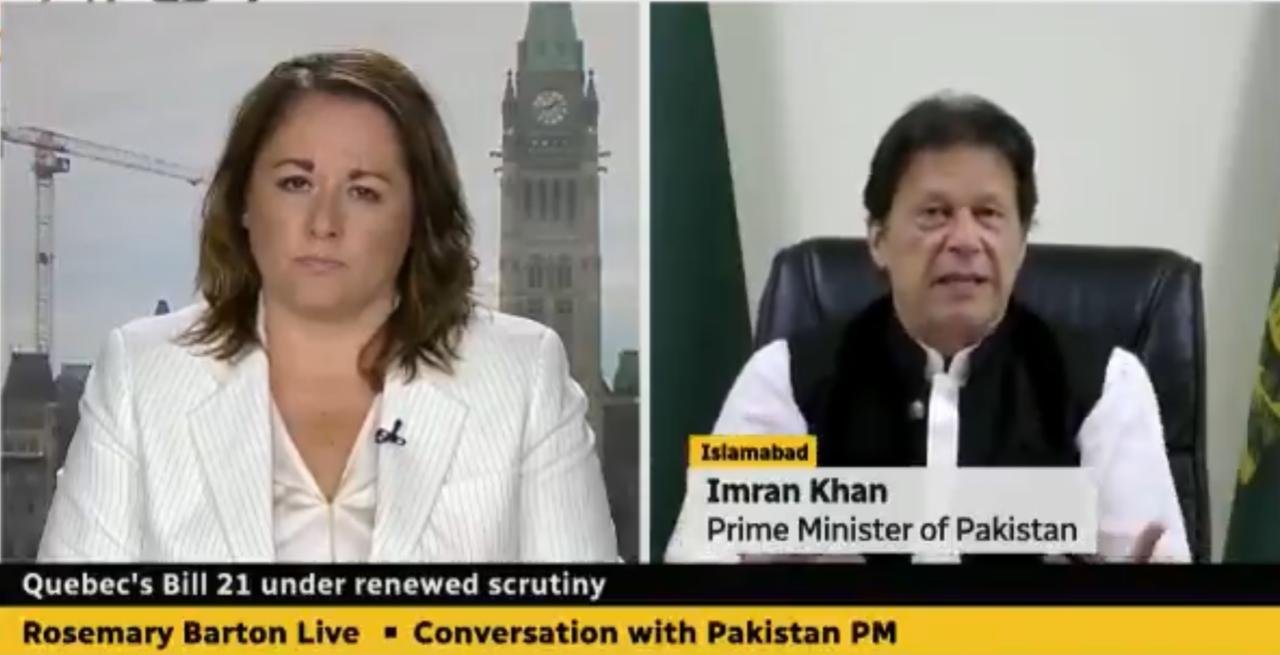
  • ‘Muslims living in the western world are the ones who suffer from Islamophobia’: PM Khan

    ‘Muslims living in the western world are the ones who suffer from Islamophobia’: PM Khan

    In an interview with CBC’s chief political correspondent Rosemary Barton, Prime Minister (PM) Imran Khan said he had been trying to tell the world community that the Muslims living in the western countries are the ones who suffer from Islamophobia, and “we regularly hear about these incidents and many of them are not reported and our embassies tell us about those. So this gap needs to be closed”.

    The prime minister highlighted the grave issue of Islamophobia in the western world, which recently claimed the lives of four members of a Pakistan-origin family in Ontario last week.

    “Everyone is shocked [in Pakistan], because we saw the family picture, and so a family being targeted like that has had a deep impact in Pakistan,” PM Khan said.

    The prime minister said the use of the term “Islamic radicals” indicates there is something wrong with the religion, which radicalises people. Contrary to this, terrorism has no religion as extremists are found in every society, he added.

    Replying to a question about what should the governments do to shut down hate material, the prime minister called for strict action against online hate because such websites divide humanity by creating hatred through hate material.

    He further said that he “mostly agrees” with Trudeau and his position on extremism, but also expressed concern about some Canadian laws that he believed were contributing to Islamophobia.

    He asked as to why it became a big issue when someone wears a hijab (head scarf) or grows a beard in the west. “People objecting to hijab and a beard is quite bizarre for me. In liberal democracies, why is this an issue?”

    He described Quebec’s Bill 21 — which banned public servants, including teachers and police officers from wearing religious symbols at work — as a form of “secular extremism” that led to intolerance against Muslims.

    “I find this law secular extremism as it really is against, you see the whole idea behind secularism is liberalism, you want human beings to be basically free on how and the way they want to dress up as long as it doesn’t cause pain or hurt others. This is how I understand how liberalism is. If some cover their hair or their head, why has it become such a big issue,” he contended.

  • ‘No one can dare undermine me,’ Fawad Chaudhry burns BBC HARDTalk

    ‘No one can dare undermine me,’ Fawad Chaudhry burns BBC HARDTalk

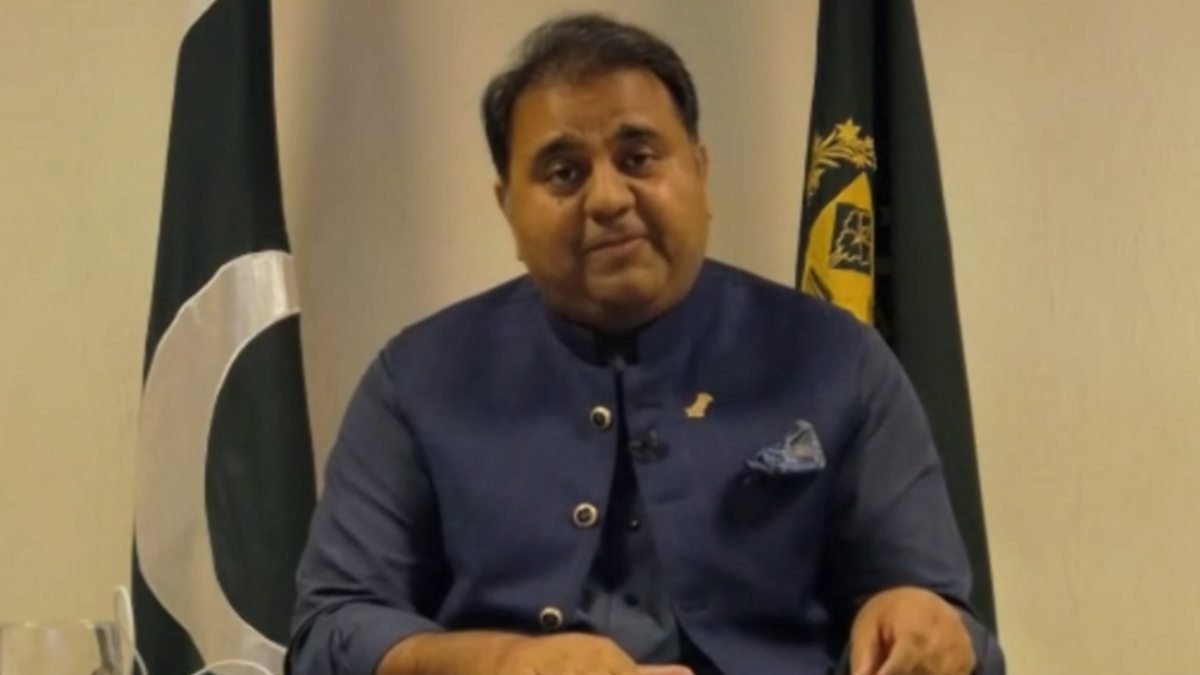
    Federal Minister for Information and Broadcasting Fawad Chaudhry talked on the protection of journalists, the involvement of the establishment within the state, the economy of Pakistan, missing persons, popularity of Prime Minister Imran Khan, Covid stituation and many other issues in an interview given to BBC host Stephen John Sackur on BBC HARDtalk.

    Journalists Protection

    The host opened the interview by asking what is the government and Fawad Chaudhry being the Information Minister doing to protect the journalists of the country. Sackur mentioned the recent attack on journalist Asad Ali Toor, who was severely beaten up by unidentified assailants in his apartment. Sackur further mentioned how a senior journalist and former Chairman of Pakistan Electronic Media Authority (Pemra), Absar Alam, was shot in Islamabad. To which Fawad Chaudhry replied, “Individual incidents do happen. The situation is not only dangerous for journalists but it has been for all the citizens of Pakistan. We have faced the worst terrorism. When we were fighting our war against terrorism, we lost a lot of field journalists and many civilians.”

    “Benazir Bhutto too got killed due to terrorism. We have been dealing with tough times,” replied Fawad.

    Stephen Sackur asked what the state was doing about the involvement of state agencies in such incidents.

    “It’s a bit fashionable for the western media to accuse ISI (Inter-Services Intelligence)
    when such incidents happen. When you name any organisation or Pakistani intelligence agency, you are bound to produce evidence of their involvement as well,” replied the minister. “The two specific incidents which you have mentioned, the investigation is still under process, I still don’t know under what pretext have you concluded that the state must be involved in any of this.”

    Direct State Interference

    BBC host asked Chaudhry about freedom of speech in Pakistan. He said that media censorship has increased during Imran Khan’s tenure. Chaudhry replied, “We have about 112 private channels, 43 international channels, with this kind of mass media we have, how do you expect the state to intimidate the media? How can the state be accused of intimidating the media?”

    Censorship

    “I am the Information Minister of the world’s fifth-largest state. I am the Information Minister of one of the world’s seven nuclear states of the world. No one can dare to undermine me. I am here with full authority and I decide in Pakistan what will and what is happening,” answered Fawad when told by Sackur that Chaudhry has no real power or control.

    PTI government’s comparison with previous government’s

    The host compared the working of the Pakistan Tehreek-e-Insaf (PTI) with previous governments.

    “This may be a perception of some Indian-influenced think tanks, not ours. This is not the perception of the people in general. Imran Khan is the most popular prime minister,” said Fawad.

    “As said, don’t undermine the elected government of Pakistan. Imran Khan has received nearly 200 million votes. This is not a joke. He is the prime minister of a nuclear state. He takes the decisions, the cabinet takes the decisions,” added Fawad.

    Relation with establishment

    Fawad Chaudhry said that we have a very good relationship with the ‘so-called establishment’ “as you term it so often. They are part and parcel of our system. We have huge respect for them, but the decision-making rests with the prime minister and the cabinet.”

    Missing Persons

    The BBC host asked about missing persons the security establishments, and the deep state?

    “ISI and army respect human rights just as any other civilian government will do. They are the most civilised army of the world, they are the most responsible army of the world. People in Pakistan respect them for their role,” said Fawad.

    “Least number of missing persons were reported in Imran Khan’s government. We are the only government that has just passed a law against disappearance. We are the only ones who have made illegal confinement a criminal offense. And now the bill has been passed and will go to the parliament,” added Fawad

    Imran Khan’s pledge to deliver

    The show host said that PM Khan’s promises have not been delivered to the people of Pakistan.

    “Unfortunately, I do not agree with your conclusion. Right now Pakistan’s growth rate is 3.94 per cent, which is one of the highest in the whole world despite all the Covid crises,” said Fawad.

    Fawad added, “People who have voted for Prime Minister Imran Khan and PTI are still ardent fans. In the next elections, PM Imran Khan will be elected again.”

    Covid situation

    Sackur asked why only one per cent of Pakistan’s population has been vaccinated.

    “As far as Covid is concerned Pakistan is a great success story. The partial lockdown story that Prime Minister Imran Khan implemented in Pakistan was a great success story,” replied Chaudhry.

  • ‘Quetta blast was a suicide attack’: Sheikh Rasheed

    Interior Minister Sheikh Rasheed said on Thursday that the blast at Serena Hotel in Quetta was a suicide attack. He said this was a foreign attempt to destabilise Pakistan. “Pakistan Army and the people of Pakistan will defeat such designs.” Tehreek-e-Taliban Pakistan (TTP) claimed the responsibility for the Quetta blast yesterday. Five people were killed and more than a dozen injured in the deadly attack.

    All law enforcement agencies are on high alert at the instructions of the Interior Ministry. Talking about the attack, Sheikh Rasheed said the suicide bomber stayed inside the car. “C4 explosives weighing between 60 to 70 kilogrammes were used in the attack”. Evidence has been sent for forensic analysis.

    The interior minister also said that social media was misused during the past few days by foreign elements who are behind efforts to destabilise Pakistan. “An estimated 250,000-300,000 social media accounts were created in India.” “These foreign forces cannot see Pakistan prosper and progress,” said the minister. 

    China strongly condemned the terrorist attack. A statement by the Chinese embassy in Pakistan said that Chinese Ambassador to Pakistan Nong Rong was leading a delegation on a visit to Quetta on the same day. “When the attack occurred, the Chinese delegation was not in the hotel. Till present, no reports of casualties of Chinese citizens in the attack have been received.”

    Prime Minister Imran Khan tweeted that he is deeply saddened by the loss of innocent lives in the condemnable and cowardly terrorist attack in Quetta yesterday. “Our nation has made great sacrifices in defeating terrorism and we will not to allow this scourge to rise again. We remain alert to all internal and external threats.”

  • Terrorist involved in murder of four women killed in Waziristan operation: ISPR

    The security forces have killed a key militant leader who was involved in the killing of four women aid workers in North Waziristan, said the Inter-Services Public Relations (ISPR) in a statement on Tuesday.

    Commander of militant outfit Tehreek-e-Taliban Pakistan (TTP) Hassan alias Sajna was killed in a security operation in the restive district near the Afghan border, the army said.

    The statement said Sajna was involved in the Monday morning killing of four aid workers associated with a local women’s skills development program in Mirali, a town in North Waziristan.

    Security forces conducted an intelligence-based operation in Mirali and killed militant commander Sajna of the TTP’s Hafiz Gul Bahadur group during an exchange of fire, it was quoted by Anadolu Agency as saying.

    Bahadur, who is believed to have been operating from Afghanistan, is leading his own militant group within the TTP.

    Sajna, the statement said, remained involved in terrorist activities against the security forces and civilians, including “bomb blasts, kidnapping for ransom, target killings, and extortion,” in addition to the recruitment of terrorists.

    North Waziristan — once dubbed the heartland of militancy — is one of seven former semi-autonomous tribal regions in Pakistan where the army has carried out a series of operations since 2014 to eliminate the TTP network.

    Successive operations have pushed the TTP towards neighboring Afghanistan and Islamabad claims the terrorist network has now set up bases across the border to attack Pakistani security forces.

  • ‘Multiple’ army officials complicit in terrorist Ehsanullah Ehsan’s escape, says ISPR DG

    ‘Multiple’ army officials complicit in terrorist Ehsanullah Ehsan’s escape, says ISPR DG

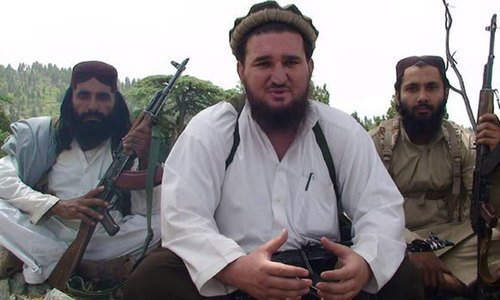
    Pakistan Army spokesperson Major General Babar Iftikhar has said that former Tehreek-e-Taliban Pakistan mouthpiece Ehsanullah Ehsan had managed to escape the custody with the help of “more than one army officials”.

    According to a report in Independent Urdu that quotes Gen Iftikhar, the military is in the process of fixing responsibility in the case. “The details of the proceedings [against the accused] would be shared with the media soon,” the Inter-Services Public Relations (ISPR) chief said in a conversation with the reporters of foreign media outlets.

    Last week, a Twitter handle, now suspended, allegedly operated by Ehsanullah Ehsan threatened Pakistani Nobel laureate Malala Yousafzai. Malala had responded to the tweet, asking the military’s media wing and PM Imran as to how did the Ehsan even escape.

    The government had denied that the account belonged to the infamous terrorist, but Ziauddin Yousafzai, father of Malala, asserted that it was the Twitter handle of the ex-TTP spokesperson. Ehsanullah had also confirmed this in an audio message to BBC Urdu, saying his account was suspended over threats to Malala but he would come back with a new Twitter handle soon.

    However, the ISPR DG told reporters that he doesn’t think the account belonged to the ex-TTP spokesperson. “The attempts are being made to arrest the Taliban spokesperson, but at present, we have no idea where is he hiding,” he was quoted by the outlet as saying.

    Ehsan is infamous for issuing claims of carrying out TTP attacks and has been linked to some of the country’s most deadly incidents of terror. These include the massacre of children at Army Public School (APS) Peshawar, bombing at a park in Lahore on Easter in 2016, and the targeting of Malala.

    He surrendered to authorities in 2017 and later gave interviews to a Pakistani TV channel, leading to criticism and controversy that a terrorist was given airtime. It angered many in the country who believed he was being pampered by authorities after years of helping lead a violent insurgency. Ehsan mysteriously escaped custody last year, which, according to SAMAA, was also confirmed by the army.

  • Four soldiers martyred in Waziristan attack

    Four soldiers were martyred in an attack on security forces post in Makeen area of South Waziristan late Thursday night, the military’s media wing said on Friday.

    In a statement, the Inter-Services Public Relations (ISPR) said that troops killed four alleged militants in retaliation.

    During the exchange of fire, four soldiers had embraced martyrdom, including Lance Naik Imran Ali, Sepoy Atif Jahangir, Sepoy Anees-ur-Rehman and Sepoy Aziz, the ISPR said, adding that “area sanitisation” was in progress following the attack.

    President Dr Arif Alvi condemned the terrorist attack and expressed grief over the martyrdom of army personnel. He expressed his condolences to the grieving families and prayed for their strength.

    Last month, security forces had conducted an intelligence-based operation (IBO) in the Nargosa area of South Waziristan, killing two terrorists and injuring one, all of whom were reportedly a part of the proscribed terrorist cell, the Tehreek-e-Taliban Pakistan’s (TTP) Sajna group.

    “Security forces conducted an IBO in Nargosa area of South Waziristan district,” the military’s media wing had said at the time, adding that all three had been active members of the TTP and experts at making improvised explosive devices (IEDs).

  • Time to extend hand of peace in all directions, says Gen Bajwa

    Time to extend hand of peace in all directions, says Gen Bajwa

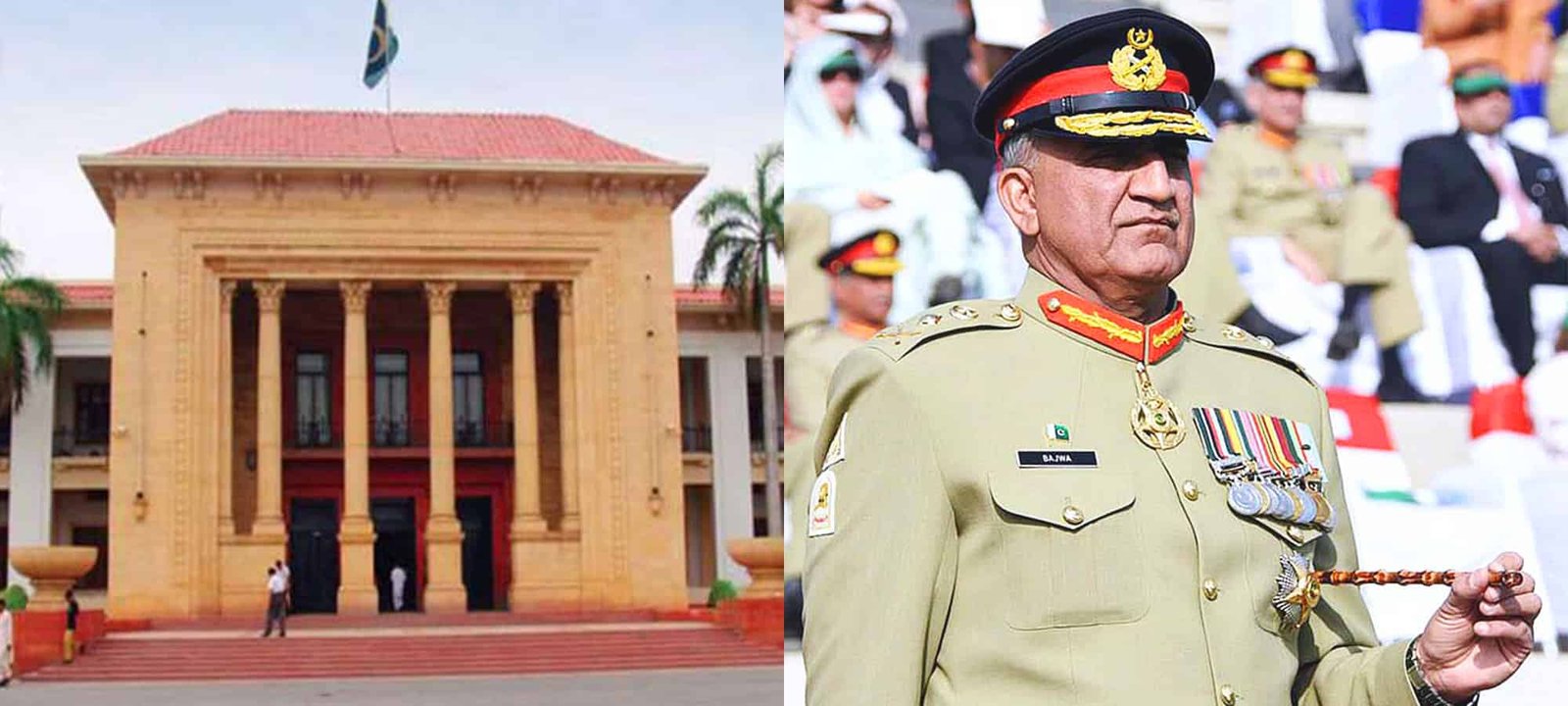
    Chief of Army Staff (COAS) General Qamar Javed Bajwa has said that Pakistan is fully committed to the ideals of mutual respect and peaceful co-existence as it is a peace-loving country.

    He was addressing the graduation ceremony of 144th GD (P), 90th Engineering Course, and 100th AD courses held at Pakistan Air Force (PAF) Academy Asghar Khan, said a statement by the Inter-Services Public Relations (ISPR).

    The country has rendered great sacrifices for regional and global peace, said Gen Bajwa, adding that it is time to extend “hand of peace in all directions”.

    The army chief also talked about the peaceful resolution of the Kashmir conflict. Pakistan and India should also resolve the longstanding issue of Jammu and Kashmir in a dignified and peaceful manner as per the aspirations of people of Jammu and Kashmir and bring this human tragedy to its logical conclusion, the army chief emphasised.

    “However, we will not allow anybody or any entity to misinterpret our desire for peace as a sign of weakness,” he added.

    The army chief said that the armed forces were fully prepared to thwart any threat. The coordination and harmony displayed by all the three services in operations against the enemies of Pakistan had brought great improvement in the internal security environment, he said.

  • Osama bin Laden funded Nawaz govt in 1990s, says ex-envoy

    Osama bin Laden funded Nawaz govt in 1990s, says ex-envoy

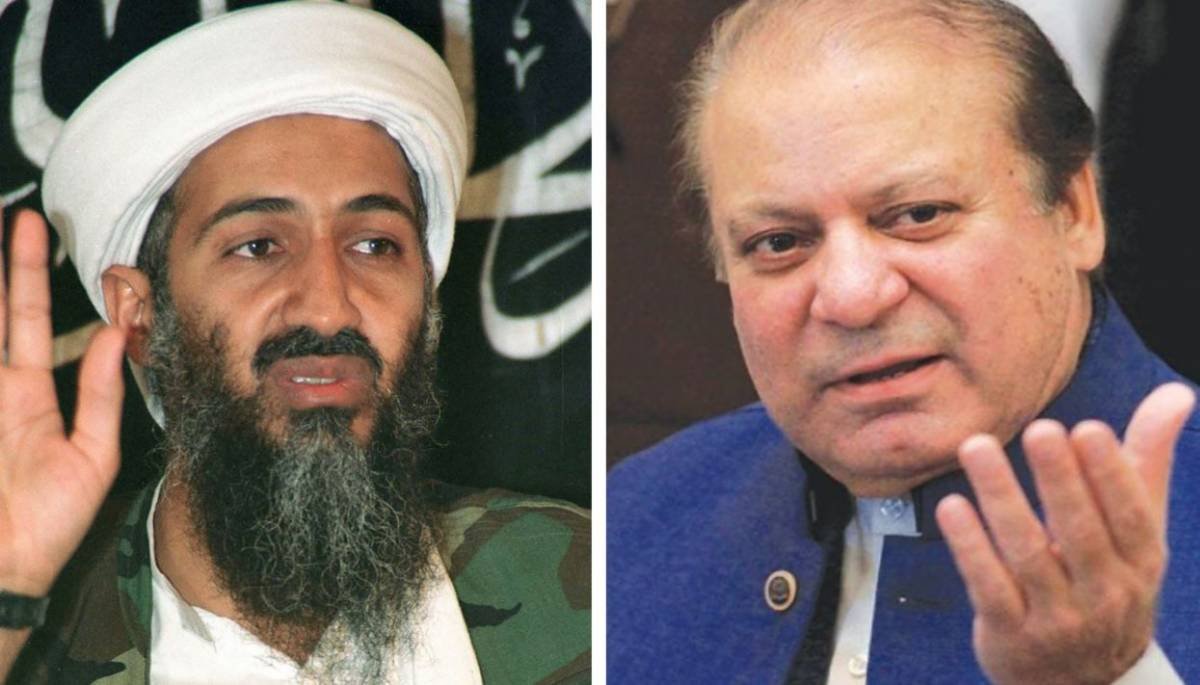
    The government of former prime minister Nawaz Sharif was supported and funded by global terrorist Osama bin Laden at some point during the 1990s, said Pakistan’s former envoy to the United States Abida Hussain.

    In an interview with Samaa on Saturday, the former ambassador said that the claims that OBL supported Nawaz are true. She, however, added that the story of Nawaz-OBL relationship is a “complicated one”.

    Abida Hussain also talked about Pakistan’s nuclear programme, saying Nawaz Sharif was not aware of the developments regarding the project due to an unfriendly relationship with then president Ghulam Ishaq Khan.

    She said that the nuclear programme was completed in 1992 and not 1983, adding that Pakistan was under a lot of pressure from US envoys and lawmakers to roll back the programme.

    Osama bin Laden, the al Qaeda chief who was killed by the US special forces in a midnight raid in Abbottabad in May 2011, was the mastermind of the 9/11 attacks that left over 3,000 people dead. These attacks resulted in the US invasion of Afghanistan — a 20-year-long conflict that has claimed countless lives.

    Bin Laden made headlines last year when PM Imran Khan called him a “shaheed” during a National Assembly session.

    https://twitter.com/ventdeInde/status/1276144510121148417

    “Pakistanis were deeply embarrassed when Americans killed Osama bin Laden in Abbottabad. Shaheed kar diya [was martyred]. But what happened after that? The entire world hurled abuses at us. Our ally [the US] entered our country and killed someone without even telling us. It was a big humiliation,” he said before going on to describe the drone attacks as the second set of incidents that embarrassed the country.

  • US asks citizens to reconsider travel to Pakistan owing to terrorism, sectarian violence

    The United States has asked its citizens to reconsider travel to Pakistan in the light of the coronavirus outbreak, sectarian violence, and terrorism.

    In a travel advisory issued on Jan 25, the US administration said it “has limited ability to provide emergency services to US citizens in Pakistan due to the security environment”.

    The US also asked its citizens not to visit Balochistan, Khyber Pakhtunkhwa’s tribal districts, and the areas in close proximity to the Line of Control due to militant threats.

    The advisory is “reissued after periodic review with edits regarding sectarian violence”.

    COVID-19 IN PAKISTAN:

    The Centers for Disease Control and Prevention (CDC) has issued a Level 3 Travel Health Notice for Pakistan due to COVID-19, according to the advisory.

    “The government of Pakistan has lifted stay-at-home orders and allowed the resumption of intercity domestic travel and mass transit services in most cities. Travel restrictions, stay-at-home orders, business closures, and other restrictions can be reintroduced at any time within Pakistan due to COVID-19.”

    BALOCHISTAN AND KHYBER PAKHTUNKHWA:

    The US asked its citizens not to travel to Balochistan due to “terrorist groups, an active separatist movement, sectarian conflicts, and deadly terrorist attacks against civilians, government offices, and security forces”. “In 2019, several bombings occurred in Balochistan province that resulted in injuries and deaths,” it said.

    About KP, it said that “active terrorist and insurgent groups routinely conduct attacks against civilians, non-governmental organizations (NGOs), government offices, and security forces”. “Assassination and kidnapping attempts are common, including the targeting of polio eradication teams,” it said, asking the citizens to avoid these areas.

    LINE OF CONTROL:

    It also mentioned the Line of Control, saying “militant groups operate in the area”.

    “India and Pakistan maintain a strong military presence on both sides of the border. Indian and Pakistani military forces periodically exchange gunfire and artillery fire across the Line of Control (LoC),” it said, asking the citizens to avoid the border.