Tag: terrorism

  • ‘Pulwama attack’: Fawad says Indian media twisted his words to malign Pakistan

    ‘Pulwama attack’: Fawad says Indian media twisted his words to malign Pakistan

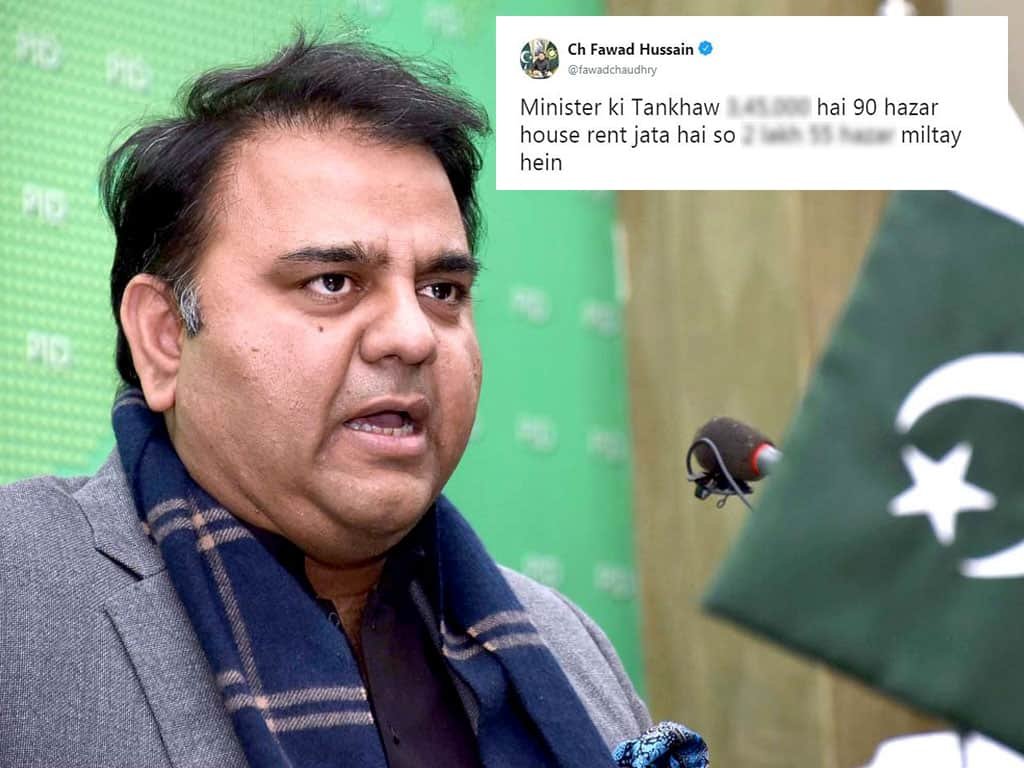
    Science and Technology Minister Fawad Chaudhry has slammed Indian media for taking his remarks on Pakistan’s response to the Balakot airstrikes out of context and twisting his words to “malign” Islamabad.

    In a statement, the minister said that the Indian media “acted with gross irresponsibility by misrepresenting the context of the speech” he delivered during a session of the National Assembly on Thursday. During his address, the federal minister gave his two cents on the controversy surrounding the release of Indian pilot Abhinandan after the Balakot strikes.

    “Humne Hindustan ko ghus ke maara (India was given a beating on its own turf). Our success in Pulwama, is the success of the people under the leadership of Imran Khan. We are all part of that success,” Fawad Chaudhry had said.

    Following these remarks, the Indian media said that the minister admitted Pakistan’s involvement in the Pulwama bombing that left at least 40 Indian soldiers dead in Feb 2019. Some Indian outlets used these statements to link Pakistan with deadly Pulwama bombing, allegations that Pakistani denies.

    Reacting to thes reports, the minister issued a rebuttal, saying the media was twisting his words, as it was obvious he meant the dogfight that resulted in Abhinandan’s capture. “The India jets that entered the Pakistani airspace and got shot down by the Pakistan Air Force. The PAF also captured a pilot, who was returned by the government as a gesture of peace.

    “As a matter of fact, [Fawad] Hussain referred to the ‘Operation Swift Retort’ which was a successful military response by the PAF to the transgression by the Indian airforce into Pakitan’s territory, as a result of which two Indian jets were shot down, not to mention the arrest of the widely discussed pilot, who was later released by the government of Pakistan as a diplomatic gesture of peace,” said the statement issued by the spokesperson of the Science and Technology Ministry.

    “It is reiterated that Pakistan has always upheld the international norms of peace and tranquility, and believes in mutual co-existence and cordial relations with its neighbouring countries,” said the minister, as he cleared the “gross” misinterpretation.

    The Indian media should promote peace with Pakistan instead of trying to capitalise on polarising rhetoric, the statement concluded.

    WAS ABHINANDAN RELEASED UNDER PRESSURE?

    This all started when former National Assembly speaker Sardar Ayaz Sadiq among other senior Pakistan Muslim League-Nawaz (PML-N) parliamentarians accused the government of taking the decision to release the India pilot under pressure. Foreign Minister (FM) Shah Mahmood Qureshi had “begged the opposition to release Abhinandan, otherwise, according to the FM, India would have attacked Pakistan at 9 pm that day,” the lawmaker said during a session of the National Assembly.

    In response, Inter-Services Public Relations (ISPR) Director General (DG) Major General Babar Iftikhar held a press conference to set the record straight about the events surrounding the capture and release of the Indian wing commander, Abhinandan.

    “Yesterday such a statement was given in which facts were attempted to be twisted surrounding the events that day,” the military spokesperson said during the media briefing.

    Reacting to the claims that have been made a mountain of by Indian media, Maj Gen Iftikhar said that after the Pulwama incident, on February 26, India violated all international principles and attacked Pakistan. “They not only faced defeat but humiliation all over the world,” Geo News quoted him as saying.

    “Our timely response derailed their efforts. Their planes and the explosives they had come to rain down on the Pakistani people, they instead dropped on empty mountains. They left in a panicked state after being confronted by our planes.”
  • Eight dead, over 100 wounded in Peshawar seminary blast

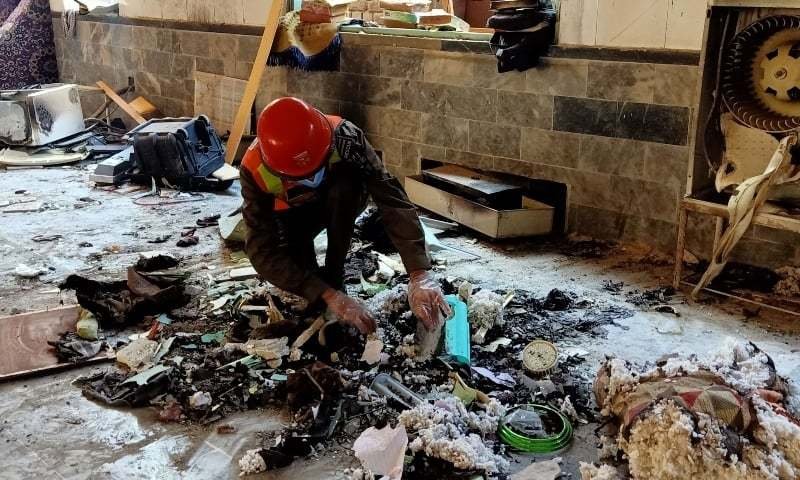
    Eight dead, over 100 wounded in Peshawar seminary blast

    A blast at a religious seminary in Peshawar’s Dir Colony killed at least eight people, including children, and injured over a hundred, officials have said.

    “The blast took place in a madrassa where unknown people had planted explosives in a plastic bag,” a police officer said on condition of anonymity as he was not authorised to speak with media. Children were among the dead, he said.

    The bombing happened while a cleric was delivering a lecture about the teachings of Islam at the main hall of the Jamia Zubairia madrassa, said police officer Waqar Azim.

    “The blast took place in a seminary during a Quran class. Someone took a bag inside the seminary and left the lecture hall before the blast,” Azim said.

    Dawn reported a police official saying it could have been an improvised explosive device (IED) used in the bombing. “Five kgs of explosives were used in the blast.”

    However, a spokesman for the Lady Reading Hospital nearby said it had received seven dead and 70 wounded patients on Tuesday, many with burns suffered in the blast. Several of the wounded were in critical condition, and hospital authorities feared the death toll could climb further.

    Mohammad Ali Gandapur, another senior police official, confirmed the blast and details. He said two teachers were among the wounded.

    No group claimed immediate responsibility for the attack.

    The latest attack comes two days after a bombing in the southwestern city of Quetta killed three people.

  • Aviation in hot water

    Aviation in hot water

    “The cat is out of the bag and the current government faces another uphill task to make amends within the aviation industry.”

    The aviation industry has transformed due to various kinds of security threats that have emerged over time. Starting from 2001 after the 9/11 hijackings, airports around the world tightened their screening of passengers, and pilots began locking their cockpits. Ever since a detonator was caught inside a passenger’s shoes, passengers have been told to take their shoes off at security checkpoints. The increasing threats have led the United States (US) to spend nearly $100 billion on revamping airport security. A few years later, the second threat surfaced in the United Kingdom (UK) when a terror plot to smuggle explosive liquids on to planes was uncovered in 2006, after which the number of liquids allowed on flights was restricted.    

    The latest security threat that has wreaked havoc is the coronavirus pandemic that emerged in China in late 2019. The industry had been growing over the decade and was estimated to earn more than $800 billion in revenue until 2020 hit, and things took an ugly turn. Approximately seven million flights were canceled between January and July as people stopped booking flights and thousands of planes that needed to be grounded struggled to find parking spots. Many travelers and foreigners were left stranded in various countries around the world and even stuck at airports when countries closed their borders.   

    A century ago, when the Spanish Flu struck, air travel was in its infancy. As a result, the effect on flights was minimal. Now, air travel is the most popular mode of transport with approximately 40 million flights a year and billions of travelers.    

    The virus has bogged down the entire flying process and made it more painstaking because masks and social distancing are mandatory. Airlines now need to follow new protocols such as leaving seats between passengers to ensure social distancing — this adds to the losses being faced by many airlines.

    “The virus, however, is not the only problem the industry will be facing this year thanks to Pakistan’s Federal Aviation Minister, Ghulam Sarwar.”

    The devastating impact of COVID-19 will not dissipate until a few years. The damage has compelled airlines to seek multi-billion-dollar bailouts from their respective governments. Airlines such as Lufthansa and Thai Airways were saved through bailouts.

    The virus, however, is not the only problem the industry will be facing this year thanks to Pakistan’s Federal Aviation Minister, Ghulam Sarwar.   

    On May 22, an Airbus A320, operated by Pakistan International Airlines (PIA) and en route from Lahore to Karachi, crashed moments before attempting a second landing, which led to the death of 97 passengers. Luckily, two passengers managed to survive the crash. The damage did not end there. When the aviation minister was expected to present the crash report, he went on to bring to light the pilots’ licensing issue that was still under investigation.    

    The revelation by Pakistan’s aviation minister unveiled a new type of security threat that jolted the entire aviation industry. Speaking on the floor of the National Assembly, the minister announced that 262 out of 860 Pakistani licensed pilots, who are working within Pakistan and abroad, had fake licenses and certificates. He repeated the number in a press conference the next day but added that the 262 pilots’ credentials were “suspected” to be fake.    

    This unprecedented revelation made frontlines, astonished the entire aviation industry, and damaged whatever little credibility the Civil Aviation Authority (CAA) had, since it is responsible for providing legitimate licences and certifications, hence ensuring travelers’ safety.

    “[Aviation minister’s] announcement rang alarm bells and dealt a heavy blow to the faltering national carrier. Now, not only PIA, but the entire CAA, needs to prove that it is capable of ensuring that its pilots are airworthy.”

    As soon as the news broke out, the European Union (EU) and the United Kingdom (UK) barred Pakistani commercial planes from entering their airspace. The European Union Air Safety Agency (EASA) issued letters to airline operators in member countries to suspend PIA’s authorisation to operate in the EU for six months. The US Department of Transportation also revoked the PIA’s authorisation to conduct flights to and from the country due to safety concerns.    

    The announcement rang alarm bells and dealt a heavy blow to the faltering national carrier. Now, not only PIA, but the entire CAA, needs to prove that it is capable of issuing legitimate licences and certificates while ensuring that its pilots are airworthy. It will definitely take a long time to recover, but the fact that such a thing could occur has alerted aviation authorities around the world. 

    Pakistan has been struggling to improve its image in the international world while being scrutinised by the Financial Action Task Force (FATF) and monitored by the International Monetary Fund (IMF). This incident might lead to the country being closely investigated by other organisations, such as the International Civil Aviation, which will be liable for ensuring that trained and certified pilots are flying planes around the world. With the Pakistani passport already being ranked among the worst in the world, the repercussions of this announcement will only cause its ranking to drop further, wiping out whatever efforts had been made to improve the country’s global image in the past. 

    It is heartbreaking to see PIA, which helped set up Emirates by leasing its aircraft and training its staff, in such a dilapidated state. Even though the coronavirus had pushed a large number of airlines towards bankruptcy, PIA’s poor global image and tarnished reputation will solely be responsible for its ill fate. The cat is out of the bag and the current government faces another uphill task to make amends within the aviation industry.

  • [GRAPHIC VIDEO] All terrorists, who attacked Pakistan Stock Exchange, killed

    [GRAPHIC VIDEO] All terrorists, who attacked Pakistan Stock Exchange, killed

    Police killed all four assailants who attacked the Pakistan Stock Exchange (PSX) compound in Karachi on Monday morning, police chief Ghulam Nabi Memon confirmed to media.

    Citing Memon, Reuters reported that the gunmen had attacked the compound on I I Chundrigar Road with grenades and guns. “Four attackers have been killed, they had come in a Corolla car,” Nabi said.

    Initial reports said that four attackers entered the building around 10 am and opened fire. A grenade attack was carried out at the entrance.

    At least two civilians were killed in the attack and multiple were injured.

    Police surgeon Dr Qarar Ahmed Abbasi said that five bodies and seven injured including policemen were brought to Dr Ruth Pfau Civil Hospital in Karachi.

    Other reports said that four guards and a policeman were also martyred.

    [GRAPHIC WARNING]

    Police and Rangers’ officials arrived at the scene soon after the attack and killed all four attackers, Sindh Rangers said.

    A clearance operation is underway in the vicinity. Weapons and hand grenades have been recovered from the attackers.

    “An unfortunate incident took place at the Pakistan Stock Exchange,” said PSX director Abid Ali Habib. “They made their way from our parking area and opened fire on everyone.”

    He said that the militants had stormed the Railway Ground parking area and fired outside the PSX ground. They made their way to the main gate of the building and stormed it after trading fire with security guards. 

    Habib said that the firing by militants caused panic among the people in the building.

    The PSX building and surrounding areas were sealed by law enforcement agencies. People inside the PSX building were evacuated from the back door.

    Police said the militants conducted the assault with sophisticated weapons and were carrying a bag filled with explosives. 

    Counter Terrorism Department’s (CTD) Raja Omar Khattab said that police would try to find out details about the car used by the attackers. “CCTV cameras are being monitored by law enforcement agencies to obtain clues.”

    An earlier statement by the PSX said that its compound had been attacked by militants and that the “situation is still unfolding”.

    “There was an attack on the PSX compound earlier today. The situation is still unfolding and management, with the help of security forces, is managing the security and controlling the situation,” tweeted the PSX.

    “We will issue a more detailed statement in due course once the situation is under control and more details are known,” it said in a subsequent tweet.

    For now firing has stopped and reinforcement are in place, it added.

    Meanwhile, Sindh Governor Imran Ismail condemned the attack.

    “Strongly condemn the attack on PSX aimed at tarnishing our relentless war on terror,” he said, vowing to protect Sindh at all costs.

    The banned Baloch Liberation Army (BLA), which was declared a global terrorist group by the United States (US) last year, has reportedly claimed responsibility for the attack.

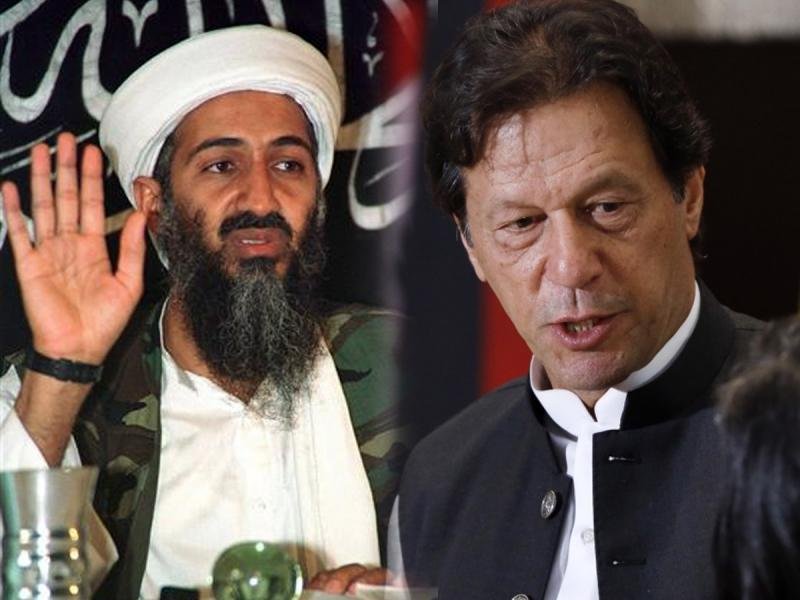
  • Imran reminded of Pakistanis and armed forces’ sacrifices as he calls Osama bin Laden a ‘martyr’

    Imran reminded of Pakistanis and armed forces’ sacrifices as he calls Osama bin Laden a ‘martyr’

    Prime Minister (PM) Imran Khan’s words have yet again landed him in crosshairs of the general public as well as opposition leaders, who are training guns at him for calling notorious terrorist and al-Qaeda chief Osama bin Laden a “martyr”.

    Making a rare appearance in the National Assembly (NA), Imran on Thursday took the floor and among other things, elaborated how Pakistan had been humiliated despite having sacrificed lives in the war against terrorism.

    “The way we helped America in the war on terror and the humiliation that my country had to face. I don’t think there has ever been any other country that supported war on terror and had to face criticism from them. If they are not successful in Afghanistan, Pakistan is held responsible for that too,” he said.

    The premier went on to add that the United States (US) “martyred” bin Laden in Abbottabad.

    “Pakistanis were deeply embarrassed when Americans killed Osama bin Laden in Abbottabad. Shaheed kar diya [was martyred]. But what happened after that? The entire world hurled abuses at us. Our ally [the US] entered our country and killed someone without even telling us. It was a big humiliation,” he said before going on to describe the drone attacks as the second set of incidents that embarrassed the country.

    WATCH VIDEO:

    https://twitter.com/ventdeInde/status/1276144510121148417

    Osama bin Laden was killed in a military operation by US Navy Seals in 2011 in Abbottabad — a few kilometres away from the Pakistan Military Academy (PMA) — and ended a nearly 10-year search for bin Laden, following his role in the 9/11 attacks on the US.

    “Whose side are you on? The head of al-Qaeda, a terrorist organisation, who died in Abbottabad or the 70 to 80 thousand Pakistani civilians and military men who laid down their lives in the war on terror?” Pakistan Muslim League-Nawaz (PML-N) leader and former Sindh governor Muhammad Zubair said while reacting to Imran’s statement.

    He, however, wasn’t the only one the premier’s speech attracted a strong reaction from. Here’s what Twitterati have to say:

    Meanwhile, a viral clip showed former foreign minister Khawaja Asif also calling Imran out in his speech on the floor of the Lower House.

    Addressing the NA, he reminded the premier that Osama bin Laden was responsible for instability in the region, especially Pakistan, and was nothing but a terrorist.

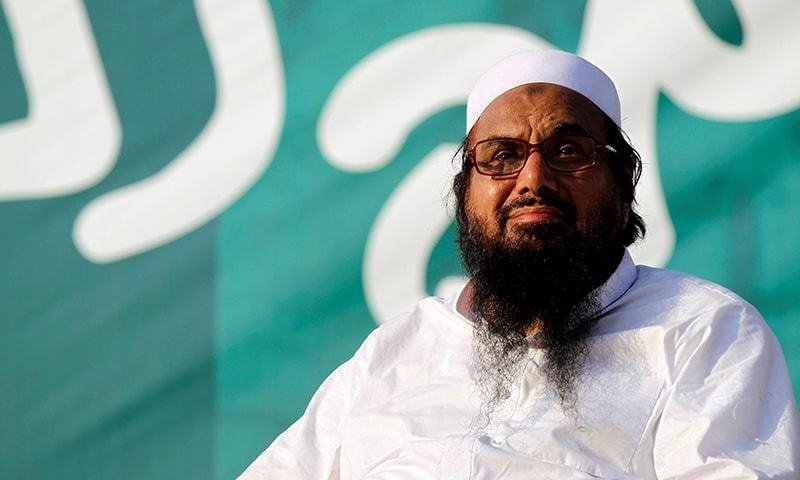
  • Conviction: Hafiz Saeed sentenced to jail for terror-financing

    Conviction: Hafiz Saeed sentenced to jail for terror-financing

    An anti-terrorism court (ATC) in Lahore on Wednesday convicted banned Jamaatud Dawa (JuD) chief Hafiz Saeed in two terror-financing cases, sentencing him to jail for five years and six months, besides reportedly imposing a fine of Rs15,000 in each case.

    The court that convicted Saeed under sections 11-F (2) and 11-N of the Anti-Terrorism Act (ATA), had reserved its verdict in the two cases on February 6.

    On Tuesday, the court had accepted a plea of Hafiz Saeed, chief of the banned Jamaatud Dawa (JuD), to club all six terror financing cases against him and his associates and announce the verdict on completion of the trial.

    The court had indicted the JuD chief and three of his associates – Hafiz Abdul Salam bin Mohammad, Mohammad Ashraf and Prof Zafar Iqbal – on terror financing charges on December 11 last year in a case filed by the Counter-Terrorism Department (CTD). Saeed and Prof Zafar Iqbal were later indicted in a similar case on December 20. The cases were filed by CTD Lahore and Gujranwala chapters.

    The ATC on Saturday last week had deferred announcing its verdict in the terror financing cases and decided to hear arguments on February 11 on the suspects’ application to hear all cases first before reserving its judgment.

    The application, filed by the petitioners’ counsel, requested that collective verdicts be issued after the completion of trials in all the cases pending against them.

    The petition also prayed the court to quash the false First Information Report (FIR) registered against the JuD chief. According to Deputy Prosecutor General Abdul Rauf Wattoo, in total six cases against the said individuals were pending before the same court, and in four of these cases, presentation of evidence was in progress.