Tag: terrorism

  • We have not invested enough in education, health and infrastructure: PM Shehbaz

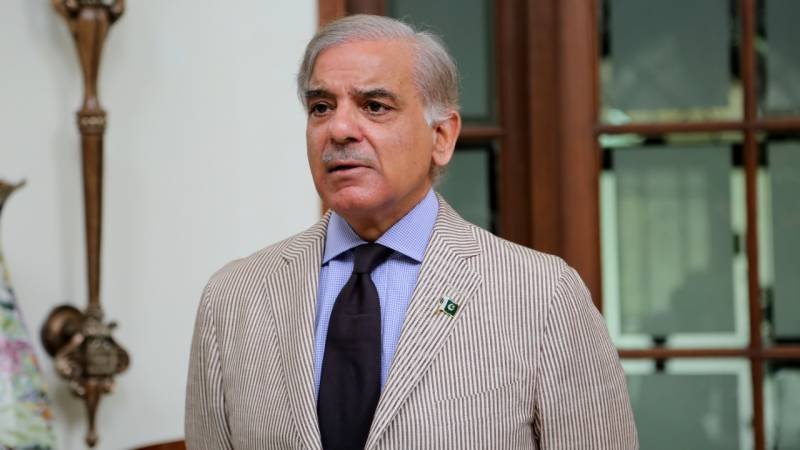
    In an interview to The Economist on Pakistan’s Independence Day, Prime Minister (PM) Shehbaz Sharif highlighted the root problems of the economic crisis gripping the nation nowadays.

    Titled “Pakistan’s prime minister on his drive to modernise the country“, PM Shehbaz mainly talked about critical structural flaws that hindered the state’s economy. According to him, the first reason is that Pakistan’s political environment has become increasingly polarised.

    “Instead of debating how to run Pakistan better and rid the country of poverty, political parties have been at each other’s throats,” he pointed out.

    “We have not invested enough in the nuts and bolts of development: education, health and infrastructure. This is in part due to an abysmally low tax take, but it also reflects our priorities in public spending.”

    PM Shehbaz further highlighted the fact that Pakistan has not enjoyed the benefits of globalisation.

    “Today, we hardly make anything that the world wants and our companies remain very comfortable only operating within our borders, often protected by barriers to competition,” he stressed.

    He pointed out that Pakistan’s exports are just 10 per cent. Shehbaz said that where “two out of every three people are below the age of 30 and full of aspirations and where every third person lives on less than $3.20 a day and less than a quarter of our women work outside the home,” it is a moment that merits “serious introspection”.

    Pakistan was one of the biggest victims of state-sponsored terrorism’: PM Shehbaz

    In an interview with Newsweek’s senior foreign policy writer Tom O’Connor, PM Shehbaz said it was no secret that Pakistan was “one of the biggest victims of state-sponsored terrorism that is planned, supported and financed by hostile intelligence agencies”.

    He went on to say that terrorist attacks against Chinese nationals were “aided and abetted by forces inimical to the Pakistan-China strategic partnership”.

    Talking about friction between the US and China, the premier said: “While the Pakistan-China relationship is very special, Pakistan and the US have also maintained a long-standing historic bilateral relationship which covers all issues of mutual interest.”

    He was of the view that the world cannot afford to go back into another “era of Cold War or bloc politics”.

    The premier called for all parties to agree to the “minimum rules of the game in which the welfare of the people remains paramount”.

    “Systematic problems can be fixed through engagement and consultations among all political stakeholders. This course may take time, but is the only way forward for the system to become strong, resilient and efficient.”
     

  • Pakistan wants to ensure rights to the women of Afghanistan: Bilawal Bhutto

    Pakistan wants to ensure rights to the women of Afghanistan: Bilawal Bhutto

     Foreign Minister (FM) Bilawal Bhutto-Zardari has said that Pakistan wants to ensure rights to the women of Afghanistan.

     The foreign minister in an interview with CNN’s Christiane Amanpour said, “I see women’s rights or women’s rights to education as rights granted to us in Islam. We’ll be emphasising that the Taliban keep their international commitments and ensure rights to the women of Afghanistan because these are rights guaranteed to women in Islam,” Bilawal said when he was asked if Islamabad had engaged with the Afghan Taliban on how Muslim countries can give rights to women.

    The minister said it wasn’t an issue of the West. He also said that the first word in Quran is ‘Iqra’, which means to read. “Nowhere is it written that only men should read. We are all meant to pursue our path to education.”

    FM Bilawal said that Islamabad is looking to the Taliban regime in Afghanistan to play its role in discouraging the increase in terrorist activity on Pakistan’s side of the border.

    “We continue to not only monitor this situation but work on our side to ensure that we can try to tackle the threat of terrorism and hope that the regime in Afghanistan lives up to their international commitment to not allow their soil to be used for terrorism.”

    “We must prioritise, alleviate the humanitarian crisis, ensure there’s no economic collapse and hold the Taliban regime to the international commitments. It was not Pakistan, but the United States who had direct communication with the Taliban regime before their takeover of Kabul. Pakistan and the international community believe it will not serve any of our interests if we abandon the people of Afghanistan once again,” said Bilawal.

    “We all believe, Pakistan believes and the international community believes, they will not serve any of our interests if we abandon the people of Afghanistan, once again,” said Bilawal.

  • PM Shehbaz condemns the killing of Sikh citizens in Peshawar

    PM Shehbaz condemns the killing of Sikh citizens in Peshawar

    Prime Minister Shehbaz Sharif condemned the killing of two Sikh citizens in Peshawar.

    “Strongly condemn the killing of our Sikh citizens in Peshawar, KP. Pakistan belongs to all its people. Have ordered a high level inquiry to ascertain facts. The killers will be arrested & meted out exemplary punishment. My most sincere sympathies to the bereaved families,” PM said in a tweet.

    Unknown assailants killed two persons of the Sikh community at Sarband area in Peshawar. According to the police, two persons riding on motorbike opened fire on two shopkeepers of the Sikh community selling spices at Bata Tal Bazaar. They succumbed to their injuries on the spot.

    The deceased were identified as Kanwaljeet Sigh and Ranjeet Singh. According to journalist Iftikhar Firdous, the Islamic States Khurasan (ISKP) chapter says it carried out the attack targeting two Sikhs. In October 2021, ISKP also claimed another such attack in Peshawar.

    The Human Rights Commission of Pakistan also condemned the killing of Sikh citizens.

  • COAS Bajwa orders tight security for OIC meeting, PDM changes long march dates

    COAS Bajwa orders tight security for OIC meeting, PDM changes long march dates

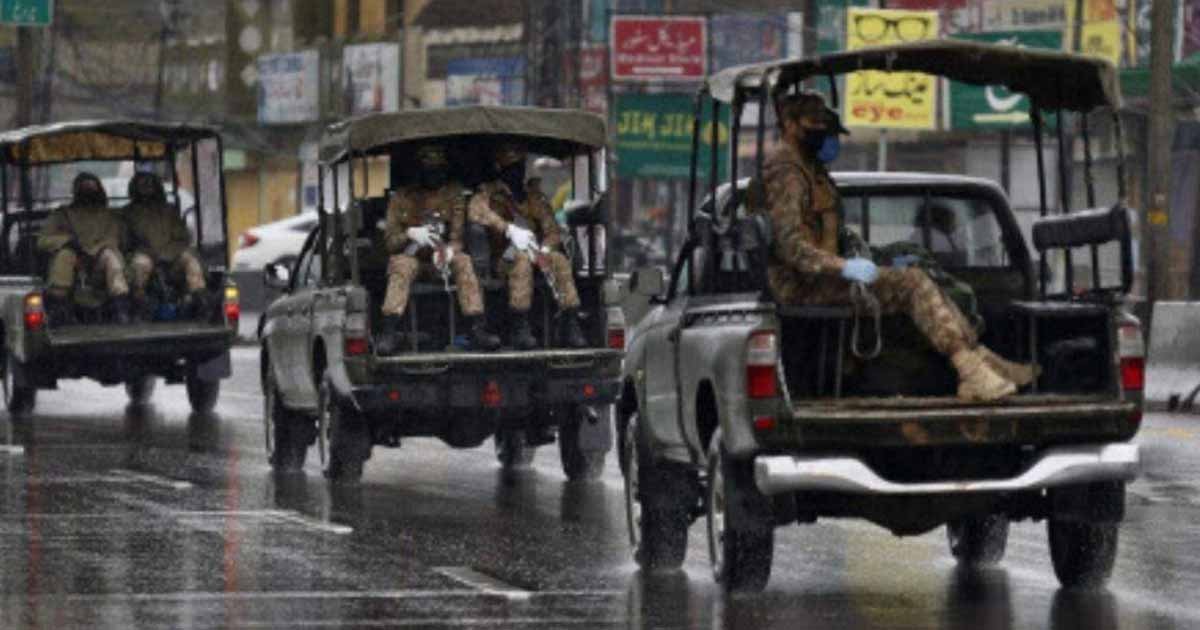
    In a Corps Commanders’ Conference held at General Headquarters (GHQ) on Monday, Chief of Army Staff (COAS) General Qamar Javed Bajwa ordered that the security in the federal capital must be increased and comprehensive security measures should be taken for the safe conduct of the Organisation of Islamic Conference (OIC) foreign ministers’ meeting (March 22-23) and the March 23 Pakistan Day parade in the capital.

    For the OIC meeting in Pakistan, 48 countries have confirmed their participation.

    Due to the high-profile events taking place next week, Pakistan Democratic Movement (PDM) chief Maulana Fazlur Rehman reviewed their march dates. While talking to reporters, he announced that the participants would now enter Islamabad on March 25 instead of March 23.

    “OIC’s foreign ministers are our guests and it is our duty to respect them as they will remain in Islamabad till March 24,” Fazl added.

    PDM chief denied that the Opposition was copying the ruling party by holding the long march. He reminded everyone that they had given the call for the long march some three months ago.

    At the Corps Commanders’ Conference, the recent incident of India’s missile firing at Pakistan was also discussed. It was emphasised that despite Indian acknowledgment of the mistake, relevant international forums must take a serious view.

    Gen Bajwa also lauded the ongoing counter-terrorism operations, which is a major concern especially because of recent incidents.

  • UN Security Council condemns ‘heinous and cowardly’ terrorist attack in Peshawar

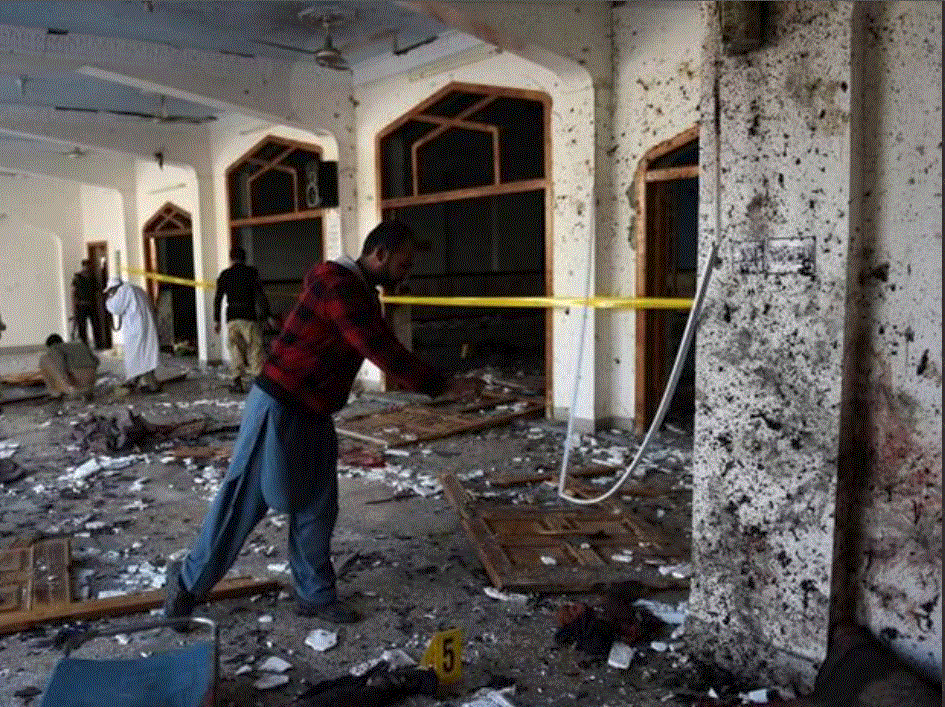
    The United Nations Security Council (UNSC) condemned the “heinous and cowardly” terrorist attack in Peshawar at a mosque on Friday (March 4). The attack was claimed by the Islamic State-Khurasan (IS-K).

    The statement on Sunday said that the UNSC members expressed their deepest sympathy and condolences to the victims and the Pakistani government.

    “I condemn the horrific attack on a mosque in Pesh­awar during Friday prayers. My condolences to those who lost loved ones, and my solidarity with the people of Pakistan,” UN Secretary Gene­ral António Guterres tweeted on Friday.

  • At least 57 dead and several injured in Peshawar’s mosque blast

    At least 57 dead and several injured in Peshawar’s mosque blast

    At least 57 people have lost their lives and more than 190 have been injured in an explosion that took place during Jumma (Friday) prayers at a mosque in Peshawar’s Kocha Risaldar, one of the densely populated areas in the city.

    The injured have been moved to the Lady Reading Hospital. Police teams are at the site of the explosion and have sealed off the area.

    According to Capital City Police Peshawar, policemen on duty were shot at by the attackers.

    Officials are yet to confirm the nature of the explosion.

    This is a developing story.

  • Bomb blast targets police van, three officers injured

    Bomb blast targets police van, three officers injured

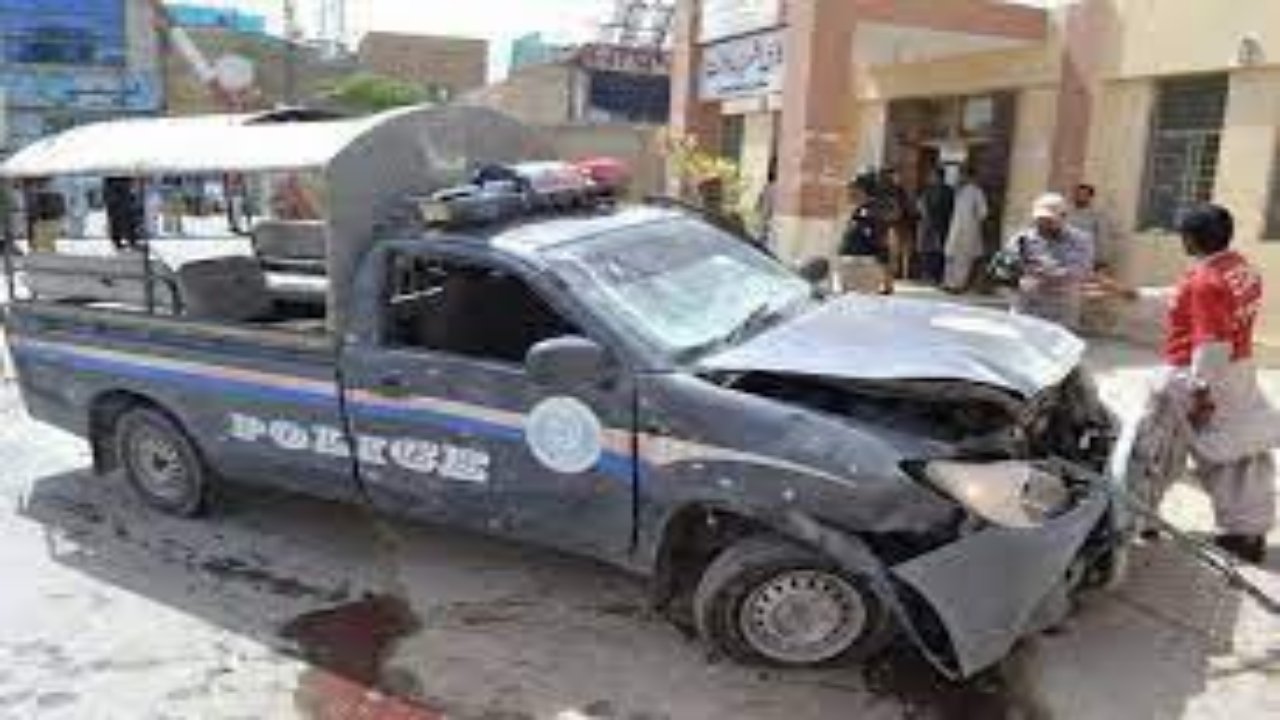
    Three police officers sustained injuries after a police mobile was targeted in Dera Ismail Khan.

    According to media reports, the police mobile was damaged in the bomb blast detonated by a remote control. The injured officers have been moved to the hospital where they are said to be in critical condition.

    Security agencies have cordoned off the area and launched a manhunt to arrest the culprits.

    According to initial reports, a police team was deployed for the ongoing polio campaign in the town.

    No one has yet claimed responsibility for the attack.

    There has been an increase in attacks targeting law enforcement agencies for the past few days..

  • Quetta bomb blast: two FC personnel injured

    Quetta bomb blast: two FC personnel injured

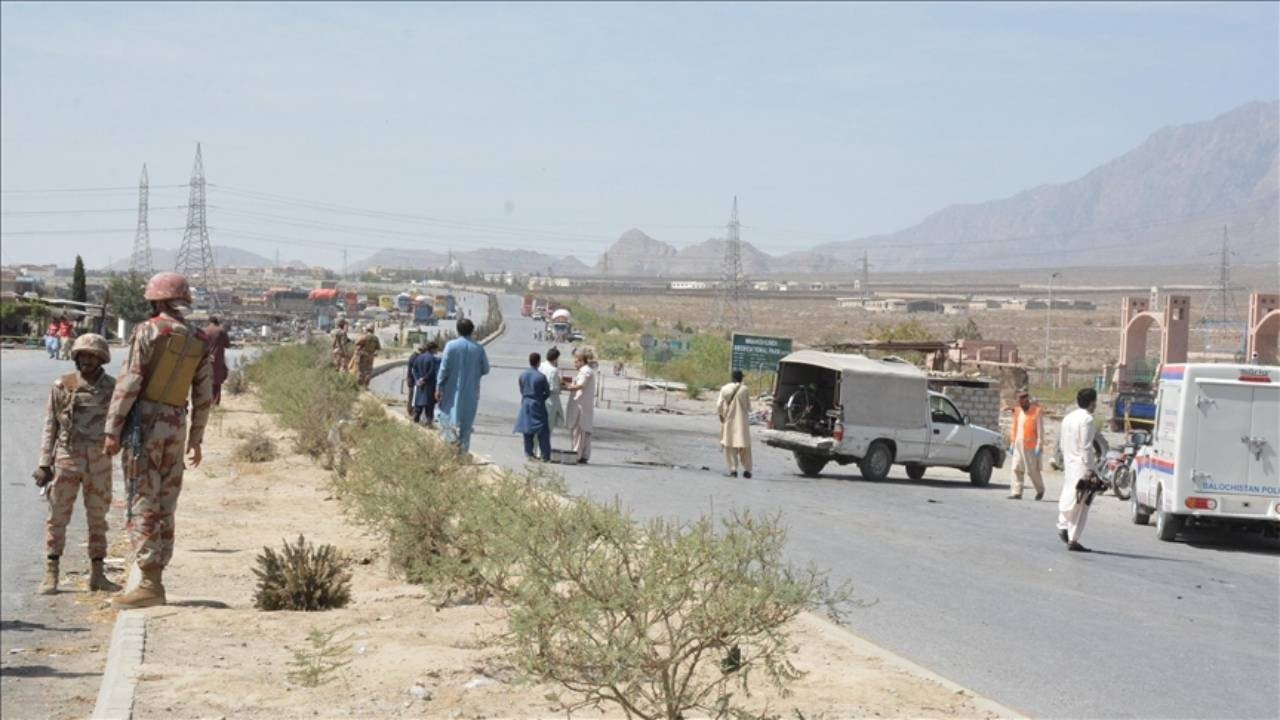
    Two Frontier Corps (FC) personnel were injured in an explosion on Quetta’s Sariab Road today (Monday). They have been shifted to the FC hospital, an FC spokesperson confirmed, reports Dawn.

    Following the blast, the area was sealed and security personnel along with a bomb disposal squad reached the site to initiate an operation.

    The spokesperson further said that the two injured personnel were on routine patrol in a village when the bomb, which was fitted in a motorcycle, blew off.

    Today’s incident is the latest in a string of attacks in Balochistan and has occurred a couple of days after a terrorist attack on security forces in Balochistan’s Panjgur and Naushki.

    Balochistan Home Minister Mir Zia Langove had revealed that several threats had been issued in February. “We had threats from Daesh and so-called nationalists,” he had said.

  • New terrorist wave

    New terrorist wave

    A new wave of terrorism seems to be gripping the country in recent months, with the Lahore blast being the latest in a series of attacks that have targeted security forces, policemen, and civilians. From Khyber Pakhtunkhwa to Balochistan, from Sindh to the capital city to the heart of Punjab, there is a rise in such attacks across the country.
     
    Khyber Pakhtunkhwa police chief Moazzam Jah Ansari told Dawn and Geo News that the Islamic State group’s Khorasan chapter (IS-K) is a different and bigger threat than even the Tehreek-i-Taliban Pakistan (TTP). Coming from the police chief of a province that has been one of the worst victims of terrorism in the country, his statement should raise alarm bells for the state. Pakistan has given immense sacrifices in its war against terrorism – 70-80,000 people lost their lives at the hands of terrorist attacks. The APS attack is a tragedy that can never be erased from our memories. Our security forces and police officials have fought bravely against terrorist outfits and now for terrorism to make a comeback, it is even more important that the state should build a consensus on this issue and tackle the hydra of terrorism.
     
    A study conducted by the Pakistan Institute for Conflict and Security Study (PICSS) says that the rise in militant attacks in Pakistan coincided with the Afghan Taliban’s military offensive and their eventual takeover of Kabul. Many had been pointing out to the Pakistan government that a government that does not believe in the rule of law and does not abide by any international covenants cannot bring any stability in the region and will in fact lead to instability in the neighbouring countries when Pakistan was celebrating the takeover of Kabul by the Afghan Taliban.
     
    With the withdrawal of the US and NATO troops from Afghanistan, the fall of Kabul and the rise of the Afghan Taliban were inevitable. However, the support that they got from Pakistan has led to many problems, including the tensions between the US and Pakistan when it comes to diplomatic ties. But the most critical consequence of the new government in Afghanistan is the rise of militant outfits who are rearing their heads once again in neighbouring Pakistan.

    The rise of the Afghan Taliban has given new ideas and strength to militant outfits that had gone underground since the security forces defeated the TTP and crushed other terrorist outfits some years ago. We hope that the state will not let them wreak havoc with the country’s future again. Pakistan needs peace and stability, not chaos. 

  • Pakistan’s most-wanted terrorist killed in Afghanistan

    Pakistan’s most-wanted terrorist killed in Afghanistan

    Pakistan’s most-wanted terrorist Muhammad Khorasani has been killed in Afghanistan.

    Khorasani, also known as Khalid Balti was planning attacks against Pakistan along with Tehreek-e-Taliban Pakistan (TTP) Chief Noor Wali Mehsood, as per Geo News’ sources. He was a spokesperson for the banned outfit since 2014.

    Khorasani was involved in several attacks which killed innocent civilians security forces personnel.

    He was running a terrorist hub in Miranshah, Khyber Pakhtunkhwa (KP), however, after the Pakistan Army’s successful “Zarb-e-Azb” operation, he escaped to Afghanistan.

    Last week, Pakistan Army spokesman Major General Babar Iftikhar said that talks with the TTP ended after the banned group came up with certain conditions which were not acceptable.

    He said that operations are on-going against the militants.