Tag: Tesla

  • ‘There is no choice when the company is losing $4 million per day’: Musk justifies cutting half of Twitter’s workforce

    ‘There is no choice when the company is losing $4 million per day’: Musk justifies cutting half of Twitter’s workforce

    On Friday, Twitter laid off half of its 7,500-person workforce as the company’s troubled big restructuring under new owner Elon Musk got under way, only one week after his sensational takeover.

    According to an internal memo seen by AFP, “approximately 50 per cent” of the workforce was affected and would immediately lose access to business computers and email.

    Workers from all over the world who were let go used Twitter to express their anger or disbelief and bid farewell to one of Silicon Valley’s most recognisable enterprises.

    “Woke up to the news that my time working at Twitter has come to an end. I am heartbroken. I am in denial,” said Michele Austin, Twitter’s director of public policy for the US and Canada.

    Prior to the layoffs, Twitter restricted access to all of its locations and asked staff to remain at home while they awaited word on their futures with the firm.

    The cull is a part of Musk’s effort to obtain financing for the massive $44 billion acquisition, for which he sold $15.5 billion worth of Tesla shares and took on billions of dollars in debt.

    After his massive acquisition, Musk, the CEO of Tesla and SpaceX, has been frantically looking for new revenue streams for Twitter, including the notion of charging users $8 per month for verified accounts.

    The actions would help Twitter combat the possibility of losing advertisers, which are the company’s primary source of income, since many of the major businesses in the world postpone their ad purchases after learning of Musk’s well-known contempt for content controls.

    The volatile businessman lamented a “huge loss in revenue” on Twitter on Friday, attributing it to “activist groups” who were pressing advertisers.

    “We did everything we could to appease the activists. Extremely messed up! They’re trying to destroy free speech in America,” he added.

    This seemed to be a reference to Musk’s previous meeting with civil rights organisations, where he heard worries that Twitter will unleash a wave of hate speech a week before the US midterm elections. Musk had promised that Twitter would not turn into a “free-for-all hellscape” in an effort to calm people down, but his assurance was swiftly contradicted by a tweet spreading a rumour that the husband of US House Speaker Nancy Pelosi had been attacked.

    “We are witnessing the real time destruction of one of the world’s most powerful communication systems. Elon Musk is an erratic billionaire who is dangerously unqualified to run this platform,” said Nicole Gill, Executive Director of Accountable Tech.

    She was a member of a group of 60 rights organisations that demanded on Friday that advertising on the Musk-owned platform be boycotted.

    “Elon Musk has demonstrated that it’s not possible for him to keep the brand safeguards that have existed on Twitter in place. There’s no more time for trust but verify, it’s time for escalation,” said Angelo Carusone, President and CEO of Media Matters for America.

    Although very popular with celebrities and opinion leaders, the California-based business has historically struggled to turn a profit and has lagged behind Facebook, Instagram, and TikTok in terms of user growth.

    Since Musk finalised his acquisition late last week and immediately set about dissolving its board and removing its chief executive and key managers, Twitter employees have been preparing for this kind of unpleasant news. Five Twitter employees who had previously been let go filed a class action lawsuit against the business late on Thursday, alleging that they had not received the legally mandated 60-day notice period.

    The US Worker Adjustment and Retraining Notification (WARN) Act, which grants employees the right to early notification in situations involving large layoffs or plant closures, is cited in the lawsuit.
  • $8 for Starbucks coffee is cool, but a Twitter badge is not? Netizens react to Musk’s meme

    $8 for Starbucks coffee is cool, but a Twitter badge is not? Netizens react to Musk’s meme

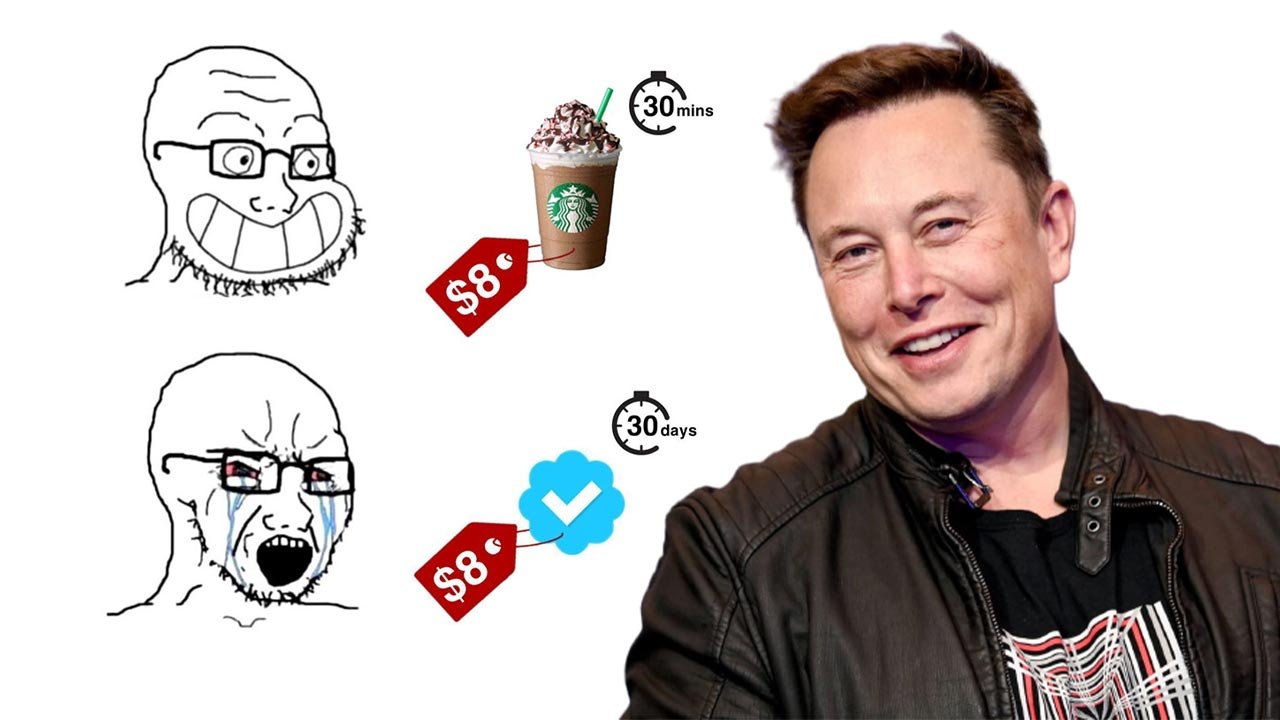
    Elon Musk’s intentions to charge an additional $8 per month for the Twitter Blue service have both amused and incensed online users. This may be the rationale behind Musk’s defense of his choice to charge verified users for their Twitter blue tick badge.

    Musk appears to have turned to memes in an effort to spread the word about his lofty goal of turning Twitter into a revenue-generating platform. The head of SpaceX, who is renowned for his blunt assessment of everything on Earth, has been jokingly outlining his new plan.

    https://twitter.com/Therealdavedfs1/status/1587894312838529024

    In one of his tweets, he posted a meme depicting individuals enjoying their $8 Starbucks coffee while grumbling about having to spend the same amount to maintain their Twitter verification badge.

    Users reacted strongly to the meme that compared the cost of coffee to that of a Twitter subscription. Some people praised the choice, while others criticised the millionaire.

    “They don’t see the vision Mr Musk. I’d pay $80 for a checkmark for even just 30 minutes. Everybody hating on Elon should instead be grateful for the service he is doing for us. He doesn’t get enough appreciation,” said a user. “Mocking of users will continue until profits improve,” chimed in another user.

    Another meme posted by the Tesla CEO depicts two characters discussing shelling out $8 for freedom of speech. Another responds to the question of why pay $8 for Twitter verification by stating that he can still use Twitter for free without the advantages.

    He claimed that Twitter is a fascinating site in another tweet. “Twitter is simply the most interesting place on the Internet. That’s why you’re reading this tweet right now,” read his tweet. In another tweet, Musk said it was good to be attacked by right and left at the same time. “Being attacked by both right & left simultaneously is a good sign,” he wrote.

    On November 1, Musk announced the $8 per month subscription plan for Twitter on his Twitter account. The new CEO continued by outlining several premium services to which users will have access.

    According to him, platform users will be able to publish long videos and audio files as well as receive priority treatment for replies and remarks. Additionally, there won’t be many adverts on subscribers’ feeds.

  • Best-selling author slams Musk’s plan to charge $20 for Twitter’s blue tick verification

    Best-selling author slams Musk’s plan to charge $20 for Twitter’s blue tick verification

    Elon Musk, who recently acquired control of the microblogging network in a $44 billion deal, responded to bestseller author Stephen King’s tweet expressing dissatisfaction over the anticipated cost for a verified badge.

    There have been rumours that Twitter would soon begin charging verified users a monthly charge for the blue ticks on their handles, Mr King said, “$20 a month to keep my blue check? F*** that, they should pay me. If that gets instituted, I’m gone like Enron.”

    The monthly charge is the subject of much rumour, with some reports stating it will be around $5 per month and others estimating it to be as high as $20. The author’s tweet on Enron relates to the significant US corporation’s spectacular collapse following years of explosive growth.

    Responding to Mr King’s tweet, Mr Musk said, “We need to pay the bills somehow! Twitter cannot rely entirely on advertisers. How about $8?”

    Many people believe it is not worthwhile to pay for a blue tick, while others contend that there is nothing wrong with charging individuals for the blue tick. The buzz surrounding the charge for a certified badge has ignited a heated debate.

    According to Musk, who oversaw the dramatic events that led to the dramatic developments of the Twitter takeover that also reached the court, the verification process for accounts is being updated. He made no further explanations.

    If the initiative is approved, users would have to pay $4.99 per month for Twitter Blue in order to keep their “verified” badges.

    Although the project may still be shelved because the CEO of Tesla Inc. has not made a final decision, Platformer predicts that verification will most likely be included in Twitter Blue.

    Musk dissolves Twitter’s board of directors

    In order to further solidify his authority over the social media network, Elon Musk earlier dissolved the Twitter’s board of directors.

    After purchasing the business last week, the multi-billionaire will serve as its CEO, putting an end to months of negotiations over the $44 billion acquisition.

    He has taken swift action to leave his stamp on the company, which is utilised by journalists and politicians all over the world.

    He is thinking about making adjustments to Twitter’s verification process and eliminating positions. According to reports, the first round of layoff is being discussed and may affect 25 per cent of the company’s workforce.

  • Elon Musk’s Twitter takeover and what it means for you

    Elon Musk’s Twitter takeover and what it means for you

    The Chief Executive Officer (CEO) of Tesla and the world’s richest man, Elon Musk, has finally closed the $44 billion deal to acquire Twitter.

    The “Chief Twit” allegedly fired Twitter’s senior executives, including its CEO Parag Agrawal and its head of legal policy Vijaya Gadde, on Thursday after closing the $44 billion deal.

    The takeover may bring significant changes to Twitter. The indicators have gotten stronger since the senior management was fired on the first day. Musk has previously made various allusions to the possibility of changing the online platform.

    This might not be good news if you use Twitter and value your online privacy. The platform has struggled with privacy and security issues for years, and it has been slow to put any potential fixes into action. As a result, it’s possible that everything you’ve ever done or said on Twitter, whether it was in public or private, including your direct messages, belongs to one of the wealthiest individuals in the world, a man notorious for being unpredictable, childish, and even vengeful.

    Additionally, it is now owned by a man who wanted to fire 75 per cent of the company’s employees, which might further jeopardise Twitter’s security.

    Noman Javed, an electrical engineer from Lahore, Pakistan, who has been using Twitter since 2010, said that given how immature and erratic Musk has always been, “anything is possible” on the social networking site. Musk has previously stated numerous times that he wants to support free expression and allow people to write anything; although this may sound positive, it can also be risky. As if everyone can tweet anything they want without worrying about being blocked or experiencing any negative effects.

    Javed anticipates that there may be increased disputes and debates on the platform, particularly between Indian and Pakistani users who regularly argue over a variety of topics, including sports and religion.

    According to TIME, when Musk commenced the takeover in April, he wrote CEO Agrawal, “I have a tonne of ideas.”

    Musk lists the preservation of “free expression” on Twitter as one of his key concerns. One of the primary advocates for removing Trump from the platform, Vijaya Gadde’s dismissal is regarded as the first step in that direction.

    After the attacks on Capitol Hill on January 6, 2021, Trump was taken from the podium. A few other right-wing speakers were banned from the stage for promoting false information and divisive ideas.

    In a survey Musk conducted in March, he found that 74 per cent of users wanted an “edit” feature. The edit button has already begun to undergo testing on Twitter, but it has not yet been made available everywhere.

    Musk has spoken out against the pervasive use of bots on Twitter. Musk said in September that 90% of the replies on his tweets are automated. Even Agrawal was targeted with the assertion that eight out of ten Twitter accounts are bogus.

    He might take action in the coming days based on bots and phoney accounts. However, a Scottish digital university called CodeClan claims that if Musk bans bots, he might lose as many as 13.5 million followers.

    According to Bloomberg, in April, Musk reportedly disclosed to the banks his plans to create features to increase business revenue, including novel ways to monetize tweets that contain significant information or go viral.

    He suggested ideas including charging a fee when a third-party website wants to reference or incorporate a tweet from a verified person or organisation.

    A UCLA adjunct professor named Robert McCann claims that Musk’s public criticism of Twitter and its leadership has caused a “significant erosion of trust” on the website.

    Employee morale can suffer, and it might “spook” potential customers. Additionally, due to the restructuring at the very top, more employees may voluntarily quit the company after the purchase.

    In an open letter to advertisers published on Thursday, billionaire Elon Musk said he wouldn’t allow Twitter to devolve into a “free-for-all hellscape, where anything can be said with no consequences.” His apparent goal was to allay users’ and advertisers’ concerns the day before his $44 billion acquisition.

  • Elon Musk enters Twitter office holding a bathroom sink

    Elon Musk enters Twitter office holding a bathroom sink

    Billionaire Elon Musk entered the Twitter’s San Francisco office on Wednesday with a bathroom sink in his hands, with just a few more days to finalise his acquisition of Twitter and avoid a fresh court hearing.

    “Entering Twitter HQ – let that sink in!” the Tesla and SpaceX CEO tweeted with a video of his entrance.

    Earlier, Musk also changed his bio on Twitter, where he has more than 110 million followers, to “Chief Twit.”

    Musk must finalise the purchase of Twitter by Friday at 5 p.m. Eastern Time, or else he will have to consider going to trial once again.

    When Musk attempted to terminate their $44 billion merger deal, Twitter sued him on the grounds that it had been negligent in disclosing information concerning spam and bots on its network, which he claimed would have a materially negative impact. This was refuted by Twitter.

    After Musk said that he would in fact be prepared to purchase Twitter, a judge in the Delaware Chancery Court set the Friday deadline.

    Twitter wants the court to continue to be engaged because it did not trust Musk’s word. The judge ultimately decided to postpone the trial that had been scheduled for last week and gave the parties until the end of this week to reach a settlement; otherwise, she would schedule fresh trial dates for November.

  • Elon Musk plans to launch ‘X’ app after Twitter buyout

    Elon Musk plans to launch ‘X’ app after Twitter buyout

    Elon Musk is taking WeChat as inspiration as he designs Twitter’s future. The tech mogul has only provided a few details about his goal of creating an app for everything, experts warn it won’t be simple to accomplish.

    After purchasing Twitter, Tesla CEO stated late Tuesday that he intended to develop a new app dubbed “X”.

    “Buying Twitter is an accelerant to creating X, the everything app,” he tweeted.

    Musk’s statement followed reports that he had once again changed his mind and chosen to proceed with his offer to purchase Twitter for $44 billion, which was the sum originally agreed upon back in April.

    After months of conflict and sour U-turns, the acquisition would give the world’s richest man control over one of the most important social networks.

    Now, analogies to “super-apps” in Asia, which are effectively one-stop shops that do it all for customers, have been made between Musk’s ambition to build out what is thought to be a versatile platform.

    More than a billion users, mostly in mainland China, rely on the social network to perform almost all of their daily tasks without ever leaving the app, including ordering groceries, scheduling yoga classes, and paying bills.

    People have also flocked to apps like Grab (GRAB) in Singapore and Malaysia and Line in Japan in other parts of Asia. While Line became well-known as a chat app, Grab was first best recognised as a ride-hailing service provider. Both have now greatly expanded to include additional functions.

    Musk hasn’t held back when it comes to his goal to duplicate WeChat’s success. He compared Twitter’s potential to that of Tencent’s pervasive service in China in a town hall with Twitter staff in June.

    “I think an important goal for Twitter would be to try to include as much of the country, as much of the world, as possible,” said Musk. “You basically live on WeChat in China because it’s so usable and helpful to daily life, and I think if we can achieve that, or even get close to that at Twitter, it would be an immense success.”

    Several well-known US tech leaders have followed China’s approach, including Elon Musk: Mark Zuckerberg, the CEO of Facebook (FB), had previously said that his business could use WeChat as a case study.

  • Twitter blames Musk for $270 million Q2 loss

    Twitter blames Musk for $270 million Q2 loss

    The social media company’s latest quarterly earnings figures offered a glimpse into how the social media business performed during months-long negotiation with billionaire and Tesla CEO Elon Musk over whether he will take over the company.

    The company lost $270 million in the April-June period after revenue slipped 1 per cent to $1.18 billion, reflecting advertising industry headwinds, as well as uncertainty over Musk’s acquisition bid.

    The number of daily active users rose 16.6 per cent to 237.8 million compared with the same period a year before.

    Twitter chalked up the gains to “ongoing product improvements and global conversation around current events.”

    Twitter’s legal battle with Musk to fulfil his April promise to purchase the company for $44 billion has overshadowed its most recent sales figures. To close the deal, Twitter last week sued Musk, and now the two parties are preparing for a trial in October.

    Twitter announced that it wouldn’t hold its customary quarterly earnings conference call or publish a shareholder letter due to the impending acquisition.

    Beginning with the April 4 disclosure that Musk had purchased a sizable stake in the company, opening the door for his takeover bid later that month, Twitter experienced a turbulent three months during the April-June fiscal quarter. Shortly after Musk publicly tweeted his concerns about Twitter and its employees and gave the impression that he was reconsidering his position, the relationship quickly grew strained.

    Musk’s actions and his “repeated disparagement of Twitter and its personnel,” according to Twitter, created uncertainty that was bad for the company’s operations, staff, and stock price.

    Musk wanted to wait until next year due to the complexity of the case and his demands for more of Twitter’s internal data about how it counts fake and automated “spam bot” accounts, which he’s cited as a key reason for trying to terminate the deal. It called for an expedited trial so the company could continue with important business decisions.

    Before the opening bell on Friday, shares were reduced by 2 per cent.

    The trial was postponed this week by the judge, who agreed with Twitter that too much delay could harm the company irreparably. Unless Musk and Twitter resolve the case prior to that time, it will be heard in Delaware’s Court of Chancery, which hears numerous high-profile business disputes.

    On Friday, Elon Musk retaliated against Twitter for partially attributing its second-quarter revenue shortfall to the uncertainty surrounding the pending $44 billion acquisition of the Tesla CEO by the social media behemoth.

    “I’m rubber, they’re glue,” Musk tweeted. 

    According to Musk, Twitter is “in material breach of multiple provisions” of the agreement and “appears to have made false and misleading representations” when it accepted Musk’s acquisition offer on April 25.

    Musk announced last month that he would be terminating the agreement. Musk disputes Twitter’s internal estimates that less than 5 per cent of its users are made up of spam and fake accounts.

  • LG Electronics is stepping into EV charging business

    LG Electronics is stepping into EV charging business

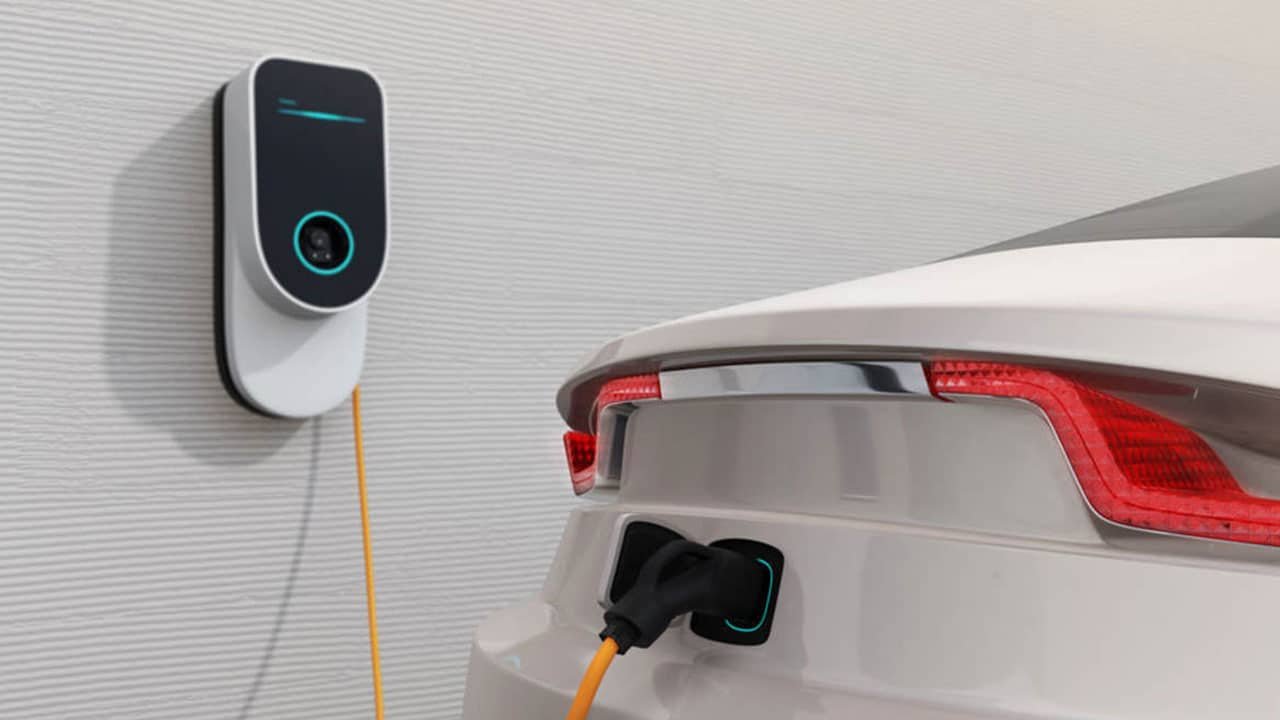
    As the worldwide competition to produce everything linked to EVs intensifies, LG Electronics has acquired AppleMango, a South Korean developer of electric car battery chargers.

    The acquisition, which was done in partnership with GS Energy, a producer of EV charging stations, and GS Neotek, a provider of IT services, will enable LG to take advantage of upcoming commercial prospects.

    According to Paik Ki-mun, senior vice president of LG Electronics, “the EV charging market is likely to increase significantly due to the surging demand for more environmentally friendly automobiles.”

    “We will provide specialised, integrated vehicle charging solutions for a variety of customers, boosting the competitiveness of our existing and assuring our preparation for future prospects,” the statement reads.

    In AppleMango, which will now be a subsidiary of LG Electronics, LG Electronics purchased a 60 per cent share, while GS Energy and GS Neotek acquired 34 and 6 per cent, respectively.

    The deal’s financial details were kept between the firms. The projected cost of the transaction is $7.8 million, according to rumours.

    In order to concentrate on its growing markets, such as electric cars, the internet of things (IoT), and B2B solutions, LG Electronics shut down its loss-making mobile business about a year ago.

    To make EV charging in South Korea a pleasant and simple experience for drivers, LG Electronics is prepared to take advantage of its experience in developing user-friendly interfaces.

    The company added that by entering the EV charging market, LG can increase the synergy between its work on EV batteries, energy storage systems, energy management solutions, and chargers.

    By the end of this year, the tech giant intends to establish an EV charger production line at LG Digital Park in South Korea with the goal of offering specialised EV charging options for private houses, retail establishments, lodging facilities, and public organisations.

    The acquired company brings to the acquisition a wide range of EV charging solution technologies, from slow chargers to rapid chargers for household and commercial use.

    LG did not specify whether it planned to continue selling AppleMango’s chargers.

  • Nio electric car falls from third floor of office, killing two

    Nio electric car falls from third floor of office, killing two

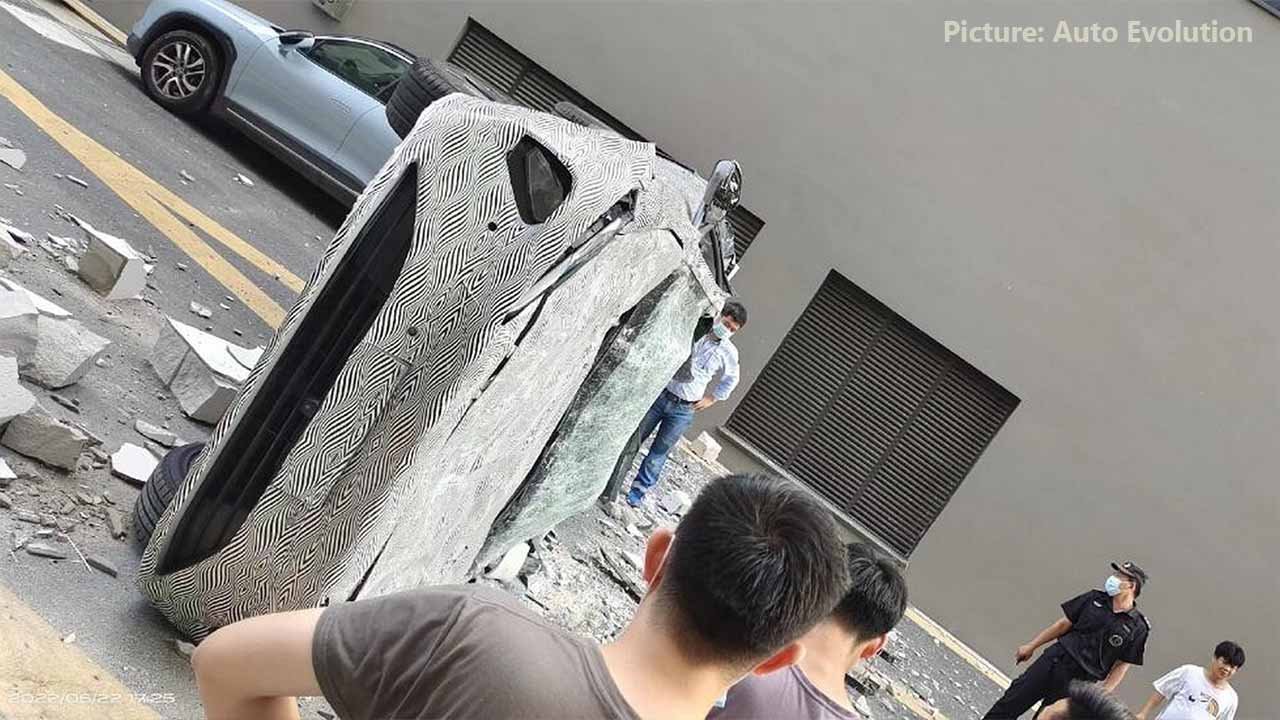
    Two employees were killed, according to Chinese electric vehicle (EV) manufacturer Nio, when one of its vehicles fell from the third floor of its Shanghai headquarters.

    One staff member and one worker from a joint venture were inside the car as it crash-landed from Nio’s Shanghai office.

    The incident happened on Wednesday at around 05:20 PM, according to the company. As the car fell from the building, those who were inside perished.

    According to Nio, it launched an investigation into the incident right away in collaboration with authorities.

    The third-floor space where the car fell has variously been referred to as a showroom, a testing facility, or a parking lot.

    “Our company has collaborated with public security department to launch the investigation and analysis of the cause of the accident. Based on the analysis of the situation at the scene, we can initially confirm that this was an accident (not caused by the vehicle),” the company said in a statement.

    “We feel very sad about this accident and would like to express our deepest condolences to our colleague and partner employee who lost their lives. A team has been set up to help the families,” it added.

    Within a half-hour, thousands of netizens commented on Nio’s initial Weibo post before it was removed. Social media users reacted angrily to the final clause of the statement, “not related to the vehicle itself.”

    The Chinese business to dominate the electric vehicle market is led by Nio. To allay customers’ worries about needing to charge their cars frequently, it has placed a lot of faith in interchangeable batteries in its vehicles.

    Nio is a rival to the US-based electric car manufacturer Tesla, owned by multi-billionaire Elon Musk, who also operates a manufacturing facility in Shanghai.