Tag: Textile industry

  • Pakistan’s textile exports surge by 30 per cent

    Pakistan’s textile exports surge by 30 per cent

    Pakistan Bureau of Statistics (PBS) reported that Pakistan’s textile group exports in July-April 2021-2022 reached a new high of $15.981 billion, up from $12.688 billion in the same period last year, a 25.96 per cent rise.

    Exports of the textile group climbed by 7.01 per cent month over month to $1.739 billion in April 2022, compared to $1.625 billion in March 2022. Textile group exports increased by 30.50 per cent year over year in April 2022, compared to $1.332 billion in April 2021.

    Cotton yarn exports increased by 22.11 per cent from July to April 2021-22 to $1.006 billion, compared to $823.952 million in the same period the previous year, and declined by 4.95 per cent in April 2022 to $97.655 million, compared to $102.736 million in the same month the previous year.

    The country’s overall exports from July to April 2021-22 were $26.247 billion, up from $20.905 billion in the same time last year, a 25.55 per cent rise. Pakistan’s exports in the last month (April 2022) were $2.897 billion, up 4.32 per cent from $2.777 billion in March 2022 and up 30.61 per cent from $2.218 billion in April 2021.

    Major export goods

    Knitwear: Rs90,096 million

    Readymade garments: Rs64,669 million

    Bed wear: Rs51,398 million

    Cotton cloth: Rs38,763 million

    Towels: Rs19,974 million

    Cotton yarn: Rs18,016 million

    Made-up articles: Rs15,277 million (excluding towels and bedwear)

  • Pakistan’s cotton fabric trade climbed by 28.23 per cent

    Pakistan’s cotton fabric trade climbed by 28.23 per cent

    In the first eight months of the fiscal year 2021-22, Pakistan’s textile and garment exports grew to $1.65 billion. The Pakistan Bureau of Statistics (PBS) estimates that the textile and apparel sector brought in $12.607 billion this time, compared to $ 9.999 billion in exports from July to February 2020-21.

    Knitwear exports surged by 33.86 per cent to $3.302 billion on a year-over-year (YoY) basis, while non-knit readymade clothes trade increased by 25.11 per cent to $2.516 billion. Additionally, cotton yarn exports increased by 34.40 per cent to $815.375 million, up from $606.690 million the previous year.

    Cotton fabric trade climbed by 28.23 per cent in 2022, reaching $1.584 billion in value. Also, over the eight months of 2021-22, the distribution of bed clothing jumped by 20.34 per cent.

    The industry has engaged in synthetic fiber imports, which increased by 31.65 per cent from July to February 2021-22, and the cost of artificial silk yarn soared by $ 569.256 million.

    Consequently, the value of textile machinery in Pakistan has climbed dramatically over the last eight months, reaching $577.249 million.

    Read more: SBP determined to curb inflation, improve foreign exchange reserves

    For those unaware, Pakistan’s textile sector has the capacity to generate $30 billion in annual revenue. The country’s leaders and economic experts should assess the existing economic situation and devise an effective economic strategy to boost textile exports.

    To summarise, the industry has tremendous potential and can significantly contribute to the country’s economic success by providing job opportunities. Which could help the country’s GDP and GNP grow even more.

  • PM says Manchester will envy Faisalabad’s progress one day

    PM says Manchester will envy Faisalabad’s progress one day

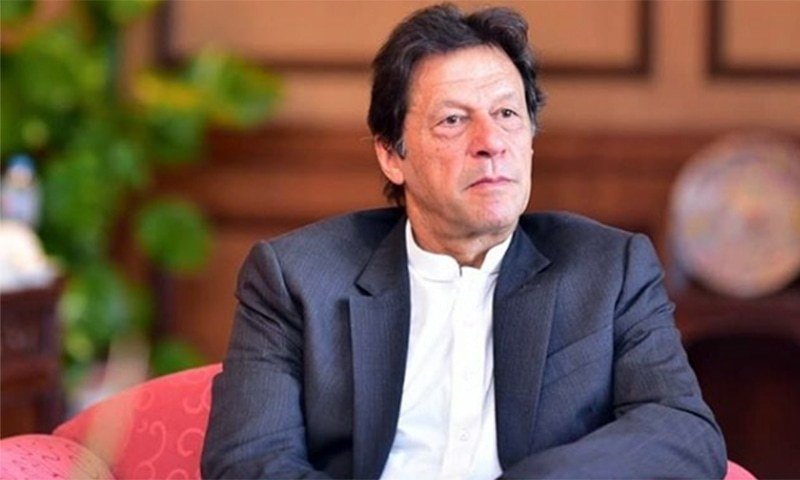
    As he announced a programme to facilitate industrialisation in Faisalabad, Prime Minister Imran Khan said he hoped one day Manchester would say that Faisalabad has overtaken it in terms of industrial progress.

    Addressing a ceremony attended by the businessmen on Wednesday, the PM said: “If Faisalabad, once known as Pakistan’s Manchester, had kept up its current pace of industrial development, it would have left even Manchester behind.”

    According to the prime minister, it said it was the government’s job to facilitate industrialisation and the business community.

    “We are now working on how we can aid the business community and investors so that jobs are created. So this cycle can only continue when we [remove] hurdles for the industrial class,” he added.

    The PM said in the ’60s Pakistan was used as an example for the developing world, adding that several countries, such as Malaysia and South Korea, borrowed its first five-year programme. “People now go to Dubai for their vacations but the sheikhs used to come here.”

    The PM also commented on the local government system, saying successful cities around the world function “like countries”. He said that the modern cities were self-sufficient, unlike Faisalabad that depended on the provincial government for funds to fix roads, build hospitals.

  • Power plants installed during PML-N’s tenure helped end power crisis, says Razak Dawood

    Abdul Razaq Dawood, advisor to Prime Minister (PM) for Commerce, Textile, Industry, Production and Investment gave credit to former prime minister (PM) Nawaz Sharif for ending power crisis in the country.

    He said that the power plants that had been set up during PML-N’s previous tenure under the China-Pakistan Economic Corridor (CPEC) have reduced power shortage.

    The adviser said that work on CPEC is going on in full swing adding that CPEC remains one of the top priorities of the Pakistan Tehreek-e-Insaf (PTI) government.

    He said that the next phase of CPEC will focus on the development of industries and agriculture in the country.

    “The IPPs which were set up under the 2002 Power Policy has now agreed to alter their existing contractual agreements and to ink new power purchase agreements,” says media reports.

    Earlier on Friday, to bring down the cost of electricity production and reduce circular debt, Prime Minister (PM) Imran Khan has signed a new agreement with the independent power producers (IPPs). A memorandum of understanding (MoU) containing 13 points was signed between the two parties.

    “I congratulate the nation because we are fixing the damaged structure we inherited in our power sector.”
    said Dawood.

    The prime minister promised that he would soon introduce a package that will focus on improving the distribution system by tackling line losses and theft.

    According to the MoU, the two parties have, in the larger national interest, voluntarily agreed to provide concessions.

    It was agreed that all projects will convert their contracts to a take-and-pay basis and until then, the existing take-or-pay will continue.

  • Govt to impose extra Rs900 billion taxes: report

    Govt to impose extra Rs900 billion taxes: report

    Pakistan’s former finance minister Dr Hafeez Pasha has said that under an ongoing deal with the International Monetary Fund (IMF), the government will impose taxes worth Rs900 billion in the upcoming budget, The Express Tribune reported.

    “The government has assured the IMF that it will impose Rs700 billion in additional taxes in the first year, Rs900 billion in the second year and Rs1,200 billion in the third year. We don’t have an option but to renegotiate with the IMF since our team was not able to prepare things properly,” Pasha said.

    “It is high time to bring radical tax reforms through tough decisions in the upcoming budget and those who can bear taxes should now take the burden since Pakistan has to pay Rs2 trillion in debt servicing this year; this amount will further increase to Rs3 trillion next year,”

    Economist Dr Qais Aslam said that Pakistan could not enter the 21st century “while having a mindset and policies of the 19th century”. “We have to uplift our institutions with a clear message to our bureaucracy that things will no longer materialise with their mindset.”

    He pointed out that the small-scale industry accounted for only 1% of Pakistan’s economy whereas in the modern world it was considered the backbone of any country. “We have to fix these issues, or else it will be impossible to give employment to the people.”

    “The country has lost one million jobs in the past one year and during the same period about two million youngsters have qualified for jobs… we have to create employment opportunities for them,” he said.