Tag: The Current

  • PML-N internal rifts cause delays in ticket announcements

    PML-N internal rifts cause delays in ticket announcements

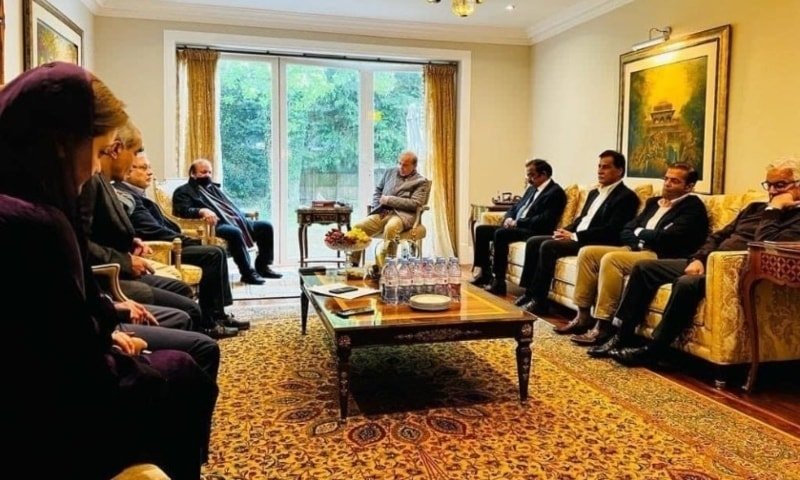
    Pakistan Muslim League-Nawaz (PML-N) candidates for the upcoming general elections hang in limbo as internal disagreements and seat adjustments cause delays in announcement of final ticket announcements, The News has reported on Monday.

    A source within PML-N told The News that it was expected that the party’s top leadership will award final party tickets on Sunday, however, the announcement got postponed due to seat adjustments with multiple political parties and internal disagreements between PML-N leaders.

    According to sources in the party, the matter of tickets is creating difficulties for aspirants who have yet to start their election campaigns.

    In Lahore, a rift between stalwarts Ayaz Sadiq and Sheikh Rohail Ashgar over party tickets has not been resolved, as both were not ready to give up. Similar is the case at Narowal, where Daniyal Aziz and Ahsan Iqbal are entangled in a rift over tickets for their blue-eyed candidates.

    PML-N leader Rohail Asghar said that he doesn’t know the destiny of the seat, but he enjoyed good relations with PML-N supremo Nawaz Sharif and has no disagreements with party leadership.

  • No signal from ‘any quarters’ to postpone upcoming polls, Solangi confirms

    No signal from ‘any quarters’ to postpone upcoming polls, Solangi confirms

    The federal Caretaker Minister for Information, Murtaza Solangi, stated on Friday that the interim government has not received any indication from any source to postpone the upcoming elections set to take place on February 8, 2024.

    Earlier on Friday, Senator Dilawar Khan tabled a resolution in the sparsely attended Upper House, which garnered the required support despite opposition from Information Minister Murtaza Solangi and Senator Afnan Ullah Khan of the Muslim League (N).

    Talking to journalists outside the Parliament House, Solangi said: “So far, no signal has been received from any quarters regarding the postponement of elections.”

    He also stated that only the Election Commission of Pakistan (ECP) has the authority to postpone general elections.

    The minister believed that there were no instructions from interim Prime Minister Anwaar-ul-Haq Kakar or the federal cabinet to postpone polls.

    According to Article 218(3) of the Constitution, ECPhas the power to conduct elections, give a date, or change the date for elections, he said.

    “We cannot interfere in the affairs of a constitutional body.”

  • Senate approves resolution asking for delay in elections

    Senate approves resolution asking for delay in elections

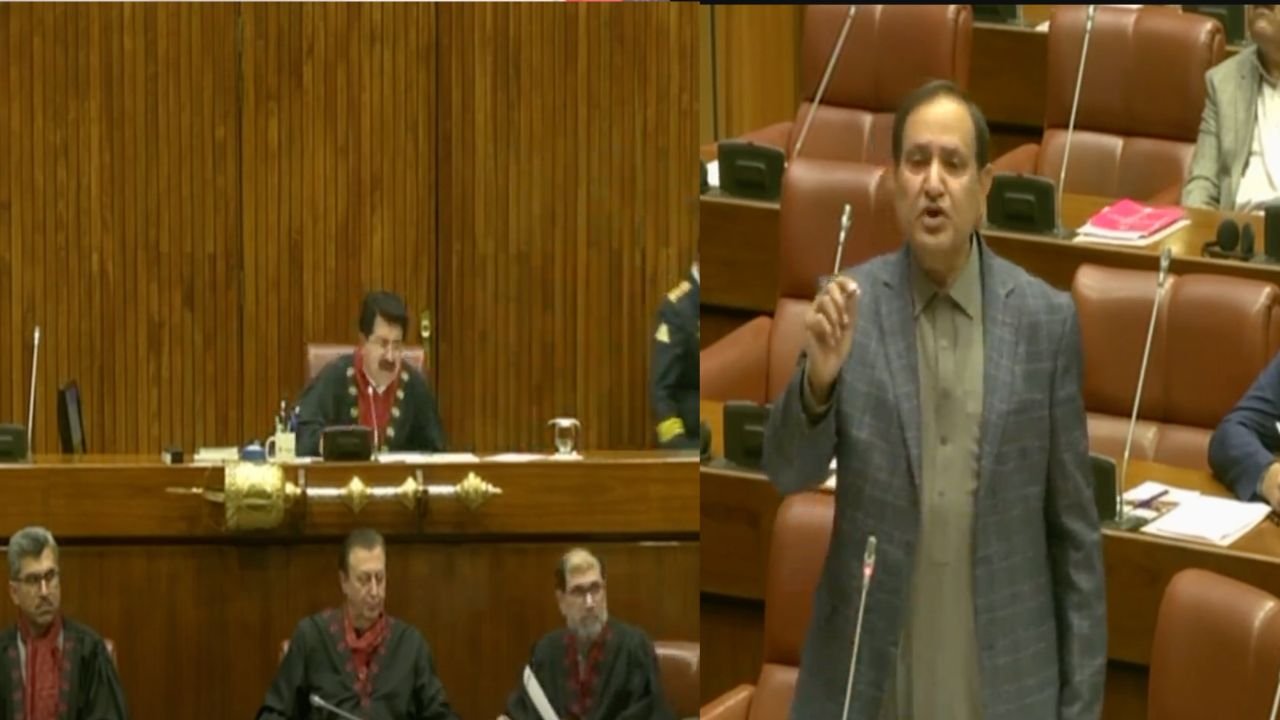
    The Pakistani Senate has approved a resolution to postpone the general elections scheduled for February 8 in the country.

    Senator Dilawar Khan tabled the resolution in the sparsely attended Upper House which garnered required support despite opposition from Information Minister Murtaza Solangi and Senator Afnan Ullah Khan of the Muslim League (N).

    13 out of 14 senators present in the House voted in favor of the resolution.

    As Senator Dilawar read the resolution out loud, he said that the Constitution upheld the right to vote for every citizen of Pakistan, and the Election Commission of Pakistan (ECP) was bound to conduct free and fair polls contingent upon inclusivity and ensuring the participation of all regional people.

    “The vote turnout in colder areas remains notably high during the moderate weather conditions. January and February are recognised as the coldest months in the majority of the areas in Balochistan and Khyber Pakhtunkhwa,” he said.

    Senator Dilawar Khan cited severe cold weather prevalent in many regions, making participation in those areas challenging.

    He also highlighted recent security incidents, including attacks on Mohsin Dawar and members of Jamiat Ulama-e-Islam Fazl (JUI-F), as well as security forces in Balochistan and Khyber Pakhtunkhwa.

    Aimal Wali of the ANP also expressed reservations over the elections.

    During the debate, Senator Dilawar Khan emphasized the existence of threats against individuals during election rallies, underscoring the need to address these security challenges before proceeding with the elections.

    He proposed delaying the February 8 election schedule and called for the Election Commission to act, expressing trust in the Senate Election Commission.

    Senator Afnan Ullah Khan of the Muslim League (N) opposed the resolution, seeking to validate Senator Dilawar Khan’s concerns.

    He acknowledged security challenges but argued that conditions were not as dire as in 2008 and 2013 when elections proceeded under more adverse circumstances.

    Afnan Ullah questioned the rationale behind using security as a pretext for postponing the elections, expressing skepticism about the proposed delay, questioning whether Great Britain and the United States postponed elections during major conflicts.

    He asserted that using weather conditions as a reason for election delay was unfounded, pointing out that elections had been held twice in adverse circumstances before.

    Information Minister Murtaza Solangi also voiced his opposition to the resolution. However, despite these objections, the Senate moved forward, approving the resolution to postpone the general elections slated for February 8.

    The controversy surrounding the decision continues, with differing opinions on the validity of the reasons presented for delaying the electoral process.

  • PPP is all set to conquer Punjab and Sindh

    PPP is all set to conquer Punjab and Sindh

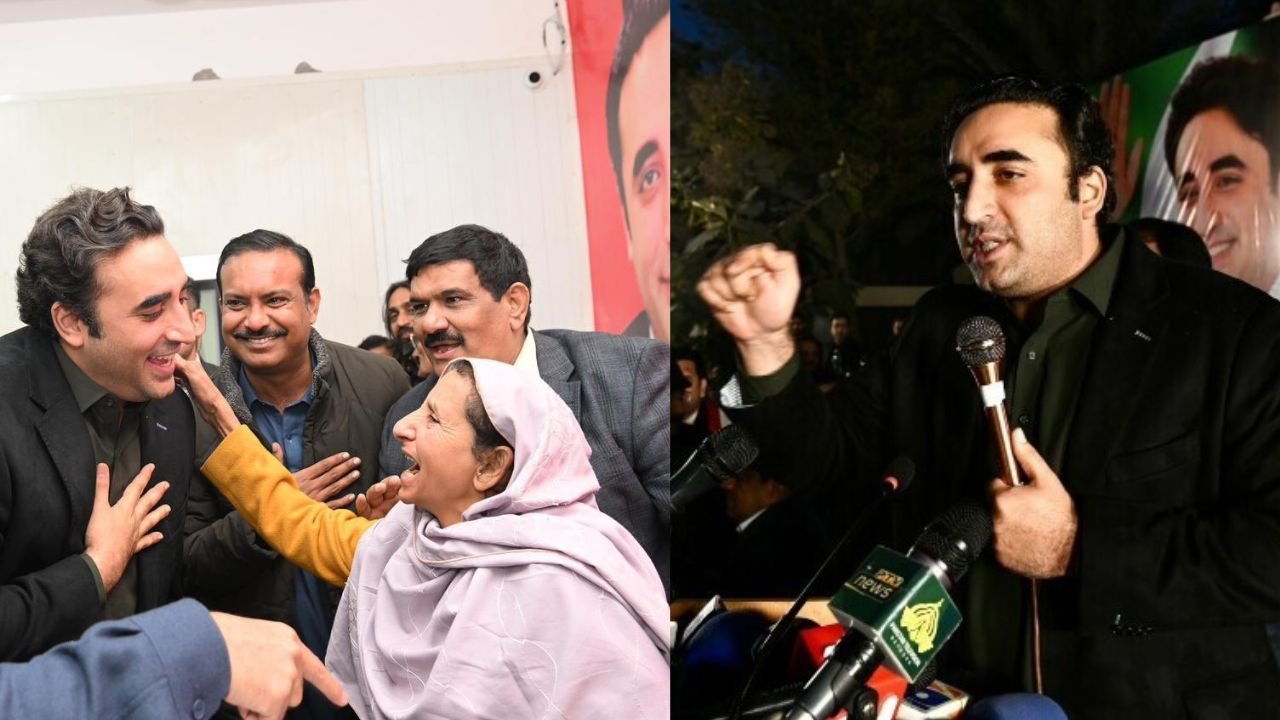
    Pakistan Peoples Party (PPP) Chairman Bilawal Bhutto Zardari formally initiated his election campaign from NA-127 Lahore on Thursday.

    The party aims to leverage the perceived political vacuum created by the establishment in Pakistan.

    With the main rival, Pakistan Muslim League-Nawaz (PML-N), still deliberating on ticket allocations for Punjab and Khyber Pakhtunkhwa (K-P), PPP leaders have been actively canvassing for votes in their respective constituencies.

    According to the party’s central Punjab chief, a majority of aspiring candidates have already received confirmation regarding ticket allocations, making the official announcement a mere formality.

    PPP has unveiled its 10-point agenda as part of its manifesto, with the official manifesto set to be revealed in the coming days, as announced by the party’s information secretary.

    In contrast, PML-N, despite forming a manifesto committee over a month ago, has not made any public announcements regarding its plans.

    The recent introduction of an online portal by PML-N to gather public input on its manifesto suggests that the process is not in its advanced stages.

    Bilawal, who will contest elections from three constituencies, including NA-127 Lahore and the party stronghold Larkana, visited his election office at Green Town in Lahore to formally launch the campaign.

    During his election campaign trail, he would address rallies in Faisalabad (Jan 11), Layah (Jan 12), Bahawalpur (Jan 13), Balochistan’s Naseerabad (Jan 14), Sindh’s Larkana (Jan 15), Qambar Shahdadkot (Jan 16) Badin and Sanghar (Jan 17), Nowshero Feroz and Dadu (Jan 18), Rahim Yar Khan (Jan 19) Kot Daud (Jan 20), Lahore (Jan 21), Chiniot (Jan 23), Sarghoda (Jan 24), Lala Musa (Jan 25) Multan (Jan 26), Peshawar (Jan 27) , Rawalpindi (Jan 28), Kurram (Jan 29), DI Khan (Jan 30), Malakand (Jan 31), Khuzdar (Feb 1), Kashmor and Shikarpur (Feb 2) Mirpurkhas (Feb 3), Hyderabad (Jan 4) and his second last rally as per schedule would be in Karachi (Jan 5).

    The decision to contest from Lahore is seen as a strategic move, countering PML-N President Shehbaz Sharif’s decision to contest from Karachi NA-242.

    The PPP aims to secure NA-127 Lahore, building on the momentum gained from the December 2021 by-election results, where the party’s candidate secured significant votes. The move is also seen as an effort to mitigate the risk of a complete loss for the party in Punjab.

    The party sees the absence of PTI from the political arena as a golden opportunity to capitalize on anti-PML-N votes. The PML-N is expected to issue the NA-127 ticket to its Deputy General Secretary Ata Tarar.

    Meanwhile, Mayor Murtaza Wahab asserted that the people of Karachi demonstrated their support for the Pakistan Peoples Party (PPP) in the local government elections held on January 15, 2023, citing the party’s perceived capability to address the city’s issues.

    The mayor expressed these sentiments during the ‘Meeting the Editors’ program organized by the Council of Newspaper Editors (CPNE) on Thursday.

    “We worked for the resolution of the issues of the people of Karachi with sincerity. The development work will continue. People think that the next government will be of the PPP as they see Bilawal Bhutto Zardari as a viable leader,” the mayor said.

    Wahab attributed the success of the Jamaat-e-Islami in the local government elections to the boycott by the Muttahida Qaumi Movement (MQM).
  • Security forces kill two terrorists in Tank

    Security forces kill two terrorists in Tank

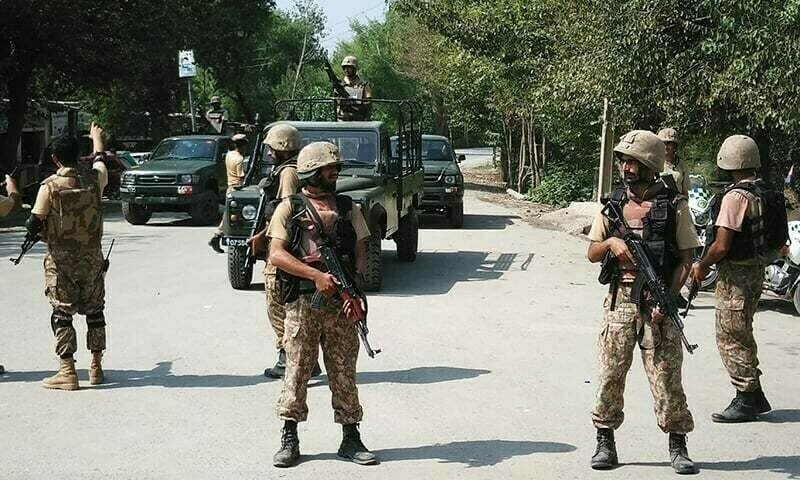
    Two terrorists and one militant were killed by security forces on Friday in an Intelligence-Based Operation (IBO) in Khyber Pakhtunkhwa’s Tank district, the military’s media wing has confirmed.

    According to the Inter-Services Public Relations (ISPR), security forces conducted the operation after reports of the presence of terrorists in the area.

    “During the conduct of the operation, after an intense fire exchange, two terrorists, including HVT (high-value target) Gul Yousaf, also known as Toor, were sent to hell,” said the ISPR.

    Yousaf was involved in numerous terrorist activities, including targeted killings of civilians and attacks on security forces in Tank and Dera Ismail Khan.

  • ‘I will impose Article 6 on you after coming to power’, Imran Khan’s threat to ECP

    ‘I will impose Article 6 on you after coming to power’, Imran Khan’s threat to ECP

    The inside story of Pakistan Tehreek-e-Insaf (PTI) founder Imran Khan’s trial in Adiala Jail, in the case of insulting the Election Commission (ECP), and Chief Election Commissioner, has come to light.⁠

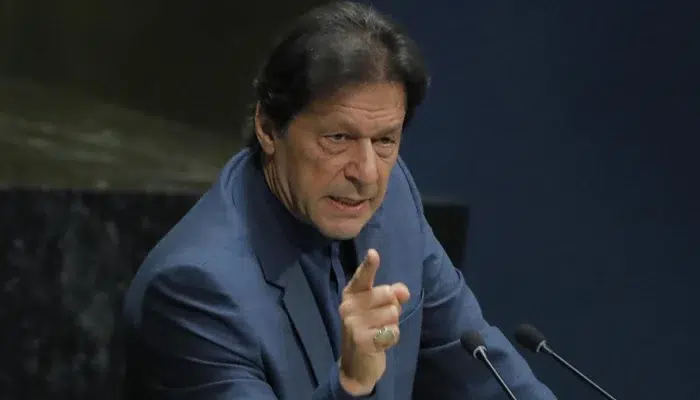
    According to the sources who talked to GEO News, PTI founder Imran Khan became very angry during the indictment. Sources claimed that the former prime minister made a serious threat to members of the ECP during the hearing.

    Threatening the four members of ECP, Khan said, “I know your faces and names. I will impose Article 6 on you when I’ll come into power.”

    A hearing of the case against the PTI founder and former PTI leader Fawad Chaudhry proceeded on Thursday in Rawalpindi’s Adiala Jail. According to the charge sheet, Imran Khan and Fawad Chaudhry launched a planned derogatory campaign against the Election Commission in 2022.

  • Finally, some good news for PTI

    Finally, some good news for PTI

    Several Pakistan Tehreek-e-Insaf (PTI) aspirants, along with their allies, re-entered the electoral fray on Thursday following successful appeals against the rejection of their nomination papers by Returning Officers (ROs) during the scrutiny process last week.

    The appellate tribunals, responsible for reviewing appeals against ROs’ decisions, swung into action a day after the deadline for filing appeals expired.

    Rulings were issued on many appeals, while notices were dispatched to the Election Commission of Pakistan (ECP) and other relevant parties for further cases.

    Numerous PTI candidates, facing rejection of their nomination papers, took up the challenge against RO decisions. Simultaneously, objections were raised against the acceptance of Pakistan Muslim League-Nawaz (PML-N) President Shehbaz Sharif’s papers in Karachi.

    According to the election schedule, nomination papers were accepted until December 22, scrutinized by December 30, and the appeal window extended until January 3. The tribunals are expected to conclude all appeals by January 10.

    Among those approved by the appellate tribunals are PTI Central Vice President Firdous Shamim Naqvi for NA-236, Karachi, and party ally Sheikh Rashid and his nephew Sheikh Rashid Shafiq for NA 56 and 57, Rawalpindi. Additionally, several other candidates from various parties, including Ijazul Haq and Punjab Assembly Speaker Sabatin Khan, received the green light to contest elections.

    Firdous Shamim Naqvi took to Twitter (former X) and wrote, “Jibran, Andaleeb and Shiraz, the team that batted for me to get my nomination cleared by the tribunal. My thanks to all those who prayed for my success. I hope to contest with your support and bat for Pakistan. Inshallah we will all succeed on the 8th of February 24.”

    In Rawalpindi, two election tribunals continued hearings on Thursday, deciding a total of 26 appeals—approving 20 and rejecting six. Notably, the tribunals accepted appeals from prominent figures such as PTI founder Imran Khan, former Punjab chief minister Parvez Elahi, and former minister Fawad Chaudhary, prompting notices to the ECP and relevant returning officers.

    Justice Chaudhry Abdul Aziz, a tribunal judge, emphasized the need to adhere to the Constitution and the law during appeal hearings, discouraging the discussion of political matters in court.

    In Islamabad, an appellate tribunal issued notices on appeals from 51 candidates whose nomination papers were rejected, including PTI’s Ilyas Mehrban, Aamir Mughal, Shiraz Kayani, and Zubair Farooq. Tribunal Judge Arbab Muhammad Tahir also sought responses on the appeal against the acceptance of the transgender candidate Nayab Ali’s nomination papers for NA-46 and NA-47.

    Meanwhile, in Karachi, the appellate tribunal at the Sindh High Court accepted the nomination papers of PTI Central Vice President Firdous Naqvi for NA-236, Karachi, declaring objections to his papers as “illegal.”

    The election process is currently undergoing a thorough review, with various candidates and parties actively participating in the appeal process to ensure fair representation in the upcoming elections. The tribunals are expected to play a crucial role in shaping the final candidate list for the upcoming polls.

  • Shah Mahmood Qureshi’s nomination papers approved from Sindh’s Umarkot  

    Shah Mahmood Qureshi’s nomination papers approved from Sindh’s Umarkot  

    The nomination papers of Pakistan Tehreek-e-Insaf (PTI) vice president Shah Mahmood Qureshi were approved on Friday, enabling him to contest general elections on February 8.

    An election tribunal approved the nomination papers of the PTI senior leader for the NA-214 constituency in Sindh’s Umarkot city. Shah Mahmood Qureshi’s son Zain Qureshi’s nomination papers were also approved from the same constituency.

    Numerous prominent political figures, such as Awami Muslim League (AML) chief Sheikh Rashid Ahmed, Balochistan National Party (BNP) head Akhtar Mengal, and Firdous Shamim Naqvi, have successfully obtained relief from election tribunals, as their nomination papers have been approved for the upcoming general elections scheduled for February 8, 2024.

    Various election tribunals have given their approval to the nomination papers of Sheikh Rashid, Akhtar Mengal, and PML-Zia chief Ijazul Haq and allowed them to take part in the forthcoming general election, set to take place on February 8, 2024.

    Sheikh Rashid’s nomination papers were approved from NA-56 and NA-57 constituencies while Mengal’s nomination papers were accepted from NA-264 Quetta.

    A tribunal consisting of Justice Hashim Khan Kakar and Justice Amir Nawaz Rana has overturned the returning officer’s decision to reject Mengal’s nomination papers due to the possession of a Dubai work permit (Aqama). The leader of BNP contested the rejection of his nomination papers with the representation of his counsel, Advocate Sajid Tareen.

    On the other hand, a tribunal approved the nomination papers of PML-Zia’s chief, Ijazul Haq, and allowed him to contest the election from NA-55.

  • Imran Khan casts doubt on election legitimacy in an article written from jail

    Imran Khan casts doubt on election legitimacy in an article written from jail

    In a recent article for The Economist, Imran Khan, the founder and former chairman of Pakistan Tehreek-e-Insaf (PTI), currently incarcerated, has expressed apprehensions about the legitimacy of the upcoming elections in Pakistan.

    Khan argues that the caretaker governments in place at both the federal and provincial levels are constitutionally illegal due to their failure to hold elections within 90 days of dissolving parliamentary assemblies.

    While the public is anticipating elections on February 8, Khan, who has faced various challenges since a vote of no confidence in April 2022, raises skepticism about the electoral process.

    He points to the election commission’s actions, which he claims include defying the Supreme Court, rejecting PTI nominations, hindering internal party elections, and initiating contempt cases against PTI leaders for criticizing the commission.

    “The country’s election commission has been tainted by its bizarre actions. Not only has it defied the top court but it has also rejected my Pakistan Tehreek-e-Insaf (PTI) party’s nominations for first-choice candidates, hindered the party’s internal elections and launched contempt cases against me and other PTI leaders for simply criticising the commission,” he wrote.

    Khan contends that since his government’s removal, orchestrated by what he terms as “the establishment”—comprising the army, security agencies, and civil bureaucracy—the playing field for PTI has been anything but level. He alleges external interference, specifically from the United States, citing a State Department message urging his removal from the prime minister’s seat.

    Despite subsequent protests and electoral victories in by-elections, Khan argues that the administration that replaced his government led to economic downturns, inflation, and currency devaluation within 18 months. He emphasizes the contrast between PTI’s governance, which garnered international praise, and the subsequent administration’s economic performance.

    Khan claims that various measures have been taken to sideline him politically, including assassination attempts, abductions of party members, and legal harassment. Despite facing nearly 200 legal cases and being denied a normal trial, Khan states that PTI remains popular, with a 66 per cent approval rating, according to a recent poll.

    The former prime minister also raises concerns about the return of Nawaz Sharif, a convicted former prime minister, speculating that Sharif may have struck a deal with the establishment for support in the upcoming elections.

    Khan, who remains incarcerated on charges including treason, expresses doubt about the fairness of the electoral process, claiming that PTI is being denied its basic right to campaign.

    He concludes by advocating for fair and free elections, “The only viable way forward for Pakistan is fair and free elections, which would bring back political stability and rule of law, as well as ushering in desperately needed reforms by a democratic government with a popular mandate. There is no other way for Pakistan to disentangle itself from the crises confronting it. Unfortunately, with democracy under siege, we are heading in the opposite direction on all these fronts.”

    The Economist added an Editor’s Note stating, “The Pakistani government and the U.S. State Department deny Khan’s allegations of American interference, and Khan faces charges under the Official Secrets Act.”

  • Faiz Hameed denies ‘conspiracy’ against government in Faizabad commission case

    Faiz Hameed denies ‘conspiracy’ against government in Faizabad commission case

    Former Director General of Inter-Service Intelligence (ISI), General (retd) Faiz Hameed, recorded his statement before the Faizabad sit-in commission on Thursday. The former spymaster denied allegations that he conspired against the government.

    Faiz Hameed was called three times by the committee investigating the 2017 sit-in organised by Tehreek-e-Labaik Pakistan (TLP), but the former DG ISI did not do so.

    After that, the commission sent him a questionnaire, to which he responded that he held negotiations with TLP on the directions of the government.

    Sources told Geo News that the commission called the former spymaster on January 2, but he did not appear before the panel.

    Earlier last year, the panel summoned him in the second week of December and then on December 29th.

    In November last year, the caretaker federal government constituted the inquiry commission for the implementation of the Supreme Court’s 2019 Faizabad verdict.