Tag: The Current

  • Imran Khan rearrested in cypher case

    Imran Khan rearrested in cypher case

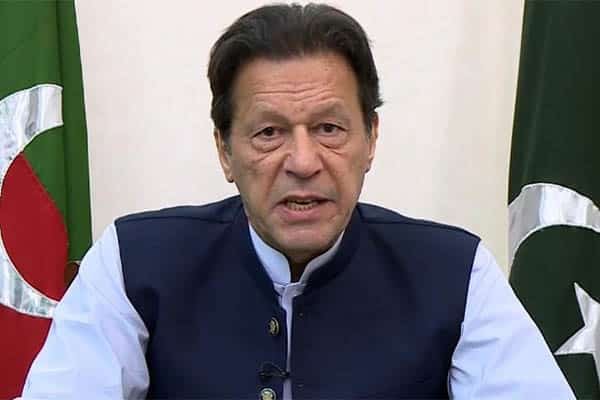
    The Islamabad High Court (IHC) has on Tuesday suspended PTI Chairman Imran Khan’s conviction and three-year sentence in the Toshakhana case.

    Imran Khan was rearrested again in the cypher case right after getting bail in the Toshakhana case.
    According to the judgment of Judge Abul Hasnat Zulqarnain, Khan will remain in police custody until August 30.

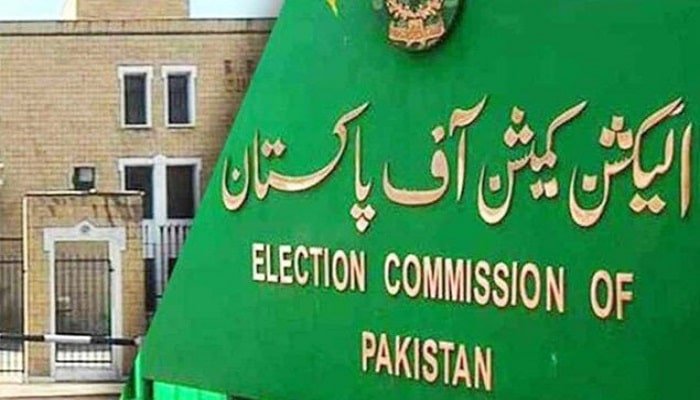
    Imran Khan was sentenced to jail for three years on August 5 in the Toshakhana Case. As a result of the sentence, the Election Commission of Pakistan (ECP) also banned Imran Khan for five years from contesting elections.

    Imran Khan has to sumbit a surety bond of Rs 100,000 to get bail, as per Geo.

    The former Prime Minister had challenged his sentence in the high court, with today’s verdict coming as a major legal victory.

    Earlier, Judge Humayun Dilawar of a sessions court in Islamabad found former Prime Minister Imran Khan guilty in the Toshakhana case.

    Khan had been disqualified for five years and given a prison sentence of three years.

    He had also been fined Rs 100,000. The judgement also said that if the fine is not paid, the imprisonment can be increased by six months.

  • ‘Weakened arm muscles’; Bushra Bibi requests court to ensure Imran’s safety in jail

    ‘Weakened arm muscles’; Bushra Bibi requests court to ensure Imran’s safety in jail

    Bushra Bibi, the wife of former prime minister Imran Khan, has submitted an affidavit to the Supreme Court (SC) on Friday, requesting the court to address the conditions in which her husband is incarcerated in at Attock Jail.

    After meeting with her husband on August 22, Bushra Bibi submitted the affidavit to the court through advocate Hamid Khan.

    In her affidavit, she raised questions about Imran Khan’s health, stating that there are evident signs of drastic weight loss and weakened arm muscles.

    She also expressed concerns that her husband’s life is at risk because of his age of 70, requesting immediate action to ensure Imran Khan’s safety.

  • ‘What the trial court did was wrong’: Chief Justice IHC

    Islamabad High Court (IHC) Chief Justice Aamer Farooq said on Friday that the trial court which convicted Tehreek-e-Insaf (PTI) chief Imran Khan in the Toshakhana case, “did wrong”.

    The judge made these remarks during the hearing of Imran Khan’s appeal challenging the Toshakhana judgment. It should also be remembered that Imran is already in Attock jail, serving a three-year sentence.

    CJ Farooq and Justice Tariq Mehmood Jahangiri are part of the bench hearing the appeal of the suspension of Imran Khan’s sentence in the Toshakhana case.

    The Election Commission of Pakistan’s (ECP) lawyer, Amjad Parvez, was absent from today’s hearing. His assistant said that Amjad is unwell.

    His assistant advocate also asked the bench for an adjournment, saying, “For the last eight months, we never sought adjournment.”

    At this point, the IHC chief justice said, “The request for suspension of sentence is now at a critical stage. We can also do what the trial court did, but we will not.”

    “We adjourn the case till Monday, and even if no one comes, we will announce our decision,” Justice Farooq said, adding that what the trial court had done was wrong.

  • ECP assures PTI, JUI-F of conducting timely elections

    ECP assures PTI, JUI-F of conducting timely elections

    According to a report in Geo News, the Election Commission of Pakistan (ECP) assured delegations of Pakistan Tehreek-e-Insaf (PTI) and Jamiat Ulema-e-Islam-Fazl (JUI-F) of conducting general elections as early as possible.

    ECP’s assurances came after consultations with the representatives of PTI and JUI-F.

    The discussions were part of ECP’s deliberations with major political parties on electoral matters such as delimitations, conducting the polls, and other related issues.

    According to ECP’s Media Wing, Chief Election Commissioner (CEC) Sikandar Sultan Raja stressed that transparency in the upcoming general elections is necessary.

    Members of the election commission, the secretary and senior officials were present in the meeting. The PTI delegation joined the meeting at 2 pm, however, JUI-F attended the meeting at 3 pm to discuss election roadmaps.

    PTI delegation stressed the need to conduct the election within 90 days, as per the constitution. The PTI delegation also demanded equal political opportunities for the party.

  • Let people decide upcoming government, US Ambassador tells Election Commission

    Let people decide upcoming government, US Ambassador tells Election Commission

    US Ambassador Donald Blome met with Chief Election Commissioner (CEC) Sikander Sultan Raja on Thursday and reassured him that the United States will always support free and fair elections in Pakistan, according to the country’s laws and constitution.

    According to a statement released by the US embassy, the ambassador reaffirmed that the Pakistani people should elect their future leaders and that Washington is still dedicated to working to strengthen the US-Pakistan relationship with whoever the people choose.

    The US ambassador made these remarks due to the unpredictability of the timing of the upcoming elections.

    Earlier, the President of Pakistan, Dr. Arif Alvi, invited Chief Election Commissioner Sikandar Sultan Raja for a meeting on August 23 or 24 to fix an appropriate date for holding the general elections.

    The letter written by Dr. Alvi states that the constitution requires the president to decide a date for general elections within 90 days of the dissolution of the National Assembly (NA).

  • ATC allows Lahore Police to arrest Imran Khan in Jinnah House case

    ATC allows Lahore Police to arrest Imran Khan in Jinnah House case

    An Anti-Terrorism Court (ATC) in Lahore has allowed Lahore police to interrogate and arrest Pakistan Tehreek-e-Insaf (PTI) Chairman Imran Khan in the Jinnah House attack case.

    Imran Khan is already in Attock district jail to serve a three-year sentence in the Tosha Khana case.

    After Imran Khan was arrested on May 9 in the £190 million Al-Qadir Trust case, protests started across the country, with violent clashes between Pakistan Tehreek-e-Insaf (PTI) supporters and law enforcement agencies. Eight people died in the riots, while several others were injured. The rioting led to the ransacking of several state buildings and installations, including Jinnah House in Lahore and the General Headquarters (GHQ) in Rawalpindi.

    Protesters accused of attacking military installations will be tried under the Army Act.

    The Inspector General of Police (IGP) requested permission in an application to ATC to interrogate and arrest Imran Khan in the case pertaining to May 9 riots. On Wednesday, ATC Lahore approved the application submitted by the IGP.

  • Pakistan won’t surrender to extremism, says PM Kakar

    Pakistan won’t surrender to extremism, says PM Kakar

    Caretaker Prime Minister Anwaar-ul-Haq Kakar has said that Pakistan will continue the fight against terrorism and will not surrender under any circumstances.

    While talking to the media on Wednesday, Kakar stated that Pakistan is his homeland, adding that, “We will take it forward according to our strategy.”

    In reference to the recent incident of martyrdom of security personnel in Waziristan on Tuesday, the caretaker PM said that acts of terrorism cannot weaken the nation.

    He also emphasised that the sacrifices of the martyrs will not be forgotten.

    The prime minister also expressed happiness over the successful rescue of eight individuals in the Battagram cable car operation and praised the efforts of the military forces, the district administration, and villagers.

  • Arif Alvi dismisses Secretary to President as bills mystery deepens

    Arif Alvi dismisses Secretary to President as bills mystery deepens

    Hours after the President said that he does not need Waqar Ahmed’s services, the Secretary has said in a statement on Monday that Dr. Arif Alvi did not sign the Official Secrets (Amendment) Bill, 2023, or the Pakistan Army (Amendment) Bill, 2023, nor did he make a written decision to send them back to parliament for further consideration.

    On Monday, the official X (formerly Twitter) account of @PresOfPakistan stated: “In view of the definite statement of yesterday, President’s Secretariat has written a letter to Principal Secretary to Prime Minister that the services of Mr. Waqar Ahmed, Secretary to President, are no more required and are surrendered to the Establishment Division, immediately”.

    President Arif Alvi caused a sensation on Sunday when he said in a tweet from his personal account that he did not sign the official secrets (Amendment) Bill, 2023, or the Pakistan Army (Amendment) Bill, 2023, as he does not agree with the laws. He said that despite his orders to return the bills to parliament, his staff disobeyed him.
    “I confirmed from them many times that whether they have been returned & was assured that they were,” Alvi wrote about the bills in a tweet, adding that he just found out that his staff “undermined my will and command”.
    He also asked for forgiveness from those who are affected by the bills.

    The tweets came about after news broke that he had signed the Official Secrets (Amendment) Bill, 2023, and the Army Act (Amendment) Bill, 2023. Now both bills are part of the law.
    On the other hand, former Senate Chairman Raza Rabbani has said that “the tweet of President Arif Alvi was inappropriate”.
    Raza Rabbani pointed out that if an inquiry is initiated, the president will have to appear before a committee of the upper house since he is a part of the parliament under Article 50 of the Constitution.
    “As per Article 75 of the Constitution, when a bill is sent for assent, the president has two options: either give assent, or refer the matter to the parliament with specific observations. Article 75 does not provide for any third option,” he stressed.
    The ministry has said neither of the requirements was fulfilled. Instead, the president purposely delayed the assent, it added. Returning the bills without any observations or assent is not provided for in the Constitution, the spokesperson said, adding that such a course of action is against the letter and spirit of the Constitution.
    “If the president had any observations, he could have returned the bills with his observations like he did in the recent and distant past. He could have also issued a press release to that effect,” the law ministry said.

  • Caretaker Punjab govt should remain in its limits: ECP

    Caretaker Punjab govt should remain in its limits: ECP

    The Election Commission of Pakistan (ECP) has sent a letter to Punjab Caretaker Chief Minister Mohsin Naqvi, staring that deputy commissioners are issuing NOCs for new housing societies in Punjab.

    According to the letter, the ECP reminded the interim CM that issuing of NOCs and announcing policies is not the domain of the caretaker government. An elected government can work on policy-making, but not a caretaker setup.

    The ECP said they are hopeful that caretaker government will work within constitutional and legal limits. According to ECP, the caretaker setup can prepare a case in case of an emergency and get it approved by the commission.

    The constitutional terms of the caretaker governments of Punjab and Khyber Palhtunkhwa were set to end in mid-April but the federal government did not issue funds needed by the ECP to hold elections in the two provinces despite a Supreme Court order. Some legal experts and opposition parties have raised questions about the legitimacy of the two caretaker governments, describing them as illegal.

  • Imran booked under Official Secrets Act in cipher case

    Imran booked under Official Secrets Act in cipher case

    Former Prime Minister Imran Khan has been booked under Section 5 of the Official Secrets Act 1923 by Federal Investigation Agency (FIA), Geo News has reported.  

    Alleging that as Prime Minister, Khan deliberately got involved in using the classified document fraudulently, the FIA registered the case against Imran Khan. Last year in April, Khan was removed from office through a no-confidence motion in the National Assembly (NA).

    Government sources told Geo News on Thursday that Imran Khan has been booked under Section 5. However, authorities were not sharing a copy of the FIR.

    The punishment in this case is imprisonment for two to 14 years, or even a death sentence in some cases.

    According to Section 5 of the Official Secrets Act 1923: “(1) If any person having in his possession or control any secret official code or password or any sketch, plan, model, article, note, document or information which relates to or is used in a prohibited place or relates to anything in such a place, or which has been made or obtained in contravention of this Act, or which has been entrusted in confidence to him by any person holding office under [Government], or which he has obtained or to which he has had access owing to his position as a person who holds or has held office under [Government], or as a person who holds or has held a contract made on behalf of [Government], or as a person who is or has been employed under a person who holds or has held such an office or contract —

    a) wilfully communicates the code or password, sketch, plan, model, article, note, document or information to any person other than a person to whom he is authorised to communicate it, or a Court of Justice or a person to whom it is, in the interests of the State, his duty to communicate it; or
    b) uses the information in his possession for the benefit of any foreign power or in any other manner prejudicial to the safety of the State; or c) retains the sketch, plan, model, article, note or document in his possession or control when he has no right to retain it, or when it is contrary to his duty to retain it, or wilfully fails to comply with all directions issued by lawful authority with regard to the return or disposal thereof;
    d) fails to take reasonable care of, or so conducts himself as to endanger the safety of, the sketch, plan, model, article, note, document, secret official code or password or information;

    He shall be guilty of an offence under this section.

    (2) If any person voluntarily receives any secret official code or password or any sketch, plan, model, article, note, document or information knowing or having reasonable ground to believe, at the time when he receives it, that the code, password, sketch, plan, model, article, note, document or information is communicated in contravention of this Act, he shall be guilty of an offence under this section.

    (3) A person guilty of an offence under this section shall be punishable, (a) where the offence committed is a contravention of clause (a) of sub-section (1) and intended or calculated to be, directly or indirectly, in the interest or for the benefit of a foreign power, or is in relation to any work of defence, arsenal, naval, military or air force establishment or station, mine, mine-field, factory, dockyard, camp, ship or aircraft or otherwise in relation to the naval, military or air force affairs of Pakistan or in relation to any secret official code, [with death, or] with imprisonment for a term which may extend to fourteen years; and (b) in any other case, with imprisonment for a term which may extend to two years, or with fine, or with both.”

    The cipher case against the former premier took a turn after his former principal secretary Azam Khan stated before a magistrate as well as the FIA that the former PM had used the US cipher for ‘political gains’ and to avert a vote of no-confidence against him.

    Azam Khan also stated that he told Imran Khan not to proceed with using the cipher. However, in response, Imran Khan said that the classified document can be used to divert the public’s attention towards “foreign involvement” in the opposition’s no-confidence motion.