Tag: The Current

  • PPP denies consensus reached on caretaker Prime Minister as PML-N sticks to Ishaq Dar

    PPP denies consensus reached on caretaker Prime Minister as PML-N sticks to Ishaq Dar

    Pakistan People’s Party (PPP) has on Monday denied that the ruling coalition has reached agreement on who will become interim Prime Minister as reports of Pakistan Muslim League-Nawaz (PML-N) nominating Finance Minister Ishaq Dar gain traction.

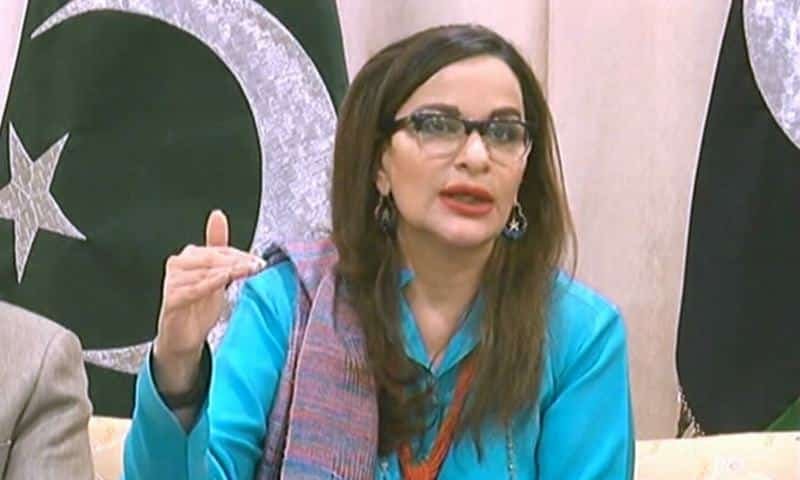
    Minister for Climate Change, Sherry Rehman, held a press conference today to categorically deny that a consensus has been reached after media reports surfaced last night that PPP has agreed to Dar’s nomination.

    “Someone has been crowned as caretaker Prime Minister based on fake news,” Rehman said in a thinly veiled reference to rumors about Ishaq Dar. “We want a level playing field for everyone,” she pointedly said, adding that no name has as yet been suggested to PPP.

    She also stated that her party is forming a committee of three members to make decisions about the caretaker setup.

    News reports about Dar, the father-in-law of the younger daughter of PML-N head Nawaz Sharif, set off frenzied criticism among political analysts and commentators. Dar is a close ally of Nawaz Sharif’s, raising concerns about his neutrality as a caretaker Prime Minister.

    The news was first reported by Express Tribune’s Shehbaz Rana, while The News’ Azaz Syed tweeted last night that PPP had agreed to Dar’s nomination.

  • Khan says won’t believe Azam called US cypher ‘Khan’s conspiracy’ until he hears Azam say it himself

    Khan says won’t believe Azam called US cypher ‘Khan’s conspiracy’ until he hears Azam say it himself

    Azam Khan, the former principal secretary of former Prime Minister Imran Khan, has said that the Pakistan Tehreek-e-Insaf (PTI) chief’s “cypher drama” was a preplanned conspiracy, Geo News has reported.

    Azam Khan has been ‘missing’ since last month, however, he recorded a statement under CrPC 164 before a magistrate on Wednesday, damaging Imran’s claims that he was ousted through a US orchestrated by Donald Lu, a senior officer of the Biden administration.

    PTI’s government was removed via a vote of no confidence last year in April. The then Prime Minister alleged on March 27, 2022, that Washington planned the movement to remove him from office and used the so-called cypher to back his claims. The US has repeated denied his accusations.

    Later, Khan changed his story, accusing former Chief of Army Staff, General (retd) Qamar Javed Bajwa of conspiring to remove him.

    Azam Khan also confessed that when he provided Imran with the cypher, he was very happy and labelled the language a “US blunder”.

    The ex-prime minister then said, according to Azam, that the cable could be used for “creating a narrative against the establishment and opposition”.

    It is also mentioned in the confession that Imran Khan told his principal secretary that the cypher could be used to divert the public’s attention towards “foreign involvement” in the no-confidence motion.

    Azam Khan states that when he told Imran Khan that the cypher had secret content and could not be disclosed in a public gathering, the former prime minister suggested a strategy.

    He said that Imran called a meeting, which included then-foreign minister Shah Mehmood Qureshi and then-foreign secretary Sohail Mahmood, who would tell him the minutes of the meeting as the PTI chief had lost the original copy of the cable.

    Reacting to the sensational disclosure of his once most trusted officer, Imran Khan said on Wednesday that Azam Khan is an honest man and he will not believe any statement until he hears everything from Azam himself.

  • Iran’s ‘morality police’ back in action 10 months after nationwide protests 

    Iran’s ‘morality police’ back in action 10 months after nationwide protests 

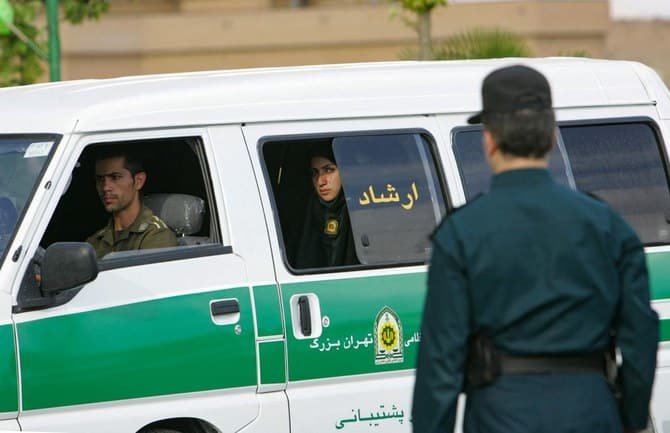
    Iran’s notorious morality police have resumed patrolling the streets of the country, after policing efforts had been scaled back following nationwide protests that broke out across the country last year. 

    Following the death of 22-year-old Kurdish woman Mahsa Amini while she was held in police custody, tens of thousands of Iranians took to the streets to protest, in what some analysts say was the ‘biggest challenge‘ posed against the government since the 1979 Islamic Revolution.

    During the mass protests, which lasted for months, the morality police were largely absent from Iranian streets, refraining from highly confrontational methods of enforcing mandatory hijab laws that were imposed shortly after the ‘79 revolution. There were even some reports – later denied – that they had been disbanded.

    The protests largely died down earlier this year, after a brutal crackdown in which more than 500 protestors were killed and nearly 20,000 detained by authorities. 

    Saeid Montazeralmahdi, the spokesperson for the Iranian law enforcement force, confirmed on Sunday that police patrols were now operational on foot and with vehicles to crack down on people whose head covering is not deemed appropriate in the Islamic Republic, according to Al-Jazeera.

    The Guardian reported that in Tehran, morality police has been seen patrolling the streets in marked vans.

    For the past few months, morality police have also been employing surveillance cameras with face-recognition software to identify hijab violators. The violators are given warnings, fines, or sent to appear in court.

    Mahsa Amini was detained last year on September 13th, on accounts of violating the draconian dress code law the Iranian government has in place, which mandates women wearing the hijab. According to authorities, Mahsa Amini was not wearing her hijab ‘properly’.

    Witnesses reported that she was beaten by morality police after her arrest in Tehran. The morality police maintain that Mahsa Amini suffered a heart attack and died. 

    Demonstrators initially gathered outside Kasra hospital in Tehran, where Amini was being treated. Human rights groups reported that security forces deployed pepper spray against protesters and that several were arrested.

    This year alone, there have been many high-profile hijab related incidents, including an incident in Mashadd, where a man dumped yoghurt on two women for not wearing the hijab properly. All three parties were arrested by authorities.

  • Journalist removed from PTV panel after questioning PM Shehbaz

    Journalist removed from PTV panel after questioning PM Shehbaz

    President of Lahore Press Club, Azam Chaudhry, was dismissed by state-run PTV after questioning Prime Minister Shehbaz Sharif on the “diminishing space for freedom of speech” and the increased restrictions over media in Pakistan during a press conference in the provincial capital. 

    Chaudhry posed a two-part question to the prime minister, addressing both widespread media restrictions in the country as well as the interim government’s plan to continue executing the current economic policy. He inquired about the end of media restrictions, specifically, when would journalists be granted the freedom to speak and write without constraint. 

    In response, Prime Minister Shehbaz expressed his disapproval of curbs on media freedom but deflected responsibility to Federal Minister for Information & Broadcasting Marriyum Aurangzeb. Aurangzeb, while acknowledging the need to distinguish between politics and the authority of the state, emphasized that the two should be treated separately.

    In a conversation with The Current, Chaudhry revealed that he was reportedly told by PTV right after the conference that he would not be invited back to his regularly scheduled program Ba-khaber, of which he is one of the pioneer journalists since 2022. 

    He also shared that he was informed earlier in the day that PTV would be doing a panel program after the press conference with two other journalists, Sajjad Mir and Salman Ghani. However, after his questions to PM Shehbaz, he was taken off-air and told that he was no longer with PTV.

    Many news platforms have reported that Azam Chaudhry lost his contract with the state channel; he asserts that he never claimed to be an employee of PTV. He was working as a freelance journalist, with an ‘approval letter’ stating he would be paid PKR 18,000 per program appearance (for Ba-khaber), for three programs per week. 

    According to Chaudhry, the moment the press conference concluded, PTV verbally conveyed to him that he would not be invited back to present on Ba-khaber, so he could take his leave. 

    Speaking to The Current, Chaudhry chuckled at how well-punctuated his point at the press conference became after his dismissal. “I talked about freedom of expression at the press conference, and I was off-aired right after – it proves my initial point [of ongoing media restrictions]”. 

    Ironically enough, Finance Minister Ishaq Dar was reportedly discussing his government’s media-friendly policy at the very same press conference, chiding the previous Pakistan Tehreek-e-Insaf (PTI) government for only inviting “chosen journalists” to media interactions. According to the Tribune, however, leading journalists from prominent English dailies were excluded from this particular press conference.

    Marriyum Aurangzeb tweeted earlier that the story is “completely false and baseless”. She reiterated Dar’s point of the previous PTI government being declared a ‘Press Freedom Predator’ by Reporters Without Borders, and only allowing selected reporters and journalists to its press conferences. 

    In conversation with the Express Tribune, Chaudhry said journalists in Pakistan were operating in a “very suffocating environment”, where they were not allowed to express themselves freely. 

    “I was not fired on establishment’s orders, I was fired by this government, but in the larger scheme of things, people would blame them.” he said, adding that this tenure also “exposes Pakistan People’s Party and their claims of being upholders of democratic principles”.

  • Reporter of Daily Jang returns home day after appearance

    Reporter of Daily Jang returns home day after appearance

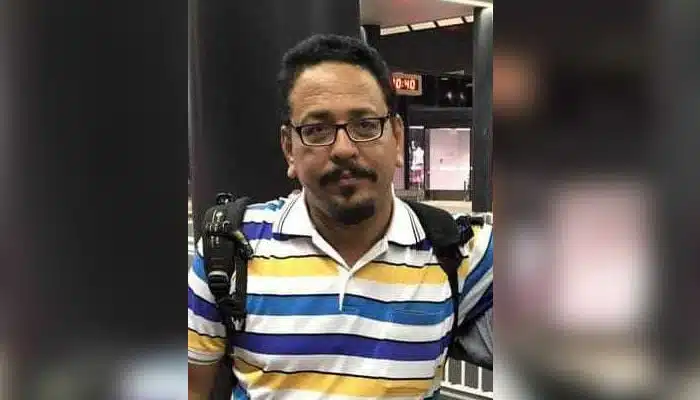
    Senior reporter of the Daily Jang, Syed Muhammad Askari, returned home on Monday after going missing on Saturday night, Geo News has reported.

    Askari had been picked up by police and personnel dressed in plain clothes. The incident was reported to the Baloch Colony Police Station. The journalist’s wife filed a complaint, accusing police and personnel in plainclothes of “abducting” Askari for no reason.

    She also stated in her application that the personals had their faces covered and were in a white vehicle. It was also mentioned in the application that Syed Muhammad Askari was abducted at 1:15 a.m. on Sunday.

    Shazia had requested the immediate release of her husband.

  • Five dead, over a dozen injured in gas cylinder blast in Jhelum hotel

    Five dead, over a dozen injured in gas cylinder blast in Jhelum hotel

    At least five people died and 15 others were injuredwhen a three-storey building collapsed due to a powerful gas cylinder explosion in Jhelum yesterday.

    The hotel is located on the Grand Trunk Road Jhelum, Punjab and collapsed after the cylinder exploded in the kitchen.

    Rescue officials said that approximately 15 injured have been recovered and shifted to the hospital and two critically injured have been taken to Rawalpindi.

  • Accountability court acquits Nawaz Sharif in plot allotment case

    Accountability court acquits Nawaz Sharif in plot allotment case

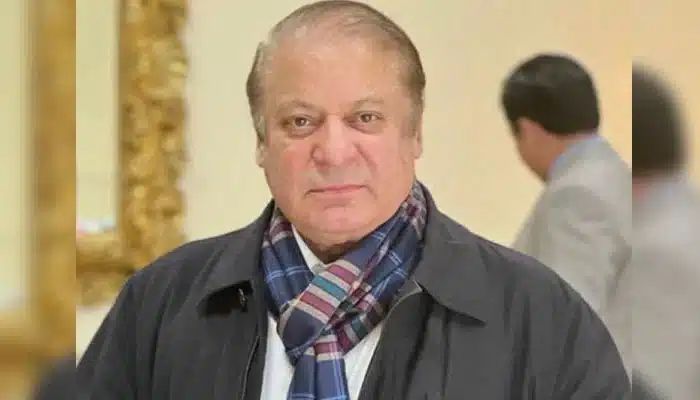
    An accountability court has acquitted former Prime Minister Nawaz Sharif on Thursday in a case pertaining to a reference on illegal plot allotment.

    The judgement said that the record shows that Nawaz Sharif was subjected to political revenge, blaming the government of the time for forcing National Accountability Bureau (NAB) officials to destroy the political career of Pakistan Muslim League-Nawaz (PML-N) head.

    The accountability court has declared that the role of Nawaz Sharif in the allegations of the reference is less than that of his co-accused.

    The court has ordered the restoration of the Sharif’s properties and those of 27 shareholders, while emphasising that NAB should release the property after the time of appeal expires.

    The accountability court has also said in the decision that the court cannot be a silent spectator.

  • Pakistan Meteorological Department issues countrywide monsoon warning

    Pakistan Meteorological Department issues countrywide monsoon warning

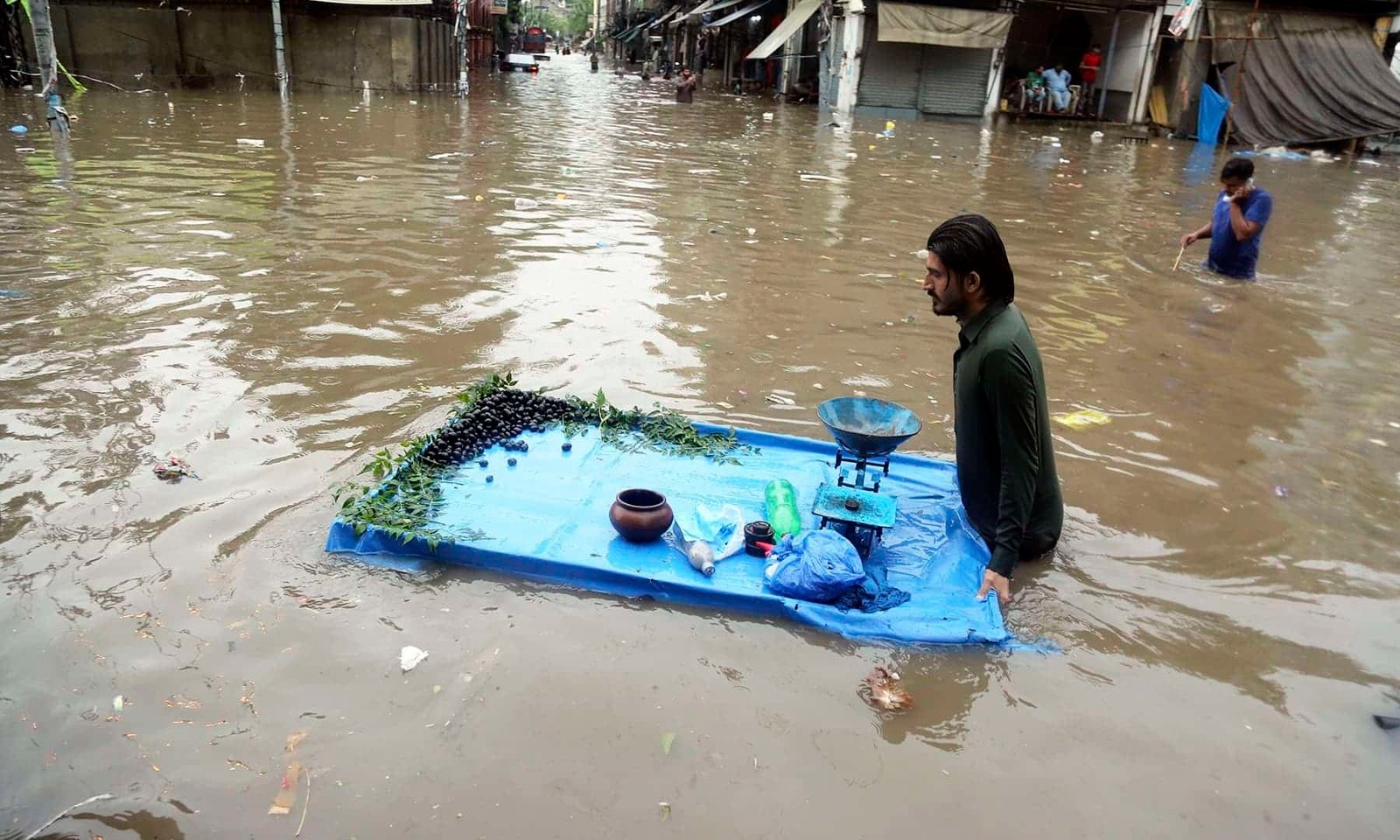
    The Pakistan Meteorological Department (PMD) has on Sunday issued a countrywide advisory of heavy monsoon rain, warning that from Monday night onwards there could be hailstorms resulting in urban flooding, as reported by Dawn. 

    PMD said that moist currents from the Arabian Sea are expected to enter the upper parts of Pakistan while a wave from the west is likely to enter the region. The weather system is expected to last till July 8, with district administrations being cautioned to remain alert in order to avoid flood-like situations.

    Rain, thunderstorms, and scattered hailstorms are expected in Lahore, Islamabad, Rawalpindi, Faisalabad, Gujranwala, Sialkot, Murree, Galliyat, Attock, Chakwal, Jhelum, Kashmir, Gilgit-Baltistan, Chitral, Swat, Mansehra, Kohistan, Abbottabad, Haripur, Peshawar, Mardan, Swabi, Nowshera, Kurram, Bannu, Lakki, Marwat, Kohat, Mianwali, Sargodha, Hafizabad, Mandi Bahauddin, Narowal, Gujrat, Sheikhupura, Jhang and Toba Tek Singh from July 3 – July 8. 

    Rain/wind-thundershower with isolated heavy falls expected in Barkhan, Loralai, Sibbi, Naseerabad, Kalat, Khuzdar, Zhob, Lasbella, Awaran, Musakhel, D.I Khan, Bannu, Karak, Waziristan, D.G. Khan, Rajanpur, Multan, Bhakkar, Layyah, Kot Adu, Bahawalpur, Bahawalnagar, Sahiwal and Okara from July 5- July 8.  

    Rain/wind-thundershower with isolated heavy falls expected in Sukkur, Jacobabad Ghotki, Shaheed Benazirabad, Larkana, Mithi, Chhor, Padidan, Nagarparkar, Tharparkar, Umerkot, Sanghar, Mirpur Khas, Dadu, Thatta, Badin, Hyderabad and Karachi on July 7 and the next day. 

    From July 4- July 7, low-lying areas of Islamabad, Rawalpindi, Peshawar, Gujranwala and Lahore are at risk of urban flooding caused by heavy rain. The downpour may also trigger landslides in vulnerable areas of Murree, Galliyat, Kashmir, Gilgit Baltistan and hilly areas of Khyber Pakhtunkhwa. 

    From July 6-July 8, heavy rainfall may cause flash floods in the hill torrent areas of D.G. Khan and adjoining areas of northeast Baluchistan.

    Farmers and tourists have been cautioned to plan their activities keeping in mind the weather forecast. 

    The public has also been cautioned to avoid areas with loose structures during the heavy spells of rain, such as electric poles, solar panels, etc.

  • Senator Sherry Rehman schools CDA Chairman on Twitter

    Senator Sherry Rehman schools CDA Chairman on Twitter

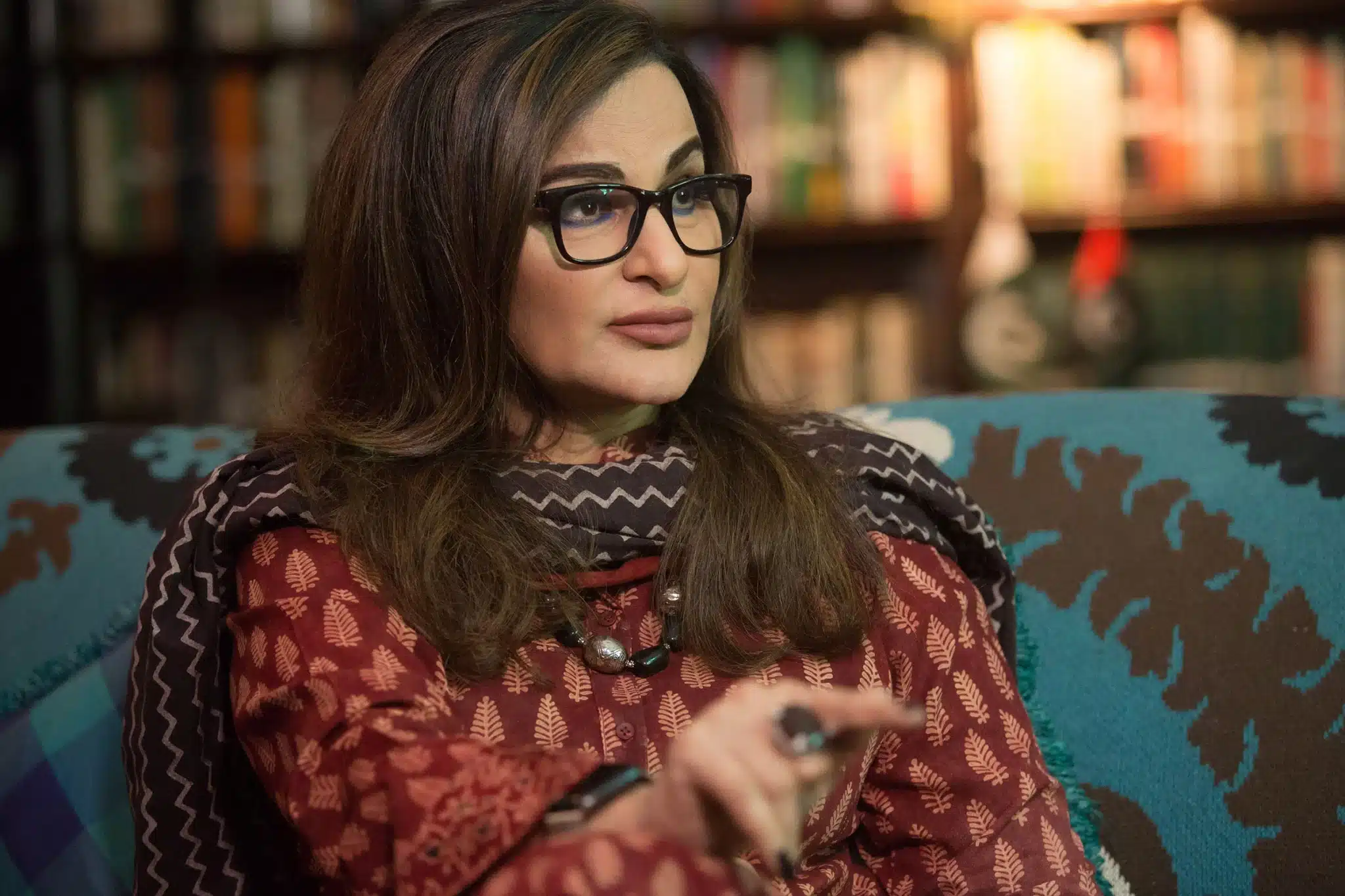
    Climate Change Minister Sherry Rehman is not one to hold back when it comes to calling out audacious ideas. Earlier this week, Capital Development Authority (CDA) Chairman Noor Ul Amin Mengal tweeted a suggestion for alleviating traffic congestion on the road to Daman e Koh and Peer Sohawa on Margalla Hills. He pondered planning a road from Peer Sohawa to Barri Imam and 3rd Avenue to make it a loop to facilitate traffic movement.

    Rehman clapped back today, reminding the Chairman of his domain of authority:

    Correcting the Chairman, Rehman stated that planning infrastructure through a Wildlife Board-protected green area is not under the CDA’s domain of authority. She reiterated that the plan is against Pakistan’s existing wildlife laws and goes against the country’s international commitments to preventing climate change. 

    Other Twitter users also chimed in with their opinions:

    Many users supported Rehman’s sharp response:

    Pakistan’s climate promise

    As part of UNDP’s Climate Promise, Pakistan intends to set a cumulative ambitious conditional target of an overall 50% reduction of its projected emissions by 2030, with a 15% reduction from the country’s own resources and a 35% reduction subjected to the provision of international grant finance.

    Cutting down trees in order to build concrete infrastructure stands decidedly against Pakistan’s Nationally Determined Contribution to the Climate Promise.

  • The Weight of a Life

    The Weight of a Life

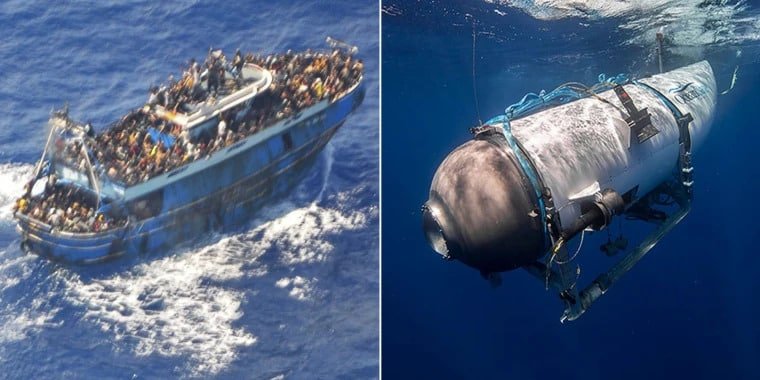
    In the last week alone, the world has been witness to two immense tragedies that played out at sea. Tragic as both events were, the public seems to be divided on which party to extend their empathy and/or sympathy toward: the 300+ Pakistani migrants that drowned after a trawler capsized off the south coast of Greece, or the Pakistani billionaire and his 19 year old son that died in an implosion thousands of metres below the surface of the North Atlantic Ocean?

    One only need to peruse through the comments under The Current’s reporting on the tragedies to understand what the two sides believe in. On the one hand, individuals are calling out the difference in response to both calamities and suggesting that Shahzada Dawood, Vice-Chairman of Engro Corporation, made a choice to die when he paid $500,000 for him and his son to travel to see the Titanic’s wreckage. Yet, this side maintains, the migrants aboard the trawler had ‘no choice’ but to embark on such a perilous journey to better fortune. 

    On the other hand, people are shocked by the Pakistani public’s ability to extend and withdraw empathy on the basis of an individual’s wealth – or lack thereof. The Dawoods were renowned philanthropists in the country, donating millions of their wealth to education and healthcare (notwithstanding the argument that, admittedly, it’s probably because they had those millions to spare). Should empathy not be extended to the wealthy that donated vast amounts to projects providing higher-education opportunities to Pakistanis? Should empathy only be extended if the wealthy are charitable?

    What is perhaps most interesting – and also practically self-evident – is the anger drawn from the media coverage of both tragedies. The OceanGate submersible was dominating global headlines the second it was announced ‘missing’, up until the moment they realised there was no hope. Meanwhile, the Greek migrant boat tragedy only saw a couple days of reporting – even though there is currently an ongoing investigation concerning the complicity or negligence of both Greek authorities and border authority Frontex on the discrepancies found in communication. 

    While there is more than plenty to criticise in regards to the stark difference with which both calamities were responded to, it is hugely counterintuitive to compare the loss of lives. It is indeed likely that the migrants were condemned to their deaths by the authorities. In transcripts published by AlarmPhone, and analyses of vessels in the area around the time the trawler sent out an alarm signal, discrepancies in official statements made by the European authorities are enough to merit investigations. Moreover, accusations have abounded regarding the Greek coast guard’s role in the eventual capsize. Pakistani survivors of the wreck reported that the boat only capsized after the Greek coast guard started towing it. 

    Of course, anger is bound to arise when one compares that scenario to a full-blown military-scale search for the five individuals onboard the missing submersible. However, the people offering no sympathy to Shahzada and his young son Suleman,  simply because they paid a lot of money to be in that position, are largely misplacing their anger. The tragic plight of migrants and refugees is not new to us: they were not simply left to their deaths only because they are poor as compared to the Dawoods. 

    Anti-immigrant sentiment is on the rise in Europe. Far-right parties with anti-immigrant policies have risen in popularity and have become quite verbose on how unwelcome immigrants are. Within such a growing sentiment – while it by no means justifies the tragedy – one simply cannot expect the same level of frantic search. It isn’t because those lives were not worth the search: it’s because those lives, in the clinical eyes of the Europeans, simply meant a burden on their existing economy and resources. 

    So yes, we should be angry. We should be absolutely livid at such blatant disregard for life. But to redirect that anger to two completely innocent Pakistanis who also encountered a tragic fate, simply because they’re rich, is quite unfounded. It could have made sense if the two incidents were correlated beyond just their occurrence in the sea – say, if the authorities meant to search for the migrants were redirected to the submersible. 

    At the end of the day, the families of the migrants have seen their entire world shatter, much like the Dawood family. To weigh the worth of lives on such a material basis such as wealth is counterintuitive to the anger felt by the loss of them. And to compare such tragedies distracts us from the larger, more pertinent structural issues that led to the worst migrant boat disaster in recent history.