Tag: The guardian

  • UK’s The Guardian stops posting on ‘toxic media platform’ X

    UK’s The Guardian stops posting on ‘toxic media platform’ X

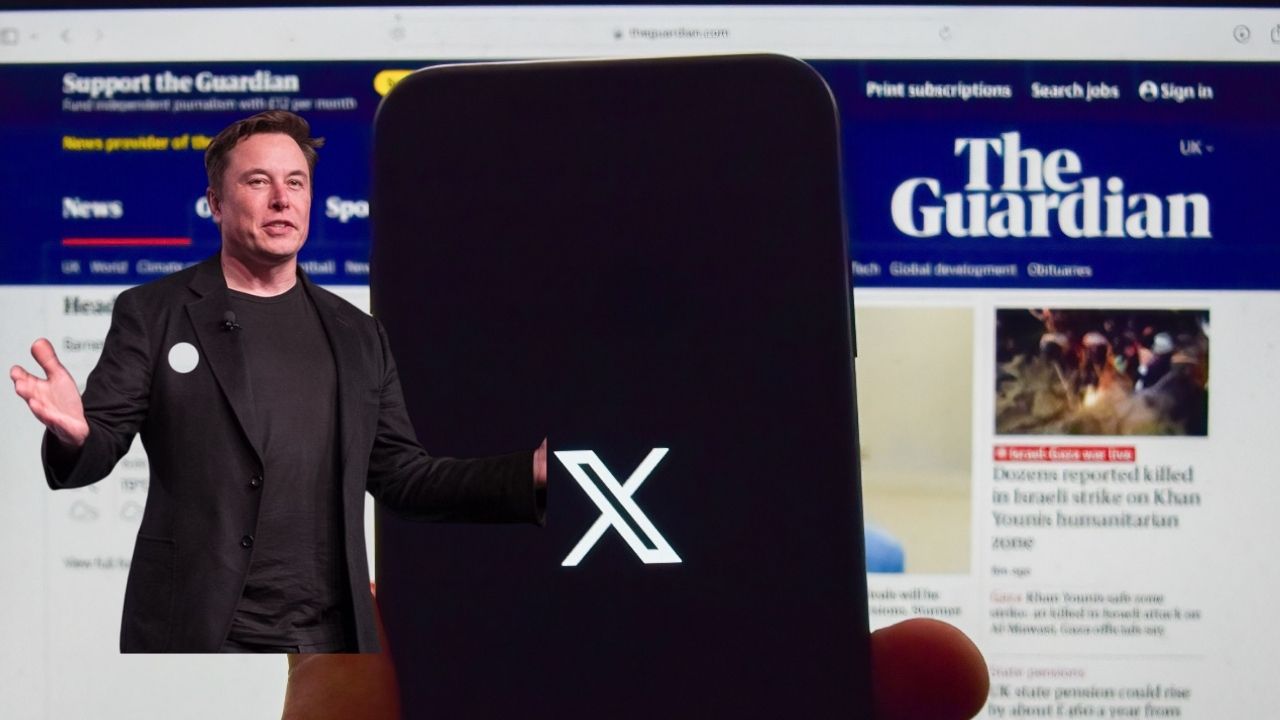
    Britain’s The Guardian newspaper announced Wednesday it would no longer post content from its official accounts on Elon Musk’s X, branding it a “toxic media platform” home to “often disturbing content”.

    “We think that the benefits of being on X are now outweighed by the negatives,” the left-leaning newspaper, which has nearly 11 million followers on X, said in a statement on its website.

    It added that its “resources could be better used promoting our journalism elsewhere”.

    “This is something we have been considering for a while given the often disturbing content promoted or found on the platform, including far-right conspiracy theories and racism,” the statement noted.

    “The US presidential election campaign served only to underline what we have considered for a long time: that X is a toxic media platform and that its owner, Elon Musk, has been able to use its influence to shape political discourse.”

    The paper’s main X handle — @guardian — was still accessible Wednesday but a message on it advised “this account has been archived” while redirecting visitors to its website.

    The Guardian noted that X users would still be able to share its articles, and that it would still “occasionally embed content from X” within its articles given “the nature of live news reporting”.

    It also said its reporters would still be able to use the site and other social networks on which the paper does not have an account.

    “Social media can be an important tool for news organisations and help us to reach new audiences but, at this point, X now plays a diminished role in promoting our work,” The Guardian added.

    Musk purchased X, formerly known as Twitter, for $44 billion in 2022 and has consistently courted controversy with his use of the platform, particularly during the recent US presidential election.

    Musk endorsed Donald Trump and used his personal account boasting nearly 205 million followers to sway voters in favour of the Republican, with a slew of incendiary, misleading posts criticised for cranking up the political temperature.

    Trump on Tuesday announced that the Tesla and SpaceX billionaire would lead a so-called Department of Government Efficiency in his incoming administration, alongside the entrepreneur Vivek Ramaswamy.

  • USAID contractor resigns, alleging work on Palestine was censored

    Alexander Smith, a contractor for the US Agency for International Development (USAID), resigned from his private sector position, saying he could no longer perform contract work for the Biden administration after a presentation he was preparing on Gaza’s humanitarian crisis was cancelled.

    Smith claimed that USAID gave him a choice between resigning or dismissal after he attempted to give a presentation on maternal and child mortality among Palestinians, says a report published by The Guardian.

    “I cannot do my job in an environment in which specific people cannot be acknowledged as fully human, or where gender and human rights principles apply to some, but not to others, depending on their race,” Smith wrote in his resignation letter quoted by The Guardian.

    Smith’s resignation adds to a small but growing list of officials working inside or for the US government who have resigned in protest against the Biden administration’s support for Israel’s genocide in Gaza.

    On Tuesday, Stacy Gilbert, a career official in the US State Department’s Bureau of Population, Refugees and Migration (PRM), told staff she was resigning because she felt the State Department had wrongly concluded that Israel was not preventing the entry of aid into Gaza.

    Earlier this month, Lilly Greenberg Call became the first Jewish-American political official to resign. Call worked in the Department of Interior, but there have been a number of high-profile resignations from officials working on the Middle East and defence.

    Major Harrison Mann tendered his resignation from the Department of Defence Intelligence Agency in May, citing Washington’s support for the war on Gaza.

  • ‘Biggest liar on earth’: PM Shehbaz calls out his rival Imran Khan

    ‘Biggest liar on earth’: PM Shehbaz calls out his rival Imran Khan

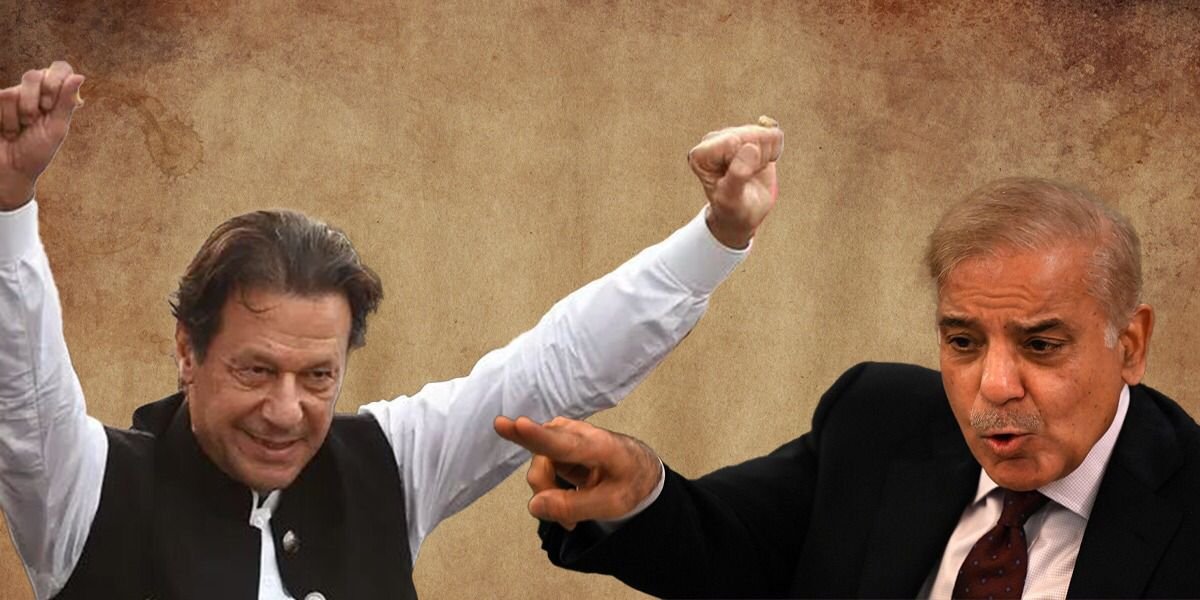
    Prime Minister (PM) Shehbaz Sharif has called Pakistan Tehreek-e-Insaf (PTI) Chairman Imran Khan the “Biggest liar on earth”.

    In an interview with The Guardian, Shehbaz Sharif stated that Khan was responsible for injecting poison into society to “Dangerously polarise the electorate” after he was ousted from office earlier this year.

    Shehbaz termed Khan “A liar and a cheat” whose policies had left the economy in ruins. “Khan ran on an anti-corruption manifesto, of conducting the country’s affairs to suit his own personal agenda in a manner which can be only described as the most inexperienced, self-centred, egotistical, immature politician in the history of this country,” said the premier.

    Mincing no words while talking about the recent leaked audios, the Prime Minister said that they were “An irrefutable endorsement that he [Khan] is the biggest liar on the face of the earth. I’m not saying this with a sense of glee but a sense of embarrassment and concern. My country’s image has been been damaged hugely by these lies told out of mean personal interest.”

    Shehbaz said Khan had to be held accountable for these “conscious criminal acts”.

    The prime minister highlighted the significant challenges he has to deal with alongside Khan mobilising on the streets, building a narrative against the government.

    “Never before was I concerned about our country’s future,” stressed the PM, blaming Imran Khan for injecting “Ifinite amount of poison in this society and made it hugely polarised as never before … he is distorting facts and creating hate.”

    Discussing his brother Nawaz Sharif’s, involvement in government, Shehbaz Sharif was diplomatic. “Of course I consult Nawaz, he is my leader and my older brother,” he said. “But he has given me completely free rein to make decisions,”‘ he insisted.

    Commenting on Khan’s criticism of dynastic politics in Pakistan, the premier said, “It’s about competence: it’s about public support, it’s about people’s trust,” he said. “It’s not about dynasty.”

    Prime Minister Shehbaz also highlighted how several world leaders, who he [Shehbaz] refused to name, had personally raised questions on Khan’s conduct. “Some leaders told me in person about his personality,” said the PM. “They told me he was rude, he told lies and he is a ‘narcissist’, quote unquote.”

  • ‘PM Khan’s phone does not have messages of Gujarat massacre like Modi’: Fawad

    ‘PM Khan’s phone does not have messages of Gujarat massacre like Modi’: Fawad

    Federal Minister for Information and Broadcasting Fawad Chaudhry, while speaking on Geo News’ programme ‘Jirga’, said, “Two days prior to the story of Pegasus spyware being published, I received a letter from The Guardian revealing that there was a list of phone numbers that had been hacked. Three numbers previously used by Prime Minister Imran Khan were also in the list.”

    Fawad said that the letter further added that he needed to confirm whether the numbers included in the list belonged to PM Khan or not.

    Fawad said that a team was being put together by the government, who would do the forensics to verify whether the premier’s phone was hacked or not. Only then will the government be able to tell if the attempt to hack the phone was successful or not.

    “It is confirmed that an attempt to hack the phone was made,” said Fawad.

    On being asked by Saleem Safi that if the phone was indeed hacked and the Indians did get the data from the premier’s phone, what implications would it have for the country, Fawad replied, ” PM Khan’s phone did not have messages of Gujarat massacre like Indian Prime Minister Narendra Modi. His phone does not have any orders of murder in it.”

    Fawad condemned how Modi and his government had hacked the phones of Indian journalists, judges, his own government officials, and other world leaders and said that the United Nations must intervene in this regard.

    Fawad Chaudhry added that the Foreign Office has taken notice of India’s use of Israeli spyware, Pegasus, to hack Prime Minister Imran Khan’s phone and had already said: “We call on the relevant UN bodies to thoroughly investigate the matter, bring the facts to light, and hold the Indian perpetrators to account.”

    When questioned about the meeting between Imran Khan and Narendra Modi before he came into power and whether it was discussed with the then government, Fawad responded that PM Khan’s meeting was public and the media was present. Fawad criticised Nawaz Sharif’s meeting with Afghan National Security Adviser (NSA) Hamdullah Mohib in London and said this was news shared with the Afghan media.

    “I won’t call Nawaz Sharif a traitor but it was a very irresponsible act by him,” added Fawad.

    Earlier this week, Pakistan Muslim League-Nawaz (PML-N) leader Nawaz Sharif was met by Afghan National Security Adviser Hamdullah Mohib and State Minister for Peace Sayed Sadat Naderi.

    The National Security Council of Afghanistan (NSCA) gave an update about the meeting on Twitter Saturday, saying that the Afghan state minister for peace and NSA discussed “matters of mutual interest” with the former Pakistan prime minister.

    Nawaz Sharif’s meeting faced extreme criticism from the government.

  • ‘Smartphones are worse than a spy in your pockets’: Edward Snowden

    ‘Smartphones are worse than a spy in your pockets’: Edward Snowden

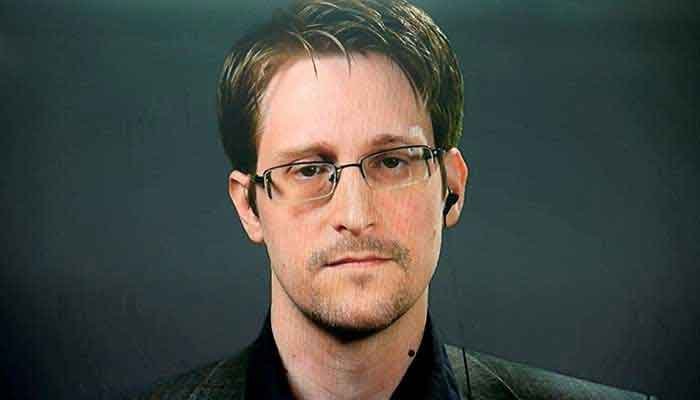
    Ex-computer intelligence consultant at the United States (US) National Security Agency (NSA) Edward Snowden has said that smartphones are “worse than a spy in your pockets”, reports Geo News.

    Snowden urged governments to impose a global delay on the international spyware trade or face a world in which no mobile phone is safe from state-sponsored hackers, reported The Guardian.

    In the wake of the revelations about Israeli NSO Group, whose software Pegasus was used to hack mobile phones for surveillance, Snowden said the consortium’s findings illustrated “how commercial malware had made it possible for repressive regimes to place vastly more people under the most invasive types of surveillance”.

    “If you don’t do anything to stop the sale of this technology, it’s not just going to be 50,000 targets. It’s going to be 50 million targets, and it’s going to happen much more quickly than any of us expect,” he warned.

    Snowden said commercial malware such as Pegasus was so powerful that ordinary people could in effect do nothing to stop it.

    Asked how people could protect themselves, he said: “What can people do to protect themselves from nuclear weapons?”

    “There are certain industries, certain sectors, from which there is no protection, and that’s why we try to limit the proliferation of these technologies. We don’t allow a commercial market in nuclear weapons.”