Tag: TheCurrent

  • US Secretary Blinken congratulates Anwaar Kakar

    US Secretary Blinken congratulates Anwaar Kakar

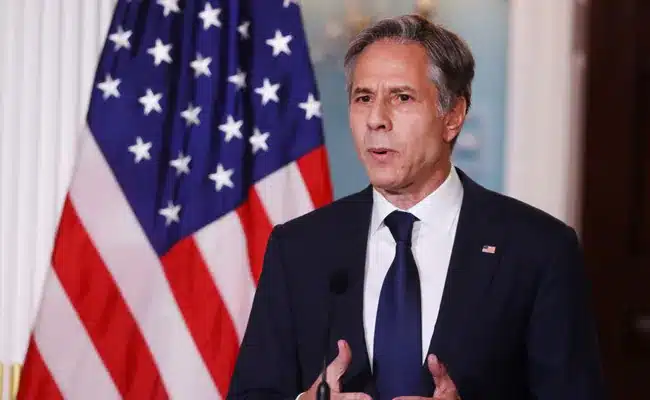
    According to Bol News, US Secretary of State Antony Blinken has congratulated caretaker Prime Minister of Pakistan Anwaar-Ul-Haq Kakar on assuming office.

    “Congratulations to the new Pakistan Interim Prime Minister, @anwaar_kakar. As Pakistan prepares for free and fair elections in accordance with its constitution and the rights to freedom of speech and assembly, we will continue to advance our shared commitment to economic prosperity,” Blinken tweeted.

    In response, Anwaar Kakar said on Thursday that “The caretaker government would assiduously work to facilitate a free and fair election in the country”.

    Anwaar Kakar also thanked the US Secretary for his good wishes and said in his tweet “We place importance on our partnership with the US and deeply value the shared commitment to economic prosperity, democracy, and stability in the region”.

  • Relief for PTI; IHC issues release orders for Shandana Gulzar and Shehryar Afridi

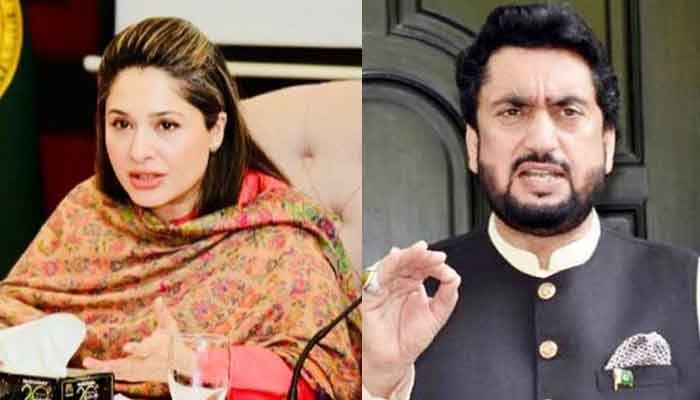
    Relief for PTI; IHC issues release orders for Shandana Gulzar and Shehryar Afridi

    The Islamabad High Court (IHC) has on Wednesday ordered the immediate release of Pakistan Tehreek-e-Insaf (PTI) leaders Shandana Gulzar and Shehryar Afridi after suspending their arrest warrants under Maintenance of Public Order (MPO).

    The IHC had previously ordered that both Shandana Gulzar and Shehryar Afridi be presented in court.

    IHC conducted a hearing against the detention of both the leaders under the MPO on Tuesday.

    Afridi’s lawyer Sheer Afzal Marwat told the court that, “This is the seventh MPO order passed against Afridi, and the accused has been in jail for 90 days.”

    IHC judge Justice Babar Sattar asked, “Before this, which MPO order was passed by the deputy commissioner?”. The order against Shehryar Afridi was then read aloud by the counsel.
    The lawyer told the court, “Arrests were made in seven cases, but his client was later released on bail. Seven MPO orders issued against Shehryar Afridi so far have been declared illegal by courts.”

    The court further asked, “Where the MPO has not been issued?” To this question, the lawyer told the court that MPO orders have not been issued in Balochistan and Sindh.

    Justice Babar Sattar remarked, “If you have to keep a citizen in custody, you will have to provide reasons.”

    The court restricted Shehryar Afridi from speaking on media or social media until the trial ends.

  • Imran’s nephew, Hassan Niazi arrested in Abbotabad

    Imran’s nephew, Hassan Niazi arrested in Abbotabad

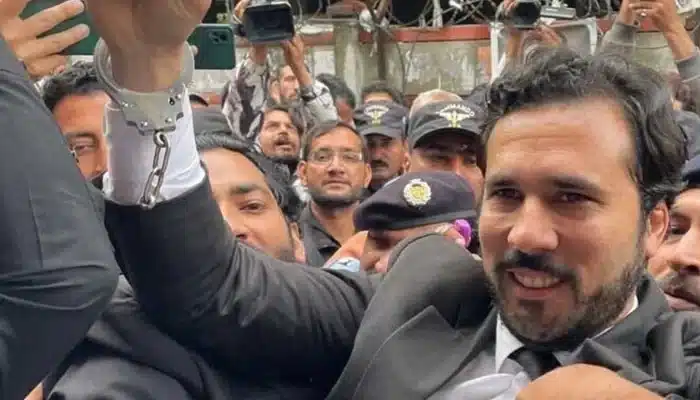
    Pakistan Tehreek-e-Insaf (PTI) leader and Imran Khan’s nephew Hassan Niazi got arrested in Abbotaabad late on Sunday night. Hassan Niazi’s father, political analyst Hafeez Ullah Niazi, confirmed the arrest in a tweet.
    Sources have told Daily Pakistan that Hassan Niazi, who is also a lawyer, got arrested from his friend’s house in Abbotabad. Hassan Niazi had been in hiding since May 9, to avoid arrest.
    In footage recorded outside Lahore’s Corps Commander’s House, aka Jinnah House, Hassan Niazi could be seen holding the Corp Commander’s uniform that he had stolen from inside the premises.

    Two of Imran Khan’s sisters and Hassan Niazi were named as declared offenders in a case involving the attack on the Jinnah House by a court last month.
    Hafeez Ullah Niazi, Hassan’s father, has said in a tweet that he “hopes no law would be violated.”

    Following Imran Khan’s arrest from the Islamabad High Court on May 9, a mob of Pakistan Tehreek-e-Insaf (PTI) supporters set fire to and vandalised the Corps Commander House in Lahore. The house, originally a property of Quaid-e-Azam, is also known as Jinnah House.

    Hassan Niazi has been handed over to Quetta Police by Abbottabad Police. Lahore police have also written a letter to the Ministry of Interior Quetta office to bring the accused to Lahore in light of the cases against him regarding the May 9 incidents.

    According to the details provided by ARY News, Hassan Niazi’s case has now been forwarded to the military court. However, police have said that Hassan Niazi was transferred from Quetta to Rawalpindi to face the military trial.

    The court directed the IG, CCPO, and SHO to present Hassan Niazi before the court if they had him.

    Hassan’s father, Hafeezullah Niazi, had requested the Lahore High Court to seek the release of his son. It is mentioned in the petition that Hassan Niazi should be presented before the court.

  • Shehbaz, Arif Alvi lock horns on caretaker PM appointment

    Shehbaz, Arif Alvi lock horns on caretaker PM appointment

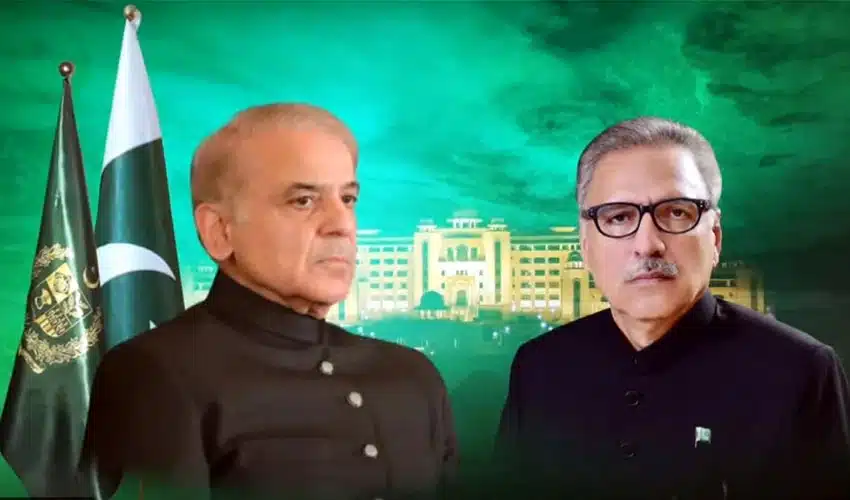
    President Arif Alvi wrote a letter on Friday to outgoing Prime Minister Shehbaz Sharif to appoint a caretaker Premier by Saturday (today), rekindling the uneasy relationship between the two.

    Dawn has reported that PM Shehbaz is not happy with the letter, questioning why President Alvi is in a hurry. He also said that the President might not have read the constitution.

    According to Dawn’s sources, delay in nominating caretaker PM can be chalked up to opposition leader Raja Riaz, who is insisting that his candidate be appointed caretaker PM instead of agreeing to the names suggested by Pakistan Muslim League-Nawaz (PML-N).

    After a meeting was held between Prime Minister Shehbaz Sharif and opposition leader Raja Riaz on Saturday to discuss the name of the upcoming caretaker prime minister, Riaz gave three names for caretaker Prime Minister to Sharif. The Premier consulted with his allies last night about the three names.

    One of these three names is Sadiq Sanjrani, but so far the other two names are not known.

    On the other hand, PML-N head Nawaz Sharif wants former finance minister Ishaq Dar or former Prime Minister Shahid Khaqan Abassi as caretaker PM.
    However, insiders alleged that Mr. Riaz was taking orders from another power corridor and insisted on the name of Senate Chairman Sadiq Sanjrani. On Friday, Mr. Sanjrani called Mr. Riaz as well as Mr. Dar and Ahsan Iqbal.

  • Khan’s alleged cypher is out

    A report carried by The Intercept, a US publication, says that Imran Khan’s cypher which he blamed for his removal from power, did include American official Donald Lu pressurising Pakistan to oust Khan. The Intercept says it has the cypher.

    The conversation took place during a meeting held on March 7, 2022.

    The meeting between the Pakistani ambassador to the United States and two State Department officials has drawn significant attention, controversy, and rumours in Pakistan.

    On August 5, Khan was given a three-year prison sentence in the Tosha Khana case and was arrested for a second time since being ousted. Khan’s supporters deny the accusations as unfounded.

    One month after the meeting with U.S. officials documented in the leaked Pakistani government document, a no-confidence vote was held in Parliament, leading to Khan’s removal from power.

    The text of the Pakistani cable that the ambassador sent to Islamabad following the meeting has not yet been made public. The cable, internally referred to as a “cypher,” promises improved relations if Khan was ousted and isolation if he was not, The Intercept says.

    An unnamed insider in the Pakistani military who claimed to have no connections to Imran Khan or Khan’s party gave The Intercept access to a
    the document.

    Here is the complete text of the cipher as published in The Intercept:

    “I (the former Pakistani Ambassador to the US) had a luncheon meeting today with Assistant Secretary of State for South and Central Asia, Donald Lu. He was accompanied by Deputy Assistant Secretary of State Les Viguerie. DCM, DA and Counsellor Qasim joined me.

    At the outset, Don referred to Pakistan’s position on the Ukraine crisis and said that “people here and in Europe are quite concerned about why Pakistan is taking such an aggressively neutral position (on Ukraine), if such a position is even possible. It does not seem such a neutral stand to us.” He shared that in his discussions with the NSC, “it seems quite clear that this is the Prime Minister’s policy.” He continued that he was of the view that this was “tied to the current political dramas in Islamabad that he (Prime Minister) needs and is trying to show a public face.” I replied that this was not a correct reading of the situation as Pakistan’s position on Ukraine was a result of intense interagency consultations. Pakistan had never resorted to conducting diplomacy in public sphere. The Prime Minister’s remarks during a political rally were in reaction to the public letter by European Ambassadors in Islamabad which was against diplomatic etiquette and protocol. Any political leader, whether in Pakistan or the U.S., would be constrained to give a public reply in such a situation.

    I asked Don if the reason for a strong U.S. reaction was Pakistan’s abstention in the voting in the UNGA. He categorically replied in the negative and said that it was due to the Prime Minister’s visit to Moscow. He said that “I think if the no-confidence vote against the Prime Minister succeeds, all will be forgiven in Washington because the Russia visit is being looked at as a decision by the Prime Minister. Otherwise, I think it will be tough going ahead.” He paused and then said “I cannot tell how this will be seen by Europe but I suspect their reaction will be similar.” He then said that “honestly I think isolation of the Prime Minister will become very strong from Europe and the United States.” Don further commented that it seemed that the Prime Minister’s visit to Moscow was planned during the Beijing Olympics and there was an attempt by the Prime Minister to meet Putin which was not successful and then this idea was hatched that he would go to Moscow.

    I told Don that this was a completely misinformed and wrong perception. The visit to Moscow had been in the works for at least few years and was the result of a deliberative institutional process. I stressed that when the Prime Minister was flying to Moscow, Russian invasion of Ukraine had not started and there was still hope for a peaceful resolution. I also pointed out that leaders of European countries were also traveling to Moscow around the same time. Don interjected that “those visits were specifically for seeking resolution of the Ukraine standoff while the Prime Minister’s visit was for bilateral economic reasons.” I drew his attention to the fact that the Prime Minister clearly regretted the situation while being in Moscow and had hoped for diplomacy to work. The Prime Minister’s visit, I stressed, was purely in the bilateral context and should not be seen either as a condonation or endorsement of Russia’s action against Ukraine. I said that our position is dictated by our desire to keep the channels of communication with all sides open. Our subsequent statements at the UN and by our Spokesperson spelled that out clearly, while reaffirming our commitment to the principle of UN Charter, non-use or threat of use of force, sovereignty and territorial integrity of States, and pacific settlement of disputes.

    I also told Don that Pakistan was worried of how the Ukraine crisis would play out in the context of Afghanistan. We had paid a very high price due to the long-term impact of this conflict. Our priority was to have peace and stability in Afghanistan, for which it was imperative to have cooperation and coordination with all major powers, including Russia. From this perspective as well, keeping the channels of communication open was essential. This factor was also dictating our position on the Ukraine crisis. On my reference to the upcoming Extended Troika meeting in Beijing, Don replied that there were still ongoing discussions in Washington on whether the U.S. should attend the Extended Troika meeting or the upcoming Antalya meeting on Afghanistan with Russian representatives in attendance, as the U.S. focus right now was to discuss only Ukraine with Russia. I replied that this was exactly what we were afraid of. We did not want the Ukraine crisis to divert focus away from Afghanistan. Don did not comment.

    I told Don that just like him, I would also convey our perspective in a forthright manner. I said that over the past one year, we had been consistently sensing reluctance on the part of the U.S. leadership to engage with our leadership. This reluctance had created a perception in Pakistan that we were being ignored and even taken for granted. There was also a feeling that while the U.S. expected Pakistan’s support on all issues that were important to the U.S., it did not reciprocate and we do not see much U.S. support on issues of concern for Pakistan, particularly on Kashmir. I said that it was extremely important to have functioning channels of communication at the highest level to remove such perception. I also said that we were surprised that if our position on the Ukraine crisis was so important for the U.S., why the U.S. had not engaged with us at the top leadership level prior to the Moscow visit and even when the UN was scheduled to vote. (The State Department had raised it at the DCM level.) Pakistan valued continued high-level engagement and for this reason the Foreign Minister sought to speak with Secretary Blinken to personally explain Pakistan’s position and perspective on the Ukraine crisis. The call has not materialized yet. Don replied that the thinking in Washington was that given the current political turmoil in Pakistan, this was not the right time for such engagement and it could wait till the political situation in Pakistan settled down.

    I reiterated our position that countries should not be made to choose sides in a complex situation like the Ukraine crisis and stressed the need for having active bilateral communications at the political leadership level. Don replied that “you have conveyed your position clearly and I will take it back to my leadership.”

    I also told Don that we had seen his defence of the Indian position on the Ukraine crisis during the recently held Senate Sub-Committee hearing on U.S.-India relations. It seemed that the U.S. was applying different criteria for India and Pakistan. Don responded that the U.S. lawmakers’ strong feelings about India’s abstentions in the UNSC and UNGA came out clearly during the hearing. I said that from the hearing, it appeared that the U.S. expected more from India than Pakistan, yet it appeared to be more concerned about Pakistan’s position. Don was evasive and responded that Washington looked at the U.S.-India relationship very much through the lens of what was happening in China. He added that while India had a close relationship with Moscow, “I think we will actually see a change in India’s policy once all Indian students are out of Ukraine.”

    I expressed the hope that the issue of the Prime Minister’s visit to Russia will not impact our bilateral ties. Don replied that “I would argue that it has already created a dent in the relationship from our perspective. Let us wait for a few days to see whether the political situation changes, which would mean that we would not have a big disagreement about this issue and the dent would go away very quickly. Otherwise, we will have to confront this issue head on and decide how to manage it.”

    We also discussed Afghanistan and other issues pertaining to bilateral ties. A separate communication follows on that part of our conversation”.

    Rana Sanauulah said in his tweet late Wednesday night “It should not be forgotten that Imran Khan Niazi had a copy of the cypher, which he has not returned and has accepted (on record) that he misplaced or lost it. If proven guilty, Khan should be tried under the Official Secret Act”.
  • Hafeez Sheikh in, Ishaq Dar out; Rana Sanaullah says interim PM names shortlisted

    Hafeez Sheikh in, Ishaq Dar out; Rana Sanaullah says interim PM names shortlisted

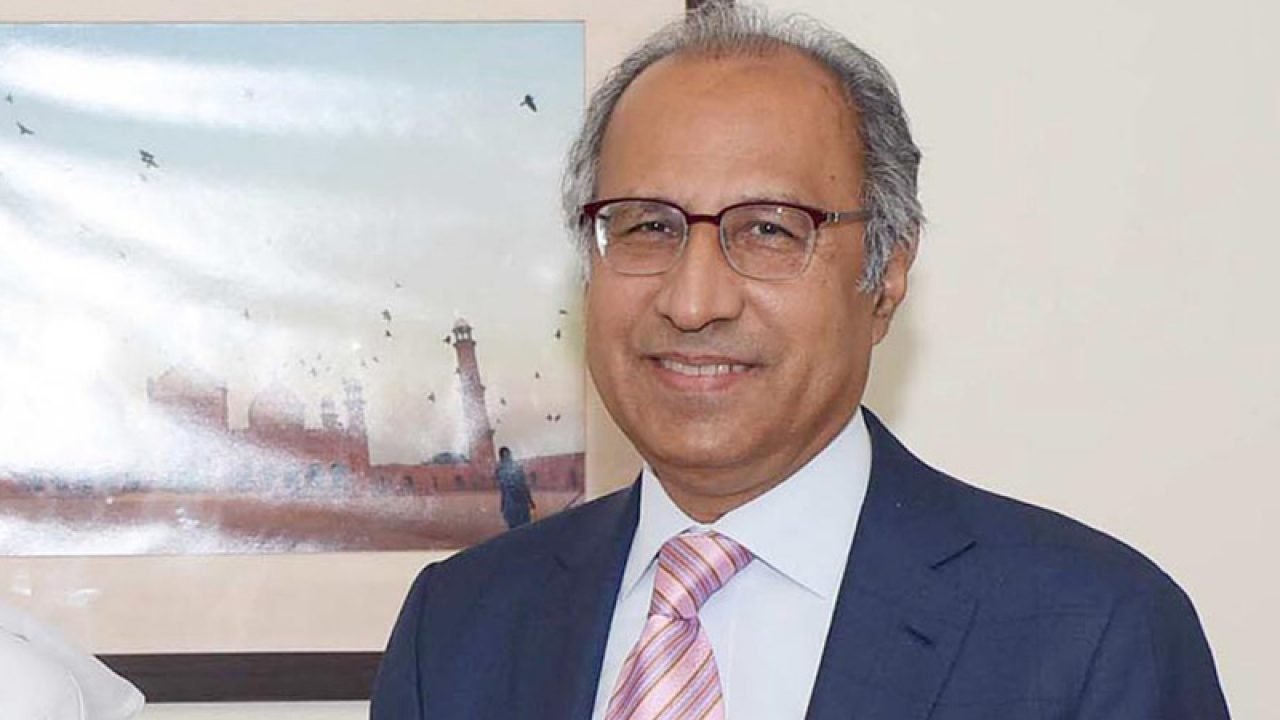
    Federal Interior Minister Rana Sanaullah has said on Sunday that former finance minister Hafeez Shaikh has been shortlisted among the names being discussed for caretaker prime minister.

    Earlier on Sunday, Prime Minister Shehbaz Sharif said that the National Assembly would be dissolved three days before the completion of its tenure, on August 9.

    The assembly will complete its term on August 12, in which case the Election Commission of Pakistan (ECP) would be responsible for holding the election in the next 60 days.

    Speaking on Geo News’ programme ‘Naya Pakistan’, Sanaullah said that the name of a retired judge of Supreme Court is also among the shortlisted candidates for caretaker PM.

    “The interim prime minister will be finalised by Tuesday or Wednesday (August 8 or 9),” he added.

    He also mentioned that the names of Finance Minister Ishaq Dar and former Prime Minister Shahid Khaqan Abbasi are not among the shortlisted candidates.

  • Khaqan, Bhootani in running for caretaker PM post

    Khaqan, Bhootani in running for caretaker PM post

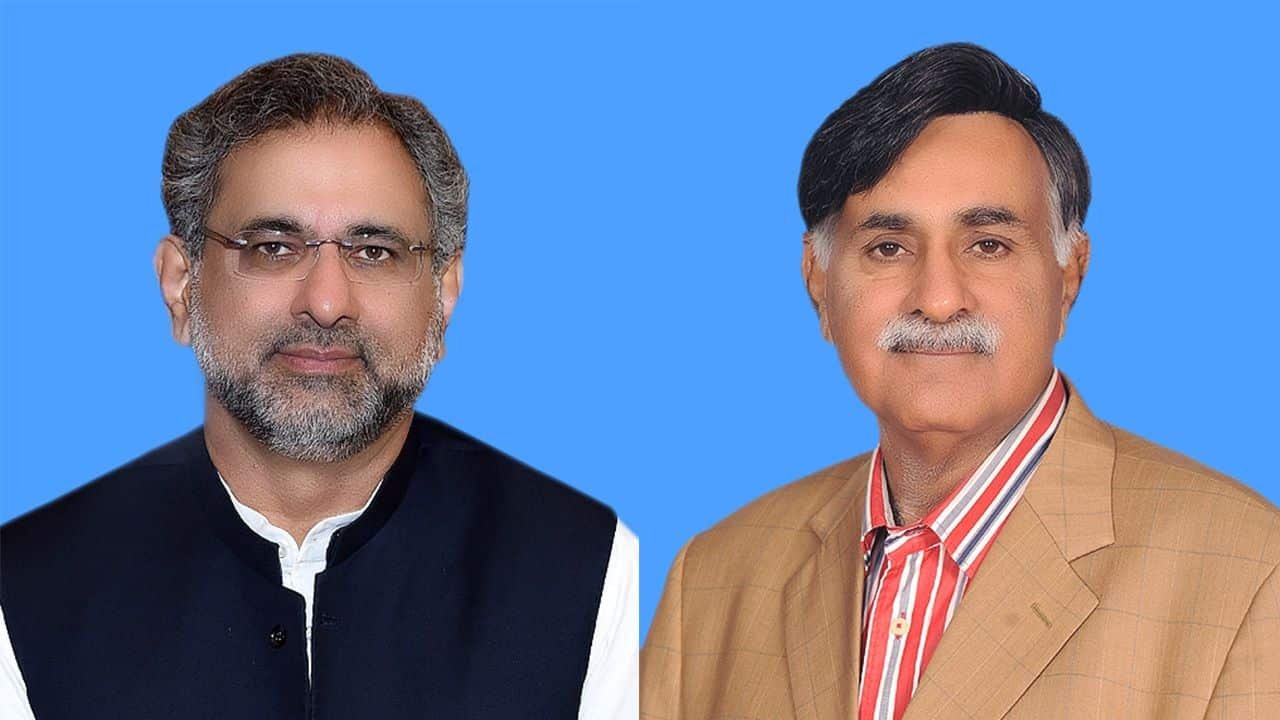
    The names of independent lawmaker from Balochistan Aslam Bhootani and former Prime Minister Shahid Khaqan Abbasi are also in the running for the post of caretaker PM, Geo News has reported.

    According to the report, coalition partners are currently having a Zoom meeting to share their views about the upcoming caretaker setup, as the tenure of this government is coming to an end.

    According to media reports, aome other names that are being considered include Ishaq Dar, Gohar Ejaz, Dr. Shamshad Akhtar, Dr. Hafeez Pasha, and former Chief Justice Tassaduq Jilani.

    Jamiat Ulema-e-Islam Fazl (JUI-F) Chief Maulana Fazlur Rehman, Pakistan People’s Party (PPP) Chairman Bilawal Bhutto, and other senior leaders are in the Zoom meeting.

    Pakistan Democratic Movement (PDM) leaders have had several meetings about the upcoming caretaker setup, but no final decision has been made.

    Earlier, at a dinner hosted for allies, Prime Minister Shehbaz Sharif revealed that the National Assembly will be dissolved on August 9, three days before the end of its tenure.

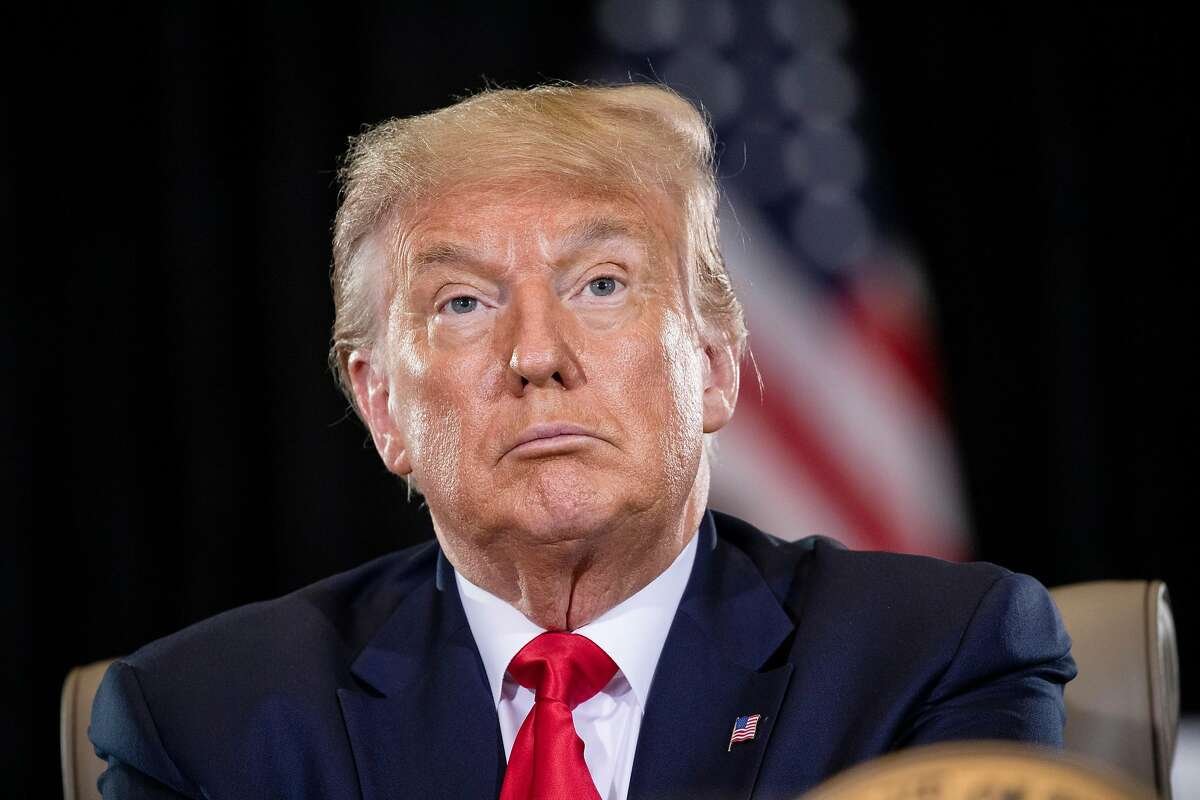
  • Trump indicted for third time for trying to overturn 2020 US election

    Trump indicted for third time for trying to overturn 2020 US election

    Former US President Donald Trump has been indicted for the third time in a case pertaining to attempts at overturning the results of the 2020 election which Joe Biden won. Since he began his 2024 Republican primary campaign, he has been the first former US president to face three felony indictments in history. No other president, living or dead, has ever faced criminal charges.

    In a previous post on his Truth Social platform, Trump stated his expectations clearly and said that special counsel Jack Smith intended to bring forth another “Fake Indictment” against him.

    “I hear that Deranged Jack Smith, in order to interfere with the Presidential Election of 2024, will be putting out yet another Fake Indictment of your favourite President, me, at 5:00 P.M. Why didn’t they do this 2.5 years ago? Why did they wait so long? Because they wanted to put it right in the middle of my campaign. Prosecutorial Misconduct!”

    The allegations are part of a larger probe into what Trump did as president and afterwards. The investigation, which also includes claims of improper handling of top-secret government records while Trump was in office, is being overseen by special counsel Jack Smith.
    In connection with alleged attempts to hide these documents from the government, Trump was slammed with 37 counts earlier this year. Last week, he was also charged with additional counts for allegedly attempting to remove surveillance footage from his Mar-a-Lago resort.

  • NA passes bill proposing up to three years jail for involvement in anti-state activities

    NA passes bill proposing up to three years jail for involvement in anti-state activities

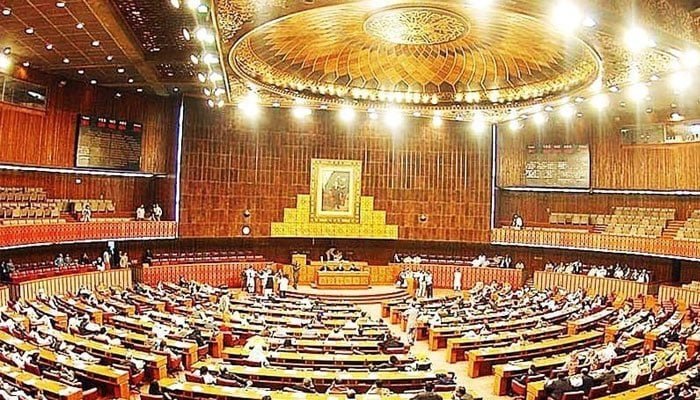
    The National Assembly has on Tuesday passed amendments to the Official Secrets Act Amendment Bill 2023 which suggests a three year jail sentence for involvement in anti-state activities.

    Murtaza Javed Abbasi, Parliamentary Affairs Minister, presented the bill named “Official Secrets (Amendment) Bill, 2023”.

    According to the bill, a person who creates a problem of public order or intentionally acts against the policies of the state would be guilty of the offence.

    Action will also be taken against the person who will try to gain unauthorised access to documents or information to act against the security interests of the state within or outside the country.

    These offences are punishable with three years in jail and a fine of Rs10 lacs or both.

    According to the bill, intelligence agencies can enter any place without a search warrant. The investigation officer will be the officer of FIA.

    Under the Official Secrets Act, the accused will be tried in a special court, and the special court will give it’s verdict after completing the hearing within 30 days.

  • “Usne meri qamar mai chaaku maara hai’, Khan says Bajwa betrayed him

    “Usne meri qamar mai chaaku maara hai’, Khan says Bajwa betrayed him

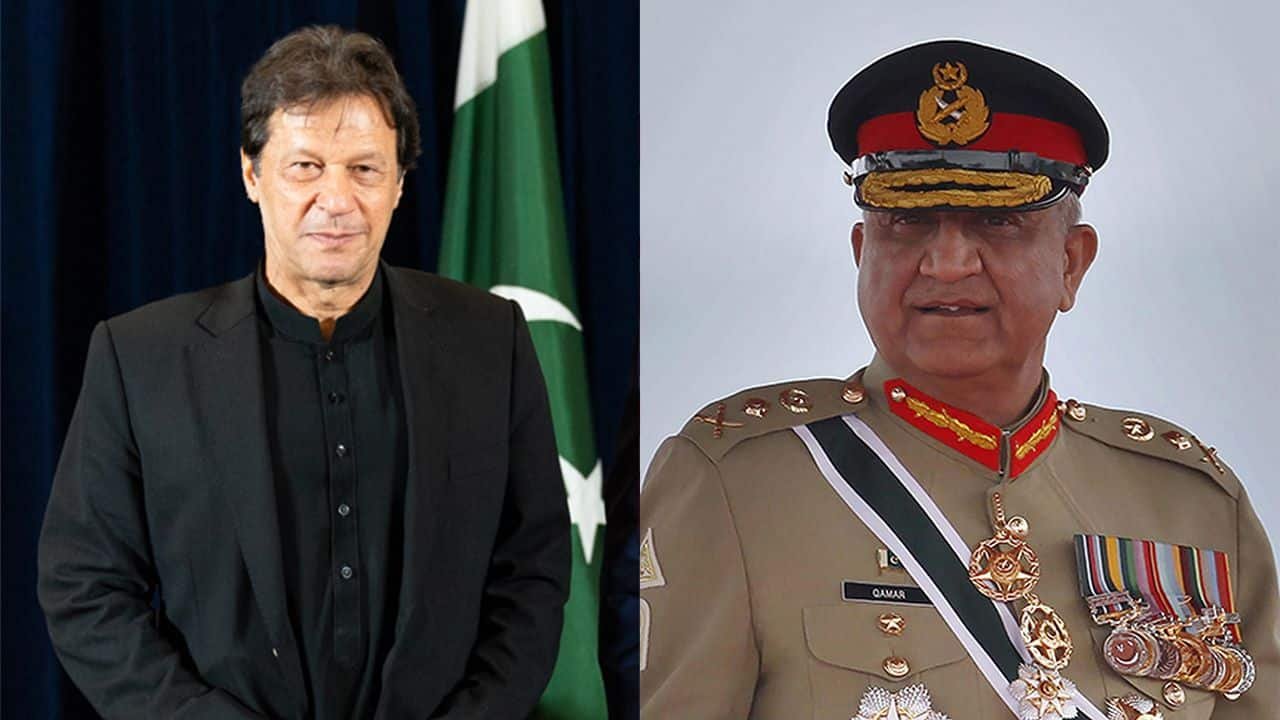
    Former Prime Minister Imran Khan has said that former Chief of Army Staff (COAS) General (retd) Qamar Javed Bajwa “stabbed” him in the back.

    Talking to Geo’s Haider Shirazi on camera at a court, Imran Khan said of the former army head, “I have been saying this, he stabbed me in the back.”

    “People say, ‘You must have done something.’ I did nothing. He [General Bajwa] was already planning to get an extension, he was thinking ahead,” the Chairman of the Pakistan Tehreek-e-Insaf (PTI) said.

    “That conspiracy is obvious,” he stated.

    Since his removal from power through a Vote of No Confidence in April 2022, Khan has attacked the former Army Chief many times in public rallies and interviews. However, the current Director General of Inter-Services Intelligence (ISI), Lt. General Nadeem Anjum alleged in a press conference held last year that the PTI government offered Bajwa an extension in March 2022 for “an indefinite period of time” if he would save the government from being ousted.

    Khan has denied the allegations.