Tag: tiktok

  • TikTok removes over 30 million Pakistani videos

    TikTok removes over 30 million Pakistani videos

    TikTok has deleted more than 30 million videos from Pakistan during the second quarter of 2024 for violating community guidelines.

    A Community Guidelines Enforcement Report released by TikTok stated that the platform has deleted more than 30,709,744 videos from TikTok in Pakistan in recent years.

    99.5 per cent of videos were deleted before users reported them, while 97 per cent were deleted within 24 hours, the report said.

    The above data highlights TikTok’s commitment to ensuring the platform is safe for Pakistani users.

    More than a billion people from all over the world visited this platform daily, and millions of videos, photos, and other content were posted there.

    TikTok has deleted more than 178,827,465 videos from around the world in the second quarter of this year, excluding Pakistan. 144,430,133 were deleted through automation, indicating the platform’s advanced use of its detection technology to eliminate harmful content in real time.

    The report also highlights a 50 per cent reduction in the number of restored videos, reinforcing the accuracy and effectiveness of TikTok’s content moderation system.

    TIKTOK DELETED PAKISTANI VIDEOS IN JULY THIS YEAR:

    TikTok has deleted 20 million videos in Pakistan that violated the social media giant’s community guidelines. The company wants to make sure its platform is safe and respectful for all users.

    This isn’t the first time TikTok has removed videos in Pakistan. Last year, it deleted 11.7 million videos for the same reason.

    TikTok uses special tools to find and remove videos that don’t follow its rules. It also deleted 21 million accounts that belonged to children under 13.

    In the meanwhile, it reported that proactive measures resulted in the global removal of 166,997,307 films, or around 0.9 percent of all videos posted on the site. “A significant fraction of these, 6,042,287 movies, were reinserted after additional examination, whereas 129,335,793 videos were recognised and removed by automatic detection systems.”

    TikTok has now disclosed the number of comments removed and filtered by its comment safety tools for the first time. TikTok has removed and filtered 976,479,946 comments during the three-month period.

    In Pakistan alone, the platform took action against 20,207,878 videos for also breaching its community guidelines during the same period. The platform utilizes automated systems to identify and remove videos that breach its rules.

  • TikTok removes 20 million videos in Pakistan for violating community guidelines

    TikTok removes 20 million videos in Pakistan for violating community guidelines

    TikTok has deleted 20 million videos in Pakistan that violated the social media giant’s community guidelines. The company wants to make sure its platform is safe and respectful for all users.

    This isn’t the first time TikTok has removed videos in Pakistan. Last year, it deleted 11.7 million videos for the same reason.

    TikTok uses special tools to find and remove videos that don’t follow its rules. It also deleted 21 million accounts that belonged to children under 13.

    In the meanwhile, it reported that proactive measures resulted in the global removal of 166,997,307 films, or around 0.9 percent of all videos posted on the site. “A significant fraction of these, 6,042,287 movies, were reinserted after additional examination, whereas 129,335,793 videos were recognised and removed by automatic detection systems.”

    TikTok has now disclosed the number of comments removed and filtered by its comment safety tools for the first time. TikTok has removed and filtered 976,479,946 comments during the three-month period.

    In Pakistan alone, the platform took action against 20,207,878 videos for also breaching its community guidelines during the same period. The platform utilizes automated systems to identify and remove videos that breach its rules.

  • Ali Abbas wants 18+ age limit, ID verification for social media

    Ali Abbas wants 18+ age limit, ID verification for social media

    Pakistan is going through huge regulations, with Twitter/X banned by the government and talks of a firewall underway in the country. 
    Recently, actor Ali Abbas appeared as a guest on the ‘FHM Podcast’ where he talked about the urgent need for regulations on social media.
    Ali Abbas said, “There should be an age limit of 18 years enforced and monitored, with users required to verify their identity using an ID card or passport before opening an account. The younger generation is losing their way, influenced by inappropriate content they encounter online.”

  • Mohammad Ahmed is all praise for rural TikTokers

    Mohammad Ahmed is all praise for rural TikTokers

    TikTok has caught the attention of Mohammad Ahmed. The screenwriter and actor recently praised rural TikTokers for their creativity and impact.
    Muhammad Ahmed was invited as in ‘Mazaaqrat’, hosted by Imran Ashraf. He talked up about making TikToks.
    The host asked, “Especially what you are doing on TikTok these days, what it is all about? What’s the secret behind it?”

    Mohammad Ahmed said, “I’m amazed by TikTok’s creativity! It’s incredible how a person can create engaging content in just thirty seconds. I’ve seen talented individuals from rural areas producing outstanding content that has left me impressed. Without TikTok, they might have been rejected by the industry, but now they have a platform to showcase their skills. I’m impressed by TikTok’s potential, and I think young people like you are great at creating content – although I find it challenging myself.”

    Mohammed Ahmed has acted in many dramas like ‘Kuch Ankahi’ ‘Mere Paas Tum Ho’, Suno Chanda’, ‘Sabaat,’ ‘Parizaad,’ and many more are among his well-known theatre roles. He is well-known for playing fatherly roles, and at the moment, people are praising his character in Radd.

  • TikTok removes 93.5 percent of controversial videos at Pakistani government request

    TikTok removes 93.5 percent of controversial videos at Pakistani government request

    Short video platform TikTok removed 93.5 per cent of controversial videos at the request of the government of Pakistan.

    According to TikTok’s recent transparency report, the social media platform is actively working with the Pakistani government, and specifically the Pakistan Telecommunication Authority (PTA), to address concerns about content removal.

    In the second half of 2023, TikTok received 303 requests from the Pakistani government, resulting in the removal of 93.5 per cent of the reported content, while 270 accounts for violating community guidelines and 59 for violating local laws.

    TikTok’s latest Community Guidelines Enforcement Report shows that the platform promptly removes content that violates its guidelines with a global rate of 99.5 per cent.

  • Court issues notice to PTA in TikTok ban case

    Court issues notice to PTA in TikTok ban case

    The Peshawar High Court has sought a response from the federal government within 15 days on the request to impose a complete ban on TikTok. The petition stated that relevant authorities have failed to remove ‘profane and obscene’ content on the app.

    According to media reports, the bench, comprising of Chief Justice Ishtiaq Ibrahim and Justice Sahibzada Asadullah, fixed June 20 for the hearing.

    The petition was filed by a lawyer, Imran Khan, who requested the court to order the Pakistan Telecommunication Authority (PTA), the Federal Investigation Agency (FIA) and the Ministry of Information to arrest the defendants on TikTok in Pakistan and to ban the platform permanently.

    According to the petition, the guidelines of Tik Tok violate the Constitution of Pakistan.

    It has also been requested to the court to direct the defendants to not allow social applications in future which would affect the moral values of the people of Pakistan.

    Barrister Babar Shehzad Imran appeared on behalf of the petitioner and argued that while there are benefits of social media, some social media platforms have opened the way for blasphemy against decency, morality and the glory of Islam in countries like Pakistan.

  • ‘Zindagi Tamasha’ makes history as first Pakistani film released on TikTok

    ‘Zindagi Tamasha’ makes history as first Pakistani film released on TikTok

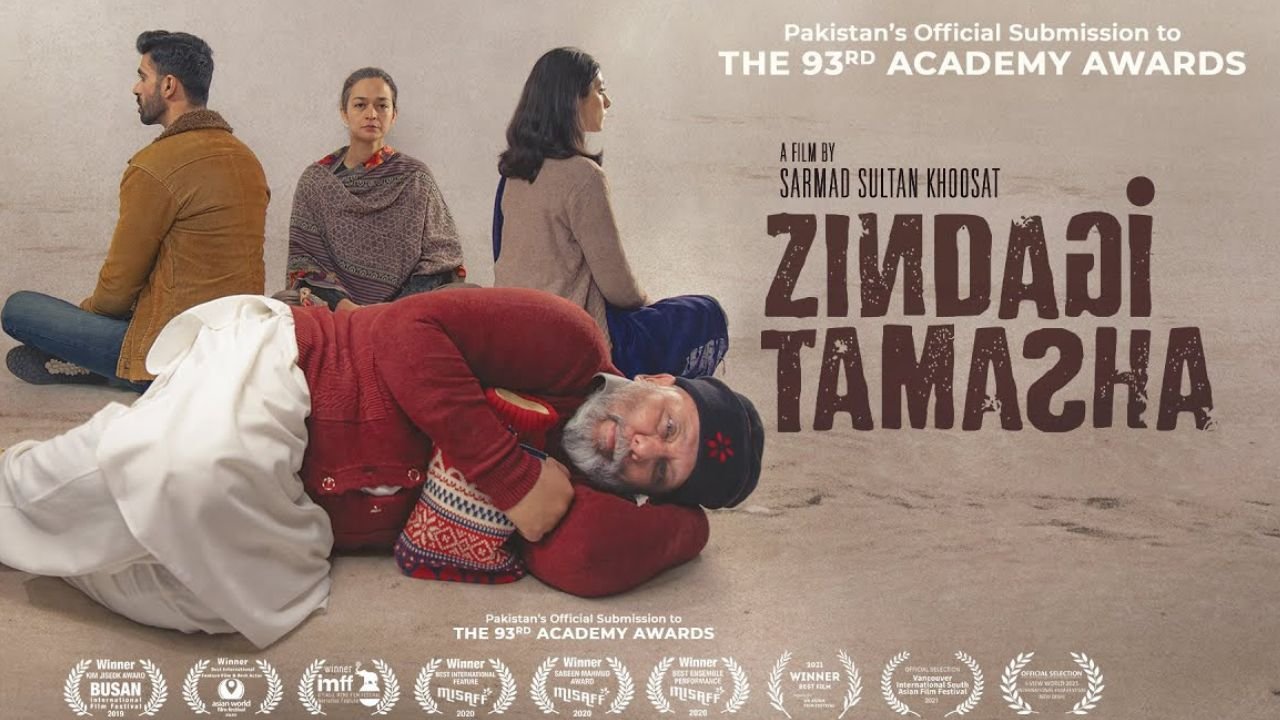
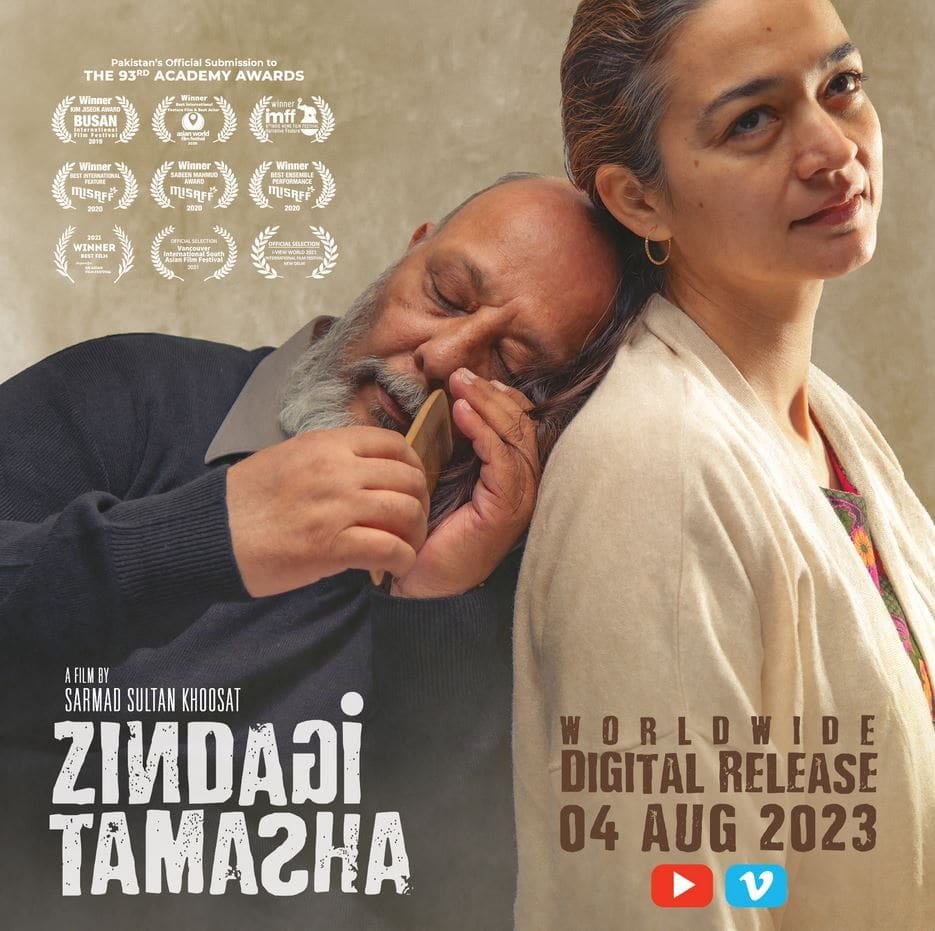
    Director Sarmat Khoosat’s beleaguered film ‘Zindagi Tamasha’ is making history as the first full-length film to partner with TikTok. The film will be divided into 12 to 15 parts, each part lasting more than a minute and will be available on Tik Tok.

    ‘Zindagi Tamasha’ (Circus of Life) tells the story of a religious man who faces criticism for dancing, highlighting Pakistan’s strict gender roles. Despite controversy, the film won international awards, including the Kim Ji-Seok Award and Snow Leopard Award for Best Film. It was also Pakistan’s official entry for the 93rd Academy Awards.

    Tik Tok press team quoted Sarmad Khoosat as saying, “Our film inspires kindness, promotes tolerance, and encourages peace. I’m thrilled it will be the first Pakistani film officially released on TikTok, and we cannot wait for the platform’s vibrant global community to enjoy the movie.”

    @khoosatfilms Zindagi Tamasha | Intro | Sarmad Khoosat #whattowatch #whotofollow #zindagitamasha ♬ original sound – Khoosatfilms – Khoosat Films

    @khoosatfilms

    Zindagi Tamasha | Trailer | Feature Film #whattowatch #whotofollow #zindagitamasha #circusoflife @sarmadkhoosat

    ♬ original sound – Khoosatfilms – Khoosat Films

  • TikTok challenges potential US ban in court

    TikTok challenges potential US ban in court

    Washington (AFP) – TikTok and its Chinese parent company ByteDance filed a legal challenge against the United States on Tuesday, taking aim at a law that would force the app to be sold or face a US ban.

    This comes around two weeks after President Joe Biden signed a bill giving TikTok 270 days to find a non-Chinese buyer or face a ban in the country.

    The video-sharing platform argues that this was unconstitutional.

    “For the first time in history, Congress has enacted a law that subjects a single, named speech platform to a permanent, nationwide ban, and bars every American from participating in a unique online community with more than one billion people worldwide,” said the suit by TikTok and ByteDance.

    The suit, filed at a federal court in Washington, argued that the move violates the First Amendment, charging that “Congress has made a law curtailing massive amounts of protected speech.”

    It also said the divestiture demanded in order for TikTok to keep running in the United States is “simply not possible” — and not on the timeline required.

    The White House can extend the 270-day deadline once, by 90 days. During this period, the app would continue to operate for its roughly 170 million US users.

    ‘Shutdown TikTok’

    ByteDance has said it has no plans to sell TikTok, leaving the lawsuit, which will likely go to the US Supreme Court, as its only option to avoid a ban.

    “There is no question: the Act will force a shutdown of TikTok by January 19, 2025,” the lawsuit said, “silencing (those) who use the platform to communicate in ways that cannot be replicated elsewhere.”

    TikTok first found itself in the crosshairs of former president Donald Trump’s administration, which tried unsuccessfully to ban it.

    That effort got bogged down in the courts when a federal judge temporarily blocked Trump’s attempt, saying the reasons for banning the app were likely overstated and that free speech rights were in jeopardy.

    The new effort signed by Biden was designed to overcome the same legal headaches and some experts believe the US Supreme Court could be open to allowing national security considerations to outweigh free speech protection.

    “TikTok has prevailed in its previous First Amendment challenges, but the bipartisan nature of this federal law may make judges more likely to defer” to Congress and arguments over national security, said Gautam Hans, professor of law at Cornell University.

    “Without public discussion of what exactly the risks are, however, it’s difficult to determine why the courts should validate such an unprecedented law,” Hans added.

    The United States has strict limits on foreign ownership of broadcast media, but authorities have until now left internet platforms largely untouched.

    TikTok had taken a series of measures to assuage concerns that the data of US users was unprotected, but the lawsuit said those efforts were ignored by the government.

    There are serious doubts that any buyer could emerge to purchase TikTok even if ByteDance would agree to the request.

    Big tech’s usual suspects, such as Meta or YouTube’s Google, will likely be barred from snapping up TikTok over antitrust concerns, and others could not afford one of the world’s most successful apps for a key demographic.

    There are also doubts that the company would ever give up the secrets of its algorithm that saw TikTok become a cultural juggernaut, rivaling YouTube and Instagram for the attention of young people.

  • TikTok and its ‘secret sauce’ caught in US-China tussle

    TikTok and its ‘secret sauce’ caught in US-China tussle

    Seoul (AFP) – As a US campaign to sever TikTok from its Chinese parent heads to the Senate, analysts say Beijing’s response to a forced sale of the app – and its ‘secret sauce’ algorithm – will be clear: Hands off.

    Under new legislation that passed the House of Representatives last week, TikTok could be banned in the United States if it does not cut all ties with Chinese tech giant ByteDance.

    But in the battle over TikTok’s future in the United States, what strikes many as a contradiction has emerged: while the company tries to convince Congress of its independence from Beijing, China has come out swinging in its defence.

    Beijing does not want a precedent to be set where a Chinese company is strong-armed into selling one of its most valuable assets, including an algorithm that is the envy of competitors, analysts say.

    “This kind of threat is like daylight robbery,” Mei Xinyu, a Beijing-based economist, told AFP. “All things considered, the Chinese government’s actions so far have been very mild.”

    “What the US government is proposing is way over the line.”

    US lawmakers and security agencies say TikTok presents a threat because China can access and use the vast troves of data the app collects for influence and espionage.

    TikTok has denied the allegations, saying it has spent around $1.5 billion on “Project Texas”, under which US user data would be stored in the United States.

    However, many lawmakers and bodies including the FBI remain unconvinced.

    Some critics have said the data itself is only part of the issue, and that the algorithm that produces personalised recommendations for TikTok users must also be disconnected from ByteDance.

    ‘The secret sauce’

    That ByteDance algorithm has helped drive TikTok’s stratospheric success since the app was launched for the international market in 2017.

    It crunches huge amounts of user data, such as their interactions on the app and their location, to provide more content tailored for them.

    Its precise details are a closely guarded secret, but it helped propel TikTok to one billion users in just four years. Facebook, by comparison, took more than eight years to reach that milestone.

    Other social media platforms also deploy tailored recommendations based on algorithms that analyse user data, but analysts say TikTok’s has been so successful that it is considered by some to be the company’s most precious asset.

    The algorithm is “valuable because TikTok is sticky. People spend more time on TikTok than they do on other social media”, James Andrew Lewis, a technology expert at the Center for Strategic and International Studies (CSIS), told AFP.

    “This is the secret sauce that makes TikTok a success.”

    The algorithm has been at the centre of discussions about any potential sale of TikTok since the administration of then US president Donald Trump sought to ban TikTok in 2020.

    That year, the Chinese government designated algorithms that provide recommendations based on user data analysis as a protected technology, meaning their export would require Beijing’s approval.

    While no specific app or firm was cited, the economist Mei said the move was “to a very large extent” because of US pressure against TikTok.

    TikTok has said that under Project Texas, its recommendation algorithm for US users is stored along with their data on Oracle servers in the United States.

    However, The Wall Street Journal reported in January that ByteDance employees in China updated the TikTok algorithm so frequently that Project Texas workers could not track all changes.

    TikTok did not respond to AFP’s questions about the Wall Street Journal report or about where its algorithm is updated.

    CEO Shou Zi Chew has said previously that TikTok will not be “manipulated by any government” and that it has never been asked by the Chinese government for US user data.

    ‘Commercial plunder’

    In Beijing, however, officials have not minced words in their opposition to the TikTok bill, saying China will take all necessary measures to protect its interests.

    “You’ve got the desire to protect the option for a relationship with the intelligence services, and you’ve got a little bit of nationalist pride because it’s so successful,” said Lewis at CSIS.

    “Some of it is just (being) annoyed with the Americans for trying to force them to sell. All of that puts Beijing right behind ByteDance.”

    Beijing wants to avoid a forced sale to protect Chinese firms, Zhang Yi, founder of the Guangzhou-based tech research firm iiMedia, told AFP.

    “Once the precedent is set, there may be countless other Chinese companies that will face a similar fate in the future.”

    Hu Xijin, a former editor of the nationalist Chinese newspaper Global Times, urged ByteDance not to give in to US pressure.

    “The essence of this matter is commercial plunder,” he wrote this month.

    “As long as ByteDance remains firm, willing to shut down TikTok rather than give up ownership, it will create reverse pressure on the passage of the bill.”

  • China warns proposed TikTok ban will ‘come back to bite’ US

    China warns proposed TikTok ban will ‘come back to bite’ US

    Beijing (AFP) – Beijing warned on Wednesday that a proposed ban on Chinese-owned video-sharing app TikTok would “inevitably come back to bite the United States”.

    The US House of Representatives is set to vote later Wednesday on a bill that would force the app to cut ties with its Chinese owner or get banned in the United States.

    The legislation is the biggest threat yet to the video-sharing app, which has surged to huge popularity across the world while raising fears among governments and security officials over its Chinese ownership and potential subservience to the Communist Party in Beijing.

    Ahead of the vote, foreign ministry spokesperson Wang Wenbin condemned the proposed ban.

    “Although the United States has never found evidence that TikTok threatens US national security, it has not stopped suppressing TikTok,” he said.

    “This kind of bullying behaviour that cannot win in fair competition disrupts companies’ normal business activity, damages the confidence of international investors in the investment environment, and damages the normal international economic and trade order,” he added.

    “In the end, this will inevitably come back to bite the United States itself,” Wang said.

    The vote is likely to occur at 10:00 am (1400 GMT) and is expected to pass overwhelmingly in a rare moment of bipartisanship in politically divided Washington.

    The fate of the bill is uncertain in the Senate, where key figures are against making such a drastic move against an hugely popular app that has 170 million US users.

    President Joe Biden will sign the bill, known officially as the “Protecting Americans from Foreign Adversary Controlled Applications Act,” into law if it comes to his desk, the White House has said.

    TikTok staunchly denies any ties to the Chinese government and has restructured the company so the data of US users stays in the country, the company says.

    TikTok CEO Shou Zi Chew is in Washington, trying to shore up support to stop the bill.

    “This latest legislation being rushed through at unprecedented speed without even the benefit of a public hearing, poses serious Constitutional concerns,” wrote Michael Beckerman, TikTok’s vice president for public policy, in a letter to the bill’s co-sponsors seen by AFP.