Tag: top life

  • Big idea into a successful business? Read this book

    Big idea into a successful business? Read this book

    The first thing you need to know about the book “Sprint: How to Solve Big Problems and Test New Ideas in Just Five Days” is that it’s been written by the guys at Google. Jake Knapp, John Zeratsky and Braden Kowitz are three partners at Google Ventures, an organisation that helps entrepreneurs by investing in their startups.

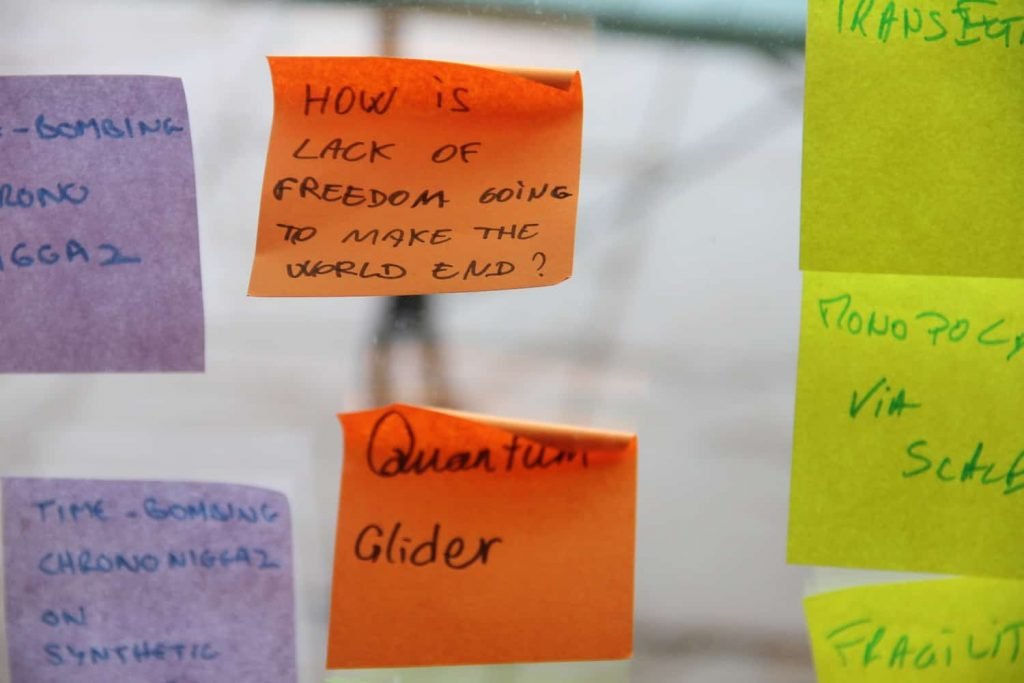
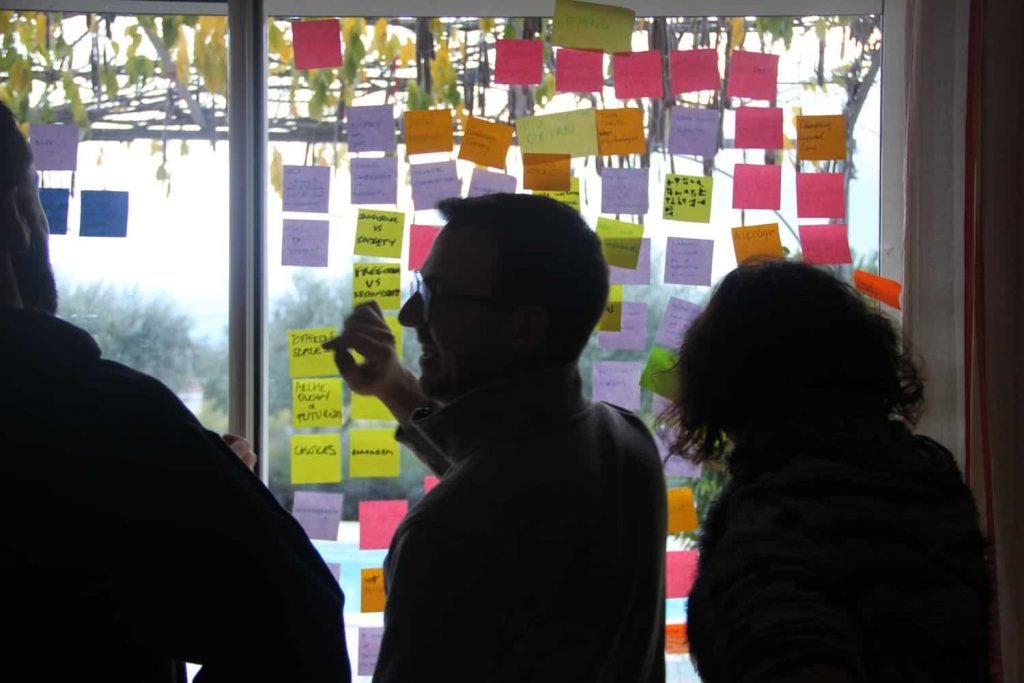
    Post it notes play a big role in the Sprint methodology

    The book isn’t tedious at all, which is what someone would expect from a book that discusses how to resolve problems. It gives you simple instructions and examples on how to sort out the issue your start up (or big firm) is facing.

    The book is very hands on, asking the reader to arrange five days for five long sessions of meetings to identify a problem, question it, work it out and test it. So in just five days, you are able to test an idea and see if it works or not.

    Interactive brainstorming leads to effective meetings

    Although the method described in the book is for an already up and running startup, or a big business, the ideas and methodology can apply to one person or two. It just helps sort out a muddled idea or a difficult plan. And is a fun read too.

    Don’t want to buy or read the book? Here is the video version of what the book is all about

    We actually tried implementing the method which is why we are such big fans of it. We used the plan for day one and day two and implemented it on a small group of people who needed to resolve a problem and it was an effective way of getting the problem identified and also coming up with a solution to resolve it.

  • Dog culling: You don’t have to be an animal lover, but at least be human

    Dog culling: You don’t have to be an animal lover, but at least be human

    We starve them, kidnap them and even murder them, but the moral community that rejects the abuse of humans, does not consider what we are doing to animals as something wrong.

    If you reside in any of the big cities of Pakistan, you must have woken up to the sounds of gunshots every few months. Gunshots, loud whimpers, more gunshots and then complete silence… a deafening silence.

    Dog culling, which basically means to kill, takes place to reduce the population of stray dogs and the occurrence of rabies. It is a brutal and outdated practice that still exists in a few countries around the world — Pakistan being one of them.

    As per a study by the World Health Organisation (WHO) in 2010, around 97,000 dog bite cases are reported every year in Pakistan, however, there are still no exact figures of the number of deaths caused by rabies. And the governments’ solution to combating the spread of the deadly disease, is dog culling.

    Every year, thousands of dogs are brutally murdered by being shot or poisoned. The government, under the municipal department, hires ‘dog shooters’, whose only job is to kill all the dogs in any area. These shooters are given old guns, which mostly miss the target, resulting in injured dogs suffering for hours as they slowly bleed to death.

    According to the World Animal Protection (WAP), “Culling dogs is not the solution to rabies”. It is also not the solution to decrease dog population, because, for every dog that’s left, eight more puppies will be born and with the imbalance created in the environment due to dog culling, more food will be available for the new ones.

    The surviving animals will keep on reproducing and these new dogs will then move to areas that were previously made ‘dog-free’. This cycle continues every year, the dog population doesn’t decrease and nor is rabies contained. So what is the solution that can eliminate both rabies and dog population? It is TNVR.

    TNVR stands for Trap, Neuter, Vaccinate and Return. You pick up dogs from the streets, spay/neuter them so they can no longer reproduce; vaccinate them so they do not get rabies, tag them or chip them and then return them to the area they were found in. This way, stray dogs will not only be free of rabies, but their population will also gradually start to decrease.

    As per WAP, “the only way to eliminate the virus is through
    vaccination. Vaccinating at least 70% of the dogs in an area creates herd
    immunity, slowing the spread of rabies until it dies out”.

    A single female can produce up to 2,048 puppies in just four years! Now imagine the effect of spaying one female. A study in India (Reece & Chawla, 2006) reported a decrease of 31.8% to 51% in dog population in six years when 50% or 70% of the population was spayed and neutered. Meanwhile, Thailand has seen a decline of 50% in just five years.

    If we just talk about rabies drives, countries as Panama, Chile, Brazil and Argentina initiated countrywide rabies vaccine drives that have led to them being rabies-free for over 10 years now.

    One of the major reasons why no time is spent on campaigns such as TNVR is because of the public opinion regarding dogs. In our society, dogs are looked down upon, and we consider them as non-feeling, non-thinking beings.

    However, according to a 2012 University of Cambridge study, animals have a conscience, which means they think, feel and respond to the world in the same way as humans, but just because they express their emotions differently, we tend to overlook them.

    The result of this willful forgetfulness is reflected in the way we treat dogs. We stone, beat and even shoot them dead every day.

    Imagine the same for a human being;
    where he or she is starved, kidnapped, poisoned, murdered, shot or tortured. Most
    governmental bodies around the world, NGOs and individuals would agree that
    such acts are wrong. They would criminalise such acts and punish those who
    commit them.

    Sadly, the same cannot be said for animals, their abuse is accepted by the same moral community that rejects the abuse of humans. As a society, we still do not see what we are doing to animals as something wrong. We are okay with watching animals suffer; we are okay with the constant and widespread abuse of animals.

    Perhaps it is time for the citizens of this country to wake up and take a good hard look in the mirror. Have we become the very monsters we speak of? Have we become so selfish that we refuse to acknowledge the abuse that takes place outside our homes every day? Have we become so arrogant that we deny basic rights to other living beings around us? Have we completely lost humanity and compassion? But most importantly, are we even human anymore?
  • Experts question Modi’s claims as millions still relieve themselves in public

    Experts question Modi’s claims as millions still relieve themselves in public

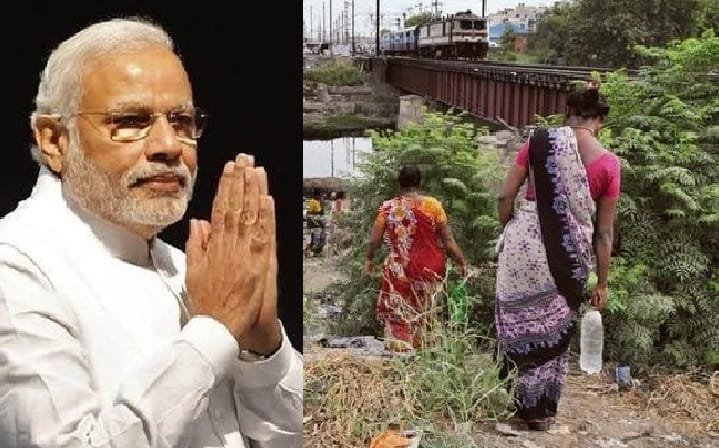
    India is to be declared “open-defecation free” by Prime Minister (PM) Narendra Modi on Wednesday evening, although experts question his bold claim that all 1.3 billion people in the country have access to a toilet, Agence France-Presse (AFP) has reported.

    Modi made his “latrines for all” pledge when he first assumed office in 2014 and is hailing the project’s success as India celebrates the 150th anniversary of the birth of independence hero Mahatma Gandhi, a sanitation champion.

    Since being elected, Modi’s government says it has built almost 100 million toilets, winning the leader plaudits abroad, including an award from the Bill and Melinda Gates Foundation last week.

    In March, the government had said fewer than 50 million people relieved themselves outside, down from 550 million in 2014, with more than 550,000 villages declared open-defecation free.

    However, experts are sceptical over his claims, citing data from rural as well as urban areas.

    “A lot of latrines have been constructed from 2014 to 2018. Latrine ownership increased from about 35 per cent to about 70 per cent,” said Sangita Vyas from the Research Institute for Compassionate Economics (RICE).

    “That increase did accelerate the reduction of open defecation but in December 2018 we estimated about half of the people in the states of Bihar, Madhya Pradesh, Uttar Pradesh and Rajasthan still defecated in the open,” she told AFP, doubting that the shortfall has been made up since.

    Many of the toilets that have been constructed are without a water connection and even when they are connected, cultural barriers stop many Indians from using them, experts say.

    Modi, 69, was set to make the grand announcement in his western home state of Gujarat today evening in front of 20,000 village chiefs.

    He was also due to visit the Sabarmati Ashram in Gujarat, where Gandhi based himself for many years, and where 10,000 jars of treated human faecal matter were to be handed to guests, the Indian Express daily reported.

    The nutrient-rich matter — sun-dried, sieved into a tea leaf-like consistency and packed into the glass jars together with seeds — will then sprout upon watering.

    Before that, Modi early on Wednesday paid his respects to Gandhi, who was assassinated the year after India gained independence from Britain in 1947, at the Raj Ghat memorial in New Delhi.

    He said on Twitter that India was expressing “gratitude to Mahatma Gandhi for his everlasting contribution to humanity. We pledge to continue working hard to realise his dreams and create a better planet”.

    Other events also took place nationwide including in a hospital room in Pune where Gandhi was operated on for appendicitis in 1924.

    As many as 600 prisoners were also set to be released in an amnesty, media reports said.

    Later on Wednesday, a year-long, 14,000-kilometre (8,700-mile) “global peace” march was due to leave Delhi bound for Switzerland and taking in 10 countries.

  • Boy in Lahore performing an indecent act caught on video

    Boy in Lahore performing an indecent act caught on video

    Zoya Ayaz, a resident of Lahore, was crossing a pedestrian bridge in New Garden Town, when a boy on the bridge exposed himself to her and started masturbating in front of her.

    https://twitter.com/ShoutOutLoud16/status/1176724620495544325
    Zoya released the video on Twitter

    Even though it is obvious that he knew he was being filmed, he continued the act and then after finishing, walked away from her. After she continued filming him, and he tried to block his face, he came towards her, trying to hit her but she ran away.

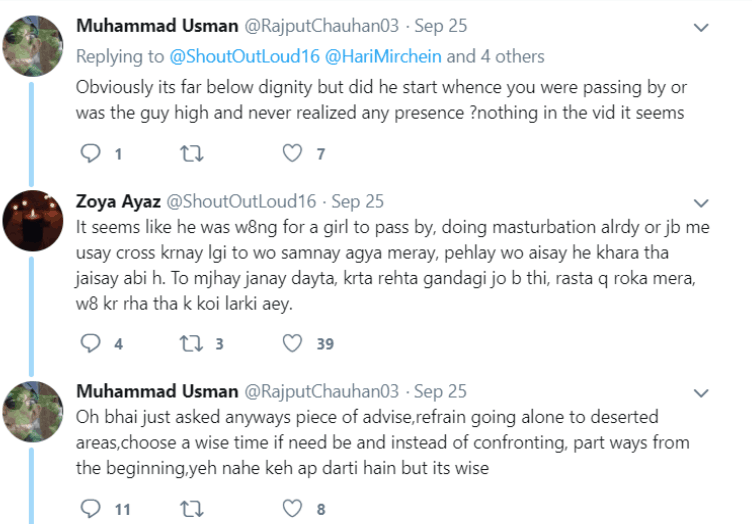
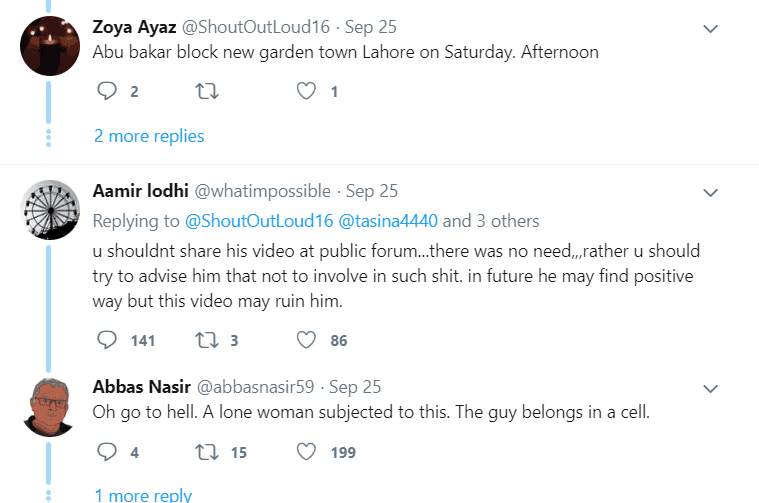
    Twitter was surprisingly divided on the issue, with Zoya having to give clarifications.

    With others also coming to Zoya’s defence.

  • Sindh announces to ban plastic bags

    Sindh announces to ban plastic bags

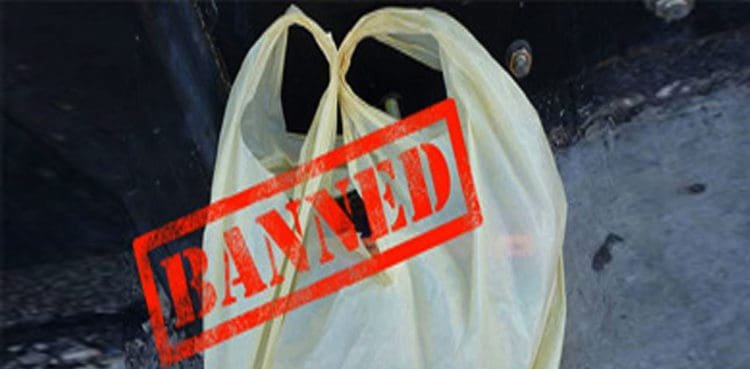
    The Government of Sindh has announced a ban on plastic bags across the province from October 1st (tomorrow).

    As per reports, the Sindh Government’s Environment Department has issued a notification to ban the production, sale, purchase, and use of non-biodegradable plastic bags.

    Legal action will be initiated against anyone who breaks the law. Special teams will monitor different markets and those found involved in any violation of the law will be punished accordingly, said the notification.

    Adviser to CM on environment Murtaza Wahab advised citizens to replace plastic bags with paper or cloth bags.

    Biodegradable refers to substances that are capable of being decomposed by bacteria and other living organisms and do not pollute the environment. Ordinary plastic does not degrade and stays in the ecosystem for years and years, creating pollution and health hazards for living things.

  • Kashmiris protest against India with apples

    Kashmiris protest against India with apples

    Farmers in India-occupied Kashmir (IoK) are intentionally letting their apples rot in a bid to discourage the valley’s most profitable export as bitterness towards the Indian government grows.

    According to a report by AFP, farmers are purposely sabotaging the crop, vital to the local economy, in protest against Modi’s government.

    At an orchard in central Shopian district, Ghulam Nabi Malik and his brother usually sell 7,000 boxes of apples per year earning them some seven million rupees (nearly $100,000). Their land is now idle, with branches drooping under the weight of unpicked fruit.

    “Let it rot on the trees,” Malik said, adding, “To leave the ripe apples rotting on the trees is the only form of protest we can do under the current circumstances.”

    Malik said that harvesting would allow the Indian government “to tell the world that everything is fine in Kashmir” and he wants the world to know that everything is far from fine.

    In early August, the Indian Government revoked Article 370 which granted special status to IoK. Troops were deployed in the region and all communication in the valley was blocked, cutting off Kashmiris from the outside world. Thousands of civilians and political leaders have been arrested and protests have raged since.

    Pro-independence fighters have pasted posters outside mosques, appealing to orchard owners not to harvest and instead join the protest.

    The fertile Himalayan region usually sells apple worth hundreds of million dollars each year, and more than half of Kashmiris are engaged directly or indirectly in cultivation.

  • Matchmaker tricks elderly widower into marrying transwoman

    Matchmaker tricks elderly widower into marrying transwoman

    An elderly widower from Upper Dir was tricked by a conman into marrying a transwoman in return for Rs 150,000 in dowry.

    According to reports, 55-year-old Jan Saaz – whose wife had passed away three years ago – met an alleged matchmaker in Peshawar, who promised to find him a bride.

    The matchmaker set up Saaz with a transwoman, Sapna, without sharing the details. Meanwhile, he told Sapna that Saaz wanted to marry her knowing that she is gender-neutral. The two got married and on the wedding night, Saaz was shocked when he found out that Sapna was a transwoman. Sapna was also shocked to know that he had not known about her.

    The next morning, Saaz dropped Sapna in Peshawar before telling his family about her. He said that he revealed the truth after sending Sapna off fearing that his friends, family and villagers might harm her.

    Saaz’s family claimed that they paid the matchmaker Rs 150,000 in cash as dowry and spent another Rs 150,000 on the wedding ceremony. They are planning to register a case against the alleged matchmaker.

  • Saudi Arabia drops abaya restriction for women tourists

    Saudi Arabia drops abaya restriction for women tourists

    To boost tourism in the country, Saudi Arabia has introduced a new visa system which will allow people to visit the country as tourists. Along with that, they have also announced that abayas will no longer be mandatory for women tourists. However, women are requested to dress modestly, including at public beaches.

    As per reports, the Kingdom is launching a new visa system for 49 countries to attract foreign companies to invest in a sector that can contribute towards ten percent of the country’s GDP by 2030.

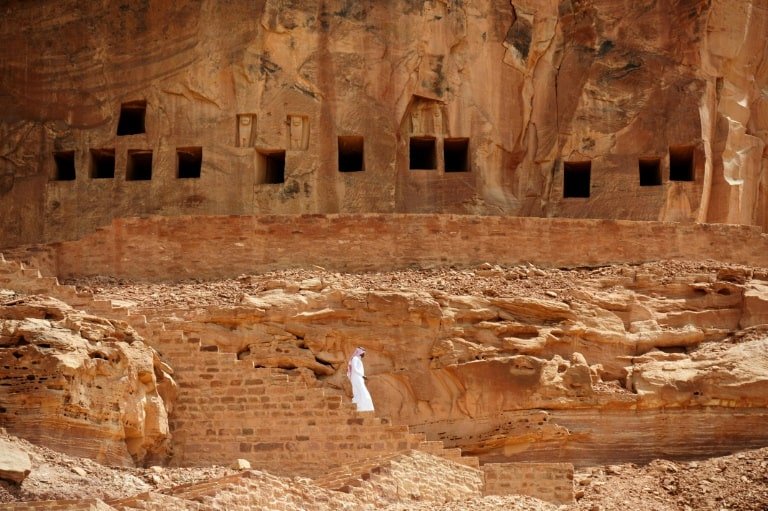
    The rose-coloured sandstone of Madain Saleh, a UNESCO World Heritage site, near Saudi Arabia’s northwestern town of al-Ula

    Visas will be available online for about Rs 12,550 ($80) with no restrictions for unaccompanied women as in the past. This does not include the holy cities of Makkah and Medina.

    Visas in the desert kingdom, endowed with rich bedouin heritage and archaeological sites, are currently restricted to expat workers, their dependents and Muslim pilgrims travelling to holy sites in Mecca and Medina. Citizens of Bahrain, Kuwait, Oman, and the UAE can also travel freely to the country.

    Al Ula

    Saudi Arabia has splurged billions in an attempt to build a tourism industry from scratch.

    In 2017, the kingdom announced a multi-billion dollar project to turn 50 islands and other pristine sites on the Red Sea into luxury resorts.

    Last year, construction of Qiddiya “entertainment city” was launched near Riyadh, which would include high-end theme parks, motorsport facilities and a safari area.

    The country is also developing historic sites such as the centuries-old Mada’in Saleh, home to sandstone tombs of the same civilisation which built the Jordanian city of Petra.

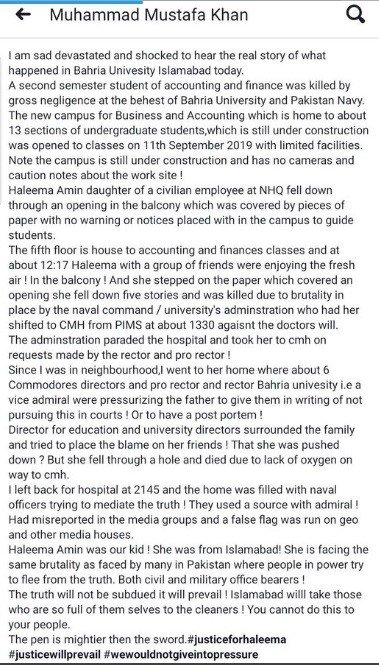
  • Criminal negligence or accident? Bahria University student falls to death

    Criminal negligence or accident? Bahria University student falls to death

    A student of Bahria University Islamabad passed away after falling from the fourth floor of the university building.

    The deceased, 23-year-old Haleema Amin, was a bachelors student in her second semester at Bahria University. According to the police and hospital staff, she fell from the fourth floor of a new university block which is currently under construction.

    The hospital staff claimed that the Haleema was conscious when she was brought to the Pakistan Institute of Medical Sciences (Pims) in the afternoon by university staff, including a doctor.

    She had suffered multiple fractures including her backbone and was kept under observation and provided treatment. However, she passed away in the afternoon around 4:30 pm. The staff added that her body was later taken from the hospital by the same people who brought her to Pims.

    Meanwhile, the Margalla police said they found out about the incident when the woman was brought to the hospital. They said they were told she fell off the building while taking a selfie.

    The police said that the university did not allow them to investigate the scene of the accident and said that they would inform the police later and submit a report in this regard.

    The police also shared that the woman’s family has yet to be approached for legal action, and her body is not with the police or the hospital. They said legal action will be taken, including an autopsy, if a complaint is lodged with the police.

    Meanwhile, students of Bahria University said that their colleague passed away due to negligence by the university. They said that some of their classes were being held on the fourth floor of a new university block which is currently under construction and Haleem fell because of no proper fencing.

    The students took to social media and the streets to protest against the university for being negligent and hiding the facts of the case and are demanding justice for their friend.

    https://www.facebook.com/amna.asif.9277/posts/2399791793449586

    Minister for Human Rights Dr Shireen Mazaari also took notice of the incident and asked Education Minister Shafqat Mehmood to institute an inquiry.

  • ‘DON’T kiss babies’: Mother-of-four whose infant son nearly died begs adults

    ‘DON’T kiss babies’: Mother-of-four whose infant son nearly died begs adults

    A mother-of-four is warning others against kissing their newborns during the flu season after her own son barely survived a severe respiratory infection.

    Ariana DiGrigorio’s son Antonio caught the flu when he was still an infant.

    For two months, they could not figure out why the symptoms persisted. Antonio was then diagnosed with respiratory syncytial virus (RSV).

    Ariana shared a heart-wrenching photo of son in the hospital with all manner of supportive and monitoring tubes and wires coming from his tiny body on Facebook, urging parents to keep their babies away from relatives’ kisses, for the infants’ good.

    RSV is a common viral infection but for the elderly, those with compromised immune systems and especially babies, the virus can be dangerous.

    Most instances of pneumonia and bronchitis in infants are triggered by RSV.

    Antonio pulled through, but it was a terrifying time for the DiGrigorio family. Antonio finally pulled through.

    ‘Don’t be the reason a baby is hospitalized (or dead) because the baby was “just so cute I had to kiss her!”‘ Ariana wrote in a Facebook post that was shared over 2,500 times.