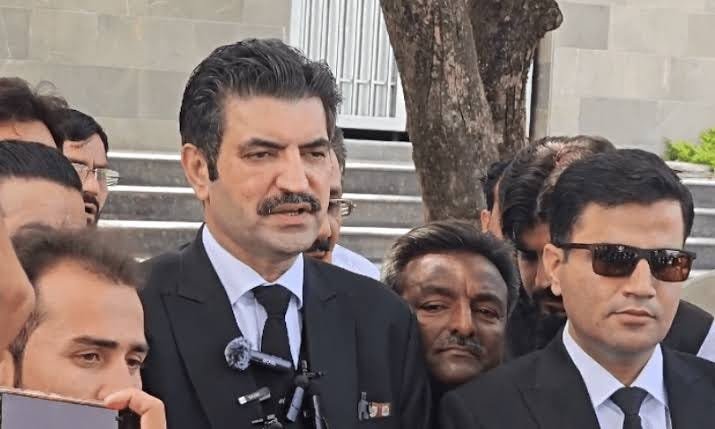
Pakistan Tehreek-e-Insaf (PTI) popular leader Sher Afzal Marwat has turned out to be a fan of Indian film songs. During an interview, at the request of the host, Sher Afzal Marwat sang a classic 90s song.
The host asked him to sing his favourite song in Urdu or Pashto.
Marwat crooned the song “Barsat kay mausam main, tanhai kay aalam main” from the Bollywood film Najaiz.
The song is about the loneliness of a man drinking alcohol in the rain.
Sher Afzal Marwat said that his children are fond of listening to his songs, but his wife is not.
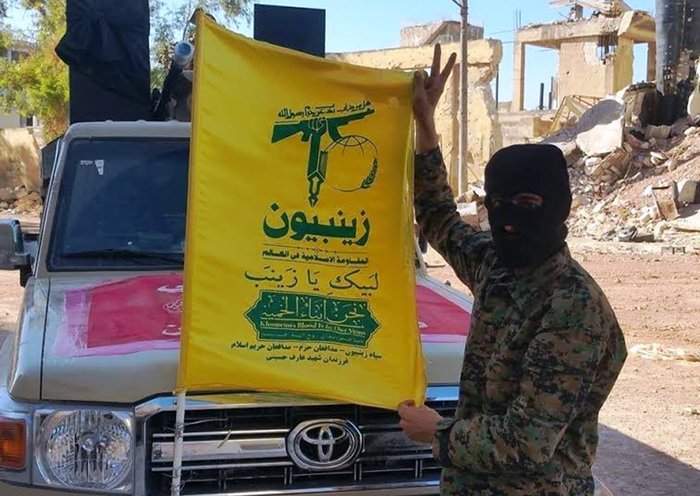
The Pakistani government has officially proscribed the Zainebiyoun Brigade, a Shia faith militant organization, as a threat to the security of Pakistan.
The Khorasan Diary reported that the banned militant organization has backing from Iran as well.
Interestingly, former Senator Faisal Raza Abidi had said in a talk show on GTV that, “40,000 fighters from Hezbollah and Zainebiyoun Brigade have reached Jerusalem out of which 233 are Pakistani fighters who came from areas of Parachinar.”
In a notification issued on March 29 by the Interior Ministry of Pakistan, it was said that “Zainebiyoun Brigade is engaged in certain activities which are prejudicial to the peace and security of the country”.
Under the Anti-terrorism Act of 1997, the government has made it a proscribed organization.
The banned group is known for its involvement in the Middle East conflict and provided support to the Bashar-ul-Asad forces in Syria.
The group had come under scrutiny from the authorities about its capabilities.
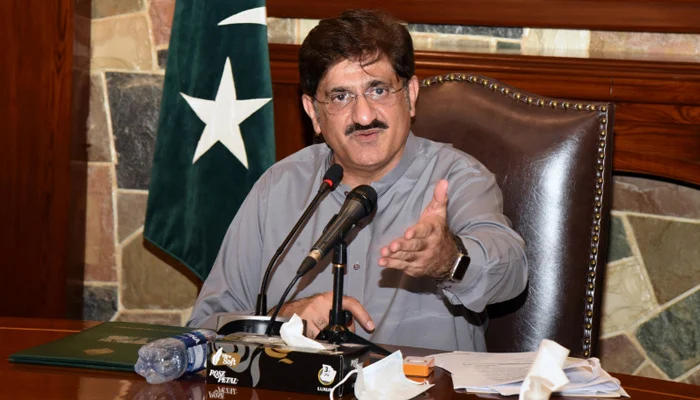
Amidst increasing crime rates and deteriorating law and order situation in Karachi, Sindh Chief Minister Murad Ali Shah has blamed the previous caretaker government, again, for the problem – a claim rejected by the ex-caretaker home minister Brig (retd) Haris Nawaz.
The CM made the claim while speaking to media after visiting victims of a road accident while en route to the Shah Noorani shrine.
The CM was of the opinion that the previous caretaker set-up had reshuffled the police department ahead of the February 9 general elections, worsening the law and order situation.
“This reshuffle affected the entire policing system, from additional inspector generals (AIGs) to station house officers (SHOs). However, the government is taking strict measures to improve the overall law and order situation, including in Karachi, rural areas, and particularly in the katcha area,” said Shah.
Shah emphasized that PPP has always done the best for Sindh and recalled Karachi’s 7th ranking as the world’s most dangerous city by International Crime Index in 2008 before their government came.
“But we restored law and order after coming into power and when we left the government in 2023, the same city of Karachi had improved its ranking and was ranked 128th on the same Index,” he said.
Responding to Shah’s claims, former caretaker home minister Brig (retd) Haris Nawaz rejected CM’s remarks and said, “The Sindh CM has his own point of view, but we approved postings of the officers with good reputation”.
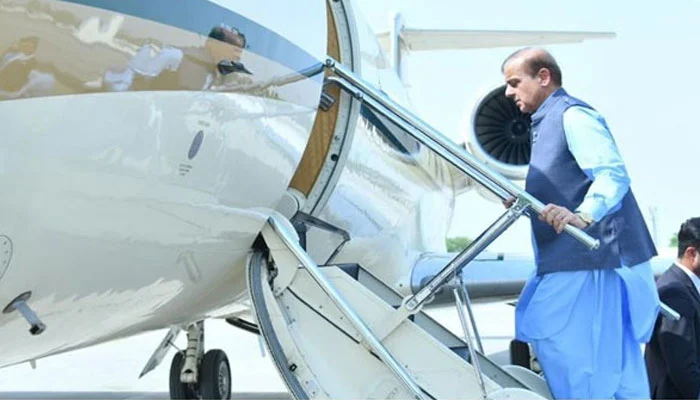
A Pakistan International Airlines (PIA) flight from Jeddah to Islamabad, carrying Prime Minister Shehbaz Sharif and Punjab Chief Minister Maryam Nawaz back from their visit to Saudi Arabia, was diverted to Lahore on Monday.
Flight PK842 was supposed to land in Islamabad at 10:30pm on Monday night but was diverted to Allama Iqbal International Airport, Lahore and landed there at 9:25pm.
The commercial flight was carrying 393 passengers which had the official delegation returning from Pakistan, including the Defence Minister, the PM, the CM and their family members.
Videos circulating online showed passengers expressing resentment for the problems caused to them.
After offloading about 79 passengers at Lahore, the flight did take off for Islamabad and landed there at 11:17pm.
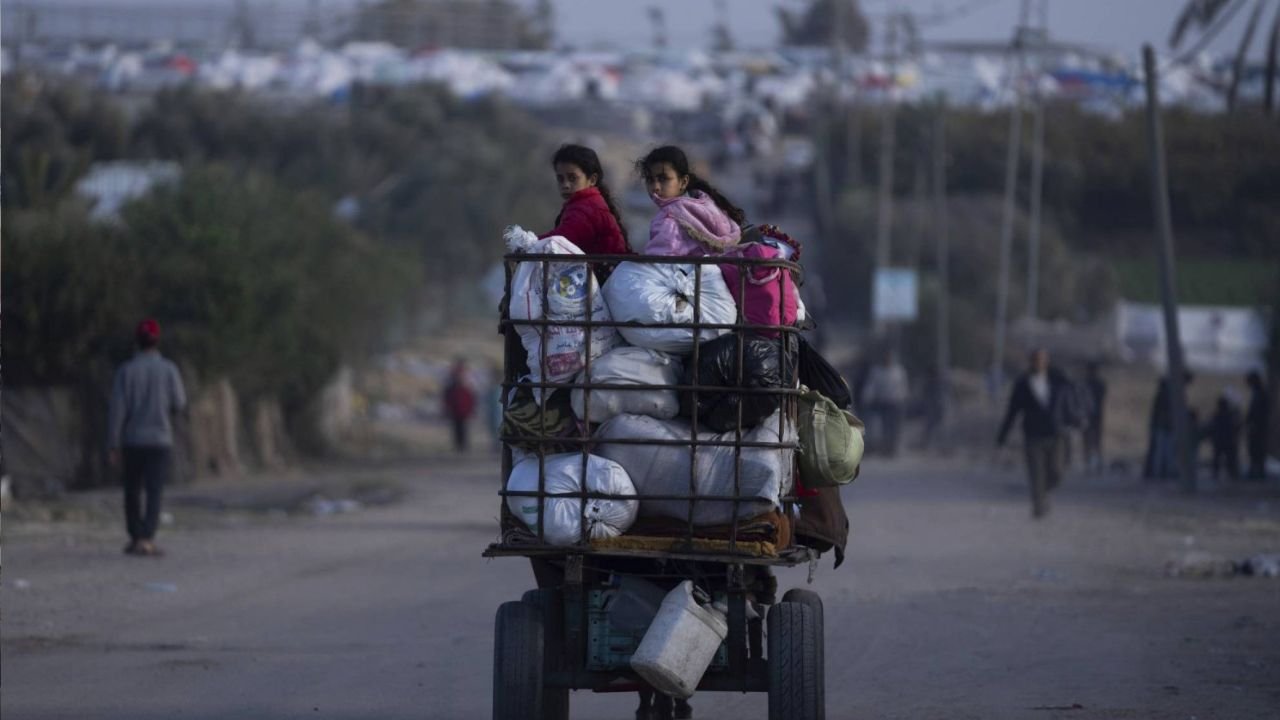
Most aid bound for war-ravaged Gaza arrives overland from neighbouring Egypt but Israel and UN agencies clash on how much actually makes it inside the Palestinian territory.
The volume of aid entering Gaza by road each day through the Rafah crossing from Egypt is insufficient, aid workers say, blaming rigorous Israeli inspections at least in part.
With no truce in sight to pause the Israel-Hamas war, here is a look at how aid currently reaches Gaza and what alternatives are being weighed to alleviate the crisis in the besieged Palestinian territory.
First stop: Egypt
Most Gaza-bound goods arrive by sea in the Egyptian ports of Port Said or El-Arish.
El-Arish is closer to Gaza but also smaller, and was quickly overwhelmed by the volume of shipments arriving, aid groups say.
Israeli authorities, who have blockaded Gaza since Hamas took sole control of the Palestinian territory in 2007, require that all aid entering Gaza be inspected by them.
The main inspection area for goods is Kerem Shalom in southern Israel, not far from the Rafah crossing.
Another inspection area exists in Nitzana, on the Israeli-Egyptian border about 40 kilometres (25 miles) to the southeast.
Long wait for trucks
Before reaching the inspection areas, many aid trucks wait for days at the Egyptian side of the Rafah checkpoint.
Once inspected, goods that are cleared to enter by Israel are unloaded from the mostly Egyptian trucks in the zone between Egypt and Gaza.
The supplies are then loaded onto separate vehicles, driven by Gazans working for aid groups, for distribution inside the Palestinian territory.
Cumbersome screenings are a major reason shortages are so glaring, aid workers say.
Israel blames a lack of sufficient capacity on the Palestinian side to distribute the aid once it gets in.
In recent days, Israel took issue with UN figures on the number of trucks entering Gaza, accusing UN Palestinian refugee agency UNRWA of counting only trucks it had processed, not those processed by Israel.
Heading north
For months, aid groups and foreign governments including top ally the United States have urged Israel to reopen border crossings into the north of Gaza, where the humanitarian crisis is most severe.
Israel announced that six World Food Programme (WFP) aid trucks entered the north directly from its territory in early March, in what it described as a “pilot project”.
The trial was not extended, however, and aid convoys bound for northern Gaza must travel the length of the territory negotiating battlegrounds, Israeli bombardments and mobs of desperate civilians.
In March, the WFP said one of its convoys had been blocked by Israeli forces inside Gaza before it could reach the north.
After turning back, the agency said the convoy was looted by a “crowd of desperate people”.
According to Israeli authorities, 28 trucks reached northern Gaza on Wednesday.
They were among 298 trucks that Israel said entered Gaza on Wednesday, still far below the number aid groups say is needed to sustain the territory’s 2.4 million people.
Under pressure from the international community, Israel announced on April 5 that it would open a new crossing directly into northern Gaza, without specifying its exact location or when it would open.
By air and by sea
In a bid to get round the logjam, several Arab and European governments, later joined by Washington, began carrying out aid airdrops over Gaza, particularly the north.
But the airdrops have proved controversial, with multiple deaths among civilians on the ground who were crushed by aid crates when parachutes failed to open, or drowned trying to reach others accidentally dropped in the sea.
There has also been an attempt to establish a maritime aid corridor from the Mediterranean island of Cyprus but it has largely fizzled out after seven aid workers were killed by Israeli fire on April 1 as they unloaded food from the second flotilla to make the crossing.
Even though the Cypriot government insists it has not given up on the aid corridor, no further crossings are currently planned after the US and Spanish charities behind the first two suspended their operations in the region.
UN agencies have in any case said repeatedly that road convoys are the only practical way of meeting Gaza’s needs.
Former President Dr Arif Alvi doesn’t think Khan was allowed to say Eid ki Namaz in jail, but even Alvi was confused. The former president first tweeted, alleging that Pakistan Tehreek-e-Insaf founder Imran Khan was not being allowed to offer Eid namaz in Adiala Jail where he is currently incarcerated.
On April 9, Dr. Arif Alvi posted that Imran Khan’s ban on Eid prayers reminded him of the British rule. He wrote about a famous leader in India’s freedom struggle when he was sentenced by the occupying authorities.
He remarked, “He [Indian leader] remained in prison for four years and during that time Eid prayers were not even allowed. Because these oppressive rulers wanted to destroy the leadership of Muslim India, one of the various tactics to weaken their patriotism was to ban Friday and Eid prayers as well.”
However, when it was reported that Khan was allowed to offer Eid prayers, Alvi modified his statement.
Alvi wrote “Good sense has prevailed” in a post on X.
But again, in a twist, Dr Arif Alvi, a few hours later again, condemned authorities that Khan indeed was not allowed to offer Eid prayer quoting Meher Bano Qureshi, a PTI member and incarcerated Shah Mahmood Qureshi’s daughter. According to Meher Bano, both Khan and her father were not allowed to say Eid Namaz, as was confirmed to her by her father. He further stated that another party member Ejaz Chaudhary wasn’t allowed to do so either but “he led the prayer with Omar Cheema in their cell.”
He then edited his post with deploring fake news by saying, “in these times of falsehood and deceit no news source is trustworthy, except the crowdsourcing of PTI social media.”
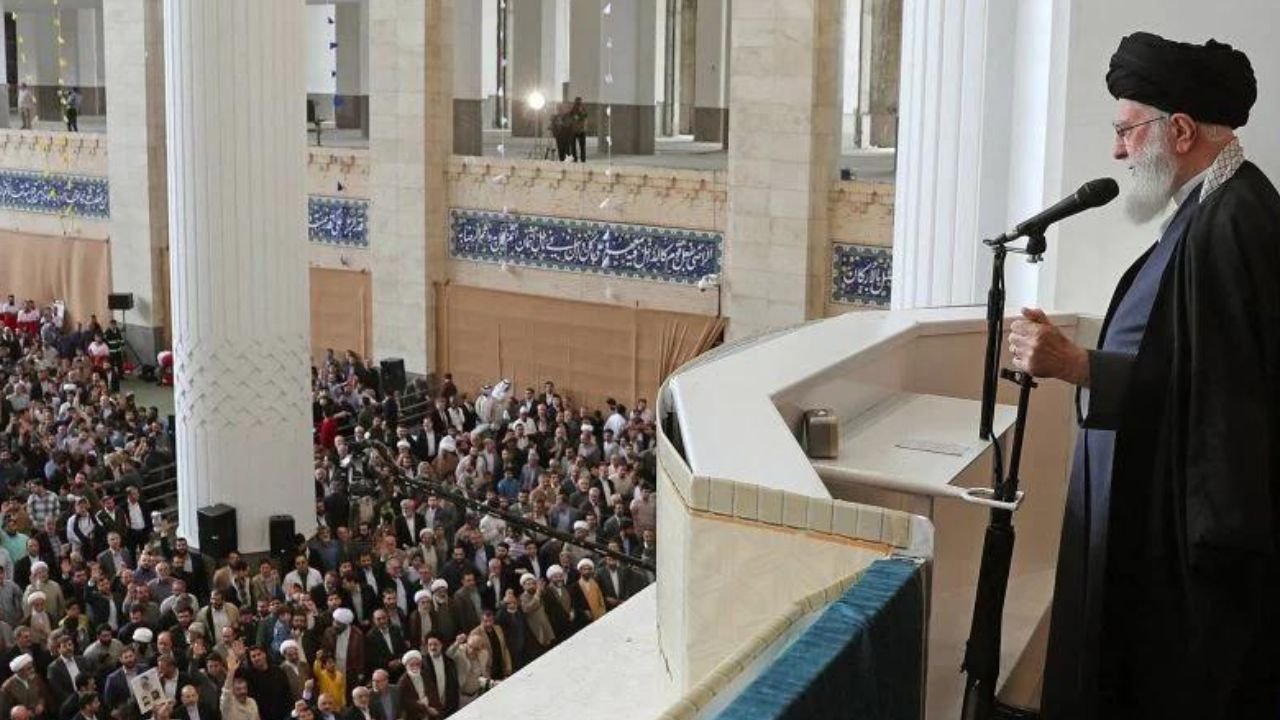
Iran’s supreme leader Ayatollah Ali Khamenei again warned Israel Wednesday that it “will be punished” for a Damascus air strike that killed seven Revolutionary Guards, two of them generals.
“The evil regime made a mistake in this regard. It must be punished and will be punished,” Khamenei said in a televised speech after Eid al-Adha prayers in Tehran.
Israeli Foreign Minister Israel Katz swiftly riposted with a Persian-language statement on social media site X.
“If Iran attacks from its territory, Israel will respond and attack Iran,” he said.
Khamenei said the April 1 strike, which levelled the five-storey Iranian consulate building in the Syrian capital, had run roughshod over international agreements providing for the inviolability of diplomatic premises.
“The consulate and embassy offices in any country are the territory of that country,” he said. “When they attacked our consulate, it means they attacked our territory.”
Khamenei has led Iranian officials in a succession of promises to avenge the strike, which was widely blamed on arch foe Israel.
One of his senior advisers, Yahya Rahim Safavi, warned on Sunday that Israeli embassies were “no longer safe”.
Israel said last week it was strengthening its defences and pausing leave for combat units following Iran’s retaliation threats.
Iran does not recognise Israel, and the two countries have fought a shadow war for years.
Iran charges that Israel was behind a wave of sabotage attacks and assassinations targeting its nuclear programme.
GAZA STRIP: Israeli strikes hit Gaza on Wednesday as Muslims marked the end of the holy fasting month of Ramzan and after US President Joe Biden labelled Israel’s approach to the war a “mistake”.
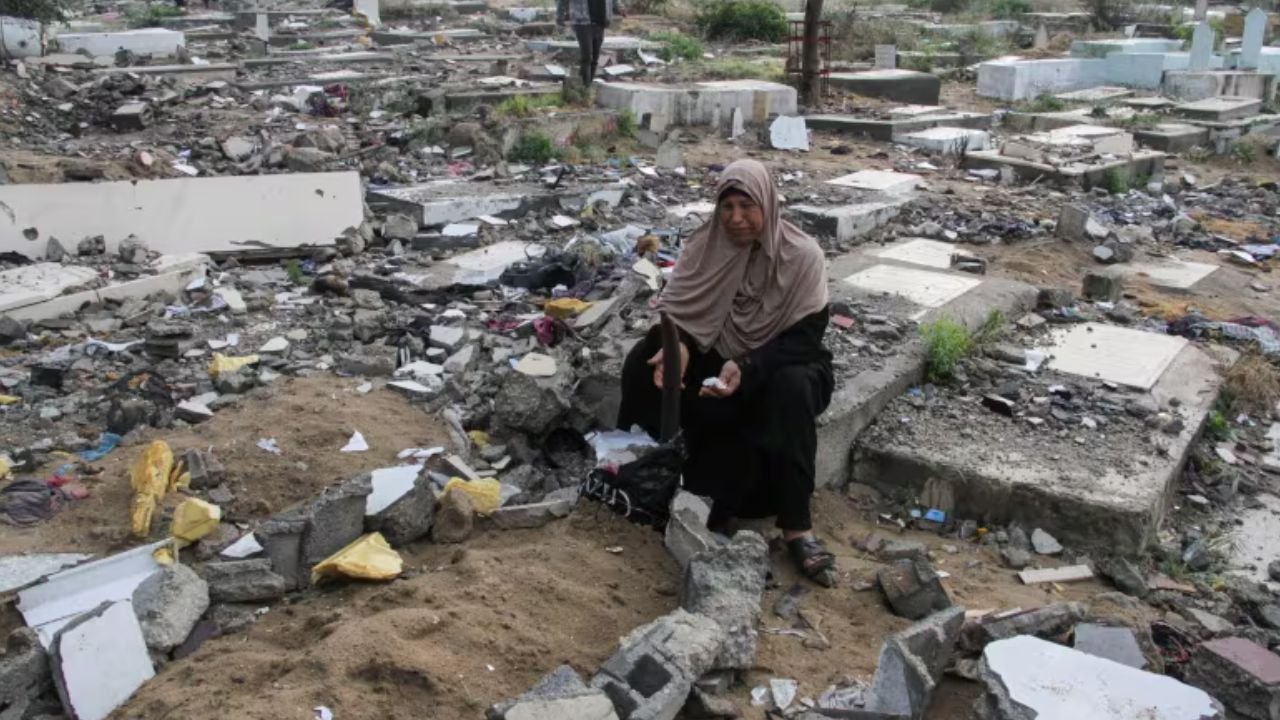
Palestinians gathered for morning prayers on the first day of the Eid al-Fitr holiday amid the ruins of Gaza, which has been devastated by more than six months of war since October 7.
Tens of thousands also flocked to Israeli-annexed east Jerusalem’s Al-Aqsa mosque compound where one worshipper, nurse Rawan Abd, said: “It’s the saddest Eid ever… you could see the sadness on people’s faces.
“Usually we come to Al-Aqsa to celebrate, this year we came just to support each other,” the 32-year-old said at Islam’s third holiest site, which is also revered by Jews as the Temple Mount.
Israeli forces kept up combat operations and air strikes on Gaza a day after Prime Minister Benjamin Netanyahu vowed no let-up in the campaign to destroy Hamas and bring home the hostages.
Netanyahu insisted on that “no force in the world” would stop Israeli troops from entering Gaza’s far-southern city of Rafah which is packed with displaced Palestinians.
His threat came amid ongoing talks in Cairo involving US, Egyptian and Qatari mediators for a truce and hostage release deal.
Biden, voicing his growing frustration with hawkish Netanyahu, issued some of his sternest criticism yet of the war, which has brought mass civilian casualties and widespread suffering.
“I think what he’s doing is a mistake,” Biden told Spanish-language TV network Univision in an interview that aired Tuesday night after being recorded last week. “I don’t agree with his approach.”
He urged Netanyahu to “just call for a ceasefire, allow for the next six, eight weeks, total access to all food and medicine going into the country.”
‘Famine-like conditions’
The war broke out with October 7 against Israel, which resulted in the deaths of 1,170 people, mostly civilians, according to Israeli figures.
Palestinian also took about 250 hostages, 129 of whom remain in Gaza, including 34 the Israeli army says are dead.
Israel’s retaliatory offensive has killed at least 33,360 people in Gaza, mostly women and children, according to Gaza’s health ministry.
Another 14 people were killed – including small children – in a strike on a home in Nuseirat camp in central Gaza, the health ministry said.
The army said Wednesday that “Israeli troops are continuing to operate in the central Gaza Strip and killed a number of terrorists over the past day”.
It added that aircraft had “struck dozens of terror targets in the Gaza Strip, including military sites, launchers, tunnel shafts and infrastructure.”
Israel has imposed a siege that has deprived Gaza’s people of most food, water, fuel, medicines, and other essential goods.
Humanitarian groups have accused Israel of using starvation as a weapon of war in Gaza, where UN experts say half the population is facing “catastrophic” food insecurity.
Washington’s recent tougher line with Israel, its main ally in the region, has brought some results, according to the US Agency for International Development.
Recent days had seen a “sea change” in aid deliveries, said USAID administrator Samantha Power, with Israel reporting 468 trucks entering from Egypt on Tuesday.
However, Power stressed that Israel needs to do more, saying that “we have famine-like conditions in Gaza, and supermarkets filled with food within a few kilometres away” in southern Israel.
Washington has also resumed funding to the UN agency for Palestinian refugees after cutting it weeks ago after Israel claimed that some UNRWA staff took part in the October 7.
‘It will be punished’
Hamas has said it is studying the latest proposal for a truce. A framework being circulated would halt fighting for six weeks and see the exchange of about 40 hostages for hundreds of Palestinian prisoners.
However, Hamas has so far also publicly insisted on a full withdrawal of Israeli ground forces and a permanent ceasefire – demands Israel has rejected outright.
US National Security Advisor Jake Sullivan said Tuesday that Israel had to “take some steps forward” while Hamas’s public statements had been “less than encouraging”.
The US State Department has however also warned Israel that “a full-scale military invasion of Rafah would have an enormously harmful effect” on civilians and “would ultimately hurt Israel’s security”.
US Secretary of State Antony Blinken said Tuesday he had no indication of an “imminent” assault on the city, where around 1.5 million Palestinians are sheltering.
Blinken also said he doubted Israel would attack Rafah before a delegation is set to visit Washington next week.
Regional tensions have surged amid the Gaza war, and Israel was widely blamed for an April 1 strike on arch foe Iran’s consulate in Damascus that killed seven Revolutionary Guards.
Iran’s supreme leader Ayatollah Ali Khamenei warned Israel that “the evil regime made a mistake in this regard. It must be punished and will be punished.”
Israeli Foreign Minister Israel Katz swiftly replied with a Persian-language post warning that “if Iran attacks from its territory, Israel will respond and attack Iran.”
Louis Theroux, Aimee Lou Wood, Nicola Coughlan, Peter Capaldi, and Jenna Coleman are among the many celebrities who have donated items to help Cinema for Gaza.
Famous musicians, filmmakers, actors, and photographers like Annie Lennox, Jonathan Glazer, Brian Cox, Tilda Swinton, Misan Harriman, Gurinder Chadha, Juliette Larthe, and Naqqash Khalid have also donated to a Cinema for Gaza Auction.
Film journalists and filmmakers Hanna Flint, Julia Jackman, Leila Latif, Sophie Monks Kaufman, and Helen Simmons have started Cinema For Gaza with a planned auction to help Medical Aid for Palestinians (MAP).
Many talented filmmakers from the UK and beyond have donated too. A-listers like Tilda Swinton, Jonathan Glazer, Ramy Youssef, Juliette Larthe, Peter Capaldi, Imelda Staunton, Brian Cox, Joseph Quinn, Mike Leigh, Misan Harriman, Joanna Hogg, Aimee Lou Wood, and Josh O’Connor.
Juliette Larthe, who helped start PRETTYBIRD UK and made the award-winning movie IN CAMERA, is giving a mentoring session over Zoom. And the director of IN CAMERA, Naqqash Khalid, is giving a mentoring session and two tickets to see his movie.
Some cool things in the auction are Tilda Swinton reading a bedtime story, special seats for the play Long Day’s Journey into Night with a chance to meet Brian Cox, signed movie posters from Jonathan Glazer, a photo taken by Misan Harriman, a small part in Gurinder Chadha’s next movie, handwritten lyrics to Annie Lennox’s song ‘Sweet Dreams’, and a Zoom serenade from Olly Alexander.
Louis Theroux, Aimee Lou Wood from Sex Education, Nicola Coughlan from Bridgerton, and Peter Capaldi and Jenna Coleman from Doctor Who have also given things to Cinema for Gaza.
MAP helps Palestinians living under occupation and as refugees by giving them medical aid and working on building up local healthcare. Right now, they’re helping with the emergency in Gaza.
The auction is online until Friday, April 12th, at midnight BST. You can bid on the lots here.
In a surprising turn of events, a complaint has been filed with the Supreme Judicial Council (SJC) against Islamabad High Court (IHC) Senior Puisne Judge Mohsin Akhtar Kayani, seeking his removal over alleged misconduct.
The complainant, Waqas Malik Advocate, is a former secretary of the IHC Bar Association. He filed the complaint accusing the judge of pursuing an ‘anti-state agenda’ and also collusion with other judges.
Justice Kayani is one of the six judges on March 27 wrote a scathing letter to SJC alleging deep meddling in judicial affairs by spy agencies.
The letter had stirred a national controversy and even an inquiry commission was not enough when Justice Tassaduq Jillani refused to head the one-man commission.
The Supreme Court took Suo Moto notice after Justice Jillani refused to head the commission.
Coincidentally, the letter by IHC judges was followed by a series of threatening and poison-pen letters sent to judges of the higher judiciary by anonymous individuals.