Tag: Top News

  • Asim Azhar shares fun moments from brother-in-law’s wedding with fiancée Merub Ali

    Asim Azhar shares fun moments from brother-in-law’s wedding with fiancée Merub Ali

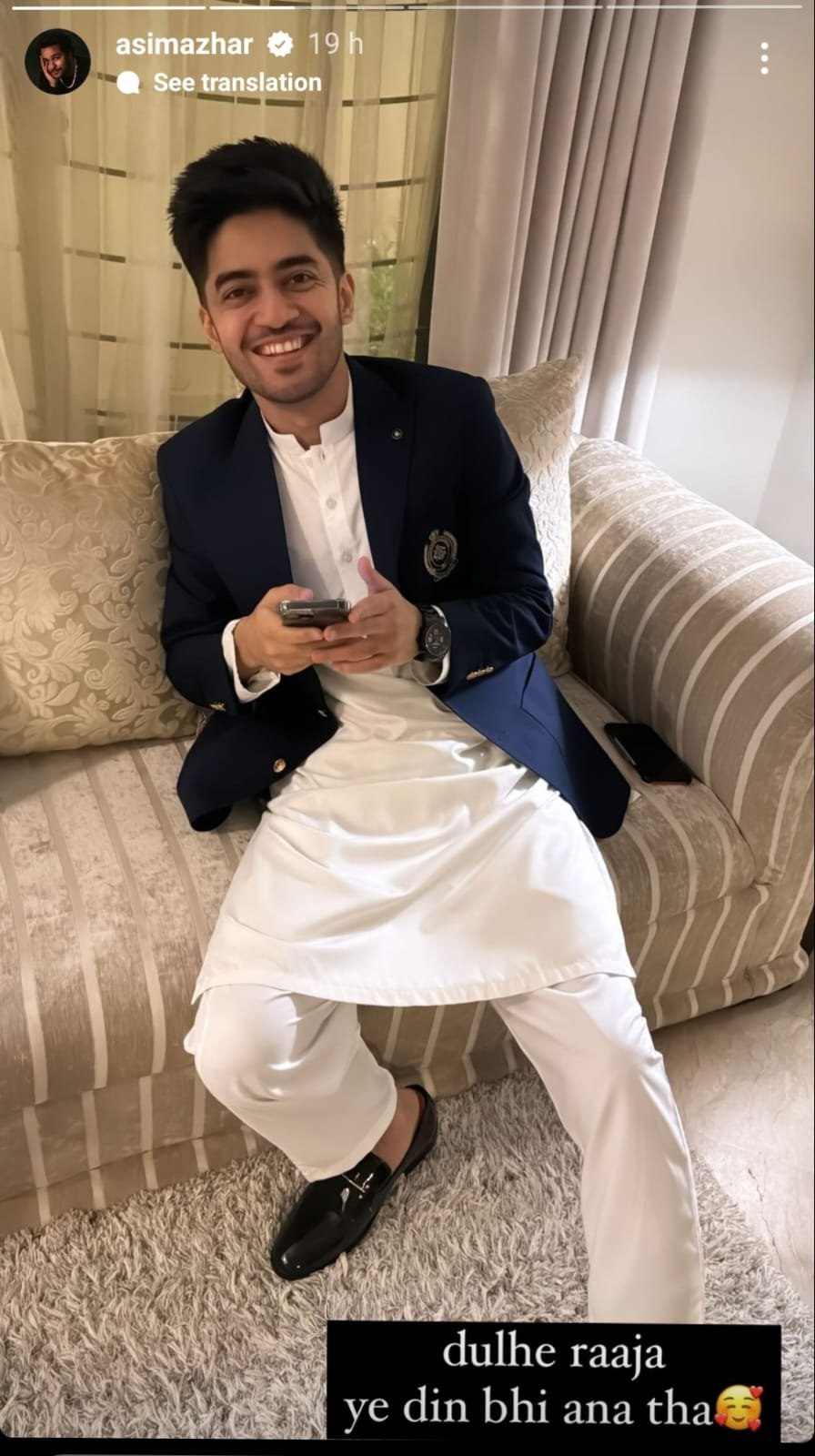
    Asim Azhar, the Pakistani singing sensation, delighted fans by sharing glimpses of his brother-in-law’s wedding celebrations on social media. Posing alongside his fiancée, Merub Ali, and his mother, Gule Rana, Azhar posted heartwarming pictures and fun-filled videos, capturing the joyous moments of the festivities. The couple looked really happy as they joined in the celebration, making everyone around them smile and feel happy too.

    Check the pictures below:

  • ‘PPP pressurising PML-N to sideline MQM,’ alleged MQM’s Kamran Tessori audio leak sparks new debate

    ‘PPP pressurising PML-N to sideline MQM,’ alleged MQM’s Kamran Tessori audio leak sparks new debate

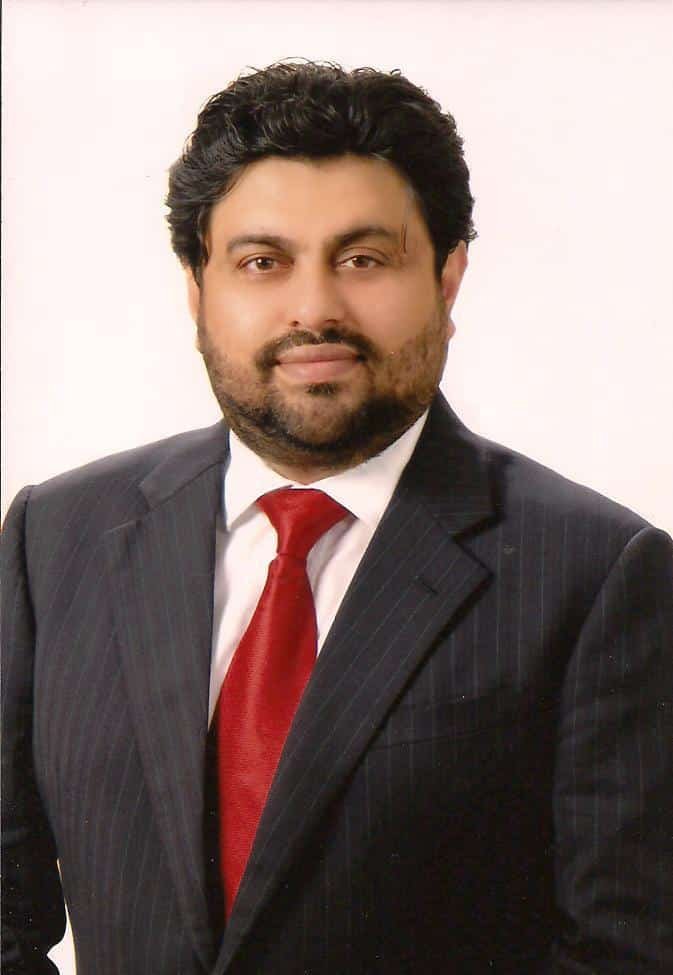
    Muttahida Qaumi Movement-Pakistan (MQM-P) is facing challenges in talks with Pakistan Muslim League-Nawaz (PML-N) as another alleged audio of Governor Sindh Kamran Tessori goes viral on social media.

    Earlier, an audio clip went viral in which MQM-P leader Mustafa Kamal revealed to the party’s Rabita Committee that PML-N “doesn’t want to talk to us”. He accused the Pakistan Peoples Party (PPP) of trying to corner them.

    Kamal has confirmed that the audio is genuine.

    In the latest audio, Kamran Tessori can be heard saying that MQM-P is paying the cost of becoming part of the Pakistan Democratic Movement (PDM) coalition government.

    “We were part of the Pakistan Tehreek-e-Insaf (PTI) government when PML-N and the PPP were in opposition. We supported the PDM, which angered our voter,” Tessori said in the audio, which could not be independently verified.

    “MQM-P got seven seats despite all the hurdles [in 2018 elections] which was our vote bank. We didn’t get the vote today [in the 2024 polls]. The party is being offered one ministry [Information Technology] as part of government and they are bringing their own governor in Sindh as well.”

  • Do you know how Speaker, Deputy Speaker, Prime Minister, and Leader of Opposition are elected in assembly?

    Do you know how Speaker, Deputy Speaker, Prime Minister, and Leader of Opposition are elected in assembly?

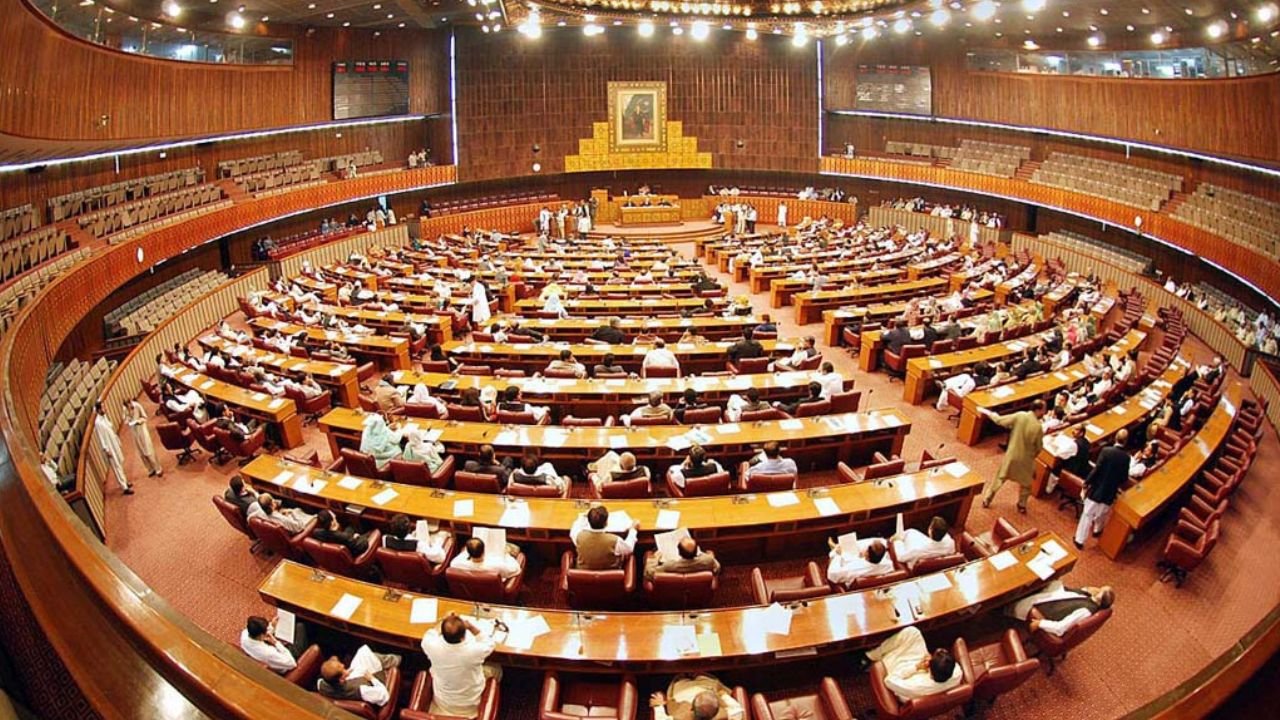
    By constitutional obligation, Speaker Raja Pervaiz Ashraf has convened a session of the newly elected National Assembly, scheduled for February 29th, following the general elections on February 8th. President Arif Alvi’s reluctance to fulfill this duty prompted Speaker Ashraf to take matters into his own hands, ensuring the timely commencement of parliamentary proceedings.

    Oath-Taking Ceremony for Newly Elected Members

    The inaugural session of the new assembly will first see all the lawmakers take oath. In the 336-member house, 60 seats are reserved for women and 10 for minorities.

    Allocation of Reserved Seats

    The Election Commission of Pakistan (ECP) has already allocated 40 reserved women seats to different political parties. These include 20 out of 32 of Punjab, two out of 10 of Khyber Pakhtunkhwa, all 14 of Sindh and all four of Balochistan.

    Seven out of 10 seats reserved for minorities have also been allocated. The ECP is yet to allot reserved minority and women seats to the Sunni Ittehad Council (SIC), which has allied with the PTI.

    Election of Speaker and Deputy Speaker

    Speaker Ashraf, continuing in his role until a successor is elected, will preside over the session’s proceedings.

    “At the first meeting of the Assembly, following a general election, after the members have made oath and before the transaction of any other business, the Assembly shall proceed to elect a Speaker under clause (1) of Article 53, by secret ballot,” states Rules of Procedure and Conduct of Business in the National Assembly, 2007.

    Article 53 of the Constitution of Pakistan says, “After a general election, the National Assembly shall, at its first meeting and to the exclusion of any other business, elect from amongst its members a Speaker and a Deputy Speaker and, so often as the office of Speaker or Deputy Speaker becomes vacant, the Assembly shall elect another member as Speaker or, as the case may be, Deputy Speaker.”

    “At any time before 12:00 noon on the day preceding the day on which the election is to be held, any member may propose another member for election as Speaker by delivering to the Secretary a nomination paper signed by him and accompanied by a statement by the member whose name is proposed that he is willing to serve as Speaker, if elected,” states the official procedure.

    The voting process will be conducted through a secret ballot, and whoever receives more votes will be elected the new speaker of the house. In case the speaker’s election ends in a tie, the election will be held again.

    Subsequently, the new speaker will announce the schedule for the deputy speaker’s election. In the same manner, through a secret ballot, the deputy will be elected.

    Prime Ministerial Election Process

    Once the Speaker and Deputy Speaker are elected, the schedule for the Prime Minister’s election, also known as the leader of the house, will be announced. This process, outlined in Section 91(3) of the Constitution, involves nominations and an open vote by division, requiring a simple majority for victory.

    Section 91(3) of the Constitution says: “After the election of the speaker and the deputy speaker, the National Assembly shall, to the exclusion of any other business, proceed to elect without debate one of its Muslim members to be the Prime Minister.”

    In the same way, nomination papers for the prime minister’s election will be submitted to the assembly’s secretariat.

    While the election for the speaker, his deputy, and the leader of the opposition are free from any religious limitation, the prime minister’s election is open to only the Muslim members of the house.

    “Before voting commences, the Speaker shall direct that the bells be rung for five minutes to enable members not present in the chamber to be present. Immediately after the bells stop ringing, all the entrances to the lobby shall be locked and the assembly staff posted at each entrance shall not allow any entry or exit through those entrances until the voting has concluded,” according to the official procedure for recording of votes in the Second Schedule.

    Under the supervision of the speaker, an open vote will take place — by division.

    For instance, if there are two candidates, the speaker would say that ‘whoever wants to vote for candidate A can go to lobby A’ and ‘whoever wants to vote for candidate B, can go to lobby B’.

    At the entrance of the said lobbies, there will be an member of the assembly secretariat staff who will record every MNAs name in their register. This whole process will be open and people sitting in the galleries will be able to see who votes for whom.

    Here, the political parties have to vote collectively and every member has to vote for the candidate that their party is voting for.

    After every member has picked their lobby and registered their vote, the speaker will call them back and announce the result. To be selected as the prime minister, one needs a simple majority — more than half of the votes in the house i.e. 169 votes out of the total 336.

    Section 91(4) of the Constitution states, “The Prime Minister shall be elected by the votes of the majority of the total membership of the National Assembly: Provided that, if no member secures such a majority in the first poll, a second poll shall be held between the members who secure the two highest numbers of votes in the first poll and the member who secures a majority of votes of the members present and voting shall be declared to have been elected as Prime Minister: Provided further that, if the number of votes secured by two or more members securing the highest number of votes is equal, further poll shall be held between them until one of them secures a majority of votes of the members present and voting.”

    This means that the two most-voted candidates will contest another round of elections till one ultimately gets 51 percent of votes or more, and wins.

    Selection of Leader of the Opposition

    After the Prime Minister’s election, the Speaker will facilitate the nomination of candidates for the Leader of the Opposition, a position crucial for parliamentary balance. The selection process entails the submission of candidate names along with signatures, with the individual garnering the most support from opposition members being appointed.

    “After the [election of the Prime Minister] the Speaker shall inform the members about the date, time and place for submission of a name for the Leader of the Opposition under their signatures,” says the official procedure in Chapter V 39(2).

    The third point of the same section adds, “The Speaker shall declare a member as Leader of the Opposition having the greatest numerical strength after verification of the signatures of the members: Provided that any member who is not signatory to the proposal, if he presents himself before the count, and signs the proposal, shall be included in the count.”

    This announcement will be made right after the prime minister’s election but submission of these lists can take time.

    Changes in Selection Procedures

    Before the implementation of the 18th Amendment to the Constitution, the designation of the opposition leader rested solely with the discretion of the speaker.

    During the era of Parvez Musharraf, this discretionary power was perceived to be misused, notably when Fazlur Rehman was appointed as the opposition leader despite the clear majority held by the PPP and PML-N.

    However, the process has transformed now. In the current scenario, if multiple candidates are contending for the position, they are required to submit lists of opposition members, along with their signatures, to the speaker. The candidate who garners greater support from opposition members will be conferred the title of the leader of the opposition.

    Furthermore, it’s worth noting that in each of the aforementioned elections, the votes of the candidates themselves will also be taken into account.


  • Pakistani scientists introduce first calf born through IVF

    Pakistani scientists introduce first calf born through IVF

    University of Veterinary and Animal Sciences has announced the birth of the first Holstein Friesian (HF) calf by using In Vitro Embryo Production (IVEP) at the Training and Research Demonstration Farm, Ravi Campus, Pattoki, reports Dawn.

    Emeritus Professor and former UVAS VC Dr Naseem Ahmed announced the success at Pattoki campus on Tuesday, calling it the culmination of research and collaboration across departments. The process involved ovum pickup from pure Holstein Friesian specimens at the TRDF, followed by the UVAS embryology lab’s maturation, fertilisation, and culture of oocytes. Subsequently, the resulting embryo was transferred to a synchronised recipient, resulting in a successful pregnancy and the birth of a healthy calf.

    Department of Theriogenology and Embryology Chairman Dr Irfanur Rehman congratulated the embryology team, their guide Prof Dr Amjad Riaz, faculty members Dr Ali Husnain, Dr Talha Ashraf, and Dr Muhammad Yaseen, postgraduate students Dr Melaad and Muhammad Abdullah, researchers, technicians and staff.

    Prof Naseem Ahmad said that locally producing pure breed Holstein Friesian animals via IVEP not only lowers the expense of importing animals or embryos but also contributes to the nation’s sustainability while maintaining genetic integrity and milk production levels.

  • Woman strangles 8-years-old nephew over property dispute

    Woman strangles 8-years-old nephew over property dispute

    A woman in the Ghazi Tehsil of Haripur allegedly strangled her minor nephew and threw his body into a well over a property dispute. She has been arrested by the police along with two accomplices, reports Dawn.

    The boy, Abdul Moeed, 8, a student of grade III, went to school on Feb 21 but didn’t return home. The family searched for the missing boy, but could not find any clue to his whereabouts, informing the police.

    As per the initial investigation conducted by the police, the suspect, Abida Shaheen, was identified by the police upon investigation of her mobile phone record. She disclosed that she strangled Moeed with the help of two accomplices, Waseem and Mohammad Akhtar, and then threw his body into a well in the village.

    After her confession, the police recovered the body from the well and shifted it to Ghazi Tehsil Headquarters Hospital for autopsy.

    A criminal case was registered against the woman and the accomplices under sections 201, 202, and 302/34 of the Pakistan Penal Code.

    The motive behind the boy’s murder was a property dispute between two brothers – the husband of the accused woman and the boy’s father – the police said.

  • Watch: Drunk Pakistani passenger restrained in international flight

    Watch: Drunk Pakistani passenger restrained in international flight

    An unruly and drunk flyer on Sunday forced the cabin crew to physically restrain him using cable ties during an international flight from Dubai to Islamabad.
    The incident happened on an Emirates flight where a man’s behaviour was described by a witness as drunk and “extremely violent”, according to a US-based outlet. The individual was subdued by the crew initially but with help from fellow passengers, he was tackled to the ground.

    A video has emerged on social media platforms showing a restrained passenger in an airport wheelchair. The viral footage captures the individual’s attempt to headbutt a male flight crew member, who, along with another crew member, successfully pushes him to the floor. Subsequently, two male crew members hold the passenger down while two female flight attendants secure his legs using cable ties.

    In a post on X, a Pakistani journalist Amir Mateen shared details from a fellow passenger, describing the man’s aggressive behavior and subsequent restraint by the Emirates cabin crew. Mateen raised questions regarding the passenger’s release, suggesting potential connections enabling his departure despite the incident.

    “This happened in Dubai flight to Islamabad this morning. Sent by a passenger who remained terrified during the flight: “Drunk guy extremely violent. Restrained and handcuffed by Emirates cabin crew but I think Pak authorities let him go as he was well connected,” said Amir Mateen, who was a person on board.

    This incident adds to a series of similar occurrences in recent months, including a mid-air altercation on a Southwest Airlines flight in February and other incidents of disruptive behavior aboard flights.

  • ‘Cringe’; Maryam Nawaz slammed for adjusting police officer’s dupatta

    ‘Cringe’; Maryam Nawaz slammed for adjusting police officer’s dupatta

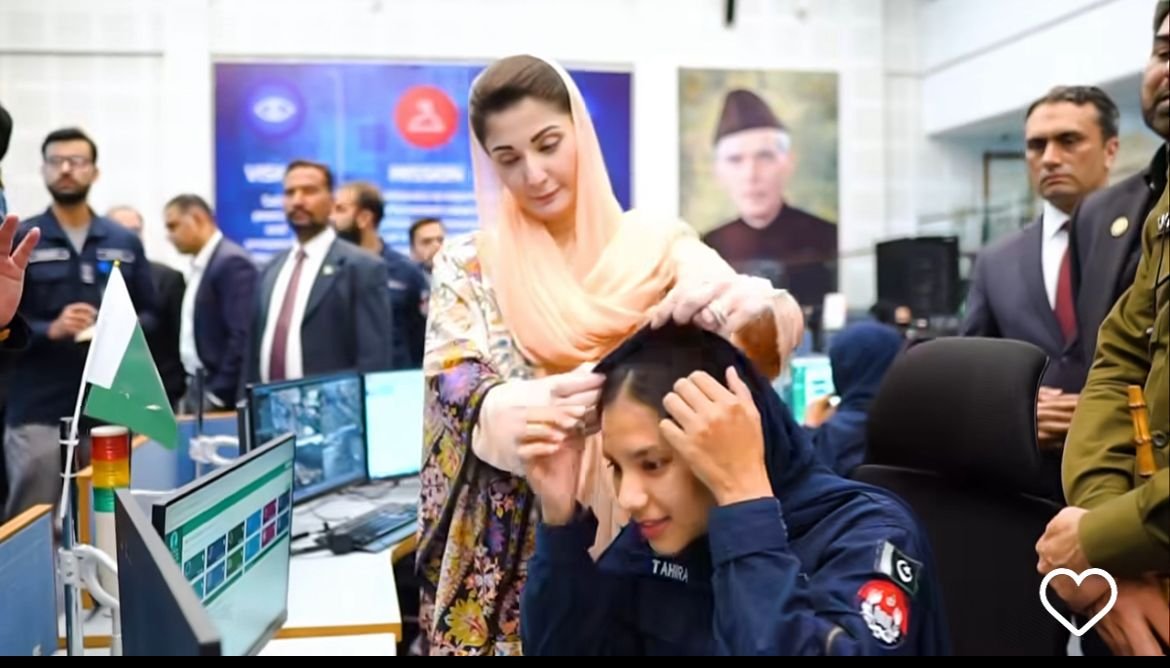
    Maryam Nawaz, the Vice-president of Pakistan Muslim League-Nawaz (PML-N) and newly appointed Chief Minister of Punjab, has managed to land into controversy on her second day on the job.

    A video posted on X (formerly Twitter) by an account claiming to be Team MNS shared a video of Maryam listening to a female police officer showing her something on a computer screen. While the officer is talking, her dupatta slips off her head. Maryam Nawaz then puts the dupatta back on her head.

    The account wrote: “CM Maryam Nawaz Sharif’s act of adjusting a police officer’s dupatta is a powerful reminder that leadership is about compassion and understanding.”

    The video, posted on Tuesday evening, has set off a furious debate with many people finding the gesture cringe inducing and an invasion into the police officer’s personal space.

    We at The Current agree that the gesture is indeed an invasion of personal space, and just a few days after the Ichra incident, completely unnecessary. The police officer performs serious duties, we are quite sure she can take care of her dupatta herself.

  • From dress to shoes, all the info about Maryam Nawaz’s oath-taking look

    From dress to shoes, all the info about Maryam Nawaz’s oath-taking look

    Vice-president of the Pakistan Muslim League-Nawaz (PML-N), Maryam Nawaz, famous for her fashion sense, is making waves with the customised emerald green dress she wore on her oath-taking ceremony on Monday when she became the first female Chief Minister of Punjab.

    The Current contacted designer Ayesha Jawad who runs the fashion label Parniyaan. She revealed the exquisite details of the dress, stating that the fabric used for the shawl (dupatta) was chiffon bordered with chantelle and an organza design. The design on the dress was also of the same chantelle net which gave it an oomph of elegance.

    Yes! This is the same dupatta she was cautious of getting ruined when she brushed off Uzma Kardar.

    Ayesha revealed that it was a customized dress and could be available for Rs. 60,000 approximately.

    As for the suave footwear, it was from Manolo Blahnik’s White Satin Jewel Buckle Pumps collection. It is originally available in the price of £945, roughly Rs. 334,795.41.

    When the late Benazir Bhutto became the first female Prime Minister of Pakistan and the Muslim world, she too wore a green suit, a look that became iconic for generations.

  • President Alvi made the right decision not to call assembly session: Imran Khan

    President Alvi made the right decision not to call assembly session: Imran Khan

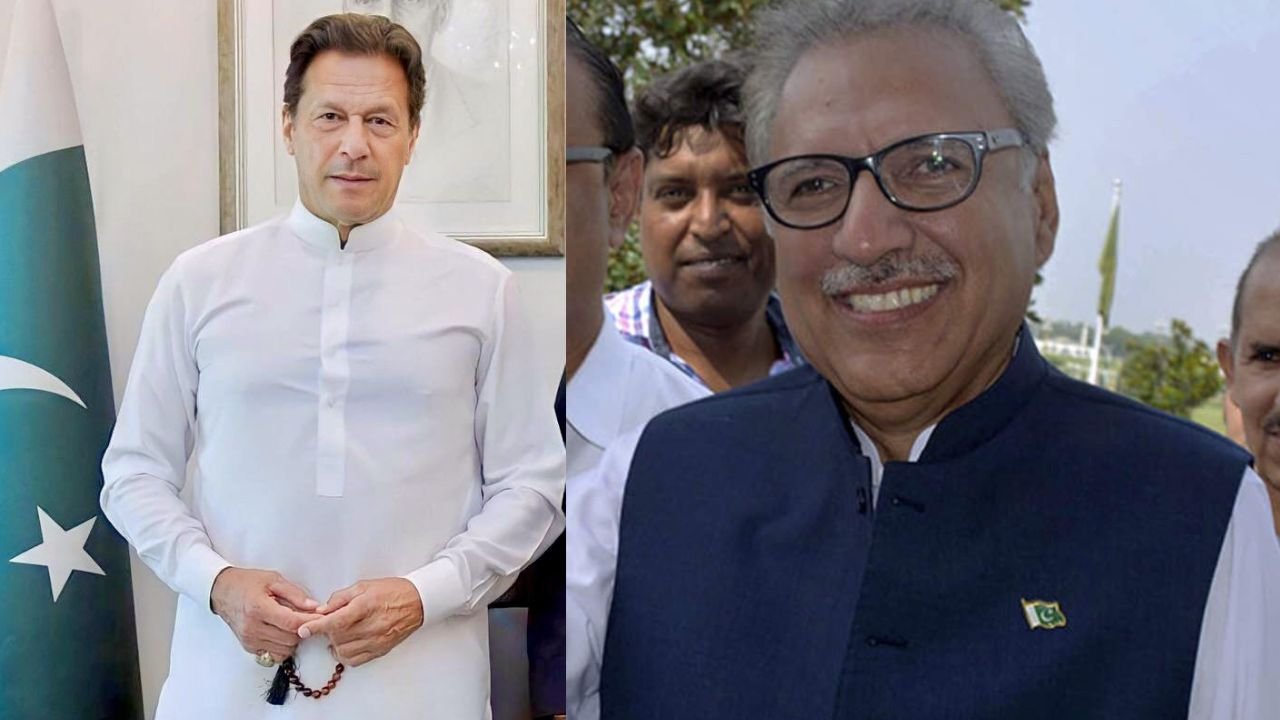
    Imran Khan, the founder chairman of Pakistan Tehreek-e-Insaf (PTI) and former Prime Minister, has endorsed President Arif Alvi’s choice to abstain from calling the session of the National Assembly.

    Imran conveyed these sentiments during an informal exchange with journalists at Adiala Jail on Tuesday.

    First and foremost, he said, he had personally dictated the letter addressed to the International Monetary Fund (IMF).

    He clarified that, following the drafting of the letter, there have been no meetings with other party leaders.

    However, he said that after consultations with the party’s leadership, the letter would be dispatched to the IMF today (Tuesday). In his discussion on the prevailing political climate, Imran Khan reiterated his call for the resignation of the chief election commissioner, citing concerns over impartiality during elections.

    He accused the Election Commission of Pakistan (ECP) of engaging in rigging even after the conclusion of elections, stressing the imperative of fair and transparent electoral processes.

    Commenting on the recent developments, the former prime minister lauded the decision of President Arif Alvi to refrain from convening a meeting of the National Assembly. He reiterated concerns about the allocation of specific seats despite the PTI’s electoral victories, alleging efforts to undermine the party’s success.

    “Every attempt was made during the elections to eliminate the PTI,” he alleged.

    “We are gathering all the parties that have been made to lose through rigging. and will hold country-wide protests against rigging,” Imran announced.

    Amidst ongoing challenges and political tensions, the founder of PTI remains steadfast in advocating for fair governance and democratic principles, vowing to address electoral irregularities and promote accountability across all levels of government.

  • Accountability court indicts Imran Khan, Bushra Bibi in £190m reference

    Accountability court indicts Imran Khan, Bushra Bibi in £190m reference

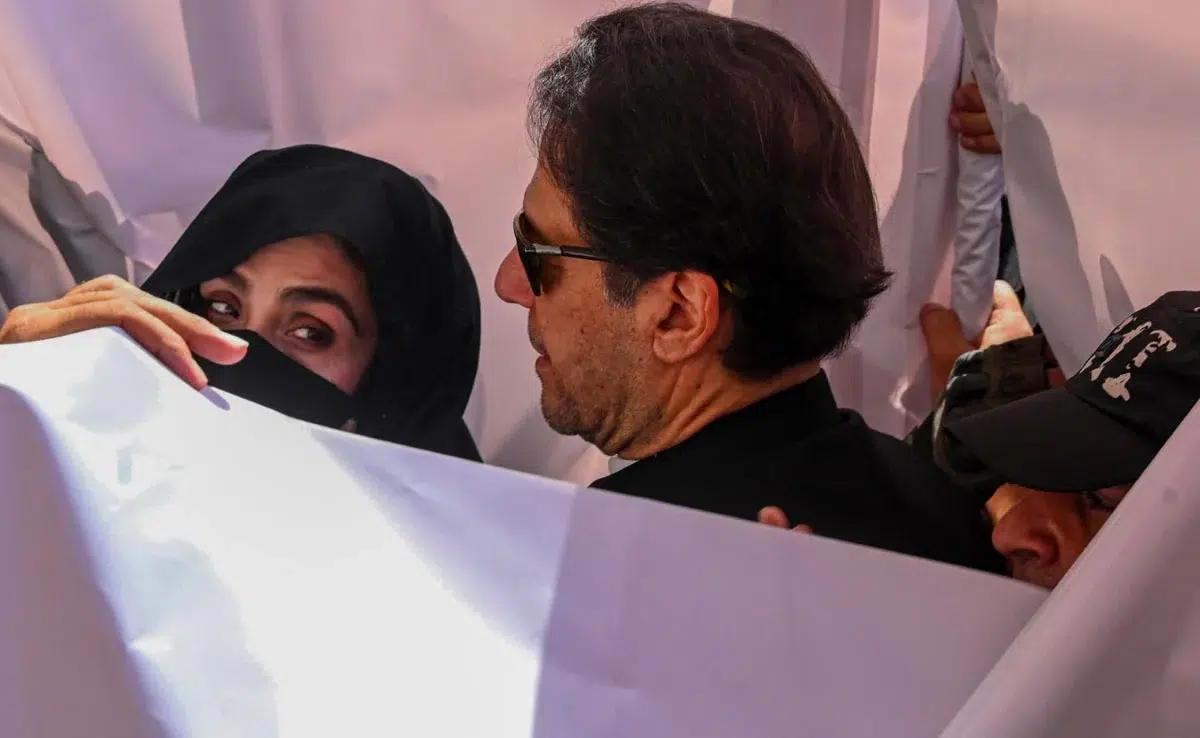
    An accountability court in Rawalpindi on Tuesday charged Pakistan Tehreek-e-Insaf (PTI) founder Imran Khan and his wife Bushra Bibi with involvement in the £190 million reference.

    Judge Nasir Javed Rana of the accountability court conducted the hearing at Adiala Jail, where former Prime Minister Imran is invarcerated in multiple cases, including the Toshakhana, cipher and illegal marriage cases. 

    Imran Khan and his wife Bushra Bibi were present when Judge Nasir Javed read the charge sheet.

    National Accountability Bureau (NAB) Deputy Prosecutor Sardar Muzaffar Abbasi, along with his team, was also present in court.

    NAB had started investigating Imran Khan, his wife, and others for allegedly getting hundreds of canals of land under the name of Al Qadir University Trust. As a result of the accusation of land, the government faced a loss of 190 million pounds.