Tag: Top News

  • PPP is all set to conquer Punjab and Sindh

    PPP is all set to conquer Punjab and Sindh

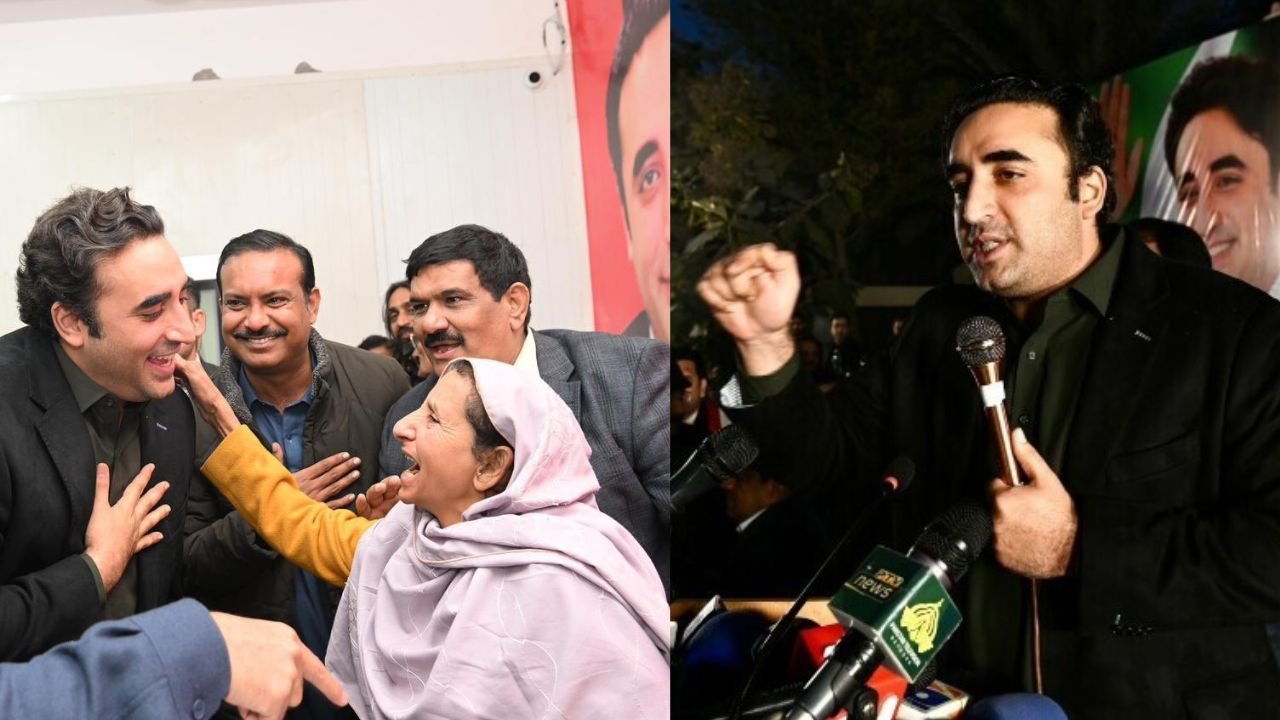
    Pakistan Peoples Party (PPP) Chairman Bilawal Bhutto Zardari formally initiated his election campaign from NA-127 Lahore on Thursday.

    The party aims to leverage the perceived political vacuum created by the establishment in Pakistan.

    With the main rival, Pakistan Muslim League-Nawaz (PML-N), still deliberating on ticket allocations for Punjab and Khyber Pakhtunkhwa (K-P), PPP leaders have been actively canvassing for votes in their respective constituencies.

    According to the party’s central Punjab chief, a majority of aspiring candidates have already received confirmation regarding ticket allocations, making the official announcement a mere formality.

    PPP has unveiled its 10-point agenda as part of its manifesto, with the official manifesto set to be revealed in the coming days, as announced by the party’s information secretary.

    In contrast, PML-N, despite forming a manifesto committee over a month ago, has not made any public announcements regarding its plans.

    The recent introduction of an online portal by PML-N to gather public input on its manifesto suggests that the process is not in its advanced stages.

    Bilawal, who will contest elections from three constituencies, including NA-127 Lahore and the party stronghold Larkana, visited his election office at Green Town in Lahore to formally launch the campaign.

    During his election campaign trail, he would address rallies in Faisalabad (Jan 11), Layah (Jan 12), Bahawalpur (Jan 13), Balochistan’s Naseerabad (Jan 14), Sindh’s Larkana (Jan 15), Qambar Shahdadkot (Jan 16) Badin and Sanghar (Jan 17), Nowshero Feroz and Dadu (Jan 18), Rahim Yar Khan (Jan 19) Kot Daud (Jan 20), Lahore (Jan 21), Chiniot (Jan 23), Sarghoda (Jan 24), Lala Musa (Jan 25) Multan (Jan 26), Peshawar (Jan 27) , Rawalpindi (Jan 28), Kurram (Jan 29), DI Khan (Jan 30), Malakand (Jan 31), Khuzdar (Feb 1), Kashmor and Shikarpur (Feb 2) Mirpurkhas (Feb 3), Hyderabad (Jan 4) and his second last rally as per schedule would be in Karachi (Jan 5).

    The decision to contest from Lahore is seen as a strategic move, countering PML-N President Shehbaz Sharif’s decision to contest from Karachi NA-242.

    The PPP aims to secure NA-127 Lahore, building on the momentum gained from the December 2021 by-election results, where the party’s candidate secured significant votes. The move is also seen as an effort to mitigate the risk of a complete loss for the party in Punjab.

    The party sees the absence of PTI from the political arena as a golden opportunity to capitalize on anti-PML-N votes. The PML-N is expected to issue the NA-127 ticket to its Deputy General Secretary Ata Tarar.

    Meanwhile, Mayor Murtaza Wahab asserted that the people of Karachi demonstrated their support for the Pakistan Peoples Party (PPP) in the local government elections held on January 15, 2023, citing the party’s perceived capability to address the city’s issues.

    The mayor expressed these sentiments during the ‘Meeting the Editors’ program organized by the Council of Newspaper Editors (CPNE) on Thursday.

    “We worked for the resolution of the issues of the people of Karachi with sincerity. The development work will continue. People think that the next government will be of the PPP as they see Bilawal Bhutto Zardari as a viable leader,” the mayor said.

    Wahab attributed the success of the Jamaat-e-Islami in the local government elections to the boycott by the Muttahida Qaumi Movement (MQM).
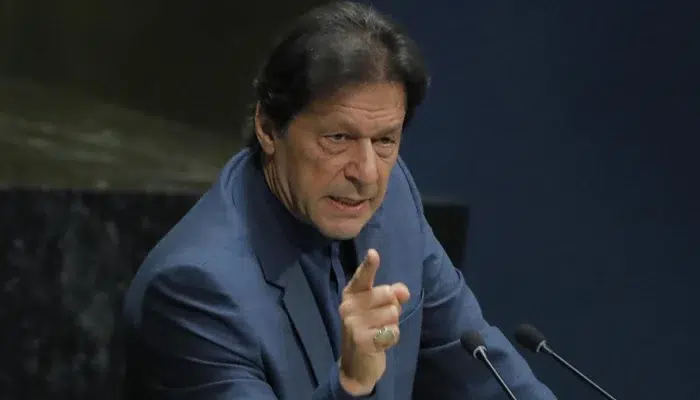
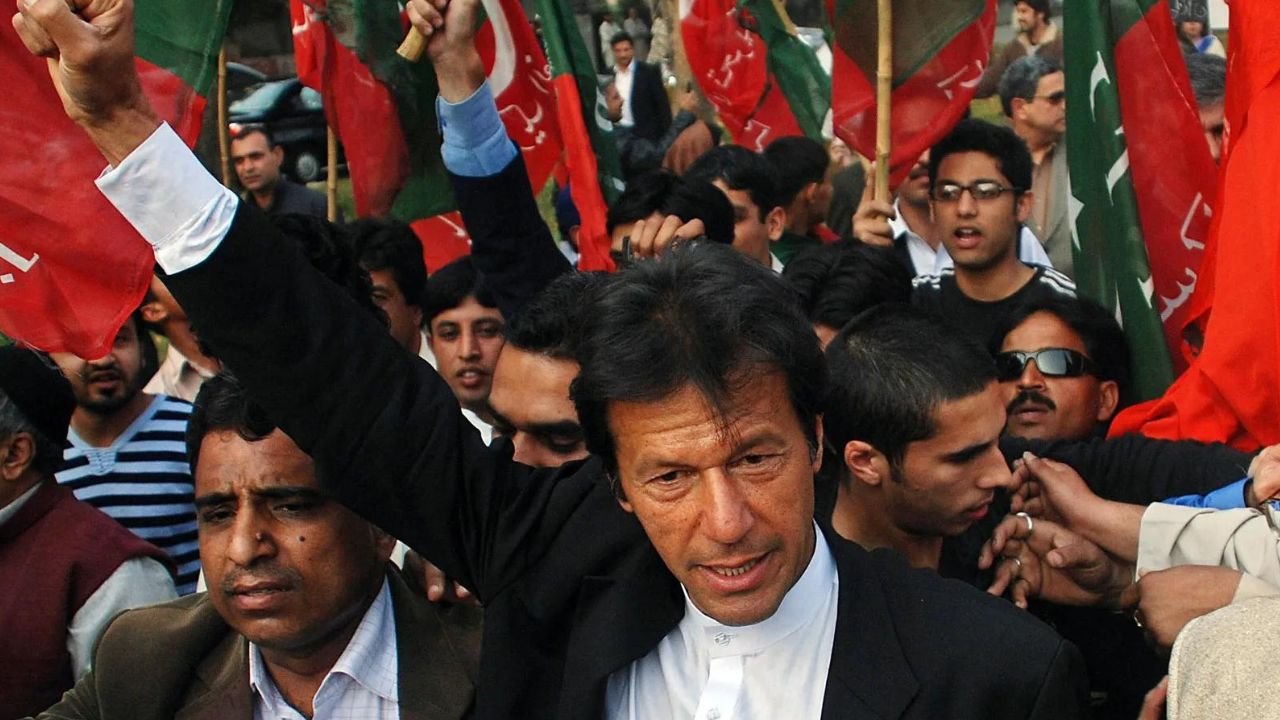
  • ‘I will impose Article 6 on you after coming to power’, Imran Khan’s threat to ECP

    ‘I will impose Article 6 on you after coming to power’, Imran Khan’s threat to ECP

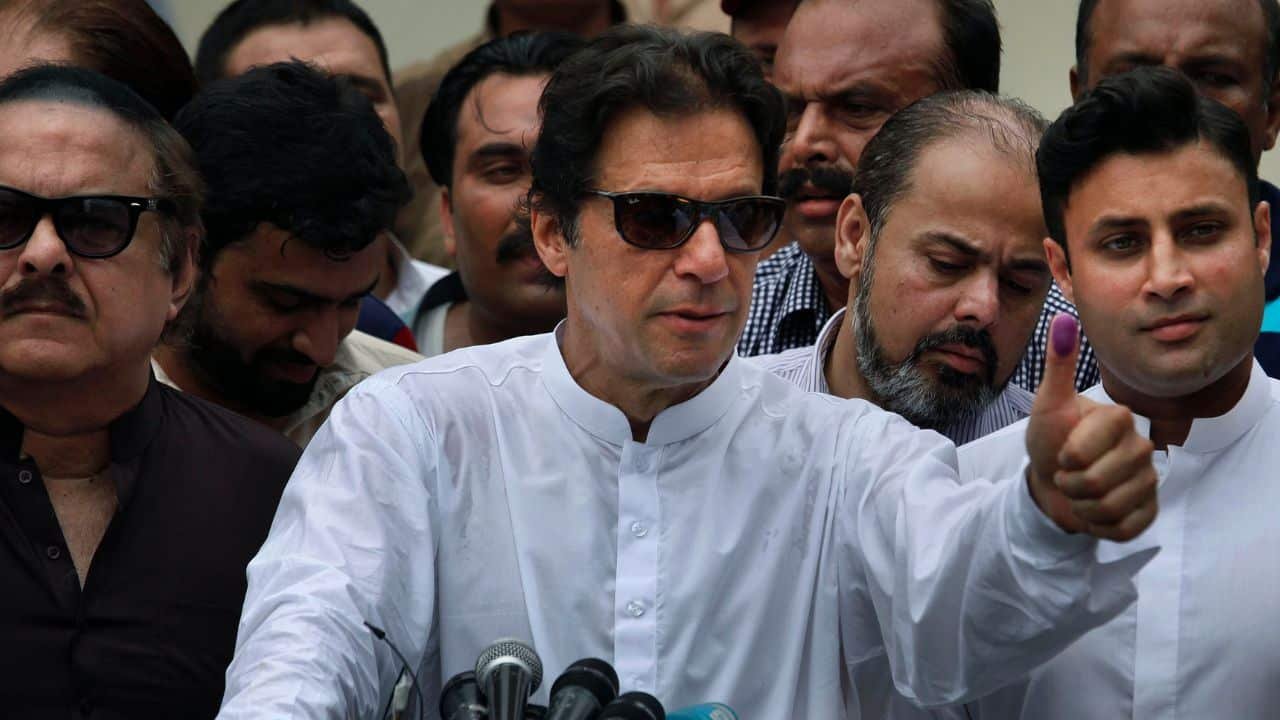
    The inside story of Pakistan Tehreek-e-Insaf (PTI) founder Imran Khan’s trial in Adiala Jail, in the case of insulting the Election Commission (ECP), and Chief Election Commissioner, has come to light.⁠

    According to the sources who talked to GEO News, PTI founder Imran Khan became very angry during the indictment. Sources claimed that the former prime minister made a serious threat to members of the ECP during the hearing.

    Threatening the four members of ECP, Khan said, “I know your faces and names. I will impose Article 6 on you when I’ll come into power.”

    A hearing of the case against the PTI founder and former PTI leader Fawad Chaudhry proceeded on Thursday in Rawalpindi’s Adiala Jail. According to the charge sheet, Imran Khan and Fawad Chaudhry launched a planned derogatory campaign against the Election Commission in 2022.

  • Finally, some good news for PTI

    Finally, some good news for PTI

    Several Pakistan Tehreek-e-Insaf (PTI) aspirants, along with their allies, re-entered the electoral fray on Thursday following successful appeals against the rejection of their nomination papers by Returning Officers (ROs) during the scrutiny process last week.

    The appellate tribunals, responsible for reviewing appeals against ROs’ decisions, swung into action a day after the deadline for filing appeals expired.

    Rulings were issued on many appeals, while notices were dispatched to the Election Commission of Pakistan (ECP) and other relevant parties for further cases.

    Numerous PTI candidates, facing rejection of their nomination papers, took up the challenge against RO decisions. Simultaneously, objections were raised against the acceptance of Pakistan Muslim League-Nawaz (PML-N) President Shehbaz Sharif’s papers in Karachi.

    According to the election schedule, nomination papers were accepted until December 22, scrutinized by December 30, and the appeal window extended until January 3. The tribunals are expected to conclude all appeals by January 10.

    Among those approved by the appellate tribunals are PTI Central Vice President Firdous Shamim Naqvi for NA-236, Karachi, and party ally Sheikh Rashid and his nephew Sheikh Rashid Shafiq for NA 56 and 57, Rawalpindi. Additionally, several other candidates from various parties, including Ijazul Haq and Punjab Assembly Speaker Sabatin Khan, received the green light to contest elections.

    Firdous Shamim Naqvi took to Twitter (former X) and wrote, “Jibran, Andaleeb and Shiraz, the team that batted for me to get my nomination cleared by the tribunal. My thanks to all those who prayed for my success. I hope to contest with your support and bat for Pakistan. Inshallah we will all succeed on the 8th of February 24.”

    In Rawalpindi, two election tribunals continued hearings on Thursday, deciding a total of 26 appeals—approving 20 and rejecting six. Notably, the tribunals accepted appeals from prominent figures such as PTI founder Imran Khan, former Punjab chief minister Parvez Elahi, and former minister Fawad Chaudhary, prompting notices to the ECP and relevant returning officers.

    Justice Chaudhry Abdul Aziz, a tribunal judge, emphasized the need to adhere to the Constitution and the law during appeal hearings, discouraging the discussion of political matters in court.

    In Islamabad, an appellate tribunal issued notices on appeals from 51 candidates whose nomination papers were rejected, including PTI’s Ilyas Mehrban, Aamir Mughal, Shiraz Kayani, and Zubair Farooq. Tribunal Judge Arbab Muhammad Tahir also sought responses on the appeal against the acceptance of the transgender candidate Nayab Ali’s nomination papers for NA-46 and NA-47.

    Meanwhile, in Karachi, the appellate tribunal at the Sindh High Court accepted the nomination papers of PTI Central Vice President Firdous Naqvi for NA-236, Karachi, declaring objections to his papers as “illegal.”

    The election process is currently undergoing a thorough review, with various candidates and parties actively participating in the appeal process to ensure fair representation in the upcoming elections. The tribunals are expected to play a crucial role in shaping the final candidate list for the upcoming polls.

  • Imran Khan casts doubt on election legitimacy in an article written from jail

    Imran Khan casts doubt on election legitimacy in an article written from jail

    In a recent article for The Economist, Imran Khan, the founder and former chairman of Pakistan Tehreek-e-Insaf (PTI), currently incarcerated, has expressed apprehensions about the legitimacy of the upcoming elections in Pakistan.

    Khan argues that the caretaker governments in place at both the federal and provincial levels are constitutionally illegal due to their failure to hold elections within 90 days of dissolving parliamentary assemblies.

    While the public is anticipating elections on February 8, Khan, who has faced various challenges since a vote of no confidence in April 2022, raises skepticism about the electoral process.

    He points to the election commission’s actions, which he claims include defying the Supreme Court, rejecting PTI nominations, hindering internal party elections, and initiating contempt cases against PTI leaders for criticizing the commission.

    “The country’s election commission has been tainted by its bizarre actions. Not only has it defied the top court but it has also rejected my Pakistan Tehreek-e-Insaf (PTI) party’s nominations for first-choice candidates, hindered the party’s internal elections and launched contempt cases against me and other PTI leaders for simply criticising the commission,” he wrote.

    Khan contends that since his government’s removal, orchestrated by what he terms as “the establishment”—comprising the army, security agencies, and civil bureaucracy—the playing field for PTI has been anything but level. He alleges external interference, specifically from the United States, citing a State Department message urging his removal from the prime minister’s seat.

    Despite subsequent protests and electoral victories in by-elections, Khan argues that the administration that replaced his government led to economic downturns, inflation, and currency devaluation within 18 months. He emphasizes the contrast between PTI’s governance, which garnered international praise, and the subsequent administration’s economic performance.

    Khan claims that various measures have been taken to sideline him politically, including assassination attempts, abductions of party members, and legal harassment. Despite facing nearly 200 legal cases and being denied a normal trial, Khan states that PTI remains popular, with a 66 per cent approval rating, according to a recent poll.

    The former prime minister also raises concerns about the return of Nawaz Sharif, a convicted former prime minister, speculating that Sharif may have struck a deal with the establishment for support in the upcoming elections.

    Khan, who remains incarcerated on charges including treason, expresses doubt about the fairness of the electoral process, claiming that PTI is being denied its basic right to campaign.

    He concludes by advocating for fair and free elections, “The only viable way forward for Pakistan is fair and free elections, which would bring back political stability and rule of law, as well as ushering in desperately needed reforms by a democratic government with a popular mandate. There is no other way for Pakistan to disentangle itself from the crises confronting it. Unfortunately, with democracy under siege, we are heading in the opposite direction on all these fronts.”

    The Economist added an Editor’s Note stating, “The Pakistani government and the U.S. State Department deny Khan’s allegations of American interference, and Khan faces charges under the Official Secrets Act.”

  • Spain police investigate suspected poisoning of 47 cats

    Spain police investigate suspected poisoning of 47 cats

    Spanish police said Thursday they had opened an investigation into the suspected poisoning of nearly 50 street cats that could see the perpetrators serving several years’ jail time under a new animal welfare law.

    The incident occurred in La Carlota village just outside the southern city of Cordoba, with local residents discovering the bodies of at least 10 cats on December 31 at the local dump where the colony was based.

    They alerted the animal rights party PACMA which on Tuesday filed a complaint with the Guardia Civil police over “the mass poisoning of a 47-strong feline colony”.

    “Some of the animals were found inside nearby containers while others were lying in the street with only one survivor, a young male cat which is in very poor state,” said the complaint, a copy of which was seen by AFP.

    The rest of the cats had disappeared, with a PACMA spokeswoman saying they were believed to have died in the nearby woods after the poison took hold.

    In response, officers from the Guardia Civil’s nature protection service Seprona were dispatched to the scene on Wednesday to investigate, a spokesman for the force said.

    “They are looking into whether the deaths were due to poisoning or from other causes. And if there was a crime, to identify the culprits,” he added.

    Under terms of a new law that came into force in September, anyone found guilty of cruelty leading to an animal’s death could face up to three years behind bars, up from a previous penalty of 18 months.

    In a separate operation, police said Thursday they had smashed a ring which allegedly imported puppies from Hungary and Slovakia and then sold them in Spain with forged documents.

    Officers arrested eight people and rescued over 100 animals during four searches they carried out as part of the operation, a police statement said.

  • How many registered religious minority voters are in Pakistan?

    How many registered religious minority voters are in Pakistan?

    As per the recent province-wise religion report of the Election Commission of Pakistan (ECP), there are 30 lac, 78 thousand, 3 hundred and 6 voters from religious minorities in Pakistan.

    Out of 40 thousand 781 minority voters in Khyber Pakhtunkhwa 3516 are Bahai, 220 Buddist, 28080 Christian, 4209 Hindu, 723 Parsi, 1149 Ahmadi, and 2884 Sikh.

    In former Federally Administered Tribal Areas (FATA) there are 3539 religious minority voters out of which 400 are Bahai, 41 Buddist, 1446 Christian, 669 Hindu, 16 Parsi, 23 Ahmadi, and 944 Sikh.

    For 12 lac 59 thousand 303 minority voters in Punjab, 18102 are Bahai, 786 Buddist, 1057071 Christian, 73456 Hindu, 262 Parsi, 108538 Ahmadi, and 1088 Sikh.

    In Sindh, there are 16 lac 80 thousand 582 minority voters, out of which 7269 are Bahai, 495 Buddist, 228552 Christian, 1423276 Hindu, 2787 Parsi, 16668 Ahmadi, and 1535 Sikh.

    Balochistan has 44 thousand 930 minority voters, out of which 1387 are Bahai, 1387 Buddist, 18702 Christian, 18702 Hindu, 265 Parsi, 549 Ahmadi, and 272 Sikh.

    In the Federal Capital, there are 44 thousand 783 minority voters, out of which 242 are Bahai, 41 Buddist, 40518 Christian, 276 Hindu, 16 Parsi, 3677 Ahmadi, and 13 Sikh.

    Although elections are not happening in Gilgit Baltistan and Azad Jammu and Kashmir in February 2024, ECP did share detailed data of these areas too.

    Out of 653 minority voters in Gilgit Baltistan, 472 are Bahai, 5 Buddist, 147 Christian, 8 Hindu, 16 Ahmadi, 5 Sikh, and none from the Parsi community.

    Azad Jammu and Kashmir has 3735 minority voters out of which 1083 are Bahai, 23 Buddist, 987 Christian, 45 Hindu, 13 Parsi, 1580 Ahmadi, and 4 Sikh.

    As Pakistan gears up for nationwide parliamentary elections in February 2024, a significant portion of the population, the Ahmadiyya community, faces disenfranchisement due to discriminatory provisions in the electoral law.

    Current electoral regulations in Pakistan effectively exclude Ahmadis from the voting process based on their religious beliefs.

    To register as voters, members of the Ahmadiyya community are compelled to either renounce their faith or accept placement in a distinct electoral list categorizing them as “non-Muslim.”

    However, self-identification as Muslim is a fundamental tenet of Ahmadiyya religious belief.

    This exclusionary practice has resulted in the denial of voting rights for Ahmadis, who comprise over 500,000 individuals in Pakistan.

    Despite their significant numbers, Ahmadis find themselves unable to participate in local, provincial, and national elections.

    It is noteworthy that in 2002, Pakistan discontinued an electoral system that segregated Muslims and non-Muslims into separate categories for registration and voting.

    However, discriminatory measures persist, particularly affecting the Ahmadiyya community’s ability to exercise their

    The government also created a separate category for Ahmadis. Since then, all Pakistani citizens have voted according to a single electoral list except the Ahmadis, who vote on a separate list.

  • Harvard’s first female black president resigns for not taking action against pro-Palestine students

    Harvard’s first female black president resigns for not taking action against pro-Palestine students

    The first black woman president of America’s Harvard University, Claudine Gay, has finally resigned in the face of pressure by the university administration over accusations of plagiarism and her refusal to stop pro-Palestine protests on campus.

    Her resignation marks the end of the presidency of the first Black president and second woman in Harvard’s nearly 400-year history.

    Claudine, under intense pressure to resign since the Israeli attacks on Gaza, said in her resignation that it was in the best interest of Harvard University because of her commitment to combating hate speech and upholding academic standards.
    Gay did not say when she plans to formally step down but she described the decision as “difficult beyond words.”

    It is important to note that in December 2023, Harvard University decided to retain Dr. Claudine in her position after the American University Board ruled in favor of the head of the institution on the issue of not taking action against pro-Palestinian students.

    After Harvard’s president was accused of not taking a strong stance on what was being called anti-Semitism but was anti-Zionism, in an appearance before the Congress Committee, Harvard University was under pressure to demand the resignation.

    Many at Twitter are attributing the exit of Dr. Claudine to the outrageous questioning in the Congressional hearing where she was brutally cornered leading to the withdrawal of donors and adding pressure to the administration to ask the president to resign.

    Her resignation has divided the internet largely into three debates. One group sees it as another manifestation of racism in America. The other is celebrating her exit for believing her to be a plagiarist and anti-semitic. The last viewpoint is seeing the whole scenario as a depiction of how America treats voices that are not aligned with the state’s pro-zionist and fake-liberal policy using anti-semitism and plagiarism as an excuse.

    Editor and Analyst Mara Gay called the move blatant racism, “This is really an attack on academic freedom … This is an attack on diversity. This is an attack on multiculturalism, & … I don’t have to say that they’re racist, because you can hear and see the racism in the attacks.”

    Fox News anchor CJ Pearson asserted that “Claudine Gay wasn’t fired for being black. She was fired for being an anti-Semitism-enabling plagiarist. I’m so tired of the black community using the color of our skin to shield people from accountability.”

    Mo Torres called out the duplicity in the resignation of Dr Caludine by saying, Gay should not have been forced to resign but it’s unfortunate to see that she still misses an obvious point: students on her campus never called for genocide against Jewish people. “Liberals seem strangely addicted to assuming good faith from their detractors on the right.”

    Professor of sociology Heba Gowayed, commented, “Do not cower just to be beaten away”. She added, “And with that Claudine Gay ends her tenure disliked on both the right and the left. Whew.”

    Pro-zionist voice Ben Shapiro outrightly called her a grifter, “Claudine Gay’s defenders are calling her a martyr for one reason and one reason only: if they admit she’s an unqualified grifter who became powerful thanks to DEI, their own grift is endangered.”

    Journalist Mehdi Hassan shared the Guardian’s article about how the hedge-fun manager, Zionist and billionaire Bill Ackman is behind the forced exit of Professor Gay.

  • Imam shot dead outside mosque in New Jersey, suspect still at large

    Imam shot dead outside mosque in New Jersey, suspect still at large

    An imam who was shot Wednesday outside a mosque in New Jersey has died, the US state’s attorney general said, adding that the killing did not initially appear to be driven by “bias” or domestic terrorism.

    The shooting was reported at Masjid Muhammad-Newark at South Orange Avenue.

    Imam Hassan Sharif was shot multiple times near a mosque in Newark, just west of New York, before being taken to hospital where he later died, New Jersey Attorney General Matt Platkin said.

    “We do not yet know the motivation for this crime (but) the evidence collected thus far does not indicate that this was an act motivated by bias, or an act of domestic terrorism,” said Platkin.

    He added that “in light of global events, and with a rise in bias that many communities are experiencing across our state — particularly the Muslim community — there are many in New Jersey right now who are feeling a heightened sense of fear.”

    The state is home to 300,000 Muslim Americans, he said.

    Since the outbreak of the War on Gaza, there has been an increase in Islamophobic and anti-Semitic attacks across the United States.

    The Essex County prosecutor, Ted Stephens, confirmed Sharif was shot more than once, and that “it does not appear the imam was the victim of a bias crime or that this is related to terrorism.”

    “We are dedicated to bringing justice for the imam’s family,” said Stephens, who called it a “dastardly crime.”

    Famous Muslim scholar Dr. Omar Suleiman posted about the death of the Imam and paid tribute to him as a beloved Imam of the Newark Community.

    The United States Transportation Security Administration (TSA) earlier confirmed that Sharif had worked as a security screener at Newark airport since 2016.

    “We are deeply saddened to learn of his passing and send our condolences to his family, friends and colleagues,” said Lisa Farbstein, a TSA spokeswoman.

    Images published by the New Jersey chapter of the Council on American-Islamic Relations (CAIR) showed police vehicles deployed outside the Masjid Muhammad-Newark, a two-story yellow and green complex.

    In a statement, CAIR described Sharif as “a beacon of leadership and excellence.”

    “As always, and irrespective of this specific incident, we advise all mosques to keep their doors open but remain cautious, especially given the recent spike in anti-Muslim bigotry,” the organization said.

  • How 379 people escaped deadly fire in a plane in Japan?

    How 379 people escaped deadly fire in a plane in Japan?

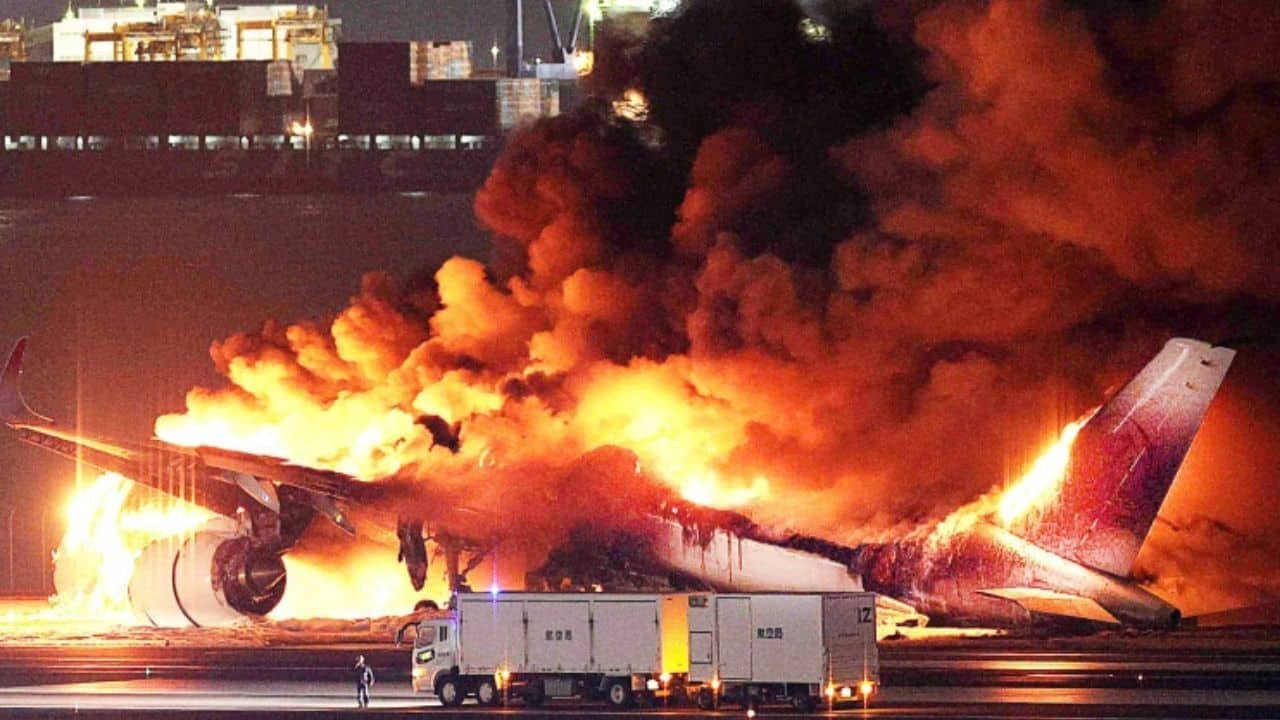
    It took firefighters more than eight hours to extinguish the fire that engulfed a Japan Airlines jet after it struck another plane on landing at Tokyo’s Haneda airport on Tuesday. It took 12 crew members just minutes to usher hundreds of people on board to safety.

    All but one of the six people on the smaller aircraft were killed, but all 379 Japan Airlines passengers and crew escaped down emergency slides minutes before the Airbus was engulfed in flames late Tuesday.

    The blackened husk of the airliner, still sitting on the tarmac Wednesday, bore witness to just how dangerous their escape had been. Several hundred metres (yards) away lay the remains of the coast guard’s DHC-8 aircraft.

    The captain of the coast guard plane — which had been bound for the New Year’s Day earthquake zone in central Japan — was its lone survivor but suffered serious injuries.

    Footage on Tuesday showed a ball of fire erupting from underneath the airliner shortly after landing and coming to a halt on its nose after its front landing gear failed.

    “It was getting hot inside the plane, and I thought, to be honest, I would not survive,” one female passenger told broadcaster NHK.

    “I thought we landed normally. But then I realised I was smelling smoke,” a woman with a small child told NHK.

    “I needed to protect my daughter. That was the only thing in my mind,” she added.

    Another passenger described surviving the crash as a “miracle”.

    “I bounced off my seat from the impact when we landed,” the 28-year-old man told Nikkei Asia.

    “We made it just in the nick of time. It’s a miracle we survived.”

    Takuya Fujiwara from the Japan Transport Safety Board told reporters that the flight recorder and the voice recorder from the coast guard plane had been found, but those of the passenger jet were still being sought.

    “We are surveying the situation. Various parts are scattered on the runway,” Fujiwara said, adding that the authority planned to interview several people involved.

    Asked at a briefing whether the Japan Airlines flight had landing permission, officials at the major carrier said: “Our understanding is that it was given.”

    Widely shared video footage shows flight attendants at the front of a darkened cabin gesturing for passengers to remain seated and thanking them for their cooperation. At one point, the camera pans across to show a window frame filled with orange light.

    “Please get me out of here,” one woman shouts in the video. A child is heard asking: “Why don’t you just open the doors?”

    The actions of crew and passengers have been credited with averting tragedy. Incredibly, none received serious injuries. 

    none appeared to have paused to retrieve hand luggage from overhead lockers, ensuring a clear route to the emergency exits. Less than two hours earlier, the passengers had watched a JAL safety video urging them to do exactly that. In the video, a flight attendant warns: “Leave your baggage when you evacuate!”, extending her open palms for emphasis. An animated sequence then shows the damage that bags and high-heeled shoes can cause to the inflatable evacuation slides.

    Aviation experts said the unshakeable composure displayed by the flight attendants combined with the high level of cooperation among passengers probably prevented a deeply unsettling experience from becoming a major disaster.

    “I can’t speculate on what happened here but human error will probably be found as a contributing cause,” Doug Drury, aviation expert at Central Queensland University, told AFP.

    “Airlines are required to be able to empty an airplane of all passengers and crew within 90 seconds. The flight crews train for events quite frequently in simulation and it is a complicated process that as we saw was completed without fail,” he said.

  • Prisoners rape, kill fellow inmate in Adiala Jail

    Prisoners rape, kill fellow inmate in Adiala Jail

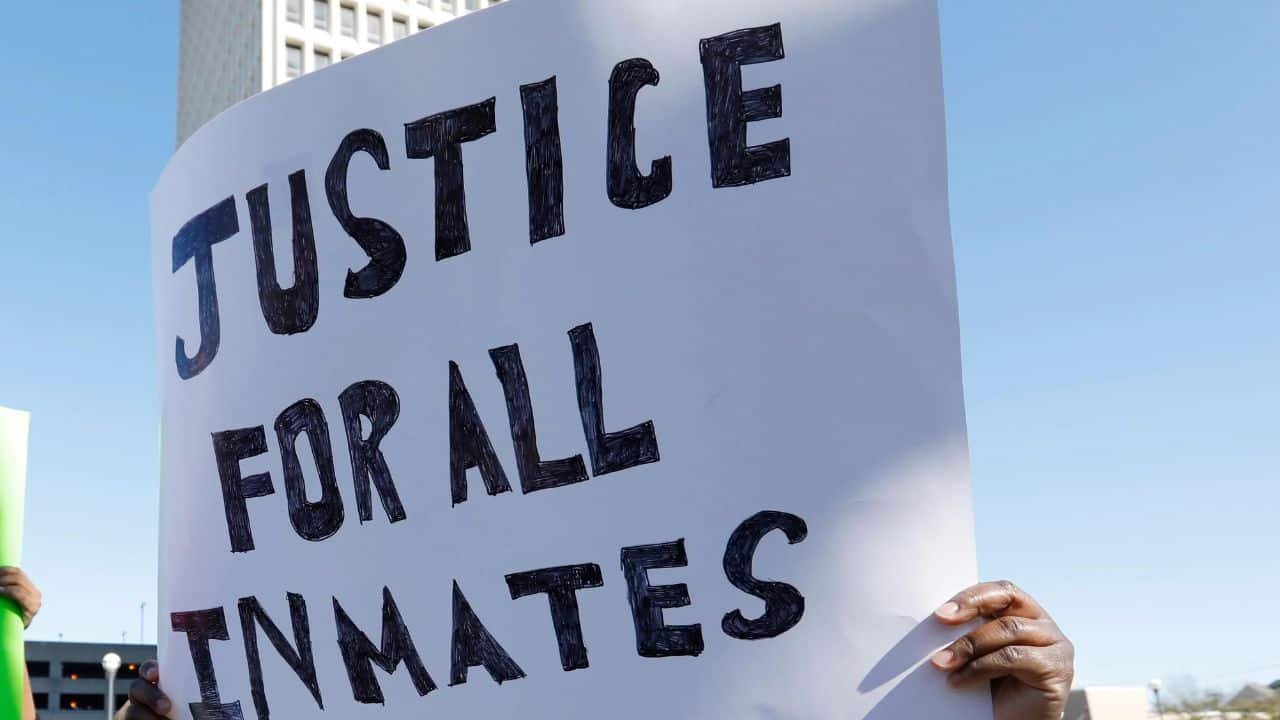
    Jail inmates have raped and killed a fellow prisoner in Adiala Jail, Public TV has reported.

    https://youtu.be/nT9KVGGU3J4?si=5SyxdaBRUK0mjANM

    The victim, Sabil, was first raped and then hanged to death by his fellow prisoners. He was locked in the mill of Adiala Jail Cell 2 where the harrowing incident took place.

    The jail administration has registered a complaint against four suspects who have been detained.

    According to the FIR, the victim was raped by Waqas, Asif, Naqash, and Bilal by tying his hands and feet and then killed him by putting a cloth noose around his neck.

    The Jailer has said that Waqas pressed down on Sabil’s throat and chest with his foot, quoted PNP.

    On the morning of January 1, the deceased was found lying unconscious in cell 2. His death was confirmed upon being transferred to the prison hospital. There were marks on the neck of the deceased which made the cause of death suspicious.

    Police say that the body of the deceased prisoner has been handed over to his family after an autopsy.