Punjab Police is launching a unique initiative for pets. ASP Sheharbano Naqvi, along with the IG Punjab Dr Usman Anwar, is bringing a one-of-a-kind Pet Park to Lahore.
ASP Sheharbano recently made headlines for her compassion towards sniffer dogs of the police department who are now adopted after retirement instead of being euthanized, due to her efforts.
In a recent post on Instagram, the Police department announced the establishment of a pet park with a caption that stated, “This is going to to be the most amazing place for you and your fur babies which will very soon be complete and it’s like a gift for all animal lovers. A place where you can not only play around with your fur babies, walk them, make them interact with other animals but also have food and snacks that you can order for yourself and your pets.”
It further explained that the park is being established in collaboration with JFK Animal Rescue and Shelter. Top architects are going to design it and it will have all the facilities one can think of.
This is the latest in a series of efforts to rescue animals after the launch of a helpline and the establishment of the Police Animal Rescue Centre(P.A.R.C). The tagline was Hifazat Bezuban Ki (Protection of the Voiceless).
Physicist Nabil Iqbal, a professor at Durham University, posted a thread on X (Twitter) detailing his experience of teaching in a physics school co-organized by him in the West Bank. He shared that students from Gaza, both undergrads and from the University of Gaza, would send in applications but were never granted travel permits from Israel.
For several years I co-organized a physics school in the West Bank of Palestine. We always had many applications to the school from physics students in Gaza, undergrads from the Islamic U. of Gaza and Al-Azhar U.
He reminisces about the time they would conduct Zoom meetings with the physics enthusiasts and check their assignments on the phone. They would also wonder about the time they will get to talk ‘physics’ in person.
So dedicated professors in IUG would arrange a room where all of their students could gather and watch together the lectures happening over Zoom.
(This was pre-pandemic, when this idea felt deservedly abnormal). 4/N
Iqbal recently got connected to one of his students in Gaza. She told him that if this is the end, she wants us to remember that she is a physics student and that she wanted to teach others to be as inspired by science as she is.
I was recently in touch with one of them. Just before the war started she was asking me typically academic questions about references etc. etc.
The topic of our correspondence has since shifted.
As the world marks the International Day to End Impunity for Crimes against Journalists, Pakistan’s journalistic community continues to grapple with an alarming surge in violence and impunity.
Several reports have highlighted the deteriorating situation, shedding light on the challenges faced by media professionals in the South Asian nation.
According to the recently released annual report by the Islamabad-based independent media watchdog, Freedom Network, Pakistan has failed to combat the rising impunity of crimes against journalists, painting a grim picture of the state of press freedom in the country.
The report titled ‘One Step Forward, Two Steps Back,’ outlines the harrowing experiences faced by journalists, including incidents of kidnapping, physical assaults, and unjust legal cases.
Pakistan made history in 2021 by passing two special laws to protect journalists.
The Sindh Assembly passed the “Sindh Protection of Journalists and other Media Practitioners Act-2021” while the National Assembly passed “Protection of Journalists and Media Professionals Act-2021” in space of few months.
Azad Jammu and Kashmir, Gilgit-Baltistan, Balochistan, Khyber Pakhtunkhwa, and Punjab have not passed a similar law for their jurisdictions.
According to the Freedom Network’s report at least 37.5 percent of the violations in Pakistan – 93 out of the total 248 cases in the period between August 2021- August 2023 – were recorded in Islamabad alone.
The report further states that during this period there were 11 cases of murders of journalists, plus another 20 unsuccessful assassination attempts.
25 instances of legal cases registered against journalists.
11 cases of abductions, plus another case of an unsuccessful kidnapping attempt.
25 cases of arrests, detentions, or illegal confinements of journalists by the State.
59 cases of physical assaults, 26 of which caused bodily injuries.
05 cases of attacks on the homes of journalists.
30 cases of specific threats of murder or other dire consequences issued to journalists.
59 cases of harassment of journalists.
At least 37.5% of the violations (93 out of a total 248 cases) were recorded in the federal capital Islamabad alone.
Sindh was the second worst with 22.5% of the violations (56 cases) and Khyber Pakhtunkhwa (KP) was a close third at 18.5% (46 cases).
These were followed by Punjab with 17.3% (43 cases), Balochistan with about 2.5% (6 cases), Azad Kashmir (AJK) with 1.2% (3 cases) and Gilgit-Baltistan (GB) with 0.5% (1 case).
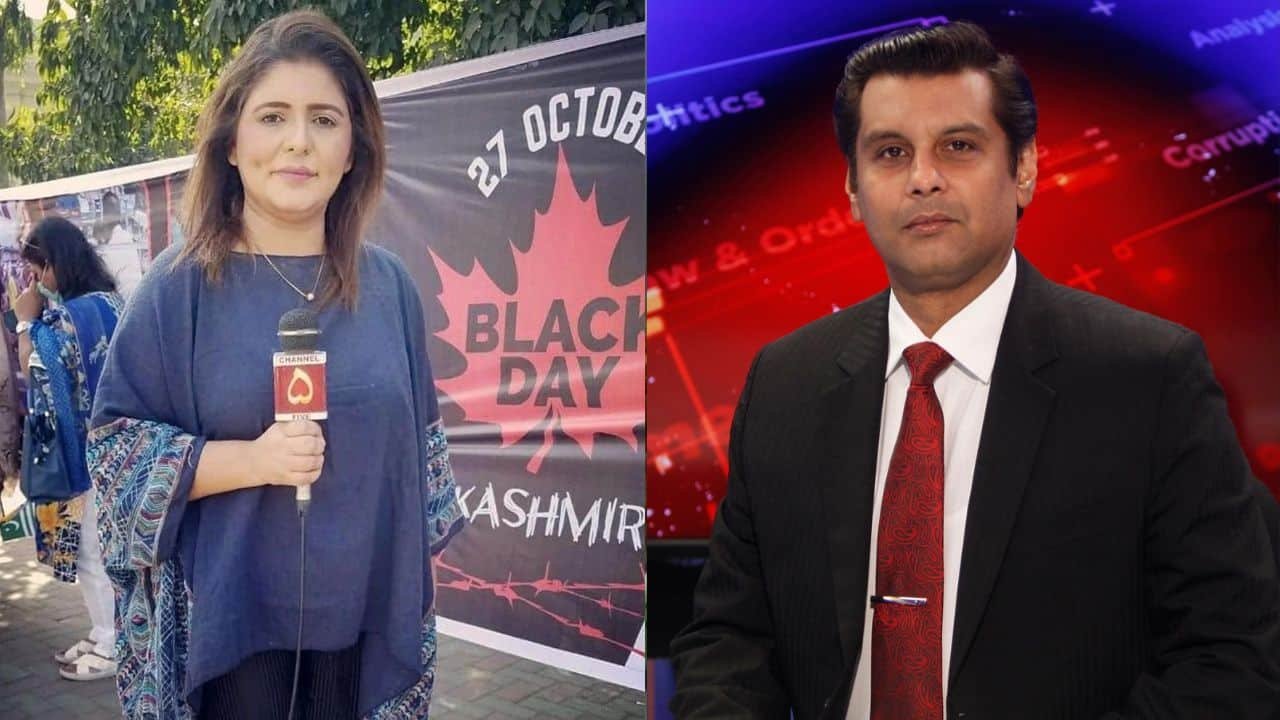
The report also cited specific incidents, such as the tragic death of Channel 5 reporter Sadaf Naeem during the coverage of former Prime Minister Imran Khan’s rally in Punjab in October 2022.
The report notes that another Pakistani journalist Ashad Sharif was killed in Kenya on October 23, 2022, and there is still no clarity on his murder.
Pakistan Press Foundation has also documented at least 157 media-related attacks, including 16 instances of arrests, five instances of detention, and 44 cases of assault this year.
Between January and September 2023, PPF has documented at least 157 attacks on the media in connection with their work, including 16 instances of arrests and five instances of detention, 44 cases of assault, two cases of damage to property, four instances of raids, 18 instances of registration of cases against media professionals and two instances of legal action, 26 instances of censorship, 20 instances of harassment of journalists or media practitioners, 13 cases of threats, seven confirmed cases of kidnappings and three unconfirmed cases.
While the country witnessed an improvement in its ranking in the World Press Freedom Index, climbing from 157 in 2021 to 150 in 2023, this progress is overshadowed by the failure to effectively implement the laws designed to protect journalists.
A three-member bench, headed by Chief Justice Qazi Faez Isa and comprising Justice Aminuddin Khan and Justice Athar Minallah, is hearing petitions filed by the Supreme Court Bar Association (SBCA) and others seeking directives to hold general elections within 90 days as stipulated by the Constitution.
During the hearing, Election Commission of Pakistan (ECP) lawyer, Sharjeel Sawati, said that elections will be held on February 11, as per Geo News.
After being questioned about wether they have consulted with the president of Pakistan on the date or not, the lawyer was instructed to consult with Arif Alvi today.
Chief Justice of Pakistan (CJP) Qazi Faez Isa on Thursday remarked that President Arif Alvi violated the Constitution by not giving a date for general elections.
At the outset of the hearing, Pakistan Peoples Party (PPP) counsel Farooq Naek told the court that his party had submitted the request to become a party in the case.
After this, PTI’s lawyer Ali Zafar started his arguments by saying that the party has limited its petition to only seeking timely elections.
“Elections must be held within 90 days after the dissolution of assemblies as per the Constitution,” he stressed. At this, CJP Isa said that the plea seeking polls within 90 days has then become ineffective.
“The court was told that it was impossible to hold polls within 90 days in the previous hearing,” he remarked.
Zafar then said that PTI only wants elections.
He further said that there won’t be any parliament and law if elections are not conducted.
“Giving a date and schedule of elections are two different things. President Dr Arif Alvi had written a letter to hold consultations with the ECP,” he remarked.
The CJP observed that the president had written in his letter that the court should look into the matter of elections. “Is the president saying that court should take notice of the issue about elections,” he questioned.
At this, Zafar replied that the president had said that the court can also review the matter.
CJP Isa then said that the president did not give any date for elections in his letter. “Did the president not fulfil his constitutional duty,” he asked.
Zafar said that the president fulfilled his responsibility by consulting on the elections.
On this point, Justice Minallah asked why the president wrote the letter in September and not on August 15 after the assemblies were dissolved on August 9.
“Did the president only ask the Supreme Court verbally to take notice of the matter,” asked CJP. He further said that the head of state wrote the letter to the ECP and not to SC.
CJP Isa then questioned whether the apex court had the authority to give a date for polls. “Is it necessary for the president to consult the prime minister to give a date,” he inquired.
Zafar replied that consultations are not necessary as the president has his own constitutional duty to give a date.
During the last hearing, the SC had issued notices to the Election Commission of Pakistan (ECP) and the federal government for their input on polls within 90 days.
The ECP had earlier set the date for elections in Punjab on April 30, but then postponed them to October 8 — in Punjab as well as KPK.
PTI filed a plea in the top court against this decision.
On April 4, the SC had ordered the government and the ECP to hold elections for Punjab assembly on May 14 but both institutions said this would not be possible due to shortage of resources, including funds and manpower.
On September 21, the ECP announced that general elections will be held in the last week of January 2024. However, it did not issue a specific date.
The commission also published the preliminary constituency lists. According to the ECP, objections to the preliminary constituency lists will be entertained until October 26, with hearings on these objections slated to run until November 25.
The final electoral rolls are scheduled for release by November 30, and within 54 days following this publication, the election commission has outlined the election timetable.
The federal caretaker government has just approved a hefty pay rise of 45 percent for top bureaucrats in management positions. These are distinct from career diplomats and are the ones typically drawn from the private sector because of their expertise in a relevant field.
In a notification released by the Ministry of Finance, the increase would apply to all MP-I, MP-II, and MP-III positions, including basic salaries, house rents, and utilities as approved by the caretaker prime minister.
The ministry said the monthly remuneration of officers on the MP-I scale used to begin from Rs554,600, including basic salaries, house rent, and utilities with a terminal amount of Rs699,250 per month. The minimum and maximum remunerations would now be Rs804,180 and Rs1,013,920 per month, respectively. The officers in this grade would also be drawing Rs95,910 per month for transport monetisation allowance, taking the revised monthly package to between Rs900,090 and Rs1,109,830.
Likewise, the minimum and maximum monthly package of MP-II scales was Rs255,750 and Rs413,600 per month. This will now range from Rs370,850 to Rs599,740. The monthly monetisation allowance for this scale will be Rs77,430. The officers in the MP-III grade used to get Rs165,855 to Rs233,750 per month. The amount has now been revised to Rs240,460 and Rs338,960, apart from a monetisation allowance of Rs65,060. The rumenarations were last viewed in July 2017 and the current rise is effective from October 1.
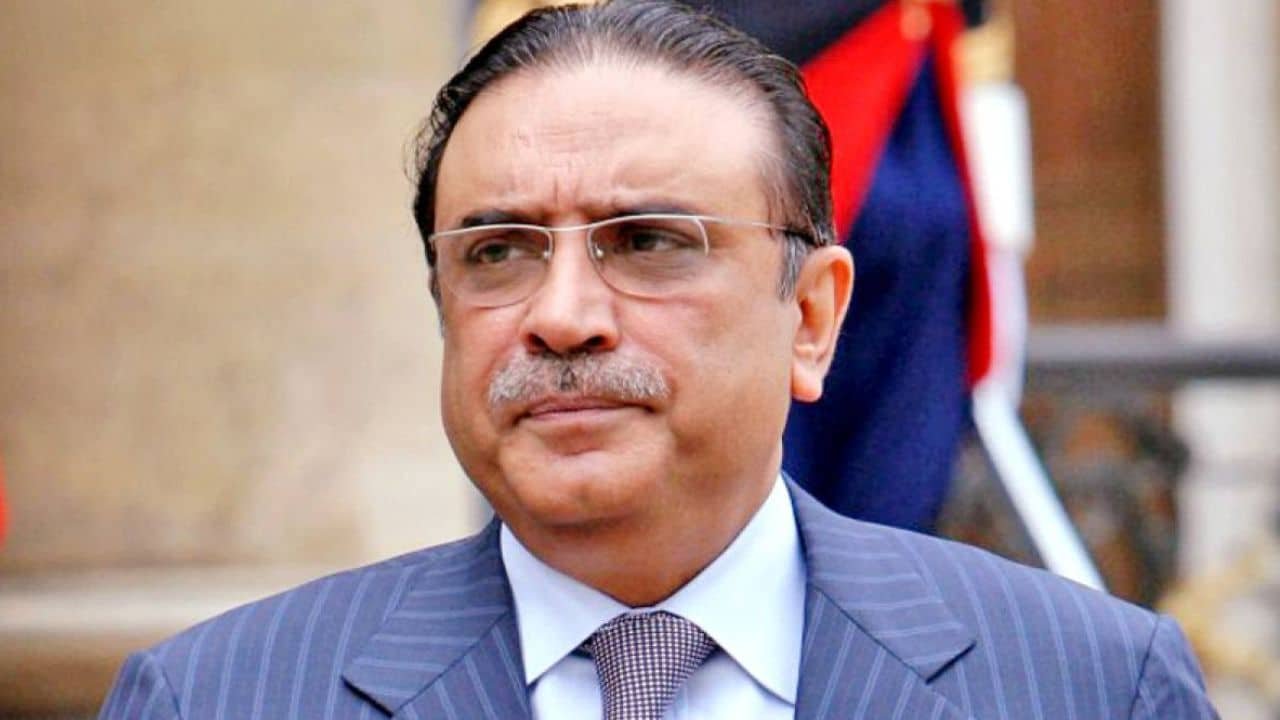
Former president and Pakistan Peoples Party (PPP) co-chairman Asif Ali Zardari has been summoned by an accountability court in Islamabad in connection with the Thatta water supply case.
The court, headed by Judge Mohammad Bashir, has also summoned several other individuals, including Ijaz Ahmed Khan, former secretary to the Sindh government, Hassan Ally Memon, former head of the committee responsible for procurements related to the water supply scheme, Khawaja Abdul Ghani Majeed, CEO Omni Group, Menahel Majeed, spouse of Khawaja Abdul Ghani Majeed and others to appear on December 15.
The case revolves around allegations of illegal contract awards to private contractors.
Earlier this year, proceedings in the case had been halted due to changes in the National Accountability Ordinance (NAO).
The case was among dozens of references transferred from accountability courts because of the amendments made in the National Accountability Ordinance (NAO) by the PDM coalition government headed by then-prime minister Shehbaz Sharif.
These amendments were struck down by the Supreme Court on September 15.
This development comes as the latest in a series of legal battles for Zardari, who was indicted in the water supply reference back in October 2020, as part of the broader fake bank accounts case.
The reference specifically focuses on the alleged award of a contract by the special initiative department for the Thatta water supply scheme to a private contractor.
The accountability court has directed the National Accountability Bureau (NAB) to ensure the reference is properly presented before the appropriate forum.
It was highly anticipated that King Charles will issue a strong apology for the harrowing atrocities of colonialism in the region during his visit to Kenya. Local rights groups were pressing for reparations but instead came a strongly-worded regret. “The wrongdoings of the past are a cause of the greatest sorrow and the deepest regret,” Charles said during a state banquet.
The British King acknowledged the painful struggle of Kenyans as he said, “There were abhorrent and unjustifiable acts of violence committed against Kenyans as they waged… a painful struggle for independence and sovereignty and for that, there can be no excuse.”
The crimes committed by the British colonial forces date back to the time when Kenyans were forced out of their tea lands as the British took over. Their lands are still producing more than 50 percent of tea for the British. Not just that, in the Mau Mau uprising during 1952-1960 a total of 90,000 people were brutally killed and 1,60,000 were detained.
Exactly a decade ago, UK Government announced payments of almost 20 million pounds to more than 5,000 people in what is known as a “a process of reconciliation”. This visit was paramount as Kenya is celebrating its 60th independence anniversary. “It matters greatly to me that I should deepen my own understanding of these wrongs, and that I meet some of those whose lives and communities were so grievously affected,” the King remarked.
While some are greatly disappointed at the lack of a formal apology speculated to be delivered ahead of the visit, President William Ruto has appreciated the courage of the British monarch for shedding light on “uncomfortable truths that reside in the darker regions of our shared experience”.
British royalty speaks publicly on the advice of the cabinet and Rishi Sunak has already rejected the call for an apology.
The government of Pakistan launched a crackdown against illegal foreigners on October 3 while a deadline of November 1 was announced for the immigrants to voluntarily leave the country or face deportation. The program has been given the name of IFRP-The Illegal Foreigners Repatriation Plan.
The interim federal Minister for Interior, Sarfraz Bugti, categorically announced that that there will be, “No compromise” after the deadline.
Stats reveal that 90,000 Afghans have left the country and a number of families are driving back home via Torkham and Chaman borders to avoid the hassle of the deadline.
Breakdown of the Afghan Population in Pakistan
The government has recognized that a total of three million Afghans are residing all over the country out of which 1.7 million are unregistered and undocumented. The rest are the ones who have Proof of Registration with UNHCR or hold Afghan Citizen Card. As per UNHCR, the population of Afghan refugees has grown to 3.7 million while only 1.3 million are officially registered. There was a particular rise in the influx of the population after the exodus of American and NATO forces from Afghanistan. Breaking down the figures, it’s observed that as of June 2023, Khyber-Pakhtunkhwa hosts 52.6 percent (735,800) of Pakistan’s undocumented Afghan population, Balochistan accounts for 24.1 percent (321,677), Punjab has 14.3 percent (191,053), Sindh houses 5.5 percent (73,789), Islamabad accommodates 3.1 percent (41,520), and Azad Jammu and Kashmir hosts 0.3 percent (4,352).
Government’s Repatriation plan
After November 1, raids will be conducted to bring all to “holding centres” and carry out the deportation plan. The government’s deportation plan as laid out by the caretaker Interior Minister is divided into three phases. The plan was laid out in detail in an interview with journalist Shehzad Iqbal on Geo TV. He clearly mentioned that this plan is for “all the Afghans” present in Pakistan and goes on to explain the varying types of them.
In phase one, refugees without any evidence of authorisation or travel documents will be brought to the deportation centres and will be sent to the borders to go back to Afghanistan.
The second phase includes the immigrants who have infiltrated the system of citizenship via illegal means. In the words of the interim minister, they have “breached” the system of NADRA.
The last phase includes the repatriation of the ones who hold documents or are registered with UNHCR. The Government will track them down eventually as “geo-mapping” is completed, claimed the Minister. Meanwhile, they can fully avail the opportunity of open borders to leave peacefully. The holding centers will serve as a temporary home for those to be deported by the Government in a matter of days. Centers are reportedly established in all the provinces and state machinery has been activated to get the task done in time.
Government’s Crackdown
Even though the Government is pledging to take action after November 1, there are multiple reports of raids being made in different cities before the deadline. For instance, one raid in Islamabad Marriot made it to the headlines as the Government arrested UK, asylum seekers. They have been waiting for two years in Pakistan withheld by the UK government in hopes of immigrating to UK, since the Taliban’s takeover. British High Commission has sped up the process after the raid.
Stance of the Pakistan’s government
The motives of the Pakistani government are clear. “In the 24 blasts that took place in the year 2023, 14 were carried out by Afgan nationals,” claimed the Interior Minister. He also claims Afghan nationals are involved in the rising crime ratio of the country. The government strongly denies allegations that the move is reactionary.
Status of Afghans in Pakistan’s society and economy
Afghan nationals residing in the country have a significant contribution to the economy. Most of them started out with small jobs involving physical labour but are now well-established. One such account is narrated by the spokesman of Anjuman-e-Tajiran Balochistan Haji Allah Dad Tareen who sees Pakistan as his home country as younger generations have been born and raised here and they made a living from scratch. “We did not have much economic stability in Quetta before the Afghan Civil War when the people came here, they had lands, agriculture, livestock back at home which were all sold and they invested their money in Pakistan to make a living. This is how the past forty years passed and their young generation belongs to Pakistan, completely. They were born here, they’ve grown up and got educated and completely assimilated in the society just like other locals have,” he said. It is one of many examples. According to Humayun Khan, an economic expert, the PTI Government under Imran Khan offered citizenship to these Afghan Nationals because they realized that if these Afghans went back, this would cause a “revenue drain” on Pakistan’s economy.
Reception of the Repatriation Program
The decision has invited mixed reactions from civil society, activists, journalists, politicians, and netizens from different walks of life.
Afghan government’s spokesman Zabiullah Mujahid called the decision “unacceptable”.
He also denounced the involvement of Afghans in the terrorist attacks in Pakistan. This indicates an impending rift between the two states.
In an interview for the Human Rights Commission of Pakistan, Hina Jillani, with journalist Rabia Mehmood, called the decision “Irrational, unreasonable, unauthorized and unlawful.”
Hina Jilani, chair @HRCP87 emphasised in @NewWaveGlobal_ discussion that Pak interim govt has no mandate to set policy on expulsion of Afghan refugees/asylumseekers a decision which is irrational, unreasonable, unauthorised & unlawful by Pk state. pic.twitter.com/HdlNTpD0Q8
Women’s Democratic Front exposed that the government is deporting the ones holding registration cards and is not allowing them to take their cattle and cash along with them.
The news that even the registered card holding refugees are being deported and are not being allowed to take their belongings especially cattle & cash is unjust and cruel. This further dispossesses an already marginalised people.
— Women Democratic Front ناری جمھوری محاذ (@wdf_pk) October 30, 2023
Moniza Kakar, a human rights lawyer vocal about the pleas of Afghan refugees, along with Aurat March Karachi, organized a peaceful protest to call out the government on the forceful deportation of the Afghan Refugees.
Participated in a protest organized by #AuratMarch against Pakistan’s unjust mass deportation of Afghan refugees. It was heartening to see a diverse group of civil society members from Karachi come together to raise their voices against this unjust policy. #RefugeeRightspic.twitter.com/4FsY8AAJhi
Shafiq Ahmed, an advocate on Twitter, highlighted the issue of forceful expulsion of a huge population to a land they have fled from.
A refugee shall not be deported to a State where his life or liberty would be threatend for reasons of race , colour, religion, political belief or membership of a particular social group.#RefugeesRights#AfghanRefugees#StopDeportingAfghanRefugees
In Geo TV’s show Report Card, journalist Mazhar Abbas questioned the capacity of NADRA to have complete information about all the illegal aliens countering the claims of Caretaker Interior Minister Bugti to have done complete geo-mapping.
Renowned Journalist Azaz Syed is critical of the decision and called it “emotional” in its spirit because many such attempts have been done before by UNHCR but it has turned out that they take the money and come back making use of the porous border.
پاکستان میں افغان مہاجرین کی وطن وآپسی پر بے جا جذباتی پن کا مظاہرہ کیا جارہا ہے۔ کاش ہم ہوش کے ناخن لیں۔ کینیڈا میں سلمی ا زاہد نامی پاکستانی نے 15 سال میں وہاں محنت کرکے اپنا مقام بنایا اور پارلیمینٹ کی رکن بنیں ہم اپنے ہم وطنوں کے لیے بیرون ممالک میں حقوق مانگتے ہیں مگر… pic.twitter.com/HHRRYDirr9
Irshad Bhatti, congratulated the Government and military leadership on this historic decision.
The government, however, has kept the decision intact and maintained that they are ready for the fallout if any because such hard decisions come with all the positives and negatives.
Hyderabad chapter of Aurat March refused to protest against the repatriation plan while the march was criticised by civil rights activist including Anis Haroon, retired Justice Majida Razvi and many others stating, “How long Sindh would bear the burden of illegal immigrants when it owns 37 percent of the rural population [that] lives below the poverty line?”
Bugti wants the move to be perceived as Pakistan’s change of image from a soft state to a “hardened” one. He asserted that Pakistani government is determined to send these foreigners to their homelands in a step-wise manner.
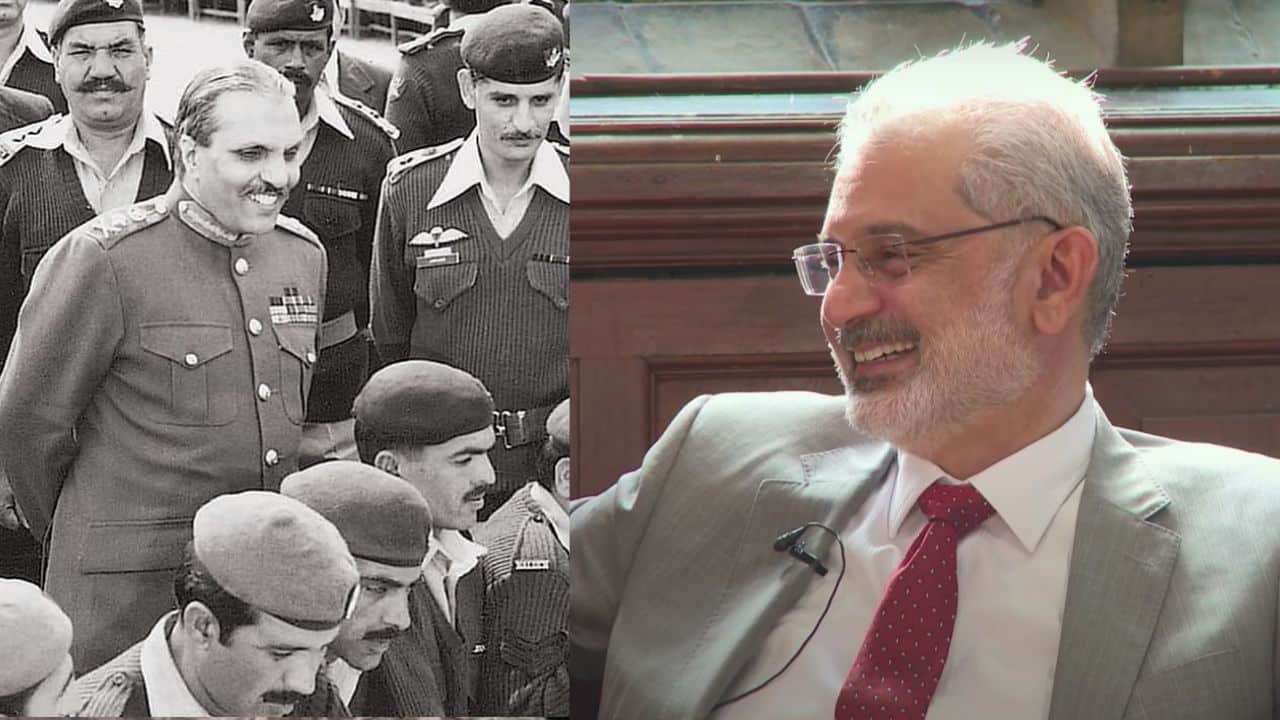
Chief Justice of Pakistan, Justice Qazi Faez Isa gave an unexpected but strongly worded statement during the hearing of the Faizabad sit-in case, stating that he doesn’t recognize the late military dictator General Zia-ul-Haq as president, as per Neo News.
During the hearing of the Faizabad sit-in case, Justice Faiz Isa, addressing Ijaz-ul-Haq’s lawyer, said that he does not consider Zia-ul-Haq the President of Pakistan.
When the Attorney General revealed that Ijaz-ul-Haq’s lawyer had been asked to provide a written reply with an affidavit to withdraw the statement, the lawyer of countered the Attorney General’s statement, denying that he had been asked to retract the statement.
Ijaz-ul-Haq’s lawyer informed the court that his client had merely stated that his name should be removed from the verdict, to which Chief Justice Justice Faiz Isa remarked that Ijaz-ul-Haq’s name was only mentioned in the report by intelligence agencies, and it was not included in the verdict.
During the same conversation, when Chief Justice Justice Faiz Isa mentioned that Ijaz-ul-Haq is the son of former army chief Zia-ul-Haq, his lawyer replied that his father was also the President of Pakistan. In response, the Chief Justice stated, “I do not consider Zia-ul-Haq the President of Pakistan. No one can become the President by the force of arms. Do not call Zia the President again in this court.”
The lawyer of Ijaz-ul-Haq, the son of former military ruler Zia-ul-Haq, asserted that it is documented in the constitution that Zia-ul-Haq was the president. Chief Justice Justice Faiz Isa responded by remarking that Zia-ul-Haq had written in the constitution that he was the president for five years.
Earlier today, the Supreme Court of Pakistan issued summons for the chairman of the Pakistan Electronic Media Regulatory Authority (PEMRA) following allegations of “media coercion” during the 2017 Faizabad sit-in.
The summon was initiated by a three-member bench of the apex court, led by Chief Justice of Pakistan (CJP) Qazi Faez Isa, and including Justice Aminuddin Khan, and Justice Athar Minallah.
The hearing, part of a series of nine review petitions against the Supreme Court’s February 6, 2019 verdict on the Faizabad sit-in case, was marked by significant developments.
Authored by Justice Isa years before he took oath as the chief justice of Pakistan (CJP), the searing judgement had instructed the defence ministry and the tri-services chiefs to penalise personnel under their command who were found to have violated their oath.
Interim Interior Minister Sarfraz Bugti has declared that the operation against illegal foreigners will start from November 2 as the deadline given to them is ending today. The deportation will take place in different phases from here on.
According to the Afghan Commission, as many as 104,000 Afghan refugees living illegally in Pakistan have returned to Afghanistan so far. The undocumented refugees included 28,000 men and 19,000 women and 56,000 thousand children.
The caretaker federal cabinet approved that provinces will bear the expenses of the logistics. Caretaker Chief Minister Maqbool Baqar gave his nod to allocating Rs.4.5 billion to carry out the Repatriation plan from Karachi, Hyderabad, Sukkur, Shaheed Benazirabad, Mirpurkhas and Larkana divisions.
49 holding centres have been established all over the country.These illegal foreigners are being brought to holding centres after registration. A huge number has already reached the Chaman border to leave whereas the ones in the centers will be sent gradually according to the plan.
However, there are reports of a crackdown in different cities of the country like Karachi, Hyderabad, Sargodha, Mianwali and Khushab. Caretaker Information Minister Barrister Feroz Jamal Shah Kakakhel told the media that, “We’ve identified and mapped 52,000 illegal residents in various districts of our province for action.” “These [undocumented] foreigners will be temporarily kept in designated processing zones from where they will be deported to their respective countries,” he added on. Mr Kakakhel said that under the plans, the exercise would be executed on Sunday, Monday and Tuesday in Khyber Pakhtunkhwa, on Friday and Saturday in Punjab, and on Wednesday and Thursday in Islamabad, Gilgit-Baltistan, and Azad Jammu and Kashmir.
He also announced that from Nov 1, the federal government would begin a “single-document” policy welcoming those entering Pakistan on passport and visas only.