Tag: Top News

  • Supreme Court upholds Practice & Procedure Act 2023

    Supreme Court upholds Practice & Procedure Act 2023

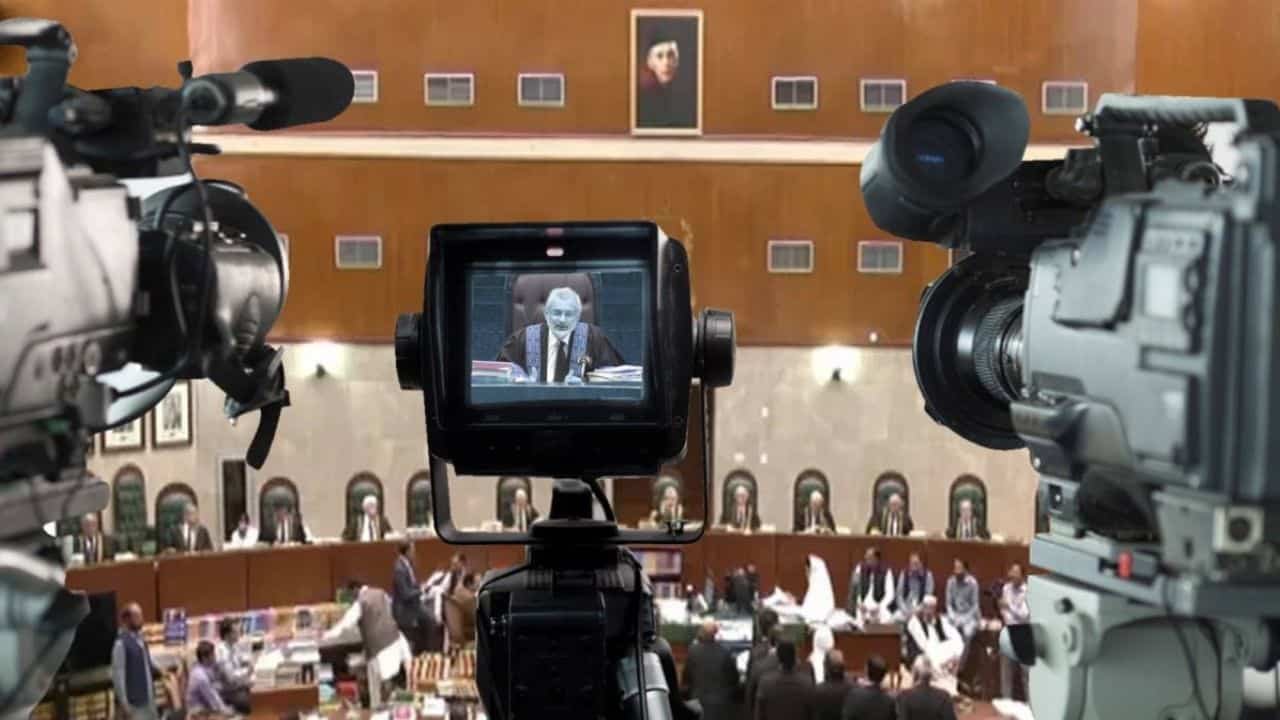
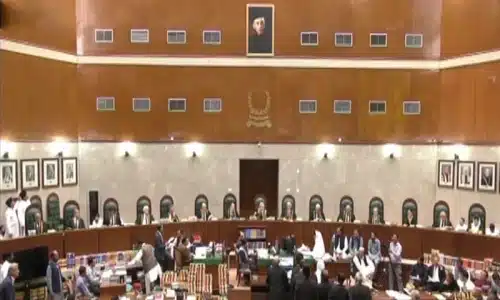
    The Supreme Court (SC) has issued a verdict in favour of the SC (Practice and Procedure) Act, 2023, dismissing petitions challenging its validity.

    Headed by Chief Justice Qazi Faez Isa, the SC full bench consisted of Justice Sardar Tariq Masood, Justice Ahsan, Justice Syed Mansoor Ali Shah, Justice Akhtar, Justice Yahya Afridi, Justice Aminuddin Khan, Justice Naqvi, Justice Jamal Khan Mandokhel, Justice Mazhar, Justice Ayesha, Justice Athar Minallah, Justice Rizvi, Justice Waheed and Justice Musarrat Hilali.

    The decision was upheld by 10-5 majority.

    While reading out the order, CJP Isa noted that five members of the full court bench — Justice Ijazul Ahsan, Justice Munib Akhtar, Justice Sayyed Mazahir Ali Akbar Naqvi, Justice Ayesha A Malik, and Justice Shahid Waheed — had opposed the law.

    The decision on the SC (Practice and Procedure) Act, 2023, case was delivered after the completion of all arguments. Attorney General Mansoor Awan presented a comprehensive case in favor of the act, leading to the full court’s decision in support of the legislation.

    The SC (Practice and Procedure) Act, 2023, has been a subject of considerable debate and legal scrutiny, with various petitions seeking its annulment. However, the apex court has preserved the Act, emphasising its continued relevance in the legal system.

    However, by an 8-7 decision, the majority of judges have decided against the provision of law wherein retrospective right of appeal was given in the Act.

    The Supreme Court (Practice & Procedure) Act, 2023, which has been at the centre of legal debate and judicial proceedings, introduced several crucial provisions, reshaping the functioning of the Supreme Court of Pakistan:

    1. Sou Motu Notice: The Act granted the power of taking suo motu notice to a three-member committee, consisting of senior judges, including the Chief Justice. This provision aimed to facilitate the initiation of legal proceedings in the apex court and ensure transparency. It also included the right to appeal.
    2. Constitution of Benches: According to the Act, every case, matter, or appeal brought before the Supreme Court would be heard and decided by a bench formed by a committee comprising the Chief Justice and the two most senior judges. Decisions of the committee would be made by a majority vote.
    3. Original Jurisdiction: When exercising the apex court’s original jurisdiction, the Act mandated that any matter invoking the use of Article 184(3) must first be presented before the committee.
    4. Interpretation of the Constitution: In cases where the interpretation of the Constitution was necessary, the Act stipulated that the committee would assemble a bench consisting of no fewer than five Supreme Court judges.
    5. Right to Appeal: In instances where a decision was made by a Supreme Court bench exercising Article 184(3) jurisdiction, the Act allowed for an appeal to be filed within 30 days of the bench’s order. This appeal would be scheduled for a hearing within a period not exceeding 14 days.
    6. Retrospective Right of Appeal: The Act also extended the right of appeal retrospectively to individuals who had been affected by an order made under Article 184(3) before the commencement of the SC (Practice and Procedure) Act, 2023, provided that the appeal was filed within 30 days of the Act’s implementation.
    7. Choice of Counsel: Parties involved in legal proceedings were granted the right to select their counsel for filing a review application under Article 188 of the Constitution.
    8. Urgency and Interim Relief: The Act outlined that any application claiming urgency or seeking interim relief in a case, appeal, or matter would be scheduled for a hearing within 14 days from the date of filing.
  • Court reserves verdict on Practice and Procedure Act 2023

    Court reserves verdict on Practice and Procedure Act 2023

    The Supreme Court (SC) has reserved its decision on petitions that challenge the 2023 SC (Practice and Procedure) Act, which restricts the authority of the Chief Justice of Pakistan.

    Chief Justice of Pakistan (CJP) Qazi Faez Isa led the full-court bench consisting of Justice Sardar Tariq Masood, Justice Ijaz Ul Ahsan, Justice Syed Mansoor Ali Shah, Justice Munib Akhtar, Justice Yahya Afridi, Justice Aminuddin Khan, Justice Sayyed Mazahar Ali Akbar Naqvi, Justice Jamal Khan Mandokhel, Justice Muhammad Ali Mazhar, Justice Ayesha A Malik, Justice Athar Minallah, Justice Syed Hasan Azhar Rizvi, Justice Shahid Waheed, and Justice Musarrat Hilali are hearing the case.

    “We will discuss amongst ourselves [now]. If there is a consensus, then we will announce it, otherwise, the decision will be reserved,” Chief Justice of Pakistan (CJP) Qazi Faez Isa said at the end of today’s hearing.

    During the hearing, the CJP emphasised the importance of maintaining a harmonious relationship between the Parliament and the SC.

    “Do not pit the Parliament and Supreme Court against each other,” he remarked, insisting on the idea of “live and let live”.

    “Why do we see each other’s institutions negatively? Why can’t it be said that one institution legislated for the betterment of another?” CJP Isa questioned.

    All the petitioners, including all political parties, concluded their arguments in today’s hearing. The Attorney General of Pakistan (AGP), Mansoor Usman Awan, also gave his arguments today.

  • Passport delivery delayed due to shortage of ‘lamination paper’

    Passport delivery delayed due to shortage of ‘lamination paper’

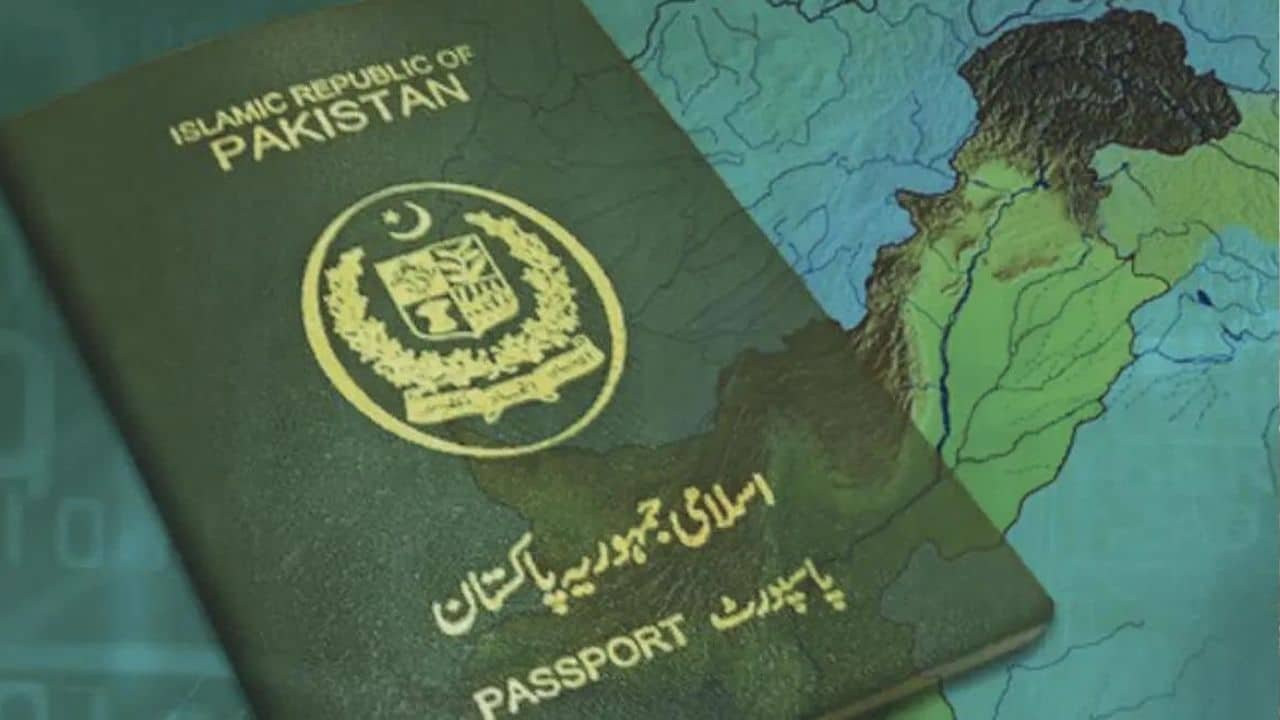
    People waiting for their new passports will have to wait a bit longer. The Directorate General of Immigration & Passport has reportedly run out of lamination papers for new passports.

    As per Samaa, sources have said that the relevant authorities did not take timely measures to ensure a sufficient supply of lamination paper. Last week, there was no improvement in the supply chain, and there is now a fear that the printing and delivery of new passports will be affected across the country.

    One of the immediate consequences of the lamination paper shortage is an expected increase in the duration of passport delivery. For instance, the delivery of passports with a normal fee will likely be extended to approximately one month. This delay poses significant challenges for applicants across the country, especially those with urgent travel plans.

    Despite the alleged non-availability of lamination paper, the passport department continues to accept new applications, further fueling concerns that the number of pending passports will surge due to printing problems.

    As of now, the passport department has not issued an official statement on the matter, leaving many in the dark about when the shortage of lamination paper will be resolved and how long the delays will persist.

    The shortage of lamination paper is causing substantial disruptions in passport issuance, and it is vital for the authorities to swiftly address this issue and keep the public informed about their efforts to resolve the problem. The impact of this situation on individuals urgently needing to travel for various reasons underscores the urgency of resolving the issue promptly to minimize inconvenience for applicants.

  • Major changes in Punjab’s National and Provincial Assembly seats

    Major changes in Punjab’s National and Provincial Assembly seats

    Five newly created districts in Punjab are set to receive a total of 13 national and provincial assembly seats as part of the preliminary delimitation, marking a notable shift in the political landscape.

    The districts in question are Kot Addu, Taunsa, Wazirabad, Talagang, and Murree. Among these, Kot Addu district in southern Punjab stands out, securing two National Assembly seats, NA-179 and NA-180, along with three provincial assembly constituencies: PP-276, PP-277, and PP-278.

    Wazirabad and Taunsa districts are also set to gain representation, with Wazirabad obtaining NA-66, PP-35, and PP-36, while Taunsa secures NA-183, PP-284, and PP-285.

    Talagang, which was carved out of Chakwal, will now share a National Assembly seat, NA-59, with Chakwal itself. This arrangement leads to Chakwal having one independent NA seat, and Talagang securing one provincial assembly seat, PP-23. PP-22 will be referred to as Chakwal-cum-Talagang.

    Similarly, Murree will not have an independent NA seat but will be included in NA-51, referred to as Rawalpindi-cum-Murree. Nonetheless, Murree will have representation in the provincial assembly with PP-06.

    These changes also entail a reduction in the number of national and provincial assembly seats for some districts. Dera Ghazi Khan, for instance, will see a decrease from four to three NA seats and a reduction from eight to six provincial assembly seats. Muzaffargarh, too, will experience a decrease, with two fewer NA seats, resulting in a drop from six to four NA seats, and a reduction in provincial assembly seats from 12 to eight.

    Gujranwala and Hafizabad, despite Gujranwala’s sizable population of 5.95 million, will collectively have only five seats, despite the potential for an additional independent seat. Dera Ghazi Khan is also set to lose one NA seat and two provincial assembly seats.

    These changes in seat allocations underscore the evolving political landscape in Punjab, reflecting efforts to ensure fair and equitable representation for all regions within the province.

  • No chance of Nawaz Sharif’s arrest, says Ishaq Dar

    No chance of Nawaz Sharif’s arrest, says Ishaq Dar

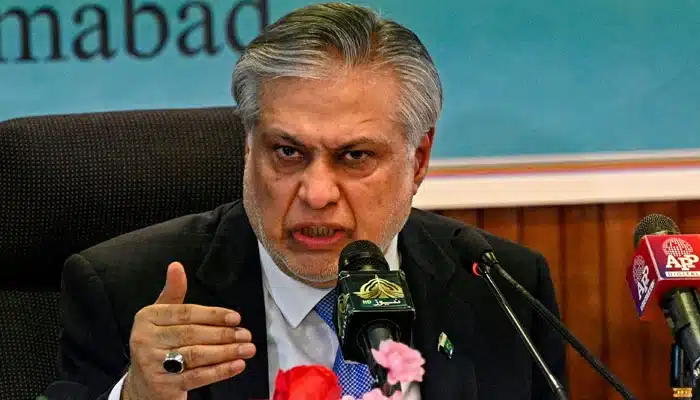
    Senior leader of the Pakistan Muslim League-Nawaz (PML-N) and former finance minister Ishaq Dar has said that there is no chance of the party supremo Nawaz Sharif getting arrested on his return to Pakistan.

    In an interview with Asma Sherazi, Ishaq Dar said that Nawaz Sharif will arrive in Saudi Arabia and perform Umrah. After performing Umrah, the PML-N chief will reach Pakistan on October 21.

    He continued, “There is no chance of arresting Nawaz Sharif on his return as he will take protected custody and transit bail on return”.

    The former finance minister also mentioned that it’s a standard judicial practice to face the courts.

    Dar also stated that PML-N will clearly get a clear majority in the next election, and PML-N’s agenda is the recovery of the economy.

    The former finance minister said that the truth commission on the characters of Project Imran is included in our agenda, “however we do not want to take any action that smells of revenge,” he added.

  • ‘Imran Khan can’t talk to his sons’: Jailer

    ‘Imran Khan can’t talk to his sons’: Jailer

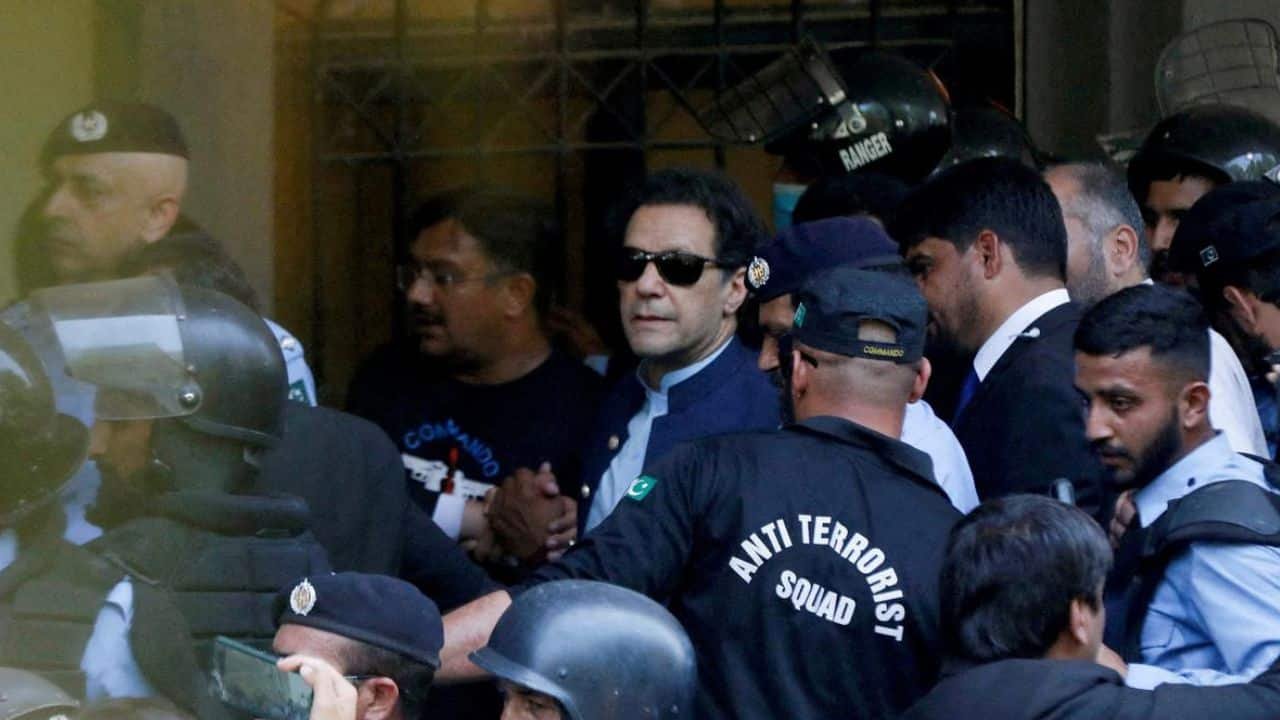
    The incarcerated chairman of the Pakistan Tehreek-e-Insaf (PTI) party and former Prime Minister, Imran Khan, has been denied permission to speak with his sons while in detention at Adiala Jail. The superintendent of the jail conveyed the decision to a special court during a hearing on Tuesday.

    Referring to security concerns and the specific nature of the cipher case under the Official Secrets Act, the jailer cited the two as the basis of his refusal to let Imran Khan speak to his sons.

    The presiding judge, Abual Hasnat, acknowledged the jail superintendent’s stance and requested the Adiala Jail’s Standard Operating Procedures (SOPs) concerning telephone communication between inmates and their relatives. The case hearing has been adjourned until October 18, pending further review.
    It is pertinent to mention that Imran Khan is currently detained at Adiala Jail in connection with the cipher case, a transfer that was ordered by the Chief Justice of the Islamabad High Court after his initial incarceration at Attock Prison.

    Imran Khan and the PTI vice chairman, Shah Mahmood Qureshi, are facing charges related to the alleged deliberate mishandling of a diplomatic cipher. The special court announced that PTI leaders will be indicted in the cipher case on October 17.

  • Pakistani Journalists furious over ‘Whatsapp’ solution by ICC for World Cup coverage

    Pakistani Journalists furious over ‘Whatsapp’ solution by ICC for World Cup coverage

    India has not granted a visa to any Pakistani journalist to cover the cricket World Cup 2023 yet and the International Cricket Council (ICC) has come up with a solution stating that questions can be asked via Whatsapp, provoking more anger.

    As a temporary solution while Pakistani journalists await clearance for World Cup coverage in India, the ICC has introduced a method for them to submit their questions to an ICC media manager via WhatsApp. These questions will then be presented to the Pakistani representative attending the media conferences.

    The ICC released a statement saying, “In addition to fielding questions from the present media, the Pakistani representative at the media conference will also respond to a selection of queries submitted by members of the Pakistani media who are still awaiting travel approval for the event.”

    Expressing their disappointment, the Pakistan Cricket Board (PCB) has lodged a formal complaint with the International Cricket Council (ICC). Recent reports indicate that no Pakistani journalist was present at the Rajiv Gandhi International Stadium in Hyderabad when Pakistan kicked off their World Cup campaign against the Netherlands last week.

    The PCB conveyed their disappointment in a letter to the ICC, stating, “The PCB is dismayed by the uncertainty faced by Pakistani journalists and fans in obtaining Indian visas to cover Pakistan’s opening game in the ICC World Cup. Pakistani journalists and fans are expressing deep concern, putting us under immense pressure.”

    In response, an ICC spokesperson commented, “We recognize the vital role played by journalists and passionate fans in elevating the spirit and ambiance of sporting events.”

    “This is an obligation of our host and they are working hard on it with our full support. Every effort is being made to get this sorted,” an ICC spokesperson told The Current.

    Pakistan Cricket Board Management Committee Chairman Mr. Zaka Ashraf has called upon Pakistan Foreign Secretary Syrus Sajjad Qazi and raised serious concerns and alarm over the delay in fans and journalists visas for India to cover the ICC Men’s Cricket World Cup. 

    The chairman also requested the Foreign Secretary to take up the issue with India’s Home Ministry through the Pakistan High Commission Office in New Delhi. The PCB has also taken serious notice of security threats being reported in Indian media and requested the government to evaluate player’s security in India. He emphasised that the well-being and safety of the Pakistan squad were of paramount importance.

    PCB is extremely disappointed to see that journalists from Pakistan and fans are still facing uncertainty about obtaining an Indian visa to cover Pakistan games in ICC World Cup 2023. In the meantime, PCB has again reminded ICC and BCCI of their respective obligations and terms and conditions stipulated in the Host agreement to guarantee visas for fans and journalists of participating teams.

    Pakistani Journalists are upset over this entire situation.

    Abdul Ghaffar, a sporta Journalist wrote took to X (formerly Twitter),

    “ICC instead of asking Pakistan Journo to send questions via Whatsapp must make sure well in advance that Pakistan Media gets visa on time and travelled,” he wrote.

    Another sports journalist, Ubaid Awan, withdrew his ICC media accreditation for World Cup 2023 in protest.

  • Notices issued to Bajwa and Faiz over ‘controversial’ interviews

    Notices issued to Bajwa and Faiz over ‘controversial’ interviews

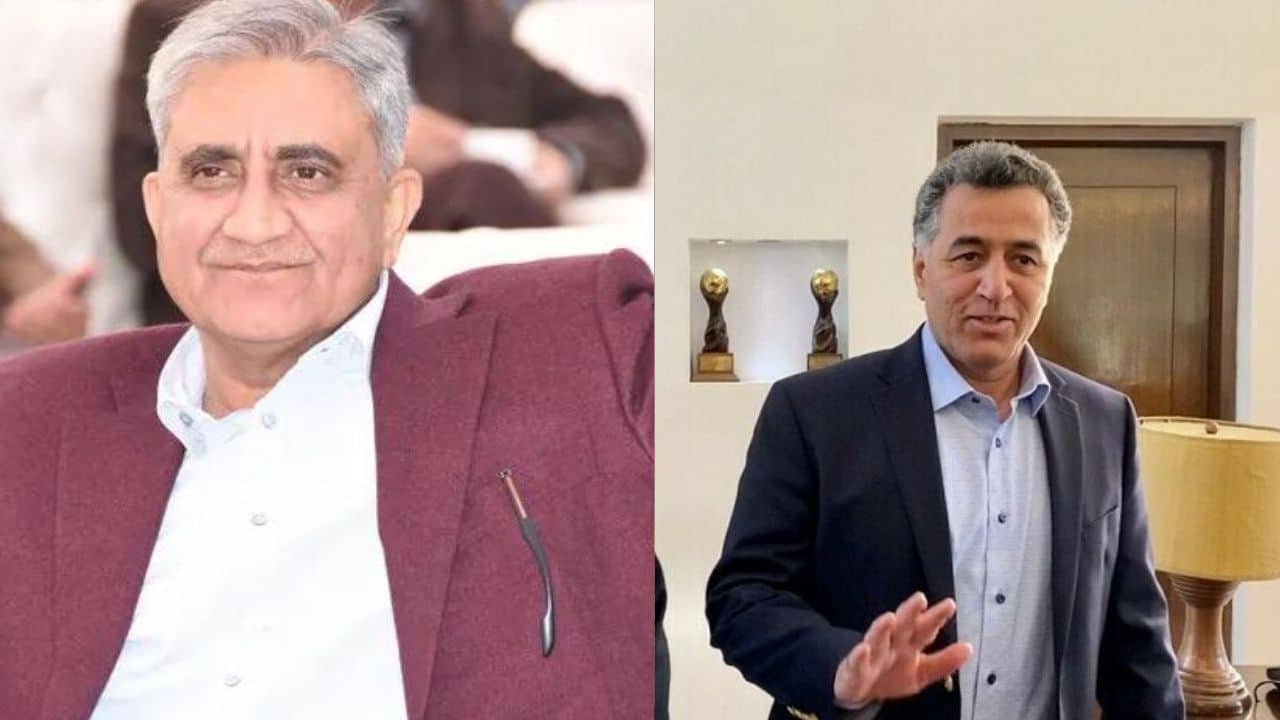
    The Islamabad High Court (IHC) has issued notices to former Army Chief General (retired) Qamar Javed Bajwa and former ISI Chief Lieutenant General (retired) Faiz Hameed over allegations of violating rules by giving interviews after their retirement, where they are accused of misrepresenting events.

    The notices were issued in response to a complaint filed by a private citizen named Atif Ali.

    The petition says that journalists Shahid Maitla and Javed Chaudhry conducted interviews with Bajwa and Faiz for the sake of viewership which had a “negative impact” on society. The petitioner said that he had been taken aback when he saw the articles as they could “pollute” society. It added that the garb of freedom of expression was used for a “criminal act”.

    The petition further alleges that events were misrepresented in the interviews and that the “criminal act” was conducted through connivance between the journalists and the generals.

    The petition says that the interviews portrayed a negative image of the institution and tried to create a rift between it and the people of Pakistan. Copies of the articles have also been attached to the petition.

    In addition to Gen. Bajwa and Lt. Gen. Hameed, notices have also been issued to the Pakistan Electronic Media Regulatory Authority (PEMRA) and the Press Association of Pakistan. Two journalists, Shahid Maitla and Javed Chaudhry, who conducted the interviews in question, have also been summoned by the court.

    Islamabad High Court’s Chief Justice, Aamer Farooq, in a written order issued on Monday, expressed dissatisfaction with the Federal Investigation Agency (FIA) for not responding to the petitioner’s repeated requests to file a complaint.

  • Jinnah House Trial to be completed in 1.5 months

    Jinnah House Trial to be completed in 1.5 months

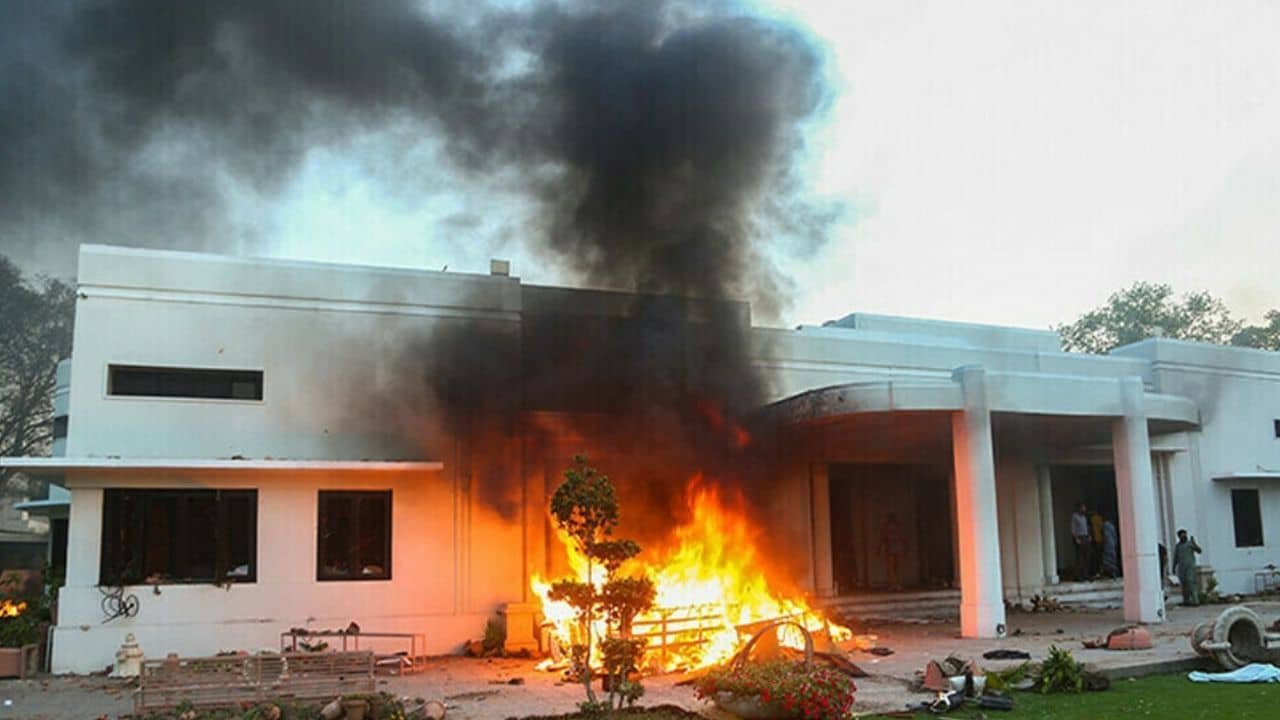
    In a recent development, Punjab’s Special Prosecutor, Syed Farhad Ali Shah, revealed that the Home Department has issued a notification to conduct the trial of the May 9 cases within the confines of a jail facility.

    Speaking about the matter, Syed Farhad Ali Shah stated, “The Jinnah House trial is set to be completed within a timeframe of one to one and a half months.” He also confirmed that the challan (charge sheet) has been submitted to the court.

    The notification issued by the Home Department specifies that not only the Jinnah House case but also the arson and siege cases related to Askari Tower and Shadman police station will be conducted within jail premises. The move aims to streamline legal proceedings and enhance security during the trials.

    In a related development, Justice Ali Baqir Najfi of the Lahore High Court (LHC), on Monday, directed Punjab government prosecutors to apprise the court in the Khadijah Shah case after taking directions from the government.

    The petitioner, through a lawyer, pleaded that she was unduly implicated in the May 9 riots incidents and Gulberg police station had illegally involved her in the case against the facts.
    “The Anti-Terrorism Court dismissed the bail by ignoring the facts,” Khadija Shah pleaded via her lawyer in the provincial apex court.

    Earlier, the LHC had conditionally dismissed the registrar’s objections to Khadija Shah’s bail plea, deciding to remove objectionable documents from the application and dismissing the objection itself.

    In another recent development, an anti-terrorism court (ATC) has ordered the release of Sanam Javed Khan, a prominent Pakistan Tehreek-e-Insaf (PTI) activist, and eight other party members in connection with the Jinnah House attack case. The decision comes after a series of legal proceedings surrounding the incident earlier this year.

    Presiding over the case, ATC Judge Arshad Javed announced the verdict, granting bail to the nine suspects involved in the Jinnah House attack. The court approved their bail pleas, requiring surety bonds worth Rs 0.1 million each, thereby paving the way for their release.

  • Release political opponents, urges Maulana

    Release political opponents, urges Maulana

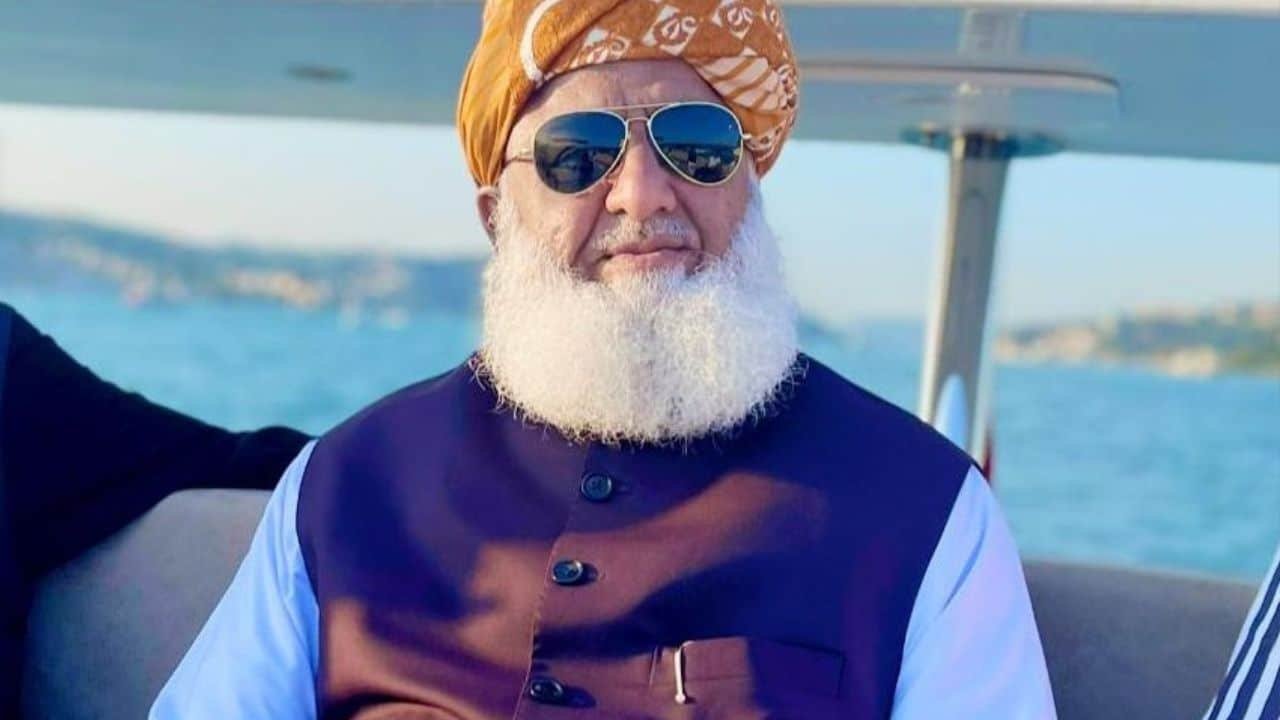
    In a recent address at the Jamiat Ulema-e-Islam Fazal (JUI-F) social media convention in Peshawar, Maulana Fazlur Rehman, the head of JUI-F, conveyed his desire to see imprisoned politicians released from incarceration.

    He emphasized that political parties need to direct their attention towards internal and external challenges faced by Pakistan.

    Maulana Fazlur Rehman expressed his reluctance to organize public gatherings against his incarcerated political opponents, stating that such actions do not befit the current circumstances.

    Addressing the return of Pakistan Muslim League-N (PML-N) supremo Nawaz Sharif to Pakistan, Maulana Fazlur Rehman encouraged the nation to welcome him.

    He criticized the Pakistan Tehreek-e-Insaf (PTI) chief, asserting that his governance had led the country into an economic crisis. He also pointed out that the pending court cases against the PTI leader could result in his disqualification, preventing him from participating in future elections.

    Maulana Fazlur Rehman further highlighted the Election Commission of Pakistan’s (ECP) announcement of elections in January, asserting that holding elections is a constitutional right.