On a balmy evening in August 2022 at Birmingham’s Alexander Stadium, the largest athletics grounds in the United Kingdom, a packed crowd was following the drama unfolding in the men’s javelin competition.
Arshad Nadeem, the Pakistani athlete, was preparing for his fifth and penultimate throw.
Moments earlier, Grenada’s Anderson Peters, a two-time world champion, had delivered a mighty 88.64-metre (291ft) throw, propelling himself to the gold medal position and pushing Nadeem down to second place.
Nadeem took hold of his bright yellow javelin and strode towards the beginning of his run-up, holding up his arms and clapping at the crowd, which cheered back enthusiastically.
Until Peters’s throw, Nadeem had led the competition, already surpassing the 85-metre (279ft) mark three times with his longest throw at 88 metres (289ft).
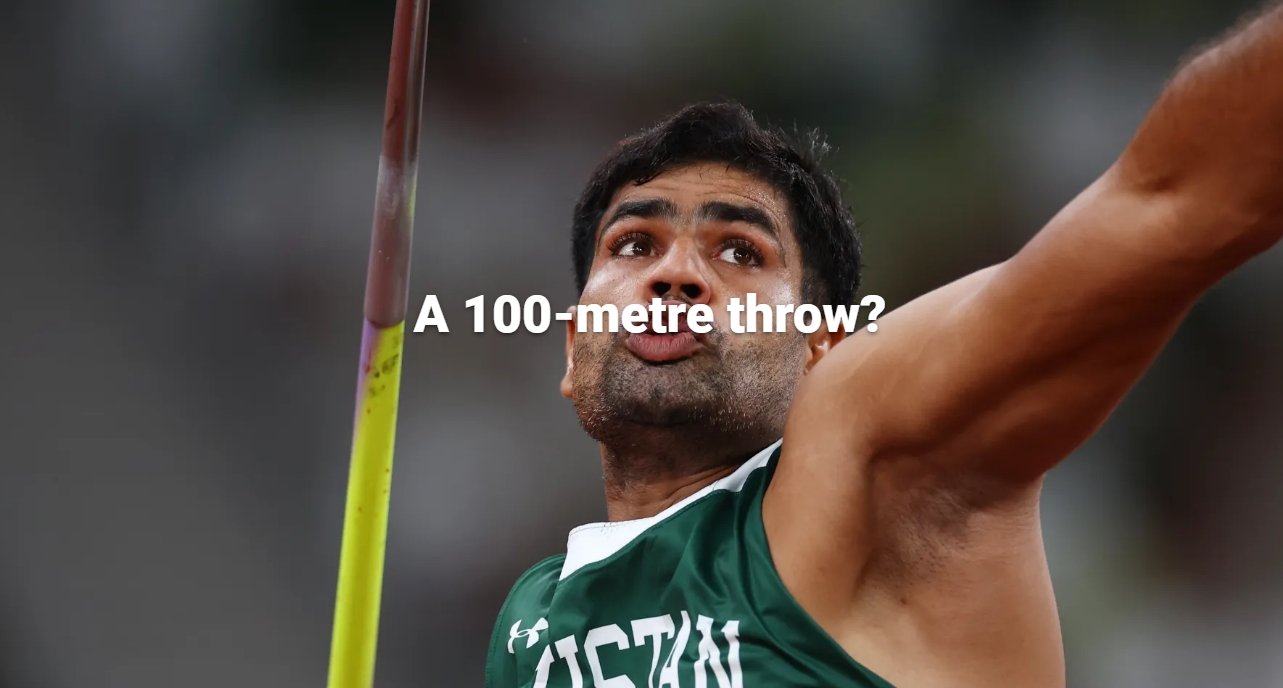
As the crowd’s clapping and cheering picked up, Nadeem, his throwing arm lined with pink therapeutic tape, took long strides before launching the javelin with a low grunt.
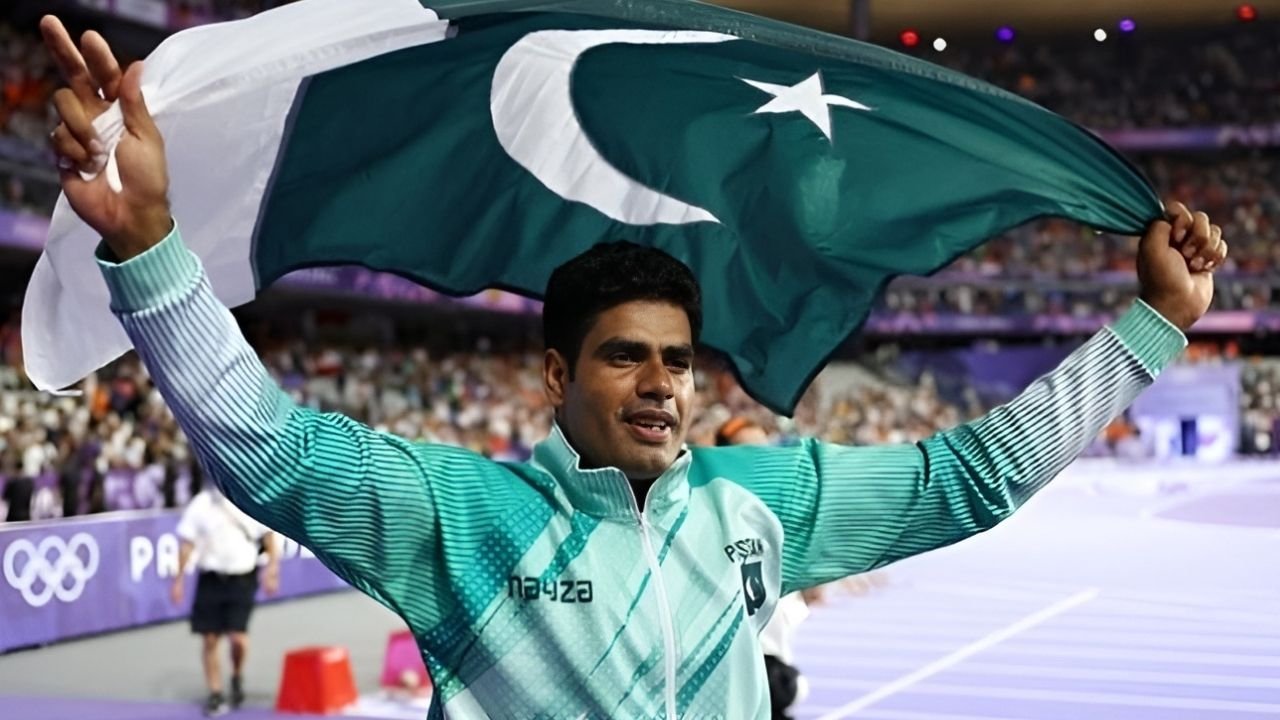
Beneath Birmingham’s pink and blue dusk sky, the spear soared through the air for about five seconds, then landed beyond the 90-metre (295ft) mark. The crowd roared as Nadeem held up his arms triumphantly, a gentle smile on his face before hugging a smiling Peters.
Shortly after, with no other competitor matching Nadeem’s record in their sixth and final attempt, his victory became official.
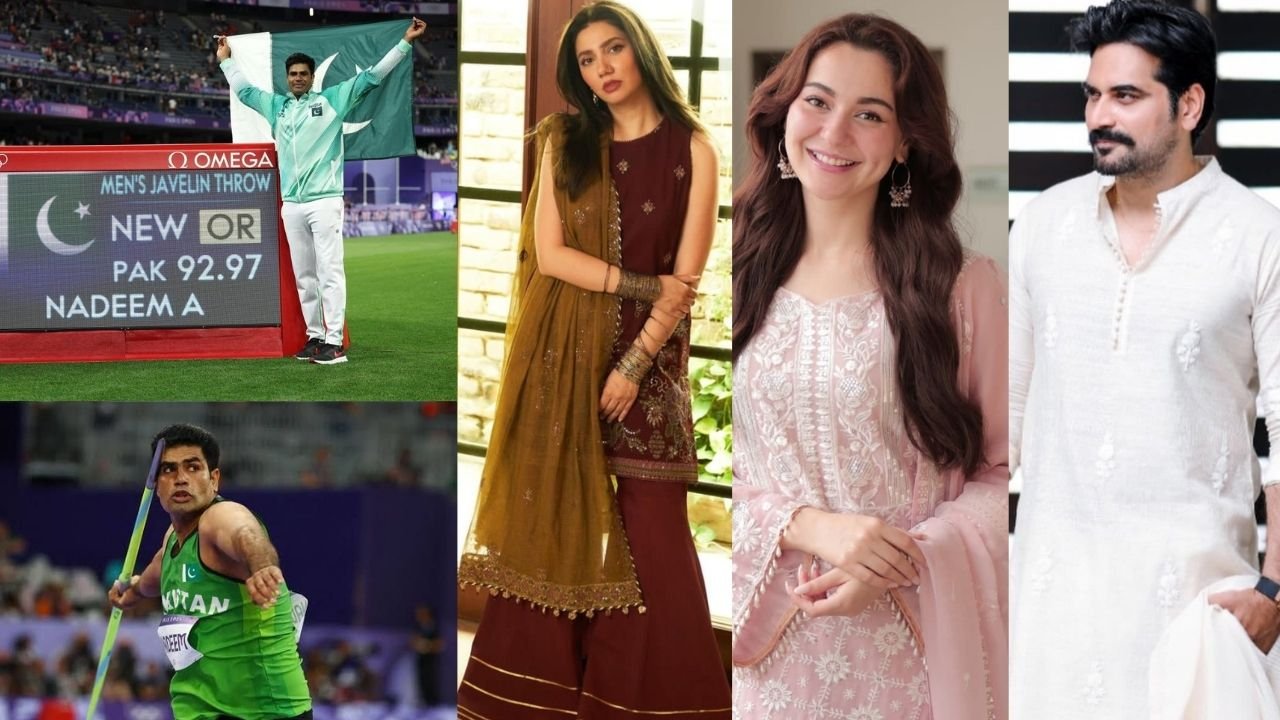
Nadeem’s throw was a new event record and also Pakistan’s first gold medal in track and field in six decades. He also became the first South Asian and only the second Asian man to surpass the 90-metre mark in the javelin throw.
Nadeem, now 27, calls that throw the best of his career so far.
“I was in good rhythm,” he recalled on a June afternoon after training. “I was confident [the earlier throws] would enable me to win the gold.
“Usually, by the third or fourth throw in any event, you have an idea who will emerge on top. Then Peters sent his fifth throw and went past 88 metres. But I was not nervous. By the grace of God, despite pain in my right elbow, I somehow managed to pull off my personal best,” he recounted.
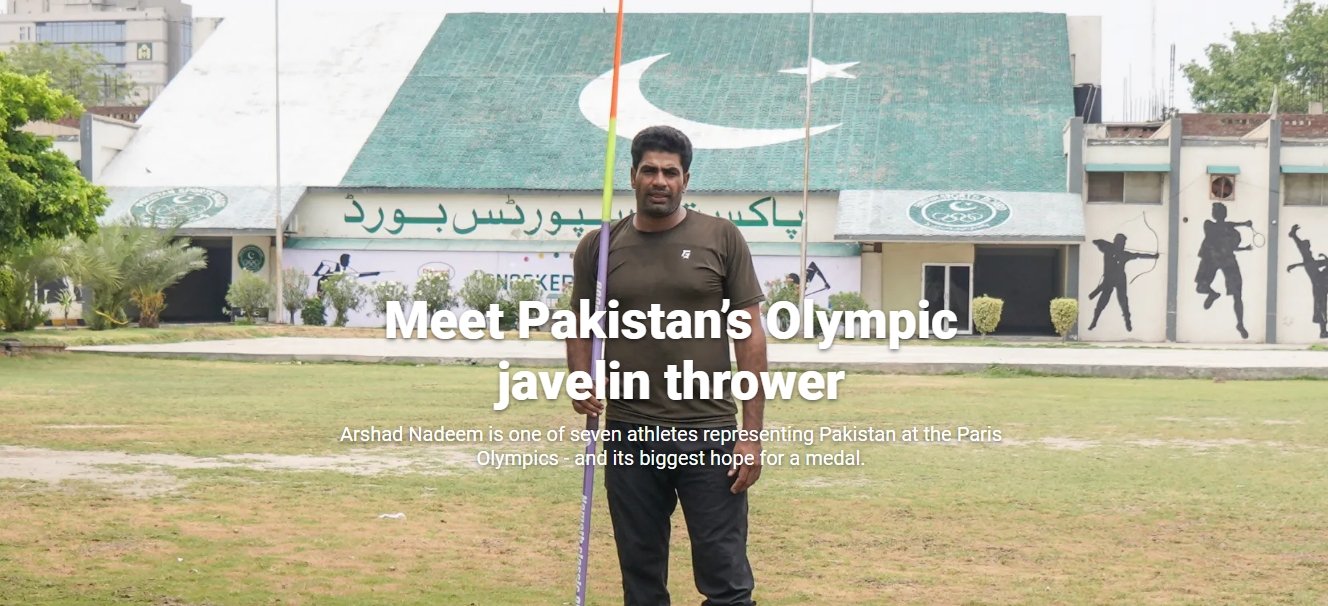
Nadeem is Pakistan’s biggest hope for a medal in the 2024 Paris Olympics, which began on July 26.
The nine-time international medallist and four-time gold medallist came fifth at the 2020 Tokyo Olympics. In Paris, he hopes to secure the country’s first medal in 32 years after it won bronze in field hockey at the 1992 Barcelona Olympics.
“I feel strong and fit,” Nadeem said, “and quite hopeful of a strong performance in Paris.”
A month before the games were scheduled to start, Nadeem arrived shortly after 8am at the University of the Punjab gymnasium in Lahore for a day’s training.
Wearing an olive green T-shirt and black pants, the broad-chested, 1.92m-tall (6ft-3-inch-tall) athlete began his routine by stretching in the sparse room.
On a day when the temperature would reach 41 degrees Celsius (105 degrees Fahrenheit), the gym was stiflingly hot without air conditioning, and four fans did little to ease the heat.
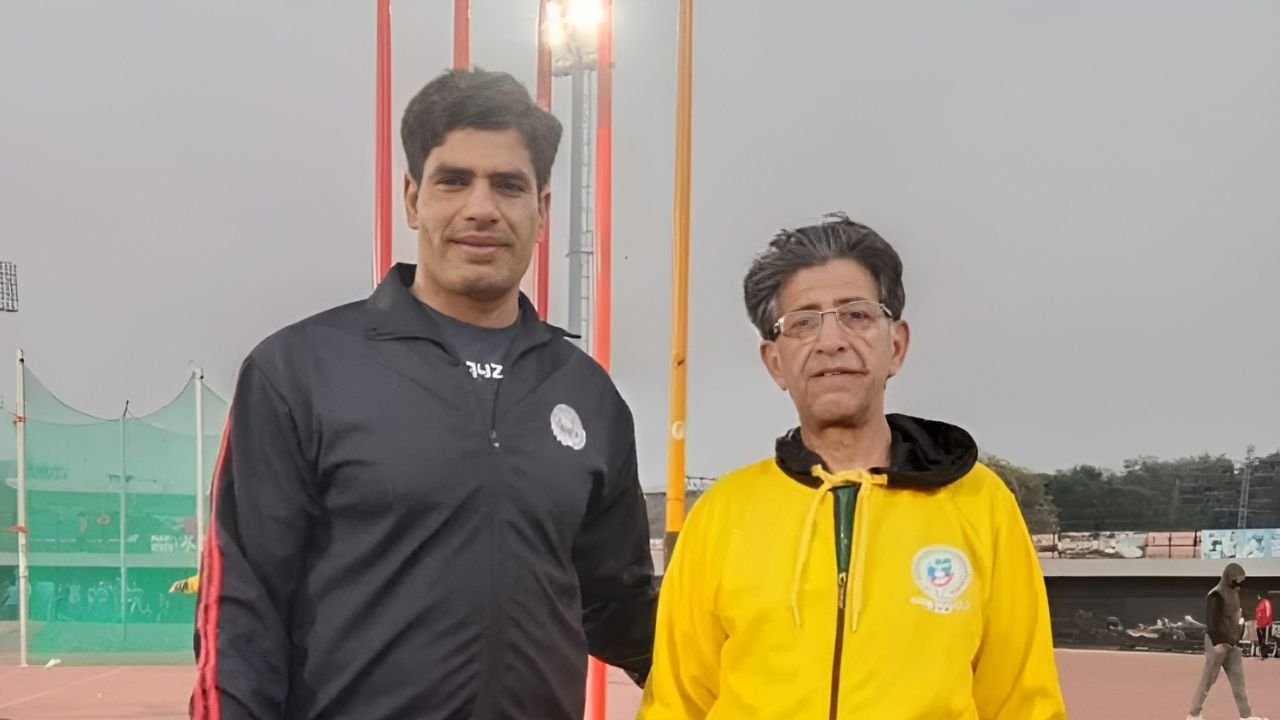
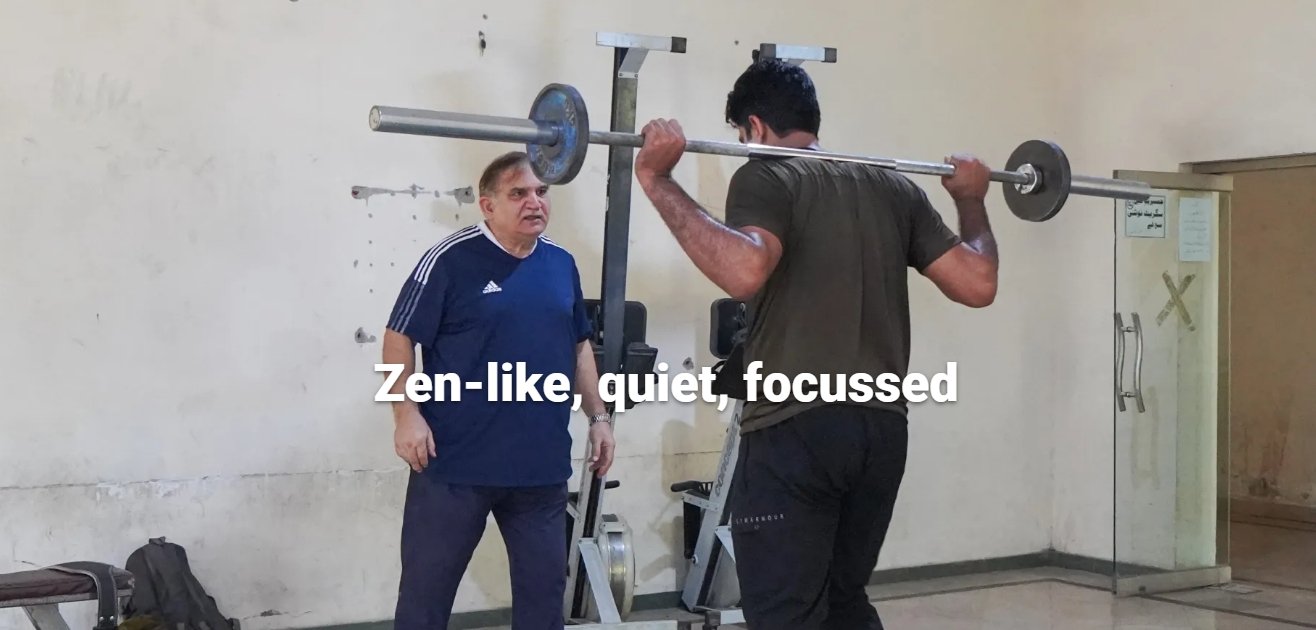
Nadeem’s coach, Salman Iqbal Butt, 66, himself a former national-level discus thrower, led the training.
The coach, a stout man with a gentle demeanour, has worked with Nadeem for the past four years, helping him win two gold medals and one silver.
Butt, a two-time silver medallist in the South Asian Games in 1989 and 1991, remarked that things were better in the decades he competed because there was more institutional support and resources for athletes.
There was a strong grassroots network within schools, the coach explained, which helped identify young athletes, provide them with opportunities to explore various sports, compete and progress to the national level. Until the early 2000s, Pakistan would send a squad of about 30 members to compete in the Olympics. In Paris, it is sending seven.
Nadeem added weight plates to a barbell. As he lifted it under his coach’s watchful gaze, Nadeem kept his eyes focused ahead while beads of sweat formed on his forehead.
“Last week, Arshad felt some pain in his right knee, so we are taking it lightly for the next few days where he will just focus on mobility and weights, but no running or throwing,” Butt said.
He added that they needed to look after Nadeem’s fragile knees and elbows – a common concern for javelin throwers, given the stop-start motion of the run-up and the strain of repeated throwing. In the past two years, Nadeem has had multiple surgeries, most recently in February this year.
While Nadeem said his body heals quickly, he was mindful not to push himself too much and drank water frequently. He also avoids the hottest hours by training for three hours in the morning and three in the evening.
But on practice throwing days, there was no choice but to train outdoors under the blazing sun. Still, Nadeem said he’s used to the conditions.
A video in May on Nadeem’s Instagram profile showed him throwing in 45C (113F) weather. “45°C fuels my passion for success,” he wrote.
Nadeem was born on January 2, 1997, in a small village near the city of Mian Channu in southern Punjab state, about 300km (186 miles) southwest of the megacity of Lahore.
The third of seven siblings, Nadeem grew up in a household that struggled to make ends meet. His father, Muhammad Ashraf, a retired construction worker, was the sole breadwinner.
Nadeem’s older brother Shahid Azeem, 32, said their family would get to eat meat only once a year, during Eid al-Adha.
“It would be a lucky day for the family if we ate anything more than lentils or vegetables,” Shahid told Al Jazeera in a phone interview.
As a child, Nadeem towered over his classmates. By the time he was 14, he was almost 6ft (183cm) tall. It was a “gift”, Shahid said, from their father, who is also more than six feet tall.
Nadeem saw Shahid compete regionally in track and field events and became interested in sports, diving into football, hockey, badminton, kabaddi – a 900-year-old contact sport that originated in South Asia – and cricket, Pakistan’s most popular sport.
Cricket was his first love. “I used to be a very good bowler and would participate in a lot of tournaments,” Nadeem said.
“He was famous in the village for his bowling,” Shahid recalled. “He could single-handedly get teams out. If he’d have continued to play, I am sure he could have become as fast as Shoaib Akhtar,” he said, comparing Nadeem to one of Pakistan’s fastest bowlers, who retired in 2011.
But Nadeem’s father and two older brothers discouraged him from pursuing cricket.
“My father never liked cricket. He’d say, ‘You do all the hard work to win the match, but your teammates leave it all on you but don’t deliver. You should do something else,’” Nadeem recalled.
Shahid also told a teenage Nadeem that it would be difficult to break through the ranks of a popular sport like cricket. So with his brother’s encouragement, Nadeem, who was quick and well-built, started to compete in school athletics events, including sprints, long jump, triple jump, discus throwing and javelin.
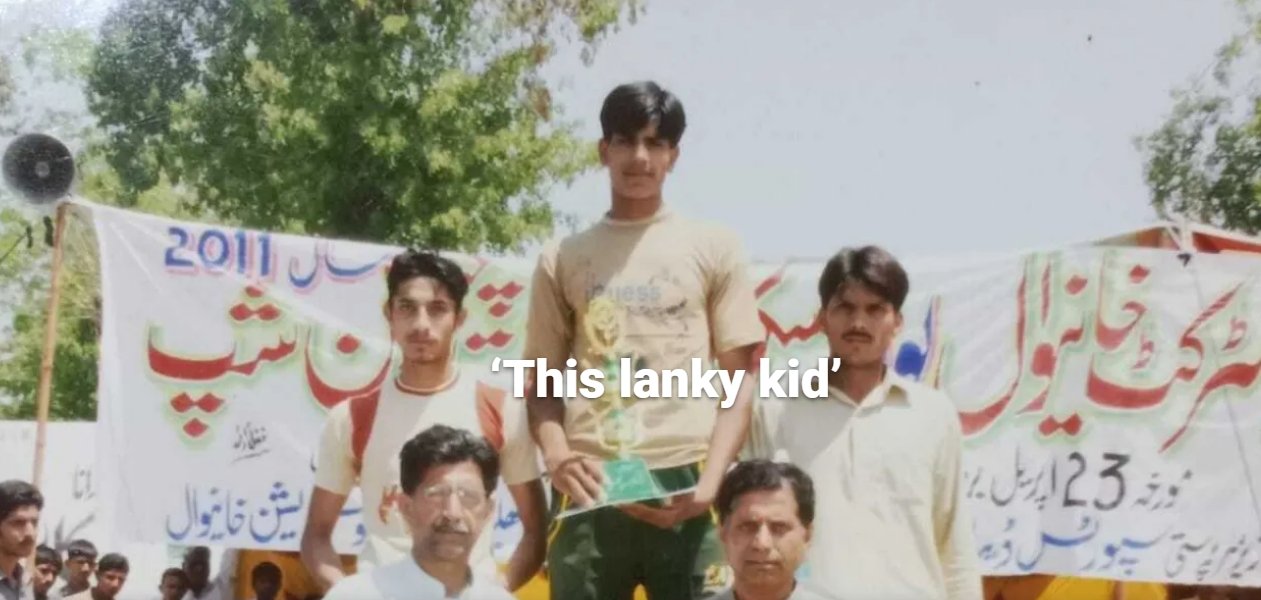
Then in 2011, Rasheed Ahmed Saqi, a hotelier and resident of Mian Channu who scouts and invests in new athletic talent, saw Nadeem compete.
“I was a member of the Punjab Athletic Federation, and there was a local competition I organised where I saw this lanky kid who made quite an impression in track and field games, especially javelin and shot put. I noticed he was strong. He ran well. So I thought, maybe if I can help train him, he could make a difference,” said the 69-year-old, who had competed on the provincial level in track and field, including in javelin throw, in the 1960s and 1970s.
Two weeks after the event, Saqi, was sitting in a hotel he owns in Mian Channu when Ashraf brought his son to his office. “Arshad is your son and your responsibility from today,” Ashraf told him.
“And from that day onwards, I have taken him under my wings,” said Saqi, who became Nadeem’s first coach and mentor.
Around this time, Shahid started working as a police officer while his eldest brother joined the army.
They urged Nadeem to pursue javelin throwing. “He has always been a shy, quiet person who often keeps to himself. We both knew that he liked the sport but never spoke about it publicly,” Shadid said. “We told him, ‘Do not worry about money. We have jobs. We can support our home.’”
With Pakistan’s sports structure revolving around public sector organisations that offer employment opportunities to talented athletes, Nadeem’s athletic exploits generated attention locally, and various departments sought him out a few years later.
In 2015, an army representative came calling. “I flat out refused them,” Saqi recalled. “I told him, ‘Your training will ruin my athlete.’” He was worried about Nadeem doing both army and sports training.
“He is basically working extra hard without any recovery period. You cannot force or flog a player and say working for long hours is part of training,” Saqi explained.
Saqi, who trained Nadeem until 2015, still maintains close ties with the athlete.
Saqi believes the most important factor behind Nadeem’s success is his humility and said he has not been “tainted” by fame or money.
“He displays no arrogance or pride. When he comes to Mian Channu to see me, he makes sure he walks behind me. He ensures he opens the doors for me and waits till I sit,” Saqi said.
Recalling an incident from a few years ago, the hotel owner said Nadeem was at a training camp in Islamabad when Saqi was taken to the hospital for a heart complication.
“Somehow, he found out, and he left the camp to come and see me within a day’s notice. I had to scold him, despite my health, telling him to go back to training,” Saqi recalled with a chuckle.
Nadeem refers to Saqi as his “spiritual father”. A decade ago, when he did not even know specific spikes for javelin throwers existed, let alone owned them, it was Saqi who bought him his first pair.
The athlete also said it was thanks to Saqi that he secured employment at the sports department of the Water and Power Development Authority (WAPDA), a government-owned public utility that pays him a monthly retainer.
“WAPDA was holding trials for its sports department when Saqi sahib arranged for my entry there, and I managed to throw 56 metres [184ft] there, which made everyone pay attention,” Nadeem recalled.
Within two months of joining WAPDA, Nadeem, then 18, became Pakistan’s 2015 national champion.
“We were down to the sixth and the last throw, and by that time, I was fifth in the competition with an army athlete having thrown 69 metres [226ft]. Everybody thought that the competition was over. But somehow, I managed to push myself and threw a 70-metre [300ft] throw, which got me the gold medal,” Nadeem recounted with a brief, shy smile.
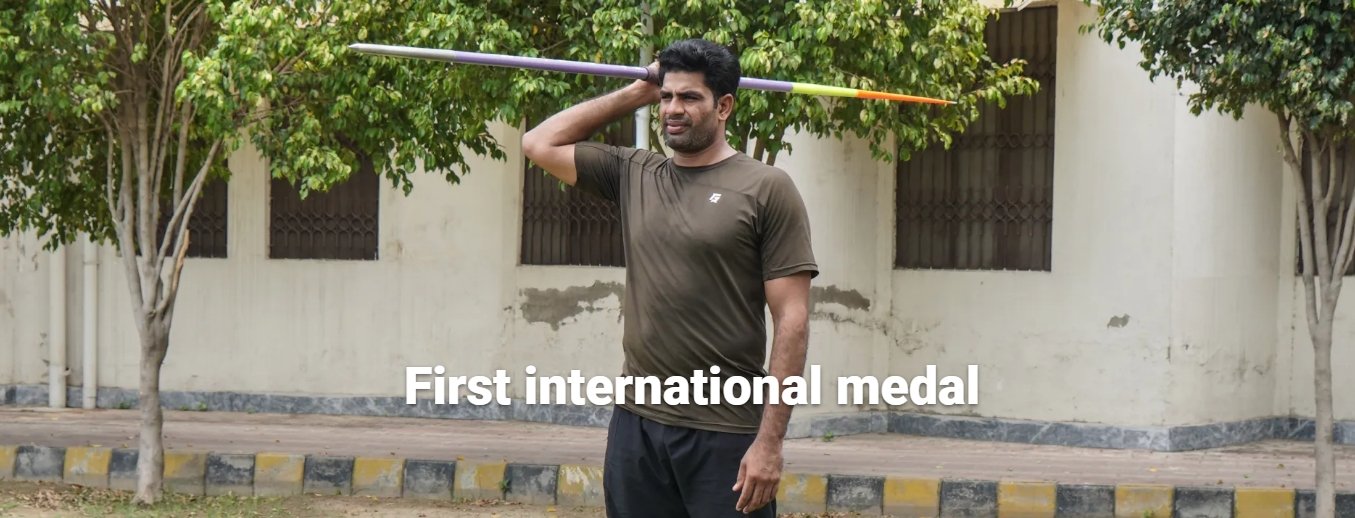
Nadeem was then selected for the 2016 South Asian Games in India, his first international competition.
The sporting event, which took place in Guwahati, India, was also the first time Nadeem competed against the then-emerging Indian star Neeraj Chopra.
Nadeem, who went into the tournament with a niggle in his throwing elbow, still managed a throw of 78.33 metres (257ft), winning his first international medal, a bronze, with Chopra securing gold.
“The previous Pakistani record lasted for nearly two decades, so I was very pleased with my effort,” Nadeem reflected.
Spears were once hurled as weapons for hunting and fighting. As a sport, it was one of the original disciplines at the ancient Olympic Games in Greece.
In its modern iteration, the sport has been part of the games since the 1908 London Olympics.
Over the decades, the spear has gone through various changes.
The most important change to the javelin, however, was made in 1986 after the feats of East German athlete Uwe Hohn, who in 1984 threw the spear an astonishing distance of 104.8m [343.8ft], raising safety concerns. The javelin at that time would also fall flat instead of on its tip, often resulting in arguments over the validity of the throw.
Consequently, the spear was redesigned to bring the centre of gravity 3cm (1.2 inches) forward, ensuring the javelin landed tip first and also reducing the flight range.
Only 24 male athletes have thrown beyond the 90-metre mark, some multiple times. Czech athlete Jan Zelezny, considered the greatest javelin athlete of all time, retains the world record with a throw of 98.48 metres (323ft) in 1996 using the redesigned spear.
Zelezny went on to launch more than 30 throws that crossed the 90-metre mark.
While Nadeem has managed one throw of more than 90 metres in his career, he remains quietly confident in his abilities and talent.
“People have seen me throw long distances, and I have also heard chatter that I can go close to 100 metres [328ft]. But I don’t want to appear too ambitious. If I have crossed 90 once, my next attempt is to touch 92,” he explained.
“From the beginning, I just tell myself to keep a simple approach, make small changes and hope for the best, and it has worked out for me.”
On July 7, Nadeem participated in the Diamond League competition in Paris, his first international event since his surgery in February.
Wearing a white vest emblazoned with “Nadeem”, the Pakistani athlete managed a best throw of 84.21 metres (276ft) on his fifth attempt, which landed him in fourth position.
Grimacing after every throw, it was evident that Nadeem was easing his way into a rhythm, something his coach confirmed later.
“The first and foremost aim was to see how well the rehabilitation has been, and now we can work on making small tweaks in training and just fine-tuning,” Butt said.
Nadeem credits his coach with helping his quick recovery.
“In the world of elite athletics, it all comes down to your support system and who is looking out for you. In Pakistan, even though our overall structure might not be the best, coaches like Butt sahib really make a difference,” he said.
Nadeem and Butt said the Pakistani authorities do what they can, including helping finance medical trips to the United Kingdom. But when he travels for competitions, Nadeem pays for part of the trip while the Athletics Federation of Pakistan and the Pakistan Sports Board finance the rest. Nadeem earns a living from his three sponsors, a clothing, shoe and car manufacturer in Pakistan, as well as his modest WAPDA stipend.
In August 2023, Nadeem won silver at the World Athletic Championships in the Hungarian capital, Budapest, guaranteeing him a place on the Paris Olympic squad. He also won $35,000 in prize money, but competitions such as the Olympics, Asian Games and Islamic Games do not award cash prizes. Instead, it is at the discretion of the home country or sports authorities to give such prizes.
However, from the 2024 Olympics, gold medal winners will receive a $50,000 reward, and from the Los Angeles Olympics in 2028, prize money will also be awarded to silver and bronze medal winners.
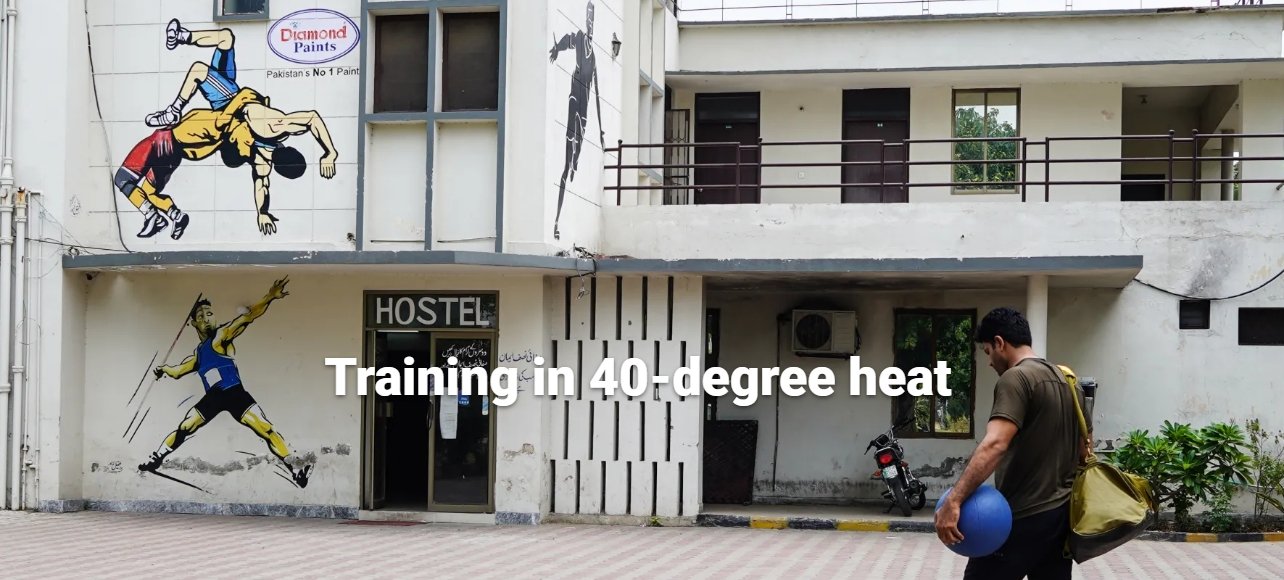
While training, Nadeem spends time away from his wife, two sons and a daughter, who live in Mian Channu, and stays in the Punjab sports board’s hostel for athletes.
“I do not have many friends. I keep to myself, and besides training, I stay indoors. I just keep telling myself that I cannot go into a negative spiral and try to look at the positives,” he said.
Butt chimed in, saying Nadeem’s mental strength is his “superpower”, adding that in his decades of coaching, he has not met another athlete with the same level of focus as Nadeem, who bows his head as he hears his coach’s words.
“He is Zen-like. He is quiet. He is focused, and no matter the setback, he does not let it linger. This is one of the most incredible things about Nadeem, and you cannot really teach it either,” his coach said.
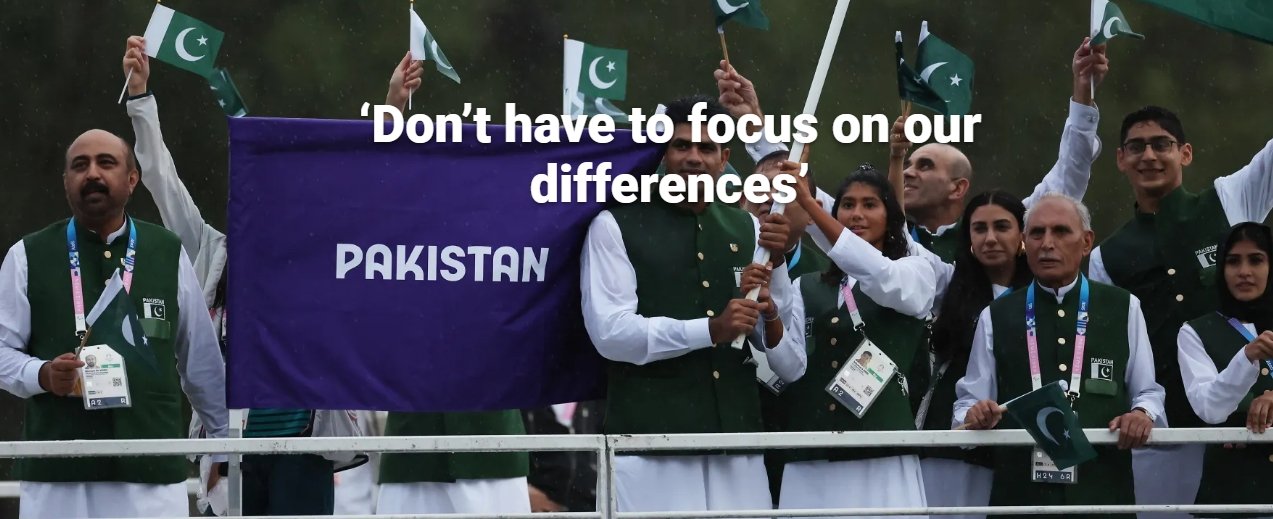
At the opening ceremony of the Olympics on July 26 in Paris, Nadeem carried the Pakistan flag along with swimmer Jehanara Nabi.
“This is something straight out of a dream to be able to carry your country’s flag at the Olympics and a huge honour. But this is not the only thing for me. My main objective is to see my country’s flag being raised and the anthem being played if I get the gold,” Nadeem told Al Jazeera about a week before the Olympics began.
Among his competitors will be India’s Chopra, a now 27-year-old who has won seven gold medals. When they competed against one another at the 2020 Tokyo Olympics, people on social media fanned the flames of the traditional rivalry between the South Asian countries and criticised Nadeem for being distracted and not winning a medal while Chopra won gold.
But Nadeem speaks fondly of his rival from India.
“Neeraj and I are on very good terms. Whenever we are abroad in training or an event, we always talk to each other and stay in touch, but when it comes to competition, then you only think of yourself,” the athlete explained. “Look, India is our neighbour. People on both sides say a lot of things about each other’s country, but this is what sports teaches us – to be friendly and that we don’t have to focus on our differences.”
He continued: “I know I have great rivals like Chopra or Peters or others, but ultimately, I compete against myself.”
Source: Al Jazeera