Tag: Top News

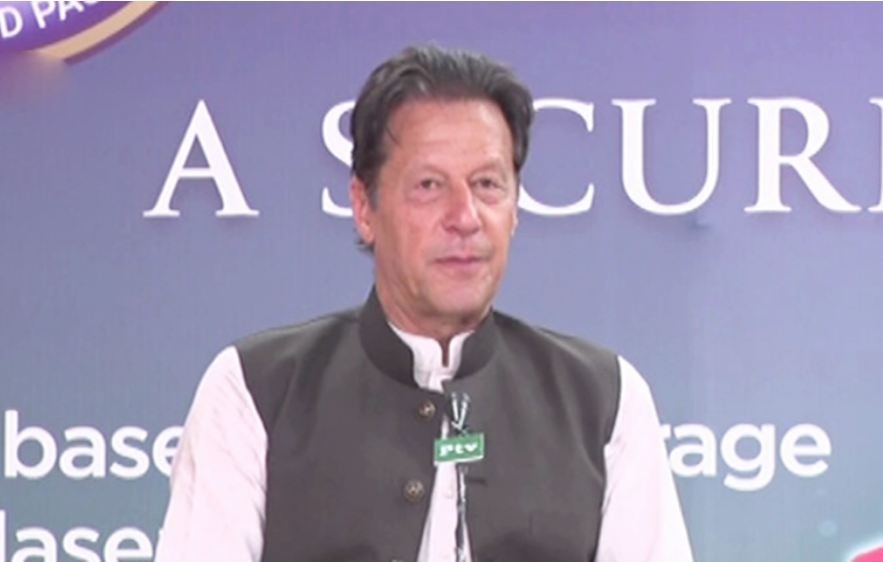
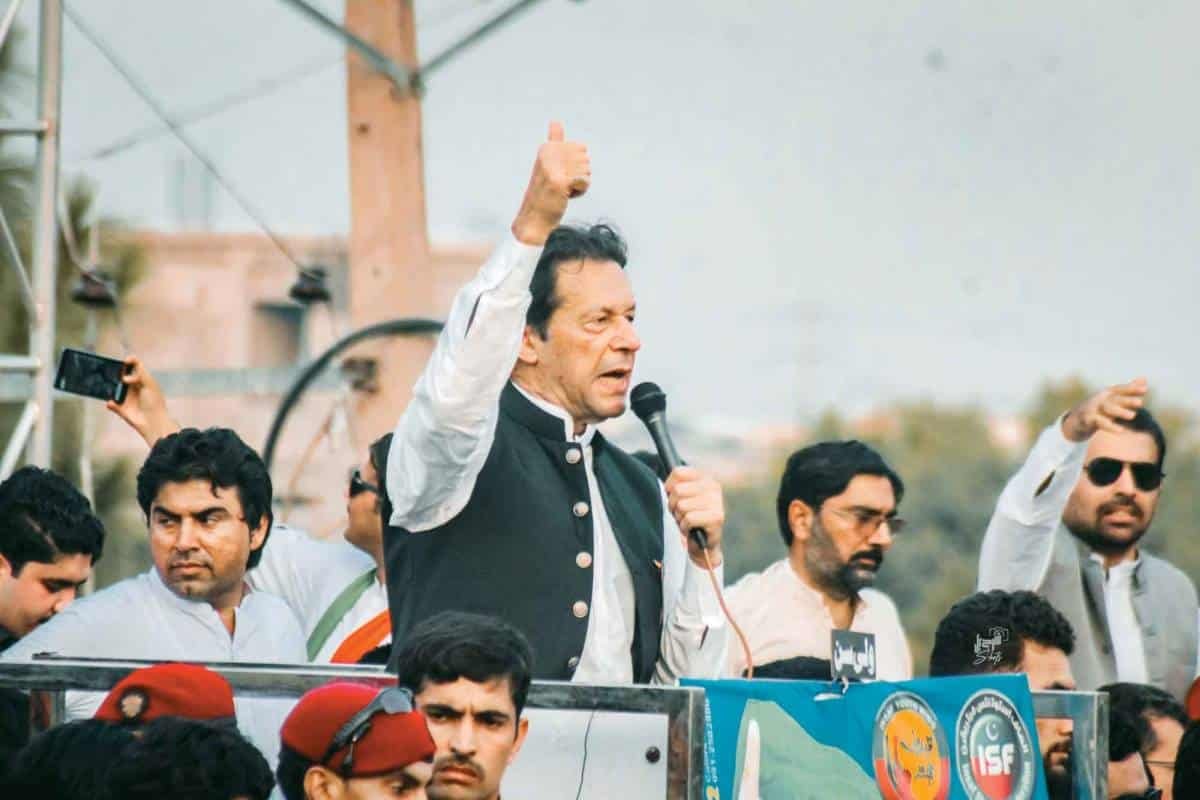
  • ‘Mai in logon ke sath nahi bethoonga, meri team bethegi’: Khan refuses to sit with govt for talks

    ‘Mai in logon ke sath nahi bethoonga, meri team bethegi’: Khan refuses to sit with govt for talks

    Pakistan Tehreek-e-Insaf (PTI) Chairman Imran Khan has said that he will not sit with the government for dialogue, asserting that if any talks are held, his team will participate instead of him.

    “I will not sit with the government. And if any dialogues are held on the issue of elections alone, my team, not me, will participate,” said the PTI chief.

    “The dialogues should only be held on elections alone. However, I will not sit with those to whom I use to call thieves and corrupt,” he clarified. “And if the talks don’t go towards holding elections, then there is no benefit of dialogues,” he added.

    Khan had hoped that after former Chief of Army Staff General Qamar Javed Bajwa retired, there will be some change in the treatment given to his party, however, he claimed that matters have become even more difficult than they were before.

    “We were hoping that when Gen Bajwa leaves, and there is change of command there would be some change. However, we have seen no change. Everything is the same, or I should say that the policies have intensified,” said Khan in an interview to news website Urdu.com on Sunday.

    Khan said that he was not in contact with the establishment. He further said if talks are held on elections alone, his party will talk to anyone. When asked if the establishment has something personal against Khan, he said that he can’t say much about this but he knows one thing for sure that Gen (retd) Bajwa caused a lot of oppression on PTI. “We used to ask the police they would say that we have orders from higher ups,” he stated.

    Talking about forced disappearances, Khan said that he knew who was responsible for taking away PTI social media activist Azhar Mashwani.

    “We knew who took Azhar Mashwani. It was neither police who was involved nor FIA. We know which agency was behind it,” said Khan.

    “There are actually scared. They only want my complete blackout. They have banned me on media and now they’re after my social media presence,” said Khan.

  • Nadra confirms data theft of Army Chief’s family

    Nadra confirms data theft of Army Chief’s family

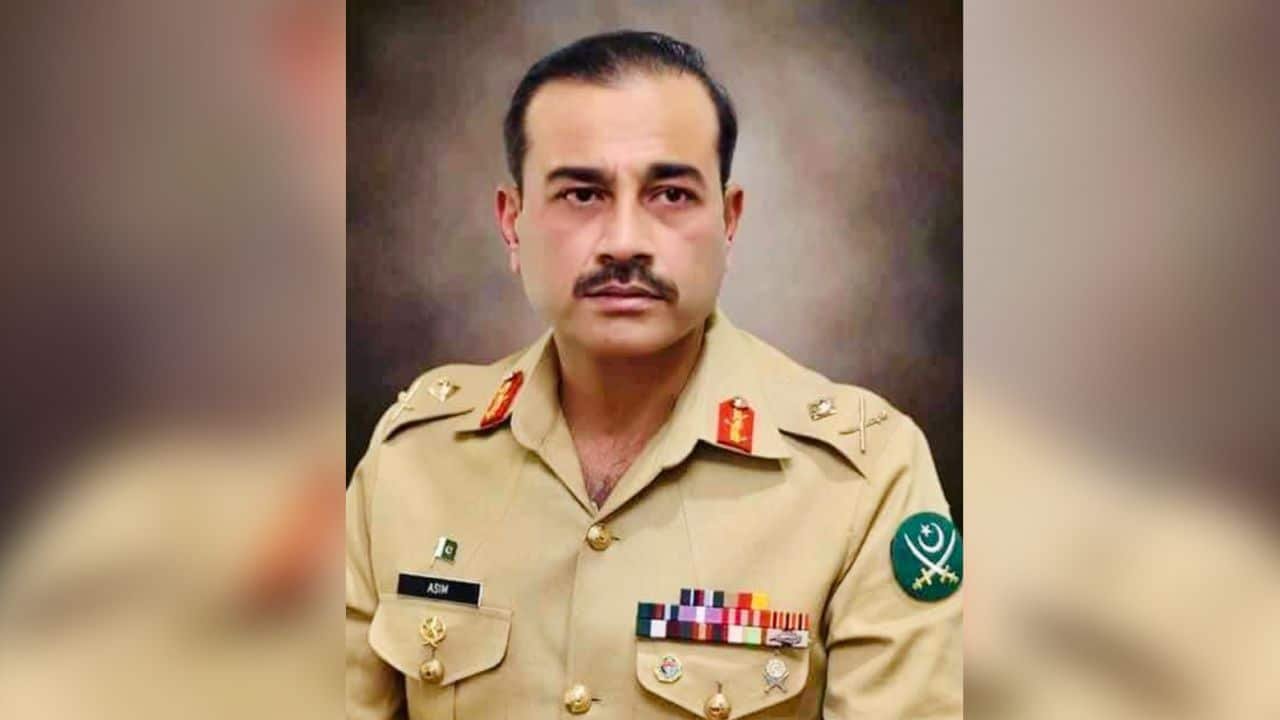
    In a news report published on Sunday in The News, it was stated that the National Database Registration Authority (NADRA) is set to finalise an inquiry identifying those behind a data leak involving the incumbent Chief of Army Staff (COAS) General Asim Munir’s family.

    Journalist Azaz Syed wrote that NADRA has issued a detailed statement confirming the data theft of Army Chief’s family, according to the same news outlet.

    According to the report, “Nadra finalises probe into illegal access to COAS family’s data, dated April 02, 2023, it is to clarify that the subject probe into illegal access to COAS family’s data is a continuation of Nadra’s stringent measures to protect the citizens’ data from unauthorised access, when he sought help from premier security agency upon assumption of charge as chairman Nadra in June 2021.”

    Multiple users of different organisations had accessed General Asim Munir’s data before he was appointed COAS. Other than Nadra, nine institutions, including law enforcement agencies, banks and housing authorities, accessed the COAS’s family data.

    About the ongoing inquiry, COAS’s family data was accessed in absence of Nadra Chairman Tariq Malik, who was on ex-Pakistan leave (on official assignment) in November 2022.

    Last November, illegally-accessed information was reportedly used in an attempt to block the appointment of the current army chief.

    In October 2022, five senior Lieutenant-Generals were contending for the position of Pakistan’s new army chief. During this time, a junior data entry operator at NADRA, Farooq Ahmed, allegedly accessed the data of a female family member of Gen Munir and collected the family’s details and identity card numbers.

    This data was later used in the Federal Investigation Agency’s (FIA) Integrated Border Management System (IBMS) to track international travel destinations the family had travelled to.

    The prime minister had an investigation launched into the data leak.

    As regards to the ongoing probe into the COAS family’s data, the NADRA chairman ordered the inquiry which is in the closing phase. Culprits, from DGs to the data entry operators, have been identified.

  • The high cost of not automating healthcare records can be death

    The high cost of not automating healthcare records can be death

    Shafiq* is a middle-aged Pakistani man, working as a driver for a household in Lahore. His son has just been diagnosed with early-stage lung cancer. He finally manages to take time off to take his son to an oncologist in a government hospital. The oncologist asks for all the lab reports of the patient. Shafiq hands over a heavy file. It turns out, one of the reports has been misplaced. The doctor tells Shafiq to come back after getting his son’s lab work done again. Shafiq now has to find the money to pay for more testing and also has to plead with his boss to give him another day off. Meanwhile, his son’s condition is only getting worse.

    When a healthcare system has no proper infrastructure for medical record keeping, the result is waste and medical errors. For example, the cost of repeat lab work will either be borne by Shafiq if he goes to a private lab or by the taxpayer if he opts for a government one. Repetition of tests will also use up limited laboratory resources and delay the test results of other patients. Shafiq’s story also points out another avenue of concern: medical misdiagnoses. Generally, a primary care physician, or family doctor, ensures an individual’s health through keeping family histories, doing annual health screenings and ensuring immunisations. These doctors maintain all this information is the form of electronic medical records. Shafiq’s son had no such family doctor to track his smoking habits or note the prevalence of cancer in his family history. In fact, the first doctor he saw gave him antibiotics for what he diagnosed as a bacterial infection of the lungs.

    In a country with less than 125,000 government hospital beds for more than 200 million people, there is little room for such errors. According to the World Health Organisation (WHO), Pakistan has one of the lowest per capita current health expenditures among Eastern Mediterranean countries, second only to Afghanistan. Because of our chronic debt issues, our healthcare spending will likely remain dismal. In such an environment, technology is a relatively inexpensive tool that can be used to improve efficiencies and better population health.

    Pakistan’s larger cities are home to a select few secondary and tertiary care hospitals, which are meant to provide inpatient care, ambulatory services and specialist care. The major swathe of the country, however, does not have access to these hospitals. In rural areas, the major public health facilities are small establishments called Basic Health Units (BHUs). In the more than 5,500 BHUs across Pakistan, outpatient facilities are provided to ordinary citizens. Contrastingly, the private sector is dominated by specialist care with doctors running their own independent clinics. Here, primary care is seen as neither lucrative nor prestigious. Patients do their own guesswork at diagnosing their problems and then decide which specialist they should see.

    But be it private or public, most doctors in Pakistan are reliant on pen and paper for record keeping. Patients like Shafiq* are meant to keep these physical records safe in a folder and bring them to each appointment. According to one doctor practicing in a government-run tertiary hospital in Lahore, the only records their hospital keeps is the patient’s admission date, discharge date and what kind of operation was performed. Any blood tests, imaging or other notes go into a black hole of patient data. 

    This is all set to change in the province of Punjab. The government is in the process of completing its transition from physical registers to electronic medical records in BHUs across the province.

    Khalid Sharif is Manager MIS in the government’s Health Information and Service Delivery Unit (HISDU). His unit aids the primary and secondary health department in developing and running health dashboards, inventory management systems and mobile applications.

    “Electronic Medical Records (EMR) came about because we wanted to be able to assess our performance as a department,” he said. “Before this, we had no credible way of knowing any metrics like doctor-patient ratios or the number of daily births.”

    The process began in around 2017, when they began testing out earlier versions of EMR in select BHUs. Now, they are running the multi-module application across more than 2,500 BHUs.

    “We expect to be fully paperless in about one and a half month’s time,” he said.

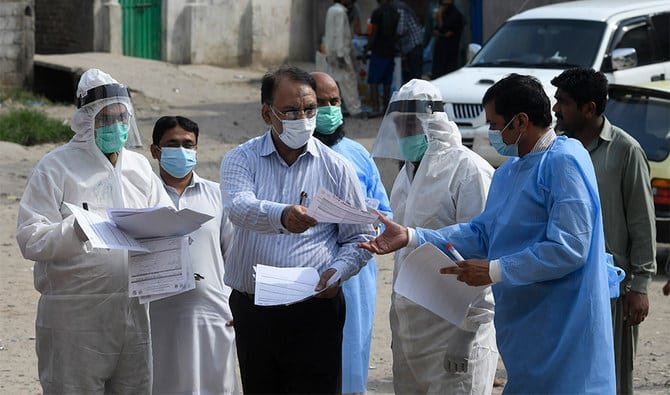
    Each employee at a BHU logs in using their computerised national identity card (CNIC) number and has access to a different module of the system. When a patient comes in, they are registered using their CNIC number. The receptionist takes the patient’s vitals and adds them to their profile. Then, when the patient goes to the doctor’s office, the doctor select a diagnosis and prescribes medicine. Finally, the medicine dispenser checks off the prescription he/she is filling, which automatically updates inventory records.

    “If someone doesn’t have a CNIC we have created another option,” Sharif said. “They can use a relative’s CNIC and we can select their relationship to the CNIC holder.”

    Dr. Faiza Ahmed* has been practicing as a health officer at a BHU near Faisalabad for the last couple of years. When I visited her, they were partially using the EMR system. Out of the 150 patients that had been to the BHU that day, they had electronically registered around 90 of them.

    Most of her patients, especially women, don’t bring along CNICs. But she has made it a point to especially encourage expectant mothers to bring along their own or a relative’s CNIC so that she can track the health of mothers and babies. “This way, I can see a patient’s data even if she had her baby six months ago,” she said. “I can see if she was hypertensive or diabetic back then and how her child was doing back then.”

    Dr. Ahmed has not received instructions to go paperless and she is skeptical of the idea.

    “It’s practically impossible to register all 200 patients because of resource limitations,” she told me. “Internet speed in this area is also very slow.”

    When I asked Khalid Sharif about this, he said that they had already address this issue by creating an offline version of the software which automatically uploads the data when the internet reconnects. However, Dr Ahmed said that the offline version is not functional yet.

    Another reason why the system might feel tedious to Dr Ahmed is because they are currently running two parallel systems. The EMR system has been designed with the idea of print receipts. When the midwife sends the patient off to the doctor, they are supposed to bring their registration slip along. Similarly, the doctor is supposed to print out a prescription slip and hand it to the patient. However, Dr. Ahmed contended that the BHU cannot afford to thermally print slips for every patient. So currently they are both logging data online and writing all the information manually on pieces of paper to give to the patients.

    “I think there’s always resistance to change — everyone gets used to a certain system and doesn’t want to get out of it,” Zara Ansari, a consultant for the government, said. “As with any new data system, it takes time, but this is definitely the future.”

    Zara Ansari is a senior consultant at ACASUS, a management consultancy firm that is assisting the health department with the rollout of electronic medical records. Ansari and her team have been giving trainings to doctors to make them comfortable with the new system. They have also been analysing data for the government to monitor the level of compliance that each BHU is showing.  

    “We started off by assigning lax targets so people can be onboard with actually doing this and then progressively over time making it more strict,” she said. “As of recently, we will be monitoring to see which facilities are doing completely paperless entry.”

    There are of course caveats to this new age technology. There is not a lot of clarity around the privacy of the date being collected and how it will be kept safe. There seem to be no conversations happening around data privacy or patient confidentiality in government halls. 

    Caveats and all, Punjab is making a step forward into modern healthcare. How successful they will be is something only time can tell.

    (*Names have been changed to protect privacy)
  • Resham, you might not be depressed but 75 per cent of Pakistanis are

    Resham, you might not be depressed but 75 per cent of Pakistanis are

    In a recent interview on PTV Home, veteran actor Resham claimed that depression “does not exist”, which is an incredibly insensitive and illogical statement for a person in her position to say. Depression is not trivial; it is a genuine health condition. And it very much exists in Pakistan — more than most countries in the world.

    In 2022, public health experts and intellectuals pointed out that around 75 per cent of the population, especially youngsters, are experiencing stress, anxiety or depression in Pakistan. We have one of the highest rates of mental ill-health in the world; according to one estimate, around 50 million people in Pakistan suffer from debilitating issues such as depression, abuse, alcoholism, post-traumatic disorder, eating disorders, manic depressive psychosis, and schizophrenia. What is even more alarming is that according to the World Health Organisation (WHO), there are only 0.19 psychiatrists in Pakistan per 100,000 inhabitants, one of the lowest numbers in the world. The absence of trained mental health professionals in the country has created a major treatment gap, leaving more than 90 per cent with mental health issues untreated. More than 20 million Pakistanis (10 per cent of the country’s population) suffer from some form of mental health condition.

    With a deteriorating economy, unemployment, an all time high inflation, and low salaries, survival seems nearly impossible in Pakistan right now. People are getting killed in stampedes just to get free ration for themselves.

    Last year, WHO and the International Labour Organisation (ILO) called for concrete actions to address mental health concerns in the working population, saying that an estimated 12 billion workdays are lost annually due to depression and anxiety, costing the global economy nearly $1 trillion.

    The struggles and torment some people are facing in Pakistan are truly heart-wrenching, the reasons why the country is wrapped in depression. Conditions are so palpable and scary that last month we witnessed a Grade 17 officer of the Inland Revenue Service (IRS) in Pakistan’s Federal Board of Revenue (FBR) who allegedly wrote a letter to Prime Minister Shehbaz Sharif requesting permission to start engaging in corrupt activities from April 1. The officer claimed that he faced difficulties in meeting his expenses due to his low salary and the current high inflation in the country. In the letter, the officer said that he had been working with the FBR for the last four years and has never committed a single rupee of corruption, despite offers to earn below-the-table money on several occasions. However, now he was not left with any option but to look for illicit means to make ends meet, and seeks permission from the prime minister to engage in corruption. The officer also shared his salary, which is Rs122,922, and his general expenses, which amount to Rs110,500, not including petty expenses as a husband and father.

    In these desperate times how would one not be scared, anxious, worried and in depression? We can only hope that people take mental health seriously. Times are tough and only the right help and guidance will help us get through. And we hope that people acknowledge and understand the reality of these conditions and not disregard that we are very much, in fact, a depressed nation.

  • PDM moot meets today to discuss future strategy for the government

    PDM moot meets today to discuss future strategy for the government

    Leaders of the Pakistan Democratic Movement (PDM) will meet today to discuss future strategy for the government.

    Chairing the meeting from via a video link, Prime Minister (PM) Shehbaz Sharif will discuss the “overall political situation of the country” while Law Minister Azam Nazir Tarar will brief the members on legal issues, Radio Pakistan said.

    The current political situation, the upcoming elections in line with the Election Commission of Pakistan’s (ECP) decision, and the SC proceedings, as well as the role of the CJP and the top court, will all be under discussion.

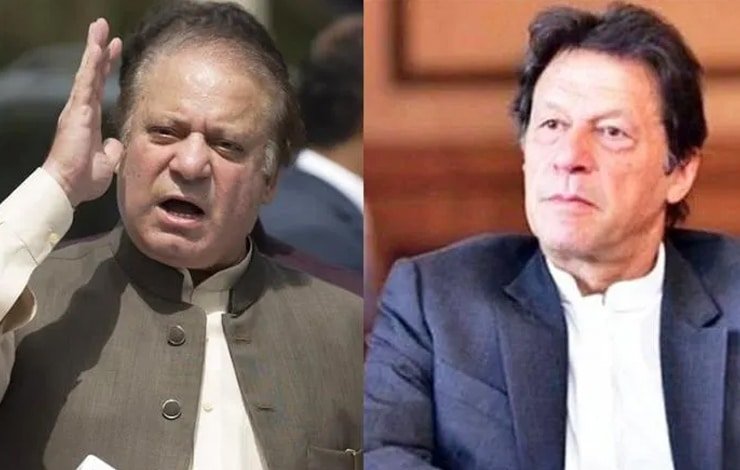
    Earlier, Pakistan Muslim League-Nawaz (PML-N) supremo, Nawaz Sharif, had spoken out against the decision to disqualify him as prime minister, stating that it hurt the future of the country.

    Speaking at a press conference in London on Friday evening, Nawaz said, “I appeal to my people, open your eyes. This is a cruel joke. In 2017, weren’t you happy? You had full stomachs, your families were content. After 2017, what was the situation?”

    Hitting out at the judiciary, Nawaz criticised incumbent Chief Justice of Pakistan (CJP) Umar Ata Bandial and former CJP Saqib Nisar and said there was consensus “among all” that a full court should hear the elections case.

  • ‘Are all decisions and benches only for Imran Khan?’: Nawaz raises questions on judiciary

    ‘Are all decisions and benches only for Imran Khan?’: Nawaz raises questions on judiciary

    Pakistan Muslim League-Nawaz (PML-N) supremo, Nawaz Sharif, has spoken out against the decision to disqualify him as prime minister, stating that it hurt the future of the country.

    Speaking at a press conference in London on Friday evening, Nawaz said, “I appeal to my people, open your eyes. This is a cruel joke. In 2017, weren’t you happy? You had full stomachs, your families were content. After 2017, what was the situation?”

    Hitting out at the judiciary, Nawaz criticised incumbent Chief Justice of Pakistan (CJP) Umar Ata Bandial and former-CJP Saqib Nisar and said there was consensus “among all” that a full court should hear the elections case.

    “Then why this zid [stubbornness]? Why the insistence that only three judges will be on the bench? This is a national issue, not the issue of one truck, cart or of vacating a plot. Why just these three judges?” he questioned.

    “All political parties have said this, the government wants this, bar associations want this, parliament has expressed its will and even passed its bill. It is now with the president… parliament is the country’s major institution, its sanctity should be respected,” he elaborated.

    Justice Bandial has been criticised for forming what critics have called a “like-minded bench” to hear major cases, ignoring senior judges, most notably Justice Qazi Faez Isa.

    “For one man, you [the judges] are giving decisions? Have you ever taken a suo motu on things said by Justice Shaukat Siddiqi? Or what ex-COAS Gen Bajwa said? Doesn’t this warrant a suo motu that Nawaz Sharif was treated unjustly,” Nawaz Sharif asked, who was disqualified for life by a Supreme Court bench.

    “Are all decisions and benches for Imran Khan?” questioned the former Prime Minister, adding “I also heard that the chief justice had tears in his eyes, if these are from fear of God then that is welcome news. I cannot say more.”

    Furthermore, Nawaz called for a full court to be formed to hear a petition by the Pakistan Tehreek-e-Insaf (PTI) against the delay in Punjab elections.

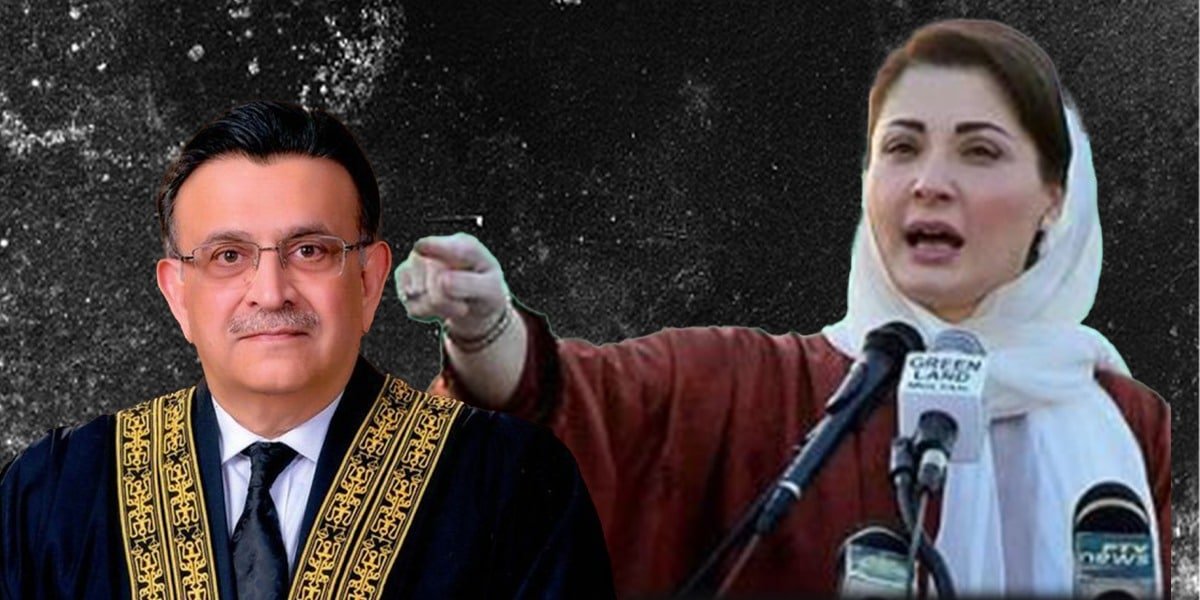
  • ‘One-man show tabaahi ka baayis banega’: Maryam Nawaz criticises CJP Bandial for facilitating PTI

    ‘One-man show tabaahi ka baayis banega’: Maryam Nawaz criticises CJP Bandial for facilitating PTI

    Pakistan Muslim League-Nawaz (PML-N) Senior Vice President Maryam Nawaz took to Twitter and without naming Chief Justice of Pakistan (CJP) Umar Ata Bandial criticised him, stating that “one man show will lead to disaster.”

    In a thinly veiled jibe at the crisis in the apex court, Maryam wrote, “A person whose own brothers judges mistrust him, raise questions, the decision given by him will have no legal or moral status.”

    “It is the responsibility of the entire nation to prevent the House of Justice from becoming the House of Tehreek-e-Insaaf on behalf of a few facilitators. A one-man show will lead to disaster.”

    It is pertinent to mention here that Maryam Nawaz’s tweet comes at a time when the SC judges have recused themselves from hearing the PTI’s petition against the Election Commission of Pakistan’s decision to delay polls in Punjab and Khyber Pakhtunkhwa (KP).

    The initial five-member bench comprising CJP Bandial, Justice Ahsan, Justice Akhtar, Justice Amin-Ud-Din Khan, and Justice Jamal Khan Mandokhail held three hearings on the matter from Monday till Wednesday. 

    Another three-member bench was formed today after two of the five judges of the original five-member larger bench recused themselves.

  • Donald Trump becomes first US president to face criminal charges

    Donald Trump becomes first US president to face criminal charges

    A New York grand jury on Thursday indicted former United States (US) President Donald Trump, over hush money payments made to a porn star.

    Trump became the first ever former US president to face criminal charges.

    The 76-year-old Republican denies all wrongdoing in connection with the payments made ahead of the election that sent him to the White House.

    The former US president survived two impeachment threats and kept prosecutors at bay over charges ranging from the US Capitol riot to missing classified files — only to land in court over a sex scandal involving Stormy Daniels, a 44-year-old adult movie actress.

    Calling his indictment a “political persecution and election interference,” Trump believed that it would backfire on his successor, President Joe Biden, state prosecutors and his Democrat opponents.

    On March 18, Trump had declared he expected to be arrested within days over the payment to Daniels – who received $130,000 weeks before the election that brought Trump to power, to stop her from going public about a tryst she claims they had a decade earlier.

    In predicting his indictment, Trump also issued a call for demonstrations and dark warnings that it could lead to “potential death & destruction” that “could be catastrophic for our Country.”

    Trump, who is seen as the frontrunner for Republican nomination in the 2024 election, has branded all of the investigations political persecution.

    Trump staged his first presidential campaign rally in Texas on Saturday, addressing several thousand supporters — far fewer than the 15,000 he had expected — in the city of Waco, Texas.

    “The innocence of people makes no difference whatsoever to these radical left maniacs,” said Trump.

  • ‘Mera bhi dil hai’, Chief Justice Bandial ki ankhon mein aansoo aa gaye

    ‘Mera bhi dil hai’, Chief Justice Bandial ki ankhon mein aansoo aa gaye

     Now at three members — resumed hearing the PTI’s petition against the Election Commission of Pakistan’s decision to delay polls in Punjab on Friday.

     The Supreme Court on Friday rejected the government’s request to form a full court on the Punjab and Khyber Pakhtunkhwa election delay case. 

    A three-member bench headed by Chief Justice of Pakistan (CJP) Umar Ata Bandial, comprising Justice Ijaz Ul Ahsan and Justice Munib Akhtar, rejected the request put forward by Attorney General for Pakistan Mansoor Usman Awan on behalf of the government. 

    During the hearing it was reported that CJP Bandial got teary eyed and said that he too has a heart and emotions.

    SC bench dobaara toot gaya; After Justice Amin, Justice Mandokhail recuses from hearing election delay case

    Justice Jamal Khan Mandokhail, who was part of the four-member bench hearing the case against the delay of Punjab and Khyber Pakhtunkhwa (KP) elections, has excused himself from hearings on Friday morning, adding to the turmoil gripping the Supreme Court.

    Justice Mandokhail said that Justice Amin-ud-Din excused himself from hearing the case. After Justice Amin’s decision, the order was awaited. “I received the court order yesterday at home. I have written a separate note on the order, Attorney General, please read the dissenting note,” said Justice Mandokhail.

    The Attorney General read the dissenting note of Justice Jamal Mandokhail, in which it was said that he was a member of the bench; he was not consulted while writing the judgment. “I think I am a misfit in the bench,” the justice wrote in his note.

    A four-member bench of the Supreme Court headed by Chief Justice of Pakistan (CJP) Umar Ata Bandial was to hear Pakistan Tehreek-e-Insaf’s (PTI) plea against the delay in elections in Khyber Pakhtunkhwa (KP) and Punjab today.

    Initially, a five-member larger bench of the top court was hearing the case.

    The original bench comprised CJP Bandial, Justice Ijaz Ul Ahsan, Justice Munib Akhtar, Justice Amin-Ud-Din Khan, and Justice Jamal Khan Mandokhail.

    However, on Thursday the bench was dissolved after Justice Khan recused himself from the case after a Supreme Court order halted proceedings under Article 184(3).

    After the dissolution of the bench, Supreme Court announced that the bench would continue hearing the case without Justice Khan.

    Taking to Twitter, the PTI Chairman Imran Khan said, “Whether it’s a 5 mbr SC bench or Full Bench, it makes no difference to us bec all we want to know is if elections will be held within the 90 days’ constitutional provision.”

    “Before we dissolved our two provincial assemblies, I consulted our top constitutional lawyers, all of whom were clear that the 90-day constitutional provision on holding elections was inviolable.”

    “Now Imported Govt of crooks, their handlers & a compromised ECP are making a complete mockery of Constitution. By cherry picking which Articles of Constitution they will abide by, they are threatening the very foundation of Pakistan, which is the Constitution & Rule of Law. So petrified are they of elections & so desperate to whitewash their convicted ldrs that they are prepared to destroy the Constitution & any semblance of Rule of Law.”

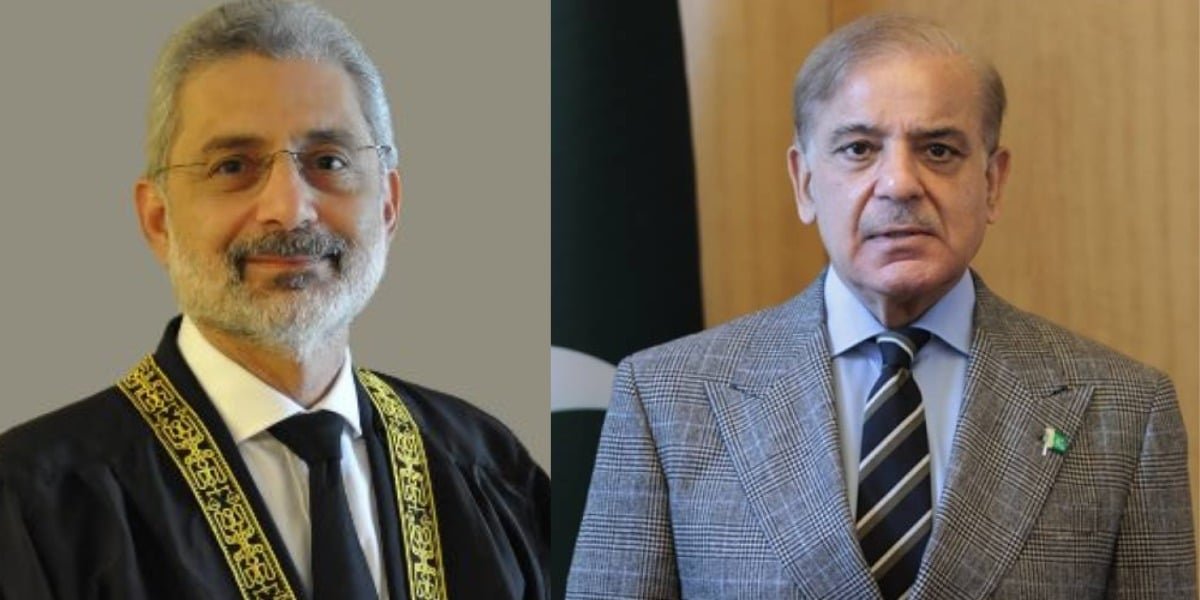
  • PM Shehbaz orders withdrawal of review petitions against Justice Isa

    PM Shehbaz orders withdrawal of review petitions against Justice Isa

    Prime Minister (PM) Shehbaz Sharif on Thursday directed Law Minister Azam Nazir Tarar to withdraw the curative review reference filed against Justice Qazi Faez Isa of the Supreme Court.

    “On my direction, the government has decided to withdraw the Curative Review Petition against senior most Judge of the Supreme Court, Justice Qazi Faez Isa,” tweeted the PM.  

    In a tweet posted today, the PM said that the curative review was based on “ill-will and meant to harass and intimidate the honourable Judge at the behest of Imran Niazi”.

    Separately, in a statement issued by the Prime Minister’s Office (PMO) today, PM Shehbaz said that Justice Isa and his family were “harassed and defamed” in the name of the reference.

    “This was not a reference, but a vendetta by Imran Khan Niazi, a vindictive person, against a fair-minded judge who followed the path of the Constitution and the law,” the statement quoted the PM as saying.

    “Imran Niazi misused the constitutional office of the president for this criminal act and President Arif Alvi became an instrument in the attack on the judiciary and an accomplice to a lie.”