The Senate’s Standing Committee on Energy has been briefed by the Secretary of Power Division that 190,000 employees are being given free electricity worth 15 billion rupees annually.
He said, “Our electricity demand for industry is about 25 percent, decreasing over time.”
The Secretary explained that 25 million employees of 400 units received a 592 billion subsidy, which has now increased by Rs 692 billion. “244 billion was taken from industry and given to domestic consumers,” he told the Committee.
Senator Mohsin Aziz remarked, “IPP has become a dragon, and people are on the streets.”
The federal minister for power and energy said, “Even if we get five rupees from IPP payments, we will help poor people.”
The minister opined that electricity theft can be reduced with privatisation and digitisation.
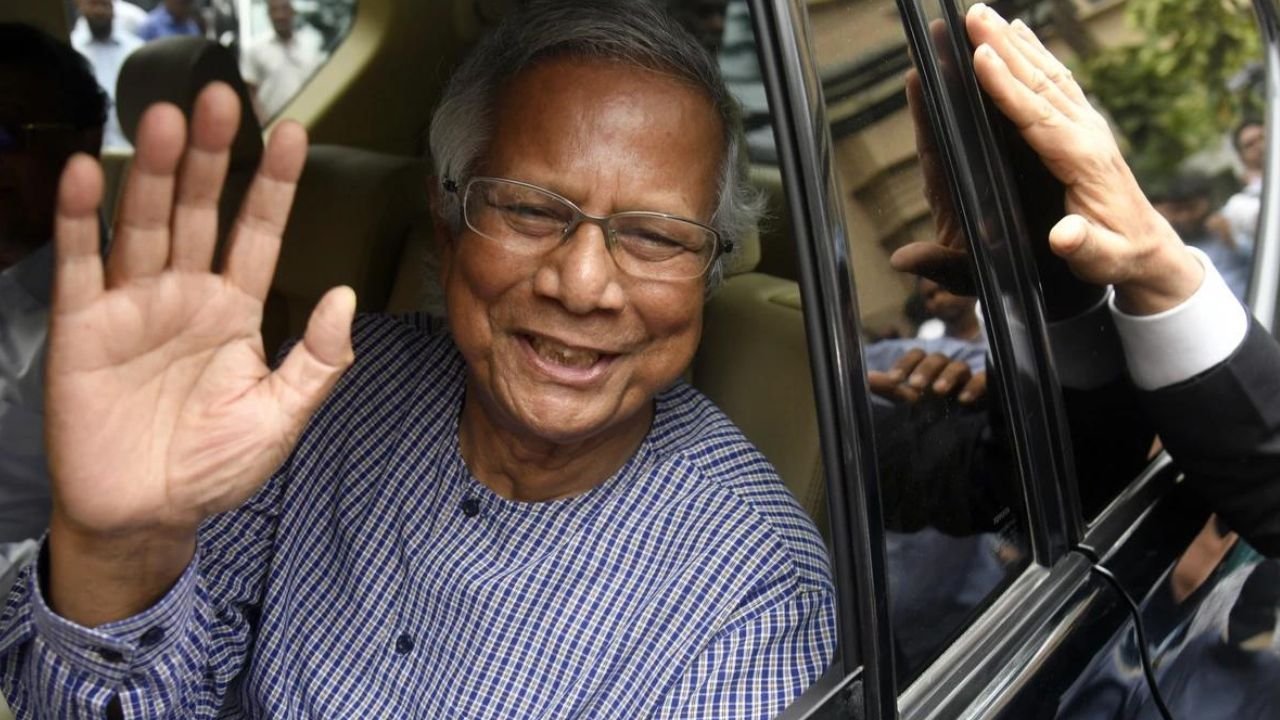
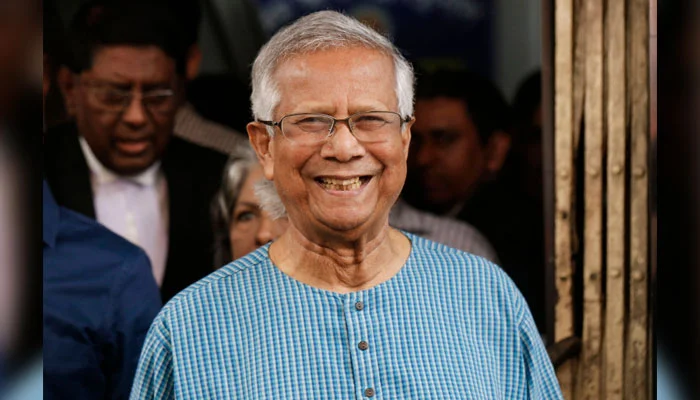
The appointment came quickly after student leaders called on the 84-year-old Yunus — credited with lifting millions out of poverty in the South Asian country — to lead.
The decision was made in a meeting with President Mohammed Shahabuddin, the heads of the army, navy and air force, and student leaders.
“(They) decided to form an interim government with Professor Dr Muhammad Yunus as its chief,” Shahabuddin’s office said in a statement.
“The president has asked the people to help ride out the crisis. Quick formation of an interim government is necessary to overcome the crisis.”
Yunus will have the title of chief advisor, according to Haid Islam, one of the leaders of Students Against Discrimination who participated in the meeting.
Shahabuddin agreed that the interim government “will be formed within the shortest time” possible, Islam told reporters.
Islam described the meeting as “fruitful”.
However, there were few other details about the planned government, including the role of the military.
Yunus, who is currently in Europe, told AFP on Tuesday he was willing to lead the interim government.
“If action is needed in Bangladesh, for my country and for the courage of my people, then I will take it,” he said in a statement, also calling for free elections.
Muhammad Yunus: Bangladesh’s ‘banker to the poor’
Nobel-winning microfinance pioneer Muhammad Yunus has been asked by Bangladeshi protest leaders to helm an interim government to replace ousted premier Sheikh Hasina, who had hounded him in speeches and through the courts.
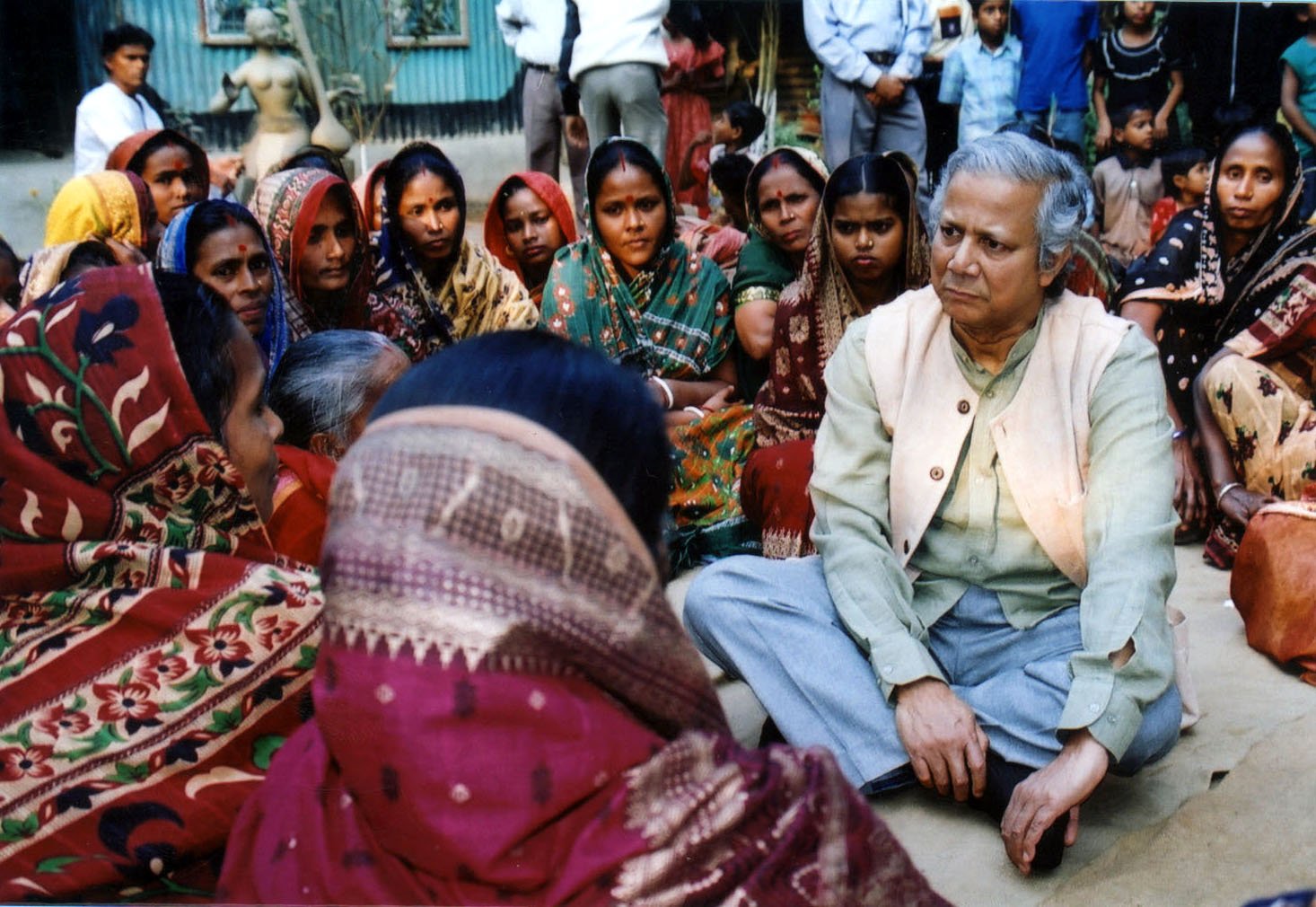
The 84-year-old, known as the “banker to the poorest of the poor”, was awarded the Peace Prize in 2006 for his work loaning small cash sums to rural women, allowing them to invest in farm tools or business equipment and boost their earnings.
Grameen Bank, the microfinance lender he founded, was lauded for helping unleash breakneck economic growth in Bangladesh. Since then, scores of developing countries have copied its work.
“Human beings are not born to suffer the misery of hunger and poverty,” Yunus said during his Nobel lecture, daring his audience to imagine a world where deprivation was confined to history museums.
But his public profile in Bangladesh earned him the hostility of Hasina, who once accused him of “sucking blood” from the poor.
In 2007, Yunus announced plans to set up his own “Citizen Power” party to end Bangladesh´s confrontational political culture, which has been punctuated by instability and periods of military rule.
He abandoned those ambitions within months, but the enmity aroused by his challenge to the ruling elite has persisted.
Yunus was hit with more than 100 criminal cases and a smear campaign by a state-led Islamic agency that accused him of promoting homosexuality.
The government unceremoniously forced him out of Grameen Bank in 2011 — a decision fought by Yunus but upheld by Bangladesh´s top court.
In January he and three colleagues from one of the companies he founded were sentenced to jail terms of six months — but immediately bailed pending appeal — by a Dhaka labour court which found they had illegally failed to create a workers´ welfare fund.
All four had denied the charges and, with courts accused of rubber-stamping decisions by Hasina´s government, the case was criticised as politically motivated by watchdogs including Amnesty International.
Yunus was born into a well-to-do family — his father was a successful goldsmith — in the coastal city of Chittagong in 1940.
He credits his mother, who offered help to anyone in need who knocked on their door, as his biggest influence.
Yunus won a Fulbright scholarship to study in the United States and returned soon after Bangladesh won its independence from Pakistan in 1971 war. When he returned, he was chosen to head Chittagong University´s economics department, but the young country was struggling through a severe famine and he felt compelled to take practical action.
“Poverty was all around me, and I could not turn away from it,” he said in 2006.
“I found it difficult to teach elegant theories of economics in the university classroom… I wanted to do something immediate to help people around me.”
After years of experimenting with ways to provide credit for people too poor to qualify for traditional bank loans, he founded Grameen Bank in 1983.
The institution now has more than nine million clients on its books, according to its most recent annual report (2020), and more than 97 percent of its borrowers are women.
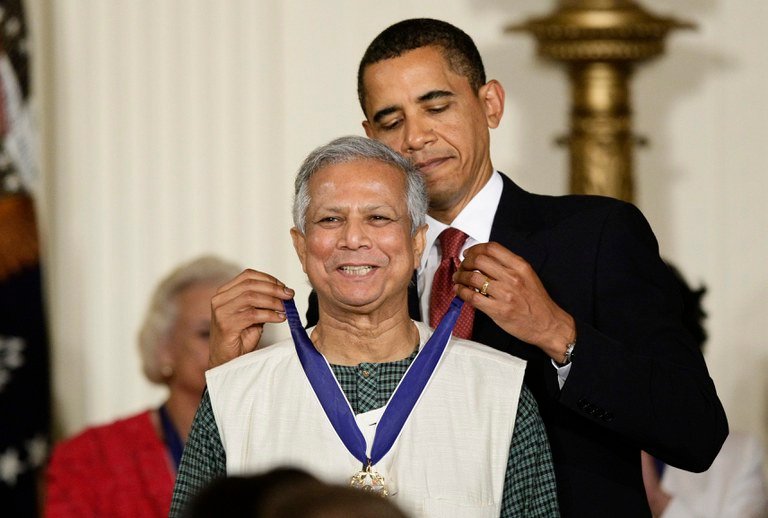
Yunus has won numerous high honours for his life´s work, including the US Presidential Medal of Freedom, which Barack Obama awarded him.
Actress Hina Chaudhary is one of those rare celebrities who successfully balance their careers with her role as a wife and mother.
In a recent interview with ‘Fuchsia Magazine,’ Hina disclosed that she was deeply involved in cricket during her college days. “Meri ammi ko ye pasand nahi tha kyun ke mein sara din dhoop me rehti thi. Aur phir logon ka meri ammi ko ye kehna kay larkon walay khel khail rahi hai, ye tou kaali hojaegi,” Hina said. Despite her mother’s concerns about her getting tanned and impacting marriage prospects, Hina’s dedication to cricket was unwavering.
She also discussed how she reignited her passion for acting during her university days by joining a dramatics club and becoming its president. This led to a challenging yet transformative period as she convinced her father to support her acting career. Initially resistant, her father eventually agreed after many discussions.
She shared valuable advice from her mother: “My mother told me something that I still remember. If you want to reach the top, you must complete every step. If you miss a step, you will fall and get hurt.” This advice has guided Hina throughout her career, motivating her to persist and succeed.
Hina also talked about her marriage to Ali, whom she met at university. Ali, an assistant professor, initially helped her with admission documents. Their relationship grew from a simple connection to a deep and supportive partnership as Ali continued to assist her with academic challenges.
Hina emphasized that love can diminish. “It is very important to have friendship in a relationship,” she pointed out. She highlighted that Ali’s progressive attitude and support have been crucial for her career. Ali encourages her acting ambitions and supports her through various challenges, including managing family responsibilities.
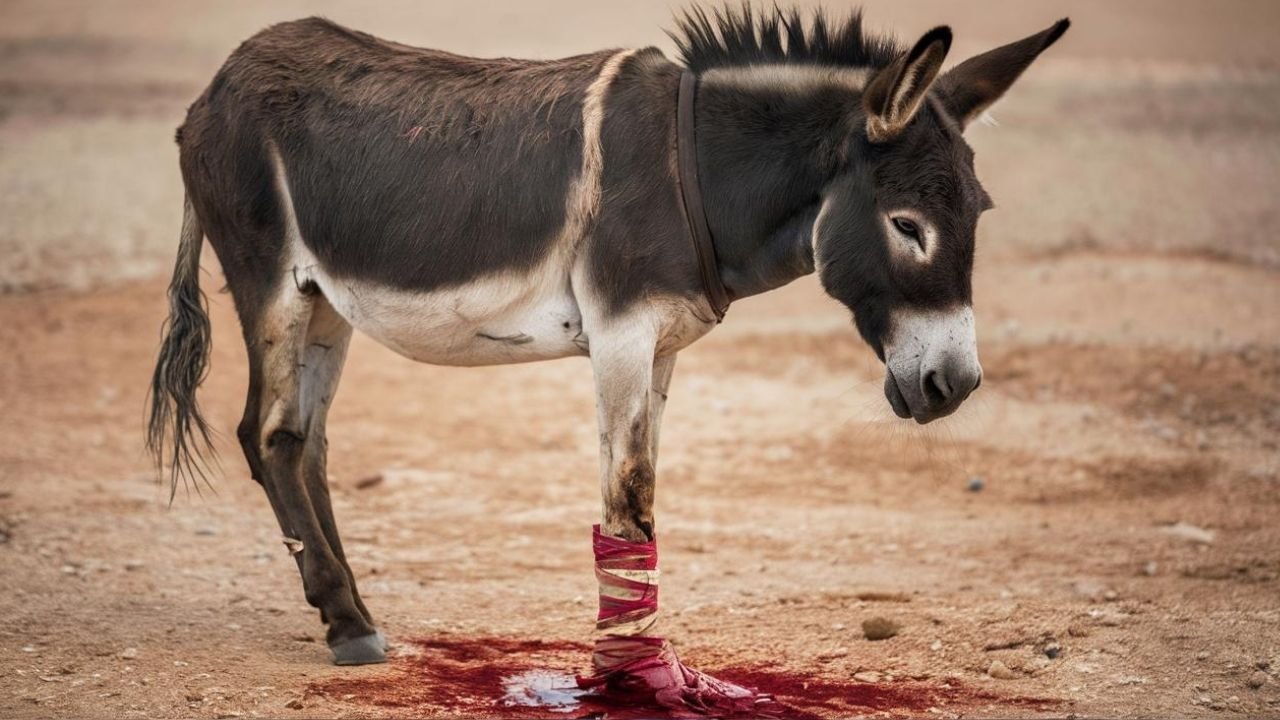
A landlord in Sindh has cut off the leg of a donkey that entered his stable.
The incident took place in Batra village of Mehar Tehsil in Sindh.
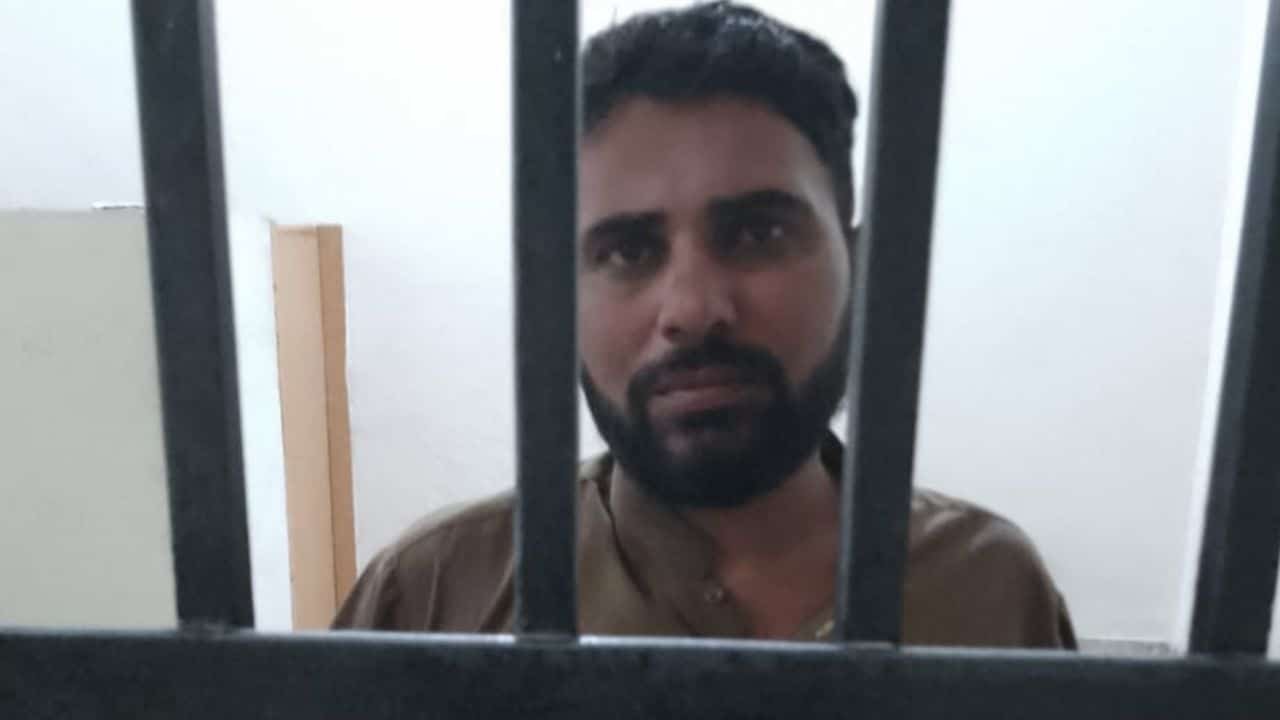
The donkey’s owner says his son earns money by driving a donkey cart. The owner said, “Last night, my donkey went to the landlord’s shed, after which he and his son got angry and cut off the leg of the donkey.”
Geo News reported that the donkey owner had registered a complaint with the Rajhastan police station against the influential landlord, but so far, the police have not taken any action. They have also left the donkey with the police.
However, the police believe that the donkey’s owner has only reported the case and has not registered an FIR. Further action will be taken after the case is registered and the investigation is carried out.
Famous actress Ushna Shah has opened up about her struggle with high testosterone levels due to Polycystic Ovary Syndrome (PCOS).
In Instagram posts and tweets, Ushna shared that she and many other women in Pakistan deal with PCOS, which causes high levels of the male hormone testosterone.
Ushna’s honest talk brings attention to PCOS, a common but often misunderstood health issue. She pointed out that PCOS causes hormonal imbalances, leading to problems like extra body hair (hirsutism).
Talking to her followers, Ushna said that high testosterone gives her stronger muscles and more energy. However, she made it clear that this does not make her any less female. She said that even with these hormonal changes, she is still fully feminine.
Ushna’s comments challenge old views that link high testosterone with masculinity or a third gender.
Her message is important, especially in light of recent events like the case of Algerian athlete Imane Khelif. Khelif qualified for the Paris Olympics and is set to compete in the finals. However, she faced controversy last year when she was disqualified by the International Boxing Federation due to an unspecified gender test. Even though the International Olympic Committee confirmed Khelif’s female gender, the Algerian has been attacked relentlessly by racists and transphobes, including JK Rowling and Elon Musk.
A flight in America made an emergency landing after passengers spotted lice in a woman’s hair.
The flight, scheduled to fly from Los Angeles to New York, was rerouted to Phoenix.
A TikTok user on board, the flight, said in a video that passengers were left confused as American Airlines did not inform them of what caused the diversion.
Ethan Judelson’s video reached over 1.2 million views. As soon as the plane landed, he described seeing a woman causing a commotion as she rushed through the aisle towards the front. While he was confused, no other passenger paid attention to it.
“It just seemed like one of those people who, as soon as the seatbelt sign goes off, gets up and tries to be the first to their bag,” he told People magazine, recalling the incident. “So the girl next to me … we were both like, ‘Why is she so rushed to get off? We’re all getting off together; calm down.”
The TikToker mentioned that two women gave him “cryptic” answers when asked about what happened to them.
After the plane made the emergency landing, Mr Judelson overheard hushed conversations among fellow passengers. According to eyewitnesses, two passengers had spotted lice crawling out of a woman’s hair, prompting them to alert the flight attendants.
“Apparently, those two girls saw bugs crawling out of the woman’s hair and alerted the flight attendant,” Mr Judelson said in the TikTok video.
The airline later issued a statement confirming that the flight was diverted due to a medical emergency.
Pakistan Tehreek e Insaf (PTI) bigwig and Khyber Pakhtunkhwa Chief Minister Ali Amin Gandapur, while addressing a rally at Swabi, threatened the federal government that his party would ‘’hold a rally in Islamabad in late August or the first week of September at any cost.’’
Addressing the government, the CM said, “We will accept any venue, whether F9 Park or Srinagar Highway, for a rally in Islamabad.”
He also said, “If the government does not permit the Non-Objection Certificate (NOC) despite requesting it, then we will rally at D Chowk.” Earlier, PTI offered to negotiate with the military by announcing their representative chairman, Mehmood Khan Achakzai, of the Pakhtunkhwa Milli Awami Party.
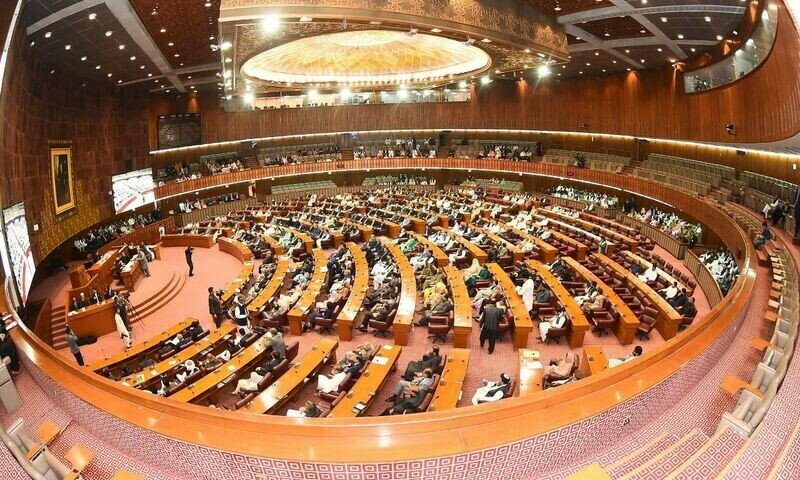
The National Assembly on Tuesday approved a bill proposing amendments to the Elections Act 2017, to disallow lawmakers from changing their political party even as the opposition terms the legislation “unconstitutional”.
Last month, the Parliamentary Affairs Committee approved the bill tabled by Bilal Azhar Kiyani, a lawmaker from the Pakistan Muslim League-Nawaz (PML-N).
When it becomes a law, the bill might reverse the PTI’s return to the parliament after the party got significant relief from the Supreme Court’s verdict in the reserved seats case on July 12.
Since the landmark SC ruling, the Election Commission of Pakistan (ECP) has notified as many as 93 lawmakers from three provincial assemblies as PTI members.
Famous singer Aima Baig has announced that she will start a nationwide ‘#MeToo’ campaign after her recent Umrah pilgrimage.
Aima shared her plans on Instagram, saying that her religious journey gave her new strength and purpose.
In her Instagram story, the songstress said that performing Umrah made her feel the need to help and protect women in Pakistan from harmful people.
“There are many people who have hurt young girls,” Aima said. “I stayed quiet before, but not anymore.”
Aima admitted she regrets not speaking up earlier, but now she is determined to lead a ‘#MeToo’ movement to give women a voice.
“I will speak up for women,” she declared. “We are not toys or jokes; we are important and deserve respect.”
Aima urged women to raise their voices against unfair treatment and abuse, pointing out that many girls suffer physically and mentally from mistreatment.
She promised to take action, saying, “I have a list of those who have wronged women. We will use evidence and support all women.”
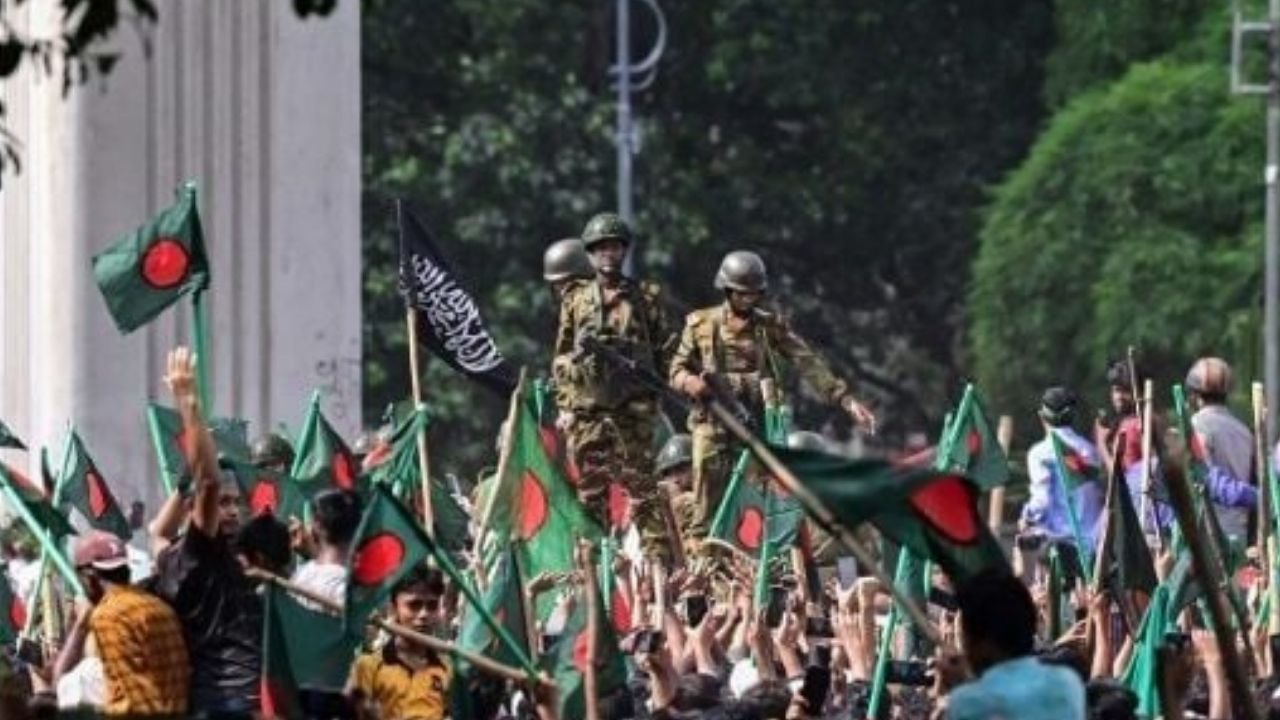
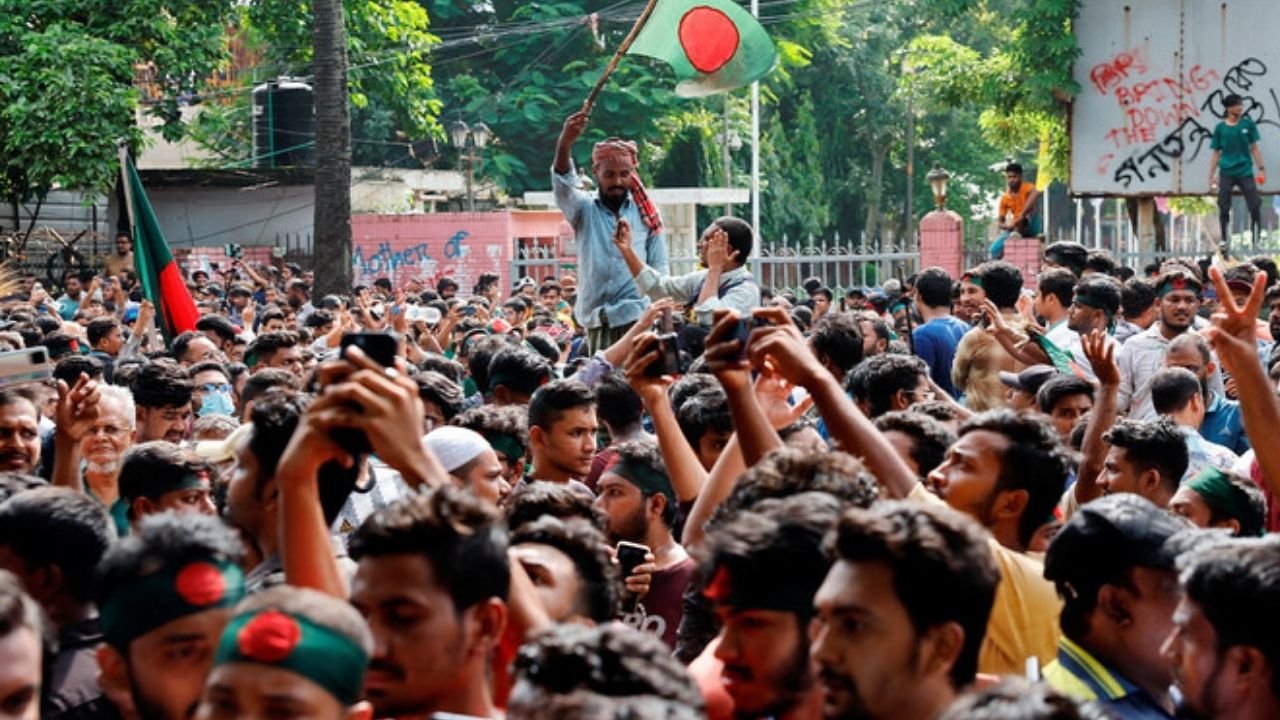
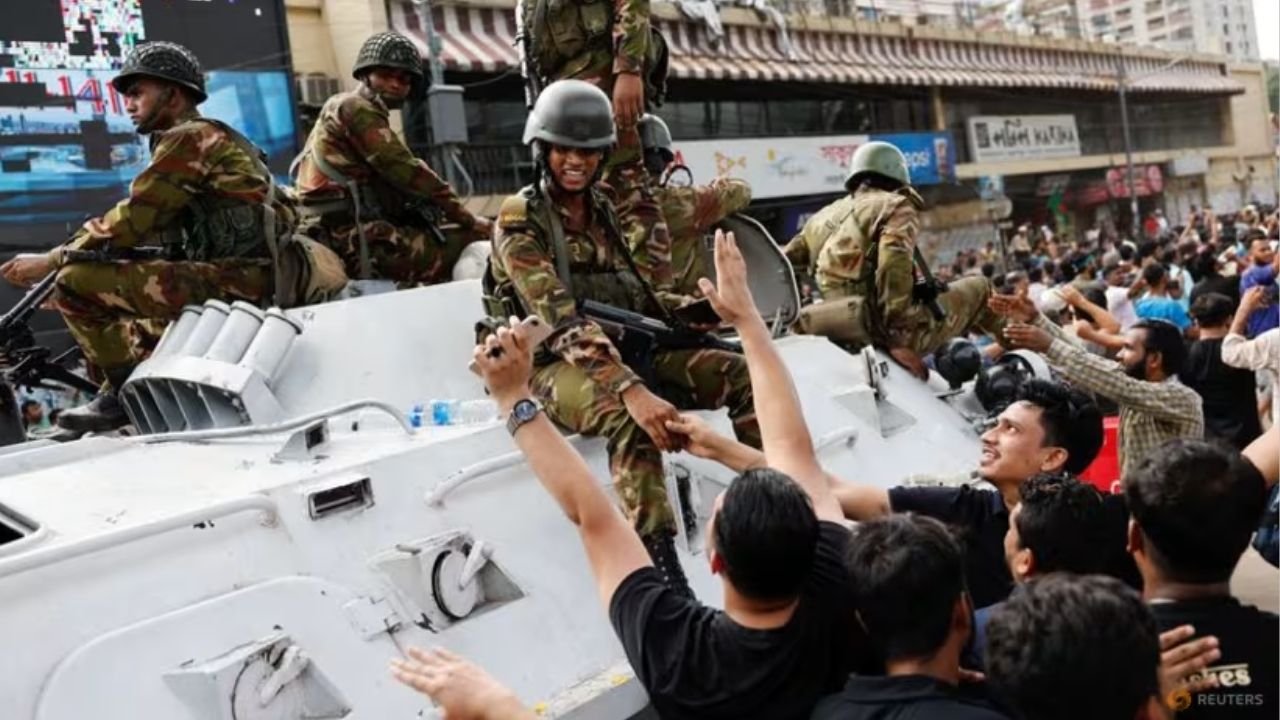
Bangladesh’s military was in control of the country on Tuesday after mass protests forced longtime ruler Sheikh Hasina to resign and flee.
Hasina, 76, had been in power since 2009 but was accused of rigging elections in January and then watched millions of people take to the streets over the past month demanding she step down.
Hundreds of people died as security forces sought to quell the unrest, but the protests grew, and Hasina finally fled Bangladesh aboard a helicopter on Monday as the military turned against her.
Army chief General Waker-Uz-Zaman announced Monday afternoon on state television that Hasina had resigned and the military would form a caretaker government.
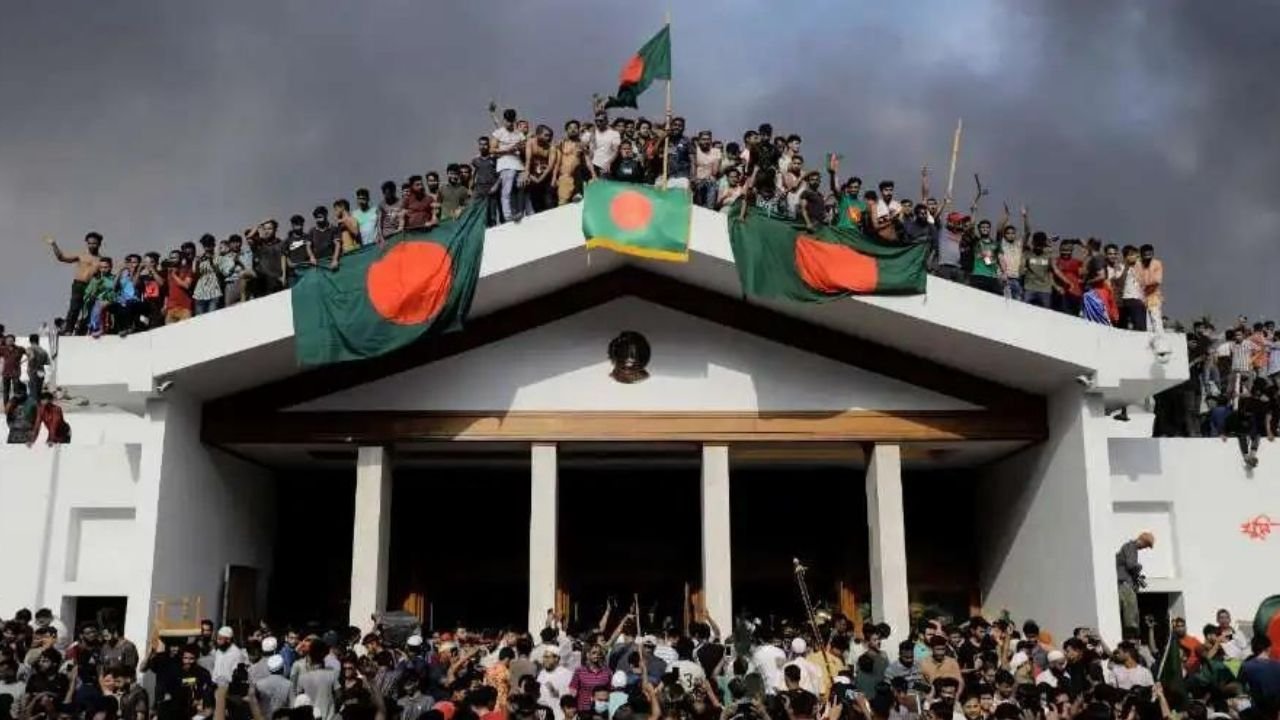
“The country has suffered a lot, the economy has been hit, many people have been killed — it is time to stop the violence,” said Waker, shortly after jubilant crowds stormed and looted Hasina’s official residence.
“I feel so happy that our country has been liberated,” said Sazid Ahnaf, 21, comparing the events to the independence war that split the nation from Pakistan more than five decades ago.
“We have been freed from a dictatorship. It’s a Bengal uprising, what we saw in 1971, and now seeing in 2024.”
But there were also scenes of chaos and anger, with police reporting at least 66 people killed on Monday as mobs launched revenge attacks on Hasina’s allies.
Protesters stormed parliament and torched TV stations, while some smashed statues of Hasina’s father, Sheikh Mujibur Rahman, the country’s independence hero.
Others set a museum dedicated to the former leader on fire, flames licking at portraits in destruction barely thinkable just hours before, when Hasina had the loyalty of the security forces under her autocratic grip.
“The time has come to make them accountable for torture,” said protester Kaza Ahmed. “Sheikh Hasina is responsible for murder.”
Offices of Hasina’s Awami League across the country were torched and looted, eyewitnesses told AFP.
The unrest began last month in the form of protests against civil service job quotas and then escalated into wider calls for Hasina to stand down.
Her government was accused by rights groups of misusing state institutions to entrench its hold on power and stamp out dissent, including through the extrajudicial killing of opposition activists.
At least 366 people died in the unrest that began in early July, according to an AFP tally based on police, government officials and doctors at hospitals.
Student protest leaders, ahead of an expected meeting with the army chief, said Tuesday that they wanted Nobel laureate and microfinance pioneer Muhammad Yunus, 84, to lead the government.
“In Dr. Yunus, we trust,” Asif Mahmud, a key leader of the Students Against Discrimination (SAD) group, wrote on Facebook.
Waker said a curfew would be lifted on Tuesday morning, with the military set to lead an interim government.
Bangladeshi President Mohammed Shahabuddin late Monday ordered the release of prisoners from the protests, as well as former prime minister and key opposition leader Khaleda Zia, 78.
Zia, who is in poor health, was jailed by her arch-rival Hasina for graft in 2018.
The president and army chief also met late Monday, alongside key opposition leaders, with the president’s press team saying it had been “decided to form an interim government immediately.”
It was not immediately clear if Waker would lead it.
Hasina’s fate was also uncertain. She fled the country by helicopter, a source close to the ousted leader told AFP.
Media in neighboring India reported Hasina had landed at a military air base near New Delhi.
A top-level source said she wanted to “transit” on to London, but calls by the British government for a UN-led investigation into “unprecedented levels of violence” put that into doubt.
There were widespread calls by protesters to ensure Hasina’s close allies remained in the country.
Bangladesh’s military said they had shut Dhaka’s international airport on Monday evening, without giving a reason.
Bangladesh has a long history of coups.
The military declared an emergency in January 2007 after widespread political unrest and installed a military-backed caretaker government for two years.
Michael Kugelman, director of the South Asia Institute at the Washington-based Wilson Center, warned that Hasina’s departure “would leave a major vacuum” and that the country was in “uncharted territory.”
“The coming days are critical,” he said.
UN Secretary-General Antonio Guterres stressed the importance of a “peaceful, orderly and democratic transition,” his spokesman said. European Union foreign policy chief Josep Borrell echoed that call.
Former colonial ruler Britain and the United States meanwhile urged “calm.”