Tag: topnews

  • PM Imran, Gandhi’s great grandson on same page against extremist RSS?

    PM Imran, Gandhi’s great grandson on same page against extremist RSS?

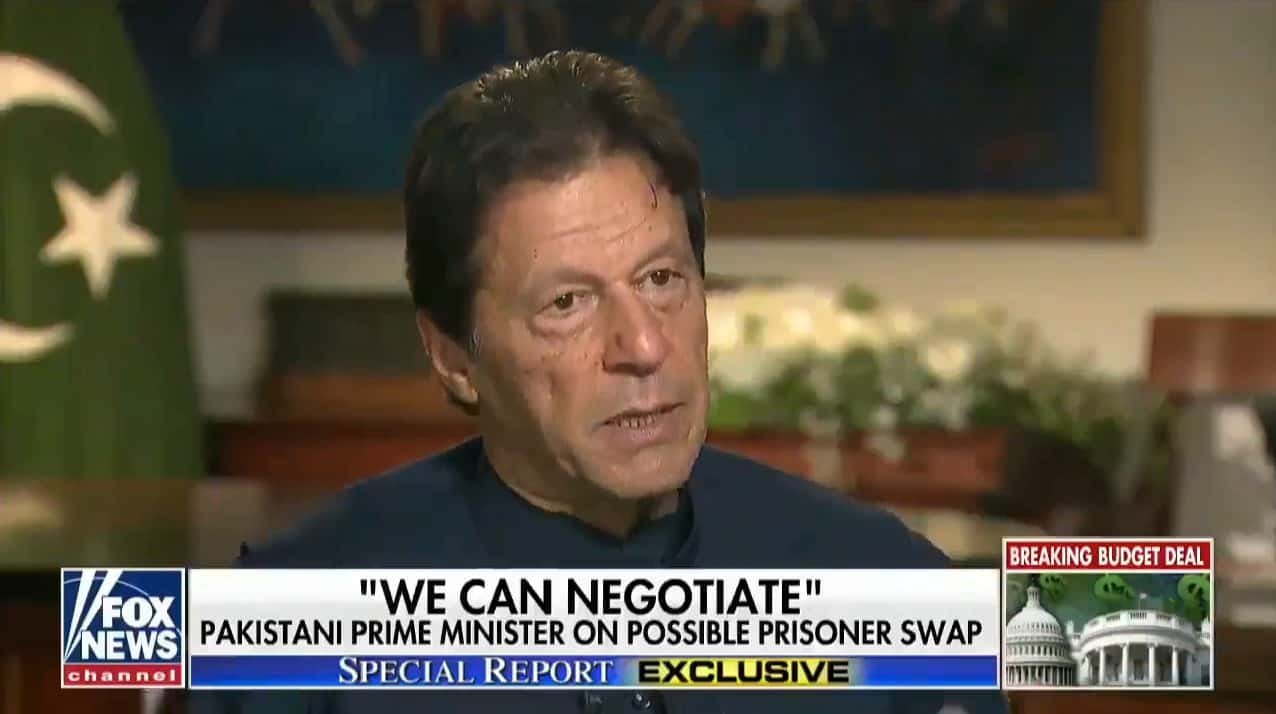
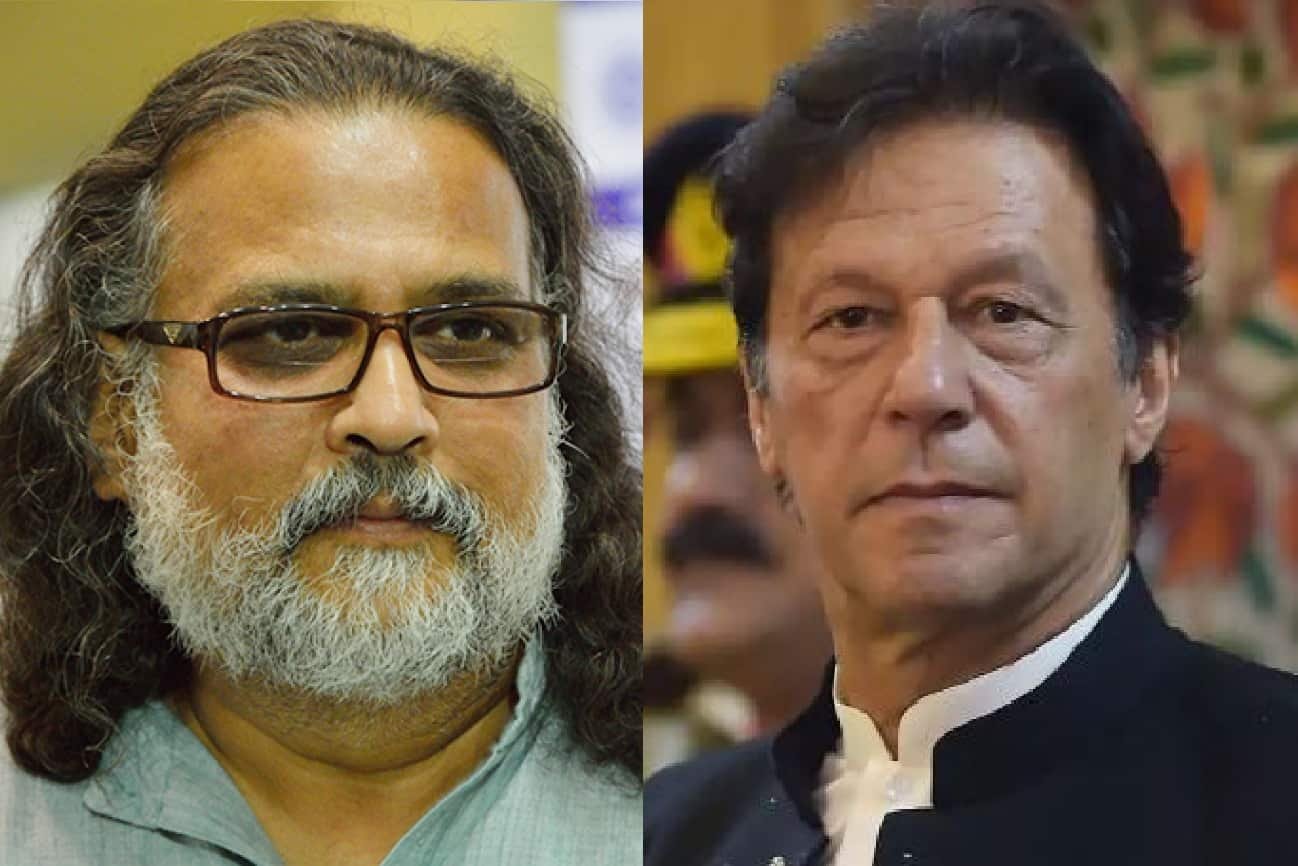
    A day after Prime Minister (PM) Imran Khan said that the ideology of the Hindu extremist Rashtriya Swayamsevak Sangh (RSS) had taken over India, a much similar statement of the great grandson of independent India’s founding father Mahatma Gandhi, has emerged.

    “The RSS ideology has taken over India, the way the Nazi party had taken over Germany,” the premier had said while addressing a Kashmir Hour gathering on Friday. “They think that Muslims should be taught a lesson, that they are not equal citizens. Today, the whole world is seeing what is happening in Kashmir.”

    With the premier’s words being widely shared over the internet, it wasn’t later that someone pointed out their similarity with an earlier statement by Gandhi’s great grandson, Tushar Gandhi.

    Addressing a gathering earlier this year, he had called for fighting the ideology of RSS, which he said was trying to divide India.

    Tushar, who is the son of Mahatma’s grandson Arun, had said that Gandhiwadis (believers of the Gandhian philosophy) can remain neutral, but those who call themselves Gandhi’s workers, cannot do the same in the present era as the RSS was threatening the very ideals espoused by Gandhi.

    “I do not hate the RSS functionaries. But I oppose RSS… that idea, which is dividing the country… I do not say that others have not done this. We oppose them as well. We will have to protest, otherwise, we don’t deserve to be called Gandhi’s workers.”

    PM Imran’s Friday address wasn’t the first time when he called out his Indian counterpart Narendra Modi’s regime for being inspired by the RSS.

    In two loaded tweets on the eve of Eidul Azha, he had tweeted, “The curfew, crackdown and impending genocide of Kashmiris in IoK [Indian occupied Kashmir] is unfolding exactly according to [the] RSS ideology inspired by Nazi ideology. Attempt is to change demography of Kashmir through ethnic cleansing. Question is: Will the world watch & appease as they did Hitler at Munich?”

    “I am afraid this RSS ideology of Hindu Supremacy, like the Nazi Aryan Supremacy, will not stop in IoK; instead it will lead to suppression of Muslims in India and eventually lead to targeting of Pakistan. The Hindu Supremacists version of Hitler’s Lebensraum,” he had said further.
  • PTI govt waives off Rs228 billion dues of rich industrialists

    PTI govt waives off Rs228 billion dues of rich industrialists

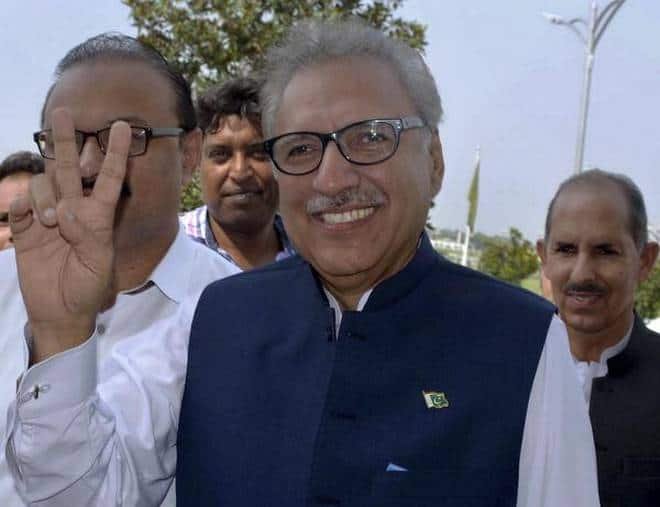
    The Pakistan Tehreeke Insaf (PTI) government has waived off Rs228 billion of influential industrialists and owners of fertilizer, CNG and power sector companies through a presidential ordinance enforced with immediate effect from August 28 The News International has reported.

    As per the details, President Arif Alvi waived half of the outstanding liabilities of the said players of the amount collected from May 22, 2015 to December 21 2018.

    Furthermore, the government also reduced Gas Infrastructure Development Cess (GIDC) rates by up to 75%, which would push down prices of gas and fertiliser for the end-consumers.

    According to the Petroleum Division statistics, as of the end of December 2018, the total principal liabilities of these sectors stood at Rs416.3 billion and half of those were written off by the government.

    Cumulative GIDC collection since 2012 was recorded at Rs701.5 billion till the end of December 2018, out of which only Rs285 billion had been deposited.

    The government further waived the late payment surcharge, which was supposed to be paid at the rate of 4% plus three-month Karachi Interbank Offered Rate (Kibor), which currently stands at 13.7%, meaning the government has written off 17.4% mark-up, which brings the total to over Rs300 billion.

    The ordinance also did not address the issue of how to refund 50% GIDC to those companies that timely discharged their legal obligations and paid the entire amount of GIDC.

  • India to receive Israel-made Spice 2000 bombs used in failed Balakot strikes

    By the end of next month, the Indian Air Force (IAF) will be receiving bunker buster version of Israel-made Spice 2000 bombs, which the country is reported to have used in the failed Balakot airstrikes in February, India Today reported.

    According to reports, India and France had signed a Rs3 billion deal with Israel to acquire the bomb that has a standoff range of 60km and approaches the target using its scene-matching algorithm.

    It consists of an add-on kit for warheads such as the MK-84, BLU-109, APW and RAP-2000; and was also used by the IAF in a failed attempt to bomb the religious seminaries in Balakot in February this year.

    The attack had been foiled by the Pakistan Air Force (PAF) that had forced Indian pilots to abort their mission and return in haste.

    India had also later failed to support its claims with facts as observers and international media reported that the seminaries New Delhi had claimed to have destroyed, were standing even days after the intrusion.

  • Managing Pakistan’s water

    Managing Pakistan’s water

    Water wastage is high and agricultural yields are low. We are also among the 10 countries with the lowest access to clean water.

    Water is a resource that has been taken granted for
    centuries. People think it’s an abundant and limitless, but this faulty
    perception is changing and it’s about time. We’re running out of fresh water…
    and fast.  

    According to a World Bank report published in January 2019,
    the country is “well-endowed” with water but “water wastage is high and
    agricultural yields are low”. This, according to the report, is because of bad
    management of available water resources.

    We are also among the 10 countries with the lowest access to
    clean water, according to a study “The Water Gap — The State of the World’s
    Water 2018”, by WaterAid. About 21 million out of the total population of 207
    million do not have access to clean water.

    “Pakistan is facing severe challenges; industrialisation and
    the demands of agriculture, depleted and increasingly saline groundwater, rapid
    urbanisation and drought have all taken their toll,” says the report.

    What adds to the problem is the outdated water
    infrastructure. The lack of reservoirs and the dilapidated existing facilities
    mean that our ability to store water is way lower than what is needed.

    Pakistan has clearly a lot to make up for in almost each of
    the areas identified above. Compared to the United States (US) and China where
    40% and 65% of freshwater withdrawals are used for agriculture, respectively;
    in Pakistan, the figure exceeds 90%.

    The government clearly needs to have a well-thought-out
    policy in place with proper implementation to ensure that the scales do not
    tilt in one stakeholder’s favor. There are sectors where urgent interventions
    are merited because they use up the most water the most notable being the
    agriculture sector.

    Intensive irrigation not just wastes water but also
    increases the risk of over-irrigation leading to low crop yield. Since most of
    the farmers are practicing agriculture the way their forefathers did, the
    government and private sector need to work together to help the farmers adapt
    to more responsible irrigation techniques.

    Another area is intensive water use industries like textile,
    leather and sugarcane to name a few. The world over, industries are looking to
    reduce their water footprint. For example, Levi Strauss & Co. recently
    announced that it would reduce its water use for manufacturing by 50%, especially
    in water-stressed areas by 2025. Abercrombie & Fitch has also pledged a 30%
    water reduction by 2022.

    There are food and beverage companies who are trying to work
    on reducing water waste, not just in their own processes but also outside their
    fence. A leading name in these efforts is that of Nestlé Pakistan, which
    under its “Caring for Water” initiative is helping farmers move
    on from water-intensive irrigation practices and take up high-efficiency
    irrigation systems like drip and sprinkler irrigation.

    The company claims that it has helped save more than 300
    million litres of water in two years by promoting drip irrigation on about 107
    acres of land. Their aim is to help save 400 million litres by the end of 2019.
    In addition, the company has also developed smart soil sensors. The sensor
    detects the level of soil moisture sensors and send real-time data to the
    farmers helping them to save water (about 12%), avoid crop stress and
    ultimately increase yield.

    The company has developed cheap versions of the sensor with the help of the Lahore University of Management Sciences’ (LUMS) Centre for Water Informatics and plans to scale the project up this year.

    We need positive initiatives like these, which involve
    different partners working together on various aspects of the water challenges
    to help address them. The multiple and cross-sectoral challenges beg
    collective solutions.

    It’s only with a collective approach that we can ensure
    effective water management, which requires planning, developing and
    distributing water in such a way that all the competing demands (agriculture,
    access to safe drinking water, daily use, biodiversity etc) for water are met
    and it is allocated on
    an equitable 
    basis to satisfy everyone’s demands.

  • Kashmir crisis: PM calls UAE crown prince who awarded Modi highest civilian honour

    Kashmir crisis: PM calls UAE crown prince who awarded Modi highest civilian honour

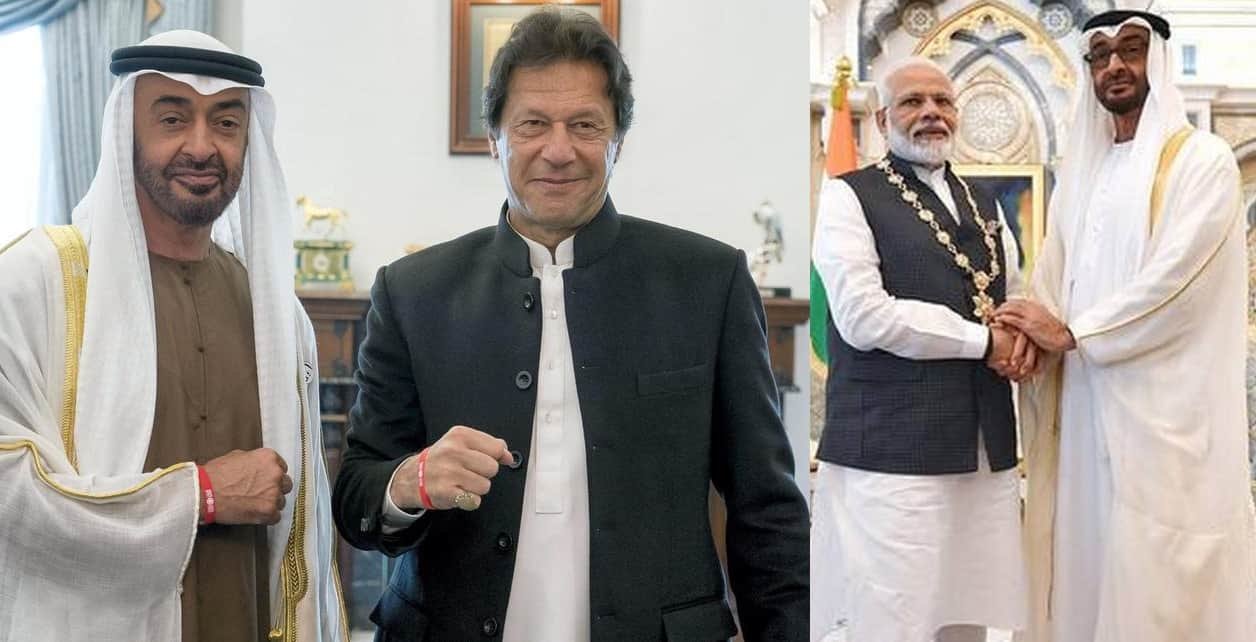
    Amid rising Kashmir tensions, Prime Minister (PM) Imran Khan has called Abu Dhabi Crown Prince Sheikh Mohammed bin Zayed al-Nahyan, who had recently drawn ire of hundreds of thousands of people for awarding Indian PM the country’s highest civilian honour.

    According to reports, the “regional and international developments” were discussed over the phone call, while a tweet by the crown prince also confirmed the development.

    The two dignitaries discussed “ways to enhance bilateral cooperation as well as the latest regional and international developments and issues of mutual interest”, the tweet said.

    Mohammed bin Zayed — or MBZ — is also the deputy supreme commander of the UAE armed forces. The phone call between the two leaders comes days after Indian premier Narendra Modi was awarded UAE’s highest civilian honour.

    The move had sparked outrage among rights activists over the Modi-led government’s clampdown on the Muslim-majority Indian occupied Kashmir (IoK).

    MBZ had personally put the gold medal around Modi’s neck, with a portrait of Sheikh Zayed bin Sultan Al Nahyan, the UAE’s first president after whom the order is named, displayed behind them.

    The two men had also held hands for a moment and spoken quietly. “You deserve it,” MBZ had told the Hindu nationalist leader at one point while posing for photos.

  • PM Imran, UN chief made respondents in petition seeking ‘jihad in Kashmir’

    PM Imran, UN chief made respondents in petition seeking ‘jihad in Kashmir’

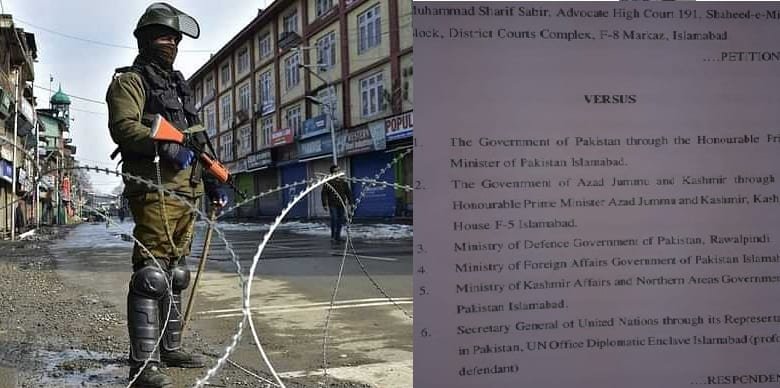
    Prime Minister (PM) Imran Khan and United Nations (UN) Secretary General António Guterres among others have been made respondents in a petition seeking “jihad in Indian occupied Kashmir (IoK)”.

    As per the details, lawyer Muhammad Sharif Sabir has moved the Islamabad High Court (IHC) for directions to the government to “declare jihad” in the troubled valley.

    While the court has dismissed the plea “as non-maintainable”, among other respondents were the Azad Jammu and Kashmir (AJK) PM, ministries of defence, foreign affairs and Kashmir affairs.

    Emotions run high ever since New Delhi abrogated Article 370 of its constitution and robbed IoK of its autonomy. Pakistan has been protesting on all fronts against the move that can pave way for a Muslim genocide in the disputed territory.

    “Kashmir Hour” on Friday is also being observed across the country on PM Imran’s call for solidarity with Kashmiris.

  • PM Imran’s office likely to lose electricity over non-payment of bills

    PM Imran’s office likely to lose electricity over non-payment of bills

    The supply of electricity to the Prime Minister’s (PM) Secretariat is likely to be snapped over non-payment of bills running into millions, Khaleej Times has reported.

    According to reports, the Islamabad Electric Supply Company (IESCO) has also issued a notice in this regard as the secretariat currently owes the distributor over Rs4 million in power bills.

    “This is a recurrent problem with the secretariat. We will cut off the power supply if dues are not paid,” reports quoted sources in the IESCO as saying and added that the dues had not been cleared despite several reminder notices being sent.

    Meanwhile, the country’s annual fiscal deficit has reportedly risen to the highest in the last three decades at 8.9 per cent for the financial year 2018-19.

    Fiscal deficit is the difference between revenues and expenditures of a federal government. According to reports, the deficit that increased to 8.9 per cent of Pakistan’s gross domestic product in the financial year that ended in June, was recorded at 6.6 per cent last year.

    The figure that depicts the situation of the country’s crippling economy, coincides with one-year completion of the Imran Khan-led Pakistan Tehreek-e-Insaf (PTI) government.

  • Govt collects total revenue of Rs4.9 trillion in FY2018-19

    Govt collects total revenue of Rs4.9 trillion in FY2018-19

    The Pakistan Tehreek-e-Insaf (PTI) government has collected a revenue of Rs4.9 trillion in the fiscal year 2018-19, out of which Rs4.5 trillion were collected as tax by the federal and provincial governments, Associated Press of Pakistan (APP) reported.

    According to the details, the total expenditure, however, exceeded the revenue by Rs3.44 trillion as it was recorded at Rs8.35 trillion. Out of this sum, the current expenditure accounts for Rs7.1 trillion, while development expenditure was recorded at Rs1.2 trillion.

    The highest-in-almost-three-decades budget deficit — the financial loss for a period when expenses exceed revenues — worth Rs3.44 trillion was mainly financed by local banks who lent around Rs2.3 trillion to the government. Other local institutions lent around Rs765 billion.

    External financing for the year has been recorded at Rs4.17 billion.

  • ‘Hussain Nawaz planning to come to Pakistan to strike deal with govt’

    ‘Hussain Nawaz planning to come to Pakistan to strike deal with govt’

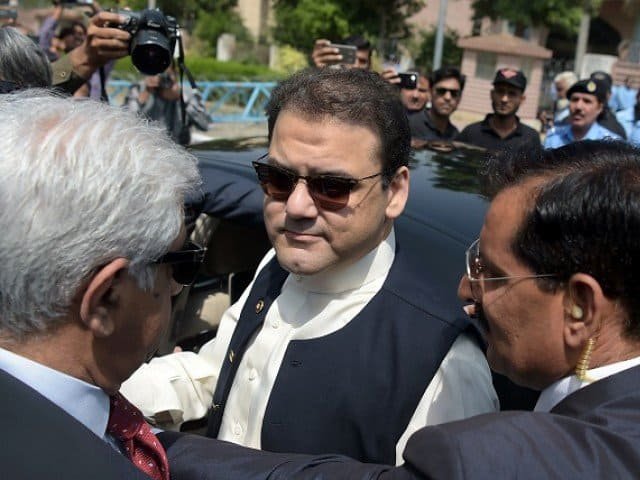
    One of the jailed former prime minister (PM) Nawaz Sharif’s sons, Hussain Nawaz, is planning to come to Pakistan to strike a deal with the government for his family members’ release, senior journalist Dr Shahid Masood has claimed.

    Speaking to a private media outlet, he said that Hussain was seeking a guarantee from the authorities that he would not be arrested upon arrival and was taking matters into his own hands because he “did not trust his uncle and incumbent party chief Shehbaz Sharif”.

    While Nawaz’s daughter and Pakistan Muslim League-Nawaz (PML-N) Vice President (VP) Maryam Nawaz is already in National Accountability Bureau’s (NAB) custody, his sons Hassan and Hussain Nawaz are wanted for their involvement in the Avenfield and other corruption references against members of the Sharif family.

    “Nawaz’s son is looking for a retired judge, bureaucrat or an ex-army official as a guarantor who can make sure that he doesn’t get arrested after reaching Pakistan,” the journalist claimed.

    “Only time will tell when the deal will be struck and how far will it go,” Dr Shahid added.

    He also criticised PM Imran Khan for “backtracking” on his stance against corrupt individuals. “He [the premier] had vowed to not strike a deal with anyone, but now he is offering to release them if they can return the looted money.”

  • I have seen good old days… Pakistan wasn’t like this: Gen Bajwa

    I have seen good old days… Pakistan wasn’t like this: Gen Bajwa

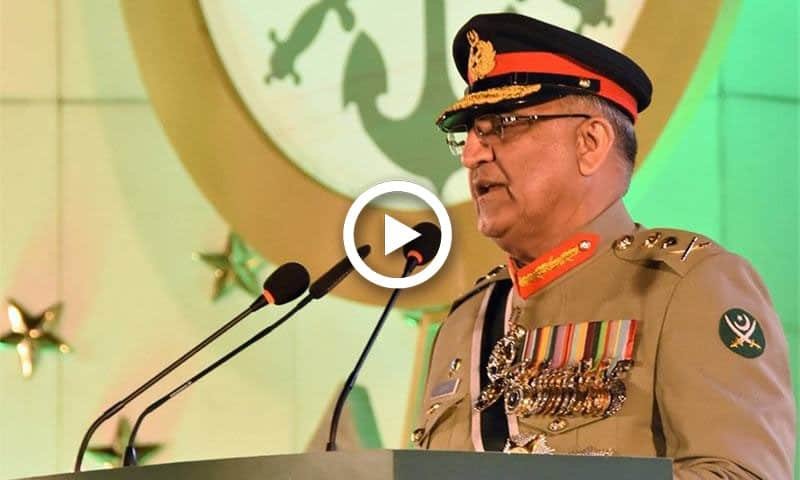
    Chief of the Army Staff (COAS) General Qamar Javed Bajwa has said that the country is going through tough times, but it wasn’t always the case as he himself has seen the good old days.

    “Pakistan wasn’t like this. I was born in 1959 and I have seen the heydays of Pakistan,” the army chief said while addressing a gathering, a video of which has gone viral over the internet.

    “In 1962, PIA [Pakistan International Airlines] was one of the best airlines in the world. PIA and Japan Airlines were the only two Asian airlines flying jet aircraft 707. India, Taiwan [and] Singapore, they were all flying Dakota [aircraft],” he said while sharing memories from the good old times.

    WATCH VIDEO:

    https://twitter.com/ShamaJunejo/status/1166670723710107648

    Gen Bajwa said that Pakistanis had televisions in the year 1964, while Indians didn’t get any until 14 years later in 1978. “In 1964, we also had an electric train running from Lahore to Sahiwal.”

    “I have seen the heydays. Cinema halls used to be full, but so were mosques. The best movies were shown in the cinemas. You know… The Beatles… they visited Karachi,” he said and added that former United States (US) first lady Jacqueline Kennedy also travelled with the PIA.

    “[36th US] President Lyndon B. Johnson travelled to Karachi on PIA. Those were the standards of this country,” he concluded.