Acricket umpire has died one month after being hit on the head by a ball during a domestic match, BBC has reported.
Mr. Williams was supervising a
Pembrokeshire County Division 2 match between Pembroke and Narbeth when he was
hit by a ball.
He was taken to a hospital and was later rushed to the University Hospital of Wales in Cardiff when he was in an induced coma. Williams was transferred to Withybush Hospital in Haverford west on August 1 where he died two weeks later.
After the tragic death of
Australian cricketer Phillip Hughes in 2014, safety concerns in cricket have
been under surveillance. Hughes was hit on the head by a Sean Abbott bouncer
during a native game. He went into a coma and never recovered consciousness.
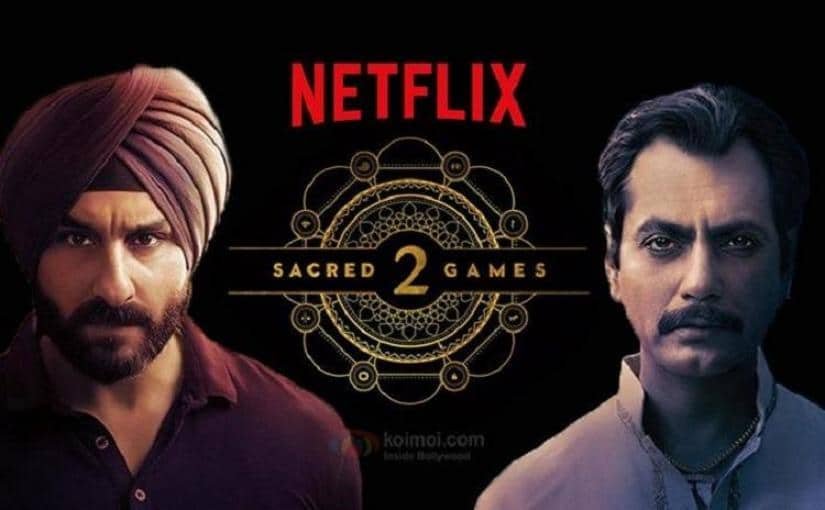
The much-awaited second season of Netflix’s Sacred Games was
dropped on Indian Independence Day, and if you want us to save you some time…
we’re disappointed.
It isn’t easy to be divided between watching Ganesh Gaitonde
(Nawazuddin Siddiqui) back in action and sticking to the idea of shunning Indian
productions at a time when Pakistan and India aren’t the best of friends.
However, having watched the eight-episode series, we can
guarantee that you won’t miss out on anything as great as the first season, in
case you’re planning not to watch it.
Expanding beyond the novel by Vikram Chandra, the second season has left us disillusioned of Anurag Kashyap and co.’s ability to do wonders.
To quickly recap the first season, because Netflix won’t, Sacred Games is one drawn-out game of cat-and-mouse between notorious Mumbai gangster Gaitonde and his chosen police mark, Sartaj Singh (Saif Ali Khan), trying to figure out the former’s dastardly (and as-yet-unknown) plans set in motion.
SPOILERS AHEAD!
The second picks up halfway through the 25 days left to save
Mumbai from uncertain calamity. Singh dives back into the investigation,
following a trail that points to nuclear weapons, terrorism and Gaitonde’s link
to Khanna Guruji (Pankaj Tripathi).
Gaitonde, still narrating to Singh but actually to us, calls Guruji his third father, to whom he and so many others are drawn like moths to a flame.
But, as one could’ve imagined (keeping in view flashbacks and
those mysterious mandalas from the first season), the ashram is actually a cult
and its leaders the liaisons between Gaitonde’s drug trade and the weapons
Singh suspects will be used to attack Mumbai over a decade later.
Just after the new twists are registered – and half the season is gone – one starts waiting for things to get as interesting as promised by cast members time and again. You start looking forward to something big enough for the season to beat its predecessor… and in all honesty, to make sense.
It isn’t later you realise that Sacred Games has successfully
pulled a Game of Thrones and disappointed you more than Gaitonde was upon realising
how Guruji deceived him as a pawn, for his own plans to create a “new world”.
All this remains the tip of a story lost somewhere between
juggling too many balls – crowing Singh as the hero, unnecessary exaggeration,
Pakistan being portrayed as the villain, gang wars, Soviet-Afghan War, 9/11 and
26/11 attacks and so much more.
Without spoiling the not-so-much a cliffhanger finale, it’s safe to say that both Gaitonde and the show might have lost the legacy which followers strived to honour after the first season (and we don’t really mind).
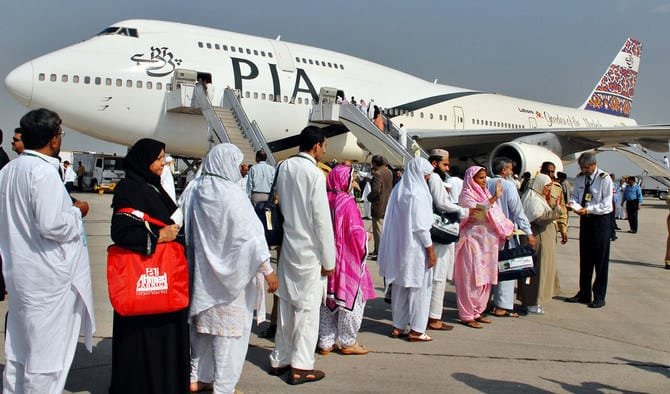
Pakistan International Airlines (PIA) has earned a revenue of Rs7-8 billion from Hajj operations against the anticipated figure of Rs25 billion, The Express Tribune reported.
According to reports, around 250,000 people went to perform Hajj from Pakistan this year. Out of the total number of pilgrims, PIA flew more than 82,000 pilgrims, which is 20% more than previous year’s 68,000.
PIA and Saudi Airlines, being major services, covered around 100,000 Pakistani pilgrims, while the remaining pilgrims were carried by Airblue, Etihad, Emirates and others.
Further details reveal that the Hajj package offered by the government this year cost around Rs400,000 while privately undertaken pilgrimage has no upper limit and can go up to Rs3 million.
Meanwhile, the ticket prices from Lahore, Islamabad ranged from Rs110,000 to Rs150,000 and tickets from Karachi airport cost between Rs100,000-Rs105,000.
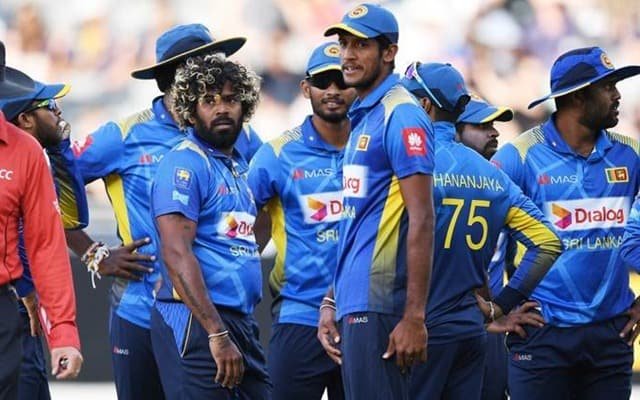
The Sri Lankan cricket team, despite its bitter experience of the past, has agreed to play a Test series in Pakistan, a private media outlet reported Saturday.
According to reports, the decision was taken after a security delegation from Sri Lankan Cricket (SLC) visited Pakistan from August 7 to 9 to evaluate the security conditions in the country.
The security team visited three major cities, including Lahore, Karachi and Islamabad.
PCB’s director for international cricket, Zakir Khan, and the head of security, Colonel Asif Mehmood, briefed the security team about the arrangements being made at the stadium for the series.
The team was assured of foolproof security for the guest team during its visit to Pakistan.
SLC Secretary de Silva thanked Pakistan for inviting them for security assessment and said: “We had a very fruitful discussion and briefing about the arrangements being made for the test match here.”
Earlier, PCB had invited the Sri Lankan cricket team to come to Pakistan this October and play two Test matches in the country.
The series will be the first of its kind to be played in the country ever since the attack on the Sri Lankan cricket team 10 years ago.
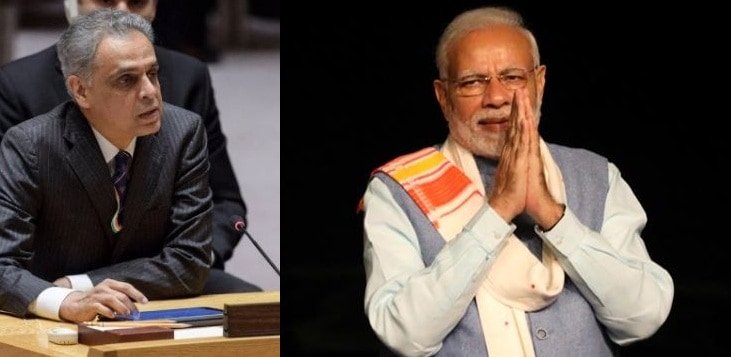
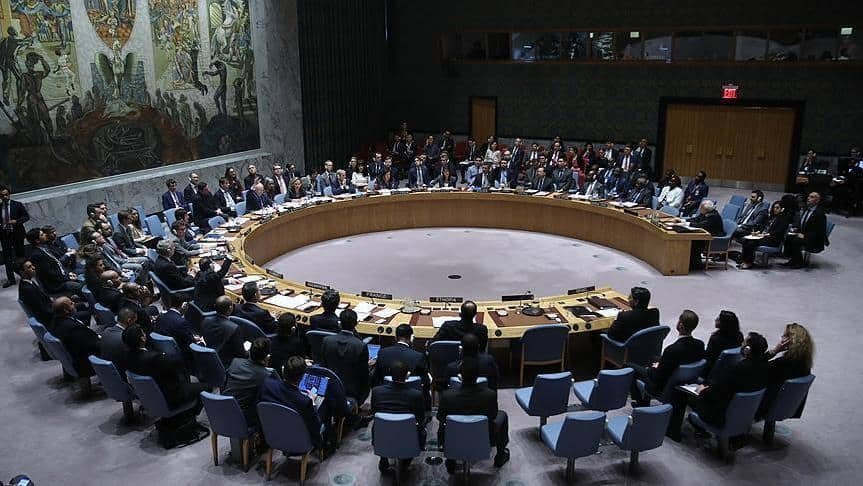
Soon after the United Nations Security Council (UNSC) held its first-ever meeting over the Kashmir issue in almost 50 years, India has backtracked on its statement and admitted that Indian-occupied Kashmir (IoK) is disputed territory.
According to The Express Tribune, facing a barrage of questions in a press briefing following the historic meeting at the UN headquarters on Friday, India’s envoy to the United Nations Syed Akbaruddin said that India was committed to the Shimla Agreement inked with Pakistan in 1972, which explicitly declares Kashmir as disputed between the two countries.
Earlier, New Delhi had regularly blocked discussion on held Kashmir at the UN, saying it considers the matter an “internal affair”.
“So let me begin by coming across to you and shaking your hand… as we’ve already extended our hand of friendship by saying we are committed to Shimla Agreement. Let us wait on that from the Pakistani side,” said the Indian ambassador while awkwardly reaching out to Pakistani journalists and shaking their hands.
WATCH VIDEO:
Responding to a question, he said: “In closed consultations at the UNSC, anyone, especially parties to the dispute, can try and throw in anything at the members of the Security Council. That’s the nature of the beast.”
“We are ready to address these issues in a matter in which states who have normal approaches to international ties address them… and in our case, we are committed to Shimla Agreement,” he added.
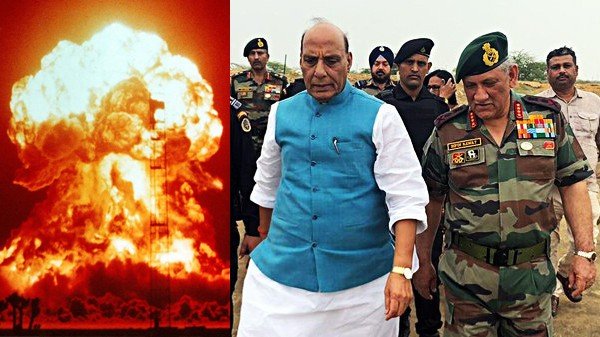
Pakistan has taken exception to Indian defence minister’s statement on the use of nuclear weapons, saying the “substance and timing of the statement was highly unfortunate and reflective of India’s irresponsible and belligerent behaviour”.
Rajnath Singh had on Friday said that New Delhi may see a major shift in its nuclear weapons doctrine by doing away with the ‘no first use’ policy in the future. ‘No first use’ is a pledge to not use nuclear weapons as a means of warfare unless first attacked by an opposition using its nuclear arms.
“Till today, our nuclear policy is ‘no first use’. What happens in future depends on the circumstances,” the Indian defence minister had said while addressing a gathering in Pokhran, the site of India’s nuclear tests in 1998.
In a subsequent tweet, Singh had added:
Pokhran is the area which witnessed Atal Ji’s firm resolve to make India a nuclear power and yet remain firmly committed to the doctrine of ‘No First Use’. India has strictly adhered to this doctrine. What happens in future depends on the circumstances.
— Rajnath Singh (मोदी का परिवार) (@rajnathsingh) August 16, 2019
“It further exposes the pretense of their no first use policy, to which we have never accorded any credence,” Pakistan Foreign Office said while reacting to the Indian defence minister’s statement.
“No first use pledge is non-verifiable and cannot be taken at face value, especially when the development of offensive capabilities and force postures belie such claims,” the statement read and added that Pakistan always proposed measures relating to nuclear restraint in South Asia.
“Pakistan will continue to maintain a credible minimum deterrence posture.”
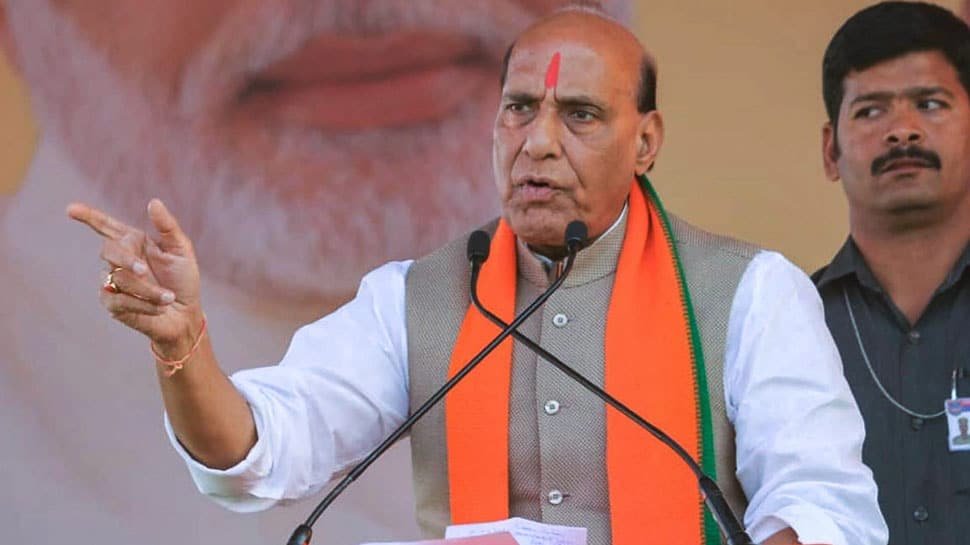
Indian Defence Minister Rajnath Singh has said that the country may see a major shift in its nuclear weapons doctrine by doing away with the ‘no first use’ policy in the future, a private media outlet reported.
‘No first use’ is a pledge by a nuclear power to not use its nuclear weapons as a means of warfare unless first attacked by the opposition using its nuclear arms.
“Till today, our nuclear policy is ‘no first use’. What happens in future depends on the circumstances,” the Indian defence minister said while addressing a gathering in Pokhran, the site of India’s nuclear tests in 1998.
In a tweet, Singh added:
Pokhran is the area which witnessed Atal Ji’s firm resolve to make India a nuclear power and yet remain firmly committed to the doctrine of ‘No First Use’. India has strictly adhered to this doctrine. What happens in future depends on the circumstances.
— Rajnath Singh (मोदी का परिवार) (@rajnathsingh) August 16, 2019
The comments come amid heightened tensions between Pakistan and India ever since New Delhi revoked Article 370 of its constitution and robbed occupied Kashmir of its special status.
Condemning the move, Pakistan has approached the United Nations (UN) against the development that can pave way for the ethnic cleansing of Muslims in the disputed valley.
Claim: United Nations Security Council is to convene in an emergency meeting on revoking Kashmir’s special status
Fact: UNSC was to convene in a mostly informal, closed-door session and not in an emergency
The United Nations Security Council (UNSC) will meet behind-closed-doors on Friday at the request of Pakistan and China to discuss India’s decision to revoke the special status of occupied Kashmir.
However, contrary to earlier reports, the meeting is not an “emergency session”, but a consultation, which is mostly informal, closed-door and does not allow the participation of non-members, lawyer Reema Omer tweeted.
Contrary to what we are being told by our media, there is no “emergency session” by the UN Security Council tomorrow on #KashmirWhat is scheduled is a “consultation” – which is mostly informal, closed-door, and does not allow for the participation of non-members pic.twitter.com/UTjxUhqHgL
In letters to the UN secretary general and the UNSC rotating chair for the month of August, Poland, Islamabad had sought an open discussion at the top-decision making forum, with a personal pitch from Foreign Minister Shah Mahmood Qureshi to his Polish counterpart Jacek Czaputowicz.
What Pakistan has been granted at the UN is a “consultation”, not an “open” or a “closed meeting”.
DIFFERENCE:
Both open and closed meetings are formal meetings of the UNSC. Closed meetings are not open to the public and no verbatim record of statements is kept, instead, the UNSC issues a press release.
Consultations, on the other hand, are informal meetings of the council members.
Clarifying the situation further, Reema tweeted:
Sure. But before assessing how much of a diplomatic success it is, important to first understand what is happening tomorrow and what the limitations of a consultation are. Exaggerating or misreporting it as an “emergency session” or a meeting of the Council doesn’t help anyone https://t.co/cApaoZnmEB
While it is not a formal meeting, it is extremely rare for the UNSC to discuss Kashmir, which has been divided between Pakistan and India since independence from Britain in 1947.
The last time there was a full UNSC meeting on the Himalayan region was in 1965.
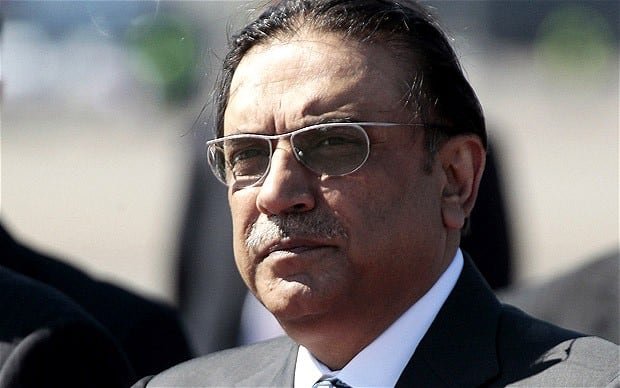
Former president Asif Ali Zardari, who is currently locked up in Rawalpindi’s Adiala Jail for his alleged involvement in the fake bank accounts case, has sought A-class facilities in prison.
According to the details, Zardari on Friday was shifted to Adiala on a three-day judicial remand in connection with the long-running mega money laundering case.
Earlier, the National Accountability Bureau (NAB) authorities presented the ex-president before an accountability court and sought extension in his remand in light of the recent developments in the case.
As the proceedings continued, Zardari’s counsel Sardar Latif Khosa maintained his client had already said that he be given a 90-day remand at once.
“NAB officials ask for a four-day remand then again ask for a new remand. These repeated appearances are only causing losses to the national treasury,” the counsel said.
Khosa also filed a plea in the court asking that Zardari be provided with A-class facilities in prison, including medical facilities and the permission to meet his family.
The accountability court then summoned a reply from NAB regarding the request and issued orders to shift Zardari to Adiala Jail on judicial remand.
JAIL FACILITIES:
The classes ‘A’ or ‘B’ have prisoners who by social status, education or habit of life have been accustomed to a superior mode of living. Habitual prisoners can be included in this class by order of the government.
The expenses of facilities to prisoners under A or B class, such as television, air-conditioner, fridge and newspapers, are usually paid by prisoners with the permission of the prisons department.
Zardari’s petition seeking A-class facilities comes weeks after Prime Minister (PM) Imran Khan announced removing the air-conditioner and television facilities provided to jailed ‘money launderers’.
Actor Hamza Ali Abbasi has fired back at Indian journalist Arnab Goswami, whose Republic TV had labeled the former “an undercover Inter-Services Intelligence (ISI) agent” amid heightened cross-border tensions.
“So that over actor and war mongerer for ratings guy Arnab/his channel declared me an undercover ISI agent! Let me clarify: I am not an “undercover” ISI agent; I am very openly/proudly an ISI agent, just like more than 200 million Pakistanis are proud ISI agents! #15thAugustBlackDay [sic],” Abbasi tweeted.
So tht over actor & war mongerer for ratings guy Arnab/his channel declared me an undercover ISI agent! Let me clarify, i am not an “undercover” ISI agent, i am very openly/proudly an ISI agent, just like more than 200 million Pakistanis are proud ISI agents! #15thAugustBlackDaypic.twitter.com/P6O4Qyk5ff
The statement was followed by a series of tweets against Indian Prime Minister (PM) Narendra Modi’s “fascist regime” in the name of Indian nationalism.
I always thought maybe i will not see a free Kashmir in my lifetime but seeing 1 blunder after another of Modi’s fascist regime & the delusional propaganda thr fascist media outlets are spreading, i am now very confident tht insha Allah i will see a #FreeKashmir very soon. https://t.co/cgwQh5nEz1
“I always thought maybe I will not see a free Kashmir in my lifetime but seeing 1 blunder after another of Modi’s fascist regime and the delusional propaganda their fascist media outlets are spreading, I am now very confident that inshaAllah I will see a Free Kashmir very soon,” he furthered.