Tag: Tourism

  • New tourist ‘glass train’ to soon run between Rawalpindi, Murree

    New tourist ‘glass train’ to soon run between Rawalpindi, Murree

    Punjab Chief Minister Maryam Nawaz Sharif has given the green light to a tourist ‘glass train’ project connecting Rawalpindi and Murree, aimed at boosting tourism in the region.

    The approval came during a meeting chaired by the Chief Minister in Murree.

    The government plans to enlist international consultants for the execution of the glass train project.

    The chief minister sanctioned several other development and beautification projects for Murree.

    A decision was also made to demolish high-rise hotels that block out the natural scenery along Mall Road Rawalpindi.

    The construction and extension of the old Rawalpindi-Murree-Kashmir Road was also approved.

    Moreover, the government has committed to removing hotels around GPO Chowk and restoring historical buildings.

  • Pakistan power crisis deepened by mountain tourism

    Pakistan power crisis deepened by mountain tourism

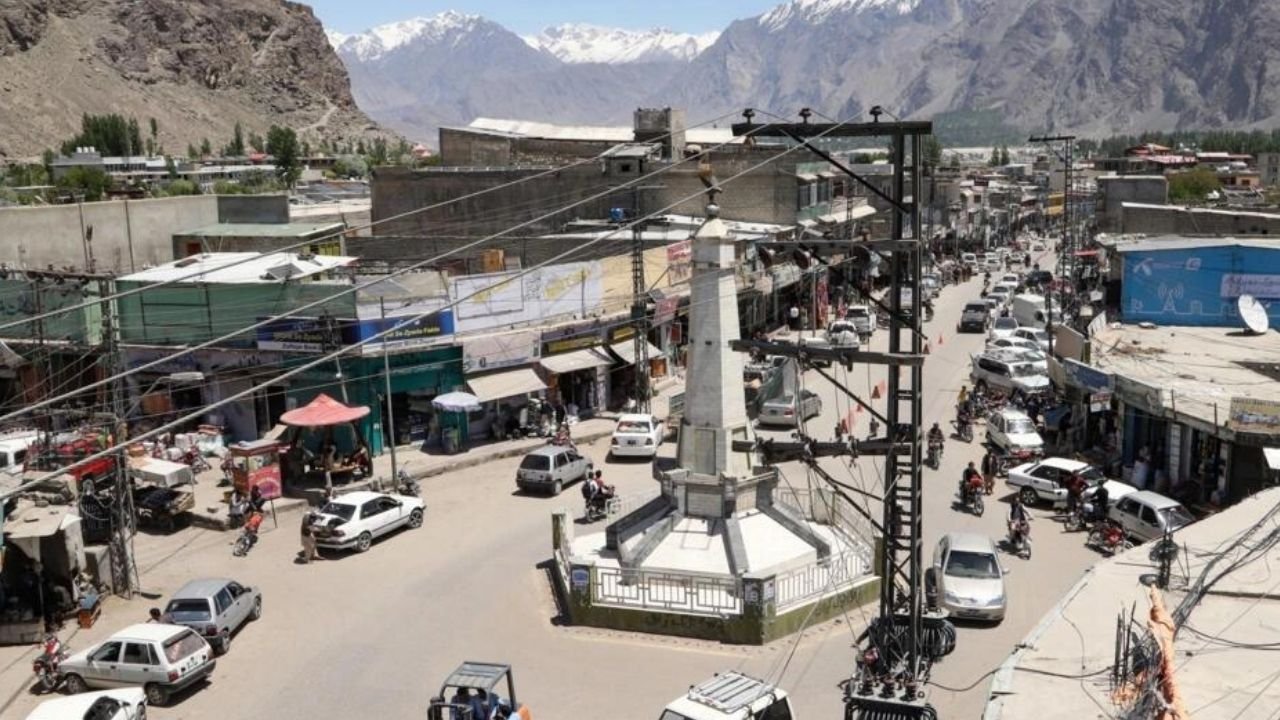
    Skardu (Pakistan) (AFP) – In the mountainous valleys of Pakistan, 18-hour daily power cuts have meant local teacher Aniqa Bano uses her fridge as a cupboard for storing books and kitchen utensils.

    Load shedding is typical across much of fuel-short Pakistan, but few areas consistently suffer the same prolonged outages as Skardu city.

    A surge in mountain tourism, driven by climbers and Pakistanis looking to escape heatwaves, is rapidly depleting the limited energy supply at the gateway to ascend K2, the world’s second-highest peak.

    While higher-end hotels can supplement their supply with solar panels or fuel generators, many locals cannot afford such luxuries.

    “We have to reinvent everything that once used electricity,” said Bano.

    Tourism boom

    Skardu is the largest city in the region of Gilgit-Baltistan, where almost impossibly high peaks tower over the Old Silk Road, still visible from a highway transporting tourists between cherry orchards, glaciers and ice-blue lakes.

    Normally home to around 200,000 people, Skardu becomes heavily bloated in summer when Pakistanis seek the relief of its cooler climate at 2,228 metres (7,310 feet) above sea level.

    The region hosted 880,000 domestic visitors in 2023, up from 50,000 in 2014.

    As the country grapples with energy shortages -– owing to dwindling forex reserves, mismanagement, rapid population growth and climate change –- the tourism boom has proved too much for local power.

    “Due to the increase in population and tourism activities, load shedding hours have increased,” Muhammad Yunus, a senior engineer for the regional government’s water and power department, told AFP.

    There are up to 22 hours of load shedding in winter and between 18 and 20 hours in summer — an increase of around 10 percent each year for the past six years, according to the department.

    Siddiqa, a tailor and handicraft maker who goes by one name, has seen her earnings fall alongside the number of hours of electricity.

    “When we started this business in 2014, there was no issue of power,” she told AFP. “Now, I have replaced all the electric machines and brought hand sewing machines.”

    “In the presence of light, we could prepare 10 to 12 suits every three days. Now, to prepare a single suit, it can take 10 to 15 days.”

    The tourism flow does not appear to be letting up any time soon. There are up to 15 domestic flights a week to the region and, since March, international flights began landing from Dubai.

    In Skardu alone, the number of hotels has increased more than fourfold since 2014, according to the tourism department.

    7,000 melting glaciers

    Owing to its remoteness, Gilgit-Baltistan is not connected to the national grid, so it relies on its own power generation from dozens of hydro and thermal plants.

    But Pakistan’s 7,000 glaciers — more than anywhere outside the poles — are rapidly melting.

    This can temporarily increase the availability of water for energy production, but the glaciers’ long-term ability to store and release water gradually decreases, affecting energy production.

    “The availability of water for hydroelectric plants is becoming unpredictable,” said Salaar Ali, head of the Department of Environmental Science, University of Baltistan.

    Damage to energy infrastructure is also a regular setback.

    Record heatwaves in 2022 caused dozens of glacial lakes to burst their banks, washing away more than 20 power plants, 50 bridges and countless homes.

    Inadequate planning and mismanagement of the power sector can also play a role, engineers have said.

    The Satpara dam on the edge of Skardu city, completed in 2008 for $26 million of aid funding, was supposed to supply 40,000 homes with power.

    But it generates just a fraction of its potential after plans to divert a river were halted, government engineers admit.

    “It has been full only once since its formation,” said Yunus, the engineer in Skardu.

    Without a reliable energy supply, Wajahat Hussain, a 36-year-old carpenter, uses a fuel generator to keep his business in operation — puffing out emissions that contribute to global warming.

    “We run the generator to fulfil the demands,” he told AFP. “There is no work without the generator.”

  • ‘Danger behind the beauty’: more solar storms could be heading our way

    ‘Danger behind the beauty’: more solar storms could be heading our way

    Tourists normally have to pay big money and brave cold climates for a chance to see an aurora, but last weekend many people around the world simply had to look up to see these colourful displays dance across the sky.

    Usually banished to the poles of Earth, the auroras strayed as far as Mexico, southern Europe and South Africa on the evening of May 10, delighting skygazers and filling social media with images of exuberant pinks, greens and purples.

    But for those charged with protecting Earth from powerful solar storms such as the one that caused the auroras, a threat lurks beneath the stunning colours.

    “We need to understand that behind this beauty, there is danger,” Quentin Verspieren, the European Space Agency’s space safety programme coordinator, told AFP.

    Mike Bettwy of the US Space Weather Prediction Center said that “we’re focused on the more sinister potential impacts” of solar storms, such as taking out power grids and satellites, or exposing astronauts to dangerous levels of radiation.

    The latest auroras were caused by the most powerful geomagnetic storm since the “Halloween Storms” of October 2003, which sparked blackouts in Sweden and damaged power infrastructure in South Africa.

    There appears to have been less damage from the latest solar storms, though it often takes weeks for satellite companies to reveal problems, Bettwy said.

    There were reports that some self-driving farm tractors in the United States stopped in their tracks when their GPS guidance systems went out due to the storm, he told AFP.

    ‘Definitely not over’

    These strange effects are caused by massive explosions on the surface of the Sun that shoot out plasma, radiation and even magnetic fields at incredibly fast speeds born on the solar wind.

    The recent activity has come from a sunspot cluster 17 times the size of Earth which has continued raging over the week. On Tuesday it blasted out the strongest solar flare seen in years.

    The sunspot has been turning towards the edge of the Sun’s disc, so activity is expected to die down in the short term as its outbursts aim away from our planet.

    But in roughly two weeks the sunspot will swing back around, again turning its gaze towards Earth.

    In the meantime, another sunspot is “coming into view right now” which could trigger “major activity in the coming days”, ESA space weather service coordinator Alexi Glover told AFP.

    So the solar activity is “definitely not over”, she added.

    It is difficult to predict how violent these sunspots could be — or whether they could spark further auroras.

    But solar activity is only just approaching the peak of its roughly 11-year cycle, so the odds of another major storm are highest “between now and the end of next year”, Bettwy said.

    What threat do solar storms pose?

    Geomagnetic storms such as the recent one create a magnetic charge of voltage and current, “essentially overloading” things like satellites and power grids, according to Bettwy.

    The most famous example came in 1859 during the worst solar storm in recorded history, called the Carrington Event.

    As well as stunning auroras, the storm caused sparks to fly off of telegraph stations. The charge that originated from the Sun was so strong that some telegraphs worked without being plugged into a power source.

    So what would happen if such a powerful geomagnetic storm struck Earth again?

    Bettwy said most countries have improved their power grids, which should prevent prolonged outages like those that hit Sweden in 2003 or Canada in 1989.

    Still, he suggested people have an emergency kit in case electricity is knocked out for a day or two. Fresh water might also help in case filtration plants go offline.

    Astronauts are particularly at risk from radiation during extreme solar activity. Those on the International Space Station usually take the best shelter they can when a bad storm is expected.

    Bettwy said a massive solar storm could expose astronauts to an “unhealthy dose” of radiation, but he did not think it would be lethal.

    Emphasising that he did not want to “instil fear”, Bettwy added that radiation can also potentially “get through the fuselage” of planes flying near the north pole.

    Airlines sometimes change routes during extreme solar storms to avoid this happening, he added.

    Several upcoming missions are expected to improve forecasting of the Sun’s intense and unpredictable weather, aiming to give Earth more time to prepare.

    If the ESA’s Vigil mission, planned to launch in 2031, was in place today, it would give us far more information about the currently rotating sunspot, Glover said.

    dl/tw/sco

    © Agence France-Presse

  • Japan town begins blocking Mt Fuji view from ‘bad-mannered’ tourists

    Japan town begins blocking Mt Fuji view from ‘bad-mannered’ tourists

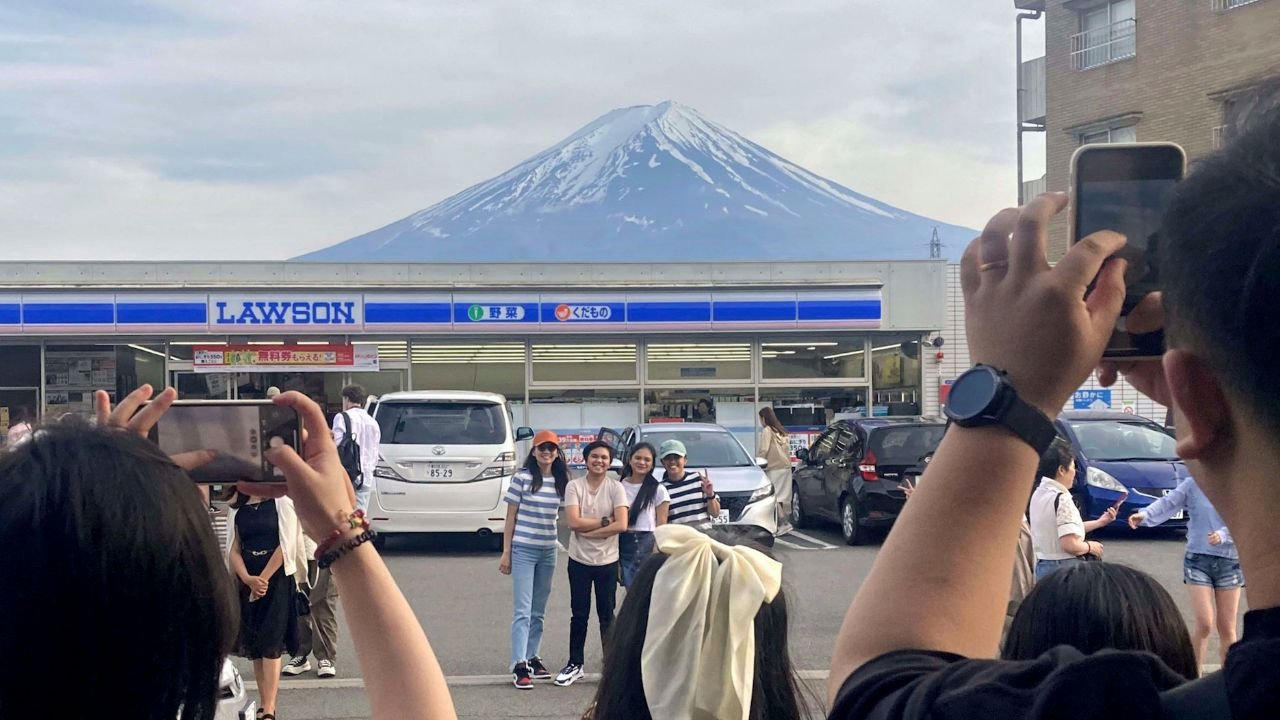
    Fujikawaguchiko (Japan) (AFP) – Work has begun in a small Japanese town to erect a barrier blocking views of the country’s most famous sight, Mount Fuji, after locals complained of bad behaviour by photo-hungry tourists.

    Fujikawaguchiko town began building panels of mesh netting at a spot where unending flows of mostly foreign tourists visit daily to take photos of the majestic mountain sitting behind a Lawson convenience store.

    Photos taken from a narrow stretch of pavement across a busy road from the Lawson store — which are ubiquitous in Japan — are widely shared online.

    Local officials and residents say while the town welcomes visitors, they need to stop tourists from continuously crossing the street, ignoring red lights, littering, trespassing, illegally parking and smoking outside of designated areas.

    “It became not uncommon for people to yell at us when we asked them to move their cars, and for them to throw their lit cigarettes (on the ground),” a dentist’s office located across the street from the Lawson shop said in a statement.

    By the middle of this month, the town plans to complete the barrier, which will stand 2.5 metres (8 feet) high and stretch more than 20 metres long to block the view of the mountain, with hopes that it will discourage tourists from loitering there.

    The town’s move has prompted national and international headlines, as Japan experiences growing problems of overtourism, particularly at popular sites like the narrow private alleys of Kyoto, and even trails on Mount Fuji itself, where tourists love to photograph themselves and post on social media.

    The Fujikawaguchiko town hall has been inundated with telephone calls from Japanese people, many of them non-local residents, who have criticised the move to block the view.

    “It is not that we do not want people to see Mount Fuji. The issue is that there are so many people who are not able to observe basic rules,” a town official told AFP.

    ‘Basic manners’

    Having the net barrier is unfortunate but perhaps necessary, area residents say.

    “We welcome foreigners for the revitalisation of the community, but there are so many violations of basic manners, like crossing the road, dumping garbage and trespassing into people’s properties,” a 60-year-old resident told AFP.

    “After all, they are here for Mount Fuji, so having that barrier is very unfortunate,” said the woman, who identified herself as Watanabe.

    “There might have been other ways to deal with it, but for now I feel it cannot be helped,” she said.

    Some tourists expressed understanding and voiced hopes that the town would create a designated photo spot.

    But others speculated that the barrier may only make matters worse.

    “Stop people? I don’t think so because when there is a will there is a way. People will just be on the left side of it or right side of it,” said 29-year-old Australian tourist Trinity Robinson.

    “There definitely will be a way to still get the shot. It will just be more dangerous, really.”

    As a possible solution, a 37-year-old local man, who gave his name as Ama, called on visitors to check out other scenic locations in the area.

    “Mount Fuji from here (near the Lawson shop) is fantastic. But there are so many other places around here where you can visit and see beautiful views,” he said.

  • ‘Go home’: Overtourism sparks backlash in Spain

    ‘Go home’: Overtourism sparks backlash in Spain

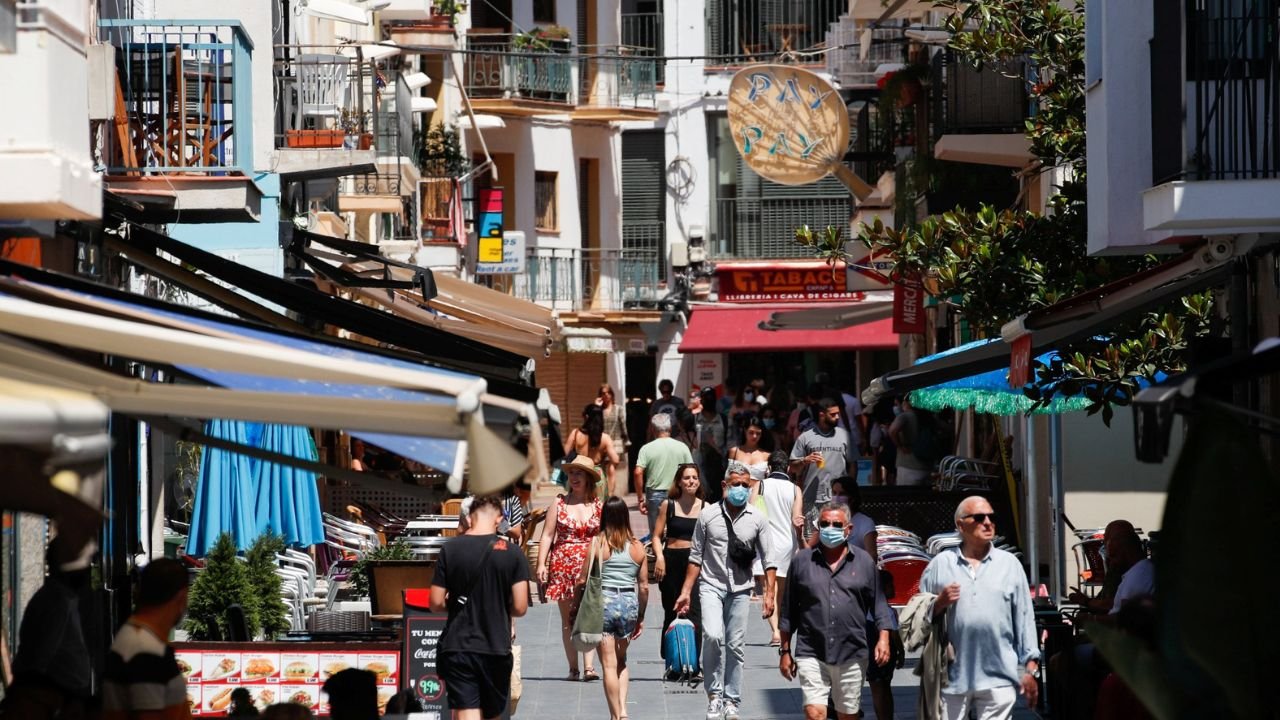
    Anti-tourism movements are multiplying in Spain, the world’s second most visited country, prompting authorities to try and reconcile the interests of locals and the lucrative sector.

    Rallying under the slogan “The Canaries have a limit”, a collective of groups on the archipelago off northwest Africa are planning a slew of protests on Saturday.

    The Canaries are known for volcanic landscapes and year-round sunshine and attracts millions of visitors from all over the world.

    Groups there want authorities to halt work on two new hotels on Tenerife, the largest and most developed of the archipelago’s seven islands.

    They are also demanding that locals be given a greater say in the face of what they consider uncontrolled development which is harming the environment.

    Several members of the collective “Canaries Sold Out” also began an “indefinite” hunger strike last week to put pressure of the authorities.

    “Our islands are a treasure that must be defended,” the collective said.

    The Canaries received 16 million visitors last year, more than seven times its population of around 2.2 million people.

    This is an unsustainable level given the archipelago’s limited resources,  Victor Martin, a spokesman for the collective told a recent press briefing, calling it a “suicidal growth model”.

    Similar anti-tourism movements have sprung up elsewhere in Spain and are active on social media.

    In the southern port of Malaga on the Costa del Sol, a centre of Spain’s decades-old “soy y playa” or “sun and beach” tourism model, stickers with unfriendly slogans such as “This used to be my home” and “Go home” have appeared on the walls fn doors of tourist accommodations.

    In Barcelona and the Balearic Islands, activists have put up fake signs at the entrances to some popular beaches warning in English of the risk of “falling rocks” or “dangerous jellyfish”.

    Locals complain a rise in listings of accommodation on short-term rental platforms such as Airbnb have worsened a housing shortage and caused rents to soar, especially in town centres.

    The influx of tourists also adds to noise and environmental pollution and taxes resources such as water, they add.

    In the northeastern region of Catalonia, which declared a drought emergency in February, anger is growing over the pressure exerted on depleted water reserves by hotels on the Costa Brava.

    “There are tourist destinations that are at the limits of their capacity,” said Jose Luis Zoreda, the vice president of tourism association Exceltur .

    “It’s a problem that appears occasionally in the high season and in certain parts of the country, but it’s getting worse”.

    Before the Covid-19 pandemic brought the global travel industry to its knees in 2020, protest movements against overtourism had already emerged in Spain, especially in Barcelona.

    Now that pandemic travel restrictions have been lifted, tourism is back with a vengeance — Spain welcomed a record 85.1 million foreign visitors last year.

    In response, several cities have taken measures to try to limit overcrowding.

    The northern seaside city of San Sebastian last month limited the size of tourist groups in the centre to 25 people and banned the use of loudspeakers during guided tours.

    The southern city of Seville is mulling charging non-residents a fee to enter its landmark Plaza de Espana while Barcelona had removed a bus route popular with tourists from Google Maps to try to make more room for locals.

    Housing Minister Isabel Rodriguez said over the weekend that “action needs to be taken to limit the number of tourist flats” but stressed the government is “aware of the importance of the tourist sector”, which accounts for 12.8 percent of Spain’s Gross Domestic Product.

  • Italy, Home Of The Mafia, Now One Of Europe’s Safest Countries

    Italy may be the land that launched Cosa Nostra, but today it is one of the safest countries in Europe, with a murder rate well below its neighbours.

    From the mid-19th century through to the 1990s, thousands of people died in mafia violence, from rivals or traitors cast in cement or fed to pigs, to judges, priests and witnesses killed for daring to defy the mob.

    There were also the traumatic “Years of Lead” from the end of the 1960s to the 1980s, when armed groups from the extreme left and extreme right brought terror to Italy with bombings and assassinations.

    The brutal murder of former prime minister Aldo Moro by the Marxist-Leninist Red Brigades in 1978 is burned into the national psyche, although the largest number of the estimated 400 victims of the period were killed by neo-fascists.

    But when this bloody period ended, and after a crackdown on mafias which pushed them into less violent financial crime, the murder rate plummeted.

    Back in 1990, there were 34 murders per one million inhabitants in Italy, compared to 24 in neighbouring France, according to UN figures.

    In 2021-22, this had fallen to 5.5 per million in Italy and 11 in France, eight in Germany and 10 in the UK.

    In Europe, only Norway and Switzerland have a murder rate lower or equal to Italy’s, while Latvia, the worst, has a rate 6.5 times higher.

    “Homicides in general have decreased in the last 25 years, especially the percentage of men” — who previously were the main victims of mafias, noted Raffaella Sette, a sociologist at the University of Bologna.

    Just 10 percent of murders each year are now blamed on organised crime.

    “The mafias — the Camorra, the ‘Ndrangheta, the Cosa Nostra — have radically changed their way of operating,” said Gianluca Arrighi, a criminal lawyer who writes police novels.

    “Today, they operate from a more economic point of view, buying up real estate, entering into companies,” he said.

    Analysing the causes of violence across different countries is always risky, but Arrighi believes several factors are at play.

    While Italy is poorer than its comparable EU neighbours, he says this is not always detrimental to social well-being, saying “goodwill” between people can help compensate for life’s difficulties.

    “The higher the conflict in a society, the higher the number of murders, committed by people who are in some state of anger,” Arrighi told AFP.

    The murder rate is, however, higher in the south of Italy, the poorest part of the country.

    But Stefano Delfini, head of criminal analysis at the government’s department of public security, agrees that “our society is less violent”.

    “The social fabric is more resistant, probably because of the presence of family values which mean difficulties are felt in a less harsh way.”

    Another factor that drives violence in other countries is alcohol or drug use, particularly in France and the UK.

    Italy does not keep data on this, but consumption of alcohol is the lowest in the EU, according to the World Health Organization.

    There is rising awareness in Italy about femicides — killing of a woman or girl by a partner, spouse or family member — with 97 recorded in 2023, out of a total 330 murders.

    A lack of harmonised data on femicides makes comparisons with other European countries difficult.

    But statistics compiled by the World Bank for 2021 show a rate of 3.9 murders of women per one million people in Italy, well below the 6.8 in France and 8.0 in Germany.

    © Agence France-Presse

  • Thailand To Offer Medical Coverage For Tourists

    Thailand To Offer Medical Coverage For Tourists

    Thailand has launched a scheme to offer visitors up to $14,000 in medical coverage in the event of an accident, the tourism minister said Thursday, as the kingdom seeks to lure travelers back after the pandemic.

    The government will cover expenses up to 500,000 baht ($14,000) and pay compensation of up to one million baht in case of death under the new scheme.

    Travel restrictions during the Covid-19 pandemic hammered the kingdom’s vital tourism sector and arrivals have not bounced back as quickly as officials hoped.

    Tourism minister Sudawan Wangsuphakijkosol told AFP the new Thailand Traveller Safety scheme began on January 1 and will run until August 31.

    “The campaign aims to assure foreign tourists that Thailand is safe and everyone will be under good care,” she said.

    The kingdom has long been popular with young backpackers from around the world seeking sun, sand and adrenalin.

    But accidents are not uncommon and there have been numerous reports in recent months of young Europeans finding themselves facing big medical bills with inadequate insurance.

    The Thai government stresses that the scheme will not cover accidents caused by “negligence, intent, illegal acts” or risky behaviour.

    Tourists can register for the scheme through the Thailand Traveller Safety website at tts.go.th.

    Some 28 million people visited Thailand in 2023, up from 11 million the year before, but still well down from the 40 million who came in 2019, the last year before the pandemic.

    Officials are hoping to hit 35 million visitors in 2024, with a target of $55 billion in revenue.

  • Don’t close car windows fully, advisory tells tourists in Murree

    Don’t close car windows fully, advisory tells tourists in Murree

    A special advisory has been issued for tourists after the increase in the number of tourists due to snowfall in Murree.

    The district administration of Islamabad has decided to stop tourists at the 17-mile point, reports Geo.

    According to DC Islamabad Irfan Memon, the decision to stop the entry of tourists to Murree was taken due to the increase in rush as tourists make their way to the hill station to enjoy snowfall.

    Irfan Memon says that more tourists will be allowed to enter when the rush eases, adding that the decision was taken after consultation with the Murree district administration.

    Chief Traffic Officer (CTO) Taimur Khan has said that awareness pamphlets are being given to the tourists coming to Murree at the entry points.

    According to the CTO, only license-holder drivers are allowed to enter Murree, tourists traveling to Murree should use anti-cooling liquid in the vehicle and chain the vehicle tires during snowfall, tourists should also bring extra warm clothes and glasses while driving. Do not cover the exhaust completely as this produces deadly carbon monoxide.

    Taimur Khan said that visiting tourists should not park their vehicles wrongly as there is limited parking space in the city.

    It is to be noted that back in January 2022, At least 21 people died of hypothermia after heavy snow trapped them in their vehicles as tens of thousands of visitors thronged the resort town of Murree.

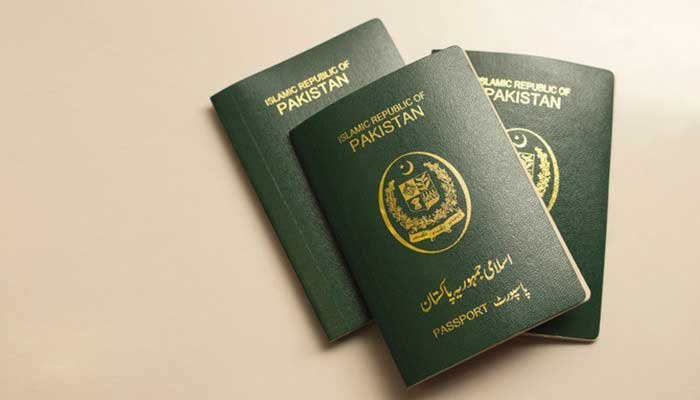
  • Pakistani passport once again least powerful

    Pakistani passport once again least powerful

    Henley & Partners‘ Passport Index has published a list portraying the world’s travel access hierarchy.

    Top on the list of countries that encourage travelling are France, Germany, Italy, Japan, Singapore, and Spain, whose citizens can visit an astounding 194 destinations without requiring arduous visa procedures. This group of countries offer passport-to-plane experience, setting the bar high for unmatched worldwide mobility.

    With access to 193 locations, Finland, South Korea, and Sweden share second place. Many visa-free or visa-on-arrival options are available to their well-travelled inhabitants, providing access to a variety of cultures and environments.

    Austria, Denmark, Ireland, and the Netherlands take third place with access to 192 destinations. These nations serve as entry points to a wide range of travel opportunities.

    The long list goes on, honouring countries that place a high priority on global connection. Among the notable entries are the United States, Canada, Greece, Switzerland, and New Zealand, all of which provide their inhabitants with an abundance of travel options.

    On the other hand, the Passport Index identifies states with more limited travel options. Afghanistan, Syria, Iraq, and Pakistan are among the least accessible, offering their passport holders entry to just 34 countries that require no visa or one upon arrival.

    The London-based company, which offers residency and citizenship consultancy services, teamed together with the International Air Transport Association to create a unique ranking that takes into account passport holders’ access to countries without a visa or with one upon arrival.

  • Saudi Arabia to open first liquor store in Riyadh

    Saudi Arabia to open first liquor store in Riyadh

    Saudi Arabia is gearing up to inaugurate its maiden alcohol store in the capital city of Riyadh, exclusively catering to non-Muslim diplomats, according to a reliable source and an official document disclosed on Wednesday.

    Prospective customers will be required to register through a designated mobile app, obtain a clearance code from the foreign ministry, and adhere to monthly purchase quotas, as outlined in the document.

    This development marks a significant milestone in Saudi Arabia’s initiatives, spearheaded by Crown Prince Mohammed bin Salman, to transform the ultra-conservative Muslim nation into a hub for tourism and business. Notably, the consumption of alcohol is strictly forbidden in Islam.

    Situated in Riyadh’s Diplomatic Quarter, a locale housing embassies and diplomats, the new store will be “strictly restricted” to non-Muslims, according to the document. 

    It remains unclear whether other non-Muslim expatriates will be granted access to the establishment, given that the majority of expatriates in Saudi Arabia are Muslim workers from Asia and Egypt.

    Insiders familiar with the plans have indicated that the store is anticipated to open its doors in the coming weeks.

    Saudi Arabia has long maintained stringent laws against alcohol consumption, with penalties ranging from lashes, fines, and imprisonment to deportation. 

    As part of ongoing reforms, the practice of whipping has largely been replaced by jail sentences. Until now, alcohol has only been available through diplomatic mail or on the black market.

    According to Reuters, the Saudi government has not responded to requests for comments on the matter.

    Recent reports from state-controlled media suggest that the government is imposing new restrictions on alcohol imports within diplomatic consignments. This move is expected to bolster demand for the forthcoming alcohol store. 

    The new regulations aim to control imports and prevent the improper exchange of special goods and alcoholic beverages received by non-Muslim embassies in Saudi Arabia, as reported by the Arab News daily on Sunday.

    In recent years, Saudi Arabia, traditionally closed off to the world, has relaxed strict social codes. These changes include ending the segregation of men and women in public places, lifting the requirement for women to wear all-covering black robes (abayas), and allowing women to drive. 

    These transformations, part of Vision 2030, align with the broader goal of developing local industries, logistics hubs, and generating hundreds of thousands of jobs for Saudi nationals.