Tag: trade and commerce

  • Cabinet Committee grants approval for UAE to build cargo terminal at Karachi Port

    Cabinet Committee grants approval for UAE to build cargo terminal at Karachi Port

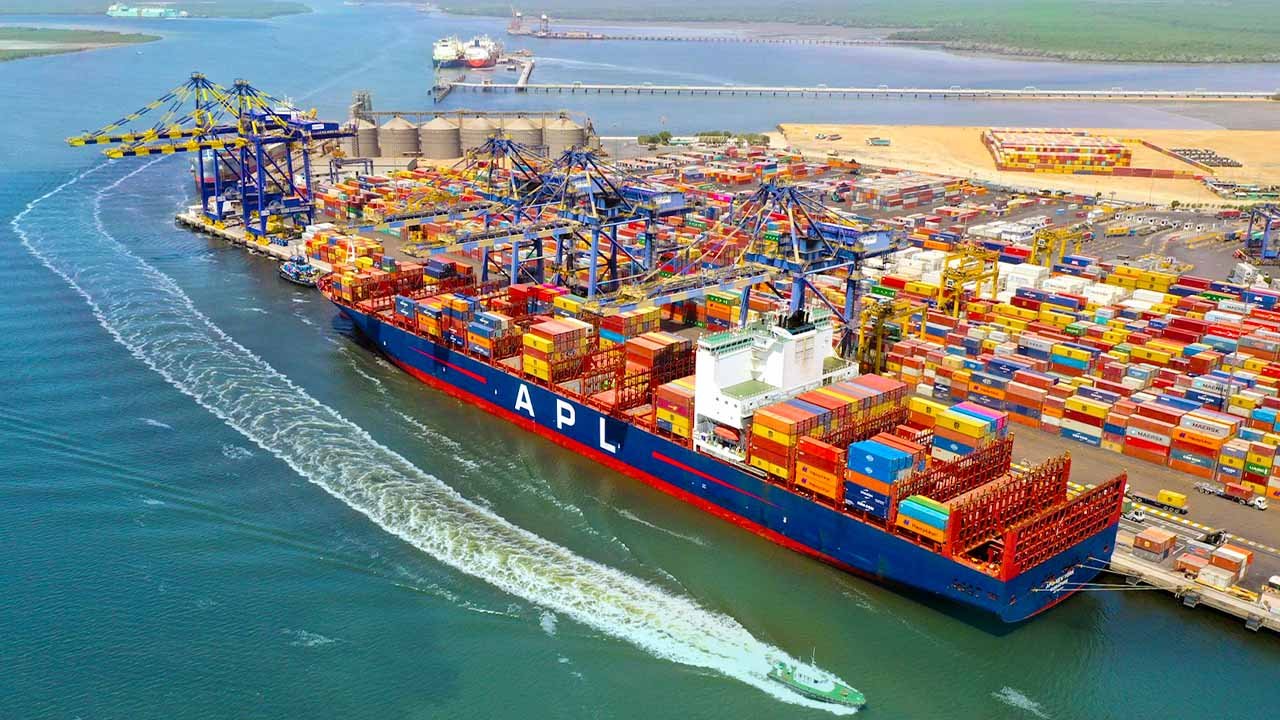
    The Cabinet Committee on Inter-Governmental Commercial Transactions has granted approval for the proposed collaboration between Pakistan and the United Arab Emirates (UAE) aimed at establishing a bulk and general cargo terminal at East Wharf, Karachi Port.

    Before the agreement is finalised, it will undergo ratification by the federal cabinet, following which the governments of Pakistan and UAE will officially sign it. The draft agreement, which has been endorsed by the cabinet committee, encompasses various essential aspects.

    These include the terms and conditions of the agreement, the cost estimation for the terminal’s reconstruction, the terminal’s expected lifespan, its maximum cargo handling capacity, the dimensions of the quality wall, royalty details, land rent per square meter in the bonded areas, storage charges, dock labour charges, upfront payment arrangements (adjustable and non-adjustable), as well as the quantum and type of investment involved.

    The Cabinet Committee on Inter-Governmental Commercial Transactions meeting, where the draft agreement received approval, was chaired by Finance Minister Senator Mohammad Ishaq Dar on Monday.

    The committee’s decision was based on a summary presented by the Ministry of Maritime Affairs, which outlined the proposed government-to-government agreement between UAE and Pakistan for fostering cooperation in the development of the bulk and general cargo terminal at Karachi Port’s East Wharf. The agreement operates under the framework of the Inter-Governmental Commercial Transaction Act 2022, as indicated by the Ministry of Finance.

  • Pakistan to receive $10 billion investment in refinery sector soon

    Pakistan to receive $10 billion investment in refinery sector soon

    Minister of State for Petroleum, Musadik Malik, announced that Pakistan will soon receive a $10 billion investment in its refinery sector. The investment, to be inaugurated by Prime Minister Shehbaz Sharif, holds significant details that cannot be disclosed at this time, according to Malik’s statement at a ceremony.

    This development follows the approval of a new refinery policy by the current government, which aims to incentivise greenfield investment.

    Malik emphasised the need for sustained GDP growth of 5 per cent in Pakistan’s growing population. To achieve this, he stated that an annual energy sector growth rate of 7.5-10 per cent is necessary. As part of this plan, the government aims to establish a comprehensive energy agreement with Central Asian countries and Russia, which will be made public by the end of the year.

    Additionally, Pakistan intends to leverage its historical ties with the Gulf Cooperation Council (GCC) countries for trade and commerce, including meeting energy needs such as LNG and petroleum products.

    The government also plans to open energy corridors with Central Asia and the GCC countries. Malik highlighted the significance of purchasing crude oil from Russia, stating that it will have a transformative impact on Pakistan, leading to industrial proliferation. The goal is to establish small industrial areas in rural regions to promote value addition.

    Malik underscored that Pakistan possesses the necessary infrastructure, labour force, and technology to present itself as an attractive investment destination. He emphasised the government’s efforts to enhance border enforcement to curb oil smuggling from Iran, expressing confidence that the flow of smuggled oil will reduce in the coming days.

    In an off-camera meeting with media persons, the minister revealed that vessels carrying 100,000 tonnes of discounted Russian oil will arrive at Pakistan’s ports in the first week of June as part of the government’s energy security plan. The oil will be transported from Oman port to Pakistan in smaller vessels within seven to ten days. Malik assured that although transportation costs may increase slightly, the impact will be minimal.