Tag: trade

  • US expresses confidence in Pakistan’s economic policies and offers support for bilateral relations

    US expresses confidence in Pakistan’s economic policies and offers support for bilateral relations

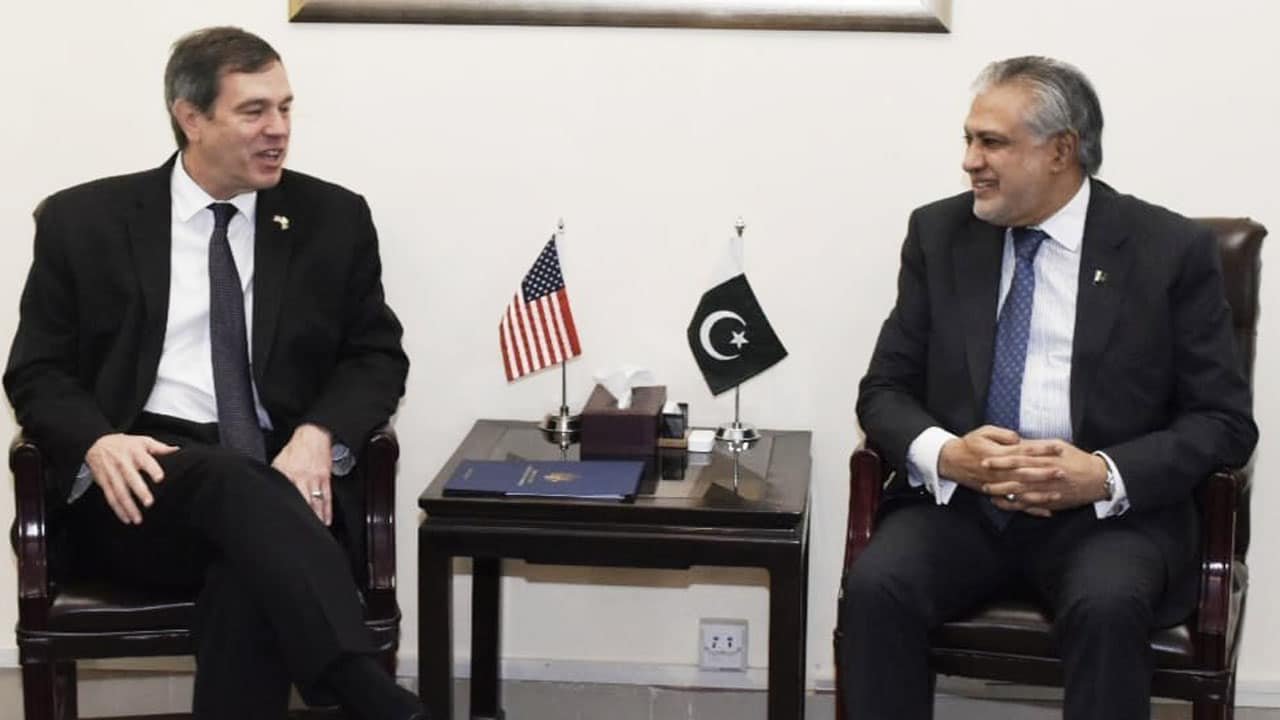
    On Wednesday, Finance Minister Senator Ishaq Dar reaffirmed the federal government’s commitment to the International Monetary Fund (IMF) programme during a meeting with US Embassy Charge’d Affaires Andrew Schofer at the Finance Division.

    Dar informed Schofer about the ongoing programme and assured him that the government was dedicated to completing it. Schofer expressed his confidence in Pakistan’s economic policies and programs and offered his support to strengthen economic and trade relations between the two nations.

    The finance minister also discussed the current economic challenges and policy decisions taken by the government to stabilize and promote sustainable and inclusive growth. Both parties exchanged their views on the notable bilateral relations between the US and Pakistan.

    Dar thanked the US Charge’d Affaires and reiterated the government’s desire to expand bilateral trade and investment ties. The meeting followed a report published by The News that stated the IMF and Pakistani authorities were holding each other responsible for the delay in reviving the stalled programme.

    It is still uncertain how Pakistan will proceed to accomplish the current IMF programme, which expires on June 30, 2023.

  • China’s $57.7 billion railway project aims to boost Pakistan’s economy

    China’s $57.7 billion railway project aims to boost Pakistan’s economy

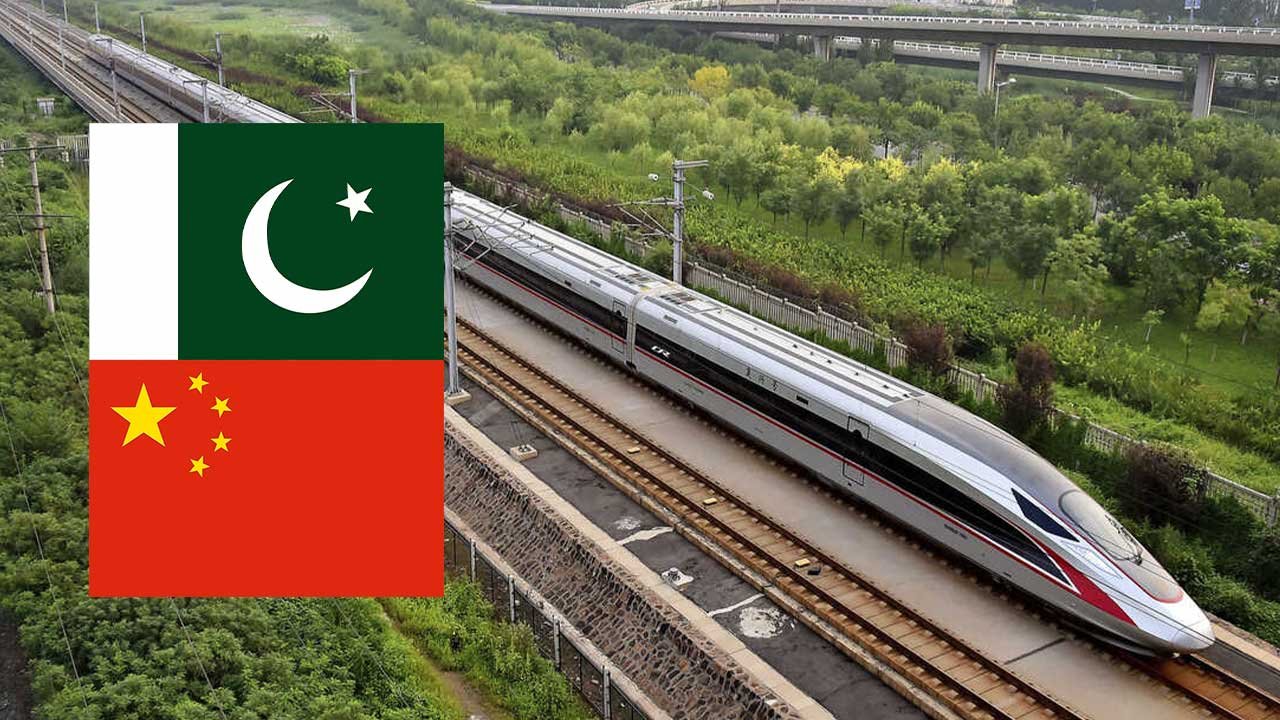
    A study conducted by scientists from China Railway First Survey and Design Institute Group has estimated the cost of a proposed China-Pakistan railway project to be $57.7 billion. The railway will connect Gwadar Port with Xinjiang’s Kashgar, and is expected to have strategic significance, potentially reshaping trade and geopolitics. The project will improve connectivity among the countries along the ancient Silk Road trade routes and is part of a plan to reduce dependence on Western-dominated routes.

    The study urges the Chinese government and financial institutions to provide strong support for the project, including increasing coordination and collaboration among relevant domestic departments and striving for the injection of support funds. Pakistan’s economy is expected to receive a much-needed boost from the infrastructure and will easily trade with China. The researchers said the project is expected to create more jobs, boost infrastructure investment, and increase trade.

    However, the study notes that Pakistan’s GDP last year was just six times the estimated cost of the project, making sufficient financing difficult. Pakistan is mainly relying on Chinese enterprises for investment and construction, as it is unable to provide sufficient financial and material support.

    Moreover, the security issues in Pakistan pose a risk to Chinese workers and investments, which may hinder the railway project. Despite these challenges, the study emphasizes the strategic significance of the railway project and urges strong support and policy guarantees for its construction.

  • Pakistan records 17% increase in exports to Afghanistan, SBP data shows

    Pakistan records 17% increase in exports to Afghanistan, SBP data shows

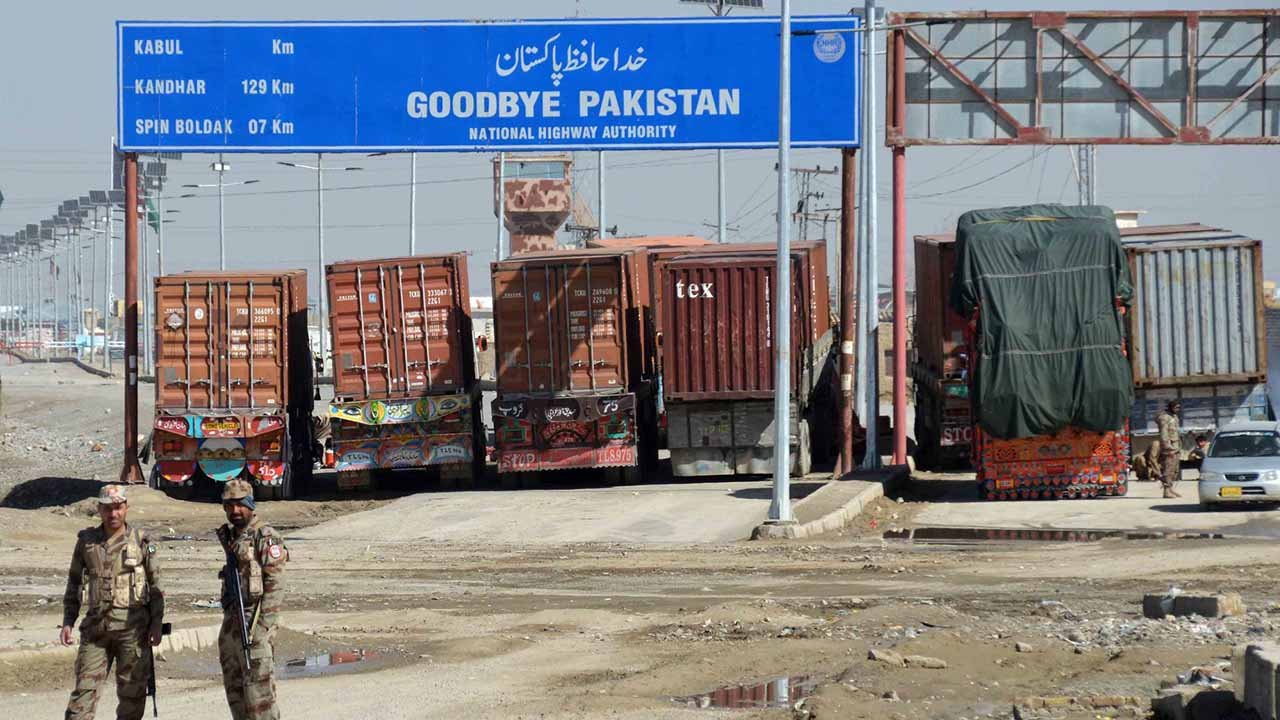
    According to a report by the State Bank of Pakistan (SBP), Pakistan’s export of goods and services to Afghanistan has increased by 17.02 per cent during the first eight months of the current fiscal year (2022-23) compared to the corresponding period of the previous year.

    From July-February (2022-23), overall exports to Afghanistan reached US $346.522 million, while during the same period last year, exports were recorded at US $296.109 million, showing a growth of 17.02 per cent.

    Furthermore, the year-to-year basis also showed an increase of 60.49 per cent in exports to Afghanistan, rising from US $38.222 million in February 2022 to US $61.345 million in February 2023. Meanwhile, on a month-on-month basis, exports to Afghanistan also rose by 82.58 per cent during February 2023, reaching US $61.345 million, compared to US $33.598 million in January 2022.

    In contrast, Pakistan’s exports to other countries decreased by 9.65 per cent during the eight months, dropping from US $20.632 billion to US $18.639 billion, according to SBP data.

    The imports from Afghanistan into Pakistan during the period under review were recorded at US $13.540 million, which was a significant decrease of 88.65 per cent compared to last year’s US $119.328 million in July-February (2021-22).

    Year-on-year, imports from Afghanistan also dropped by 98.89 per cent, from US $13.723 million in February 2022 to US $0.151 million in February 2023. However, on a month-on-month basis, imports from Afghanistan increased by 11.02 per cent during February 2023, reaching US $0.136 million, compared to US $0.122 million in January 2022.

    Overall, the imports into Pakistan also witnessed a decrease of 21.02 per cent, from US $47.336 billion to US $37.388 billion, according to SBP data. Based on the trade figures, the trade of goods and services with Afghanistan witnessed an 88.35 per cent increase in surplus during the period under review compared to the previous year, with a recorded surplus of US $332.982 million against US $176.781 million during the last year.

  • DHL limits operations in Pakistan due to outbound remittance restrictions

    DHL limits operations in Pakistan due to outbound remittance restrictions

    International logistics company, DHL, announced that it will partially suspend some of its operations in Pakistan due to restrictions on outbound remittances by the government.

    DHL Pakistan has informed its customers that it will suspend its “Import Express Product” and restrict outbound shipments to a maximum weight of 70kg per shipment for all customers billed in Pakistan from March 15.

    According to Dawn, the company has stated that the last pick-up date will be March 14, and shipments picked up on or before this date will still be delivered.

    The decision comes as the PMLN-led coalition government and the State Bank of Pakistan have imposed restrictions on outward remittances for foreign companies operating in Pakistan amid fast-dwindling foreign exchange.

    DHL has stated that the remittances sent by DHL Pakistan cover the cost of DHL’s international aviation, hub, gateway, and last-mile delivery incurred through its global network for the shipments sent/received by valued customers. The company has added that this constraint has made it unsuitable for DHL Express to continue providing the full product offering in Pakistan.

  • Pakistan Tobacco Company fears surge in smuggling, fake cigarette supply after tax hike

    Pakistan Tobacco Company fears surge in smuggling, fake cigarette supply after tax hike

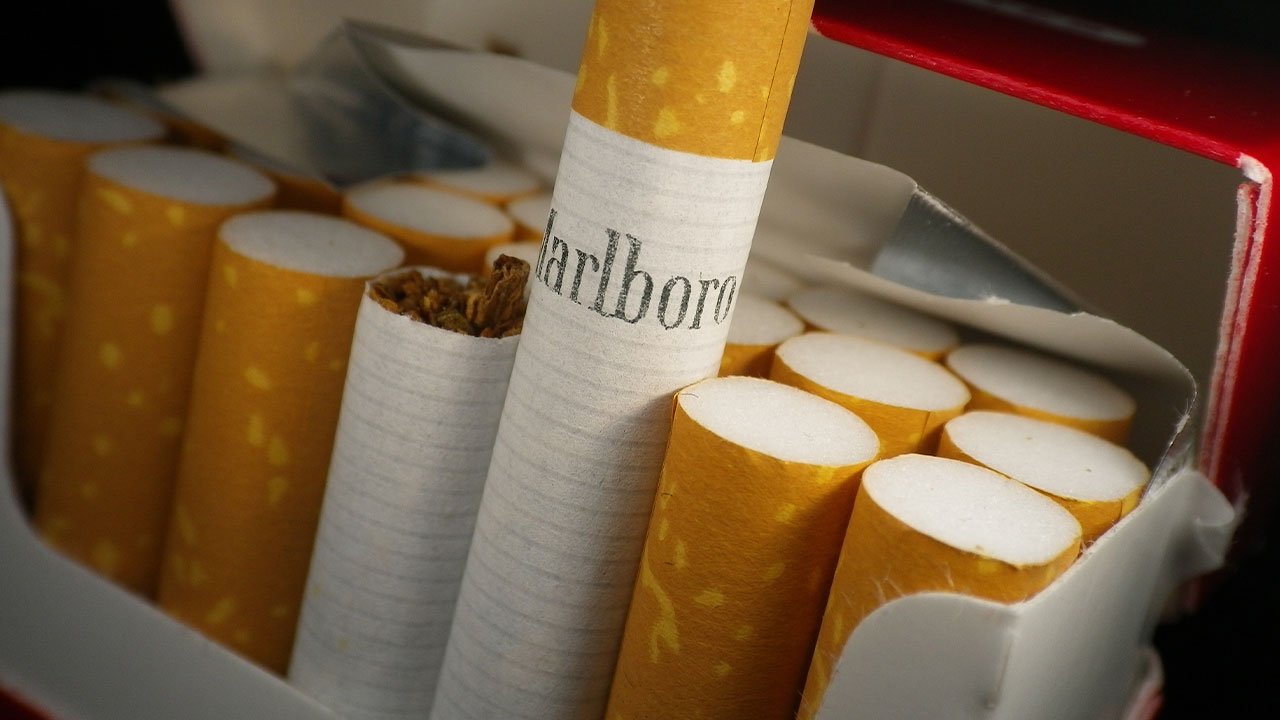
    Pakistan Tobacco Company (PTC) has expressed serious concern over the recent mini-budget announcement, stating that new taxes on cigarettes will result in an increase in smuggling and counterfeit products in markets. Speaking to the media on Friday, PTC’s Director Legal and External Affairs, Syed Asad Shah, explained that the increase in federal excise duty (FED) and the lower minimum price set by the Federal Board of Revenue (FBR) would lead to less revenue collection from the cigarette industry.

    Shah displayed several illicit cigarette packs available in markets across the country, including some smuggled brands without health warnings, counterfeit products of local brands, and unregistered and non-tax-paid locally produced cigarettes.

    Shah projected that the share of illicit cigarettes in Pakistan would increase from the current 35 per cent to 40-50 per cent in the current year. He added that if the government did not rationalize the policy of managing the threshold price level and did not restrict illicit trade, its revenues would also decline after two years. Illicit cigarettes are sold below the minimum price because the applicable tax per pack is not paid on these products.

    The cigarette industry paid total taxes of Rs150 billion in fiscal year 2021-22, and the expected tax receipts this year would be around Rs185 billion because of the new taxation measures. According to the industry, tax contribution by PTC and Philip Morris, two multinational companies, alone will be around Rs182 billion.

    Shah pointed out that around 35 cigarette companies were running in Pakistan, making some 200 brands, but local players paid only Rs3 billion in taxes and duties. He added that many companies were not paying due taxes, which was why some were selling cigarette packs for Rs7.

    PTC officials emphasized the need for a rational increase in the minimum legal price of cigarettes. After the recent rise in FED, taxes, and duties on tier-2 cigarette packs came in at Rs101, but the minimum sale price of the same packs was Rs108.

    According to Express, the company officials demanded that the finance ministry take stringent action against the illicit cigarette trade and ensure across-the-board implementation of the FBR’s track and trace system that monitors the production and supply of cigarettes.

  • Pakistan’s export market takes a hit: Textile group exports down 14.83% in January

    Pakistan’s export market takes a hit: Textile group exports down 14.83% in January

    According to the Pakistan Bureau of Statistics (PBS), the country’s textile group exports declined by approximately 8.17 per cent during the first seven months (July-January) of fiscal year 2022-23, totaling $10.039 billion as compared to $10.933 billion during the same period of the previous year.

    The data also showed that textile group exports witnessed a year-on-year decline of 14.83 per cent in January 2023, amounting to $1.321 billion, compared to $1.551 billion during the same month in the previous year. Additionally, on a month-on-month basis, the textile group registered a negative growth of 2.53 per cent compared to $1.356 billion in December 2022.

    Cotton yarn exports experienced a negative growth of 34.66 per cent during July-January, totaling $449.419 million compared to $687.857 million during the same period in the previous year. On a year-on-year basis, cotton yarn exports registered a negative growth of 12.34 per cent, while on a month-on-month basis, it registered a growth of 27.22 per cent.

    Rice exports declined by 15.82 per cent during the first seven months of fiscal year 2022-23, totaling $1.083 billion compared to $1.286 billion during the same period in the previous fiscal year. Overall, the country’s exports during July-January 2022-23 totaled $16.499 billion (provisional) compared to $17.739 billion during the corresponding period of the previous year, showing a decrease of 6.99 per cent.

    In January 2023, the country’s exports amounted to $2.244 billion (provisional) compared to $2.313 billion in December 2022, reflecting a decrease of 2.98 per cent and a decline of 14.15 per cent compared to $2.614 billion in January 2022. The primary commodities of exports during January 2023 were knitwear, readymade garments, bed wear, cotton cloth, rice others, towels, cotton yarn, made-up articles (excluding towels and bedwear), rice basmati, and surgical goods and medical instruments.

  • SBP-held foreign exchange reserves drop to a highly critical level of $2.92 billion

    SBP-held foreign exchange reserves drop to a highly critical level of $2.92 billion

    The State Bank of Pakistan (SBP) has reported a decrease in its foreign exchange reserves, as reflected in data released on Thursday. The reserves fell to a total of $2.92 billion, marking a reduction of $170 million.

    According to the recent data, the current level of reserves held by the bank has reached its lowest point since February 2014.

    The country’s total liquid foreign reserves were reported to be at $8.54 billion, according to the latest data. Meanwhile, commercial banks in the country held net foreign reserves of $5.62 billion.

    “During the week ended on February 3, 2023, SBP’s reserves decreased by $170 million to $2,916.7 million due to external debt repayments,” the SBP said in a statement.

    The State Bank of Pakistan (SBP) experienced a substantial decrease in its foreign exchange reserves last week, declining to $3.09 billion, a drop of $592 million. This represents the lowest level of reserves for the central bank since February 2014. The current level of reserves falls below one month’s worth of import coverage.

    The depletion of the central bank’s reserves, which stood at nearly $18 billion at the beginning of 2022, highlights the pressing need for Pakistan to move forward with the next review of its International Monetary Fund (IMF) program.

    These declining reserves serve as a reminder of the economic challenges facing the country and the importance of addressing them in a timely and effective manner.

  • Pakistan stocks lose more than 1,400 points due to political uncertainty

    Pakistan stocks lose more than 1,400 points due to political uncertainty

    Political unrest caused significant selling pressure on the Pakistan Stock Exchange (PSX), which saw the benchmark KSE-100 Index lose more than 1,400 points on Tuesday during trading.

    The KSE-100 Index was down 1,432.25 points, or 3.5 per cent, at 39,538.57 around 3 o’clock, below the 40,000-mark, according to the PSX website.

    Investors were under pressure to sell their shares across the board due to Pakistan’s escalating political unpredictability and economic uncertainties.

    For a while now, there has been pressure on the market. Just last week, the benchmark KSE-100 Index dropped nearly 550 points due to domestic and global events, and the PSX experienced intense selling pressure. On Friday, it increased to close higher, but this week started off negatively once more.

    Experts claim that market pressure is resulting from the Pakistan Tehreek-e-(PTI) Insaf’s announcement that it will dissolve the Punjab and Khyber Pakhtunkhwa assemblies, according to Brecorder.

    In particular, the pressure has intensified since Monday’s event.

    A worsening economic crisis is accompanied by louder political clamour as foreign exchange reserves drop to dangerously low levels and negotiations with the International Monetary Fund (IMF) keep getting postponed.

    Analysts have also stated that although the World Bank’s approval of $1.692 billion for flood relief efforts in Sindh should have had a positive effect, political commotion is also obscuring this good news.

    Pakistan’s stock market is expected to remain under pressure till Friday until clarity is achieved on the political front.

  • Business confidence in Pakistan drops to negative 4%

    Business confidence in Pakistan drops to negative 4%

    Major multinational companies with operations across a variety of sectors in Pakistan have lost faith in the country’s economy. In the previous six months, the Business Confidence Score (BCS) as a whole decreased by 21 percentage points to a negative 4 per cent.

    In the earlier survey, which was conducted in March–April 2022, the score (BCS) was positive 17 per cent. In general, more than half of respondents (56 per cent vs. 19 per cent in the prior study) had a “poor” opinion of the business environment in the previous six months.

     “Going forward, only a net 2 per cent (versus 18 per cent in the previous survey) were ‘positive’ for the next six months and 35 per cent of respondents cited no plans to invest,” according to the “Business Confidence Index Survey Wave 22” of the Overseas Investors Chamber of Commerce and Industry (OICCI), which was held from September to November 2022.

    According to Express Tribune, political unrest, currency depreciation, and rising fuel prices were the top three factors contributing to the recent drop in business confidence. The other two top-five factors contributing to the recent drop in company confidence were the current energy crisis (high power costs) and inadequate commercial and trade policies.

    The services industry experienced a confidence decline of 24 per cent, followed by the retail and wholesale trade sectors (22 per cent), and the industrial sector (20 per cent). 25 per cent of respondents were from the retail and wholesale trade, 33 per cent from the services industry, and 42 per cent from the manufacturing sector.

    Commenting on the survey results, OICCI President, Ghias Khan said in a statement that “The substantial decline in the overall business confidence to negative 4 per cent is regrettable but not surprising considering the highly challenging political and economic situation witnessed during the past six months.”

    “The record level of rains during August leading to severe flooding in Sindh and other parts of the country further restricted business activities,” he added.

    “Foreign investors’ feedback could have been more positive but for serious concerns on a few critical issues like the undue delay in revising the pharma pricing and the extreme delays in overseas (outward) remittances for goods, services and dividends. Such actions are seriously counter-productive when trying to attract FDI (foreign direct investment) into the country,” Khan expounded.

    The main factors affecting business confidence in the country are anticipated to remain political unrest, rising fuel prices, and rupee depreciation.

    OICCI Vice President, Amir Paracha noted that “These are challenging times. Authorities are doing all they can to navigate the situation, including controlling inflation, managing the economy with restricted availability of foreign exchange and other resource constraints.”

    “The key stakeholders, especially foreign investors, will continue to support the authorities in taking long-term policy measures to streamline the economic fundamentals, including fair taxation for all, and facilitate business and investment into the country,” he added.

    According to the most recent survey results, the confidence index for business expansion (extra investment) plans over the next six months has decreased to 18 per cent from 34 per cent in the previous survey/W21.

    Similarly, capital investment (new) plans for the following six months fell sharply to 2 per cent (from 21 per cent in the previous wave).

    Compared to Wave 21, just 7 per cent of respondents in Wave 22 reported an increase in overall employment. A drop in overall employment over the previous six months was mentioned by almost 11 per cent of respondents.

    According to the trade body, “OICCI is the collective voice of major foreign investors. Over 200 members, from 31 different countries, have a presence in 14 sectors of the domestic economy and contribute over one-third of Pakistan’s total tax revenue.”

    In the meantime, on Wednesday, the interbank market saw the rupee fall 0.02 per cent (or Rs0.05), falling to a two-month low of Rs224.16 against the US dollar.