Gold prices fell sharply in the local market on April 8, following the US dollar’s loss of value versus the rupee.
The price of precious yellow metal dropped by Rs2,000 to Rs132,300 a tola (11.66 grams). Similarly, the cost of 10 grammes of gold decreased by Rs1,715 to Rs113,426. On the flip side, it jumped from $6 to $1,933 per ounce (28.3 gram) on the global market.
The yellow metal in Karachi is reportedly selling for as low as Rs129,400, while 10 grams is being sold at Rs110,940. This rate for 24K gold announced by the Sarafa Bazar Association is also followed by the majority of gold markets in cities including Lahore, Islamabad, Peshawar, Quetta, and Karachi.
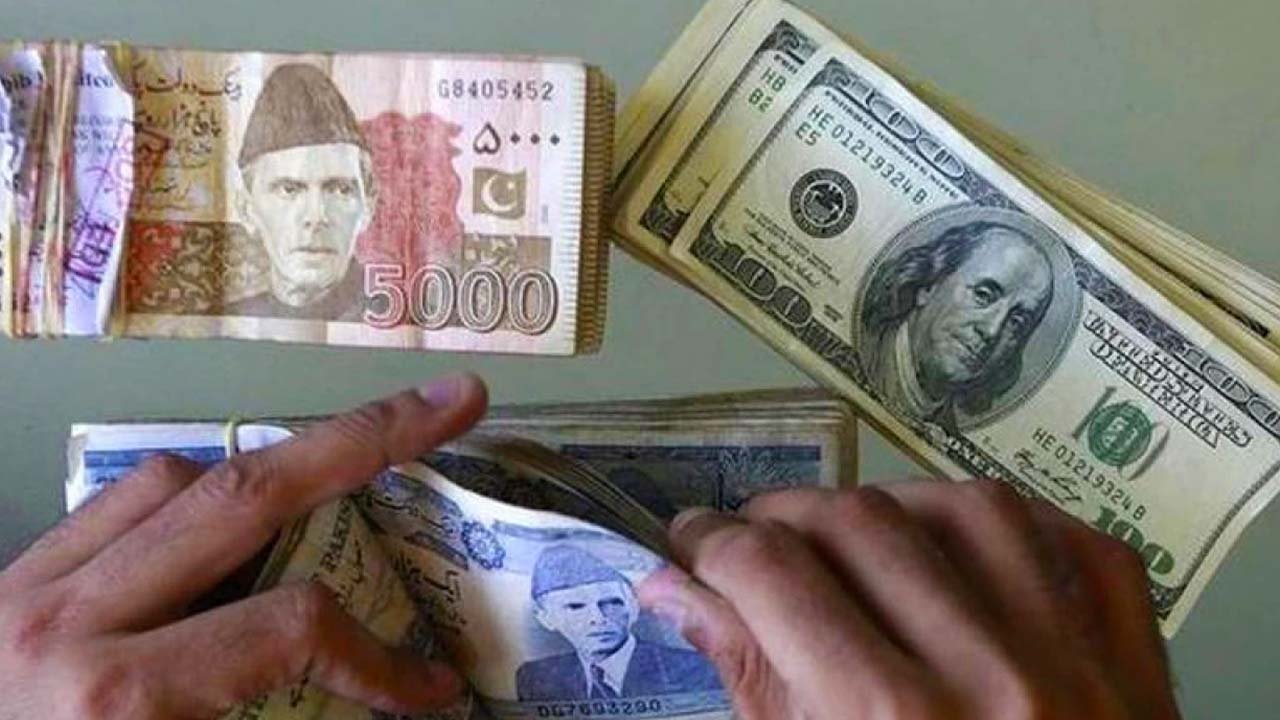
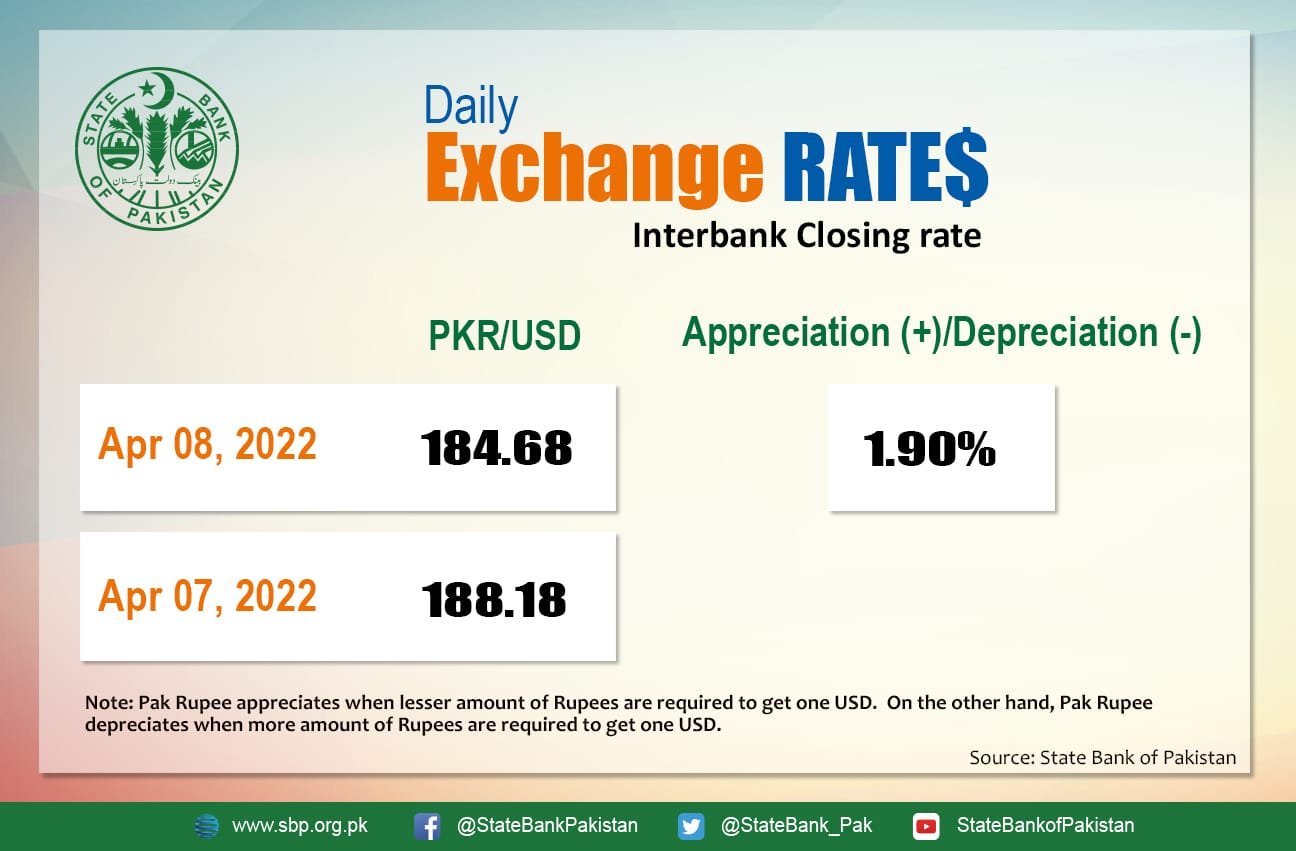
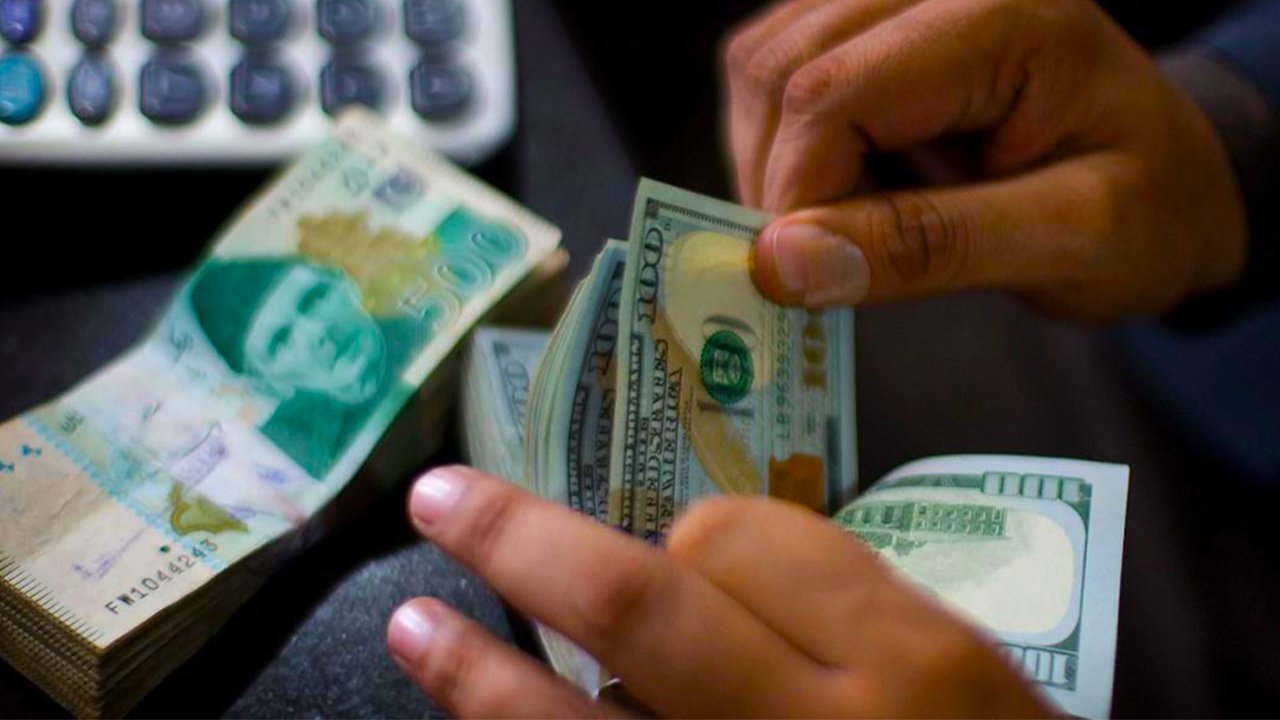
The Pakistani rupee (PKR) gained Rs3.50 yesterday against the US dollar, making it the greatest single-day gain since April 2020. The local currency is currently trading at Rs184.68.
During inter-day trading on April 7, the domestic unit crossed the Rs189 threshold, notwithstanding the political uncertainty. However, following a Rs2.5 depreciation, it concluded at Rs188.18.
The gold correction had been overdue for a long time, since the political turmoil had created widespread panic, and individuals were transferring their capital to gold, as various rules had made it difficult for everyone to buy dollars.
In the intra-day trade on Friday, the Pakistani rupee (PKR) gained an impressive Rs3.5 against the US dollar, the highest single-day gain in two years after the Supreme Court (SC) pronounced the National Assembly (NA) deputy speaker order unconstitutional and restored the NA.
The US dollar is currently trading at Rs185, as per foreign currency dealers, after weakening Rs3.5 versus the local currency in early trade. The USD is currently trading for above Rs186 on the open market.
On Thursday, the rupee concluded at Rs188.18 against the USD in the interbank market.
Consequently, the Pakistan Stock Exchange’s (PSX) benchmark KSE-100 index, reversed its downtrend shortly after starting on Friday and surpassed the 44,000 mark, a day after the Supreme Court of Pakistan annulled the deputy speaker’s decision against a no-confidence motion.
Considering the trading which continued at 44, 198 on the Pakistan Stock Exchange, the KSE-100 benchmark index gained 411 points.
The stock market has been under pressure since April 4, when it crumbled, losing over 900 points amid Pakistan’s ongoing political crisis, which arose after the National Assembly deputy speaker declared Prime Minister Imran Khan’s no-confidence resolution unconstitutional.
SBP’s rate increase of 250 basis points and establishment of cash margins on 177 commodities is a marker that the economic system is in a slump and that prior initiatives were inadequate. This protective approach will aid in limiting the import of certain products, consequently bolstering the balance of payments.
The Pakistani Rupee (PKR) continued its decline against the US Dollar (USD) today, reporting losses in the interbank market. At the close of the session today, the local currency lost 30 paisas against the US dollar.
It fell 0.16 percent against the US dollar, closing at Rs182.64 after losing 30 paisas and closing at Rs182.34 in the interbank market on Tuesday, March 29.
Pakistan’s ongoing political volatility and economic problems continue to weaken currency reserves as the country attempts to remove obstacles toward financial relief.
After global oil prices surged on Monday, the PKR maintained its downward trend against the greenback.
The rupee has lost about 17 per cent of its value since its last peak in May 2021. To date, the local currency has lost more than 13.6 per cent of its value.
It is worth noting that the Pakistani currency depreciated 30.5 per cent against the US dollar in the last three years under the government of Prime Minister (PM) Imran Khan.
The State Bank of Pakistan (SBP) and all other banks will be closed for public business on Monday, 4 April, to observe a ‘Bank Holiday’ for Zakat deduction.
Development Finance Institutions (DFIs), Microfinance banks (MFBs), and all other banks will be closed to the public on Monday.
On the Bank Holiday, which will be observed as a working day, all of these institutions’ employees will carry out their official tasks except client dealing, in-office, or through work-from-home (WFH), as per the official instructions.
According to the central bank’s announcement, it will be closed for public trading on Monday, “which shall be observed as Bank Holiday for the purpose of Zakat deduction”.
“However, all staff of banks, DFIs, and MFBs will report to work on Bank Holiday as a normal working day (except for public trading),” the statement continued.
A lucrative trade route connecting Pakistan and China, the Khunjerab Pass will finally reopen for trade activities on April 1, 2022 after more than a 2-year hiatus. The pass was closed in November 2019 as a preventive measure against the spread of COVID-19.
As per a credible resource, Chinese authorities sent Pakistan a letter requesting the reopening of the border, in reference to the agreement made in May 2013 between the neighboring countries.
Port authorities on the Chinese side have been advised to take all preventive measures related to the COVID-19 outbreak.
Likewise, the Pakistani border authorities have also been instructed to take all necessary precautions to prevent the spread of coronavirus spread.
The Khunjerab Pass was temporarily opened for less than two weeks from July 29, 2020 to August 10, 2020 to allow the passage of stranded containers filled with goods. The prolonged closure of Khunjerab Pass had caused severe financial hardships to the local business community.
A number of cryptocurrency businesses in the United Kingdom (UK) may be forced to shut down if they fail to register with the financial watchdog before a major deadline next week.
Firms providing crypto services in the UK must register with the Financial Conduct Authority (FCA) by 31 March, 2022. The FCA is in charge of supervising how digital asset firms tackle money laundering.
In 2021, the authority stretched the deadline for businesses on a temporary register to continue trading while seeking full license. Once the deadline passes, the temporary register will be closed.
Many crypto businesses have withdrew their applications, according to the FCA, since they did not match the required anti-money laundering criteria.
With only days until the deadline, the status of companies on the temporary register including Revolut, a $33 billion fintech business, and Copper, a crypto start-up is in trouble which counts on UK Finance Minister, Philip Hammond as its advisor.
Some businesses are now withdrawing their applications, including B2C2, a London-based crypto trading firm, just removed itself from the FCA’s provisional registry.
B2C2’s spot trading activity has been relocated to the company’s U.S. Entity from this week. The firm’s business is now unaffected as it is handled by an FCA-authorized subsidiary.
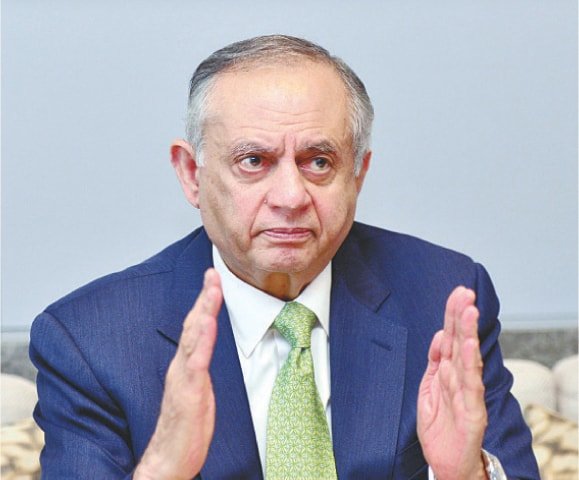
Adviser to Prime Minister (PM) Imran Khan on Commerce, Textile, Industry, and Production, and Investment Abdul Razak Dawood said that trade with India is the need of the hour and beneficial to both countries.
Dawood said “As far as the ministry of commerce is concerned, its position is to do trade with India. And my stance is that we should do trade with India and it should be opened now.”
“Trade with India is very beneficial to all, especially Pakistan. And I support it.”
Advisor to Prime Minister Imran Khan on Trade and Investment Abdul Razak Dawood has commended the launch of Facebook Marketplace in Pakistan.
He said that the opportunity could prove to be a lifeline for small enterprises as well as women entrepreneurs during Covid-19.
Dawood, in a series of tweets said, “I am happy to see that, after Amazon, Facebook has recently launched market place for Pakistan.” Dawood was of the view that the launch will encourage small enterprises and entrepreneurs in Pakistan to sell online.
“Such opportunities during Covid-19 could be a lifeline for micro-enterprises,” said Dawood.
Facebook Marketplace is a digital platform where users can arrange to buy, sell and trade items with other people in their area using their Facebook ID.
Over the years, Pakistan has seen a rapid rise in the growth of ecommerce. Back in May, Amazon added Pakistan to its sellers’ list, which means that local Pakistani sellers can now list and use Amazon’s platform to sell globally, a massive boost to the country’s e-commerce landscape.
Meanwhile, Dawood added that that the launch of the platform will also help women entrepreneurs and that it is a first step towards eCommerce.
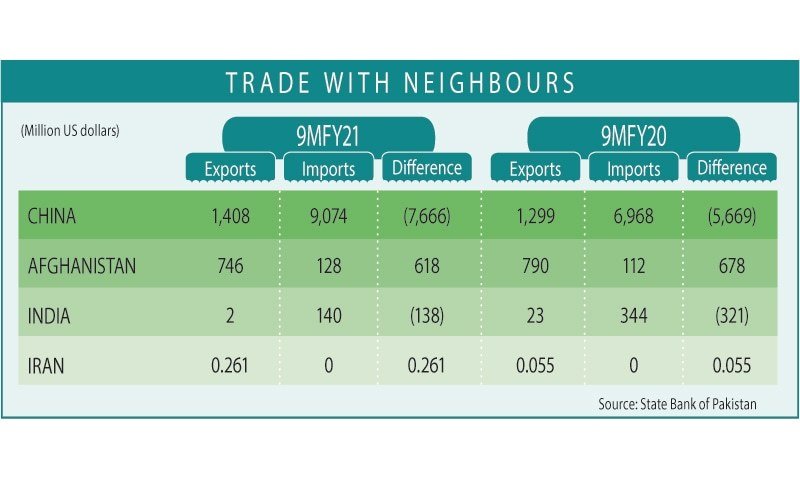
Due to the COVID-19 crises, Pakistan exports in the region have dropped by 5.7 per cent in the nine months of the current fiscal year, the State Bank of Pakistan (SBP) revealed on Monday.
Pakistan exported goods and services as little as $2.788 billion to neighbouring countries like Afghanistan, Bangladesh, Bhutan, Maldives, Sri Lanka, India and Iran.
Data revealed by the State Bank of Pakistan (SBP)
The figure is just 14.91 per cent of the total global export of Pakistan, which stood at $18.688 billion in the current fiscal year.
Pakistan largely exported to China; they are at the top of the list, leaving India and Bangladesh behind.
In terms of percentage, Pakistan exports to China are 50.46 per cent, and the remaining share is for eight other countries.
Exports to China also experienced a growth of 8.4 per cent, which is $1.407 billion in FY2021 from 1.298 billion in FY2020.
Unfortunately, the trade ties between Afghanistan and Pakistan have declined and faced political and policy turmoils. The exports to Afghanistan have fallen by 5.57 per cent that is just $746.328 million in FY2021. In FY2020, the exports between Afghanistan and Pakistan stood at $790,377 million.
Afghanistan has also been removed as the second biggest trade partner of Pakistan, and Afghanistan replaced India as the most important trade partner.
Trade ties between Pakistan and India are also topsy turvy. The government has suspended trade with India. Earlier, the Economic Corridor Committee (ECC) approved the import of cotton and yarn from India, but then the decision was reversed for political reasons.
The exports to Iran jumped 374 per cent to $0.261m in 9MFY21 from $0.055m in 9MFY20. Most of the trade with Tehran is carried out through informal channels in border areas of Balochistan.
Exports to Bangladesh decreased by 13.56 per cent that is $438.418m in FY2021. Islamabad has recently reached out to Dhaka to revive talks to facilitate trade between the two countries.
Similarly, exports to Sri Lanka dipped by 24.2 per cent to $185.883m from $245.131m in the previous year.
During Prime Minister Imran Khan’s recent visit to Sri Lanka, both countries agreed to exploit the available potential of bilateral trade.
Exports to Nepal dropped by 82.6 per cent to $3.502m from the previous year while those to the Maldives dipped by 28.96 per cent to $4.044m from $5.693m.
Exports to Bhutan were recorded at $0.043m as compared to $0.094m over the last year. In March, no exports proceeds were sent to the Maldives.
On the other hand, the country’s trade deficit with the region narrowed as imports from these countries also dipped.
The Economic Coordination Committee (ECC) of the cabinet has approved two summaries of the commerce and textile ministry to lift ban on import of cotton and white sugar from India.
According to reports, there were 21 items on the agenda of the ECC meeting to be chaired by newly appointed Finance Minister Hammad Azhar. Commerce and Textile divisions had submitted five crucial summaries for approval besides others.
At the agenda no. 16, the Textile Division summary sought permission from the ECC to lift ban on import of cotton and cotton yarn from India in a bid to bridge raw material shortfall for the value-added textile sector.
In addition to this, another summary of the commerce ministry at agenda no. 20 also sought permission to allow import of white sugar from India through the Trading Corporation of Pakistan and commercial importers.
The resumption of import of these goods will lead to partial revival of trade relations. On Aug 9, 2019 Pakistan downgraded trade relations with India in reaction to the latter’s decision to revoke Article 370 of its Constitution that granted occupied Kashmir a special status.
In May 2020, Pakistan lifted the ban on import of medicines and raw material from India to ensure there is no shortage of essential drugs amid the COVID-19 pandemic. This was the first step of reversing of complete suspension of trade with India.
However, Indian premier’s letter to Prime Minister (PM) Imran Khan on Pakistan Day was the first step in the right direction amid reports of UAE Royals brokering peace.
On Tuesday, PM Imran replied to Modi’s letter, saying Pakistan also desired peaceful relations with India.
“The people of Pakistan also desire peaceful, cooperative relations with all neighbours, including India,” he said in his reply.
“I thank you for your letter conveying greetings on Pakistan Day.”