Tag: trade

  • Pakistan likely to resume trade with India

    The ban on trade with India is likely to be lifted soon after the recent correspondence between Prime Minister (PM) Imran Khan and Indian Prime Minister (PM) Narendra Modi.

    PM Modi conveyed well wishes in a message to PM Imran after he tested positive for COVID-19. Later on Pakistan Resolution Day too Modi wrote a letter saying that India desired cordial relations with the people of Pakistan.

    Pakistan suspended trade with India in 2019 but recently imported life-saving drugs.

    The advisor to PM on commerce and investment, Abdul Razak Dawood, while speaking to media said, “Since the recent thawing began, the prime minister is in isolation being COVID positive. I haven’t talked to him as I don’t want to disturb him. I sincerely hope that trade with India will start again. Trade should be separated from politics.”

    Last week, Chief of Army Staff (COAS) General Qamar Javed Bajwa, while speaking at Islamabad Security Dialogue, also said, “It is time to bury the past and move forward.”

    On August 10, 2019, Pakistan imposed a trade ban on India after the escalation of violations on the Line of Control (LOC). In response, New Delhi withdrew the Most Favoured Nation (MFN) status from Pakistan, also after the Pulwama incident.

    However, even before the suspension, the bilateral trade between Pakistan and India had been below $2 billion.

    Now, with improvement on the horizon between the two nuclear neighbours, Dawood also said that a decision on the import of cotton from India through land route is expected soon.

  • Pakistan replaced by India, Iran as top trade partners of Afghanistan

    Pakistan replaced by India, Iran as top trade partners of Afghanistan

    Pakistan and Afghanistan are no longer leading trade partners. Strong Border restrictions on both sides and declining bilateral relations are the main reasons.

    Pakistan and Afghanistan used to have $2.5 billion worth of trade that has now declined to $1 billion, replacing Islamabad with New Delhi and Tehran as the biggest trade partners.

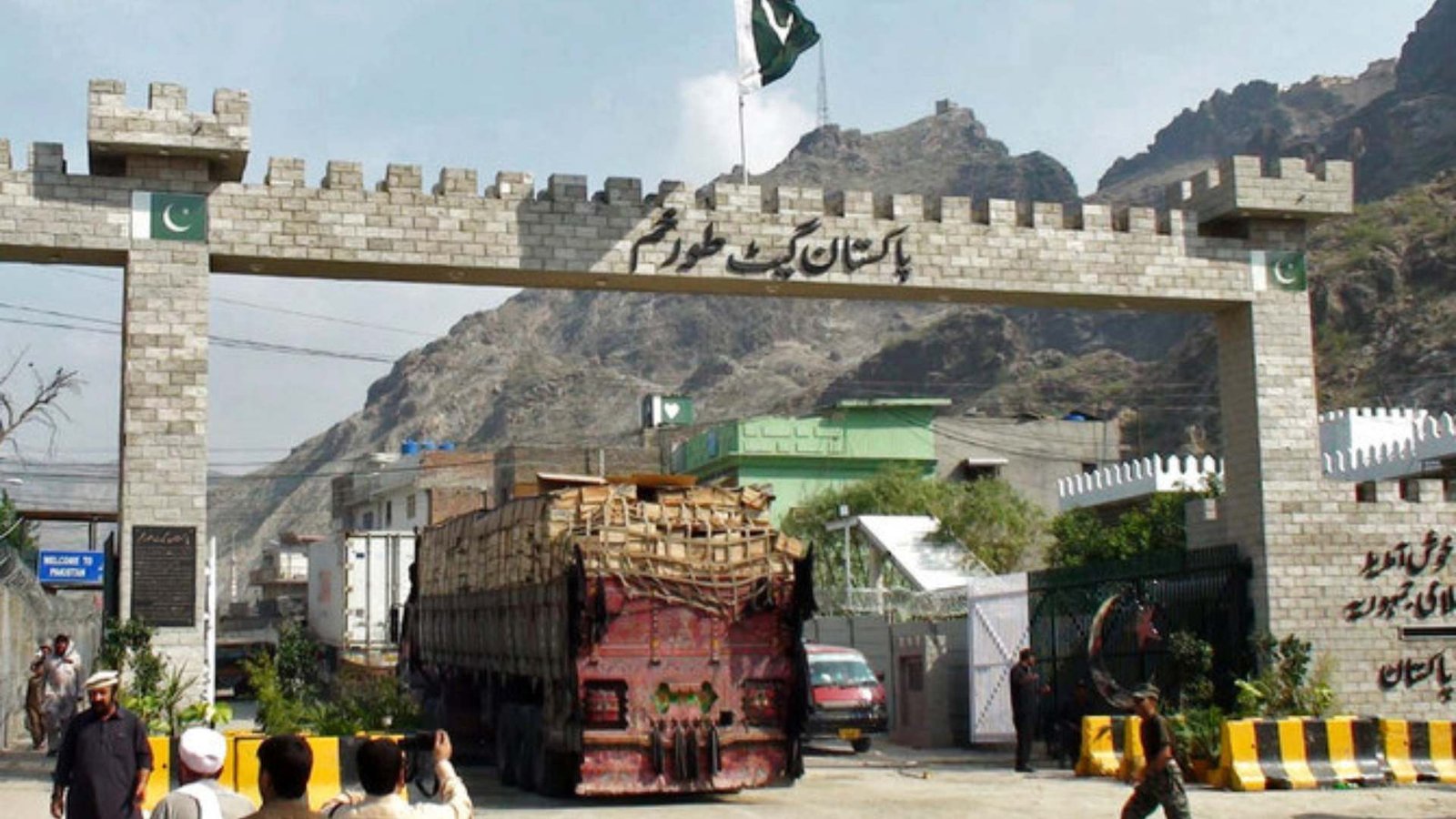
    In this regard, Pak-Afghan Joint Chamber (PAJC) former senior vice president Ziaul Haq Sarhadi said that the Torkham border crossing was open for 24 hours a day since 2019 to promote Pak-Afghanistan bilateral trade, but no significant progress was made.

    More than 832,000 containers of Afghan transit trade worth $33 billion used to pass through the Torkham border. However, a 30 per cent reduction in transit trade had been observed as it shifted to Iran, Uzbekistan and Tajikistan.

    For years, Afghan traders are demanding that the process of clearing the Karachi port should be expedited. “The volume of trade annual shipments from Karachi to Afghanistan can be increased to 75,000 containers while the volume of bilateral trade can rise to Rs5 billion if their request is accepted,” Sarhadi said.

    Afghanistan also wants to access India through the Wagah border, but Pakistan cannot facilitate Afghanistan due to its official policy stance and strained relations between Islamabad and New Delhi.

    On the other hand, Pakistan wants free trade with the Central Asian Republics (CARs) through Afghanistan, but no agreement has been reached so far.

  • Pakistan, US trade negotiation failed.

    Pakistan, US trade negotiation failed.

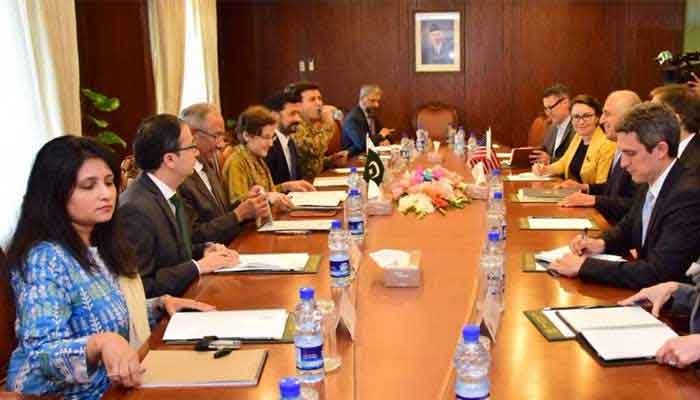
    Despite United States (US) Secretary of Commerce Wilbur Ross’s visit to Islamabad, Pakistan and the US have failed to achieve ‘breakthrough’ for promoting trade ties between the two countries, Geo reported.

    “This high-level visit proved a non-starter because the US did not make any firm commitments on three demands put forth by the Pakistani side on the negotiating table. It can be termed just a posturing visit as a balancing act in the wake of US President Donald Trump’s visit to arch-rival India,” the report said.

    It quoted top officials as noting that the Pakistani side put forward three demands before the US delegation. Pakistan seeks a Free Trade Agreement (FTA), but the US side replied that “they would look into it” and did not make a commitment.

    The delegation also disapproved Pakistan’s proposition to expand GSP Plus list for providing concession on export items from the US side, so it can once again become a non-starting area.

    Furthermore, the Pakistani side demanded moving towards Trade and Investment Framework Agreement (TIFA). However, the US authorities responded that they would see how things could proceed in future.

    Pakistani officials still seemed confident to believe that the US would respond positively on TIFA front in the coming future, but the optimism seems groundless because no commitments have been made.

    Keeping in view experience of the past many years, there have been several occasions when the US agreed to hold talks on TIFA and the Bilateral Investment Treaty (BIT), but it always proved a futile exercise after holding sessions for several years.

  • The inconvenient truth about Pakistan’s economy

    Battle of narratives confuses ordinary citizens who are less interested in politics and are more keen to know where the economy is actually heading, what they should expect in terms of growth and whether Pakistan can offer them a prosperous future.

    Economy is the hottest subject these days. Political zealots from opposing sides pick and choose data snippets of their choice, build an argument and relentlessly attack the other party.  On one hand, the Pakistan Tehreek-e-Insaf (PTI) social media machine keeps focusing on massive current account deficit and export decline during Pakistan Muslim League-Nawaz’s (PML-N) tenure, while the PML-N social media warriors rely on abundant ammunition provided by high inflation and slowing down economy.

    This battle of narratives, however, confuses ordinary citizens who are less interested in politics and are more keen to know where the economy is actually heading, what they should expect in terms of growth and whether Pakistan can offer them a prosperous future.

    Let’s first understand the origin of the present economic crisis.

    For years, Pakistan’s foreign exchange inflows — earned through exports, foreign direct investment, remittances and official development assistance — have been lagging behind its forex outflows required to pay for its imports. But this gap increased considerably in recent years, thereby forcing the country to excessively rely on external borrowing. The problem was further compounded by the overvalued exchange rate that was held artificially high during the last government’s term. This overpricing made imports cheaper and exports expensive, further enhancing the trade deficit. As a result, the current account deficit went as high as about $1.5 to 2 billion a month, which became unsustainable. The PTI government sought help from friendly countries like Saudi Arabia and China and managed to get more than $6 billion in loans or deferred payments. But without working on reducing the current account deficit, even this didn’t last long.

    The situation was no better on the fiscal front. Pakistan has been generating far less revenue than what it was spending, leading to huge fiscal deficits, which were again financed through borrowing. The state-owned enterprises kept on draining the exchequer and the circular debt kept on piling up, crippling the government. This unsustainable financial situation compelled Pakistan to knock at the doors of the International Monetary Fund (IMF).

    IMF is considered the lender of last resort and provides a bailout to a country to avoid an economic crisis when no other lender is willing to step in. But in return, it puts down certain conditions for the borrower, to put its house in order. The same happened with Pakistan.

    Pakistan has a resilient economy on the back of its 200+ million-strong population, abundant natural resources and a vibrant private sector. About two-thirds of the Pakistani population is youth, making it the youngest country in South Asia and skilling this workforce can do wonders for the country.

    To immediately curtail the current account deficit, Pakistan had to significantly devalue its exchange rate to bring it in line with its market value. But this sudden devaluation overnight made imports expensive, including petrol, leading to a round of imported inflation. Along with consumer goods, industrial goods and raw materials also became expensive. Many industries such as automotive had to pass this increase on to consumers, putting their products out of reach of many, slowing down the consumer demand for them.

    The government also had to raise prices of gas and electricity to reduce the fiscal deficit, fueling inflation. Mismanagement leading to food supply disruptions, such as wheat and flour crisis, also played its part in further pushing the inflation higher. In anticipation of the inflationary pressure, the government had already increased the interest rates. But these high interest rates, while curbing inflation, made borrowing expensive for the businesses, thus taking a further toll on their growth.

    Factories had to cut down production. Unemployment rose. And the economy started to slow down. It was as if an over-heated engine was suddenly sprayed with a splash of cold water.

    The tight fiscal and monetary policies, which were unavoidable to reign in out of control current account and budget deficits, also brought in inadvertent consequences making life hard for the people. And this is how the government ended up where it is right now. The inflation is still rising, growth is nowhere in sight and the government keeps on mulling over ways to cut corners to meet stringent IMF conditions.

    The dark night of economic hardship will be over soon. But what matters is if we can take some hard decisions during this time, correct the imbalance between our public sector spending and income, develop our export base and pull Pakistan out of its perpetual reliance on foreign and domestic borrowing.
    But all is not doom and gloom. Pakistan has a resilient economy on the back of its 200+ million-strong population, abundant natural resources and a vibrant private sector. About two-thirds of the Pakistani population is youth, making it the youngest country in South Asia and skilling this workforce can do wonders for the country. Not only does the country have 10+ million expats, forming the sixth-largest diaspora in the world, but their remittances have also been growing. Since the year 2000, remittance inflows to Pakistan have grown by 19-20 times in real terms. Moreover, in recent years, China has pumped in billions of dollars, as part of the China-Pakistan Economic Corridor (CPEC), improving Pakistan’s infrastructure and putting it on the Belt Road Initiative (BRI) map. The improved connectivity can yield sizeable trade and investment dividends for Pakistan.

    Given this tremendous economic potential, it is quite likely that as soon as the government will ease out the fiscal and monetary policies, the economy will rebound. But that growth can only be sustained if our trade deficit does not go out of control, our manufacturing sector has the capacity to expand and we can generate enough investments to sustain the growth momentum. And for this to happen, our public sector needs to be more efficient and give more space to the private sector to grow. It also requires that the government should reduce its non-productive expenditure and increase public investments, broaden the tax base and use the tax money effectively to stimulate the economy and stop using state-owned enterprises like Pakistan International Airlines (PIA) and Pakistan Railways (PR) for patronage and instead make them self-sustainable and profitable entities.

    The dark night of economic hardship will be over soon. But what matters is if we can take some hard decisions during this time, correct the imbalance between our public sector spending and income, develop our export base and pull Pakistan out of its perpetual reliance on foreign and domestic borrowing.
  • Pakistan’s first manmade island to be built in Gwadar at a cost of $10 billion

    Pakistan’s first manmade island to be built in Gwadar at a cost of $10 billion

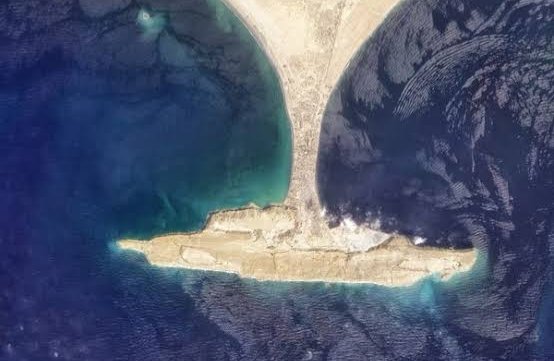
    Pakistan’s first manmade island — ‘Chaand Taara’ — will be built in Gwadar at a cost of over $10 billion. Shaped like a moon and star to represent Pakistan’s flag, it will form the cities of the Central Business District in the port city on the southwestern coast of Balochistan opposite Oman.

    According to Daily Times, located on Marine Drive and stretching towards Zero Point on the Coastal Highway, the Central Business District is to include a state-of-the-art amusement park, art and culture museum, grand theatre, concert hall, international expo centre, 5-star hotels and resorts, multiple shopping malls and waterfront walk, and a shopping promenade to name a few.

    The mega-development project that will be built around Gwadar Tower — expected to be Pakistan’s tallest building — has been detailed in the Gwadar Smart City Masterplan. The 75-page detailed report has been under development by a Chinese state-owned enterprise with assets of over $132 billion, China Communications Construction Company, and the Pakistani government as a joint-venture.

    The master plan document, prepared in conjunction with Pakistan’s Minister of Planning, Development & Reform and Gwadar Development Authority, chalks out an elaborate road map and plan on how Gwadar is to become the trade and economic hub of South Asia with a GDP per capita of $15,000 — 10 times that of Pakistan’s average.

    In line with Pakistan and China’s grand development plans for Gwadar, it will be Pakistan’s first weapon-free city. The city is being developed under the highest of international standards to be an economic hub not only for Pakistan but for the region and for this reason a robust security environment will be developed to ensure security for foreigners and expats visiting it. The security plans include the highest levels of urban security mechanisms through CCTV, vehicle management, urban video and alarm networks, and police management programmes.

    The report also quoted Balochistan Governor Amanullah Khan Yasinzai as saying that the project will be a game-changer for the people of the region.

  • Pakistan, Qatar agree to enhance bilateral trade volume

    In order to enhance bilateral trade, Pakistan and Qatar have agreed in principle on a preferential trade agreement (PTA) and a free trade agreement (FTA), The Express Tribune has reported, adding that the agreements would soon be signed after necessary formalities.

    Pakistan has also offered to establish a plant in Qatar to manufacture footballs for the FIFA World Cup 2022 as well as subsequent football tournaments.

    Nebras Power, a major investment group in Qatar’s energy sector, has expressed an interest in investing directly in Pakistan’s power sector.

    The Nebras Power Consortium will take part in the privatisation of the Haveli Bahadur Shah and Balloki power plants in Pakistan.

    It has formally informed the Pakistani government about its interest and hoped that it would promote direct cooperation between the two governments in the fields of energy and power generation.

    According to a document, Pakistan’s commerce and energy ministries attended the 5th Pak Qatar Joint Ministerial Commission meeting in Qatar last month.

    A copy of the minutes issued by the signatories of the two countries was sent to the respective ministries for implementation of the decisions made by the two countries.

    Pakistan has expressed an interest in exporting sports goods for the FIFA World Cup 2022. Qatar has welcomed Pakistan’s interest and said it would consider its goods on the basis of price and quality for the mega event.

    The document also read that the Pakistani government had fully endorsed a report sent by the Qatar government to the World Trade Organisation (WTO) to recognise its products, including Liquefied Natural Gas (LNG) and natural gas, as ecofriendly.

    Qatar has also requested additional traffic rights to enhance aviation links with Pakistan. The two countries will consider the matter on a commercial basis.

    The two countries have agreed on an air service agreement in the near future to enhance bilateral cooperation between Pakistan and Qatar in other areas of aviation and agreed to hold further meetings during the forthcoming air service talks scheduled to be held in Shi’ar Uqba, Jordan where further progress is expected in this regard.

    According to Qatar’s media, the two-way trade exchange between Qatar and Pakistan reached QR9.5 billion in 2018, witnessing an unprecedented 63pc growth as a result of better ties. The balance of trade is currently skewed in favour of Qatar due to the export of high-valued products to Pakistan. But the South Asian nation is also working aggressively to enhance collaboration in the field of manpower aiming to increase the flow of remittances, which will eventually make the economic relations more balanced.