Tag: Tranche

  • Critical IMF meeting scheduled for April 29 to approve $1.1 billion for Pakistan

    Critical IMF meeting scheduled for April 29 to approve $1.1 billion for Pakistan

    The Executive Board of the International Monetary Fund (IMF) is scheduled to meet on April 29 to deliberate on the approval of a $1.1 billion funding tranche for Pakistan.

    This amount represents the final installment of a $3 billion stand-by arrangement (SBA) with the IMF that is due to expire this month.

    The anticipated funding comes at a critical time for Pakistan’s economy, which has been struggling with a chronic balance of payments crisis.

    The country has nearly $24 billion in debt and interest repayments due over the next fiscal year, which is approximately three times more than its central bank’s foreign currency reserves.

    Meanwhile, Pakistan’s Finance Minister, Muhammad Aurangzeb, has indicated that the government is seeking a new long-term, larger loan from the IMF. Discussions are underway, with a staff-level agreement expected by early July.

    Islamabad is reportedly aiming for a multi-year agreement to promote macroeconomic stability and implement long-overdue structural reforms. However, the finance minister has not disclosed the exact loan size Pakistan is seeking.

    If approved, this would mark the 24th IMF bailout for Pakistan. The ongoing negotiations reflect the country’s continued reliance on international financial assistance to navigate its economic challenges.

    Pakistan’s economy is projected to grow by 2.6 per cent in the current fiscal year ending in June, according to the finance ministry.

    Despite this modest growth, the country continues to face high inflation, which is expected to average around 24 per cent this fiscal year, down from a record high of 38 per cent in May 2023.

    As Pakistan navigates these economic hurdles, securing the final tranche of the IMF’s stand-by arrangement and potentially a new loan agreement could provide much-needed relief and lay the groundwork for longer-term stability.

  • Pakistan’s forex reserves expected to reach $9-10 billion by year-end

    Pakistan’s forex reserves expected to reach $9-10 billion by year-end

    The Federal Minister for Finance and Revenue, Muhammad Aurangzeb, said on Tuesday that Pakistan’s foreign exchange reserves held by the State Bank of Pakistan (SBP) are expected to close the fiscal year at around $9-10 billion mark.

    This news comes amid growing optimism about the country’s financial stability and the potential for a new agreement with the International Monetary Fund (IMF).

    Speaking at the 7th Leaders In Islamabad Business Summit, themed “Collaborating for Growth,” Minister Aurangzeb outlined several positive developments in Pakistan’s economic landscape.

    The country’s central bank currently holds just over $8 billion in reserves, despite a recent $1-billion bond payment.

    Aurangzeb highlighted the dramatic increase from last year’s reserves of $3.4 billion, which covered just 15 days of imports, to over $8 billion.

    The finance minister indicated that once the IMF disburses its final tranche by the end of this week, the foreign exchange reserves would exceed $9 billion.

    He projected that by the end of June, the reserves could reach between $9-10 billion, offering about two months’ worth of import coverage.

    In his address, Minister Aurangzeb also addressed concerns about the IMF’s involvement in Pakistan’s economic recovery.

    He said that the current IMF programme is not solely driven by the international body, but is also a reflection of Pakistan’s own strategies for overcoming economic challenges.

    “This is our requirement as a country if we want to get out of the trap we are in,” he said, adding that the government had productive discussions with the IMF in Washington, D.C., to establish a broader and longer-term programme.

    The IMF mission is set to visit Pakistan in mid-May, with staff-level agreements expected by June or early July, contingent on progress with the country’s privatisation plans.

    Aurangzeb stressed that the IMF should be seen as a means to an end, rather than the end itself, emphasising that Pakistan’s long-term economic stability requires a commitment to market-driven reforms and sustainable growth opportunities.

    The summit’s inaugural session provided a platform for the finance minister to discuss the government’s efforts to stabilise the economy, promote growth, and attract international investment.

    The anticipated agreement with the IMF and a more robust foreign exchange reserve position signal a hopeful outlook for Pakistan’s economic recovery.

  • Pakistan’s forex reserves witness a dip of $127 million

    Pakistan’s forex reserves witness a dip of $127 million

    In a recent report, it was revealed that the foreign exchange reserves held by the State Bank of Pakistan (SBP) experienced a decline of $127 million during the week ending January 12, settling at $8.03 billion.

    The country’s total liquid foreign reserves, including those held by commercial banks, amounted to $13.15 billion. Specifically, commercial banks held net foreign reserves of $5.12 billion.

    The SBP attributed the reduction in reserves to debt repayments, stating, “During the week ending on January 12, 2024, the SBP’s reserves decreased by US$ 127 million to US$ 8,027.4 million due to debt repayments.”

    Notably, the previous week had also seen a decrease in Pakistan’s central bank reserves, amounting to $66 million.

    In a significant development, Pakistan received a tranche of $705.6 million from the International Monetary Fund (IMF), as confirmed in a statement by the SBP on Wednesday.

    The central bank stated, “The SBP has received SDR 528 million (equivalent to $705.6 million) on January 16, 2024, from the IMF following the successful completion of the first review by the Executive Board of the IMF under Standby Arrangement (SBA).”

    The impact of this disbursement will be reflected in the central bank reserves for the week ending January 19.

  • Gold price increases to Rs240,000 per tola amid political turmoil and IMF loan delay

    Gold price increases to Rs240,000 per tola amid political turmoil and IMF loan delay

    On Wednesday, the price of gold surged massively in Pakistan due to political turmoil following the arrest of the former prime minister and Pakistan Tehreek-e-Insaf (PTI) Chairman, Imran Khan.

    According to the All Pakistan Sarafa Gems and Jewellers Association (APSGJA), the price of gold (24 carats) rose by Rs9,900 per tola and Rs8,487 per 10 grams to reach Rs240,000 and Rs205,761, respectively.

    However, there was no increase in the international market price, which remained at $2,031 per ounce. The primary reason for the increase in gold’s price is the latest political storm that has caused violent protests across the country and led to the army’s deployment in three provinces.

    People in Pakistan are purchasing gold to protect themselves against inflation and currency depreciation, as the economy is already in dire straits. Furthermore, the delay in the revival of the International Monetary Fund (IMF) program, which negatively impacts the currency market, is bolstering the demand for gold.

    According to Brecorder, the rupee also fell to a fresh low of Rs290.22 against the US dollar in the interbank market on Wednesday, after losing Rs5.38 or 1.89 per cent. The APSGJA also reported that the price of silver reached a new high, rising by Rs100 per tola and Rs85.75 per 10 grams to settle at Rs3,100 and Rs2,657.7, respectively.

  • SBP set to raise interest rates in response to IMF’s call for tighter monetary policy

    SBP set to raise interest rates in response to IMF’s call for tighter monetary policy

    The State Bank of Pakistan’s (SBP) Monetary Policy Committee (MPC) is expected to raise interest rates during an off-cycle review scheduled for today.

    The decision to hold this meeting earlier than the previously scheduled date of March 16th was made in an effort to expedite efforts to secure the anticipated International Monetary Fund (IMF) tranche.

    SBP’s MPC, established under the SBP Amendment Act, is authorized to make decisions based on macroeconomic fundamentals. Market expectations are for a benchmark interest rate increase, given the recent rise in treasury yields and growing investor concerns about rising inflation in Pakistan and globally.

    Reports suggest that the coalition government has agreed to raise interest rates from 17 per cent to 19 per cent in response to one of the IMF’s key conditions for reviving the loan program.

    Analysts recommend advancing the MPC meeting date to avoid the failure of the next T-bill auction. Discussions with the IMF have included the possibility of further monetary policy tightening and building up foreign exchange reserves by June 2023.

    The IMF has urged the SBP to raise the policy rate by 300 to 400 basis points to achieve a positive trajectory. Pakistan is taking measures to secure IMF funding, such as raising taxes, removing blanket subsidies, and relaxing exchange rate restrictions.

    While the government is optimistic about reaching a deal with the IMF, reports indicate that the lender expects interest rates to rise. Off-cycle rate reviews are not unusual in Pakistan.

  • IMF likely to announce staff level agreement with Pakistan by this week

    IMF likely to announce staff level agreement with Pakistan by this week

    According to Syed Naveed Qamar, the Federal Minister for Commerce, Pakistan has taken all necessary measures to unfreeze a $6.5 billion credit line and is expected to reach a staff level agreement (SLA) on Extended Fund Facility (EFF) with the International Monetary Fund (IMF) this week.

    Dr Aisha Ghaus Pasha, the Minister of State for Finance, stated that Pakistan and the IMF are close to reaching an SLA, but that basic structural reforms are necessary regardless of whether they are part of the IMF program or not.

    After the formal announcement, Pakistan will receive a $1.2 billion tranche under the EFF. Qamar stated that the agreement would give investors and creditors confidence in Pakistan’s stabilising economy and that their money would remain protected.

    Qamar emphasized that the IMF program is the beginning of other funds flowing in and that increased imports would benefit exports.

    However, Pakistan is struggling to meet the tough conditions set by the IMF, such as increasing its low tax base, ending exemptions for the export sector, and raising artificially low energy prices. The country is in dire need of funds as the State Bank of Pakistan-held foreign exchange reserves only cover one month of imports.

    To meet IMF conditions, Pakistan has raised taxes, cut subsidies, and devalued its currency. Additionally, a supplementary finance bill was approved that increases sales tax from 17 per cent to 25 per cent on imports and raises general sales tax from 17 per cent to 18 per cent, increasing the burden on already inflation-stricken people.

  • Everything is going alright with IMF, says Ishaq Dar

    Everything is going alright with IMF, says Ishaq Dar

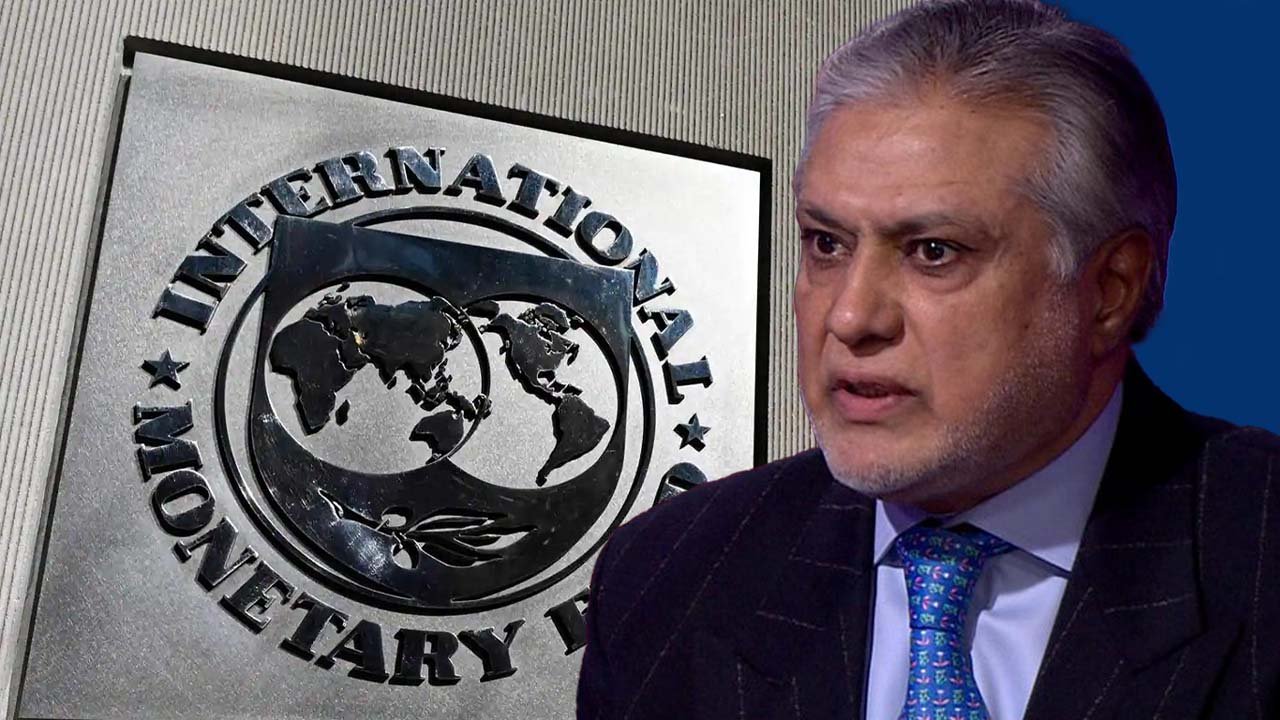
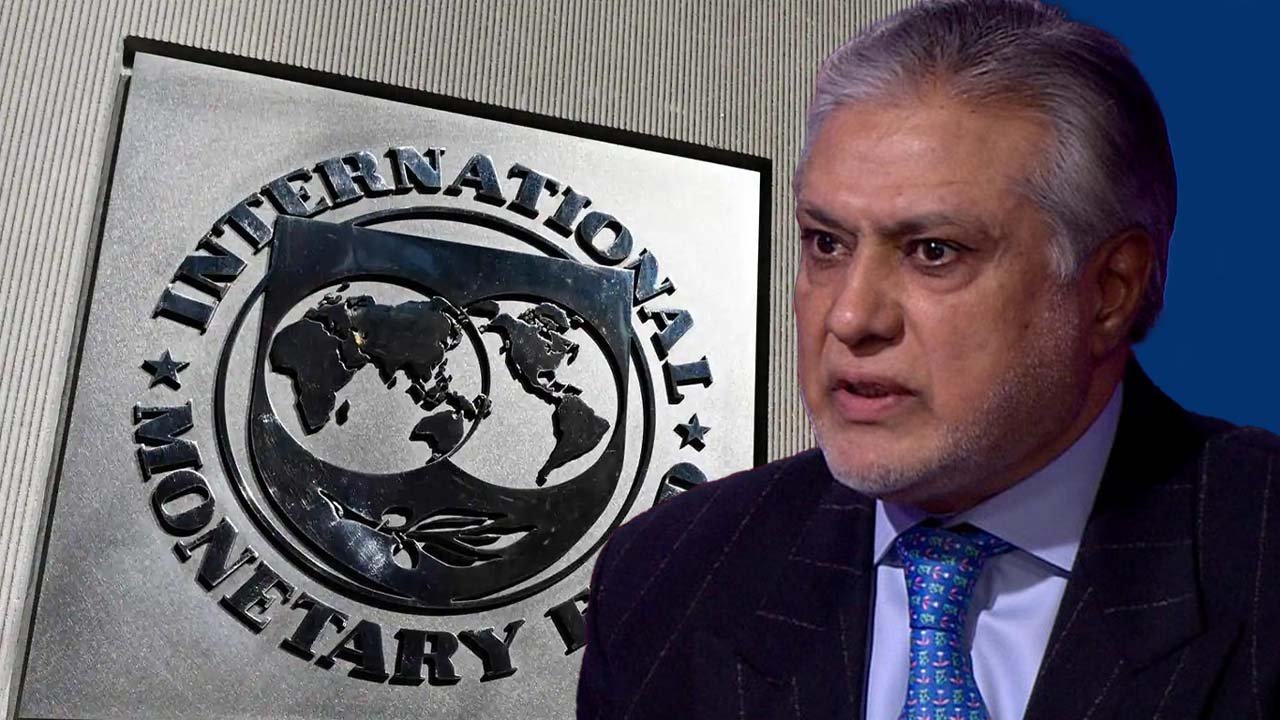
    Finance Minister Ishaq Dar said on Thursday that it is expected that the matters between the government and the International Monetary Fund (IMF) regarding the conclusion of the 9th review of the $7 billion loan program will be settled today.

    “Everything is going alright,” replied the finance minister when asked about the status of the discussions with the visiting IMF delegation. “The final round is currently underway. I have daily meetings with the IMF team and will do so again today,” he added.

    “It is expected matters will be settled today,” Dar said. “We will give you the news very soon.”

    A delegation from the IMF, led by Nathan Porter, has arrived in Islamabad for discussions surrounding the completion of the ninth review. The discussions are set to conclude on the same day.

    The successful completion of the review would result in the disbursement of $1.2 billion from the IMF and also unlock additional funding from friendly nations and other multilateral lenders, which is crucial for Pakistan to avoid default.

    Minister of State for Finance and Revenue Aisha Ghaus Pasha informed journalists on Wednesday that the government and the IMF are in close proximity to finalizing the Memorandum of Economic and Financial Policies (MEFP).

    Minister of State for Finance and Revenue Aisha Ghaus Pasha stated that the Memorandum of Economic and Financial Policies (MEFP) would be delivered to Pakistan by the IMF once all issues have been resolved. The Minister noted that significant progress had been made, but added that the IMF was seeking clarification on certain aspects, which the government team is working to address.

    In a written statement, the ministry said the talks with the IMF continued on Wednesday and “focused on fiscal table, financing, etc. There is a broad consensus on the reform actions and measures”.

    Additionally, the mission chief also held a meeting with the finance minister to provide an update on the discussions. “The mission is working on putting it all together and will finalise the MEFP,” stated the finance secretary, who declined to comment on the possibility of extending the scheduled talks in order to reach a staff-level agreement.

    According to Dawn, it is of utmost importance for Pakistan to reach a agreement with the IMF, as the foreign exchange reserves have depleted to a low of $3.09 billion as of January 27th, which is only sufficient to cover 18 days’ worth of imports.

  • Pakistan will take fiscal measures set by IMF but there will be no burden on the common man: Ishaq Dar

    Pakistan will take fiscal measures set by IMF but there will be no burden on the common man: Ishaq Dar

    Federal Minister for Finance and Revenue Ishaq Dar has categorically denied rumours suggesting that the government is considering “access to foreign exchange held with commercial banks.”

    “It is categorically denied and clarified that there is no such move under consideration of the government,” said Dar, in a series of tweets.

    The statement come days after the finance minister said that the country’s foreign exchange reserves stand at $10 billion, a much higher amount than the SBP’s $5.6 billion reserves as of December 30, 2022, since “dollars held by commercial banks also belonged to the country.”

    This comment gave rise to fears that the government may confiscate dollars from private banks as had been done in 1998 when Dar was the finance minister.

    However, Dar said that his comment was “greatly misconstrued” and nothing like this would happen.

    Dar explained at a press conference with Prime Minister Shehbaz Sharif and other federal cabinet members that before 1999, all foreign currency was deposited with the State Bank of Pakistan (SBP), and private banks were not permitted to hold any foreign currency.

    “In February 1999, when I was the finance minister, we devised a system whereby a substantial amount [of dollars] remain with [private] banks. It was on June 30, 1999 that reserves were broken down into three columns — those with the SBP, commercial banks and total.

    “Whenever Pakistan’s reserves are quoted anywhere in the world — a survey or a document — the [total figure] is quoted and then a breakdown is given. I gave a breakdown too,” he added.

    The minister claimed that certain people were to blame for the country’s dire circumstances, which caused it to drop from the 24th to the 47th largest economy in 2016.

    “Even now, they cannot tolerate any good development. They gave such a twist [to my statement],” he said, adding that while the federal cabinet was busy working for Pakistan under PM Shehbaz’s guidance, such people were spreading rumours that the government would take dollars from commercial banks.

    “Nothing of that sort will happen. Everything is all worked out … and in order. Nothing to worry about,” he assured, urging those “spreading the rumours” to play a positive national role.

    Dar also tweeted about the reserves later, saying national foreign exchange reserves always include forex held with SBP and commercial banks.

    Furthermore, Dar tweeted about the reserves and stated that SBP and commercial bank holdings are usually included in the nation’s foreign exchange reserves.

    “Recently I quoted the forex reserves figure based on this principle. Some vested elements who ruined this country’s economy in the past, gave it a deliberate twist and started a campaign as if govt was considering access to foreign exchange held with commercial banks which indeed is the property of the citizens.

    “It is categorically denied and clarified that there is no such move under consideration of the government,” he emphasised.

    The finance minister once again claimed that Pakistan’s foreign exchange reserves would increase soon.

    As of December 30, 2022, Pakistan’s foreign exchange reserves had decreased to $5.6 billion, an eight-year low. This is equivalent to imports for three weeks.

    The swift decrease has made it impossible for the government to repay its international debts without taking out new loans from allies.

    Govt to comply with IMF conditions without burdening common man

    The International Monetary Fund (IMF) programme’s ninth review, which would release $1.18 billion, has been postponed for months due to the government’s refusal to comply with some conditions imposed by the international lender.

    In today’s press conference, Dar acknowledged the delay and claimed that it was due to revenue collection. The Federal Board of Revenue (FBR) missed its goal in December, the finance minister said, and the super tax that the administration enacted in June of last year had been declared unlawful by a high court.

    Dar said that his team informed the IMF that Pakistan could recover the amount easily after the Supreme Court takes a decision on the super tax.

    “We are not changing the fiscal budget target and we will achieve it,” he claimed.

    Dar said that the IMF suggested that the government implement fiscal measures and eliminate some subsidies. “We have identified some budgetary measures, but the average person won’t be overburdened.”

    He asserted that the measures would be very specific and classified.
  • Pakistan’s removal from FATF grey list to help with its reputation and IMF’s next review

    Pakistan’s removal from FATF grey list to help with its reputation and IMF’s next review

    Experts predict that the country’s reputation would recover and it would get a credit rating upgrade from international agencies as Pakistan was taken off the Financial Action Task Force (FATF) list of nations under increased monitoring.

    According to Geo, the removal will allow Pakistan to smoothly complete the forthcoming review of the IMF’s Extended Fund Facility since the International Monetary Fund (IMF) used the execution of FATF action plans as a structural benchmark.

    Pakistan has been removed off the FATF’s “grey list,” as was to be expected, but the nation will continue to cooperate with the organisation and the Asia Pacific Group to strengthen its anti-money laundering (AML) and counter-terrorist financing (CFT) framework. FATF made this announcement following the conclusion of its two-day meeting in Paris on Friday.

    Fitch downgrades Pakistan’s rating to CCC+

    Yet on the other side, Fitch Ratings lowered Pakistan’s Long-Term Foreign-Currency Issuer Default Rating (IDR) to “CCC+” from “B-” on Friday, which experts believe is bad news for the nation’s recovery from the mega floods. The reversal comes as the country’s fragile economy continues to face challenges from all directions.

    The company claims that sovereign states with a grade of “CCC+” or lower do not normally receive outlooks. The primary factors that contributed to a downgrading, according to the agency, were increasing liquidity and policy concerns.

    “The downgrade reflects further deterioration in Pakistan’s external liquidity and funding conditions, and the decline of foreign exchange reserves,” Fitch Ratings said. “This is partly a result of widespread floods, which will undermine Pakistan’s efforts to rein in twin fiscal and current account deficits.”

  • IMF board approves disbursement of $1.17 billion in bailout funds

    IMF board approves disbursement of $1.17 billion in bailout funds

    The seventh and eighth reviews of Pakistan’s bailout programme were approved by the International Monetary Fund (IMF) board on Monday, releasing $1.17 billion to the cash-strapped nation.

    Pakistan is now set to get a $1.17 billion loan tranche from the international lender within the next six days.

    “Alhamdolillah, the IMF board has approved the revival of our EFF programme. We should now be getting the seventh and eighth tranche of $1.17 billion,” said Finance Minister Miftah Ismail in a tweet announcing the news.

    Additionally, the Finance Minister praised the Prime Minister, Shehbaz Sharif, “for taking so many tough decisions and saving Pakistan from default.”

    The previous payment was made to Pakistan in February, and the subsequent tranche was scheduled to be released following a review in March.

    However, the PTI government drastically reduced petroleum prices by providing substantial subsidies to the country, which caused the program’s fiscal objectives to be missed.