Tag: trans community

  • Protest after Peru classifies transsexuality as mental disorder

    Protest after Peru classifies transsexuality as mental disorder

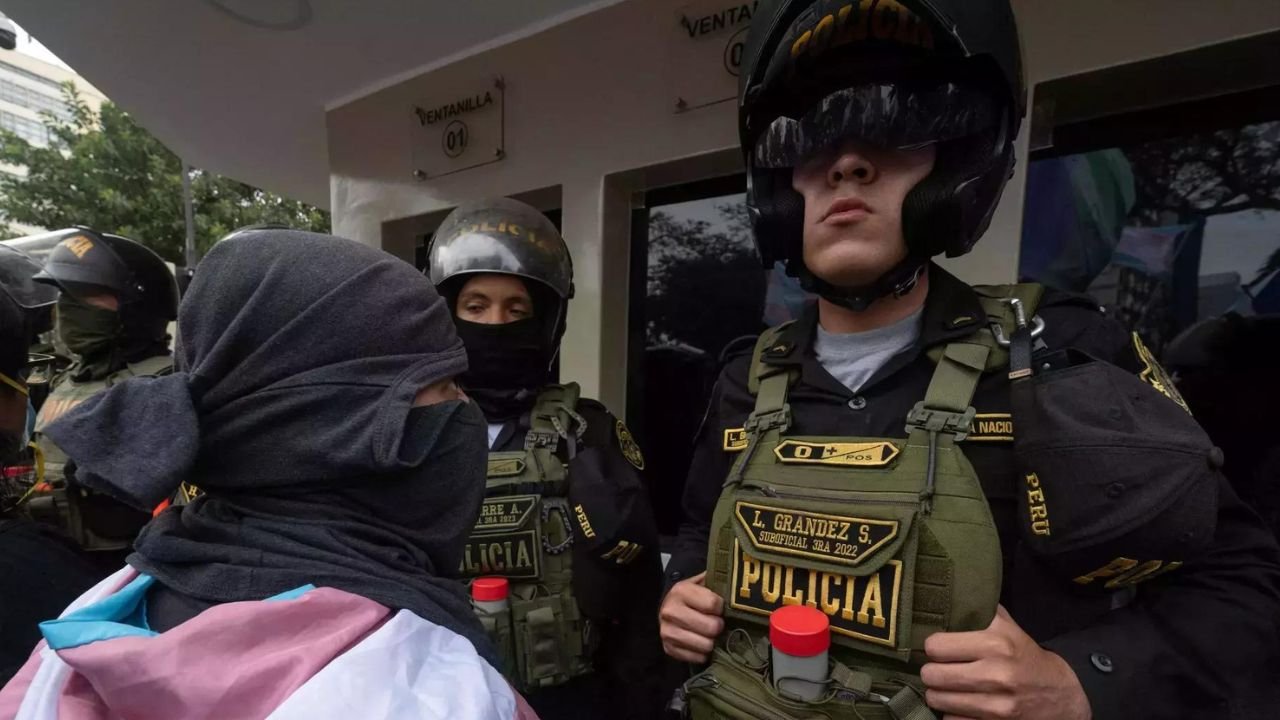
    LGBTQ groups protested Friday outside Peru’s health ministry after the government issued a decree listing transsexualism as a mental disorder.

    “It is a decree that takes us back three decades,” said Jorge Apolaya, spokesman of the Collective Pride March, a Lima-based rights group.

    “We cannot live in a country where we are considered sick,” he said.

    Transgender people are those who reject the sex they were assigned at birth. Some opt for surgical or medical intervention.

    The government on May 10 updated its list of insurable health conditions — which since 2021 has offered benefits for mental health treatment — to include services for transgender people.

    In the decree, the health ministry describes the condition as a “mental disorder” — an obsolete term long officially abandoned by the World Health Organization.

    More than 200 activists gathered outside the health ministry to demand the revocation of the decree on Friday — the International Day Against Homophobia, Biphobia and Transphobia.
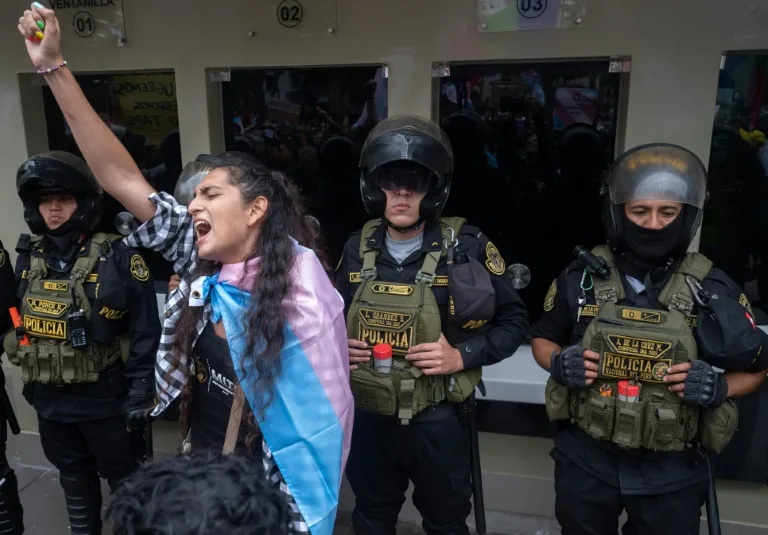
    Police guard the entrance of Peru’s Ministry of Health during a protest staged by LGBTQ groups against a new government decree listing transsexualism as a “mental disorder” (Cris BOURONCLE)

    “It is a regulation that violates us … they are positioning us as sick people, as if we have a problem,” said 25-year-old Afrika Nakamura.

    With slogans like “It’s not a  disease, it’s diversity!” and “We are trans and we are not sick,” the protesters blocked the busy avenue in front of the ministry for a few hours.

    No clashes with police were reported.

    “We demand the repeal of this transphobic and violent decree, which goes against our trans identities in Peru,” activist Gianna Camacho of the Coordinacion Nacional LGTBIQ+ told AFP.

    “We are not mentally ill and we do not suffer from any mental disorder,” she added.

    The government said it would not scrap the decree.

    Health ministry official Carlos Alvadrado told AFP that doing so would “remove the right to care.”

    The ministry has previously insisted it does not consider gender diversity as an illness, and in a statement expressed “our respect for gender identities and our rejection of the stigmatization of sexual diversity.”

    It said the decree was meant merely to extend mental health coverage “for the full exercise of the right to health and well-being” of those who want or need it.

    An article on the website of Human Rights Watch describes the decree as “profoundly regressive” in a country that does not allow same-sex marriage nor for transgender people to change their identity documents.

    For Percy Mayta, a medical doctor and activist, “pathologizing” transgender people “opens the door to… conversion therapy” — which UN bodies have equated to torture and is not illegal in Peru.

    In its press statement, Peru’s health ministry underlined that “the sexual orientation and gender identity of a person does not in itself constitute a physical or mental health disorder and therefore should not be subjected to medical treatment or care or so-called reconversion therapies.”
  • Ruh-roh, Maria B quotes trans supporter Lady Gaga in campaign video

    .It seems that while insisting she has better knowledge about who is a real woman and who is not, Maria B should have first researched which celebrities champion trans causes.

    A video for the promotion of Maria B’s upcoming fashion brand is going viral because Mona Hussain, another vocal anti-trans rights person, was seen quoting Lady Gaga’s famous song ‘Born This Way’ in it.

    “Women empowerment is when a woman is allowed to reach her full potential in whatever way that may be. What it certainely means is that we do not need men to tell us who we are, or define our roles… In the words of the famous Lady Gaga, ‘Baby, you were literally born this way!”

    Mona Hussain is a psychologist who has collaborated in the past with Maria B in transphobic videos.

    What Maria B chooses to completely filter out here is that ‘Born This Way’ was written by Lady Gaga in support of the transgender community, and it features lyrics that encourages people to love themselves, regardless of being gay, straight or transgender:

    “No matter gay, straight, or bi
    Lesbian, transgender life
    I’m on the right track, baby
    I was born to survive
    No matter Black, white, or beige
    Chola or Orient made
    I’m on the right track, baby
    I was born to be brave!”

    Lady Gaga has also called out transphobes in interviews, for instance in an interview with Anderson Cooper, she was asked about the rumor that she is secretly a man to which she responded:

    “Maybe I do…Would it be so terrible? Why the hell am I gonna waste my time and give a press release on whether or not I have a penis? My fans don’t care and neither do I.”

  • Punjab: a joy-less land

    Punjab: a joy-less land

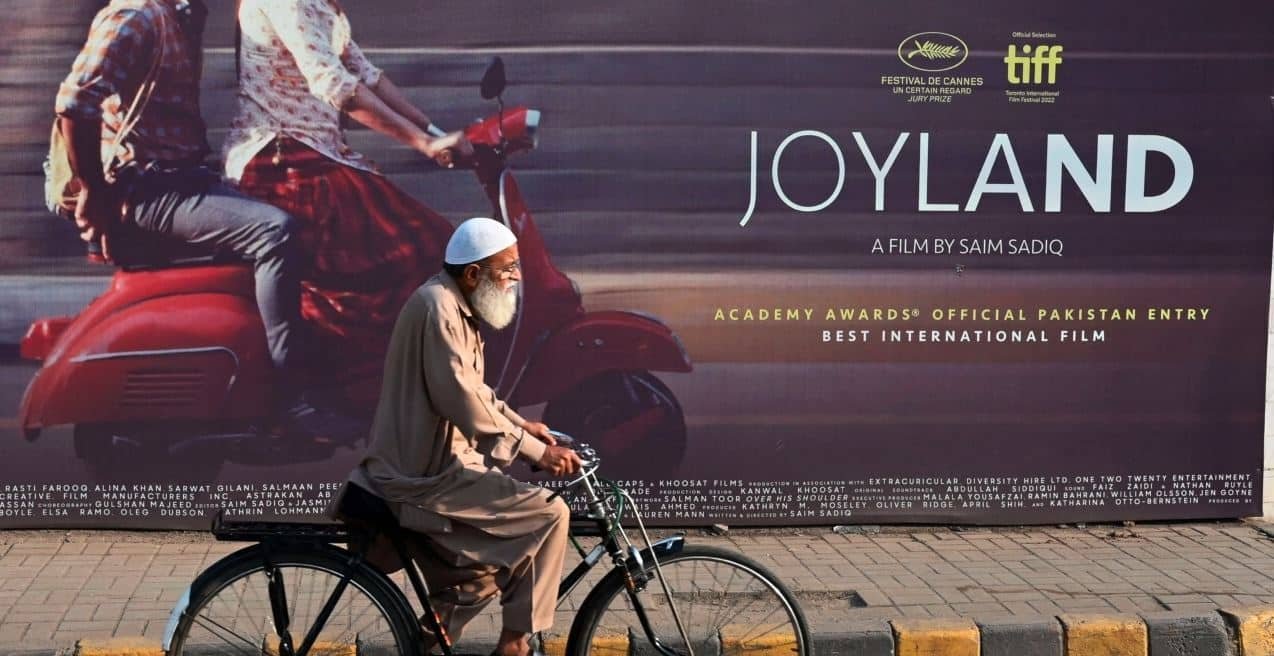
    Under pressure from conservatives, the federal government banned Saim Sadiq’s Joyland a few days before its countrywide release. After severe backlash on social media and mainstream media, the federal government finally reconsidered its decision and lifted the ban on Joyland. Less than 24 hours after the federal government decided to lift the ban, the Punjab government of issued a notice to the film’s producer, Sarmad Khoosat, saying that they cannot exhibit the film in the jurisdiction of Punjab province. Joyland is the country’s official entry for the Oscars, paving the way for Pakistan to make a name at the Academy Awards, with a bright chance to bring the Oscar home.

    So how did a film promising to spread joy, receiving a 10-minute standing ovation from the august audience at the prestigious Cannes Film Festival, ended up getting banned in its own country and the very province it was filmed in, Punjab. Set in the eastern city of Lahore, Joyland tackles issues of gender and sexuality – taboo topics in Pakistan – through the story of a married man who falls in love with a transgender dancer, played by transgender actress Alina Khan. From what we understand, the story is about love, acceptance and tackling issues in relevance to gender. So the problem is basically because of the love between a transgender and a man in the movie.

    Any marginalised community in a country goes through struggles and challenges of its own. From their right to live to their right to freedom, their existence revolves around many obstacles. Pakistan is no different. The transgender community in Pakistan is a marginalised community that on a daily basis is ridiculed, harassed, abused, and given life threats. And this has been a pattern for many years. So the treatment with “Joyland” has been no different.

    The question is: what are we scared of? Does the representation of a marginlised community make us weak as a nation or does it make us stronger? How is upholding the ban in the wake of no real logic correct? How is Joyland a threat to the country’s cultural and social fabric? Pakistani cinema was in need of a moment like Joyland, until the bans which took away the joy from the land where transgenders are only laughed at, mocked, abused and not to forget, killed. It is acceptable to show transgenders being made fun of, but once they are shown as normal persons, living normal lives, it somehow becomes problematic and against social values. Isn’t it hypocritical of us? Joyland was one way people could understand and learn the pain and troubles the trans community goes through. But systems in Pakistan work and behave differently for the ones who are ‘different’. So here we are banning a film on a transgender and barring them an existence in fiction. Now imagine their existence in the real world. What is peculiarly interesting about the public outcry for the ban on “Joyland” is from people who are up in arms against a movie they haven’t seen.

    We as a nation want to see the cinema and film industry thrive — but look at what we do to people who are the reason that art, film and Pakistan can flourish. We are habitual haters of a thriving society. We just hope that Punjab, which has significantly become a “joyless land” learns from the provinces next to it, remembers to laugh, be okay to experiment and above all, becomes a joyland.