Tag: Transparency International

  • ‘Vote ko Izzat Do’ with a new twist

    ‘Vote ko Izzat Do’ with a new twist

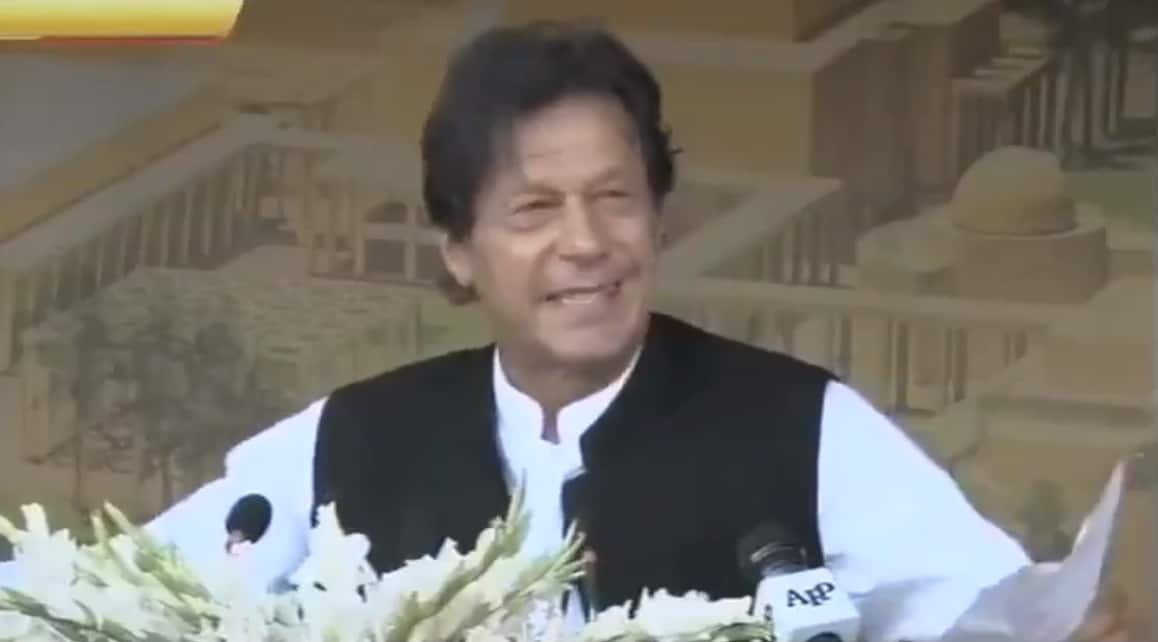
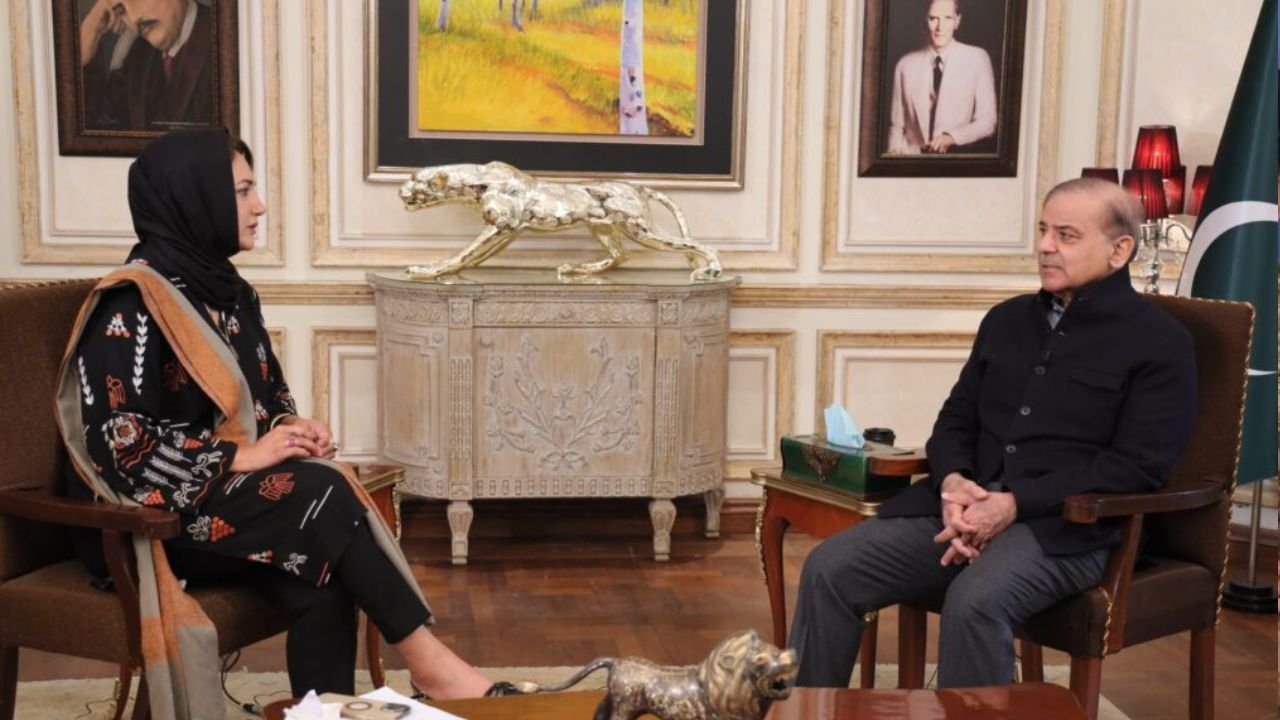
    In a recent appearance on the Hum News program ‘Faisala Aap Ka with Asma Shirazi,’ Pakistan Muslim League Nawaz (PML-N) President Shehbaz Sharif stated that ‘Vote Ko Izzat Do’ has a different meaning.

    When asked why the civilian supremacy narrative of ‘Vote ko Izzat do’ can’t be heard anymore, he said, “It means respecting the person who voted for me and fulfilling the trust they have shown in me.”

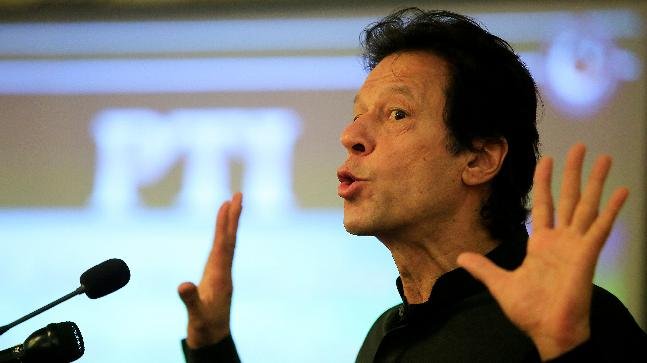
    He claimed that the May 9 riots were a deliberate conspiracy against Chief of Army Staff General Asim Munir, masterminded by Imran Khan, the founding chairman of Pakistan Tehreek-e-Insaf (PTI), and his party.

    Shehbaz Sharif highlighted the distinction between statements and conspiracies. He alleged that on May 9, the founder of PTI and his team conspired to create divisions within the military, leading to betrayal against Pakistan. He criticized PTI for diverting the nation from progress to chaos.

    Sharif expressed his views on various matters, including the loss of PTI’s iconic electoral symbol ‘Bat,’ attributing it to the party’s missteps. He also commented on Imran Khan’s recent 10-year jail sentence, emphasizing that the issue is about upholding the law, irrespective of whether decisions are perceived as good or bad.

    Responding to a question about PPP chairman Bilawal Bhutto’s invitation for a public debate, Shehbaz Sharif said, “I’m in favor of Bilawal’s debate challenge but let him extend the invitation in his province for a fair comparison.”

    Regarding political decisions, Shehbaz Sharif mentioned that if the majority is not attained through elections, consultations would be held. He confirmed that Nawaz Sharif would be the candidate for the premiership, subject to consultation, and the decision on the Chief Executive of Punjab would be made through consultation with Nawaz Sharif. The decision for the presidency would be made by the parliament.

    Stressing the importance of political and economic negotiations, Shehbaz Sharif called for the completion of the five-year term in Parliament. He recounted an incident during tensions with India, where the founder of PTI allegedly refused to attend a meeting, leading the then head of the army, General Bajwa, to return in disappointment.
  • Imran’s government more corrupt than Shehbaz Sharif’s: Transparency International

    Imran’s government more corrupt than Shehbaz Sharif’s: Transparency International

    During the Pakistan Democratic Movement (PDM)-led government in 2023, Pakistan made improvements in its ranking on the Transparency International (TI) Corruption Perceptions Index (CPI).

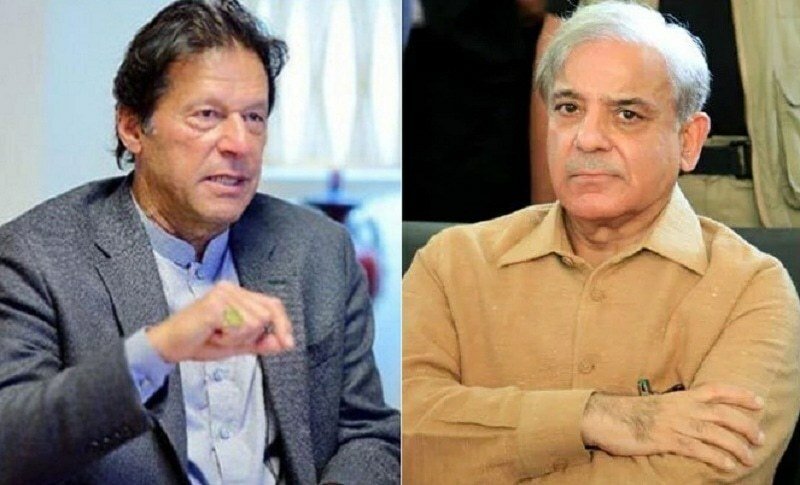
    The improvement in ranking shows that corruption decreased during the Shehbaz Sharif-led government as compared to Pakistan Tehreek-e-Insaf (PTI) founder Imran Khan’s tenure from 2018–2022.

    According to TI’s previous report, corruption in Pakistan increased since 2018.

    Imran Khan promised to wipe out corruption in Pakistan when he came into power. However, during his tenure, Pakistan’s ranking on the global corruption index went down, the opposite of what he had promised.

    According to a TI report released on Tuesday, Pakistan is now on number 133 among 180 countries.

    The previous report ranked Pakistan at 140, while the country’s overall score fell to 27 in the same year — the lowest since 2012.

    The recent report from TI indicates that Pakistan’s score on CPI increased by two points from 27 to 29. Additionally, the country’s rank has improved by 7 positions.

  • Opposition leaders say Naya Pakistan is corrupt, attack PM Khan for new corruption report

    Opposition leaders say Naya Pakistan is corrupt, attack PM Khan for new corruption report

    As the government defends Transparency International’s (TI) Corruption Perceptions Index (CPI) 2021 report, Opposition leaders criticise Prime Minister (PM) Imran Khan for saying that the TI report supports PM’s claims and accuse his government of breaking all records of corruption.

    Joining the chorus of blames, Opposition Leader in the National Assembly (NA) Shehbaz Sharif said, “Corruption rampant in ‘Naya’ Pakistan of anti-corruption Mujahid, PTI govt has broken all records of corruption in the last 20 years.”

    He further tweeted that under his brother and Pakistan Muslim League- Nawaz (PML-N) supremo Nawaz Sharif’s rule, corruption had decreased despite massive development projects being undertaken. Shehbaz further wrote that it went down due to “transparency, good governance, and legal reforms”.

    PML-N’s Vice President Maryam Nawaz said, “Imran Mafia, who emptied the pockets of the people, bravely wiped his hands on Pakistan.”

    Pakistan People’s Party (PPP) MNA Shazia Marri said that Imran Khan’s past claims that he would root out corruption from the country were lies.

    Jamaat-i-Islami (JI) emir Siraj-ul-Haq said that PM Khan had proven, quite literally, that he was dangerous for the country. He claimed that the blunder committed by this government over three years was unmatched in the country’s 74-year history.

  • PM Khan says Pak corruption getting better but corruption index says Pak is getting more corrupt

    PM Khan says Pak corruption getting better but corruption index says Pak is getting more corrupt

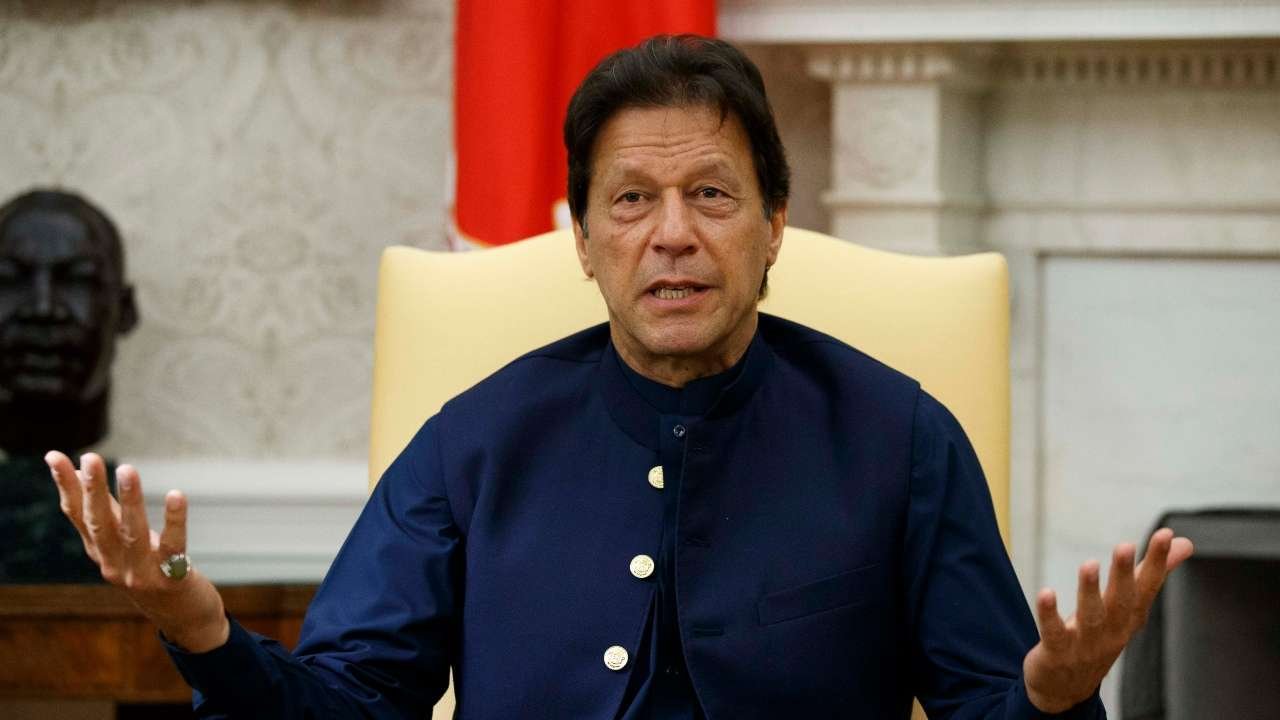
    Prime Minister (PM) Imran Khan said that the Pakistan Tehreek-e-Insaf (PTI) government has taken the most steps against corruption in the country’s history.

    The premier, while chairing a session of the federal cabinet on Tuesday, discussed the report released by Transparency International according to which Pakistan has been ranked 140 out of 180 countries, slipping further down to 16 spots over the last year, on the Corruption Perceptions Index (CPI) 2021.

    Federal Minister for Information and Broadcasting Fawad Chaudhry, commenting on Pakistan’s low ranking on Transparency International’s CPI, said that it was because of the absence of rule of law in the country and state capture as opposed to financial corruption.

    State capture is a type of systemic political corruption in which private interests significantly influence a state’s decision-making processes to their own advantage.

    The minister said all the international institutions that helped determine country rankings had Pakistan maintaining its previous ranking — except the Economist Intelligence Unit (EIU), which dropped the country’s ranking.

    “If you ascertain that who is heading the Economist in Pakistan, you will find that why Pakistan’s ranking was dropped,” he added.

  • Transparency International’s Corruption Perception Index 2021: Pakistan scores 28 out of 100

    Transparency International’s Corruption Perception Index 2021: Pakistan scores 28 out of 100

    Pakistan has been ranked 140 out of 180 countries, slipping further down to 16 spots over the last year, on the Corruption Perceptions Index (CPI) 2021 by Transparency International, reports The News.

    Pakistan’s score dropped by three points to 28 on the global corruption index. Last year, the country’s score was 31.

    “It shows that corruption has increased in Pakistan as compared to the last year,” said the anti-graft watchdog in its report.

    “The index, which ranks 180 countries and territories by their perceived levels of public sector corruption according to experts and businesspeople, uses a scale of zero to 100, where zero is highly corrupt and 100 is very clean,” the organisation said.

    The top countries on the index are Denmark (88), Finland (88), and New Zealand (88), all of which also rank in the top 10% in the world on the Democracy Index civil liberties score.

    However, Somalia (13), Syria (13), and South Sudan (11) remain at the bottom of the CPI. Syria is also ranked last in civil liberties.

    Of the 23 countries whose CPI score significantly declined since 2012, 19 also declined on the civil liberties score.

    Moreover, out of the 331 recorded cases of murdered human rights defenders in 2020, 98% occurred in countries with a CPI score below 45, read the statement.

  • PTI’s Pakistan more corrupt than PML-N’s Pakistan for second consecutive year: Transparency International

    PTI’s Pakistan more corrupt than PML-N’s Pakistan for second consecutive year: Transparency International

    Transparency International (TI) — a Berlin-based international non-governmental organisation combating global corruption — on Thursday released a new report, according to which, the country under the Pakistan Tehreek-e-Insaf (PTI) government, for the second consecutive year, has witnessed more corruption than it did in the outgoing year of the former ruling Pakistan Muslim League-Nawaz (PML-N).

    According to TI’s global report on the 2020 Corruption Perception Index (CPI), while Pakistan’s ranking and CPI score in 2019 dropped from 117 to 120 and from 33 to 32, respectively, the ranking has now fallen down to 123 and CPI score to 31 in 2020.

    The report comes at a time when the Prime Minister (PM) Imran Khan-led government boasts of the success of its promised accountability drive against opposition lawmakers and government officials. The same has time and again been termed as “political victimisation” by those on the radar of the National Accountability Bureau (NAB).

    Before the second consecutive drop, Pakistan witnessed a slight improvement in the 2018 CPI, scoring a point higher than in 2017 but remaining unchanged in the rankings. The country scored 33 out of 100 on the index — one point better than its score of 32 in 2017 and 2016. Its ranking, however, remained unchanged at 117 out of 180 countries, in 2018.

    TI’s annual report on CPI is formulated on the basis of input from 13 international agencies. In the case of Pakistan, however, the assessment of eight agencies is taken into account. These include the World Economic Forum Executive Opinion Survey; the World Bank Country Policy and Institutional Assessment; the World Justice Project Rule of Law Index; the Bertelsmann Stiftung Transformation Index; the Economist Intelligence Unit Country Risk Service; the Global Insight Country Risk Ratings; the IMD World Competitiveness Center World Competitiveness Yearbook Executive Opinion Survey; and the Varieties of Democracy project’s findings.

    Pakistan in the last 11 years had improved its index score from 23 in 2010 to 33 in 2018. However, never in the said time period had Pakistan been assessed to have performed negatively when compared to the previous year, which has now happened twice.

  • Egg on face of Modi’s India with highest bribery rate in Asia

    Egg on face of Modi’s India with highest bribery rate in Asia

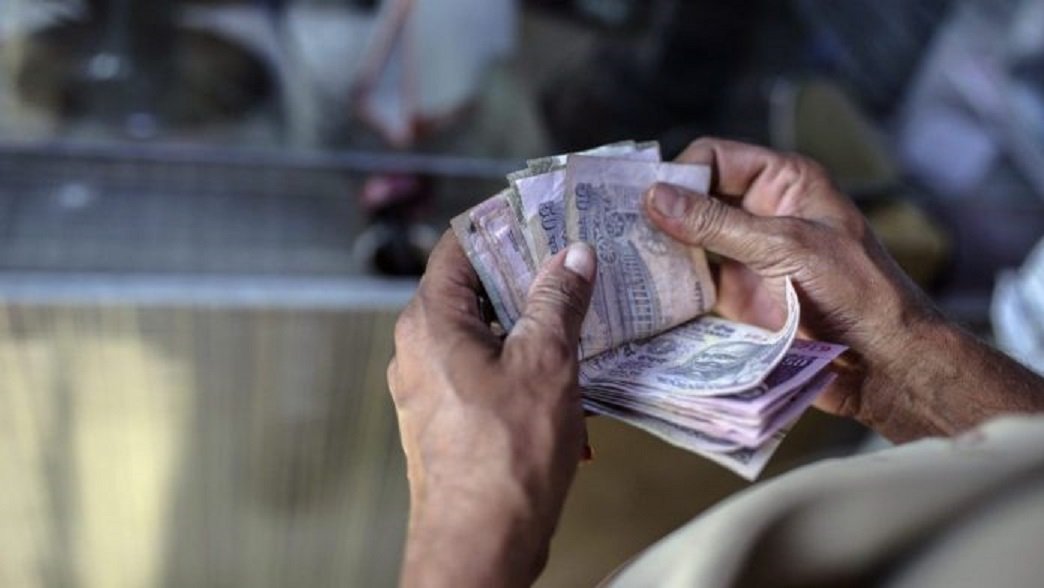
    India has the highest bribery rate in Asia and the most number of people who use personal connections to access public services, according to a new report by Transparency International (TI).

    According to Global Corruption Barometer (GCB) Asia, nearly 50 per cent of those who paid bribes were asked to do so, while 32 per cent of those who used personal connections said they would not receive the service otherwise.

    The report is based upon the survey which was conducted between June 17 and July 17 this year in India with a sample size of 2,000.

    “With the highest bribery rate [39 per cent] in the region, India also has the highest rate of people using personal connections to access public services [46 per cent],” the report said.

    Bribery in public services continues to plague India. Slow and complicated bureaucratic process, unnecessary red tape and unclear regulatory frameworks force citizens to seek out alternate solutions to access basic services through networks of familiarity and petty corruption, the report said.

    “Both national and state governments need to streamline administrative processes for public services, implement preventative measures to combat bribery and nepotism, and invest in user-friendly online platforms to deliver essential public services quickly and effectively,” the report said.

    Although reporting cases of corruption was critical to curbing the spread, a majority of citizens in India, 63 per cent, think that if they reported corruption, they would suffer retaliation, it said.

    In several countries, including India, Malaysia, Thailand, Sri Lanka and Indonesia, sexual extortion rates are also high and more must be done to prevent sextortion and address specific-gendered forms of corruption, the report said.

    Sextortion is extorting money or sexual favours from someone by threatening to reveal evidence of their sexual activity through means like morphed images.

    In India, 89 per cent think government corruption is a big problem, 18 per cent offered bribes in exchange for votes and 11 per cent experienced sextortion or know someone who has.

    “About 63 per cent of surveyed people think the government is doing well in tackling corruption while 73 per cent said their anti-corruption agency is doing well in the fight against corruption,” it said.

    Based on fieldwork conducted in 17 countries, the GCB surveyed nearly 20,000 citizens in total.

    The report said the results showed that nearly three out of four people think corruption is a big problem in their country and the survey also found that nearly one in five people who accessed public services, such as health care and education, paid a bribe in the preceding year.

    This equates to approximately 836 million citizens in the 17 countries surveyed, it said.

    After India, Cambodia has the second-highest bribery rate at 37 per cent, followed by Indonesia (30 per cent) while the Maldives and Japan maintain the lowest overall bribery rate (2 per cent), followed by South Korea (10 per cent) and Nepal (12 per cent).

    “However, even in these countries, governments could do more to stop bribes for public services,” the report said.

    The report concluded by noting that daily experience with corruption and bribery remains alarmingly high, with nearly one in five citizens paying a bribe to access key government services, such as health care or education, and one in seven being offered a bribe to vote one way or another at elections.

    “In several countries, including India, Malaysia, Thailand, Sri Lanka and Indonesia, sexual extortion rates are also high and more must be done to prevent sextortion and address specific-gendered forms of corruption,” it said.

    The report further said that to provide victims of corruption with channels for redress, governments must ensure that bribery was criminalised and actively investigated and prosecuted.

    “Citizens must have access to safe and confidential reporting mechanisms and governments must do more to ease citizens’ fear of retaliation in reporting corruption. Despite these challenges, citizens are largely optimistic about the future and believe that ordinary people can make a difference in the fight against corruption,” the report said.

  • PTI’s Pakistan more corrupt than PML-N’s Pakistan: Transparency International

    PTI’s Pakistan more corrupt than PML-N’s Pakistan: Transparency International

    Transparency International (TI) — a Berlin-based international non-governmental organisation combating global corruption — on Thursday released a new report, according to which, the country under the Pakistan Tehreek-e-Insaf (PTI) government has witnessed more corruption in 2019 than it did in the outgoing year of the former ruling Pakistan Muslim League-Nawaz (PML-N).

    According to TI’s global report on the 2019 Corruption Perception Index (CPI), while Pakistan’s ranking dropped from 117 to 120 in 2019, the CPI score also dropped from 33 to 32.

    Here’s what Twitterati have to say about the report that was to determine if corruption in the country under the PTI government has decreased as Prime Minister (PM) Imran Khan’s promised accountability drive continues against opposition lawmakers and government officials.

    PAKISTAN AND CPI:

    Pakistan witnessed slight improvement in the 2018 CPI, scoring a point higher than in 2017 but remaining unchanged in the rankings.

    According to Geo, the country scored 33 out of 100 on the index — one point better than its score of 32 in the previous year. Its ranking, however, remained unchanged at 117 out of 180 countries, same as 2017.

    TI’s annual report on CPI is formulated on the basis of input from 13 international agencies. In the case of Pakistan, however, the assessment of eight agencies is taken into account. These include the World Economic Forum Executive Opinion Survey; the World Bank Country Policy and Institutional Assessment; the World Justice Project Rule of Law Index; the Bertelsmann Stiftung Transformation Index; the Economist Intelligence Unit Country Risk Service; the Global Insight Country Risk Ratings; the IMD World Competitiveness Center World Competitiveness Yearbook Executive Opinion Survey; and the Varieties of Democracy project’s findings.

    Pakistan in the last 10 years (since 2010) has improved its index score from 23 in 2010 to 33 in 2018. In 2016 and 2017, Pakistan maintained the same score, 32, which in 2018 increased to 33. However, never in these last ten years has Pakistan been assessed to have performed negatively as compared to the previous year.