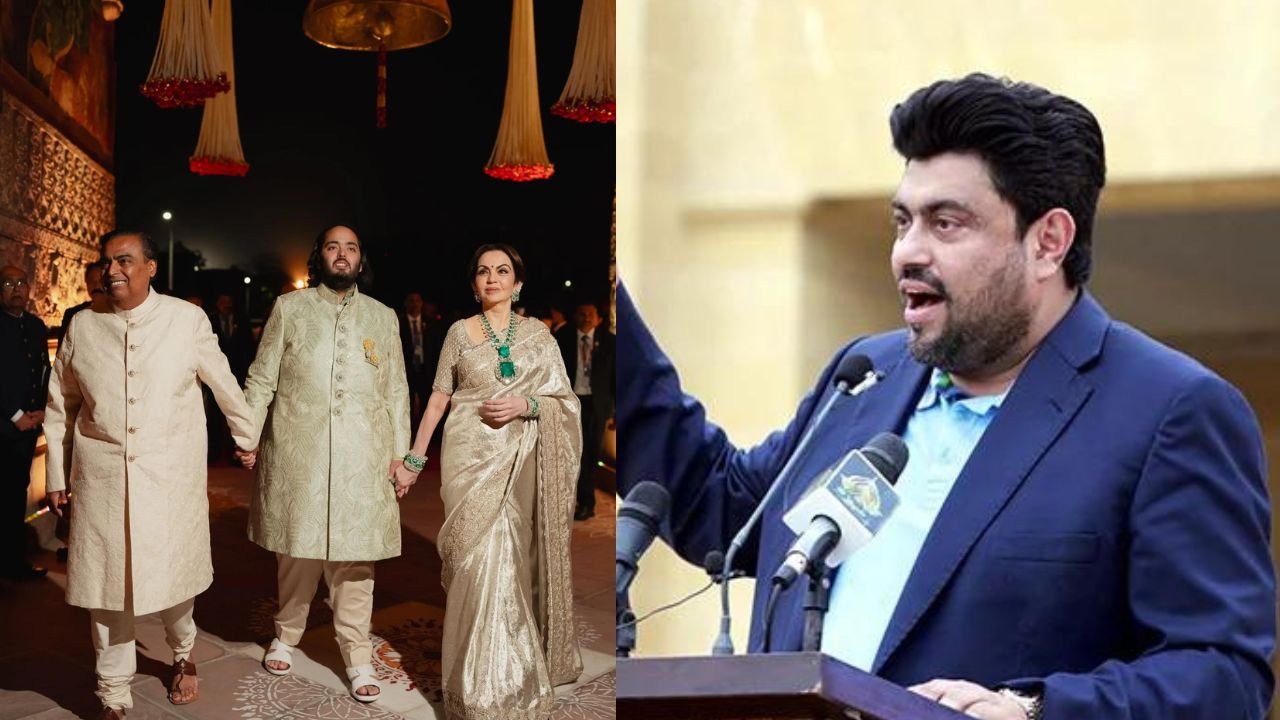
The May 9 report from the caretaker government doesn’t just talk about the role of incarcerated Prime Minister Imran Khan in the riots but also reveals how multiple Pakistan Tehreek-e-Insaf’s (PTI) leaders encouraged party workers to participate in violent protests.
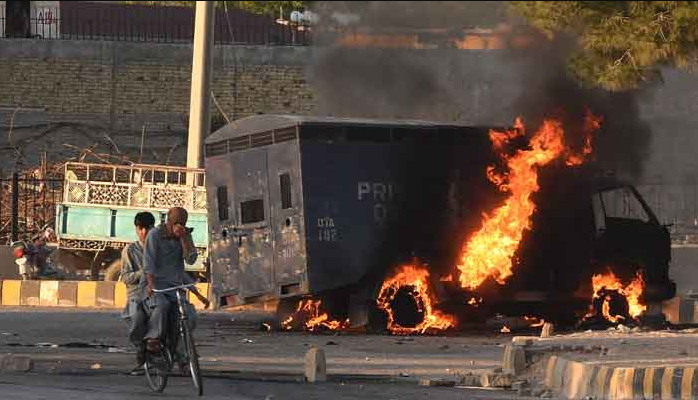
The report revealed that on May 9, protests flared up at 300 locations in the country, going on to describe the role of every individual in the entire event.
“Upon Mr Khan’s arrest, PTI leaders promptly took to social media to spread lies about Mr Khan’s custody and encourage people to violence. It was widely alleged that Mr Khan was being tortured and that he was likely to be assassinated. The language employed was sensationalist, inflammatory and it consistently encouraged violence,” said the report presented before the present cabinet a few days back.
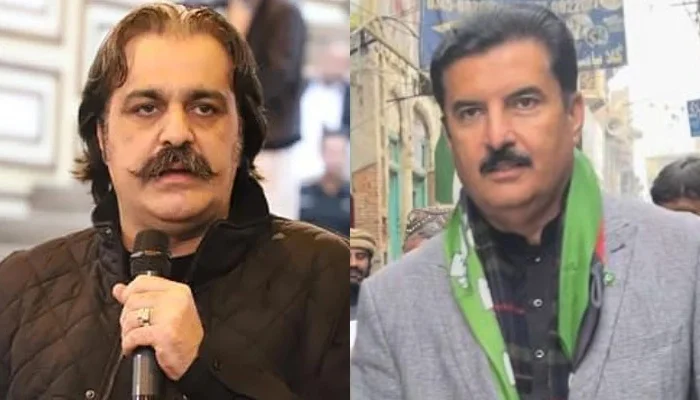
“Some instances of lies and incitement to violence by PTI leaders on that day are as follows. Hammad Azhar tweeted at 1437 hours to allege that Mr Khan was being tortured. Ms Zartaj expressed fear at 1510 hours that Mr Khan would be killed in custody. Murad Saeed tweeted at 1437 hours, 1444 hours and 1620 hours in which he, respectively, called PTI workers to gather at designated spots, not to let authorities torture and kill Mr Khan, and to make earth hell for those who consider themselves powerful. Farrukh Habib tweeted at 1651 hours asking people to lay down their lives but not let the police torture Mr Khan. Ali Amin Gandapur tweeted at 1712 hours telling workers it was now or never and to protect Khan with their lives. Ali Zaidi tweeted at 1623 hours and asked his workers to shut down the province (Sindh). Ms Anam Sheikh, Ms Shandana Gulzar Khan, Ms Kanwal Shauzab tweeted within a short span of each other encouraging people to protest at GHQ Rawalpindi. Senator Ejaz Chaudhary tweeted at 1428 hours calling all party workers to shut down the whole country. Faisal Javed tweeted at 1448 hours alleging Mr Khan was being tortured. Shahryar Afridi tweeted at 1536 hours implying that the traitors who had arrested Mr Khan had attacked the nation. Omar Malik tweeted a video message at 1555 hours encouraging people to march towards the residence of Corps Commander, Lahore.”
“Shortly after Mr Khan’s arrest, certain foreign based vloggers uploaded video messages making unsubstantiated allegations of torture and encouraged people to attack state institutions. Many of these vloggers incited general public to attack military installations. Most alarmingly, they tried to incite rebellion amongst armed forces and encouraged army officers and jawans to revolt against their command. These vloggers included Adil Raja, Haider Mehdi, Wajahat Khan, Moeed Pirzada and Shaheen Sehbai. Adil Raja and Haider Mehdi encouraged army officers to revolt,” said the report.
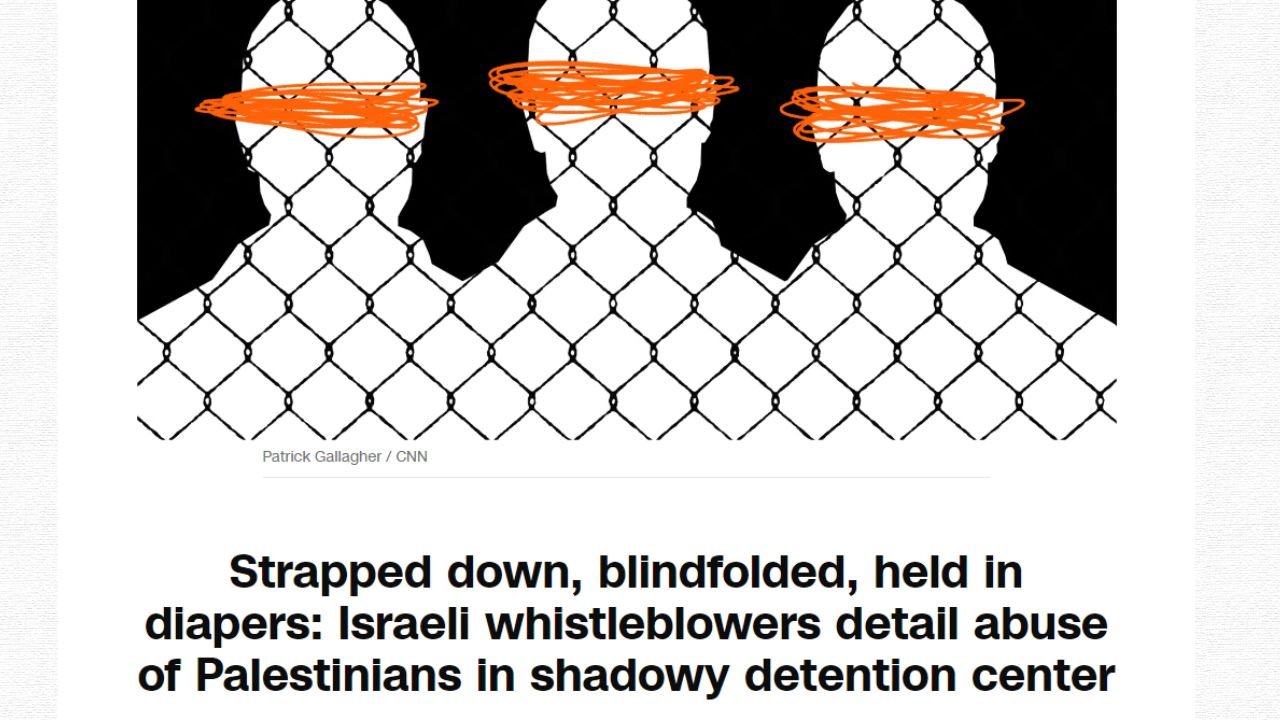
CNN has published and aired a damning report with the help of Israeli whistleblowers working at the Sde Teiman detention camp in Israel. The exposé has revealed systemic abuses by the military, including prisoners being restrained, blindfolded, and forced to wear diapers.
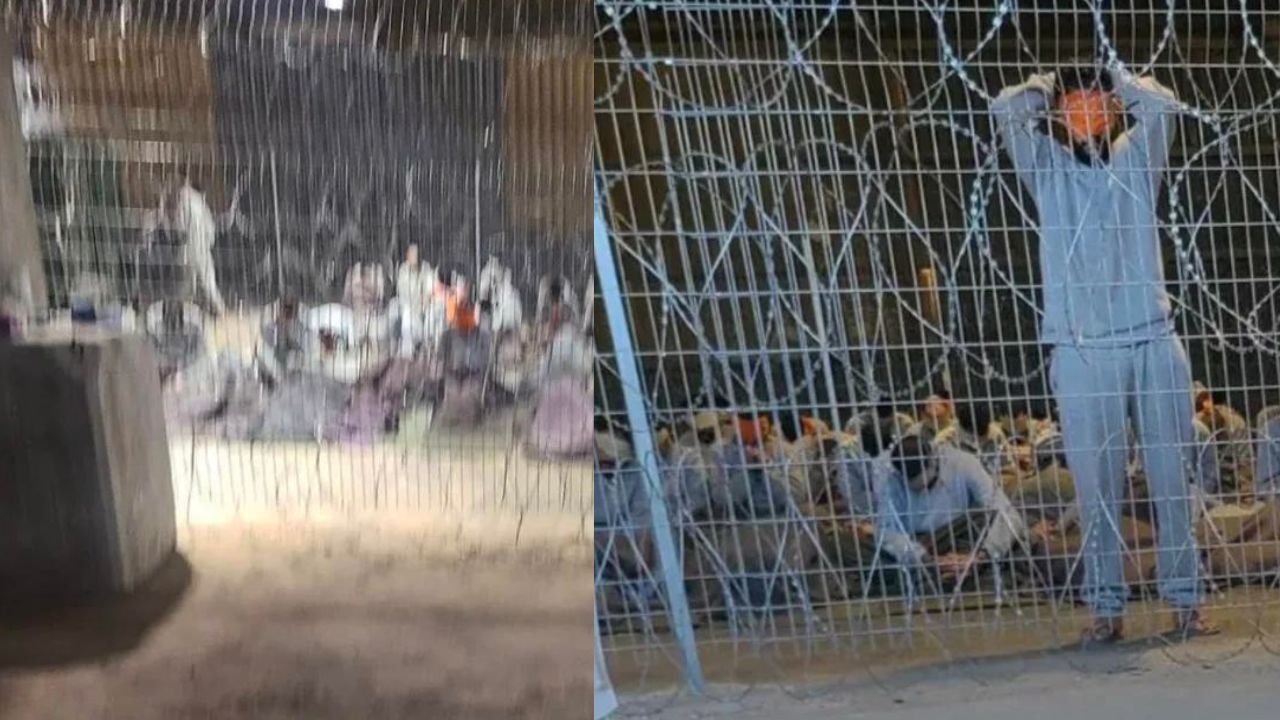
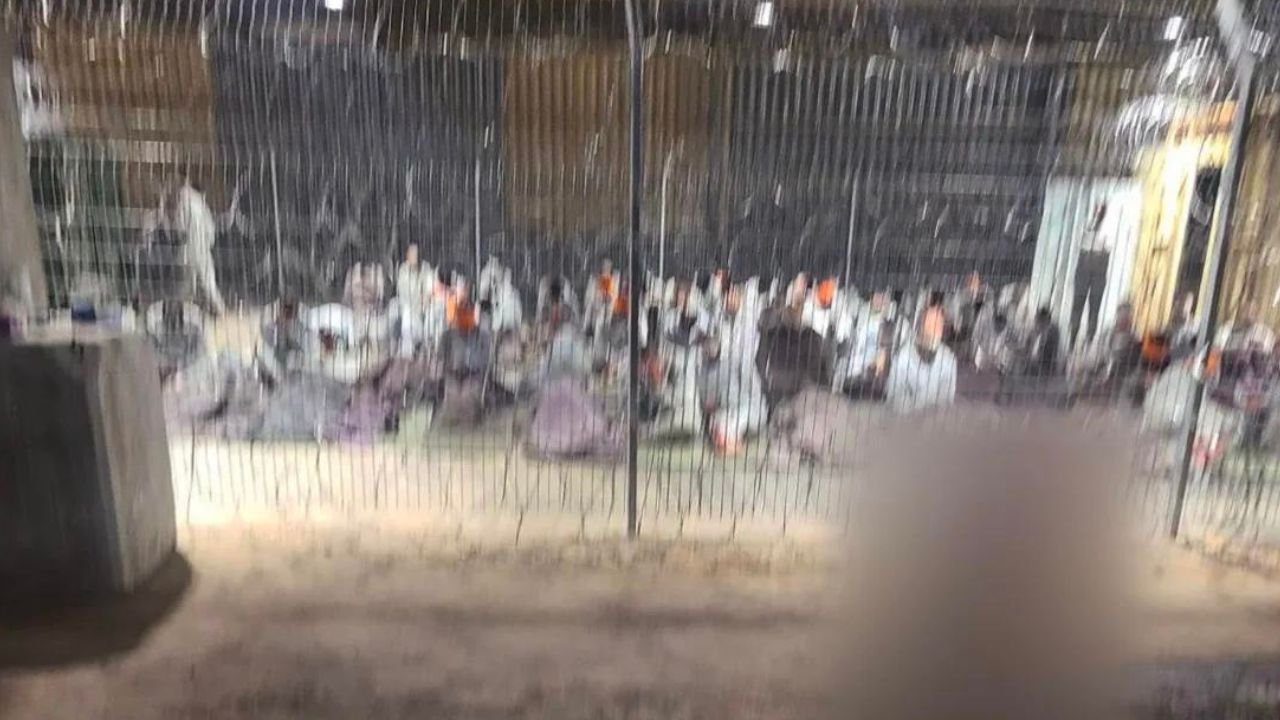
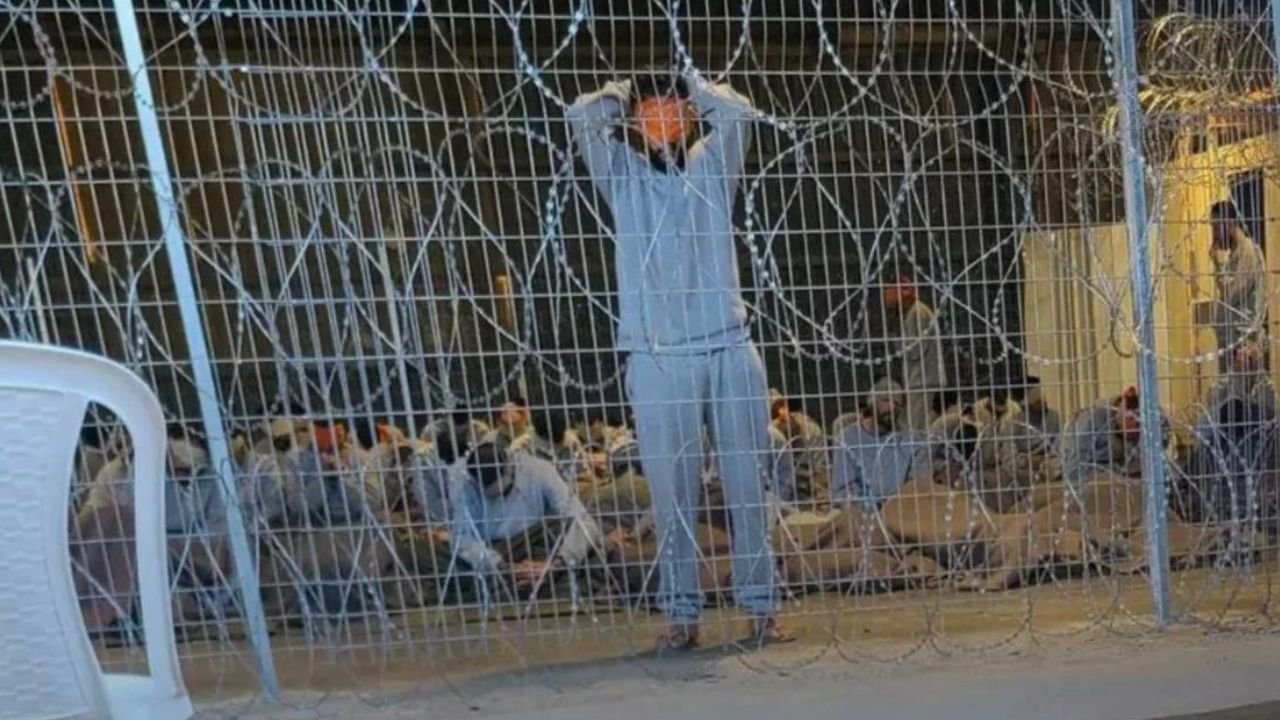
Israel’s military base, which is now a detention center in the Negev desert, was photographed twice by an Israeli worker of a scene that he says continues to haunt him.
Picture showed rows of men in gray tracksuits sitting on paper-thin mattresses, ringfenced by barbed wire. The detainees were blindfolded, their heads hanging heavy under the harsh glare of floodlights.
The whistleblower told CNN about the conditions these men were kept in, detailing that they are forbidden from speaking to each other, so they mumble to themselves.
“We were told they were not allowed to move. They should sit upright. They’re not allowed to talk. Not allowed to peek under their blindfold.” Guards were instructed “to scream uskot” – shut up in Arabic – and told to “pick people out that were problematic and punish them,” the report laid out.
Where is Sde Teiman?
Sde Teiman is located some 18 miles from the Gaza frontier and is split into two parts: enclosures where around 70 Palestinian detainees from Gaza are placed under extreme physical restraint, and a field hospital where wounded detainees are strapped to their beds, wearing diapers and fed through straws. “They stripped them down of anything that resembles human beings,” said one whistleblower, who worked as a medic at the facility’s field hospital. “(The beatings) were not done to gather intelligence. They were done out of revenge,” said another whistleblower. “It was punishment for what they (the Palestinians) did on October 7 and punishment for behavior in the camp.”
Why is it a paradise for medical interns?
The whistleblowers give a peek into the very common practice of amputation of prisoners’ limbs due to injuries sustained by constant handcuffing. The detention centre is also called “a paradise for interns” because sometimes underqualified medics perform procedures here and learn through practice.
Accounts of Palestinians held in the Israeli detention centre
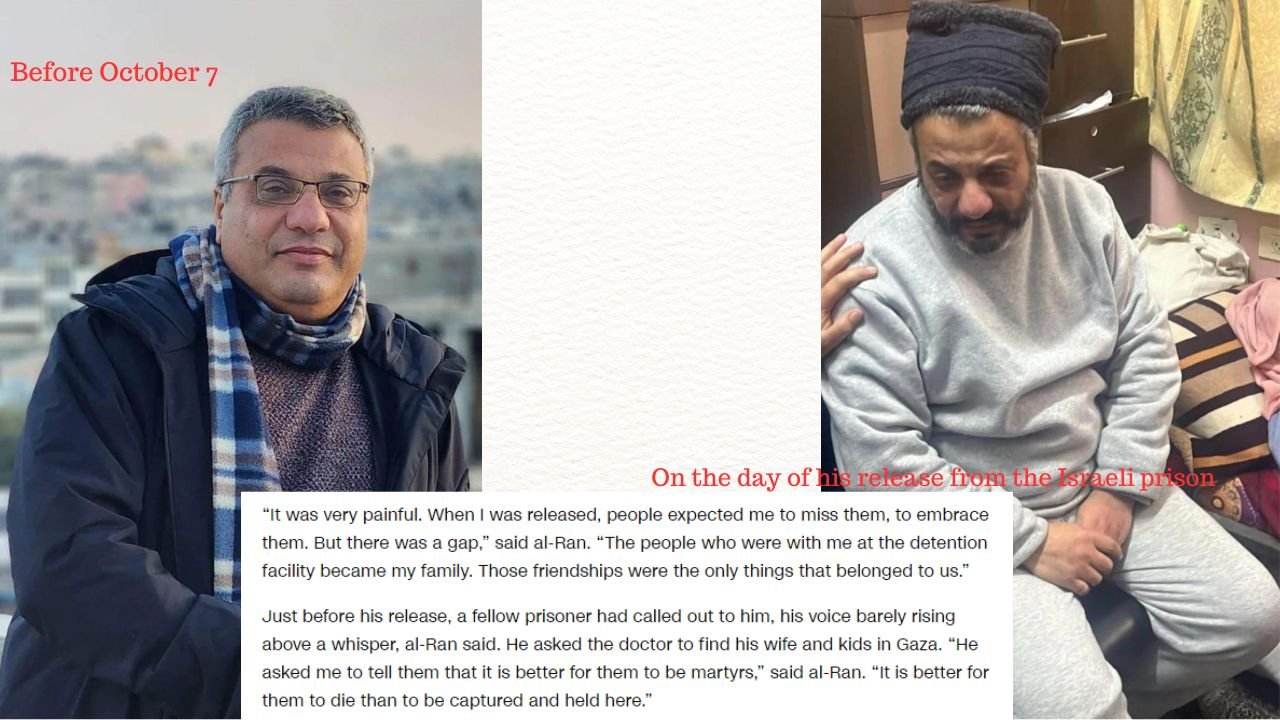
CNN interviewed Dr. Mohammed al-Ran who headed the surgical unit at Northern Gaza’s Indonesian hospital, one of the first to be shut down and raided as Israel carried out its aerial, ground and naval offensive.
He was arrested on December 18, he said, outside Gaza City’s Al-Ahli Baptist Hospital, where he had been working for three days after fleeing his hospital in the heavily bombarded north.
He was stripped down to his underwear, blindfolded and his wrists tied, then dumped in the back of a truck where, he said, the near-naked detainees were piled on top of one another as they were shuttled to a detention camp in the middle of the desert.
“We looked forward to the night so we could sleep. Then we looked forward to the morning in hopes that our situation might change,” said Dr. Mohammed al-Ran, recalled.
Al-Ran was held in a military detention center for 44 days, he told CNN. “Our days were filled with prayer, tears, and supplication. This eased our agony,” said al-Ran.
Punishment for speaking to each other
A prisoner who committed an offense such as speaking to another would be ordered to raise his arms above his head for up to an hour. The prisoner’s hands would sometimes be zip-tied to a fence to ensure that he did not come out of the stress position.
For those who repeatedly breached the prohibition on speaking and moving, the punishment became more severe. Israeli guards would sometimes take a prisoner to an area outside the enclosure and beat him aggressively, according to two whistleblowers and al-Ran.
Unleashing dogs as form of “the nightly torture”
That whistleblower and al-Ran also described a routine search when the guards would unleash large dogs on sleeping detainees, lobbing a sound grenade at the enclosure as troops barged in. Al-Ran called this “the nightly torture.”
“While we were cabled, they unleashed the dogs that would move between us, and trample over us,” said al-Ran. “You’d be lying on your belly, your face pressed against the ground. You can’t move, and they’re moving above you.”
The same whistleblower recounted the search in the same harrowing detail. “It was a special unit of the military police that did the so-called search,” said the source. “But really it was an excuse to hit them. It was a terrifying situation.”
“There was a lot of screaming and dogs barking.”
Strapped to beds in the hospital
“If you imagine yourself being unable to move, being unable to see what’s going on, and being completely naked, that leaves you completely exposed,” the whistleblower said. “I think that’s something that borders on, if not crosses to, psychological torture.”
Another whistleblower said he was ordered to perform medical procedures on the Palestinian detainees for which he was not qualified.
Response of IDF
The Israeli Defence Forces did not directly deny accounts of people being stripped of their clothing or held in diapers. Instead, the Israeli military said that the detainees are given back their clothing once the IDF has determined that they pose no security risk.
Two Palestinian prisoners associations said last week that 18 Palestinians – including leading Gaza surgeon Dr. Adnan al-Bursh – had died in Israeli custody over the course of the war.
Sde Teiman and other military detention camps have been shrouded in secrecy since their inception. Israel has repeatedly refused requests to disclose the number of detainees held at the facilities, or to reveal the whereabouts of Gazan prisoners.
Sindh Police took action on Sunday after footage of a Senior Superintendent of Police (SSP) serving tea to political leaders went viral on social media.
Sindh Inspector General (IG) Ghulam Nabi Memon termed the officer’s action “very wrong”, adding that a written explanation will be sought from him.
IG Memon added that though the act was done in an individual capacity, nonetheless the officer will have to give an answer.
The viral video shows the senior cop serving tea to political leaders who are participating in a ceremony. Sindh minister and Pakistan Peoples Party (PPP) leader Saeed Ghani can also be seen in the video.
A SSP is a BPS-19 grade officer in the government of Pakistan.
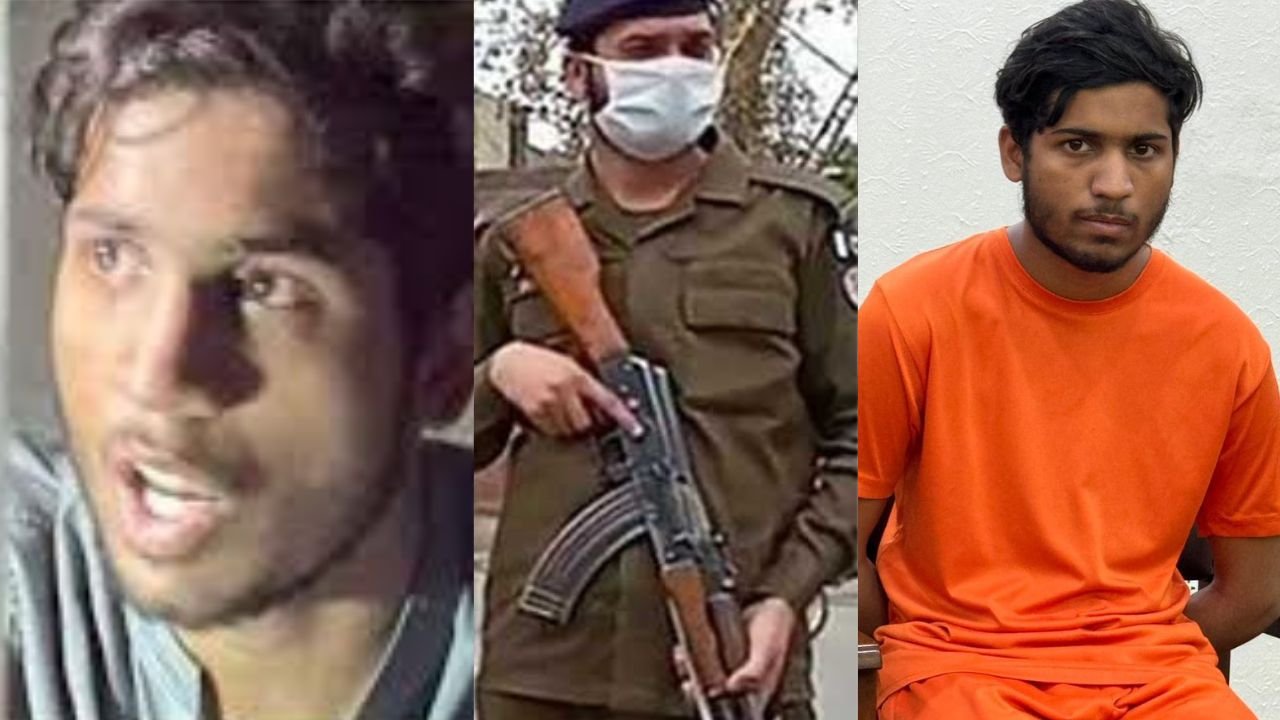
A suspected serial-killer of the police and alleged member of the banned militant group Tehrik-i-Taliban Pakistan (TTP), Faizan Butt, who was reportedly involved in three attacks on police officials in Lahore within a week, was killed along with three other terrorists during an encounter in Karol Ghatti on Sunday night.
The counter-terrorism department’s spokesperson told the media that the team took the arrested terrorists to Karol Jungle for seizure of weapons. Meanwhile, about six terrorists opened fire on the police, as a result, four of the terrorists were shot dead by the firing of their accomplices while three managed to escape.
The police seized two Kalashnikovs and a pistol from the spot, he said.
UPDATE: “The target killer involved in killings’s of Lahore police was himself killed in a gun battle with militants during a recovery operation.”
The Counter Terrorism Department Punjab in a statement claimed that Faizan Butt who went by pseudonym Usman Khurasani was taken to… https://t.co/FcHiZebeU2
— The Khorasan Diary (@khorasandiary) May 12, 2024
Faizan had shot dead a sub-inspector and a constable after following them when they were unarmed on their way back home. He had also shot and injured another police constable. Investigations revealed that he recorded the attacks by using a pen camera, ensuring that the victim was dead before leaving. He then sent the recordings to his handlers as proof.
Initial investigations suggested that the suspect was frustrated because the police had registered a case against him.
The CTD had received information that he had contacted some people in his area to help him join a militant organisation.
Later, Faizan got arrested for carrying explosives and he was sent to prison. There he met a jailed leader of a banned sectarian outfit who helped him in getting released on bail.
He went to Afghanistan where he had meetings with TTP leaders who assigned him the task of killing six policemen to prove his loyalty.
The suspect revealed in police custody that the banned group had arranged a 30-bore and a 9mm pistol for the killings.
Faizan’s father was a manager in a factory and lived in Shadbagh. His mother had separated from him and lived in the private housing society.
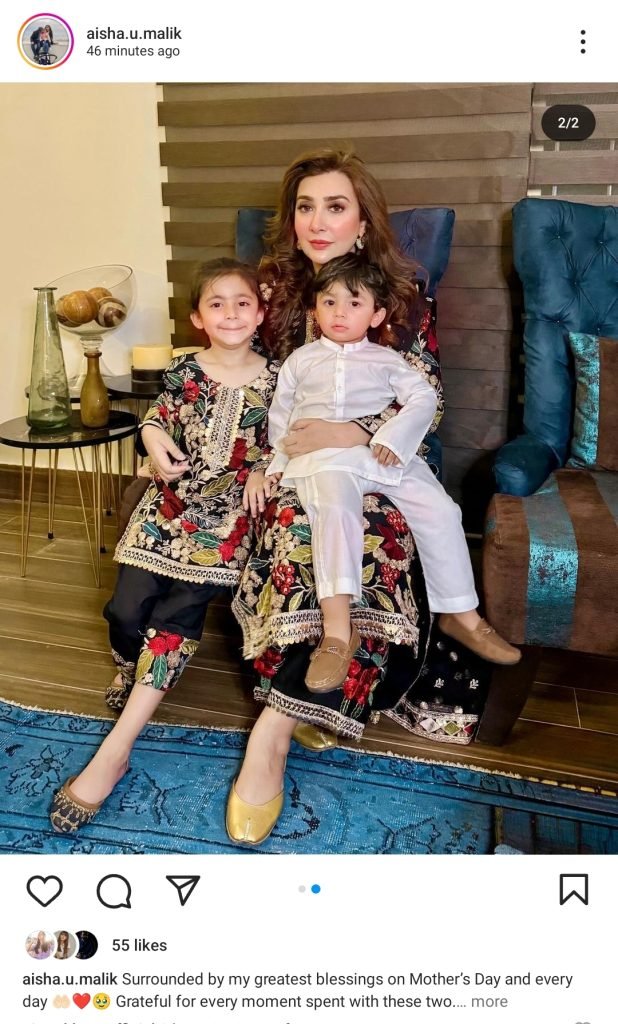
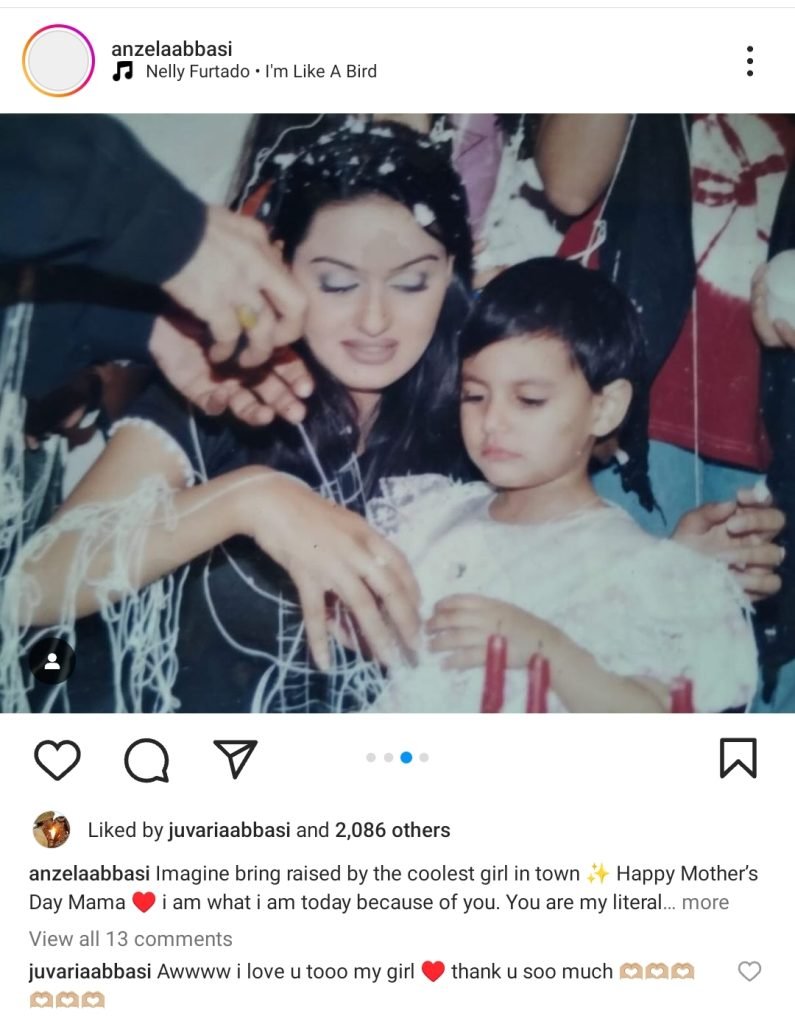
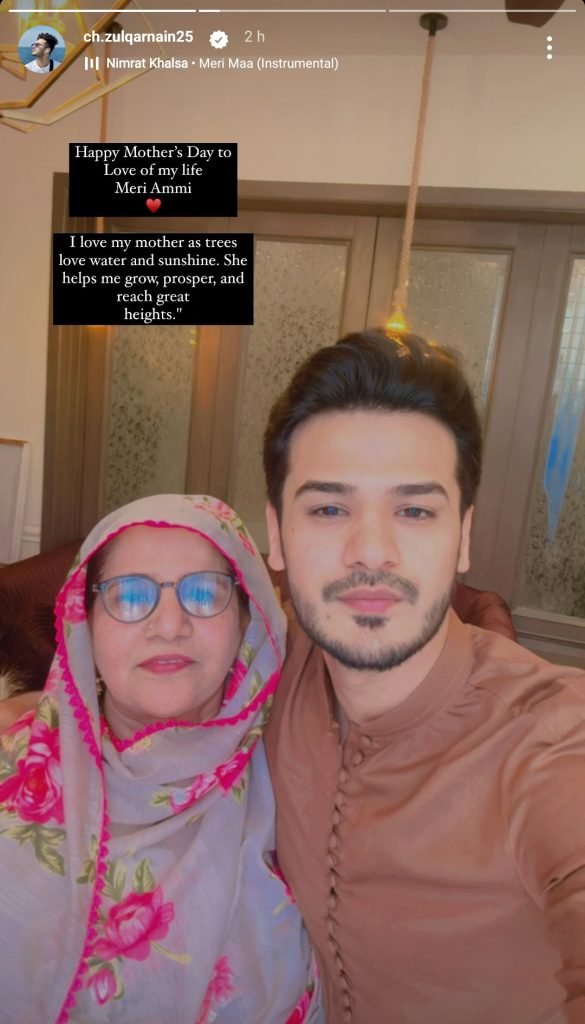
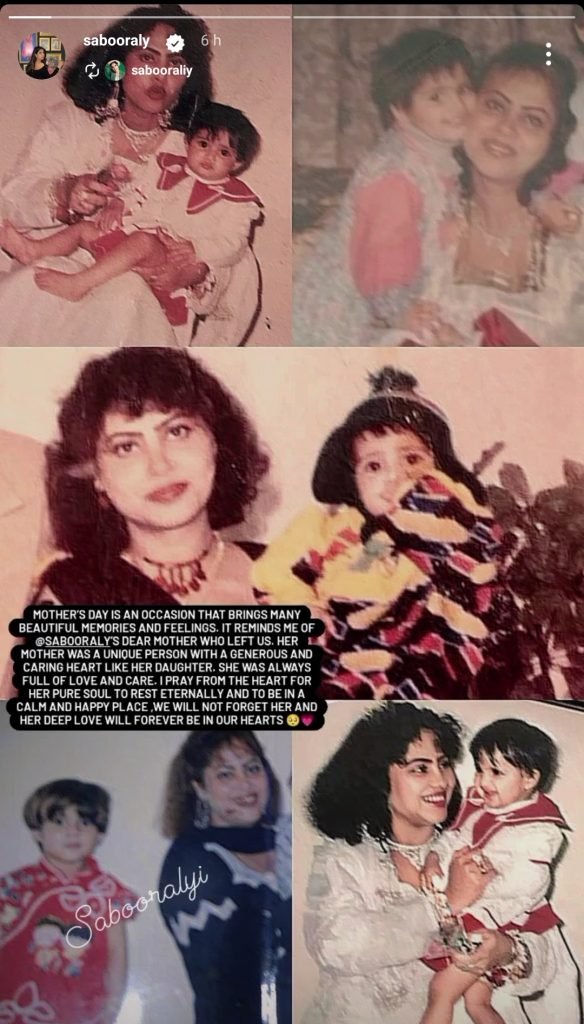
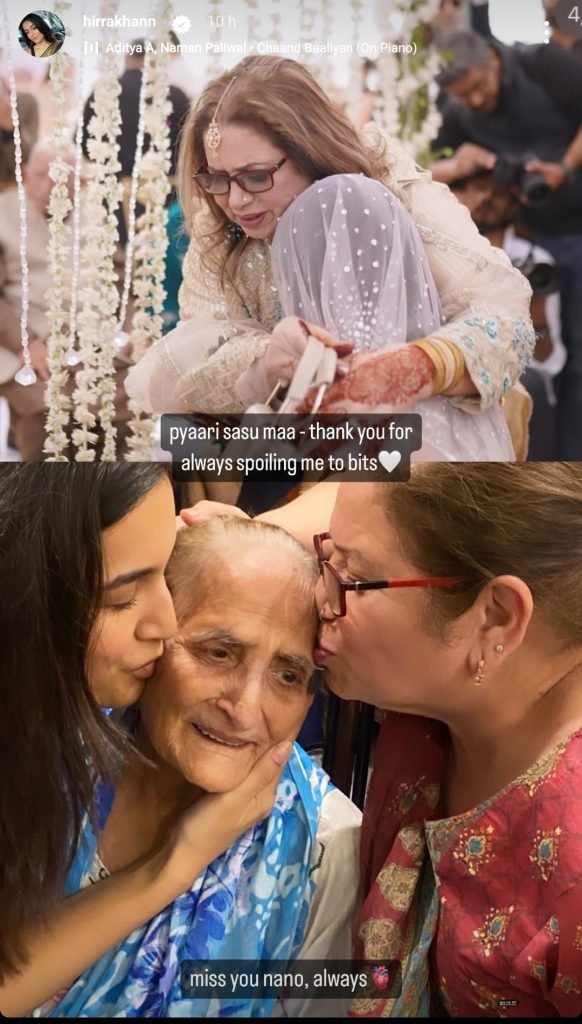
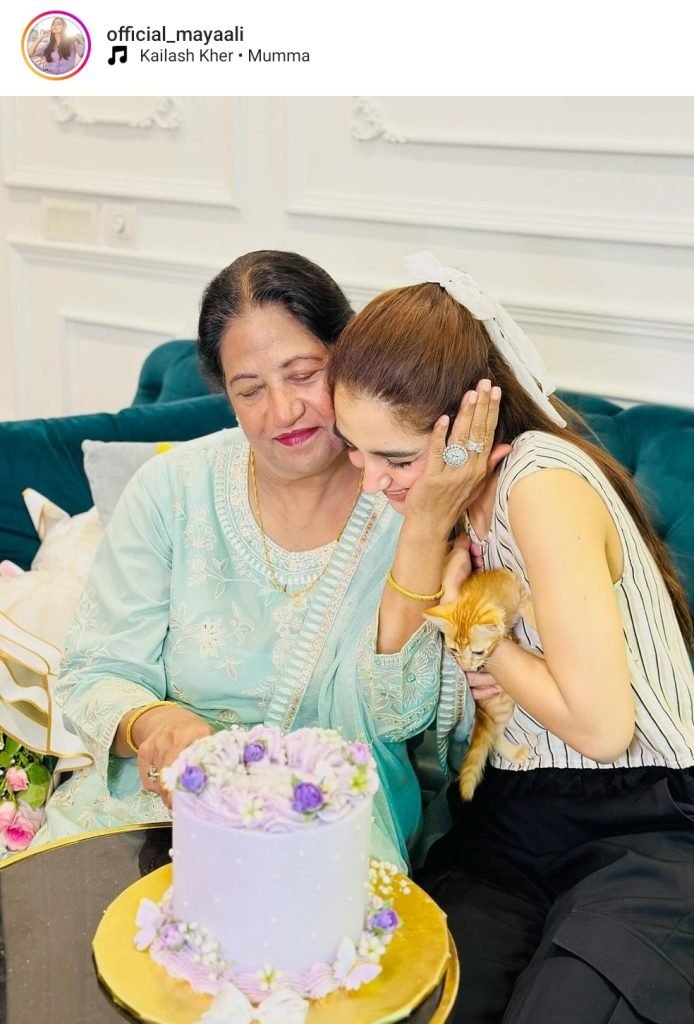
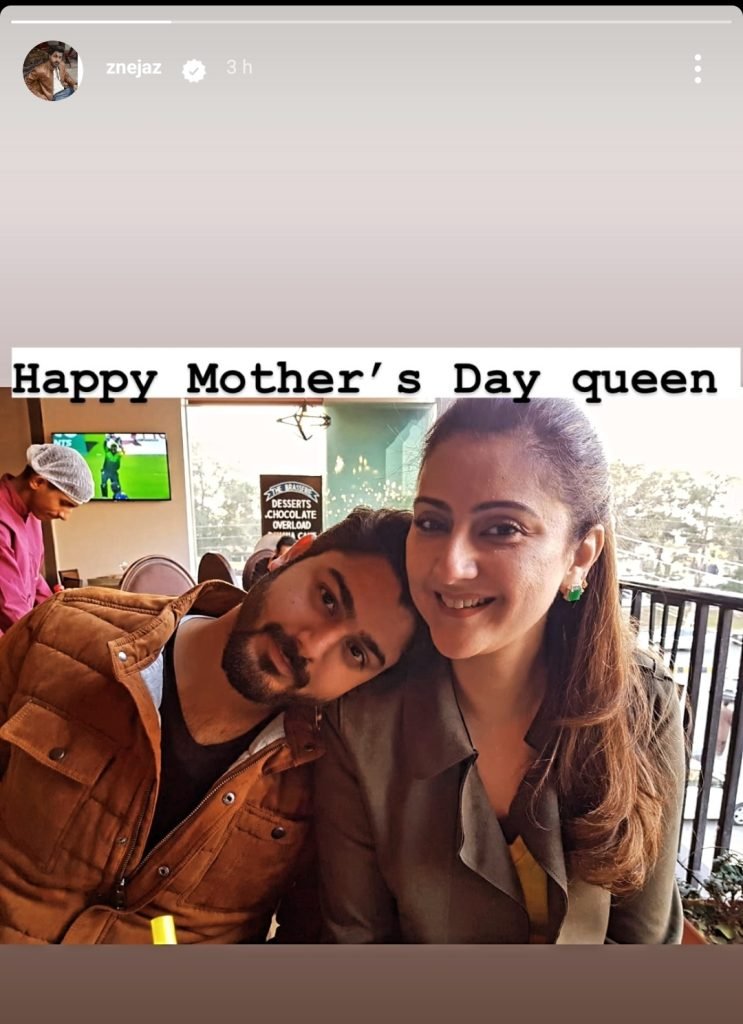
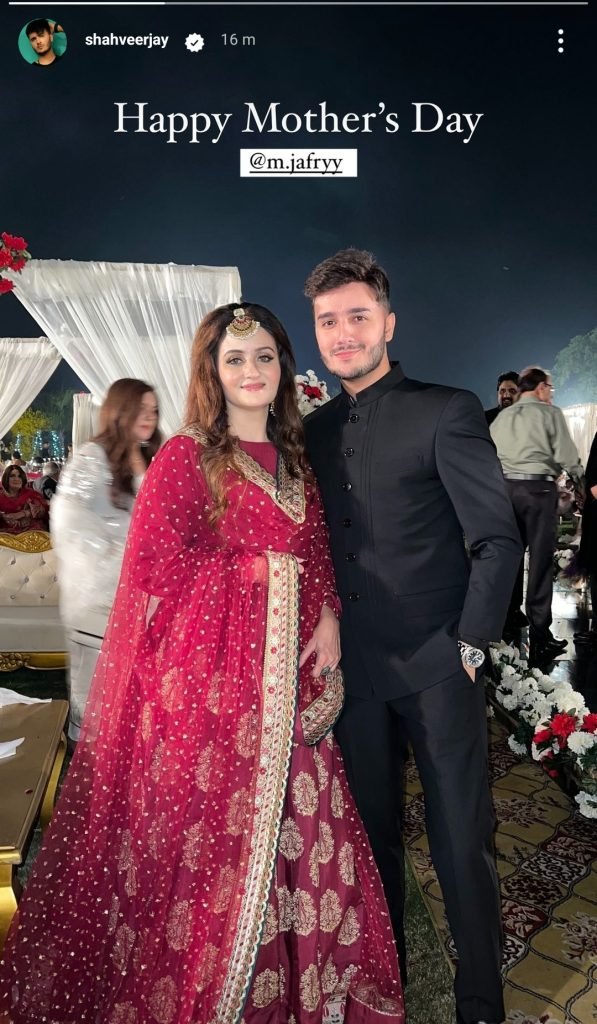
As Mother’s Day comes to pass, celebrities are using social media to show love for their moms, including actors, models, and musicians. One common theme in their posts is talking about family love. Veteran actress Nadia Jamil wrote a heartfelt letter to her mom along with a montage of pictures, set to a Bollywood song.
In her post, she talked about how strong and brave her mom is. “Happy Mother’s Day to my rock, where my strength began from, where my life began from,” she joyously expressed. “My friend, confidant, the most generous, forgiving, loving woman I know, one of the most, beyond beautiful women to have lived on this planet.” She continued, “I love you Ma. Here’s to healing and learning and unlearning and to the adventure of life still left for us to enjoy together. With Aba, Baba Zain, Nana, Nani, Puchi Khala, all watching us. Please say a prayer for the health and happiness of my best friend… my Ma.”
Meanwhile, music icon Faisal Kapadia shared a sweet post on Instagram to celebrate Mother’s Day. One picture shows him as a child in his mother’s arms, while another shows his wife Seema with their two sons, Armaan and Gibran. In the caption, Faisal wrote, “Happy Mother’s Day!”
Singer Zoe Viccaji celebrated Mother’s Day by posting a cute picture with her daughter. They both had matching butterfly-themed face paints and smiled at the camera. Zoe wrote, “Happy Mother’s Day to all the moms out there,” in a short note.
Joining the Mother’s Day celebration trend, Shaniera Akram shared a loving picture representing maternal love through the generations. She posted photos with her husband, former cricketer Waseem Akram, and their three children, two of them from the cricketer’s marriage to his late wife. Shaniera happily wrote, “My children are what makes my life full. I am blessed to have these three.”
She also said, “Happy Mother’s Day to all the moms, stepmoms, grandmas, new moms, mothers-in-law, and those who we keep in our hearts.” Moms are always there for us, giving hugs when we’re tired or saying comforting words when things get tough. They show endless love and care. So, while Mother’s Day is a special time to say thanks, let’s remember to appreciate and honor moms every day for everything they do for us.
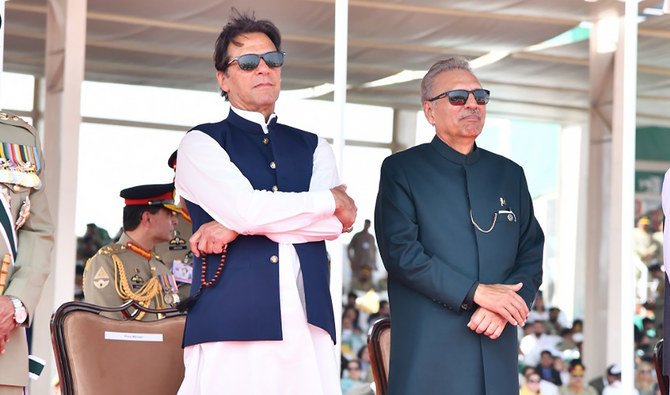
Former President of Pakistan Dr. Arif Alvi wrote about a personal moment he shared with the Pakistan Tehreek-e-Insaf (PTI) founder Imran Khan in Adiala Jail where the former Prime Minister is currently incarcerated.
Alvi recounted on X (formerly Twitter) that Imran Khan was enthusiastic as ever and welcomed him. He also humorously pointed towards his chest with prisoner number 804 written on his clothes.
He wrote, “We all had a hearty laugh. His humour, intelligence, boldness & fearlessness has taken a quantum jump and his incarceration instead of weakening him has made him exponentially stronger.”
After a heated exchange of words between Khyber Pakhtunkhwa Governor Faisal Karim Kundi and Chief Minister Ali Amin Gandapur, the Governor extended an olive branch by vowing all possible support to the provincial government for resolving public issues.
Addressing a press conference at Kundi Model Farm, he said that after taking the oath, he always wanted to work for the betterment of the people of KP including former FATA. “I repeatedly wished to work together with the provincial government for the development and welfare of the province,” he said.
The Governor also remarked, “We are democratic people and will never want to impose governor’s rule.”
Earlier, in the war of words between the two, Gandapur had warned against any imposition of ‘Governor’s raj’.
“The law and order is a burning issue being faced by the province,” Kundi said, adding that the provincial government should take concrete steps in that regard.
He also criticised the provincial government as he pointed out the KP government was getting Rs60 billion to Rs80 billion from the centre for addressing its law and order issue. “Despite this, the salaries of police are low as compared to other provinces,” he added.
Pakistan Muslim League-Nawaz (PML-N) leader Rana Sanaullah said on Sunday that PML-N is committed to solving all political issues through dialogue, adding that the party is prepared for a comprehensive discussion with all political leaders, Express Tribune reported.
The PML-N leader also said that we need a thorough discussion with all political parties to create a good and productive political environment for the progress of the country.
“Unconditional talks were the only way to move forward and address critical challenges,” he said.
The Prime Minister’s adviser on political and public affairs maintained that the federal government is trying to convince the Pakistan Peoples Party (PPP) to join the federal cabinet.
“In my personal assessment, the PPP will join the cabinet,” Rana Sana added.
Responding to a question, Sanaullah stated that Nawaz Sharif was likely be elected as the president of the party in the upcoming general council meeting, scheduled for May 28.
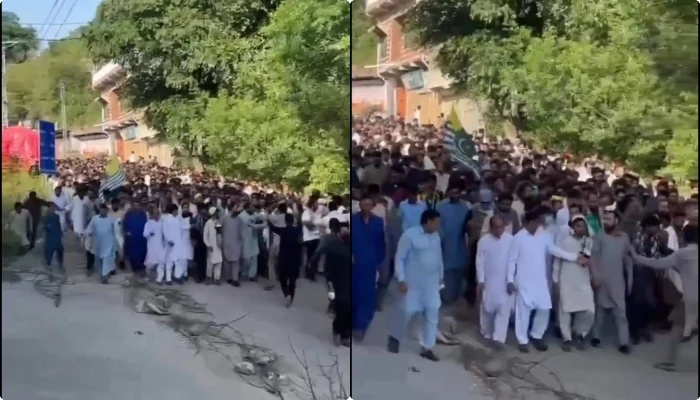
The Awami Action Committee (AAC) in Azad Jammu and Kashmir (AJK) have staged massive protests and sit-ins against high electricity bills and taxation for the fourth day now.
Protestors plan to reach the capital Muzaffarabad, after violent clashes took place between the AJK police and the protestors.
The government of AJK called in Rangers and AJK police after clashes between the police and protestors erupted in Mirpur during demonstrations that killed a cop and injured more than 70 others.
Heavy contingents of police have been posted at roundabouts and sensitive locations, while markets, trade centres and educational institutes remain closed, and transport is suspended.
Prime Minister Shehbaz Sharif expressed grave concern on the situation and stated that there should be “absolutely no tolerance for taking the law into one’s own hands”.
Meanwhile, the central leadership of the AAC has distanced itself from the violent incidents that occurred during the protests.
A sub-inspector was killed while dozens of other policemen and protesters also got injured during the teargas shelling by the police and stone pelting by the demonstrators.
Violent protesters damaged multiple vehicles, including a magistrate’s car on the Poonch-Kotli road. Moreover, markets, trade centres, offices schools and restaurants remained closed across the AJK.
Cellular services have been suspended in different parts of AJK.
The World Bank has decided to pull funding from the second phase of 5.9 kilometre Mauripur Road, which is part of the Competitive and Livable City of Karachi (CLICK) project. A total of 520 harsh white LED lights installed at the road have become the bone of contention after it was noted that they were disturbing the hatching season of turtles coming to the marine beach to lay eggs.
The lights in the city of lights are surprisingly proving to be hazardous for the endangered species which visit the city to ensure their sustenance and enhance their population. Journalist Oonib Azam working for The Citizenry.pk has formulated a detailed report about the installation of the white lights as part of the rehabilitation program of the Mauripur road from Machli Chowk to the Karachi Nuclear Power Plant (KANUPP). He not just did the research but also played an instrumental role in convincing this Bretton Woods institution to rethink about their investment in this particular area.
Background of CLICK
CLICK is a development project by the World Bank to improve “urban management, service delivery and the business environment of Karachi.” Four components of the project involve capacity building of Local Councils and granting them performance-based grants, modernizing urban Property Tax administration, improvement in city competitiveness, and building capacity of local government regarding the technical assistance for solid waste management. The total project cost is a hefty 240 million dollars and it spans over 30 districts of Sindh, six divisions, 25 town municipal corporations, and 209 Karachi UCs.
Detrimental artificial lights for the turtles
Sindh Wild Life Department told Oonib that repelled by Artificial Light at Night (ALAN) in the last season, an estimated 250 female turtles turned back to the sea without laying eggs. The same artificial lights disorientate young hatchlings and they get crushed under cars or are eaten up by stray dogs.
“A female turtle travels all the way to Australian beaches and returns to Karachi’s coast, to lay its eggs at the same coordinates where she layed eggs the last time. This shows how sensitive turtles are to their natural environment,” Oonib quotes a report by Dr. Umair bin Zamir.
Mauripur road project
Oonib explained to The Current how his research about the sanctuaries lead to awareness of turtles’ sensitivity to harsh white light. People attending picnics disrupted the whole process with torch lights just for the adventure. Huts in the surrounding areas put up huge flashlights and third and most glaringly, lamppost lights installed on the roadside in the neighbourhood.
Mauripur road project is a sub-project of the World Bank’s CLICK project which costs 840 million rupees. Because it was a Category B project it required Karachi Metropolitan Corporation (KMC) to submit an Environmental and Social Management Plan (ESMP) to the World Bank. The Citizenry report lays out how the KMC blatantly missed out on the turtle sanctuaries. It also stresses that turtles were a common sight in the area since the project is surrounded by beaches.
It was in sheer contrast with the World Bank’s policy (Environment Management Framework) of explicitly protecting the environment while ensuring a sustainable poverty reduction and development of societies at the same time.
Here, Oonib contacted the World Bank via Abedalrazq F. Khalil, manager of Uraban Development, Resilience and Land Practice for the South Asian region and shared all the intel he gathered in his research. It was revealed in that email exchange that World Bank was told that the road was about 5-8 kilometres away from the turtle hatching site. In a video report by The Citizenry, Oonib and Hunain Ameen discussed how Sanspit beach, Turtle Beach and Hawksbay Beach are in a row some kilometres apart as per Sindh Wildlife department’s maps.
It is important to mention that the 520 street lights are actually installed on a road the road from Machli Chowk to KANUUP Road runs parallel to Hawksbay Beach at a few 100-meter distances.
The Current has gone through the email exchanges between the Bank’s representative and journalist Oonib Azam and it is apparent that the Bretton Wood body was not entirely aware of the possible repercussions of proceeding with the project but after concerns were raised it was concluded that it will not move forward with the second phase.
“Light shielding and use of red lights is being considered by the PIU [Program Implementation Unit] as one of the mitigation measures. After consulting with relevant expert, we would have the CLICK PIU implement them,” Abedalrazq asserted.
As he was asked by the journalist about the operation policy of the World Bank regarding critical habitats being triggered for this project only or for the entire project, the respondent answered, “when CLICK was prepared, impacts on natural habitat were not envisaged and hence the Operational Policy 4.04 was not triggered. If a certain policy is triggered during preparation or implementation, it applies to the entire project.”
Current status of the project
Unsurprisingly, the World Bank has pulled funding for the Mauripur project. As a result, local authorities are being directed to implement mitigation measures proposed by the Sindh Wildlife Marine Turtle Conservation. They have proposed the replacement of bright white lights by red lights. Ironically, the email exchange reveals that the PIU office in Karachi plans to cover the lights with a cellophane which can change the white colour to red. As this solution is not durable, the journalist requested Bank authorities to intervene who then asked authorities to change the lights to amber LEDs rather than covering them with a cellophane shield.
The Current asked Oonib about the current status of the project and he described it to be in a lull. “The current status is that city authorities are not ready to change the lights to amber/red as recommended by the World Bank”.
We reached out to Murtaza Wahab multiple times for his perspective on the issue and also the spokesperson of the KMC, Ali Hassan Sajid, yet there was no response from them. While Murtaza committed to responding to it at first, he later did not.
Sindh Wildlife Authority maintains that the lights installed on the nearby hotels and huts are more hazardous for the marine life especially turtles compared to the streetlights but it cannot be denied that these lights of 120 watts are inflicting perils on these turtles to a great extent as well.
Climate change is hitting home. Humans have been the perpetrators of the suffering of other creatures and it is time we actually employ durable techniques which can prove to be a relief for the ecosystem rather than being a pain in the name of development.