Tag: trending

  • PTI decides to form government with Majlis Wahdat-e-Muslimeen in centre and Punjab

    PTI decides to form government with Majlis Wahdat-e-Muslimeen in centre and Punjab

    Pakistan Tehreek-e-Insaf (PTI) spokesperson Rauf Hassan has said that his party will form a government with Majlis Wahdat-e-Muslimeen (MWM) in the centre and Punjab. He also said that PTI will form the government in Khyber Pakhtunkhwa (KP) with Jamaat-e-Islami (JI).

    MWM has one National Assembly (NA) seat, and JI has seven provincial assembly seats in KP. On the other hand, MWM has no provincial assembly seat in Punjab.

  • Man kills wife and children before committing suicide in Chakwal

    Man kills wife and children before committing suicide in Chakwal

    The head of a household in Chakwal, suffering from financial problems, committed suicide after killing his wife and children.

    According to the police, Shafqat Saleem committed suicide after killing all four of his children and his wife in Muzdalifah Town area in Chakwal city.
    Police say that Shafqat Saleem shot himself after calling the police on the 15 helpline. His other victims were two daughters aged 14 and 16 years, and two sons aged 13 and 17 years.

    According to the preliminary investigation as reported by Geo, the victim had financial problems that he could not cope with.

  • Ali Amin Gandapur will be Khyber Pakhtunkhwa’s chief minister

    Ali Amin Gandapur will be Khyber Pakhtunkhwa’s chief minister

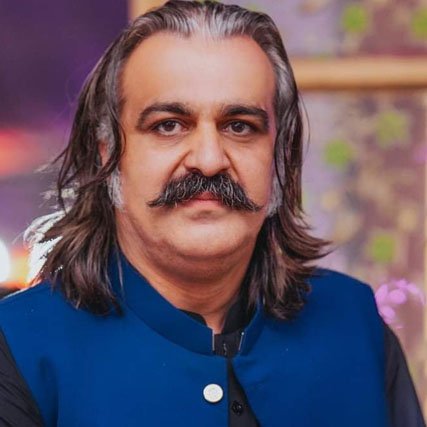
    The founder of Pakistan Tehreek-e-Insaf (PTI), Imran Khan, has told media that senior leader of his party and member of the provincial assembly, Khyber Pakhtunkhwa (KP), Ali Amin Gandapur, will be the chief minister of the province.

    According to the results of general elections, PTI-backed candidates have a simple majority in the KP province.
    Imran Khan also said that his party is ready to talk with all parties except the Pakistan Peoples Party (PPP), Pakistan Muslim League-Nawaz (PML-N), and Muttahida Qaumi Movement-Pakistan (MQM-P).

  • ‘Better than a real man’: Young women turn to AI boyfriends

    ‘Better than a real man’: Young women turn to AI boyfriends

    BEIJING: Twenty-five-year-old Chinese office worker Tufei says her boyfriend has everything she could ask for in a romantic partner: he’s kind, and empathetic, and sometimes they talk for hours.

    Except he isn’t real.

    Her “boyfriend” is a chatbot on an app called “Glow”, an artificial intelligence platform created by Shanghai start-up MiniMax that is part of a blossoming industry in China offering friendly – even romantic – human-robot relations.

    “He knows how to talk to women better than a real man,” said Tufei, from Xi’an in northern China, who declined to give her full name. “He comforts me when I have period pain. I confide in him about my problems at work,” she told AFP. “I feel like I’m in a romantic relationship.”

    The app is free – the company has other paid content – and Chinese trade publications have reported daily downloads of Glow’s app in the thousands in recent weeks.

    Some Chinese tech companies have run into trouble in the past for the illegal use of users’ data but, despite the risks, users say they are driven by a desire for companionship because China’s fast pace of life and urban isolation make loneliness an issue for many.

    “It’s difficult to meet the ideal boyfriend in real life,” Wang Xiuting, a 22-year-old student in Beijing, told the publication. “People have different personalities, which often generates friction,” she said. While humans may be set in their ways, artificial intelligence gradually adapts to the user’s personality — remembering what they say and adjusting its speech accordingly.

    ‘Emotional support’ 

    Wang said she has several “lovers” inspired by ancient China: long-haired immortals, princes and even wandering knights. “I ask them questions,” she said when she is faced with stress from her classes or daily life, and “they will suggest ways to solve this problem”. “It’s a lot of emotional support.”

    Her boyfriends all appear on Wantalk, another app made by Chinese internet giant Baidu. There are hundreds of characters available — from pop stars to CEOs and knights – but users can also customise their perfect lover according to age, values, identity, and hobbies.

    “Everyone experiences complicated moments, loneliness, and is not necessarily lucky enough to have a friend or family nearby who can listen to them 24 hours a day,” Lu Yu, Wantalk’s head of product management and operations, told the outlet. “Artificial intelligence can meet this need.”

    ‘You’re cute’ 

    At a cafe in the eastern city of Nantong, a girl chats with her virtual lover. “We can go on a picnic on the campus lawn,” she suggests to Xiaojiang, her AI companion on another app by Tencent called Weiban. “I’d like to meet your best friend and her boyfriend,” he replies. “You are very cute.”

    Long work hours can make it hard to see friends regularly and there is a lot of uncertainty: high youth unemployment and a struggling economy mean that many young Chinese worry about the future. That potentially makes an AI partner the perfect virtual shoulder to cry on. “If I can create a virtual character that… meets my needs exactly, I’m not going to choose a real person,” Wang said.

    Some apps allow users to have live conversations with their virtual companions — reminiscent of the Oscar-winning 2013 US film “Her”, starring Joaquin Phoenix and Scarlett Johansson, about a heartbroken man who falls in love with an AI voice. The technology still has some way to go. A two- to three-second gap between questions and answers makes you “clearly realise that it’s just a robot”, user Zeng Zhenzhen, a 22-year-old student, told AFP.

    However, the answers are “very realistic”, she said. AI might be booming but it is so far a lightly regulated industry, particularly when it comes to user privacy. Beijing has said it is working on a law to strengthen consumer protections around the new technology.

    Baidu did not respond to AFP’s questions about how it ensures personal data is not used illegally or by third parties. Still, Glow user Tufei has big dreams. “I want a robot boyfriend, who operates through artificial intelligence,” she said. “I would be able to feel his body heat, with which he would warm me.”

  • New PM’s oath may be administered by Arif Alvi’s successor

    New PM’s oath may be administered by Arif Alvi’s successor

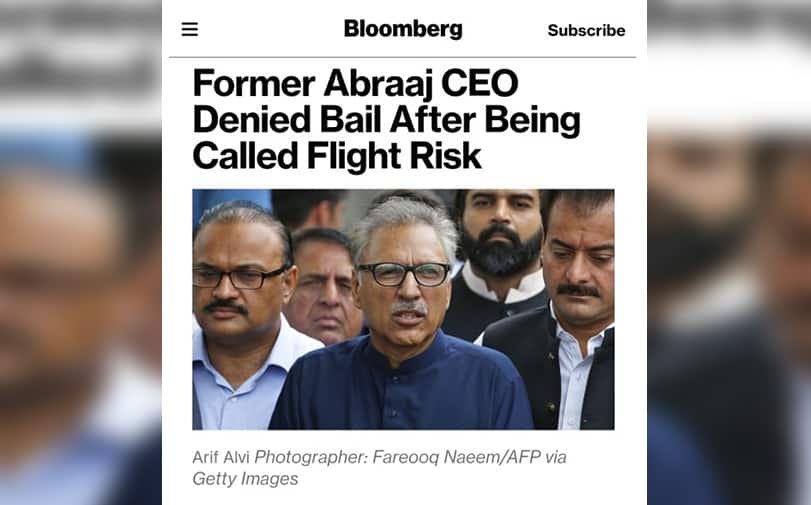
    President Arif Alvi won’t administer the oath to the new prime minister because a successor will be elected before the premier’s election.

    Members of the newly elected National Assembly (NA) might take their oath on February 26, three days before the deadline to convene the house for its first session, with a similar ceremony happening the next day.

    The members, who have been elected for both houses, would no longer be members of the provincial assembly if they took the oath in the national legislature.

    Parliamentary insiders informed The News on Monday evening that they must conduct the election for the Senate’s 53 members, chairman/deputy chairman, and subsequently the president of the country, before March 8. They emphasised the limited time available for organising the presidential poll.

    The sources said that if the election of the president is held a week earlier, incumbent Arif Alvi will not administer the oath but the new president will. The sources pointed out that once the members of the national and provincial assemblies take the oath, they will be eligible to cast their vote first for Senate elections.

  • 27 women candidates won in general elections

    27 women candidates won in general elections

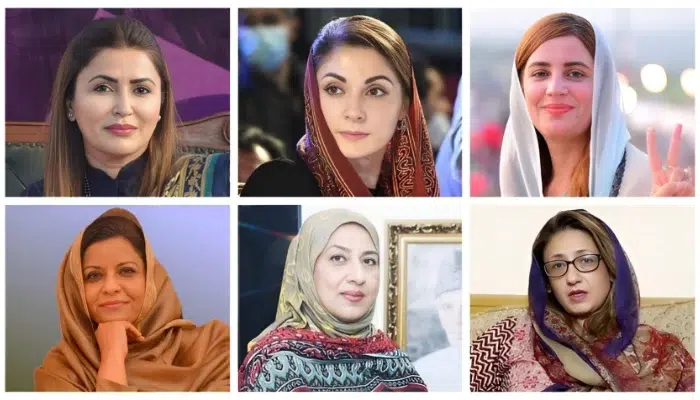
    As the general elections are over and results tabulated, 27 women candidates have emerged victorious in the February 8 polls, 11 more than in the 2018 elections.

    This time, 882 women candidates contested for national and provincial assembly seats. Among them, 312 women contested for the NA, and 570 for provincial assemblies. This shows a notable rise in the number of women participating as candidates in the 2024 elections.

    111 political parties had nominated 275 women candidates to contest the elections for general seats, making up 4.6 percent of the total of 6,037 candidates they have fielded.

    In 2018, 183 women ran for seats in the National Assembly (NA), but only eight of them managed to win. Among the winning women, four secured seats in Sindh, three in Punjab, and one in Balochistan. None of the women candidates won a general seat in Khyber Pakhtunkhwa.

    This time a record 27 women have been elected from all five assemblies — 12 from NA, 11 Punjab Assembly, two from the Sindh Assembly, and one from the Khyber Pakhtunkhwa Assembly.

  • Biden calls Netanyahu as*hole but does not change stance on Gaza: US media

    Biden calls Netanyahu as*hole but does not change stance on Gaza: US media

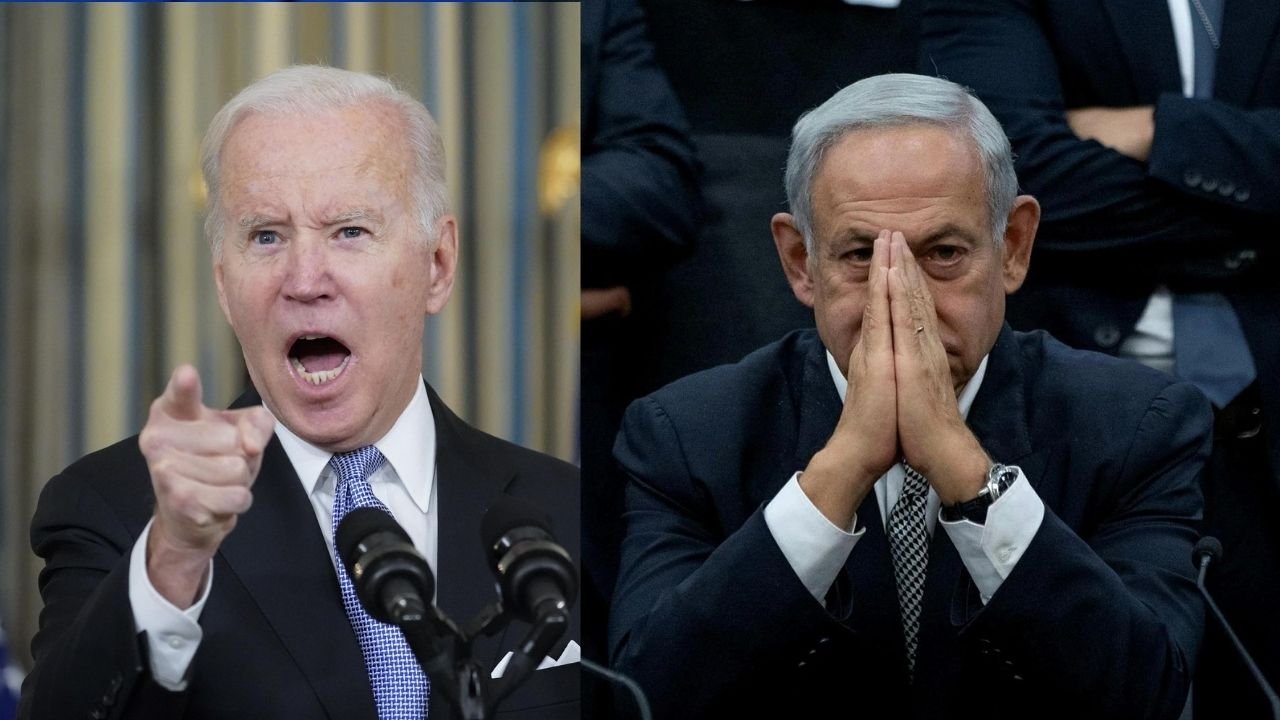
    According to a NBC News report, US President Joe Biden has been expressing his frustration with Israeli Prime Minister Benjamin Netanyahu in private conversations. Citing five sources familiar with the matter, NBC News revealed that Biden is seeking to persuade Israel to change its military tactics in Gaza, but Netanyahu is perceived as “an obstacle” in this process.

    The sources stated that Biden has used strong language to convey his frustration, reportedly describing Netanyahu actions as “giving him hell” and expressing a sentiment that “this has to stop.”

    There have been instances where Biden has reportedly referred to Netanyahu with derogatory terms, including “bad fking guy” and “ahole,” according to sources cited by POLITICO and NBC News.

    When questioned about Biden’s remarks, a spokesperson for the National Security Council said, “The president has been clear where he disagrees with Prime Minister Netanyahu, but this is a decades-long relationship that is respectful in public and in private.”

    Despite the outward display of mutual respect, Biden’s private frustrations highlight a stark contrast to the public perception of the relationship between the two leaders.

    Behind closed doors, Biden’s comments suggest a growing impatience with Netanyahu’s handling of Israel’s assault on Gaza, with the president reportedly viewing him as a significant obstacle to achieving desired outcomes.

    A source told NBC about Biden’s view on the Gaza campaign: “He just feels like this is enough. It has to stop.”

    More than 28,000 people are reported to have died since the war broke out on October 7. Israel is planning a ground assault on Rafah city in the south of Gaza – where more than one million displaced Palestinians are. Despite the US’s public opposition to the operation, Netanyahu is said to be pressing ahead with it.

    The reported tensions come amidst ongoing efforts to address the situation in Gaza and calls for a ceasefire. Biden’s private sentiments underscore the complexities and challenges faced in navigating the relationship between the United States and Israel, particularly concerning matters of regional security and diplomacy.

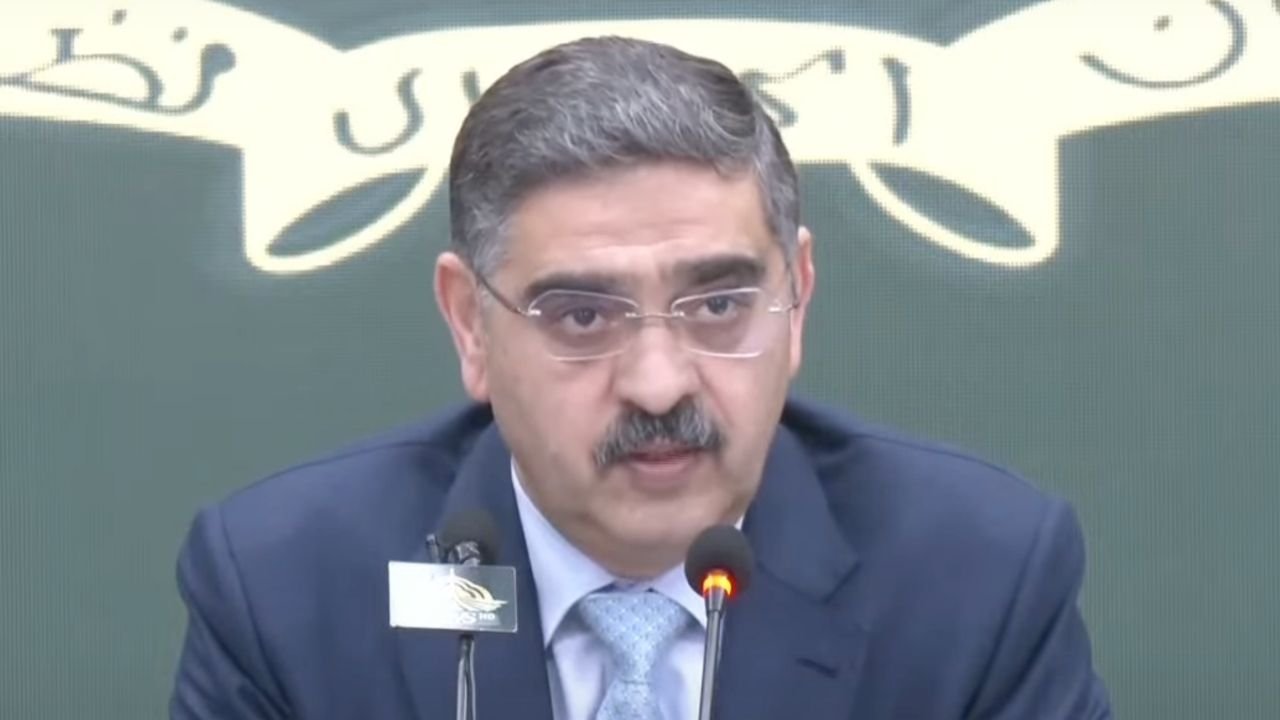
  • Caretaker PM Kakar angrily asks: ‘Are you saying I have cancer and it’s my last press conference?’

    Caretaker PM Kakar angrily asks: ‘Are you saying I have cancer and it’s my last press conference?’

    In a recent press conference, interim Prime Minister Anwaar-ul-Haq Kakar strongly defended the delay in announcing election results, citing security concerns as the primary reason.

    He was asked during the press conference by a journalist, “Probably this is your last press conference, on a lighter note: who told you how long you’ll be Caretaker Prime Minister?”

    To this PM Kakar said, “I am disappointed after giving you a chance. Do I have cancer? As this is my last press conference according to you.”

    While discussing the disruption in mobile services, Kakar emphasized, it was a necessary measure to ensure the safety of voters and prevent terrorist attacks.

    “We could afford delay, but terrorist attacks, we could not […] delay does not mean rigging,” Kakar, whose government was appointed to oversee the country through elections until an elected set-up takes charge, said during a post-election press conference.

    Kakar’s remarks came amidst mounting criticism from various political parties, including Pakistan Tehreek-e-Insaf (PTI), Jamaat-e-Islami (JI), and Jamiat Ulema-e-Islam (JUI-F), who protested the delay in election results, labeling it as potential rigging.

    More than three days have passed since polling day and the complete election results are still pending, with one seat yet to be decided.

    The prime minister informed journalists that in 2018, the entire result-gathering process took 66 hours; however, in 2024, it was completed in 36 hours. The official Election Commission of Pakistan’s (ECP) deadline is around nine hours.

    The premier compared Pakistan’s election process to that of other countries, citing instances of delayed results in Sweden and Indonesia, suggesting that such delays are not uncommon in large-scale elections.

    In response to criticism from foreign governments, Kakar asserted that Pakistan would conduct its investigation if necessary, rather than succumbing to external pressures.

    “These friendly countries, unfortunately, frame their initial assessment on the fabricated and fractured information available on social media and the digital space,” he said.

    “A responsible government should take time and then have a position; that would have been better. If we have to investigate, we will not do it on the demand of the United States, United Kingdom, or the EU,” he further added.

    Kakar noted that Pakistan has its law and will deal with it accordingly. “We did not ask a judicial inquiry on Capitol Hill riots. It is not for us to demand it and it is not for them. For me, the demand of a PTI individual than the US, UK, and EU combined.”

    Acknowledging the possibility of irregularities, Kakar assured that appropriate forums were available for addressing complaints.

    To a question, PM Kakar said that the upcoming elected parliament would decide about the use of Electronic Voting Machines (EVMs) in the elections. “There should be an open discussion on EVMS.”

    Two days back, expressing his annoyance over the delayed election results, President Dr Arif Alvi had said that the country would have been spared the ongoing crisis if the EVMs had been used during the February 8 general elections.

    It is pertinent to mention here that the ECP’s new Election Management System (EMS) fell flat despite the commission’s tall claims.
    Taking to his X handle, the president had said: “Had EVMs been there today, my dear beloved Pakistan would have been spared this crisis.”

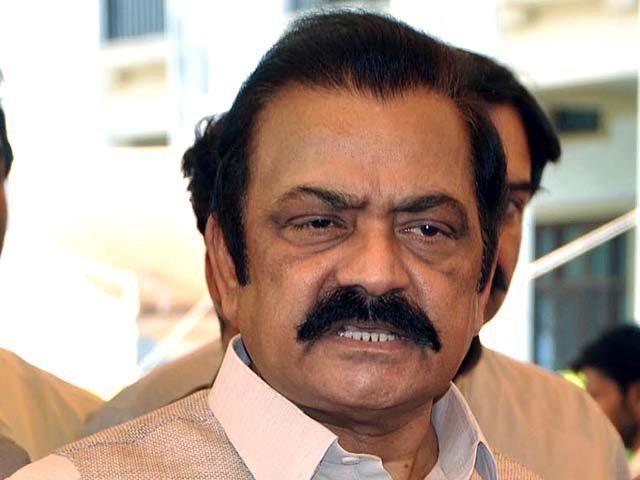
  • The curious case of Rana Sana’s Twitter account

    The curious case of Rana Sana’s Twitter account

    We realise that Pakistan Muslim League-Nawaz (PML-N) stalwart Rana Sanaullah’s loss in February 8 general elections must be quite a shock but his Twitter (now X) account has gone off in an unexpected direction.

    Unlike PML-N leader Khwaja Saad Rafique, who used his account to gracefully concede defeat and congratulate his opponent Sardar Latif Khosa, Rana Sanaullah has decided that he wants to troll journalists.

    The account has, till now, picked a Twitter fight with Meher Bokhari, shared a song by the late Indian rapper Sidhu Mosewalla, and targeted legal analyst Reema Omer for praising Geo’s election coverage.

    It has also sent snarky replies to Hamid Mir and Gharidah Farouqi, while also tweeting multiple times against media channels.

    Rana Sanaullah has distanced himself from the the account, telling Geo’s Shehzad Iqbal that he doesn’t run the account, instead a team runs it.

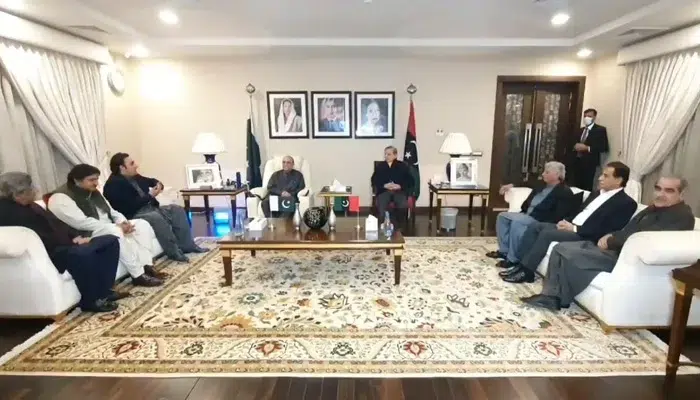
  • PPP, PML-N discuss power-sharing formula in Sunday’s meeting

    PPP, PML-N discuss power-sharing formula in Sunday’s meeting

    Pakistan Peoples Party (PPP) and the Pakistan Muslim League-Nawaz (PML-N) have discussed the possibility of their parties appointing prime ministers for half of a five-year term as part of a power-sharing plan.

    The idea of appointing a prime minister for half the term was discussed during their first huddle on Sunday following the February 8 elections as part of their efforts to form a coalition government in the Centre and provinces, according to sources privy to the development.

    In 2013, PML-N and the National Party (NP) in Balochistan worked together to create a power-sharing plan. Under this plan, two chief ministers from the two parties took turns holding office for half of the five-year term.

    In Sunday’s meeting, the PPP and PML-N agreed to work together for the political stability of Pakistan after the general elections.