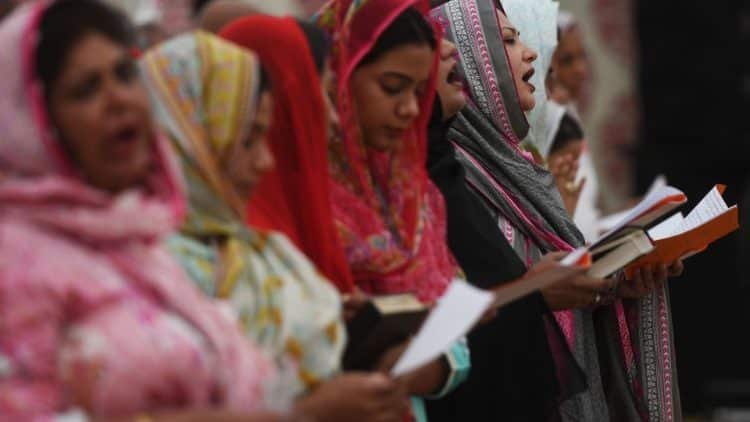
Prime Minister (PM) Shehbaz Sharif has approved the formation of a task force that will look after the implementation of minority rights in Pakistan.
An official notification in this regard states, “In light of the resolution passed by the National Assembly on May 9, 2022, the prime minister has been pleased to approve the constitution of the task force on minorities to oversee the implementation of rights of minorities in light with the decision of the apex court.”
The task force will be headed by Member of National Assembly (MNA) Dr Ramesh Kumar Vankwani. It comprises 23 parliamentarians, senators and ex-officio members.
As chairman of the task force, Dr Vankwani tweeted that such a step had been taken “for the first time in the history of Pakistan”.
پاکستان کی تاریخ میں پہلی مرتبہ پارلیمانی نمائندوں نے متفقہ طور پر اقلیتوں کے حقوق کیلئے ٹاسک فورس قائم کرنے کی قرارداد منظور کی اور وزیراعظم شہباز شریف کا من و عن عملدرآمد موجودہ حکومت کی جانب سے اقلیتوں کے تحفظ کیلئے ٹھوس اقدامات کی عکاسی کرتا ہے۔https://t.co/nFNCxayXvspic.twitter.com/GB2Ewwchc5
In another tweet, he said, “Recommendations will be made for the solution of the problems faced by the minorities and we will take people from all the segments of the society along with us.”
بطور چیئرمین ٹاسک فورس اقلیتوں کے احساس عدم تحفظ کو دور کرنا چاہتا ہوں، اقلیتوں کو درپیش مسائل کے حل کیلئے سفارشات مرتب کی جائیں گی، معاشرے کے تمام مکاتب فکر کو ساتھ لیکر چلوں گا، اقلیتوں کے حوالے سے عالمی سطح پر پاکستان مخلاف پراپیگنڈہ کا توڑ ٹاسک فورس کی ترجیحات میں سرفہرست ہے
In 2014, the Supreme Court (SC) issued an order that there should be monitoring of the practical realisation of the rights and safeguards provided to the minorities under the Constitution and law.
However, the governments over the years could not implement the SC orders.
In 2020, the Human Rights Commission of Pakistan (HRCP) expressed concern over the surge in blasphemy cases against religious minorities, and the potential for sectarian violence.
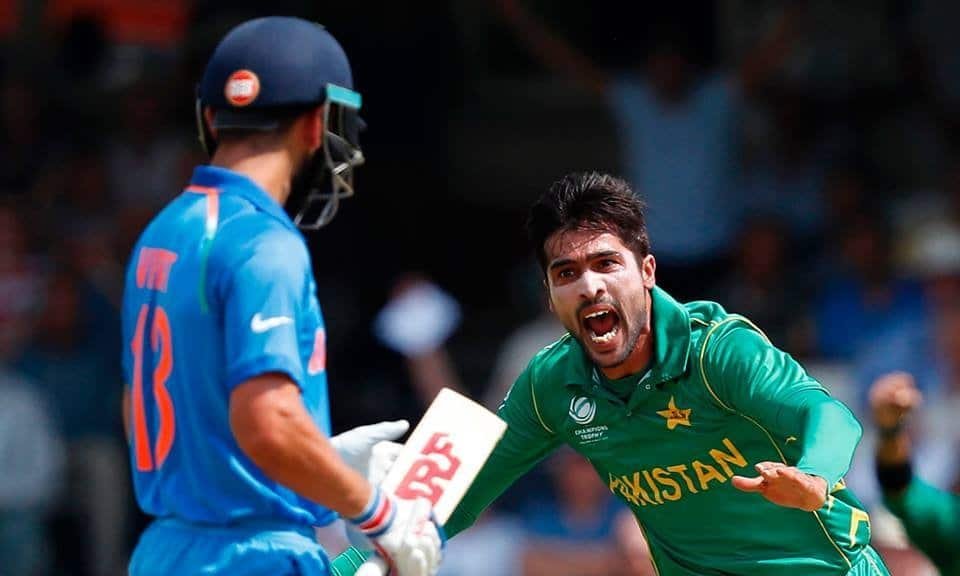
Under the captaincy of Sarfaraz Ahmed, Pakistan made history by defeating defending champions India in the final of the 2017 International Cricket Council (ICC) Champions Trophy, which happened exactly five years ago on June 18 at The Oval.
Fakhar Zaman scored 144, which played a big part in Pakistan’s victory. Other than him, Azhar Ali’s 59, Babar Azam’s 46 and Hafeez’s 57 led to Pakistan’s win against India.
One cannot forget Mohammad Amir’s bowling. He showcased his fiery skills by dismissing all three of India’s openers. The entire Indian cricket team was dismissed on 158 in just 30.3 overs.
Since June 18, every year on this day Pakistan celebrates its victory against its arch-rivals.
Here are some tweets celebrating Pakistan’s victory.
Time flies. Wrote this on Pakistan’s ICC Champions Trophy 2017 victory: “Pakistan’s stars aligned to help a young team script their own miracles” https://t.co/ImECRkBeMP
Snapchat is reportedly working on a subscription plan that will allow users access to several features, including the ability to pin conversations. With the launch of Snapchat +, users may have to pay to access exclusive, experimental, and pre-release features on social media platforms. With a premium subscription, Snapchat users will get a special Snapchat icon and a special badge.
What is Snapchat Plus?
With Snapchat Plus, Liz Markman (Snapchat Spokesperson) reports, subscribers will have access to certain features of the app.
“You’ll be able to pin friends as best friends, get custom snap chat icons and subscriber profile badges, and see how many retweets you have on Snap Stories”. He also notes that “you will be able to see your friends’ location in the last 24 hours, but only if they share it with you”.
Why paid when they can offer free?
This is not the only social media platform to launch a paid subscription model. Other social media platforms are also running the same race. For example, Twitter launched its first subscription offer, Twitter Blue, in June, which is currently available in Australia, New Zealand, and Canada.
The transition to a subscription-based business model may be the result of app tracking transparency, a feature introduced by Apple in iOS 14 that requires apps to ask users before they can track their data. Companies such as Snap and Meta have publicly stated that Apple’s new guidelines have affected their revenue, which is largely based on advertising.
By introducing new subscription plans, these companies hope to offset the loss in advertising revenue by charging for access to special features that will not be available to free users.
How much does Snapchat Plus cost?
The service costs € 4.59 (Rs1,009) monthly or € 45.99 (Rs10,111) per year.
It is not clear when Snapchat Plus will launch as it is still in testing mode, but keep an eye out for it. Will you pay for it?
Data from the Reuters Digital Media Report 2022 shows that among users of social media platforms, TikTok took over Snapchat and Telegram in 2021 and 2022 respectively, across the world. It is the fastest growing platform among all social media channels. In 2021, only five per cent of the global audience was using TikTok and this number has grown to 16 per cent in 2022. Snapchat audience decreased by one per cent to 12 per cent while Telegram has seen an increase of five per cent with new global audience of 12 per cent.
The table shows change in audiences using Snapchat and TikTok
2020
2022
Change
TikTok
5 per cent
16 per cent
11 per cent
Snapchat
13 per cent
12 per cent
-1 per cent
Social media usage has also increased throughout the world.
Trust in BBC falls by 20%
Datamentioned in the report also shows that the average level of trust in news networks globally has reduced by eight points from 50 per cent to 42 per cent in a year. Moreover, in the UK, the proportion of people not trusting BBC has increased from 11 per cent to 26 per cent while the proportion trusting BBC has fallen by 20 per cent.
The attached graph shows how the UK audience’s trust in the BBC has dwindled over time.
Another important thing to notice is that TikTok is not just being used for fun videos. It is also emerging as a new player in the news ecosystem. More and more people are turning to TikTok for their news. It has also taken over Snapchat for news as well.
2020
2022
Change
TikTok
1 per cent
7 per cent
6 per cent
Snapchat
3 per cent
2 per cent
-1 per cent
Audience is less interested in news
Globally, the interest of people in news is falling. The proportion that says they are extremely interested in the news has fallen sharply over time. On average, in 2015, 67 per cent of global audiences was interested in the news while this number declined to 47 per cent in 2022 with a change of -20 per cent.
Country
2017
2022
Change
Argentina
77 per cent
48 per cent
-29 per cent
Brazil
82 per cent
57 per cent
-25 per cent
Spain
82 per cent
55 per cent
-27 per cent
UK
65 per cent
43 per cent
-22 per cent
USA
68 percent
47 per cent
-21 per cent
Consumers are avoiding the news
The report also says that 38 per cent of the audience actively avoided news in 2022. The audience becoming least interested in the news has been increasing from 2017 to 2022 in every country except for Italy. The attached graph shows the percentage of people staying away from news in different countries.
The most common reason for avoiding news is politics and Covid-19. Data shows that 43 per cent of users avoid the news because of excessive news regarding Covid-19 and politics. Moreover, 36 per cent of the audience thinks that the news has a negative impact on their mood.
People under the age of 35 struggle to understand news
People under 35 are also finding it hard to understand the news and it is causing them to avoid the news.
Younger audiences want journalists to express personal opinions
Data from the report shows that 46 per cent of the population between the ages of 18-24 do not want news channels to just report news on social media but want them to express their personal opinions alongside reporting news, while the opposite is true for people of age 55+. 57 per cent of older people want news channels to stick to reporting the news. The older the consumer, the more the proportion of them want journalists to stick to just posting news on social media.
Majority uses smart phones to access morning news
In most countries, the majority use mobile phones to access news in the morning with the highest percentage being 43 per cent in Norway. In most countries, the least used medium for news is print media. The 2021 report shows that the lockdown during Covid-19 proved to be a nail in the coffin for print media.
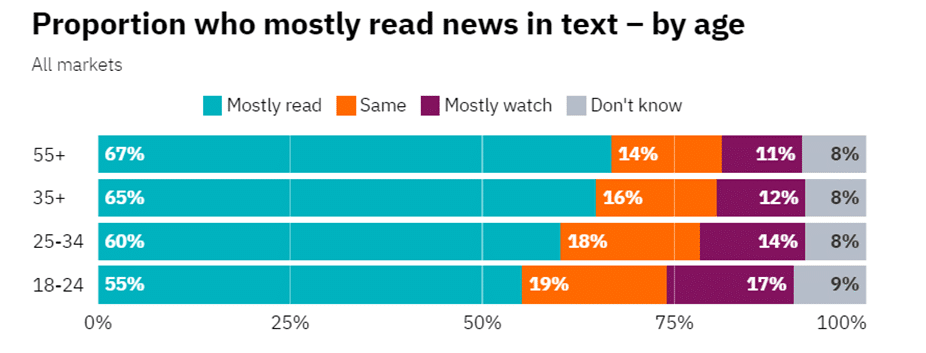
Younger audiences prefer watching the news rather than reading it
Although the significant majority still prefers reading news irrespective of age, data reveals that people aged 18-24 prefer watching the news (17 per cent) which is more when compared to older people (11 per cent for age above 55). The younger you are, the more you prefer watching the news rather than reading about it.
Key findings in Digital Media Report 2021
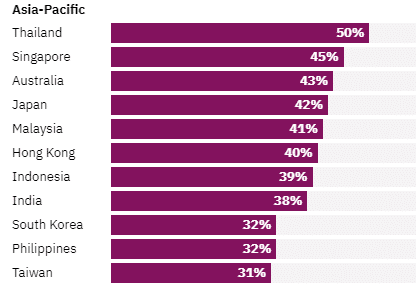
Data from the digital media report last year (2021)showed that the trust level for news reports in Asia-Pacific is no more than 50 per cent with the most being in Thailand. It is important to notice that the USA is reported to have a trust level of 29 per cent in the news, which is the lowest of all 46 countries selected for the report. The report says it is the aftermath of deep division over the US ‘stolen election reports’ and the killing of George Floyd.
To measure the trust level, people were asked to indicate if they trusted the news posted on social media,
Other key findings of last year’s report showed that Facebook, which was known for Covid-19 misinformation, was still used by 32 per cent for news and the most successful social media platform was YouTube.
A protest by the prisoners of Rara Central Jail in Muzaffarabad turned into a clash between the police and the prisoners on Saturday, reports Samaa News.
The clash started when some prisoners turned violent and started a fight with the security personnel.
The prisoners were protesting against the unavailability of facilities for the past few days. However, no casualty has been reported so far.
The police summoned additional forces to keep the situation under control and started searching for the prisoners who initially started the fight.
Last year, a clash was also reported in Adiala jail, Rawalpindi. The clash was between two groups that led to the transfer of 23 convicted and under-trial prisoners to other jails and the suspension of 11 jail officials, including two superintendents.
Are you still thinking about what to gift your dad on Father’s Day? Not sure what to get to make your father feel special? Don’t worry, we’ve got your back. We made a list of things your father will enjoy.
Have a look:
Shahid Afridi Store
Shahid Afridi clothing store in offering flat 5 to 20 per cent discount on Father’s Day. The sale that started on June 15 will end on June 22.
Give your father a customised box of their favourite chai/coffee essentials. Though Ahsan Iqbal won’t like this gift idea much, your father will love it!
Cuff-links
Tell your father he is the best by gifting him cuff-links. Browse through this collection of cuff-links by Borjan. You will definitely find something for your father.
Massager
Who doesn’t love a massager? Gift your father this neck and shoulder massager and show him that you really care about his comfort.
If you are unable to buy anything, a little hug and a few kind words can also work!
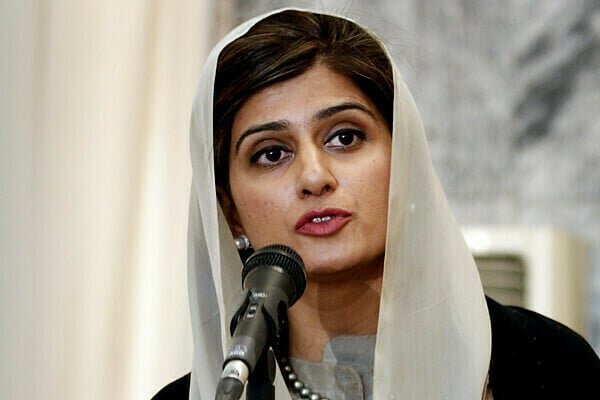
Minister of State for Foreign Affairs Hina Rabbani Khar on Saturday addressed a press conference following the announcement by the Financial Action Task Force (FATF).
“Pakistan’s positive and speedy progress was greatly appreciated and welcomed by FATF members,” she said. “All action plans items have been ticked off, largely addressed, and nothing is pending.”
“It marks the beginning of the end process that will eventually culminate in the exit of Pakistan from FATF’s grey list, InshaAllah and hopefully forever,” added Khar.
“Pakistan is one step away from exiting the grey list,” she added. “I also want to stress that Pakistan’s cooperation with FATF and the international community is grounded in our strategic objective of strengthening our economy and improving its integration in the international financial system.”
Talking about the requirement of on-site visit Khar said, “When you authorise a country’s removal from the grey list, the first step is to authorise an on-site technical evaluation, which has been done in this plenary.”
“Never again will we want to be part of any list that will require us to divert our attention from our national requirements to [international] reporting requirements. We never want to slip into this again. This is the biggest lesson,” she said while talking about lessons Pakistan had learned during meetings with FATF.
The Financial Action Task Force (FATF) announced on Friday (June 17) that it has begun the process of removing Pakistan from the grey list. FATF monitored Pakistan for four years and now the financial watchdog has expressed its satisfaction with Pakistan’s performance. The announcement comes after FATF’s four-day plenary session in Berlin.
“Pakistan has substantially completed its two action plans, covering 34 items, and warrants an on-site visit to verify that the implementation of Pakistan’s AML/CFT reforms has begun and is being sustained,” said a statement by FATF.
However, Pakistan will be placed out of the grey list once the FATF team would conduct an on-site visit of Pakistan.
Director-General Inter Services Public Relations (DG ISPR) in a tweet termed the development as a “great achievement”.
The tweet further added: “Core cell @ GHQ which steered the national effort & civil – military team which synergised implementation of the action plan made it possible, making Pak proud, COAS.”
Completion of FATF AML /CFT action plans by Pak is a great achievement. A monumental effort paving way 4 whitelisting. “Core cell @ GHQ which steered the national effort & civil – military team which synergised implementation of action plan made it possible, making Pak proud”COAS
Hina Rabbani Khar tweeted: “Congrats Pak! FATF declares both Action Plans complete. Intl community has unanimously ack our efforts. Our success is the result of 4 yrs of challenging journey. Pak reaffirms resolve to continue the momentum and give our economy a boost. Well done Pak Team FATF. Pak Zindabad!”
Congrats Pak! FATF declares both Action Plans complete. Intl community has unanimously ack our efforts. Our success is the result of 4 yrs of challenging journey. Pak reaffirms resolve to continue the momentum and give our economy a boost. Well done Pak Team FATF. Pak Zindabad!
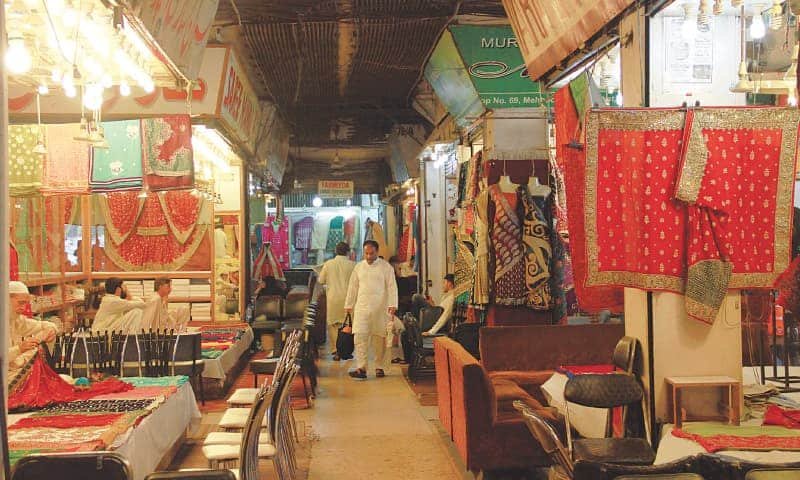
The Sindh government announced that all markets, restaurants, marriage halls and hotels will be closed early in order to save electricity. The decision will remain in force from June 17 (today) to July 16.
According to an official notification by the provincial Home Department, all markets, bazars, shops and malls will close by 9pm. Marriage and banquet halls will close by 10:30pm, while hotels, restaurants, coffee shops and cafes must shut by 11pm. However, the decision is not applicable to medical stores, pharmacies, hospitals, petrol pumps, CNG stations, bakeries and milk shops.
The notification reads: “The urgent need to take the effective measures for the conservation of energy in Sindh through a two-pronged approach, i.e. to utilise the daylight hours for business activities and minimise the possible adverse impact of the business activities.”
However, the All Pakistan Trade Union Association has rejected this decision of the provincial government, reports ARY News.
Pakistan is facing a serious power crisis due to which the government has resorted to load-shedding all over the country.
Last week, as part of the government’s ongoing measures to manage the energy crisis, the National Economic Council (NEC) agreed on the closure of markets by 8:30pm in all provinces.
No power in commercial areas in the evening from 7-10pm
The Power Division has decided to cut supply to commercial feeders from 7pm to 10pm daily across Pakistan, reports Geo News.
In this regard, the Ministry of Energy has prepared a summary for the cabinet’s approval. According to the media outlet’s sources, the commercial feeders will not face load-shedding during the daytime, which would save approximately 5,000 MegaWatt (MW).
Earlier, Defence Minister Khawaja Asif said that a huge amount of electricity can be saved if people start their businesses early in the morning and close by Maghrib prayers. He said that saving electricity means saving oil.
Afghan journalist Musa Mohammadi was spotted selling street food in order to make ends meet. After the Taliban takeover, the country has experienced economic turbulence, forcing professionals like Mohammadi into a state of poverty.
Kabir Haqmal, lecturer at Kabul University and former journalist, shared Mohammadi’s picture on Twitter with the caption, “Mohammadi worked for years as an anchor and reporter on different TV channels. He now has no income to feed his family and sells street food to earn some money.”
Journalists life in #Afghanistan under the #Taliban. Musa Mohammadi worked for years as anchor & reporter in different TV channels, now has no income to fed his family. & sells street food to earn some money. #Afghans suffer unprecedented poverty after the fall of republic. pic.twitter.com/nCTTIbfZN3
In another tweet, Haqmal added, “It is also important to look at how the well-to-do people in a country have reached this stage, and what will happen to the poor. We don’t know what to call the change.“
۲/۲… خو دې ته هم کتل په کار دي، چې په یوهٔ ملک کې د ښه عاید لرونکي خلک دې حالت ته ورسېدل، د بې وزلو به څه حال وي. نه پوهېږو راغلي بدلون ته څه نوم ورکړو. د پاکستان په فرمایش د اسلامي نظام واکمني او که د لوی الله قهر او زموږ د نا شکرانګیو عذاب؟ موږ ته خو یې دا دوېم نوم سم برېښي.
The viral post drew the attention of Ahmadullah Wasiq, Director of the National Radio and Television, who ensured Mohammadi’s employment in his response.
Wasiq’s responded: “Unemployment of Musa Mohammadi, a spokesman for a private television station, was highlighted on social media. As the director of the National Radio and Television, I assure him that we will appoint him within the framework of the National Radio and Television. We need all Afghan professionals.”
NA-240 by-elections were held in Karachi on Thursday (June 16). The seat had fallen vacant after the death of Muttahida Qaumi Movement-Pakistan (MQM-P) MNA Iqbal Muhammad Ali in April. MQM-P’s Mohammad Abu Bakr won the seat yesterday. MQM-P had won the seat in the 2018 general elections with a huge margin but this time the contest was won just by a few votes. MQM-P candidate bagged 10,683 votes, while Tehreek-i-Labbaik Pakistan (TLP) candidate Shahzada Shahbaz ended up second with 10,618 votes.
However, TLP rejected the results and decided to challenge the outcome in court.
Violence during by-polls
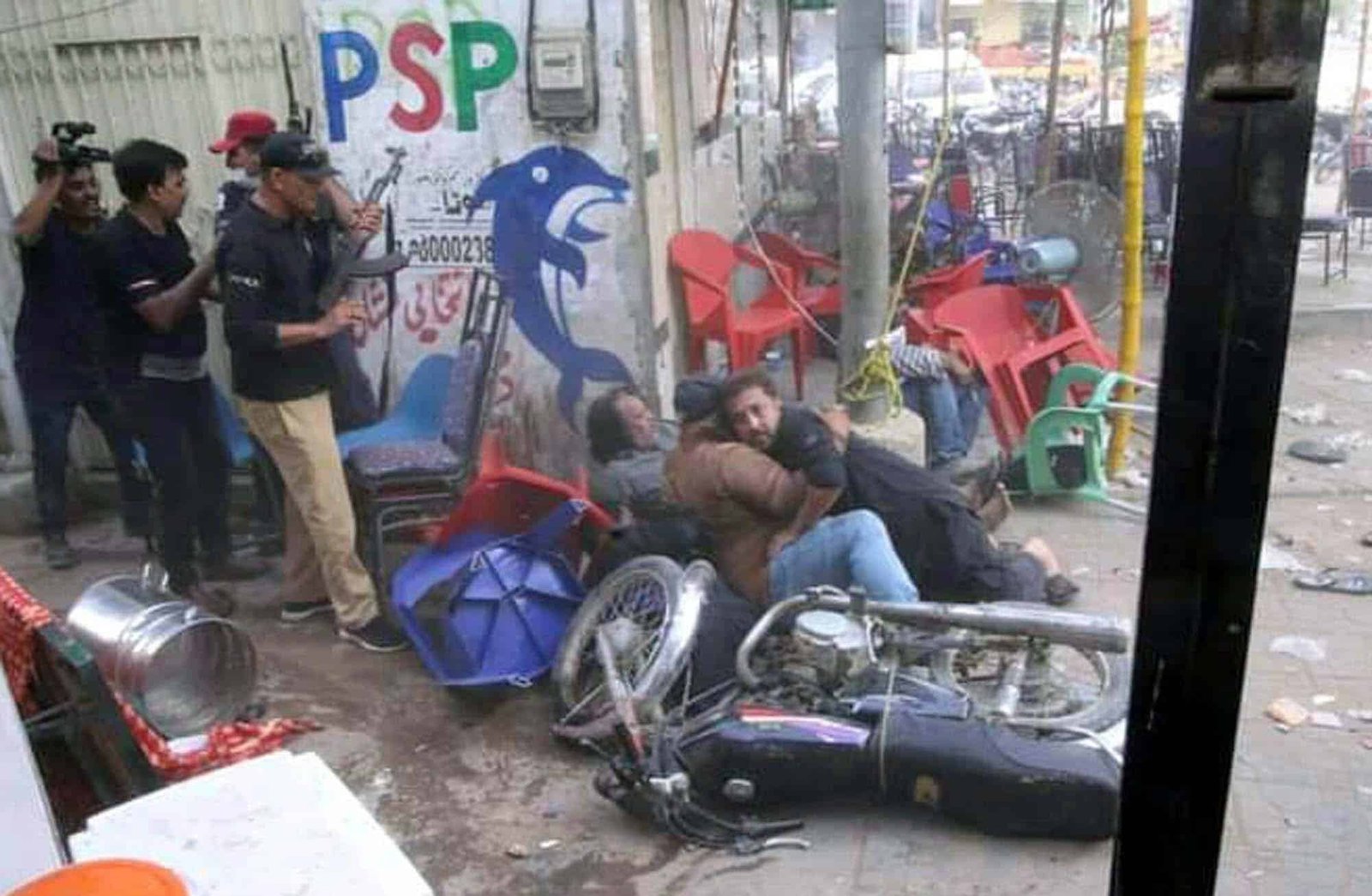
The by-polls in Karachi left at least one dead and several injured. The person who died belonged to Pak Sarzameen Party (PSP).
According to media reports, three major parties — MQM-P, TLP and PSP — were primarily involved in the violence, both as alleged perpetrators and victims.
On Twitter, PSP accused TLP workers of firing at its party chairman Syed Mustafa Kamal. A bullet reportedly grazed Kamal.
Talking toDawn, MQM-P Member of Provincial Assembly (MPA) Khawaja Izharul Hassan alleged that his eight party workers were “brutally tortured” by PSP. He also alleged that PSP party members barged into polling stations and beat up polling staff.
It was reported that during the violence, three bullets hit the Edhi Foundation ambulance. The ambulance was there to pick up the injured.
Following the incident, a total of four cases have been registered at the Landhi police station and Korangi police station, reports Geo News.
According to the First Information Report (FIR), Kamal entered a polling station in Landhi 6 accompanied by 50 to 60 men and created chaos.
Moreover, the report stated that 400-500 people belonging to a political party entered a polling station all at once. The staff of the polling station was beaten up and election materials damaged. Subsequently, the police raided the polling station and took five men into custody.
The situation was extremely tense till late at night when a heavy contingent of police and Rangers reached the area after the disruption.
Election Commissioner takes notice
Chief Election Commissioner (CEC) Sikander Sultan Raja took a “serious notice” of the episode. He directed Sindh’s provincial election commissioner to ensure strict action and asked for a comprehensive report to be sent to the Election Commission of Pakistan (ECP).
Similarly, Sindh Chief Minister (CM) Syed Murad Ali Shah also took notice of the violence.