Tag: trending

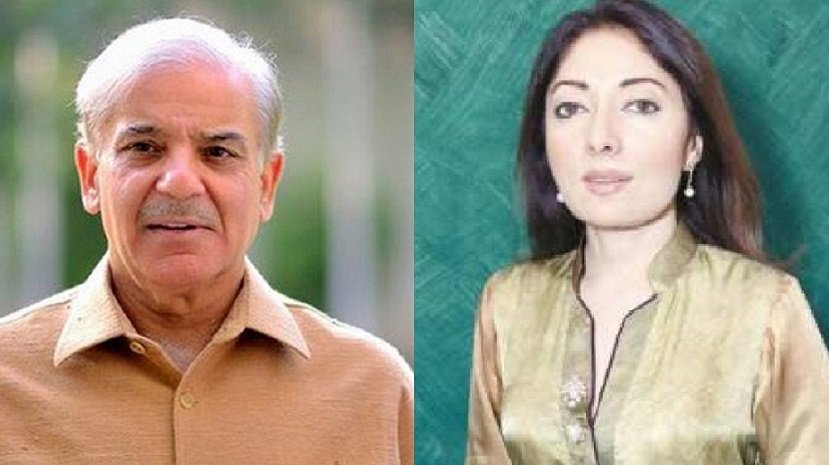
  • Shehbaz gets bail; PPP’s Sharmila, in deleted tweet, accuses PML-N of camaraderie with PTI govt

    Shehbaz gets bail; PPP’s Sharmila, in deleted tweet, accuses PML-N of camaraderie with PTI govt

    The Lahore High Court (LHC) has granted bail to Pakistan Muslim League-Nawaz (PML-N) chief and National Assembly Opposition Leader Shehbaz Sharif in the assets beyond means and money laundering case.

    He had moved the high court for post-arrest bail in the reference — filed by the National Accountability Bureau (NAB) — in March, five months after he was sent to jail on judicial remand by a trial court.

    The anti-graft watchdog had arrested Shehbaz in September after the LHC denied him further relief of pre-arrest bail in the case.

    On Tuesday, the bench, headed by Justice Sardar Muhammad Sarfraz Dogar, adjourned the hearing until today as a special prosecutor sought to start his arguments on behalf of the agency.

    An LHC division bench headed by Justice Sardar Sarfraz Dogar heard the National Accountability Bureau (NAB)’s arguments on the bail application of the opposition leader.

    On Tuesday, Shehbaz’s counsel Azam Nazir Tarar completed arguments for his bail, claiming that NAB has failed to come up with any evidence to establish the charges.

    In his bail request, Sharif alleged the NAB proceedings against him had been prompted by mala fide intention, ulterior motive, and considerations extraneous to law.

    He said the registration of a series of cases in quick succession against him and his repeated arrests at the behest of the government had been a classic example of misuse of the process of NAB to muffle the voice of the opposition.

    He said the bureau failed to collect any evidence of any corruption, kickbacks, misuse of any public office for personal gain by him throughout his political career.

    SHARMILA FARUQI’S DELETED TWEET:

    As Twitter reacted to the bail, Pakistan People’s Party (PPP) leader Sharmila Faruqi tweeted to hint at possible betterment of ties between the PML-N and Pakistan Tehreek-e-Insaf (PTI) government.

    “Accusations of joining hands with government against the PPP and bail for Shehbaz?” she said in the tweeted that was later deleted.

    Tensions are running high between the PPP and anti-government Pakistan Democratic Movement (PDM), of which the PML-N is a key member.

    Trouble had been brewing between the two political entities ever since the government-friendly Balochistan Awami Party (BAP) supported PPP’s Yousuf Raza Gilani for slot of Senate opposition leader.

    Gilani’s nomination and subsequent election considered betrayal by other PDM members except the Awami National Party (ANP) was the latest bone of contention until the PPP and ANP were served show-cause notices.

    The same led to the PPP and ANP resigning from the opposition alliance. PDM chief, Maulana Fazlur Rehman, has, however, asked both the parties to reconsider their decision.

    CASE AGAINST SHEHBAZ:

    Sharif along with his son Punjab Assembly opposition leader and PML-N Vice President Hamza Shehbaz was indicted in November in the Rs7 billion reference involving charges of money laundering and assets beyond means.

    The reference mainly accuses Sharif of being a beneficiary of the assets held in the name of his family members and frontmen, who had no sources to acquire such assets.

    It says the family members and the frontmen of the family received fake foreign remittances of billions in their personal bank accounts. In addition to these remittances, the bureau says, billions of rupees were laundered by way of foreign pay orders, which were deposited in the personal bank accounts of Hamza and his brother Suleman Shahbaz.

    The reference further says Sharif and his family failed to justify the sources of funds used for the acquisition of assets.

  • Babar Azam dethrones Virat Kohli to become number one ODI batsman

    Babar Azam dethrones Virat Kohli to become number one ODI batsman

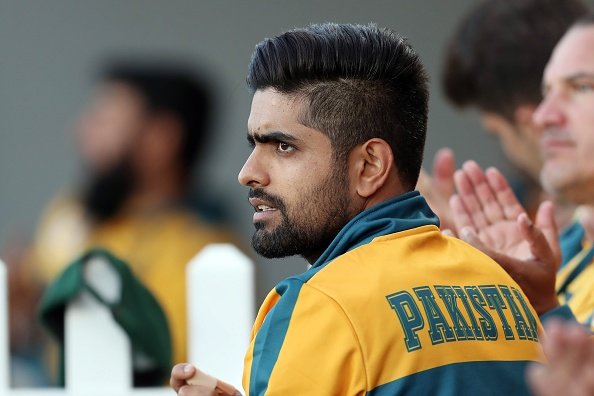
    Babar Azam has dethroned the Captain of the Indian Cricket Team Virat Kohli to become the number one batsman in One-Day Internationals, becoming the fourth batsman from Pakistan to attain the number one position in the latest ICC rankings list update, released on Wednesday.

    The 26-year-old player of the match scored 94 off 82 balls in the last match of the ICC Men’s Cricket World Cup Super League series against South Africa in Centurion which helped him gain 13 rating points to reach 865 points and he now leads the Indian captain by eight points.

    Babar, a star of the ICC Under-19 Men’s Cricket World Cups in 2010 and 2012 has been playing ODIs since 2015 and had started the series against South Africa at 837 rating points but moved up to 858 (ahead of Kohli) after his score of 103 in the first match. He dropped to 852 by the time of the last weekly rankings update with a score of 32 in the second ODI.

    By ending Kohli’s 1,258 day-supremacy, Babar has emulated compatriots Zaheer Abbas (1983-84), Javed Miandad (1988-89), and Mohammad Yousuf (2003) as the number one ODI batsman. In Tests, Babar has attained a best of the fifth position and is currently ranked sixth while in T20Is he is third but has been number one in the past.

    Meanwhile, Fakhar Zaman is another Pakistan batsman to move up the ODI batting charts, gaining five slots to reach a career-best seventh position after his knock of 101. Shaheen Afridi (up four places to a career-best 11th place) and left-arm spinner Mohammad Nawaz (up 29 places to 96th) have progressed thanks to their three-wicket hauls in the match.

    Babar had earlier overtaken Rohit Sharma to get to the second spot.

    Reacting to the news, Azam, in a statement, said: “I feel privileged and honoured to have joined the company of stalwarts like Zaheer Abbas, Javed Miandad and Mohammad Yousuf, who will always be the shining stars of Pakistan cricket.”

    “This is another milestone in my career, which will now require even more hard work and absolute consistency with the bat in order for me to hold on to the ranking for an extended period of time, like Sir Vivian Richards from January 1984 to October 1988 and Virat Kohli for 1,258 days,” he continued.

    The captain further said: “I have also previously topped the T20I rankings, but the ultimate ambition and goal is to lead the Test rankings, which are the real testament and reward to a batsman’s calibre, reputation and skills. I understand to achieve this objective, I will not only have to perform consistently but more importantly, against the top sides.”

    “I am looking forward to this challenge and remain confident I will be able to accomplish this target with the support of my teammates and coaching staff. But at this stage, I will savour the moment as it has come almost 18 months after I was first appointed the white-ball captain and that too at the back of my performances which helped Pakistan become the first Asian side to win two ODI series in South Africa,” added Azam.

  • Friendship ended with PPP? PDM removes party leaders from WhatsApp group

    Friendship ended with PPP? PDM removes party leaders from WhatsApp group

    A day after Pakistan People’s Party (PPP) finally broke silence on backstabbing allegations, expressed its reservations and later resigned from the Pakistan Democratic Movement (PDM) along with Awami National Party (ANP), members of the parties have reportedly been removed from a WhatsApp group of the anti-government alliance.

    According to sources, Yousuf Raza Gilani, Sherry Rehman, Saeed Ghani and Mian Iftikhar were removed from the WhatsApp group of the joint opposition’s steering committee.

    This came as PDM chief Maulana Fazlur Rehman asked the PPP and ANP to reconsider their decision of resigning from the alliance.

    Addressing a press conference after chairing an important meeting of the PDM in Islamabad after resignations from PPP and ANP, Fazl said both the parties still had time to reconsider their decision and contact the PDM.

    The PDM chief said PDM was an alliance of 11 parties and decisions were made with the consensus.

    “If any party is found violating the consensus then it must be made answerable,” he said while explaining the show-cause notices to PPP and ANP, which became the latest bone of contention after Yousuf Raza Gilani’s nomination and election as Senate opposition leader.

    Both the parties had the opportunity to summon PDM meeting to give an explanation on the matter, but they decided to part ways with the alliance, Fazl maintained.

  • Richa Chadha’s ‘Madam Chief Minister’ is ambitious

    Richa Chadha’s ‘Madam Chief Minister’ is ambitious

    After the success of Sacred Games and Mirzapur, political and crime thrillers set in the corridors of power have become a thing in Bollywood. Indian politics has a history of being mired in plenty of controversy, drama and action and provides ample inspiration for gripping political dramas – one that will keep audiences engaged throughout the runtime.

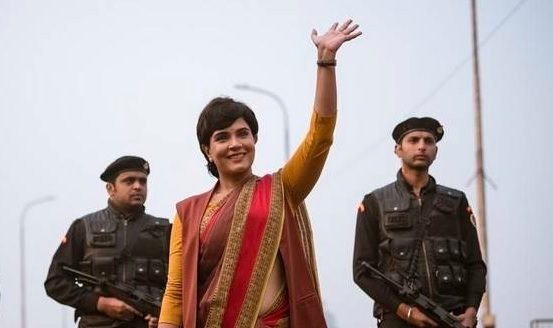
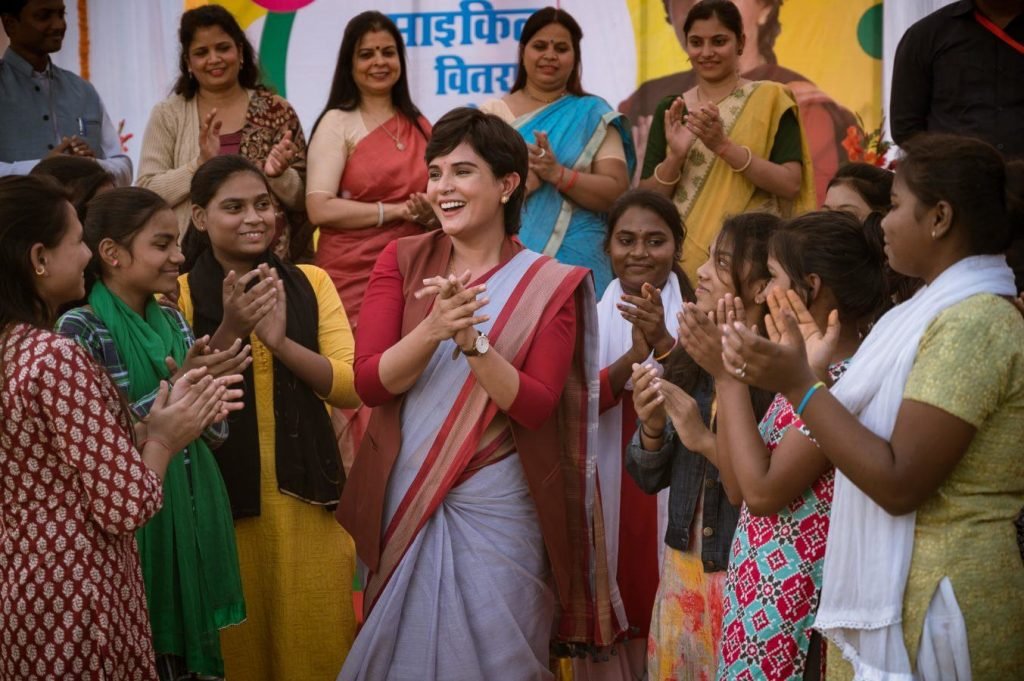
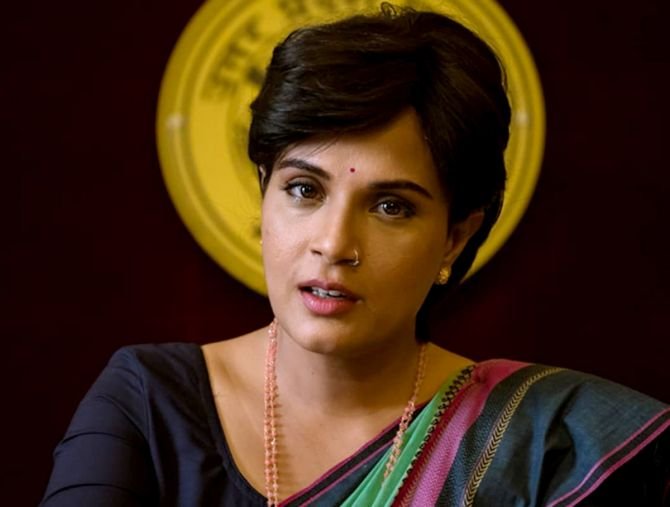
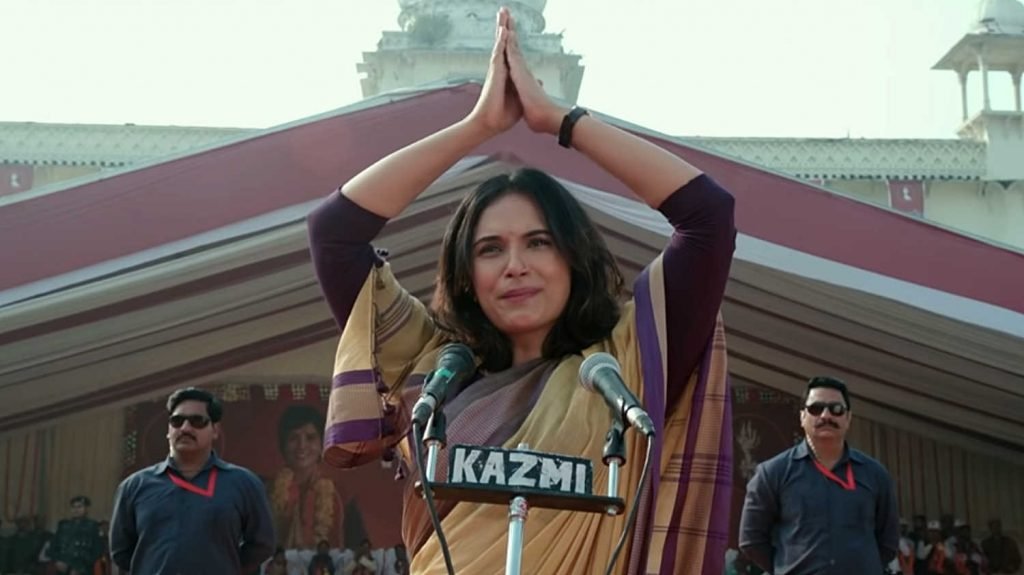
    Madam Chief Minister featuring Richa Chaddha in the lead is the latest political drama to come out of Bollywood and while it may not be able to match the class and finesse of Raajneeti or Tandav, it follows closely behind and is an entertaining watch, though a little devoid of logic at places.

    Set in Uttar Pradesh (UP), Madam Chief Minister follows an ambitious, young Dalit woman Tara Roopram (Chaddha) and her journey to becoming the Chief Minister of India’s most populous province. However, it doesn’t stop there. The film also shows Tara as she manoeuvres the ‘kursi‘ battling misogynist and racist allies and opposition.

    According to reports in the Indian media, the plot of the film has been loosely inspired by the life and political career of Mayawati, India’s first Dalit chief minister. Dalits are a marginalised community and a Scheduled Caste in India and are considered to be ‘untouchables’. She was also the youngest chief minister in the history of UP and her rise in the world of politics was referred to as a “miracle of the democracy” by former Prime Minister PV Narsimha Rao. Other characters, including Tara’s mentor Master Surajbhan (Saurabh Shukla) have also been inspired by Maya’s close associates. Master Surajbhan’s character has purportedly been based on the founder of the Bahujan Samaj Party Kanshi Ram. Nonetheless, creative liberty has been taken and Tara was given a husband, though Mayawati chose to remain unmarried.

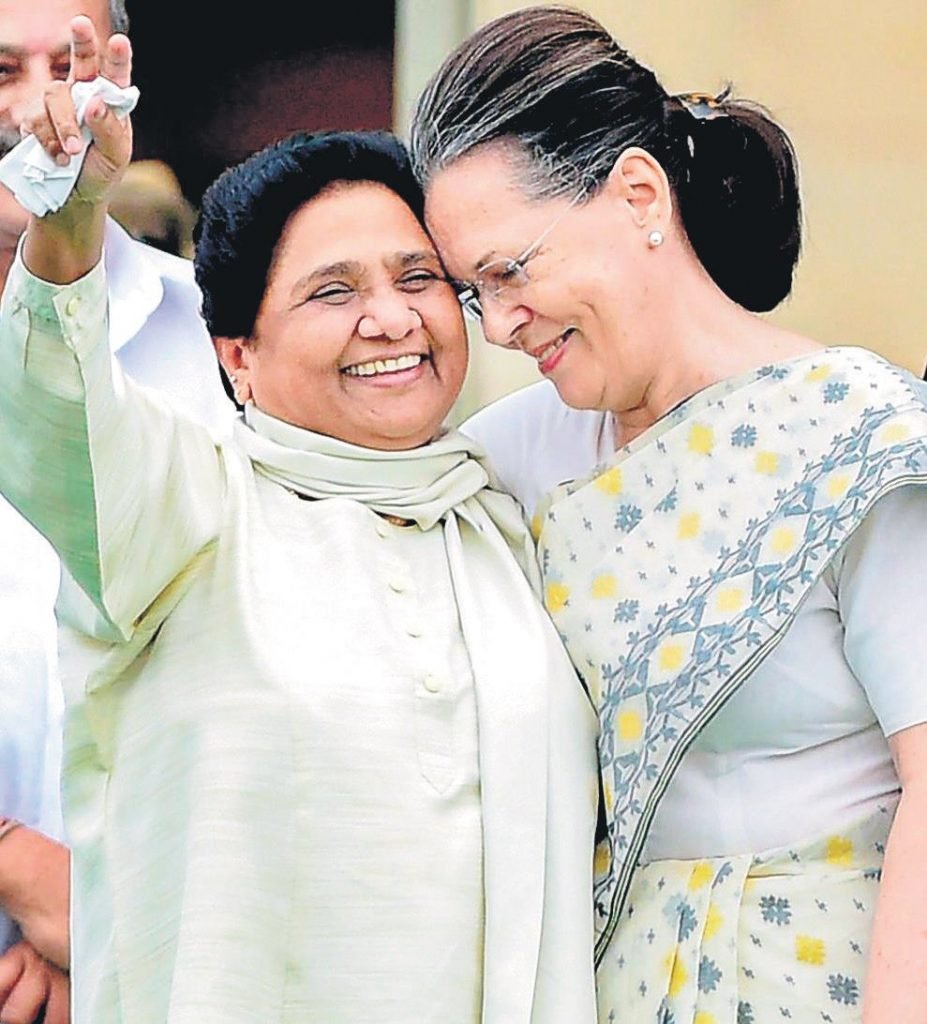
    Mayawati with Sonia Gandhi

    While Chadda gave a solid performance as Tara and shouldered the role well, it was Manav Kaul, who shines as Danish Rehman Khan, Tara’s secretary and later husband. His performance, especially in the second half of the film was strong.

    Written and directed by Shubash Kapoor, Madam Chief Minister is ambitious given how the makers tried to squeeze a lot into just two hours. The writing was weak with too many jumps, leaving plenty to be desired. However, it was entertaining, gripping and feel-good – especially where seeing a woman shine in the male-dominated world of politics is concerned.

    On a parting note, the film doesn’t appear to have a very high budget which makes you wonder why Pakistan does not attempt to produce such thrillers. Not only are they entertaining but they also subtly pass messages and challenge societal norms.

    Madam Chief Minister is currently trending in the top 10 on Netflix Pakistan.

  • ‘Govt working to introduce royalty payments for artists’

    The federal government is working to introduce a comprehensive bill to ensure that artists are given financial credit for their work, PTI Senator Faisal Javed Khan has announced.

    “Most countries around the world give royalties to artists every time a show, their work is re-run, a second time or more,” wrote Faisal on Twitter. “Sadly in Pakistan where many artists are already underpaid, there is no policy or law ensuring that artists be given financial credit for their work.”

    The Senator further said that it is “very critical to fill the gaps and bring proper framework via amendments in legislation to ensure that our producers [and] artists get their rights to royalties.”

    Khan added that he is in touch with all stakeholders and is looking to introduce a comprehensive bill to address the matter.

    Speaking exclusively to The Current on the matter, Senator Faisal said: “Royalty is very important and I am working on this bill to ensure our artists get their due right. I am hoping to get it passed soon without any further delays.”

    Asserting that the government is committed to addressing this issue, Senator Faisal said: “Actors, musicians, singers – all artists must be supported,” adding that they will soon be entitled to royalties.

    Responding to Senator Faisal’s announcement, several artists including Mikaal Zulfiqar, Ali Zafar, Ali Safina and Sakina Samo lauded the initiative and hoped that it would resolve artists’ concerns.

    https://twitter.com/SakinaSamo/status/1381551181483413504?s=20

    Ever since Naila Jaffery appealed to producers and the government to pay royalties to actors for the work and content that is re-run, the conversation around royalty payments for artists has gained momentum with several actors demanding it.

    “Why is it even a matter of discussion?” Siddiqui had questioned. “Artists rightfully deserve to be paid royalty.”

    “So many producers and channels rake in copious amount of money through reruns. It is only ethical to pay actors their due,” he added.

    “We as a community of artists, singers, actors, writers, producers, directors, composer, editors and so on, need to be recognised by our government as an industry,” asserted Ahmed Ali Butt had.

    Zulfiqar was the first one to demand payment for reruns and after Jaffery’s appeal, several artists including Yasir Hussain, Sabeeka Imam, Ayesha Omar and Mansha Pasha had demanded TV channels for royalties.

    Earlier in July 2020, the government had announced that it will be creating a film task force to promote the entertainment industry and resolve its issues. Members of the government including Senator Shibli Faraz had held a virtual meeting with artists and stakeholders involved and shared the government’s intentions. They also discussed issues being faced by the film industry and their proposed solutions. Among those present during the meeting included Humayun Saeed, Vasay Chaudhry, Ali Zafar, Fizza Ali Meerza and Nadeem Mandviwala.

    Chaudhry, while speaking to The Current, had said that Senator Shibli had shown a “keen interest in the issues of royalties when it was brought up by me.”

    “He told us that the issue of royalties of artistes is very close to his heart and he will make sure to do something about it,” shared Vasay.

  • The great debate on State Bank autonomy

    The great debate on State Bank autonomy

    “We must understand that we do need to make SBP autonomous, or else it would continue to get exploited by the government to gain political advantages through expansionary fiscal policies.”

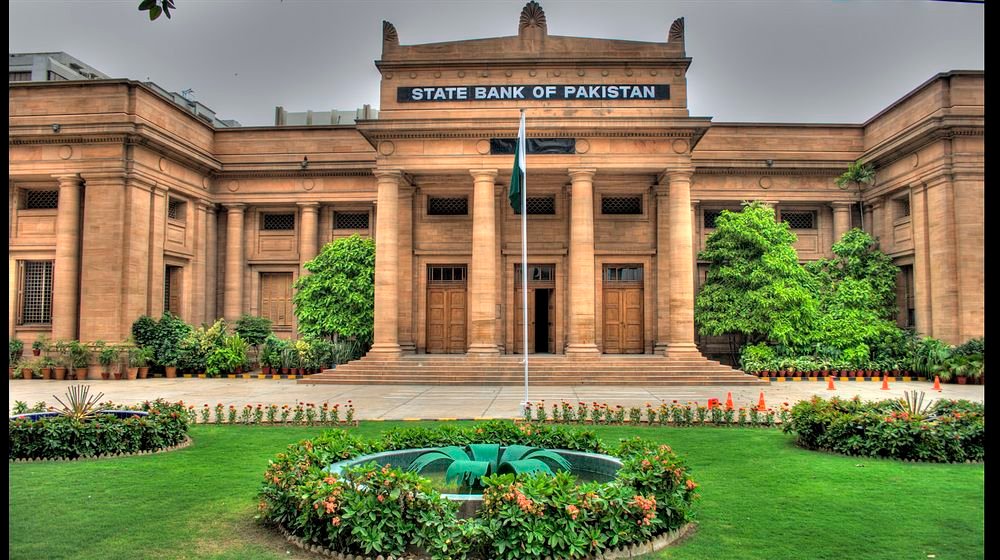
    If you have wondered in recent days what’s the real deal with the proposed changes in the State Bank of Pakistan law but have failed to understand the issue, perhaps this is just the right piece for you.

    Lately, there has been a lot of noise in the media about this issue. Many leading economists have claimed that this would mean compromising on government’s independence. Others have equated it to a deep conspiracy against Pakistan. But there are many contrarian voices as well, claiming that these amendments are justified and well needed. It’s time to put this debate to rest. Let’s objectively look at both sides of the argument and come to an independent conclusion.

    Firstly, why is there so much mistrust about the proposed amendments in the SBP Act?

    While there is always noise in the media, motivated by vested interests, it is hard to attribute all criticism to political motivations when it’s coming from multiple credible economists. There has to be a deeper reason for why so many people are apprehensive about it. There are a few cogent reasons. Pakistan is facing a fifth-generation war, and anything out of the ordinary is bound to raise eyebrows. Given our geostrategic location, it is not a farfetched idea that international powers could have a clandestine agenda. The fact that the current Governor State Bank is a former IMF employee has also not helped, given our eternal mistrust about the Bretton Woods institutions. People have confused two different issues: choice of the Governor and autonomy of the State Bank. Merely because the current governor is a former IMF employee, it’s a bit of a stretch to say that the proposed law will make the SBP subservient to the IMF. Lastly and most importantly, many economists have taken a clue from the recent past, when there was a hyper-reaction by the SBP to the headline inflation, which slowed down the economy. A legitimate question is what would prevent the State Bank from over-reacting in the future if Pakistan were to face similar circumstances.

    The second question is that where these amendments came from and why they are required.

    Pakistan has witnessed repeated boom-and-bust cycles that have taken a toll on national economic health. Many previous governments have spent generously to appease their voters and then got the State Bank to finance the ballooning budget deficits (by literally printing money). Under the government’s pressure, the central bank had kept the interest rates low and exchange rate overvalued to stimulate demand and drive growth. By the time the import-led consumption led to a crisis, it was the next government’s turn to run to the IMF yet again.  No one can deny that this pattern had to break.

    How can this cycle be broken?

    The IMF reports from 2008, 2013 and 2018 all highlighted SBP’s continued financing of large fiscal deficits and currency support operations draining external reserves and recommended enhanced autonomy for SBP with domestic price stability as the primary objective, flexible exchange rate policies and an end to direct lending to the government. Those who criticise the proposed amendments, unfortunately, have not come up with a better practical alternative.

    But the devil is always in the details. So what exactly has the IMF proposed?

    The IMF ran a safeguards assessment, which recommended ensuring full operational independence of SBP, making price stability the primary objective of the central bank, prohibiting monetary financing of public sector debt, and removing quasi-fiscal operations. It also suggested improving SBP’s governance, including creating a firewall between management and oversight functions, establishment of the Executive Board and protecting personal autonomy of members of SBP Board and Monetary Policy Committee. In addition, IMF also proposed strengthening legal provisions for audit and statutory mechanisms for sufficient capitalisation and profit retention.

    Let’s translate these proposed changes into simpler terms. What is the change that we actually need, which should not be unduly criticised?

    Putting an end to government’s direct borrowing from SBP, dissolution of Monetary and Fiscal Policies Coordination Board and removal of Secretary Finance from SBP’s Board, all aimed at cutting the cord between MoF and SBP. This is essential if we intend to remove the government’s influence on the State Bank to take politically motivated decisions.

    The tenure of the Governor also needs to be increased to delink his appointment from electoral cycle, depoliticise the Governor’s role and ensure policy continuity. The proposed tenure of five years is in line with other central banks including India. Some have criticised the provision for reappointment of the Governor, which is actually not new and was also present in the previous draft, albeit with a shorter tenure of three years.

    Then there has been a lot of criticism on proposing domestic price stability as the primary objective and ‘supporting general economic policies’ as a tertiary objective. No one has bothered to check that even the existing law does not mention supporting economic policies or growth as objectives of the SBP, and instead focuses on supporting the regulation and growth of monetary and credit systems. Moreover, putting price stability as a primary objective is not a novel concept and has been embraced by many countries. In fact, macro-economic stabilisation is critical for sustained economic growth and for preventing the boom-and-bust cycles – the kind we have repeatedly experienced.

    Nevertheless, the new law should mention sustainable growth as the ultimate objective. The Indian Reserve Bank Act also mentions price stability as its primary objective but keeping in view the objective of growth. But this would be a semantic change. The central bank cannot operate in isolation from the rest of the economy and ignore the growth considerations altogether.

    The proposed amendments also have a provision for the SBP to support growth. The end to quasi-fiscal operations would not mean the discontinuation of re-financing facilities, at least in the foreseeable future. These schemes have much lesser risk since the credit allocation decisions rest with the commercial banks, which in turn remain accountable for asset quality indicators, like non-performing loans, while the SBP steers clear of the credit risk.

    Another misunderstanding is about inflation targeting. Inflation targeting does not necessarily mean that SBP alone would be able to control inflation, especially if the country is facing supply-driven and cost-pushed inflation, and in the wake of weak monetary policy transmission mechanisms. But even in that situation, SBP’s interventions are required to mitigate the second-round effects of supply-driven inflation. However, given the track record, the SBP will also have to be cautious and not get carried away by inflationary concerns.

    There has also been much criticism about the new accountability clauses, especially the provision of getting prior permission of the SBP Board before NAB or FIA can initiate an investigation. But this is not an unusual concept in Pakistan. Securities and Exchange Commission enjoys the exact same protection under Section 41 (b) of the SECP Act. Why then fear it for the SBP?

    Moreover, a new accountability clause has been proposed to be added whereby the Governor will have to appear in person before the parliament, which wasn’t there earlier. Other than these, no accountability provision has been taken out from the existing law. 

    Furthermore, all SBP officials continue to be considered public servants and therefore subjected to Pakistan Penal Code’s stipulated offences for public servants (sections 161-171) including corruption. Similarly, the SBP’s accounts will continue to be audited by the Auditor General of Pakistan, besides two external auditors. In addition, the law now includes a conflict-of-interest clause, which will ensure transparency.

    Does this mean that all the proposed amendments are good, and nothing really needs to change? Not really. There are a number of proposed amendments that need reconsideration.

    For instance, the new law is not clear on who will set the inflation target. It should be made clear that National Economic Council is the legitimate forum to provide the target range.

    Similarly, the independent directors will now be appointed by the President, but on recommendation of the federal government. The only problem here is that the government will need to base its recommendations on list of candidates proposed by SBP’s Board itself, which seems cyclical and does not make sense. The federal government should be free to propose members who meet the requisite criteria.

    The section on removal of Governor has also been diluted, where previously they could be removed on breach of trust, but not anymore. Even the ground of serious misconduct has to be determined now by the court, which is ridiculous and needs to be fixed.

    Lastly, if the SECP Act is to be considered a benchmark for accountability clauses, then it should also be followed for other provisions. One can see that the newly inserted conflict of interest provision and the amended provision for removal of governor in the SBP Act are quite weak and must be strengthened in light of how these have been provisioned in the SECP Act.

    Most importantly, the question that we all need to ask is if there is anything for us to worry about the new SBP Act. Perhaps not as much as the media has portrayed.

    Many are confusing the issue of who occupies the seat of the governor with whether the central bank should be autonomous. The current governor might be from IMF, but that’s not always the case. So autonomy should not mean IMF controlling the central bank.

    Then, no matter what we write in the law, the parliament will always have the right to amend it. If we can change it once, we can always do that again. The President can even change it overnight through an ordinance if the parliament is not in session.

    Most importantly, there is a big difference between de jure and de facto power. By merely amending the law, the SBP cannot ignore the Prime Minister, the cabinet and the whole federal government.

    Lastly, before criticising the change and fearing the ‘new’, we must ask how the ‘old’ has delivered. We do know that it has not worked in the past, given our economic situation. So something must change.

    In short, we must understand that we do need to make SBP autonomous, or else it would continue to get exploited by the government to gain political advantages through expansionary fiscal policies. But we should not do it in a hush-hush manner and instead debate the proposed amendments in the parliament and only then pass them into law.
  • Two-week complete lockdown in worst-hit Lahore from today?

    Punjab health authorities and local administration have proposed a complete lockdown in the provincial capital as the COVID-19 positivity ratio stands at around 19% for the third consecutive week.

    The final decision, in this regard, will be taken by the Asad Umar-led National Command Operation Centre (NCOC).

    Lahore is the worst-hit during the third wave of the pandemic owing to the recklessness of the masses and disinterest of the government. Both had turned a blind eye towards the virus situation until the positivity ratio climbed to a whopping 23% last week.

    The situation in other parts of Punjab is not much better either.

    Punjab Health Minister Prof Dr Yasmin Rashid has said that if precautionary measures are not taken, the situation in Lahore and other cities would worsen.

    Explaining the alarming situation in the Punjab capital, she said there were no vacant ventilators at any of the city’s major hospitals, including Jinnah Hospital, Services Hospital and Gangaram Hospital.

    Besides the shortage of ventilators, oxygen beds at hospitals across Lahore have also reached their 70% capacity.

    “We don’t have any other option rather than the complete lockdown in Lahore however the final decision will be taken by the Punjab government,” the provincial health minister added.

    Meanwhile, 58 people lost their lives due to coronavirus with 4,584 new cases over the past 24 hours. The death toll has surged to 15,501 while the number of confirmed cases stands at 725,602.

    The 58 fatalities on Sunday-Monday come after over 100 deaths ever 24 hours for at least five consecutive days.

  • VIDEO: Mahira Khan jams to Humsafar

    Mahira Khan recently participated in ‘Carpool Karoke’ with vlogger Imaara Dharani during which she jammed to songs from her films and dramas and shared some fun facts about them.

    Mahira, jammed to, Humsafar, which is her most special project.

    She also sang Hona Tha Pyar from her first film Bol, in which she was paired opposite Atif Aslam. Mahira, while talking about the song said that shooting it was a fun experience.

    Ballay Ballay from Bin Roye also made it to the playlist, with Mahira sharing that the film took two years to complete.

    How can any Mahira Khan playlist be complete without Zaalima from Raees? Zaalima was the last song on the Carpool Karoke playlist and Mahira revealed that the song was shot in Morocco.

    After winning applause for her acting, Mahira has recently turned producer with a web series titled Baarwan Khiladi.

    Baarwan Khiladi, which features young and upcoming actors including Danyal Zafar, Shahveer Jafry, Kinza Hashmi and Khaqan Shahnawaz, has a cricket-themed story.

  • Turkey, Maldives emerge celebrity pandemic vacation hotspots

    Turkey, Maldives emerge celebrity pandemic vacation hotspots

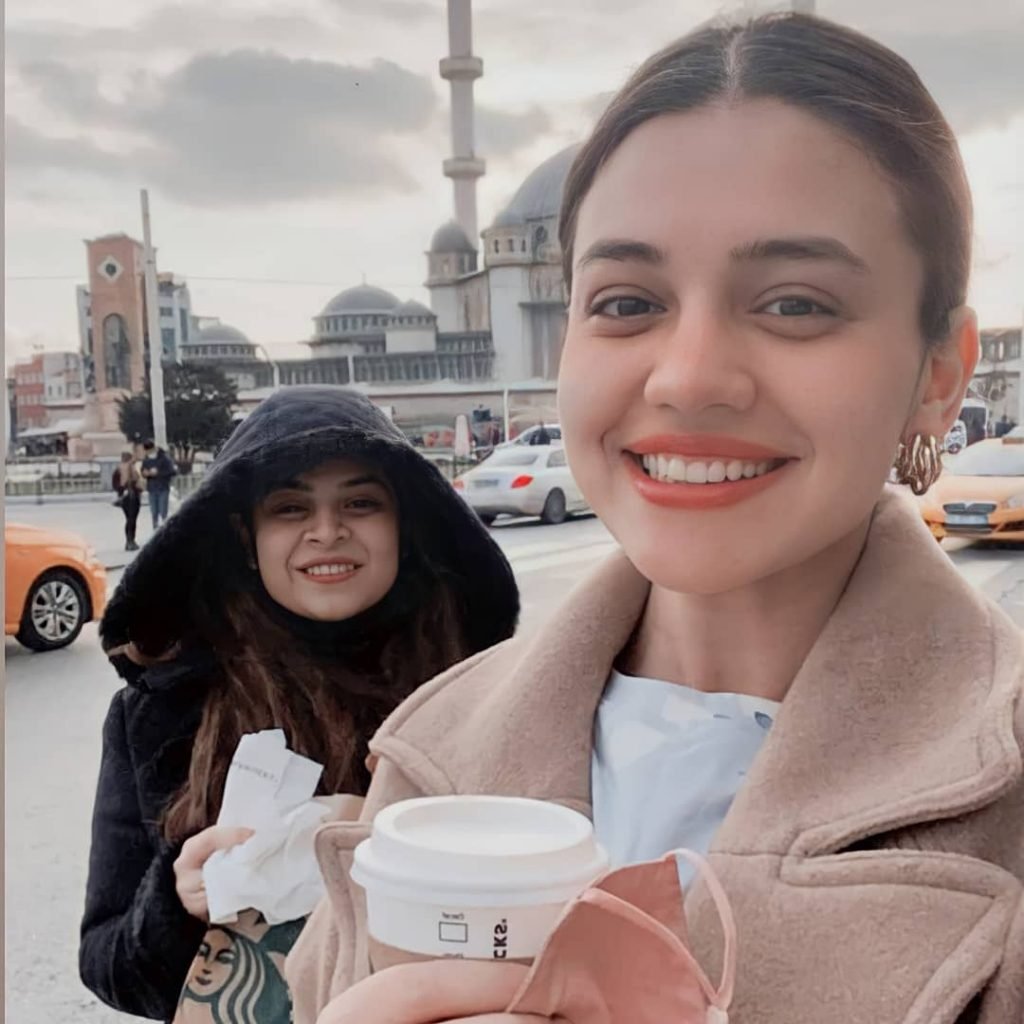
    If you’re an avid social media user like us, who loves following celebrities, chances are you have seen some of them jetting off to luxury destinations in recent weeks – despite rising coronavirus infection rates and restrictions across the world.

    From Imran Abbas to Sarah Khan to Bollywood stars including Madhuri Dixit, Janhvi Kapoor and Shraddha Kapoor, several celebrities have been spotted vacationing in Turkey and Maldives.

    Imran Abbas

    Abbas has been keeping us updated with his whereabouts by sharing photos of himself in Turkey. The actor has also been spotted hanging out with several Turkish actors including Yeşim Ceren Bozoğlu, who essays the role of Hazal Hatun in Kurulus: Osman.

    Last month, Abbas also visited the sets of the popular dramas Diriliş: Ertuğrul and Kuruluş: Osman, where actor Celal Al presented him with a handmade flag from the historical series.

    Meanwhile, the Pakistani actor is also all set to host a Ramzan transmission from Istanbul titled Baraan e Rehmat, which will be co-hosted by Reema Khan from Pakistan.

    Sarah Khan and Falak Shabbir

    Sarah and Falak, who tied the knot during the lockdown, have jetted off to Turkey for what appears to be their honeymoon.

    The couple has been sharing loved up photos with each other giving us all the feels besides a serious case of wanderlust.

    Sumbul Iqbal

    Sumbul Iqbal seems to be having the time of her life in Turkey. The Dulhan star shared some gorgeous clicks of herself with fans on her Instagram.

    Iqbal is giving us major fashion inspo also.

    Sumbul is enjoying her Turkish vacation with sister Kompal Iqbal.

    Aiman Khan and Muneeb Butt

    Power couple Aiman Khan and Muneeb Butt certainly know how to enjoy a getaway and show it too.

    Though the couple was in the country for an ad campaign, they sure struck a balance between work and pleasure.

    The couple also went for a cruise on the Bosphorus.

    Nida Yasir

    Nida was spotted enjoying some family time in Turkey back in February.

    Zara Noor Abbas

    Actress Mariam Mirza and Zara Noor Abbas are recently in Turkey. Mariam Mirza shared pictures, enjoying her holidays with her husband in Turkey and Zara is also having fun there with her freind.

    Fawad Khan

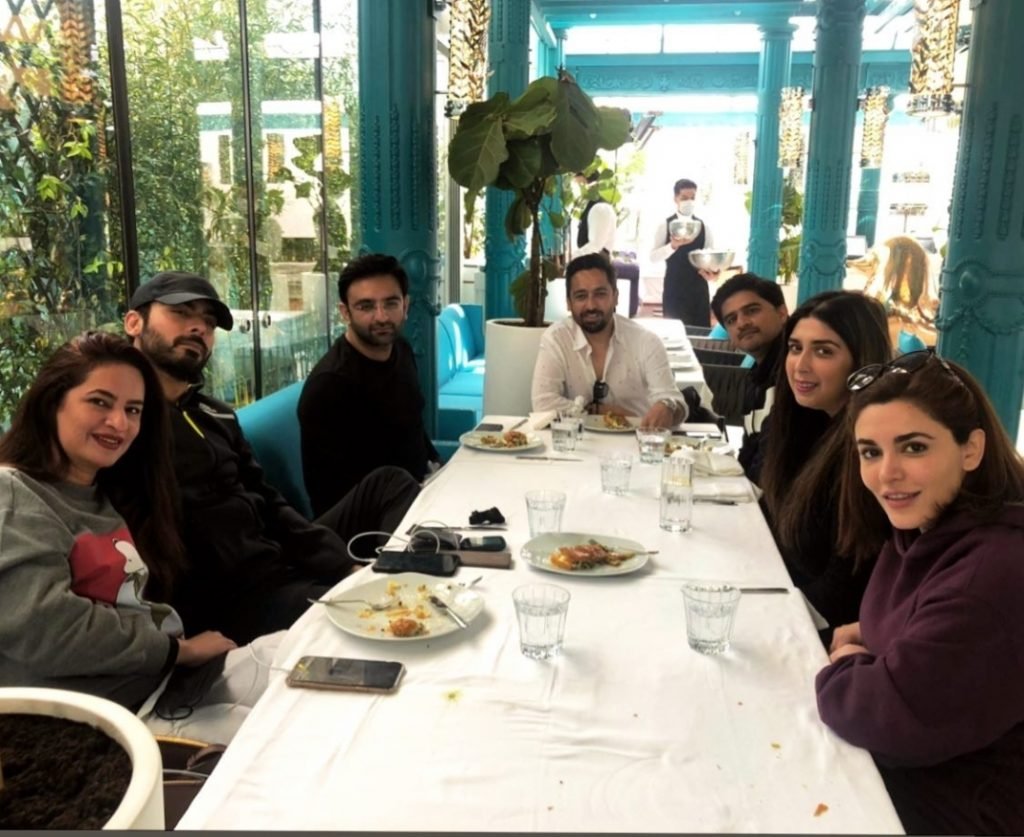
    Recently, Fawad Khan and wife Sadaf were also spotted in Turkey. The photos and videos shared on social media show that they are accompanied by their friends and industry mates.

    This is their first public appearance after the birth of their child. Producer Ammara Hikmat and others shared the snaps on their Instagram stories.

    Madhuri Dixit

    Madhuri Dixit has joined the long list of Bollywood celebrities who went to the Maldives for a family holiday recently.

    The actor has been sharing snippets from her Maldives vacation, which she is enjoying with her husband and sons.

    Dixit’s Maldives itinerary also included thrilling water sports experiences, snorkelling and a date night with husband.

    Janhvi Kapoor

    Janhvi Kapoor is enjoying a vacation in the Maldives with her friends. The actor posted pictures of herself looking absolutely gorgeous in beach wear.

    “Last to get on the Maldives bandwagon but I fully get the hype,” said the actor.

    Dia Mirza

    Dia Mirza, who recently announced that she is expecting, spent the past few days holidaying in the Maldives with her husband Vaibhav Rekhi.

    In fact, Dia announced her pregnancy with a sunset shot from her vacation.

    Shraddha Kapoor

  • ‘Oye Motti’ aims to highlight how women are shamed for their weight

    The latest teaser of Express Entertainment’s Oye Motti ruffled feathers and sparked outrage on social media for mocking and ridiculing plus-size and heavy women, especially when it comes to marriage.

    https://twitter.com/c1rcus_music/status/1380130053351120897?ref_src=twsrc%5Etfw%7Ctwcamp%5Etweetembed%7Ctwterm%5E1380130053351120897%7Ctwgr%5E%7Ctwcon%5Es1_c10&ref_url=https%3A%2F%2Fwow360.pk%2Fdrama-serial-oye-moti-highlights-how-a-womans-weight-is-policed-when-it-comes-to-marriage%2F
    https://twitter.com/7kayhan/status/1380179294924763142?ref_src=twsrc%5Etfw%7Ctwcamp%5Etweetembed%7Ctwterm%5E1380179294924763142%7Ctwgr%5E%7Ctwcon%5Es1_c10&ref_url=https%3A%2F%2Fwow360.pk%2Fdrama-serial-oye-moti-highlights-how-a-womans-weight-is-policed-when-it-comes-to-marriage%2F
    https://twitter.com/hodornm/status/1380251955822465025?ref_src=twsrc%5Etfw%7Ctwcamp%5Etweetembed%7Ctwterm%5E1380251955822465025%7Ctwgr%5E%7Ctwcon%5Es1_c10&ref_url=https%3A%2F%2Fwow360.pk%2Fdrama-serial-oye-moti-highlights-how-a-womans-weight-is-policed-when-it-comes-to-marriage%2F
    https://twitter.com/NoContextDanii/status/1380195975768240133?ref_src=twsrc%5Etfw%7Ctwcamp%5Etweetembed%7Ctwterm%5E1380195975768240133%7Ctwgr%5E%7Ctwcon%5Es1_c10&ref_url=https%3A%2F%2Fwow360.pk%2Fdrama-serial-oye-moti-highlights-how-a-womans-weight-is-policed-when-it-comes-to-marriage%2F

    https://twitter.com/boujiemami__/status/1380279669874900996?ref_src=twsrc%5Etfw%7Ctwcamp%5Etweetembed%7Ctwterm%5E1380279669874900996%7Ctwgr%5E%7Ctwcon%5Es1_c10&ref_url=https%3A%2F%2Fwow360.pk%2Fdrama-serial-oye-moti-highlights-how-a-womans-weight-is-policed-when-it-comes-to-marriage%2F

    Turns out that the series does not aim to mock women but is an honest attempt to shed light on body and fat-shaming and how it affects those at the receiving end of criticism. Each episode has a separate storyline and features different women stuck in different scenarios where they are fat-shamed. However, they manage to overcome whatever hurdle comes their way.

    Read more – Juggun Kazim opens up about being fat-shamed after giving birth

    The latest episode, Episode 9, featuring Tiktoker Kanwal Aftab and Furqan Qureshi is what stirred outrage. It follows a woman’s horrifying experience, whose fiancé, right after their engagement, announces in front of everyone that her bride-to-be must lose 100 kgs within a year else he won’t marry her. The show has been written by Sajjad Haider Zaidi and directed by Muhammad Iftikhar Iffi.

    Aftab, while sharing the teaser of the episode, said that she did this project only for those who have to face body shaming. She urged her followers to stop criticising each other for their weight and let everyone live their life the way they want.

    While the show may have faltered in dealing with the topic sensitively, what’s even more alarming is that the teaser is a reflection of our society. The culture of choosing a bride in drawing rooms continues to dominate the Pakistan rishta scene with women forced to mould themselves physically as well as mentally to meet society’s expectation and fit the role of a perfect bahu.

    Meanwhile, other episodes of the series feature veteran actor Hina Dilpazeer, Maria Wasti, Sabeena Farooq, and Hajra Yamin among others.