Tag: trump card

  • ‘I walked to my home, spent a week in silence, biggest moment of my life’: Trump claims Khan was delighted about Iran operative death

    ‘I walked to my home, spent a week in silence, biggest moment of my life’: Trump claims Khan was delighted about Iran operative death

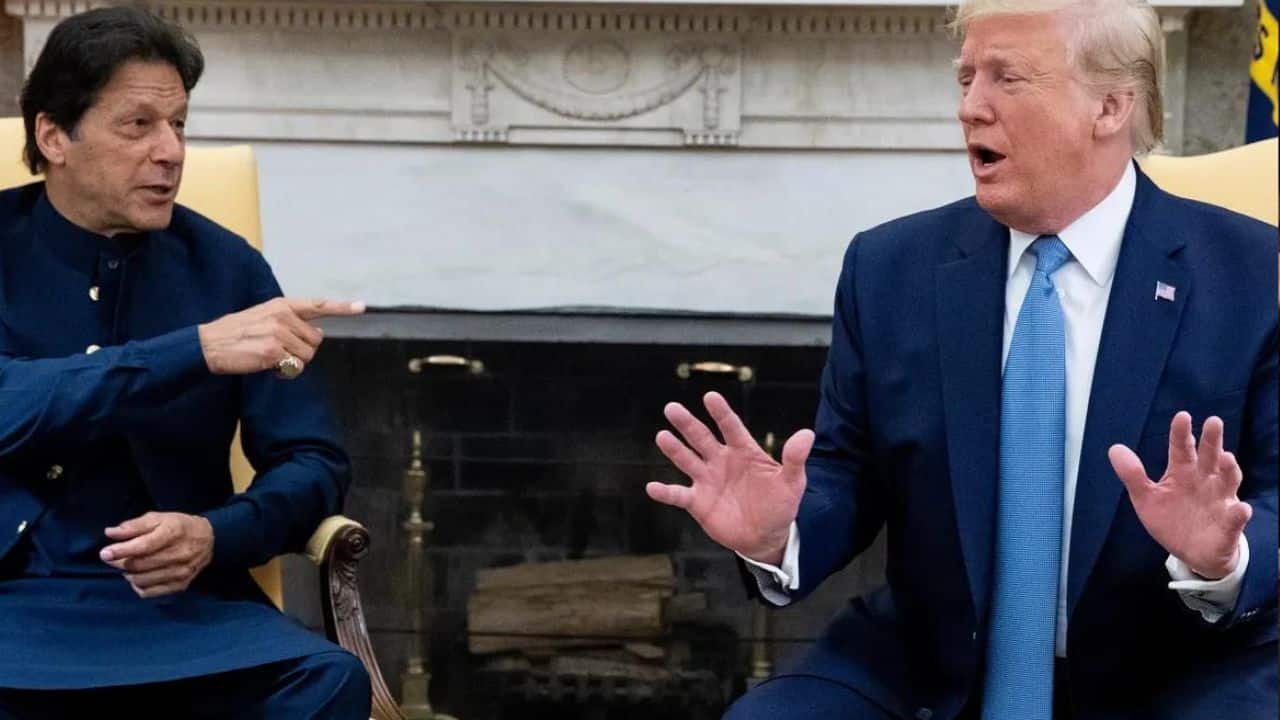
    Former American President Donald Trump is revealing about the killing of Iran’s master operative General Qassem Soleimani in 2020 just before COVID took over the world.

    Trump said that former Prime Minister Imran Khan ‘rejoiced’ at the killing.

    “There was a Khan, a great cricket player, he became the head of Pakistan, he said it was the single biggest thing I can ever remember happening in my life when Soleimani was killed,” Trump said.

    He further claimed that Khan said, “I left my office, I walked to my home, I stayed in my home in solitude for one week, It was the biggest event that ever happened to me. He was the biggest cricket player. That’s like being a great NFL player or a great baseball player. He was said to be just about the best handsome guy. He became the boss, Pakistan.”

    Trump was addressing a campaign rally in Houston, Texas, a city with a large Pakistani diaspora population.

    However, Trump’s claim of Imran Khan going into seclusion seems to be untrue. Journalist Omar Warraich pointed out in a X thread that Khan addressed a rally in his hometown Mianwali, the very next day and did not mention Soleimani’s assassination in the speech.

    Trump’s claim that Imran Khan walked from his office, the Prime Minister Secretariat, to his home, Bani Gala, also seems to be untrue. It has never been reported that Khan ever walked home, a distance of roughly 15 kilometers.

    The United States assassinated Qasem Soleimani with a drone strike in Baghdad on January 3, 2020. Soleimani was an Iranian general, the country’s most powerful commander, widely considered to be the most important person in Iran after Supreme Leader Ayatollah Khamenei.

    Soleimani was the leader of the Revolutionary Guards’ Quds Force, a pivotal figure in managing Iran’s campaign to drive U.S. forces out of Iraq, and built up Iran’s network of proxy armies across the Middle East. Washington accused Soleimani of masterminding attacks by Iranian-aligned militias on U.S. forces in the region.
  • Explainer: Law says dismissing no-confidence motion is a big no-no

    Explainer: Law says dismissing no-confidence motion is a big no-no

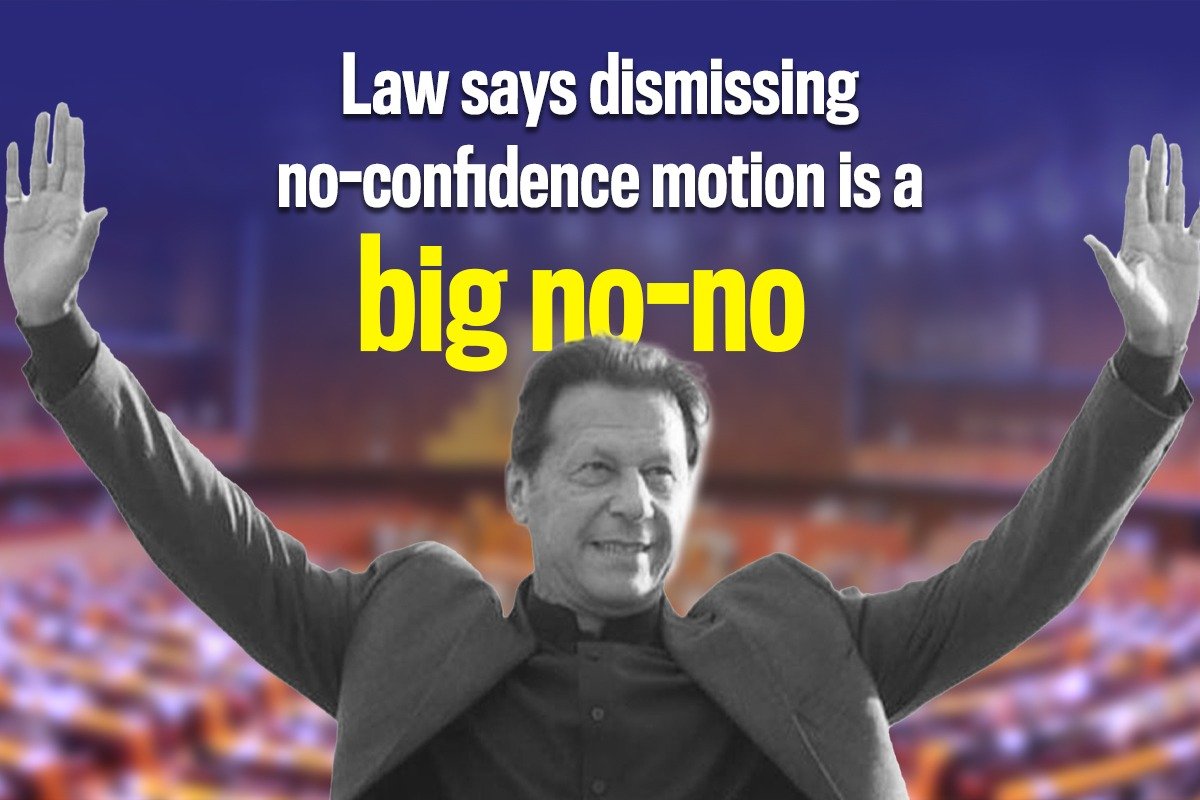
    Pakistan is in a state of political chaos as the no-confidence motion against Prime Minister (PM) Imran Khan was dismissed abruptly on Sunday. The move came after National Assembly (NA) Deputy Speaker Qasim Suri termed it “unconstitutional”, saying that it was backed by “foreign powers”.

    Suri then quickly disallowed voting on the no-confidence motion and adjourned the session. Later, on PM Khan’s advice, President Arif Alvi dissolved the National Assembly, with the premier asking the nation to get ready for fresh polls.

    After the nation was left in shock, there was much talk about the “unconstitutional trump card” used by PM Khan.What everyone wants to know is: did Khan subvert the constitution of Pakistan?

    Lawyer Salaar Khan tweeted a brief comprehension of the constitutional premise of what happened on Sunday, April 3, which went viral on Twitter.

    “Instead of allowing the vote to proceed against the Prime Minister, the Deputy Speaker dismissed the resolution. After this, the President was able to dissolve the National Assembly on the PM’s advice,” tweeted Salaar.

    “Under Article 58 of the Constitution, the President may dissolve the National Assembly on the PM’s advice. However, a PM against whom a vote of no confidence ‘has not been voted upon’ cannot ask the President to dissolve the house,” wrote Salaar.

    “To get around this, the Deputy Speaker first ‘dismissed’ the no-confidence resolution submitted against the PM. He did this on the basis of a personal interpretation of Article 5, which provides for loyalty to the state.”

    “The rather feeble argument here was that because the letter that Pakistan had received from the US suggested a regime change would improve relations, the vote of the no-confidence motion, itself, was against anti-state,” said the lawyer.

    “The irony, of course, is that Article 5 also provides for obedience to the Constitution – which was arguably violated in the process of the dismissal of the no-confidence motion.”

    “Procedurally, a ‘motion’ for no-confidence is first moved and, if leave is granted, it becomes a ‘resolution’. Under the Rules of Business in the National Assembly, there is no provision that actually allows a Speaker or Deputy Speaker to dismiss a resolution.”

    “In fact, the role of the Speaker is very clearly defined in Schedule 2 of the Rules of Business in the NA, and is essentially limited, in a VoNC, to announcing the result.”

    “And so, because the Speaker can’t dismiss a resolution for a VoNC, there is still a VoNC that has not been ‘voted upon’ by the Prime Minister. Consequently, the PM could not have advised that the assembly be dissolved under Article 58.”

    “In fact, in doing so, it may even be argued that he not only violated Article 5, by not obeying the Constitution but also subverted the Constitution under Article 6. It is, however, important to note that Article 6 is often used rather flippantly in common parlance.”

    “Finally, is the question of what the SC may do in all of this. One provision of the Constitution that has been mentioned a lot is Article 69, which bars courts from interfering in certain Parliamentary proceedings.”

    “However, the SC has laid out exceptions to this bar. Courts can interfere where there is not an ‘irregularity’ but a ‘patent illegality’, where there is clear mala fide, or where the matter in question affects the composition of the house, itself (such as in Farzand Ali).”

    “But while the SC may well find that it can interfere, how far it will go is another question. In theory, the SC could find the dissolution to be without legal effect and even order voting to resume on the VoNC. But given recent precedent, that may be a long shot.”

    The Supreme Court of Pakistan took suo moto notice of the Assembly proceedings on Sunday, April 3, and restrained the state institutions as well as the political parties from taking any unconstitutional acts and exploiting the situation.