Tag: TTP

  • No specific reaction to Pakistan-TTP talks, says US official

    No specific reaction to Pakistan-TTP talks, says US official

    The United States (US) has refused to give a specific reaction when asked about Pakistan and Tehreek-i-Taliban Pakistan (TTP) deal, reports Dawn.

    The question was raised at the US State Department briefing where a journalist reminded Spokesperson Ned Price that the US still considered the TTP a terrorist outfit and asked him to comment on it.

    Price replied, “If we have a specific reaction on the Pakistani dialogue with the Pakistani Taliban, we will, of course, let you know,” while adding that Washington is in regular contact with Pakistan regarding their approach to Afghanistan.

    “We have heard both publicly and privately from our Pakistani counterparts that they too have an interest in seeing to it that the gains, including among Afghanistan’s minorities, including among its women and girls, over the past 20 years not be squandered,” the US official added.

    Moreover, he ensured, “There is quite a bit of alignment of interest when it comes to Afghanistan, and we’re continuing to have those conversations.”

    Earlier, it was announced that a new envoy for Afghanistan Tom West would visit Islamabad later this week to clarify US expectations of the Taliban.

    Afghanistan’s Foreign Minister (FM) Amir Khan Muttaqi arrived in Islamabad on Wednesday on a three-day visit. It is the first to Pakistan by an Afghan minister since the Taliban came into power in August.

  • ‘Perhaps we should consider holding of referendum,’ suggests Mustafa Nawaz Khokhar on talks with TTP

    ‘Perhaps we should consider holding of referendum,’ suggests Mustafa Nawaz Khokhar on talks with TTP

    Pakistan People’s Party (PPP) leader Mustafa Nawaz Khokhar took to Twitter to question the government’s decision of holding talks with the banned Tehreek-i-Taliban Pakistan (TTP).

    Mustafa Khokhar tweeted, “The question of holding talks with TTP is of immense public importance. This decision can not be taken unilaterally by any individual or the govt.”

    “Perhaps we should consider holding of [a] referendum under Article 48(6)(7) of the constitution. Let the nation decide in ‘YES’ or ‘NO’,” added Mustafa.

    According to the Constitution of Pakistan, Article 48(6)(7) states, “(6) If at any time the Prime Minister considers it necessary to hold a referendum on any matter of national importance, he may refer the matter to a joint sitting of the Majlis-e-Shoora (Parliament) and if it is approved in a joint sitting, the Prime Minister may cause such matter to be referred to a referendum in the form of a question that is capable of being answered by either ‘Yes’ or ‘No’.”

    “(7) An act of Majlis-e-Shoora (Parliament) may lay down the procedure for the holding of a referendum and the compiling and consolidation of the result of a referendum.”

    Information Minister Fawad Chaudhry on Monday announced that talks between the government and the TTP were underway in line with the Constitution and that the ceasefire would be extended keeping in view the progress of the talks.

    “The state’s sovereignty, national security, peace in relevant areas, and social and economic stability will be considered during the talks,” said Fawad.

  • ‘Govt and TTP agree on complete ceasefire’: Fawad Chaudhry

    ‘Govt and TTP agree on complete ceasefire’: Fawad Chaudhry

    Information Minister Fawad Chaudhry announced on Monday that a complete ceasefire had been reached between the government and the banned Tehreek-i-Taliban Pakistan (TTP), according to state-run Pakistan Television (PTV).

    The minister said that talks between the government and the TTP were underway in line with the Constitution and that the ceasefire would be extended keeping in view the progress of the talks.

    “The state’s sovereignty, national security, peace in relevant areas, and social and economic stability will be considered during the talks,” said Fawad.

    Fawad added that the interim Afghan government had facilitated the negotiations and progress on the restoration of “complete peace” in these areas of the country was a positive development.

  • Direct, face-to-face talks between govt and TTP for temporary truce

    Direct, face-to-face talks between govt and TTP for temporary truce

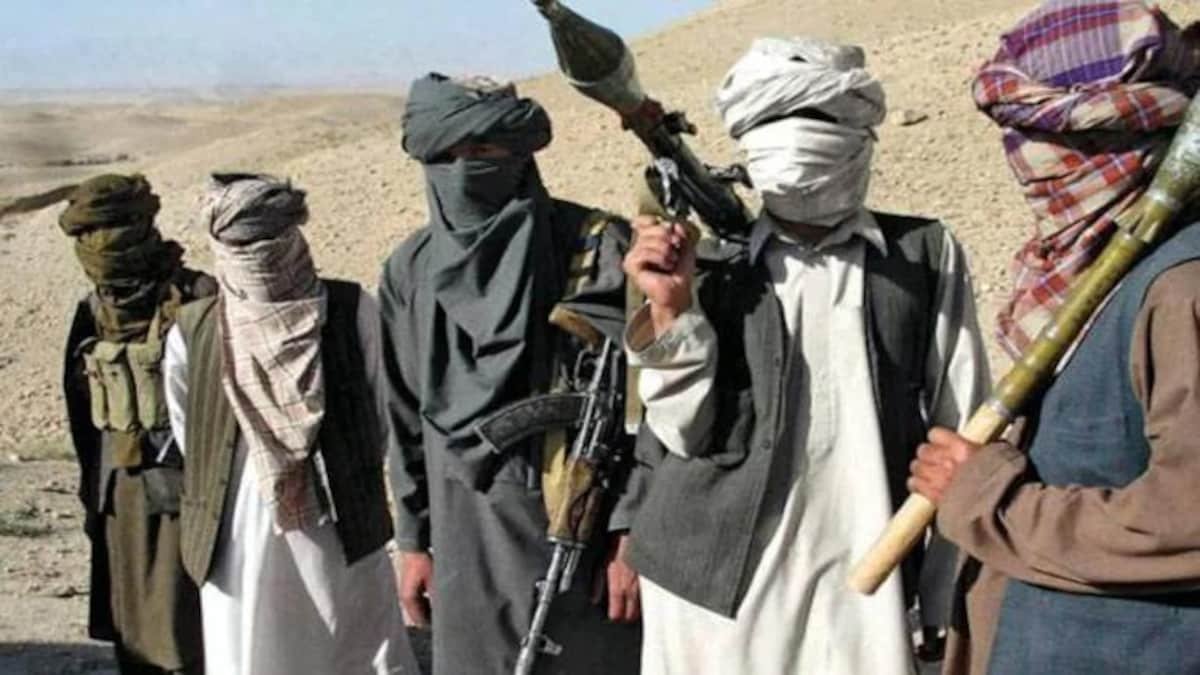
    Pakistani officials have reached a temporary understanding with the banned Tehreek-i-Taliban Pakistan (TTP) to seek a broader peace agreement to end nearly two decades of militancy in the country, reports Dawn.

    The news report reveals that the “direct, face-to-face” talks between the two sides being held in Afghanistan’s south-western Khost province for nearly two weeks had resulted in a tentative understanding to declare a countrywide truce, conditional to the release of some TTP foot soldiers as part of confidence-building measures.

    It was not confirmed as to how many militants in Pakistan’s custody would be allowed to go free, but sources said the number was not more than two dozen people. “These are foot soldiers, not senior or mid-level commanders,” the sources said. “We are testing the ground. We are cautious,” they added.

    “The truce will come into effect once the prisoners are released,” these sources said.

    “The tentative month-long truce shall be extendable, depending on how these negotiations go forward,” a source said.

  • ‘Money is a big player, money lies in India, so basically, India controls world cricket now’: PM Khan

    ‘Money is a big player, money lies in India, so basically, India controls world cricket now’: PM Khan

    Prime Minister (PM) Imran Khan on Monday in an interview with the Middle East Eye, said, “Money is a big player now,” he said. “For the players, as well as for the cricket boards. The money lies in India, so basically, India controls world cricket now.”

    “I mean, they do, whatever they say goes. No one would dare do that to India because they know that the sums involved, India can sort of produce much more money,” PM Khan added. 

    PM Imran Khan while speaking to David Hearst and Peter Oborne of Middle East Eye, discussed a wide range of topics, including the current situation in Afghanistan, relations with the United States (US), India’s role in occupied Kashmir, allegations against China regarding the treatment of Uighurs, and cricket.

    Reconciliation with TTP

    PM Imran Khan said Islamabad is trying to speak to elements within the Tehreek-e-Taliban (TTP) who can be reconciled “because it’s from a position of strength”.

    “I always believed all insurgencies eventually end up on the dialogue table, like the IRA [Irish Republican Army] for instance,” he explained.

    “We now have to talk to those we can reconcile with [and persuade] to give up their arms and live as normal citizens,” he added.

    The prime minister said the Taliban had assured Islamabad that the TTP would not launch attacks into Pakistan. He accused India of instigating terrorism in Pakistan via Afghanistan, during the Ashraf Ghani-led government. 

    International community must engage with Afghanistan’

    “The world must engage with Afghanistan,” he said as he warned of the consequences of not doing so. “There must be hardliners within the group [and] it can easily go back to the Taliban of 20 years ago. And that would be a disaster.”

    “Yet, the government is clearly trying to get international acceptability so it wants an inclusive government, talks about human rights and not allowing its soil to be used for terrorism by anyone,” he said.

    “It would be a total waste, what will the US have to show after 20 years? Therefore, a stable Afghanistan government which can then take on ISIS, and the Taliban are the best bet to take on ISIS, that is the only option left.”

    PM Khan said that isolating and imposing sanctions on Afghanistan would result in a massive humanitarian crisis.

    “If they are left like this, my worry is that [Afghanistan] could revert back to 1989 when the Soviets and Americans left,” he said, adding that over 200,000 Afghans died in that chaos.

    Pakistan expected a bloodbath in Afghanistan’

    When asked about Pakistan’s point of view after the Taliban takeover, the prime minister said: “We have been so relieved because we expected a bloodbath […] it was a peaceful transfer of power.”

    PM Imran added that the US had to “pull itself together” from the shock it had suffered after the withdrawal of forces from Afghanistan.

    “I don’t think they have found their feet as yet,” he said, adding that Pakistan would also suffer as a result of chaos in Afghanistan.

    Taliban should be incentivised to walk the talk:

    Pressed on the lack of inclusiveness in the new government setup, the prime minister acknowledged that it was not present “right now” but hoped it would be in the future, adding that it was needed because Afghanistan was a diverse society.

    Similarly, on the issue of women’s rights, he said the Taliban should be incentivised to “walk the talk” — pointing out that the group had said it would allow women to work and get educated.

    ‘All insurgencies end up on dialogue table’

    When asked about the banned TTP posing a problem for the country, the prime minister said, “They called us collaborators, started attacking us and calling themselves the Pakistani Taliban, which we didn’t have before joining the alliance. At one point there were 50 different groups calling themselves the Taliban [and] attacking us.”

    “We are no longer collaborators because we are not allying ourselves with anyone fighting the Pakhtuns so the motivation has gone down. Now we are trying to talk to those who can be reconciled because it is from a position of strength. I believe that all insurgencies eventually end up on the dialogue table,” the premier said.

    Relations with the US

    The prime minister spoke about US President Joe Biden, saying that he is yet to speak to arguably the most powerful person in the world. 

    When the interviewer told him he found that “absolutely astonishing” that the two heads of state had not yet spoken, PM Khan said: “Well, you know, it’s up to him. It’s [US] a superpower.”

    He said he had warned US officials back in 2008 about the futility of a military solution to the Afghan issue and potentially creating a “bigger quagmire than Iraq”.

    “Unfortunately, I think they were led by the generals and you know what they always say: give us more troops and time.”

    Relation with China

    Describing relations between Pakistan and China, PM Imran said the relationship was 70-years-old and had “stood the test of time”. “In all our ups and downs, China has stood with us,” he pointed out.

    Asked about his silence on the treatment of Uighurs in China, the premier said that Pakistan had spoken to China about the Uighur issue and had been provided with an explanation. “Our relationship with China is such that we have an understanding between us. We will talk to each other, but behind closed doors because that is their nature and culture.”

    Indian role in occupied Kashmir

    The premier questioned why there was no criticism of Indian actions in occupied Kashmir or its treatment of Muslims and minorities.

    He said the Muslim world was subject to turmoil and that the government wanted to highlight the Kashmir issue and human rights violations in the occupied valley.

    “Let the world take notice of that first, then we will talk about other violations of human rights.”

    Cancellation of NZ, Eng cricket tours

    PM Imran was also asked about his reaction to the decision to cancel the England team’s tour to Pakistan, to which he responded, “I think there is still this feeling in England that they do a great favour by playing for countries like Pakistan.”

    The premier said that no one would “dare do that to India” due to the power and financial resources of the Indian cricket board. “I didn’t say anything, but I think England let themselves down because I expected a bit more from them.”

    He said that the England and New Zealand cricket teams had let themselves down by cancelling the tours based on “something which we know was fake news initiated by some Indian through Singapore”.
  • Forgiving TTP: Never forget!

    Forgiving TTP: Never forget!

    Prime Minister Imran Khan has said that the government is in talks with some groups of the banned militant outfit, Tehreek-e-Taliban Pakistan (TTP). In an interview with TRT World, PM Khan said there are different groups that form the TTP and some of them want to talk to our government for peace. “So, we are in talks with them. It’s a reconciliation process.” Before PM’s interview, both President Arif Alvi and Foreign Minister Shah Mahmood Qureshi had talked about giving amnesty to TTP members if they lay down their arms and follow the Constitution of Pakistan.

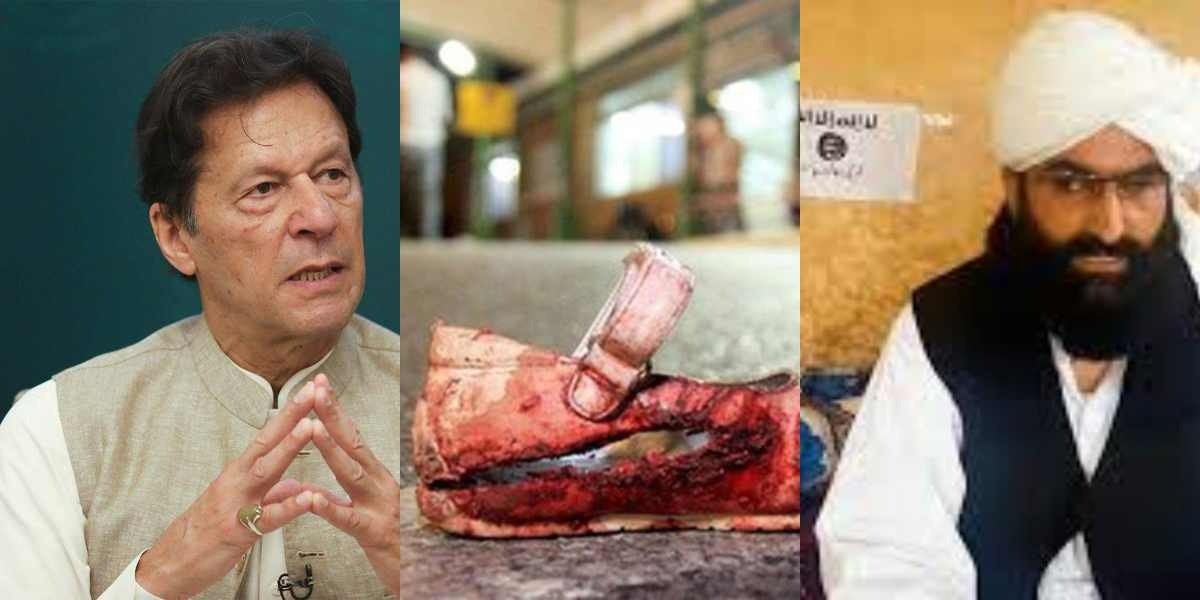
    These statements warrant a lot of questions: why did the president, prime minister, and foreign minister disclose such important information in interviews to media outlets and not in parliament? TTP is no ordinary terrorist outfit. The entire country came together after the horrific APS attack in December 2014, in which more than 150 people were martyred – most of them children. All the political forces of Pakistan reached a consensus, after which the National Action Plan (NAP) came about. There was a massive crackdown on TTP and other terrorist outfits. We finally managed to eliminate the TTP in Pakistan. Those from the TTP who survived the crackdown ran away to Afghanistan. At that time, the government in Kabul was not friendly towards Pakistan.

    The state told us that the TTP was supported and funded by India and Afghanistan – when Ehsanullah Ehsan first surrendered to Pakistan, he confirmed in a video that Afghan and Indian intelligence agencies [RAW and NDS] gave funds and other assistance to Pakistani Taliban to fight Pakistan. Last year, after sharing a dossier containing ‘irrefutable proofs’ of Indian funding of terrorism in Pakistan, Shah Mahmood Qureshi said: “The [specific] evidence presented by Pakistan provides a concrete proof of Indian financial and material sponsorship of multiple terrorist organisations, including UN-designated terrorist organisations Jamaat-ul-Ahrar, Balochistan Liberation Army and Tehreek-e-Taliban Pakistan.”

    What is the reason for Pakistan to hold talks with a RAW and NDS-funded/supported terrorist outfit when we have broken its back in our country? And now that we have a friendly government in Kabul, what is the need to hold talks with an enemy outfit? Should the Afghan Taliban not help reign in the TTP and take action against those who are carrying out attacks against Pakistan from Afghan soil? Or, is it true that the Afghan Taliban and the Pakistani Taliban both have the same ideology, even if the targets of their attacks are different? The people of Pakistan – who have been killed and maimed by the TTP over the years – deserve an answer.

    The government needs to be transparent. This decision cannot be taken just by the government alone. All political parties must have a debate on this issue and the people of Pakistan have to be taken on board as well. We cannot forget what the TTP did to our nation. We lost more than 70,000 lives at their hands. There must be a consensus about the talks and also the government should be transparent about the negotiations. Don’t keep us in the dark, dear government, for we were told that we will never forget their heinous crimes.

  • ‘Chance at a normal life’: Fawad supports TTP integration

    ‘Chance at a normal life’: Fawad supports TTP integration

    Federal Minister for Information and Broadcasting Fawad Chaudhry is supporting ‘a normal life’ for the Tehreek-e-Taliban Pakistan (TTP), those of whom wish to pledged loyalty to the state, reports Geo.

    Fawad said, “The people who could not fulfill their pledge of allegiance to Pakistan want to return to fulfill this pledge.”

    According to the minister, those people who wish to follow the constitution should be given a chance, adding that the government seeks to move forward with the conditions laid down by Prime Minister (PM) Imran Khan.

    Earlier, PM Khan called for the disarmament of the TTP by saying, “We can forgive them and they can become normal citizens.”

    The information minister added that in Balochistan more than 3000 people have come back to a normal life, the ones who had ‘fallen prey to India’s conspiracies.’

    The TTP said that their leaders are engaged in “secret talks” and have asked all fighters to observe a ceasefire till October 20.

  • PPP questions PM Khan for not taking parliament into confidence over talks with TTP

    Pakistan People’s Party (PPP) leader Sherry Rehman tweeted that Prime Minister (PM) Imran Khan again wants to give amnesty to the Tehreek-e-Taliban Pakistan (TTP). She questioned whether PM Khan had asked parliament “what we think about that”. She also questioned whether the premier had heard the TTP response to the government’s offer of reconciliation.

     PPP’s Nayyar Bokhari pointed out that the parliament had been “bypassed” and called on the government to clarify the terms on which these talks were being held.

    In a separate statement, PPP information secretary Shazia Marri said: “On what basis and under what conditions are talks being held with the TTP? Why was the parliament not taken into confidence? Why did the government feel the need to hold secret talks with the TTP in this way?”

    These statements came after Prime Minister Imran Khan said that if the TTP lay down their arms, “we can forgive them and they can become normal citizens”. 

  • ‘If TTP lay down arms, we can forgive them and they become normal citizens’: PM Khan

    Prime Minister Imran Khan has said that if the Tehreek-e-Taliban Pakistan (TTP) lay down their arms, “we can forgive them and they can become normal citizens”. PM Khan said this in an interview with journalist Ali Mustafa, which will air on TRT World Now.

    “Pakistani Taliban groups actually want to talk to our government for some peace, for some reconciliation and we are in talks with some of those groups,” added PM Khan.

    “Is the Afghan Taliban helping you in this process?” questioned Ali Mustafa.

    “In a sense that the talks are taking place in Afghanistan so yes, you can say it in this sense.”

    Mustafa asked if Pakistan was expecting some sort of an agreement or a deal to come out from the Taliban.

    “Yes, I repeat I do not believe in military solutions. I’m anti-military solutions, so I always believe that being a politician, political dialogue is the way ahead, which I always believed was the case in Afghanistan,” added the premier.

    Last month, President Dr Arif Alvi had said that if anyone wants to leave the ideology of the banned TTP and work as per the Constitution of Pakistan, the government may consider a general amnesty.

    President Alvi said, “The TTP is a threat to us. We have been told that they will stay with them [Afghan Taliban] but do nothing against Pakistan.”

    “It’s one step, Pakistan will consider general amnesty, if anyone surrenders,” further added Alvi.

    A few days after the president’s statement, Foreign Minister Shah Mahmood Qureshi in an interview with The Independent also said that the government would be “open to giving” a pardon to members of the banned TTP if they promise not to get involved in terrorism and follow the Constitution of Pakistan.

    Qureshi added, “If [the TTP] are willing to mend fences and not take the law into their hands and not get involved in terrorist activities and they submit and surrender to the writ of the government and the Constitution of Pakistan, we are even open to giving them a pardon.”

    “But as long as they do not come and start undertaking terrorist activities [in Pakistan]. That is our concern,” the foreign minister stressed.

  • Al-Qaeda, TTP members in possession of Pakistani ID cards: report

    Al-Qaeda, TTP members in possession of Pakistani ID cards: report

    Members of Al-Qaeda, Tehreek-e-Taliban Pakistan (TTP), Indian and Afghan nationals have been found to be in possession of Pakistani Identity Cards (ID), according to a government report.

    The report was presented by Senator Faisal Sabzwari of the Muttahida Qaumi Moment Pakistan (MQM) in the Senate Standing Committee on Interior.

    It states that some arrested Afghan citizens had ID cards issued by the National Database and Registration Authority (NADRA) Karachi where allegedly 50% to 60% of employees are involved in corruption.

    According to the report, Abdullah Baloch of Al-Qaeda and an Indian citizen who was involved in the Safoora Goth also had an identity card.

    NADRA chairman Muhammad Tariq Malik said that the matter is under investigation, 12 officers have been arrested and 29 have been suspended.