Tag: UN

  • World ‘failing’ to meet development goals: UN chief

    War and funding shortfalls have hampered progress toward the United Nations’ flagship development goals which include action to combat climate change, the organization’s Secretary-General Antonio Guterres warned on Friday.

    In 2015, UN member states adopted the Sustainable Development Goals, 17 targets to transform the world by 2030 including by completely ending extreme poverty and eliminating hunger.

    But Guterres said Friday that “the world is getting a failing grade.”

    “Our failure to secure peace, to confront climate change, and to boost international finance is undermining development,” he told a briefing in New York, unveiling the latest progress check on the targets.

    “We must accelerate action for the sustainable development goals, and we don’t have a moment to lose — only 17 percent of the targets (are) on track.”

    Efforts to devote money and attention to the goals have been repeatedly set back, including by the Covid-19 pandemic, the wars in Ukraine, Gaza and Sudan, worsening climate catastrophes and sharp increases in the cost of living.

    While countries were lagging on progress in many areas, there were glimmers of hope in the reduction of new HIV infections, growing internet access, and the “booming” use of renewables, Guterres said.

    But “the denial of basic needs for so many is outrageous and inexcusable,” he said.

    Guterres said action to bring peace to the major conflicts raging globally coupled with efforts towards a green transition were needed.

    “It means multiplying the lending capacity of multilateral development banks to provide more resources for climate action and sustainable development,” he added.

    gw/mlm

    © Agence France-Presse

  • UN probe accuses Israel of crimes against humanity

    UN probe accuses Israel of crimes against humanity

    A UN investigation concluded on Wednesday that Israel has committed crimes against humanity during the genocide in Gaza, including that of “extermination”, while saying Israeli and Palestinian armed groups have both committed war crimes.

    The independent Commission of Inquiry’s report is the United Nations’ first in-depth investigation into the events following October 7.

    It found that Israel had committed war crimes, crimes against humanity and violations of international humanitarian law (IHL) and international human rights law (IHRL).

    The report noted “a widespread or systematic attack directed against the civilian population in Gaza.”

    “The commission found that the crimes against humanity of extermination; murder; gender persecution targeting Palestinian men and boys; forcible transfer; and torture and inhuman and cruel treatment were committed,” it added.

    Israel rejected the conclusions by accusing the UN commission of “systematic anti-Israeli discrimination”.

    Israel intensified its attacks in Gaza after Hamas’s October 7 attack.

    The commission found that in that attack, members of the military wings of Hamas and other Palestinian armed groups and Palestinian civilians committed war crimes, as well as violations and abuses of IHL and IHRL.

    Militants seized 251 hostages, of which 116 remain in Gaza, though the Israeli army says 41 of them are dead.

    The Israeli army launched a devastating offensive on the Gaza Strip that has left more than 37,000 people dead, the majority of them civilians, according to the territory’s health ministry.

    The unprecedented Commission of Inquiry was established by the UN Human Rights Council in May 2021 to investigate alleged violations of IHL and IHRL in Israel and the Palestinian territories.

    Since October 7, the three-member commission has focused on Israeli geocide against Palestinians in Gaza.

    “It is imperative that all those who have committed crimes be held accountable,” said the commission’s chair Navi Pillay, a former UN rights chief and an ex-International Criminal Court judge.

    “Israel must immediately stop its military operations and attacks in Gaza.

    “Hamas and Palestinian armed groups must immediately cease rocket attacks and release all hostages. The taking of hostages constitutes a war crime.”

    ‘War crimes’ in October attack

    The commission concluded that members of Hamas, other Palestinian armed groups and civilians participating in the October 7 attack “deliberately killed, injured, mistreated, took hostages and committed sexual and gender-based violence”.

    These acts were committed against civilians and members of the Israeli security forces.

    “These actions constitute war crimes and violations and abuses of IHL and IHRL,” it said.

    The commission further said it found “significant evidence on the desecration of corpses, including sexualised desecration, decapitations, lacerations, burning, severing of body parts and undressing”.

    “Women were subjected to gender-based violence during the course of their execution or abduction. Women and women’s bodies were used as victory trophies by male perpetrators.”

    Many children who witnessed their relatives being killed were “also filmed for propaganda purposes”, with the commission finding it “particularly egregious that children were targeted for abduction”.

    The report said Israeli authorities “failed to protect civilians in southern Israel on almost every front”.

    Israel’s ‘starvation’ of Gaza

    In their actions in Gaza, the commission found the Israeli authorities “responsible for the war crimes of starvation as a method of warfare, murder or wilful killing, intentionally directing attacks against civilians and civilian objects, forcible transfer, sexual violence, torture and inhuman or cruel treatment, arbitrary detention and outrages upon personal dignity”.

    Starvation will affect the Gaza population, particularly children, “for decades to come”, the report said, while “the siege it imposed… constitutes collective punishment and reprisal against the civilian population, both of which are clear violations of IHL.”

    In the West Bank, the commission found that Israeli forces committed acts of sexual violence, torture and inhuman or cruel treatment and outrages upon personal dignity, “all of which are war crimes”.

    Israel’s government and forces “permitted, fostered and instigated a campaign of settler violence against Palestinian communities” in the territory, the commission added.

    The report is based on interviews with victims and witnesses conducted remotely, and in Turkey and Egypt, and through studying thousands of verified open-source items, satellite imagery and forensic medical reports, the commission said.

    “Israel obstructed the commission’s investigations and prevented its access to Israel and the Occupied Palestinian Territory,” it added.

    The report is due to be presented to the UN Human Rights Council next week.

    rjm/rlp/lb

    © Agence France-Presse

  • Countries vote to give Palestinians more rights at WHO

    Countries vote to give Palestinians more rights at WHO

    The World Health Organization’s top decision-making body voted Friday to grant Palestinians additional rights, echoing a similar decision in May by the United Nations General Assembly.

    Countries gathered for this week’s World Health Assembly, the annual gathering in Geneva of the WHO’s 194 member states, overwhelmingly approved a draft resolution on “aligning the participation of Palestine” in the WHO with its participation in the United Nations.

    A full 101 of the 177 countries with voting rights backed the text, with five opposed.

    The resolution, presented by a group of mainly Arab and Muslim countries along with China, Nicaragua and Venezuela, called for the Palestinians, which already have observer status at the WHO, to be granted virtually all the same rights as full members.

    The vote came after UN members voted in New York in May to grant Palestinians more rights in the global body, after their drive for full membership was blocked by the United States.

    At the WHA in Geneva, Palestinian officials and their backers did not attempt to ask for full membership.

    Several diplomatic sources suggested that was due to concern that a vote for Palestinian membership would trigger an automatic suspension of US funding to the WHO.

    The text approved Friday instead handed the Palestinians, among other things, “the right to be seated among member states… the right to submit proposals and amendments… (and) to be elected as officers in the plenary and the main committees of the Health Assembly”.

    But it noted that “Palestine, in its capacity as an observer state, does not have the right to vote in the Health Assembly or to put forward its candidature to WHO’s organs”.

    Israeli genocide against Palestinians has killed at least 36,224 people in Gaza, mostly civilians, according to the territory’s health ministry.

  • UN Security Council seeks inquiry into mass graves in Gaza

    UN Security Council seeks inquiry into mass graves in Gaza

    The UN Security Council on Friday called for an immediate and independent investigation into mass graves allegedly containing hundreds of bodies near hospitals in Gaza.

    In a statement, members of the council expressed their “deep concern over reports of the discovery of mass graves, in and around the Nasser and Al-Shifa medical facilities in Gaza, where several hundred bodies, including women, children and older persons, were buried.”

    The members stressed the need for “accountability” for any violations of international law and called on investigators to be given “unimpeded access to all locations of mass graves in Gaza to conduct immediate, independent, thorough, comprehensive, transparent and impartial investigations.”

    Hospitals in the Gaza Strip have been repeatedly targeted since the beginning of the Israeli military operation in the Palestinian territory, following the October 7 attack.

    Israel has accused Hamas of using medical facilities as command centers and to hold hostages abducted during the initial attack.

    The World Health Organization (WHO) said in April that Al-Shifa, in Gaza City, had been reduced to an “empty shell,” with many bodies found in the area.

    The Israeli army has said around 200 Palestinians were killed during its military operations there.

    Bodies have reportedly been found buried in two graves in the hospital’s courtyard.

    The UN rights office in late April had itself called for an independent investigation into reports of mass graves at Al-Shifa and at the Nasser Medical Complex in Khan Yunis.

    Gaza officials said at the time that health workers at the Nasser complex had uncovered hundreds of bodies of Palestinians they alleged had been killed and buried by Israeli forces.

    Israel’s army has dismissed the claims as “baseless and unfounded.”

    The statement Friday from the Security Council did not say who would conduct the investigations.

    But it “reaffirmed the importance of allowing families to know the fate and whereabouts of their missing relatives, consistent with international humanitarian law.”

    Israeli genocide against Palestinians has killed at least 34,943 people in the Gaza Strip, mostly women and children, the health ministry in the Hamas-run territory said Friday.

  • UNESCO awards press prize to Palestinian journalists in Gaza

    UNESCO awards press prize to Palestinian journalists in Gaza

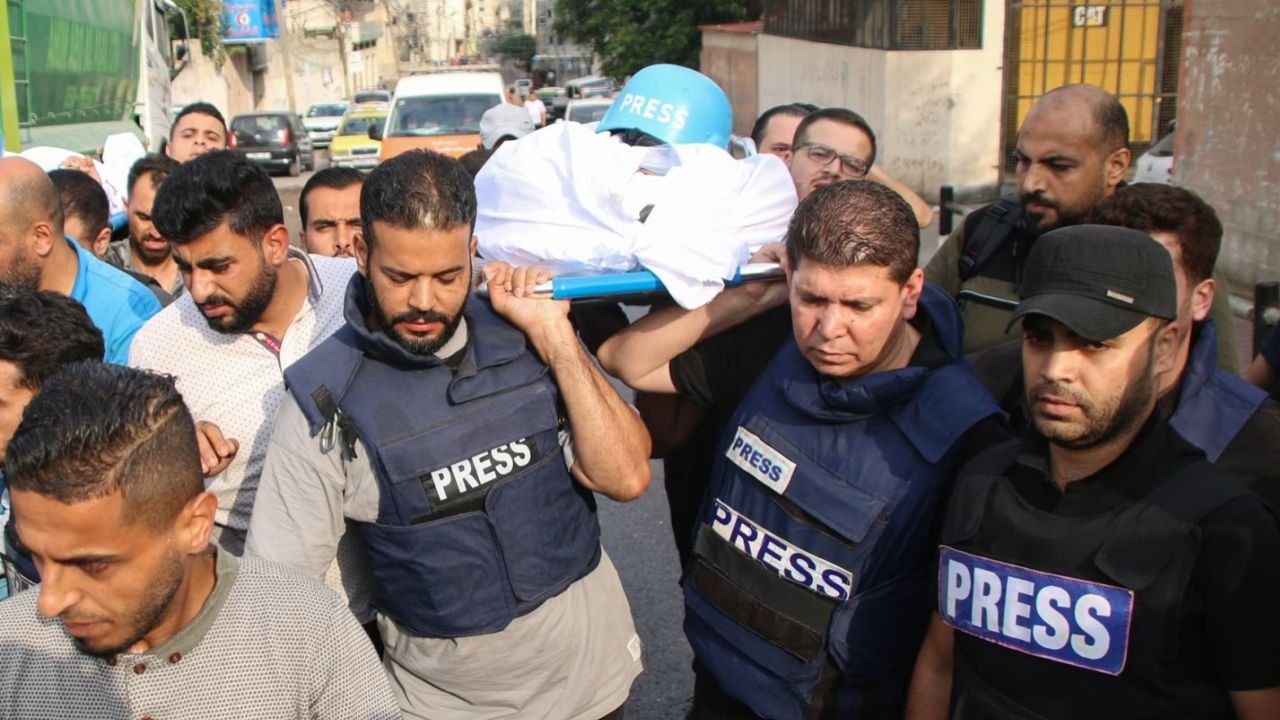
    UNESCO on Thursday awarded its world press freedom prize to all Palestinian journalists covering the Israeli genocide against the people in Gaza since October 8, 2023.

    “In these times of darkness and hopelessness, we wish to share a strong message of solidarity and recognition to those Palestinian journalists who are covering this crisis in such dramatic circumstances,” said Mauricio Weibel, chair of the international jury of media professionals.

    “As humanity, we have a huge debt to their courage and commitment to freedom of expression.”

    Audrey Azoulay, director general at the UN organisation for education, science and culture, said the prize paid “tribute to the courage of journalists facing difficult and dangerous circumstances”.

    According to the New York-based Committee to Protect Journalists (CPJ), at least 97 members of the press have been killed since the war broke out in October, 92 of whom were Palestinians.

  • Nearly 282 million people faced acute hunger in 2023: UN-led report

    Nearly 282 million people faced acute hunger in 2023: UN-led report

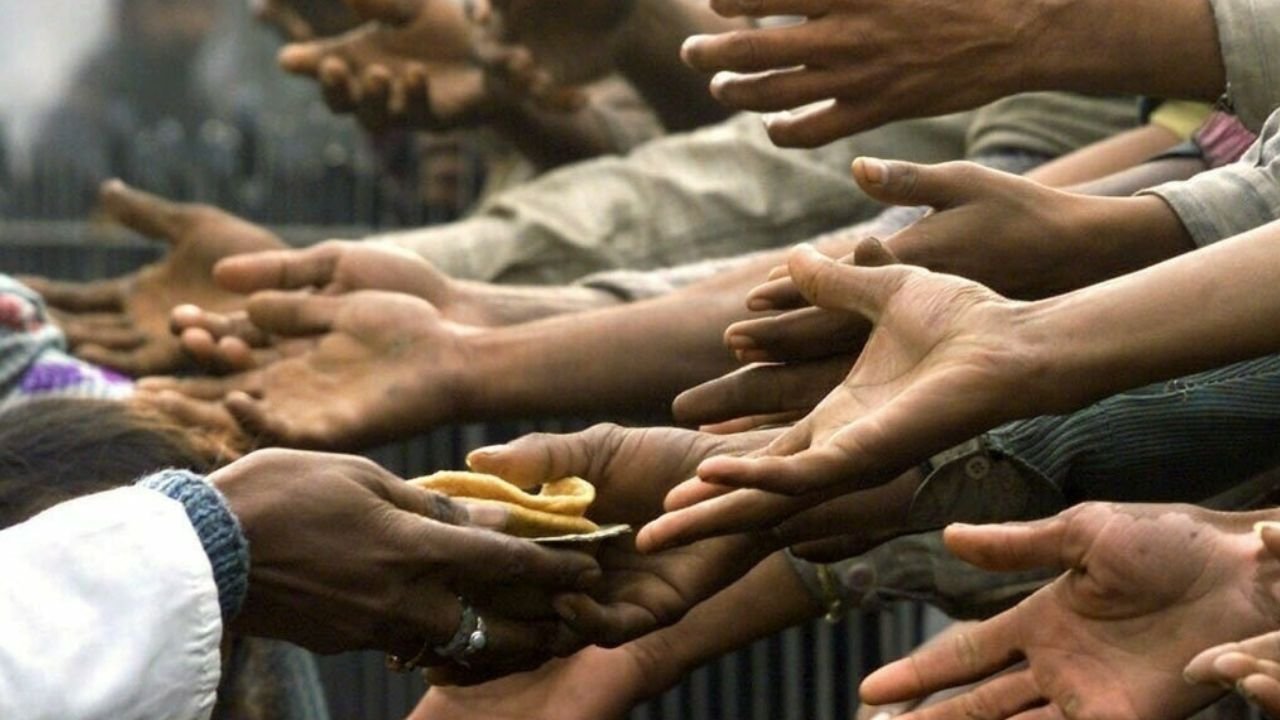
    Food insecurity worsened around the world in 2023, with some 282 million people suffering from acute hunger due to conflicts, particularly in Gaza and Sudan, UN agencies and development groups said Wednesday.

    Extreme weather events and economic shocks also added to the number of those facing acute food insecurity, which grew by 24 million people compared with 2022, according to the latest global report on food crises from the Food Security Information Network (FSIN).

    The report, which called the global outlook “bleak” for this year, is produced for an international alliance bringing together UN agencies, the European Union and governmental and non-governmental bodies.

    2023 was the fifth consecutive year of rises in the number of people suffering acute food insecurity — defined as when populations face food deprivation that threatens lives or livelihoods, regardless of the causes or length of time.

    Much of last year’s increase was due to report’s expanded geographic coverage, as well as deteriorating conditions in 12 countries.

    More geographical areas experienced “new or intensified shocks” while there was a “marked deterioration in key food crisis contexts such as Sudan and the Gaza Strip”, Fleur Wouterse, deputy director of the emergencies office within the UN’s Food and Agricultural Organization (FAO), told AFP.

    Some 700,000 people, including 600,000 in Gaza, were on the brink of starvation last year, a figure that has since climbed yet higher to 1.1 million in the war-ridden Palestinian territory.

    Since the first report by the Global Food Crisis Network covering 2016, the number of food-insecure people has risen from 108 million to 282 million, Wouterse said.

    Meanwhile, the share of the population affected within the areas concerned has doubled 11 percent to 22 percent, she added.

    Protracted major food crises are ongoing in Afghanistan, the Democratic Republic of Congo, Ethiopia, Nigeria, Syria and Yemen.

    “In a world of plenty, children are starving to death,” wrote UN Secretary-General Antonio Guterres in the report’s foreword.

    “War, climate chaos and a cost-of-living crisis — combined with inadequate action — mean that almost 300 million people faced acute food crisis in 2023.”

    “Funding is not keeping pace with need,” he added.

    This is especially true as the costs of distributing aid have risen.

    For 2024, progress will depend on the end of hostilities, said Wouterse, who stressed that aid could “rapidly” alleviate the crisis in Gaza or Sudan, for example, once humanitarian access to the areas is possible.

    Worsening conditions in Haiti were due to political instability and reduced agricultural production, “where in the breadbasket of the Artibonite Valley, armed groups have seized agricultural land and stolen crops”, Wouterse said.

    The El Nino weather phenomenon could also lead to severe drought in West and Southern Africa, she added.

    According to the report, situations of conflict or insecurity have become the main cause of acute hunger in 20 countries or territories, where 135 million people have suffered.

    Extreme climatic events such as floods or droughts were the main cause of acute food insecurity for 72 million people in 18 countries, while economic shocks pushed 75 million people into this situation in 21 countries.

    “Decreasing global food prices did not transmit to low-income, import-dependent countries,” said the report.

    At the same time, high debt levels “limited government options to mitigate the effects of high prices”.

    On a positive note, the situation improved in 17 countries in 2023, including the Democratic Republic of Congo and Ukraine, the report found.

  • UN Rights Council considers call for halt to arms sales to Israel

    UN Rights Council considers call for halt to arms sales to Israel

    The UN Human Rights Council was on Friday debating whether to demand a halt in arms sales to Israel, whose genocide in Gaza has killed more than 33,000 people.

    If the text is adopted, it would mark the first time that the United Nations’ top rights body has taken a position on the bloodiest-ever genocide to beset the besieged Palestinian territory.

    The draft text calls on countries to “cease the sale, transfer and diversion of arms, munitions and other military equipment to Israel”.

    This, it said, is needed among other things “to prevent further violations of international humanitarian law and violations and abuses of human rights”.

    It stresses that the International Court of Justice ruled in January “that there is a plausible risk of genocide” in Gaza.

    Friday’s draft resolution, which was brought forward by Pakistan on behalf of all Organisation of Islamic Cooperation (OIC) member states except Albania, calls for “an immediate ceasefire” and “for immediate emergency humanitarian access and assistance”.

    It comes after the UN Security Council in New York last week also finally passed a resolution calling for a ceasefire — thanks to an abstention from Washington, Israel’s closest ally and largest arms supplier.

    However, the ceasefire demand has had no impact on the ground.

    Palestinian militants also took more than 250 hostages on October 7, and 130 remain in Gaza, including 34 who the army says are dead.

    Israel’s retaliatory campaign has killed at least 33,037 people, mostly women and children, according to the health ministry in Gaza.

    The rights council draft resolution does not name Hamas but it does condemn the firing of rockets at Israeli civilian areas and demands “the immediate release of all remaining hostages”.

    The strongly worded text repeatedly names Israel, stressing it is “the occupying Power”.

    It demands that Israel end its occupation of all Palestinian territories and “immediately lift its blockade on the Gaza Strip and all other forms of collective punishment”.

    The text, which was revised late on Thursday removing several references to genocide, continues to express “grave concern at statements by Israeli officials amounting to incitement to genocide”.

    And it urges countries to “prevent the continued forcible transfer of Palestinians within and from Gaza”.

    It warns in particular “against any large-scale military operations in the city of Rafah” in the south of the densely populated Gaza Strip, where well over one million civilians are sheltering, warning of “devastating humanitarian consequences”.

    The draft resolution also condemns “the use of starvation of civilians as a method of warfare in Gaza”, where the UN has warned that famine is looming.

    And it slammed “the unlawful denial of humanitarian access, wilful impediment to relief supplies and deprivation of objects indispensable to the survival of civilians, including food, water, electricity, fuel and telecommunications, by Israel”.

    The text also condemns Israel’s “use of explosive weapons with wide area effects by Israel in populated areas in Gaza”.

    Friday’s draft resolution deplores the fact that Israel has persistently refused to cooperate with numerous investigations ordered by the UN rights council.

    And it insists on the “imperative of credible, timely and comprehensive accountability for all violations of international law” in Gaza.

    It calls on the Commission of Inquiry on the rights situation in the occupied Palestinian territories — the highest-level UN investigation launched prior to October 7 — to probe all “direct and indirect transfer or sale of arms, munitions, parts, components and dual use items to Israel, the occupying Power”.

    The team, it said, should identify the weapons used since October 7 and “analyse the legal consequences of these transfers”.

    The investigators should present their findings to the council at its 59th session, which will be held in mid-2025, it said.

  • Israel’s Netanyahu approves new Gaza ceasefire talks

    Israel’s Netanyahu approves new Gaza ceasefire talks

    Palestinian Territories – Israeli Prime Minister Benjamin Netanyahu gave the go-ahead Friday for a new round of talks on a Gaza ceasefire, a day after the world’s top court ordered Israel to ensure aid reaches desperate civilians.

    But despite a binding UN Security Council resolution earlier this week demanding an “immediate ceasefire”, fighting raged on unabated in Gaza Friday, including around its few functioning hospitals.

    The health ministry said dozens of people were killed overnight.

    Among them were 12 people killed in their home in the southern city of Rafah, which has been bombed repeatedly ahead of a threatened Israeli ground operation.

    Men worked under the light of mobile phones to free people trapped under the debris, AFPTV images showed.

    Regional fallout from the conflict also flared, with Israel saying it killed a Hezbollah rocket commander in Lebanon and a war monitor saying that Israeli air strikes killed several Hezbollah fighters in Syria.

    Netanyahu’s office said new talks on a Gaza ceasefire and hostage release will take place in Doha and Cairo “in the coming days… with guidelines for moving forward in the negotiations”.

    Those talks had appeared deadlocked in recent days despite a major push by the United States and fellow mediators Egypt and Qatar to secure a truce in time for the Muslim fasting month of Ramadan, now more than half way through.

    – Famine ‘setting in’ –

    In its ruling, the International Court of Justice (ICJ) in The Hague said it had accepted South Africa’s argument that the further deterioration of the humanitarian situation in Gaza required Israel to do more.

    “Palestinians in Gaza are no longer facing only a risk of famine, but… famine is setting in,” it said.

    Philippe Lazzarini, head of the UN agency for Palestinian refugees, said the ruling was “a stark reminder that the catastrophic humanitarian situation in the Gaza Strip is man-made (and) worsening”.

    A UN-backed report released last week warned that half of Gazans are feeling “catastrophic” hunger and projected imminent famine in the territory’s north.

    The Israeli defence ministry body responsible for Palestinian civil affairs (COGAT) hit back on Friday, alleging the assessment contained inaccuracies and questionable sources.

    The ICJ had ruled in January that Israel must facilitate “urgently needed” humanitarian aid to Gaza.

    The latest binding ruling by the court, which has little means of enforcement, came as Israel’s military said it was continuing operations in Gaza’s largest hospital Al-Shifa for a 12th day.

    Fighting around Gaza hospitals

    The United Nations says Gaza’s health system is collapsing “due to ongoing hostilities and access constraints”.

    Israel’s military accuses Hamas of hiding inside medical facilities, using patients, staff and displaced people for cover — charges the militants have denied.

    On Friday the army said it was “continuing precise operation activities in Shifa Hospital” where it began a raid early last week.

    Troops first raided Al-Shifa in November, but the army says Palestinian militants have since returned.

    About 200 militants have been killed during the latest Al-Shifa operation, it said.

    In north Gaza’s Shati refugee camp, Amany, a 44-year-old mother of seven, described how it felt to live under relentless Israeli bombardment.

    “Explosions and air strikes go on throughout the night, it’s petrifying,” she said. “I feel like I’m living a continuous nightmare that doesn’t want to end.”

    Netanyahu said on Thursday that troops “are holding the northern Gaza Strip” and also the southern city of Khan Yunis, amid heavy fighting.

    Near Al-Amal Hospital in Khan Yunis, troops carried out “targeted raids on terrorist infrastructure”, killing dozens in combat backed by air support, the army said on Thursday.

    Israeli tanks have also surrounded another Khan Yunis health facility, the Nasser Hospital, the Gaza health ministry said.

    Syria, Lebanon strikes

    Israel’s intensified attacks in Gaza have killed at least 32,623 people since October 7, mostly women and children, according to health ministry figures.

    Palestinian militants also seized about 250 hostages. Israel believes about 130 remain in Gaza, including 33 who are presumed dead.

    Since the Gaza war began, Israel has increased its strikes in Syria, targeting army positions and forces including Lebanon’s Hezbollah movement.

    A Britain-based war monitor, the Syrian Observatory for Human Rights, said Israeli air strikes killed seven Hezbollah fighters.

    The Israeli military said it killed the deputy commander of Hezbollah’s rocket unit in south Lebanon, Ali Abdel Hassan Naim, in an air strike.

    Israeli Defence Minister Yoav Gallant toured the army’s northern command on Friday “to closely examine another successful termination like the one that was executed this morning”, he said in a post.

    Gallant said the army would keep up its operations against Hezbollah, and its leader Hassan Nasrallah was to blame for the consequences, including members killed and wounded.

    “We will make them pay a price for every attack that comes out from Lebanon,” he said.

    Recent days have seen an uptick in deadly exchanges, and the White House has called on both Israel and Lebanon to put a high priority on restoring calm.

    burs-kir/hkb

    © Agence France-Presse
  • ‘Just staggering’: UN says households waste one billion meals a day

    ‘Just staggering’: UN says households waste one billion meals a day

    Paris, France – Households around the world threw away one billion meals every single day in 2022 in what the United Nations on Wednesday called a “global tragedy” of food waste.

    More than $1 trillion worth of food was binned by households and businesses at a time when nearly 800 million people were going hungry, the UN’s latest Food Waste Index Report says.

    It said that more than 1 billion tonnes of food — almost one fifth of all the produce available on the market — was wasted in 2022, most of it by households.

    “Food waste is a global tragedy. Millions will go hungry today as food is wasted across the world,” Inger Andersen, executive director of the UN Environment Programme, said in a statement.

    Such wastage was not just a moral but “environmental failure”, the report said.

    Food waste produces five times the planet-heating emissions of the aviation sector, and requires huge tracts of land be converted for growing crops that are never eaten.

    The report, co-authored with non-profit organisation WRAP, is just the second on global food waste compiled by the UN and provides the most complete picture to date.

    As data collection has improved the true scale of the problem has become much clearer, said Clementine O’Connor from UNEP.

    “The more food waste you look for, the more that you find,” she told AFP.

    Billion meals binned

    The report said that the “billion meals” figure was a “very conservative estimate” and “the real amount could be much higher”.

    “For me, it’s just staggering,” Richard Swannell from WRAP told AFP.

    “You could actually feed all the people that are currently hungry in the world — about 800 million people — over a meal a day just from the food that is wasted every single year.”

    He said bringing together producers and retailers had helped reduce waste and get food to those who need it, and more such action was needed.

    Food services like restaurants, canteens and hotels were responsible for 28 percent of all wasted food in 2022, while retail like butchers and greengrocers dumped 12 percent.

    But the biggest culprits were households, which accounted for 60 percent — some 631 million tonnes.

    Swannell said much of this occurred because people were simply buying more food than they needed, but also misjudging portion sizes and not eating leftovers.

    Another issue was expiration dates, he said, with perfectly good produce being trashed because people incorrectly assumed their food had gone off.

    A lot of food, particularly in the developing world, was not so frivolously wasted, but instead lost in transportation or spoiling because of a lack of refrigeration, the report said.

    Contrary to popular belief, food waste is not just a “rich country” problem and can be observed across the world, the report said.

    Hotter countries, too, generated more waste, possibly due to higher consumption of fresh foods with substantial inedible parts.

    ‘Devastating effects’

    Businesses also underestimate the cost of wasting food to their bottom line because it was cheap to dump unused produce in landfill.

    “It’s quicker and easier to throw it away at the moment because the waste fee is either zero or very low,” O’Connor said.

    Food waste had “devastating effects” on people and the planet, the report said.

    Converting natural ecosystems for agriculture is a leading cause of habitat loss yet food waste takes up the equivalent of nearly 30 percent of the world’s farming land, the report said.

    “If we can reduce food waste across the entire of the supply chain, we can… minimise the need to have land set aside that’s growing stuff that’s never used,” Swannell said.

    It is also a key driver of climate change, generating up to 10 percent of annual greenhouse gas emissions.

    “If food waste was a country, it would be the third biggest emitter of greenhouse gas emissions on the planet behind the US and China,” Swannell said.

    But people rarely think about it, he said, despite the opportunity to “reduce our carbon footprint, reduce our greenhouse gas emissions, and save money, simply by making better use of the food that we’re already buying”.

  • Countries at UN rally behind expert who accused Israel of ‘genocide’

    Countries at UN rally behind expert who accused Israel of ‘genocide’

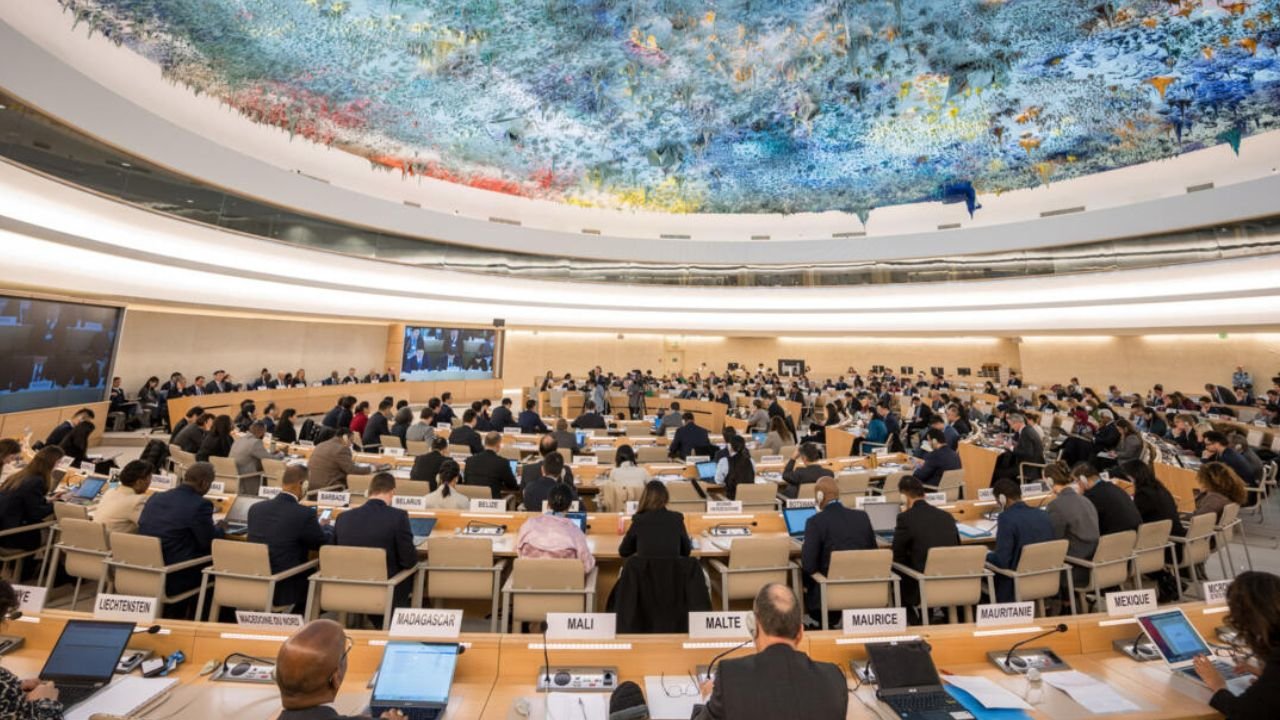
    GENEVA: The UN expert who concluded Israel was committing acts of genocide in the Gaza Strip received broad support at the United Nations on Tuesday, with countries speaking up to back her and her report.

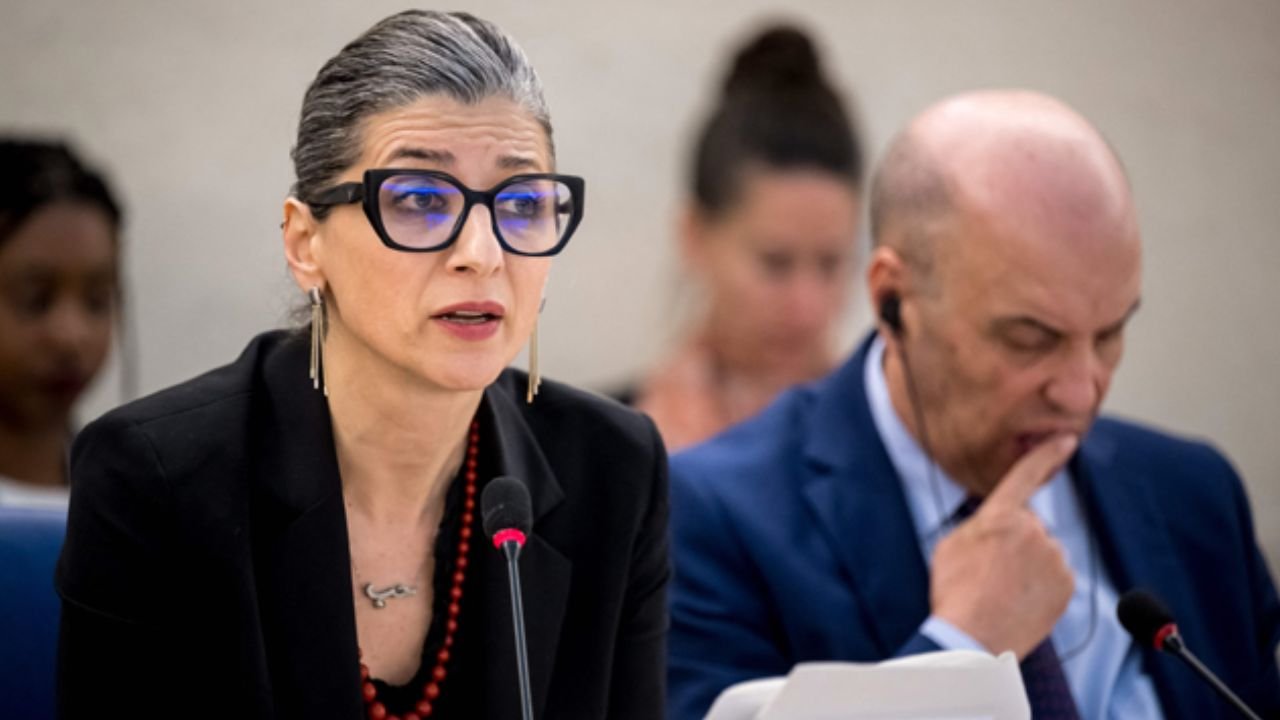
    Francesca Albanese, the special rapporteur on human rights in the Palestinian territories, told the UN Human Rights Council that countries should impose an arms embargo and sanctions on Israel.

    Expanding in person on her report released on Monday, Albanese said Israel was characterising the entire Gazan population as “targetable, killable and destroyable,” and had ostentatiously laid bare its “genocidal intent” to “rid Palestine of Palestinians.”

    Dozens of diplomats, mostly representing Arab and Muslim countries but also Latin America, took the floor to defend her mandate and her work.

    Pakistan, speaking for the Organization of Islamic Cooperation, backed her call for sanctions and an arms embargo.“We commend your courage in documenting… acts amounting to genocide in Gaza,” Islamabad’s representative said.

    “The occupation force’s dangerous and ruthless push for a final solution to the Palestinian question is plain for all to see, as its forces encircle Rafah like vultures and its ravenous land grab continues unabated in the West Bank.”

    Egypt, speaking for Arab group countries, affirmed their support for Albanese’s mandate and said they were gravely concerned about Israel’s “structured and systematic attack to make the Gaza Strip uninhabitable.”

    And Qatar, on behalf of the Gulf Cooperation Council, thanked Albanese for her report and demanded the international community “put an end to genocide being perpetrated by the Israeli war machinery.”

    In her speech, Albanese told the top UN rights body that Israel had “destroyed Gaza.”

    “When genocidal intent is so conspicuous, so ostentatious, as it is in Gaza, we cannot avert our eyes: we must confront genocide, we must prevent it and we must punish it,” she said.

    “The genocide in Gaza is the most extreme stage of a long-standing settler-colonial process of erasure of the native Palestinians.”

    Special rapporteurs are independent experts appointed by the Human Rights Council, although they do not speak on behalf of the UN.

    In response, Russia said it was “horrified” by Israel’s military operation that had seen “civilian infrastructure targeted” while China said it was was ready to facilitate peace talks.

    The European Union called for “proper and independent investigations on all allegations” and while appalled by the civilian death toll it recognized Israel’s right to self-defense.

    Albanese’s speech concluded to applause in the chamber. Israel was not present, nor was its chief ally the United States.

    Israel has long been harshly critical of Albanese, and on Monday immediately rejected her report as an “obscene inversion of reality.”

    The United States called her mandate “biased against Israel.”

    In the rights council on Tuesday, the only firm support for such positions came from non-governmental organizations.

    The World Jewish Congress said Albanese’s mandate “seeks to entrench divisions and a one-sided narrative instead of pursuing a balanced and inclusive approach.”

    The European Union of Jewish Students said Albanese’s “resignation is imperative” for the council to retain any credibility on issues concerning Israel and the Palestinian territories.

    Israel’s genocide in Gaza has killed at least 32,400 people in the besieged Strip, most of them women and children, according to the health ministry in the territory.