Tag: UN

  • Women, contraceptives, and the troubled alleys of violence

    Women, contraceptives, and the troubled alleys of violence

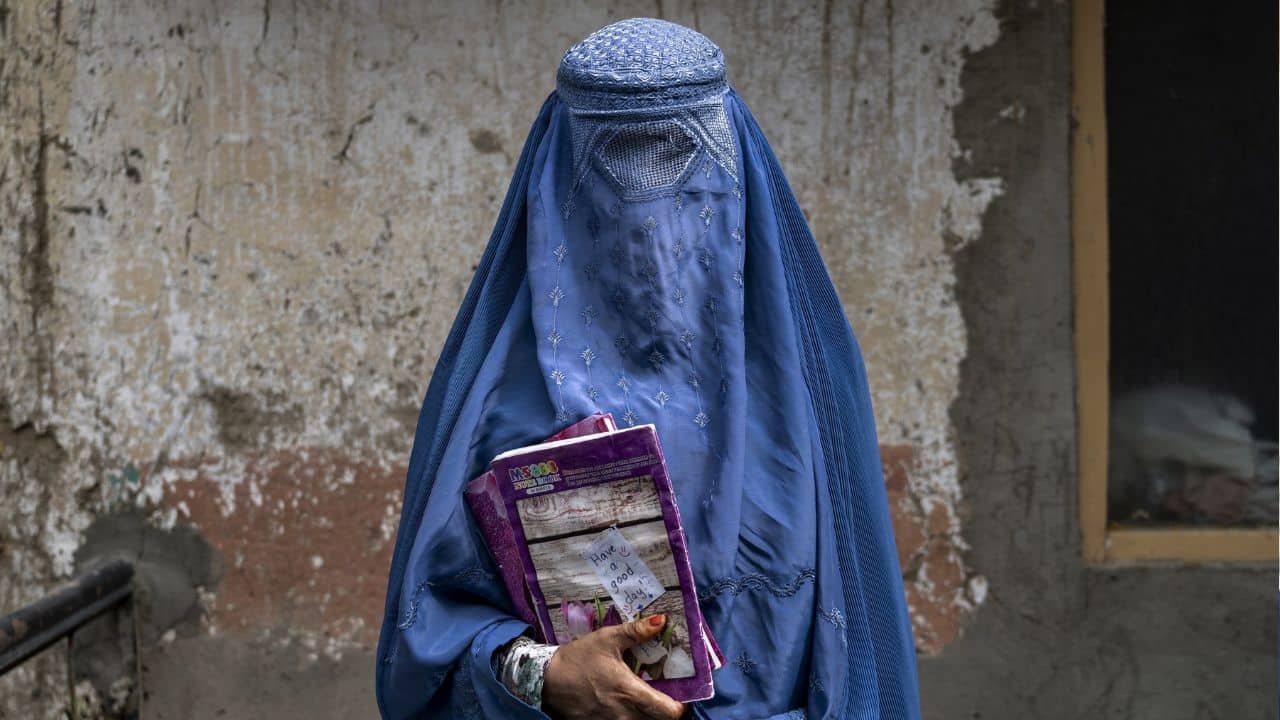
    Shazia Khalid*, a 28-year-old housewife, was sitting on a bench in a small park in Lahore, looking at her five playing children when we met. She had a spark in her eyes but visibly looked tired, at least a decade older than her age. Seven years ago, when she got married, she was denied the authority to take a break from giving birth every year except one time which cost her everything.

    Shazia was in the final year of a Bachelor’s program when her family decided to marry her off. It was entirely their decision; she wasn’t even allowed to talk to her fiancé during the two months she was engaged to her future husband, a small general store owner.

    Akmam*, Shazia’s husband, is 42, and has been running the store for the past 20 years as this is his family business. Shazia feels like there is less mental compatibility between the two due to the 14-year age difference between them which also has an impact on family planning, “He keeps saying that he needs more off-spring before he gets older. We had four children in the first four years of our marriage. I wasn’t prepared for it at all. I kept asking him to think about a gap or family planning, but he never listened to me.”

    Teary-eyed, she explained how difficult her pregnancies were. Every time doctors advised her husband to wait for a year or two before the next pregnancy. “During my fourth child’s birth, my body almost collapsed. They had to give me a steroid shot to revive me. I was anemic and there was a lot of blood loss during childbirth. I went in shock and most things after that are blurry for me,” she said.

    After the near-death experience, she decided that she needed to think about her well-being and her children. Thoughts of what would happen if they were left alone in this world haunted her. The spectre of death during her next pregnancy seemed a real possibility. Her husband was still adamant that he needed another child because he had only one son, born after three daughters. Khalid talked to her gynecologist who strictly prohibited her from birthing again, advising her to give two years to her body before getting pregnant again.

    Since her husband wasn’t convinced, she secretly contacted her doctor to learn about contraceptives. After surety of discretion, she opted for an IUD (Intrauterine Contraceptive Device) which impacted her period cycle for two months but then everything was normal.

    Her husband was frustrated within six months that Shazia wasn’t getting pregnant. Her mother-in-law started talking about a second marriage for her son as she wanted more grandchildren. After almost a year, she was forced by the in-laws to visit another doctor of their choice and that’s when the truth was revealed.

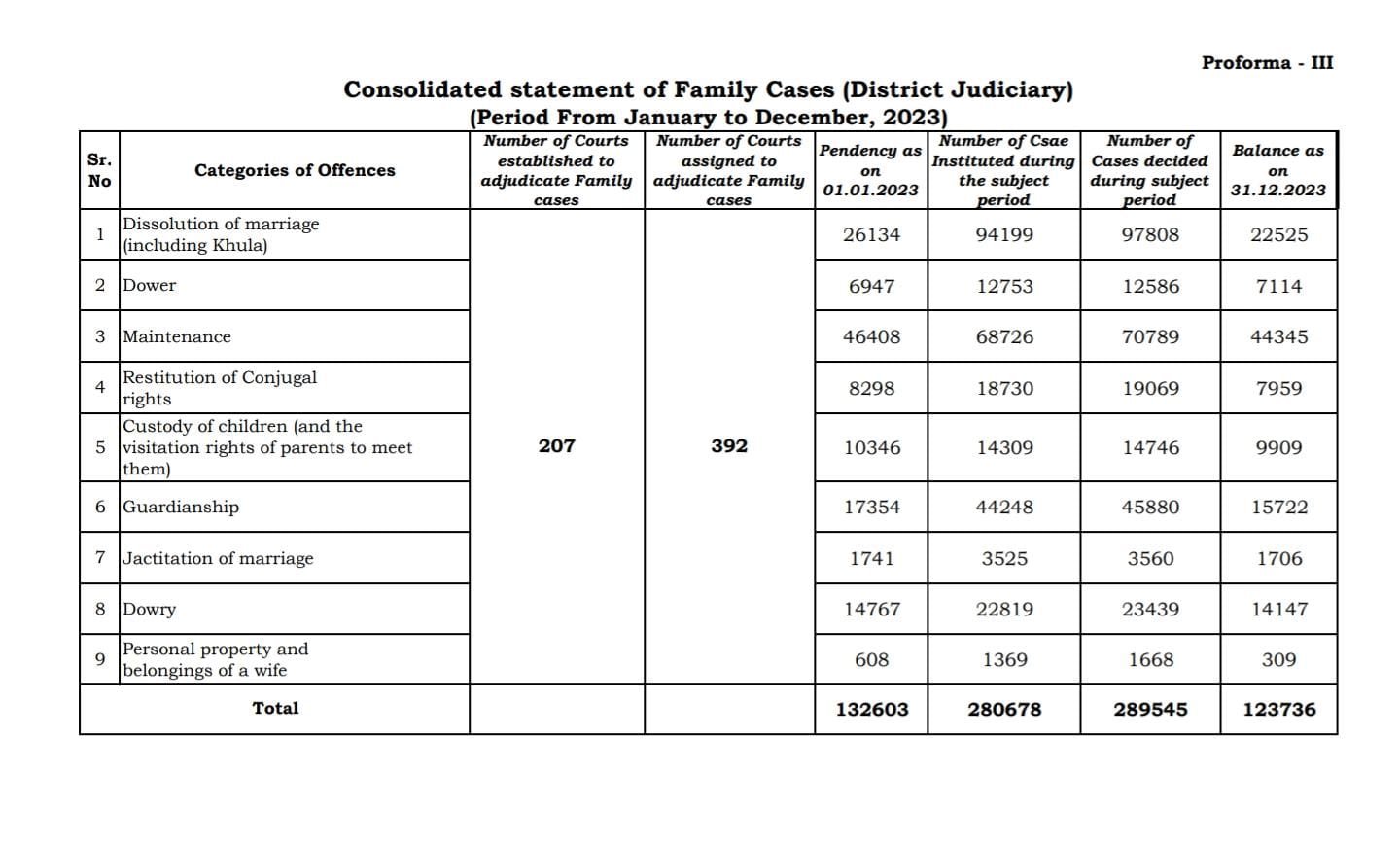
    Shazia was beaten by her husband, the gynecologist who helped her was attacked too, the staff in her clinic was assaulted and Akram didn’t hesitate in breaking things. Distraught and heartbroken, Shazia was sent back to her parents’ home where she received divorce papers soon after. Her kids are still with her husband and like 9909 people, as per data of consolidated statement of Family Cases in Lahore, she is also waiting for a verdict on custody and visitation rights.
    For gynecologist and physician Mehnaz Asim, who runs her practice in a lower socio-economic area of Lahore, these cases are a norm and to my surprise, religion is not the sole reason behind it. “Most of these people want more kids because they want them to be a part of the labor force and earn money from a young age. They don’t worry about their upbringing or education; they see their kids as a source of income.”

    As per the United Nations Population Fund (UNFPA) 2023 data, contraceptive prevalence rate for any method of contraception is only 26 percent among women aged between 15 and 49 while for modern methods it is only 20 percent.

    In a study conducted by the National Library of Medicine, the world’s largest biomedical library and a leader in research in computational health informatics, significant barriers to the adoption of IUDs in Pakistan were identified. These barriers include the reluctance of husbands, societal and cultural taboos, and heightened concerns regarding perceived side effects of IUD usage. Additionally, factors such as illiteracy, poverty, and low socioeconomic status were found to contribute to limited IUD utilization.

    Other important factors contributing to such a low modern contraceptive prevalence rate of 35.4% in Pakistan include the conservative society imposing restrictions on women’s self-determination and self-governance.

    Doctor Mehnaz thinks that it is important for people to know the pros and cons of every contraceptive method and there should be a strict rule implemented by the government regarding at least 2 years gap between children. “We are an overpopulous country with limited resources. Our government needs to implement this rule and penalize people who don’t follow it. This is not only important for the mother but for healthy childbirth too.”

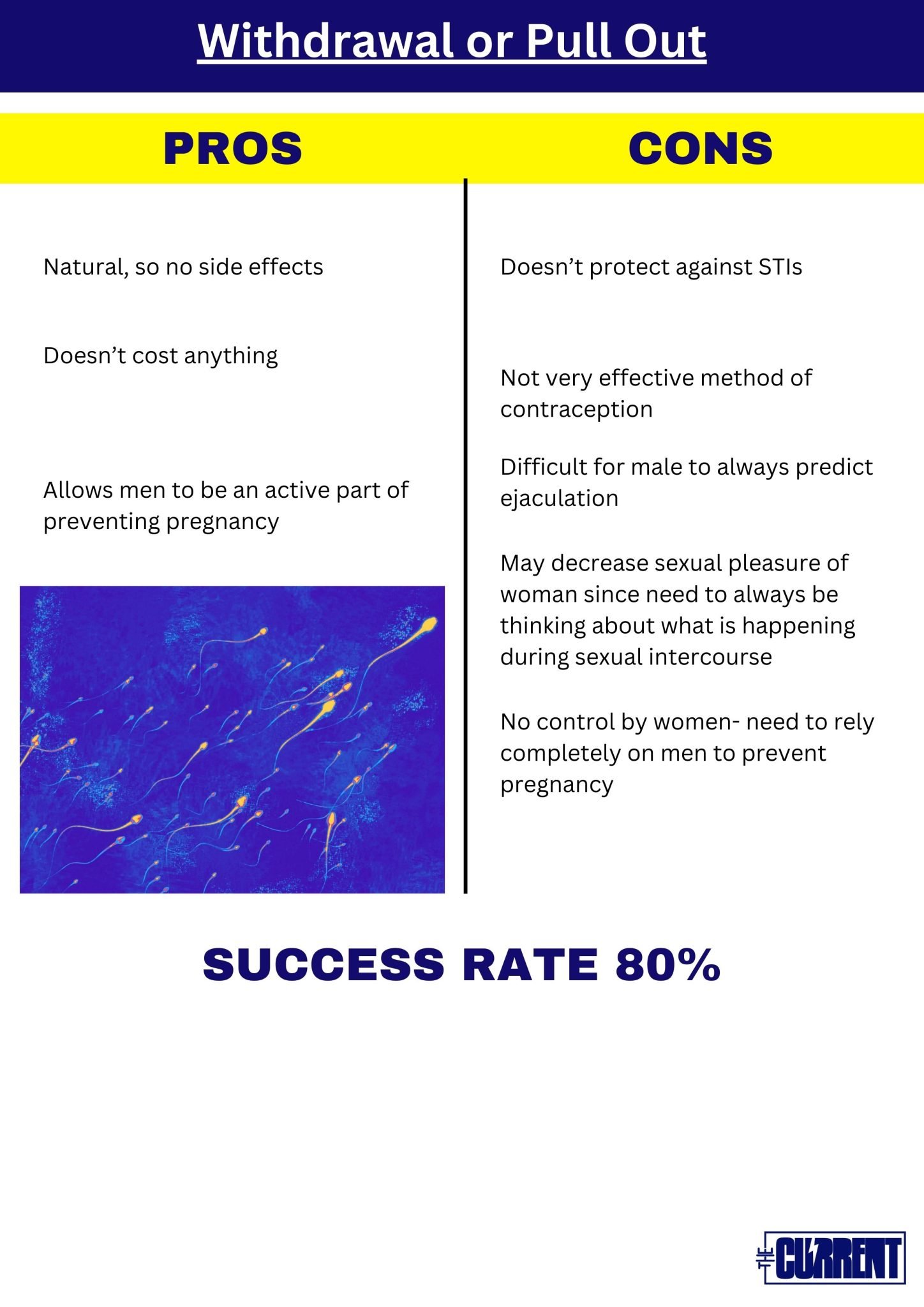
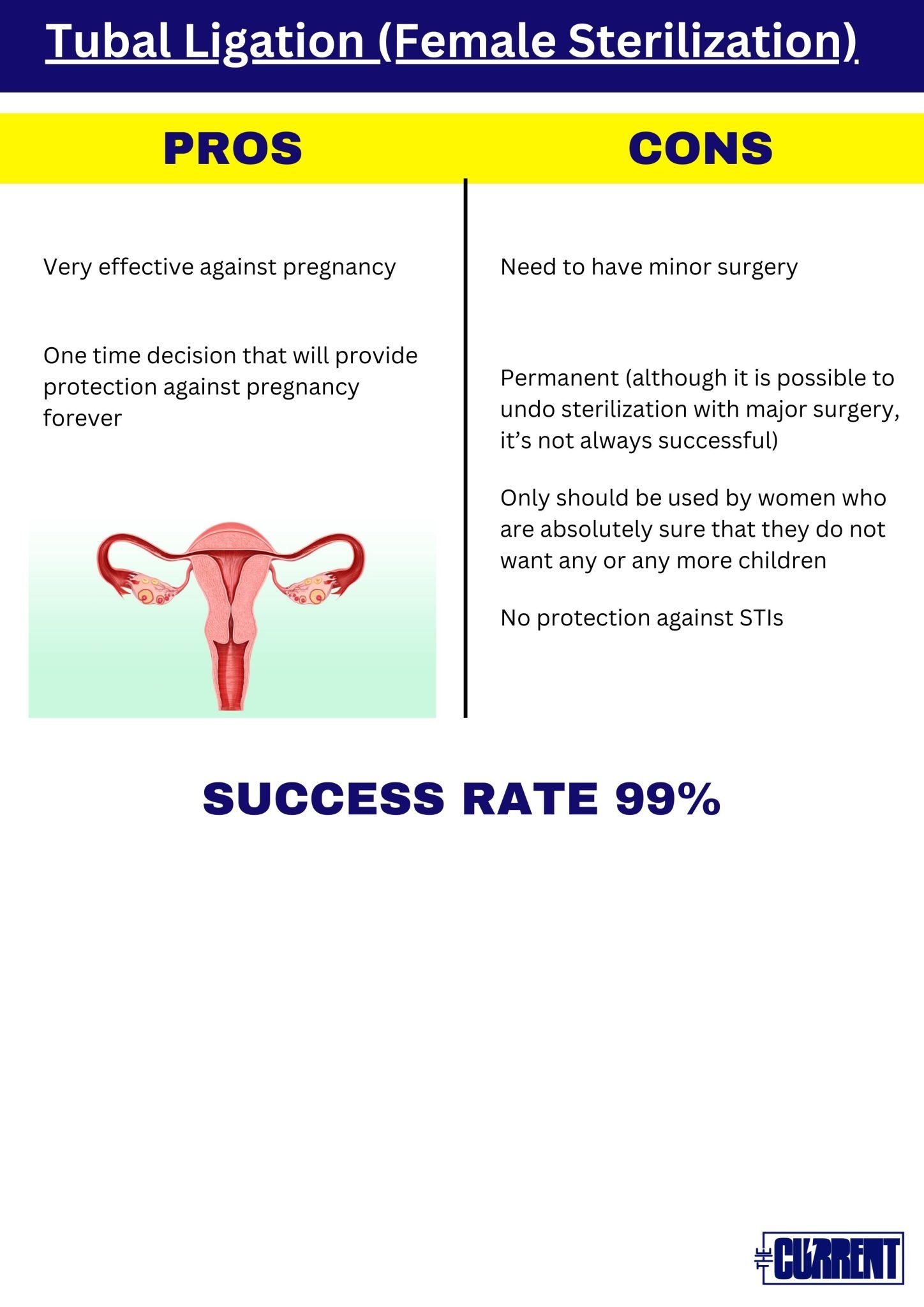
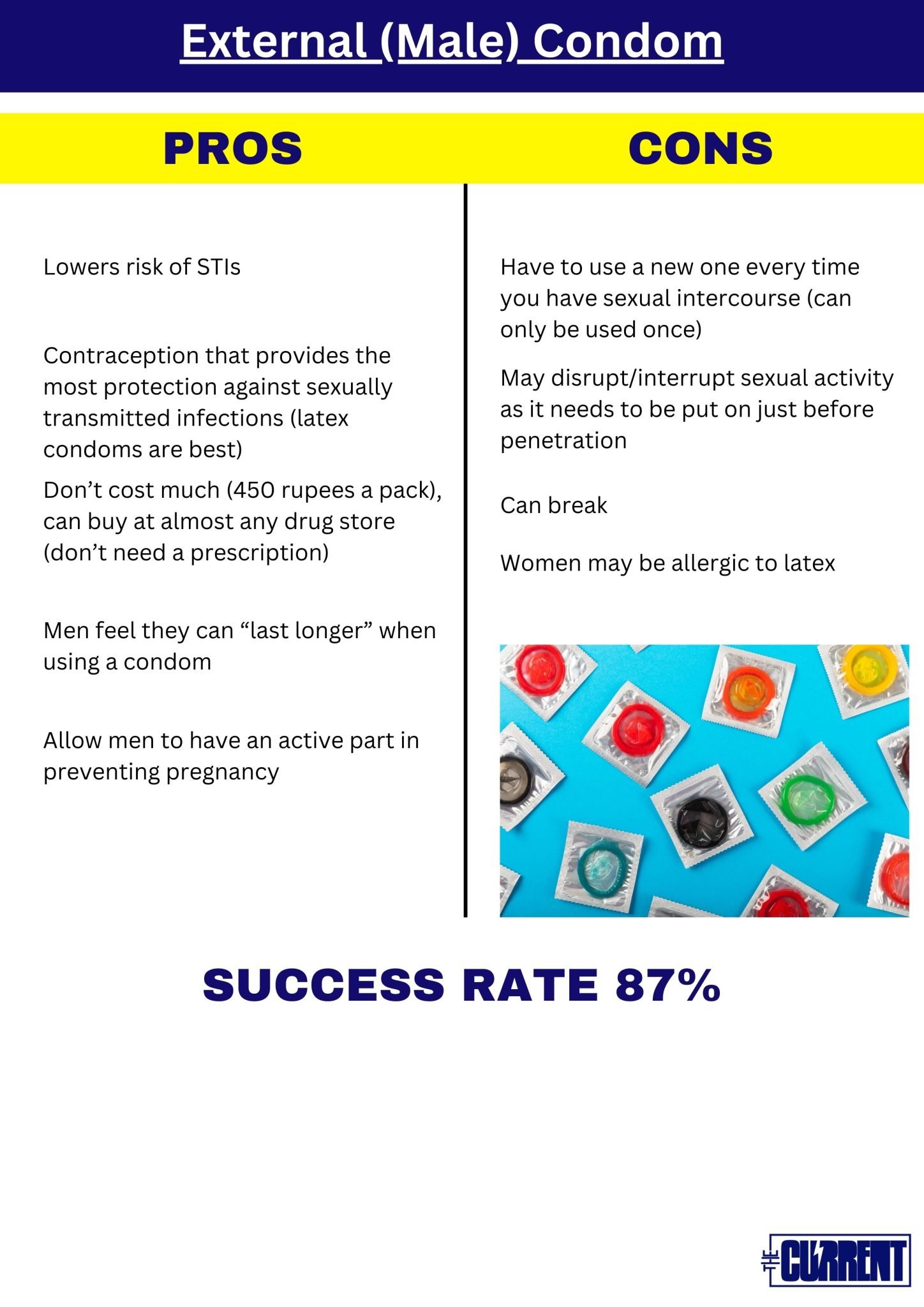
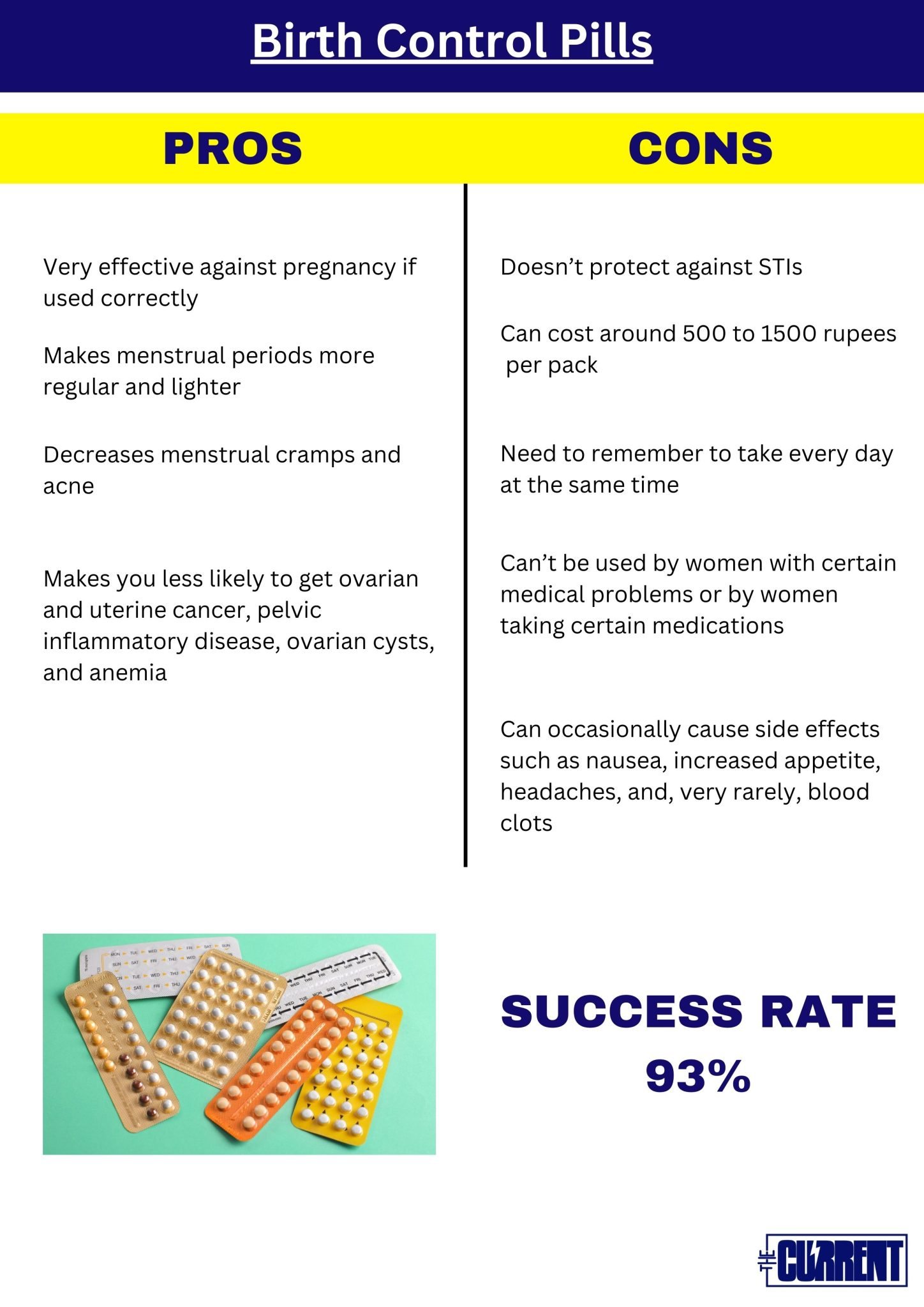
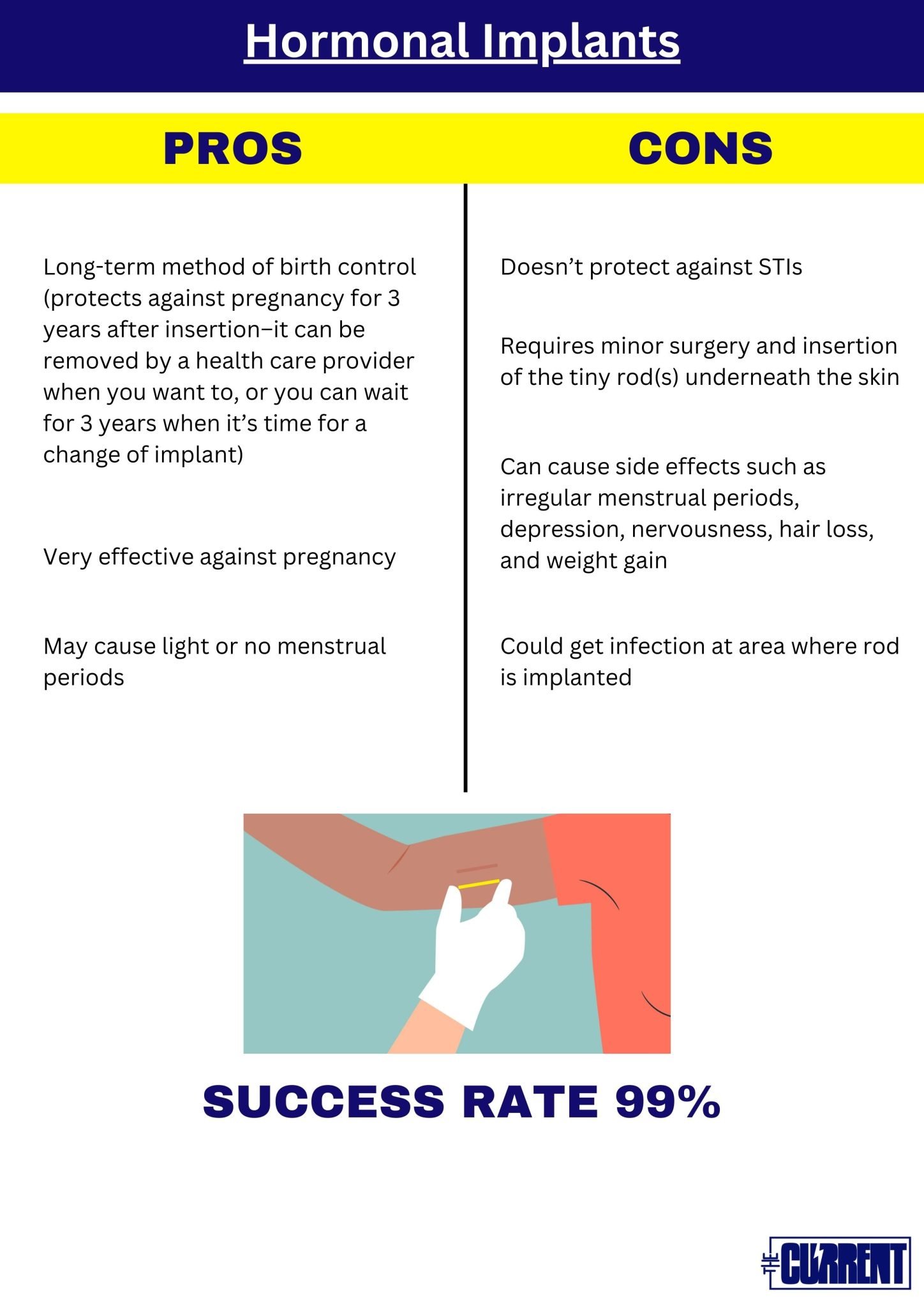
    Pros and Cons of Contraceptive Methods:

    The Center for Young Women’s Health (CYWH), a partnership between the Division of Adolescent/Young Adult Medicine and the Division of Gynecology, at Boston Children’s Hospital, has extensively researched on the pros and cons of different methods of contraception and their success rate.

    *Names have been changed to protect the privacy and confidentiality of the individual involved
  • Israel furious at US abstention on Security Council ceasefire vote

    Israel furious at US abstention on Security Council ceasefire vote

    Israel reacted angrily on Monday to the first UN Security Council vote to demand an “immediate ceasefire” in the Gaza war, after its closest ally the United States abstained, while fighting raged in the Palestinian territory.

    Immediately after the resolution passed, Israel cancelled the visit of a delegation to Washington, which the United States had requested to discuss concerns over a mooted Israeli invasion of Rafah, in crowded southern Gaza.

    Israel said the US abstention “hurts” both its war effort and efforts to release hostages.

    It was “a clear retreat from the consistent position of the US,” Prime Minister Benjamin Netanyahu’s office said.

    While diplomatic attention turned to New York, fighting continued across the Gaza Strip, with Israeli forces battling Hamas militants around at least two major hospitals.

    Washington insisted that its Security Council abstention did not mark a shift in policy, although it has taken an increasingly tougher line with Israel in recent weeks.

    The United States had repeatedly vetoed Security Council resolutions calling for an immediate ceasefire, but on Friday it put forward its own unsuccessful text mentioning one, before abstaining on Monday’s resolution drafted by non-permanent Council members.

    Applause

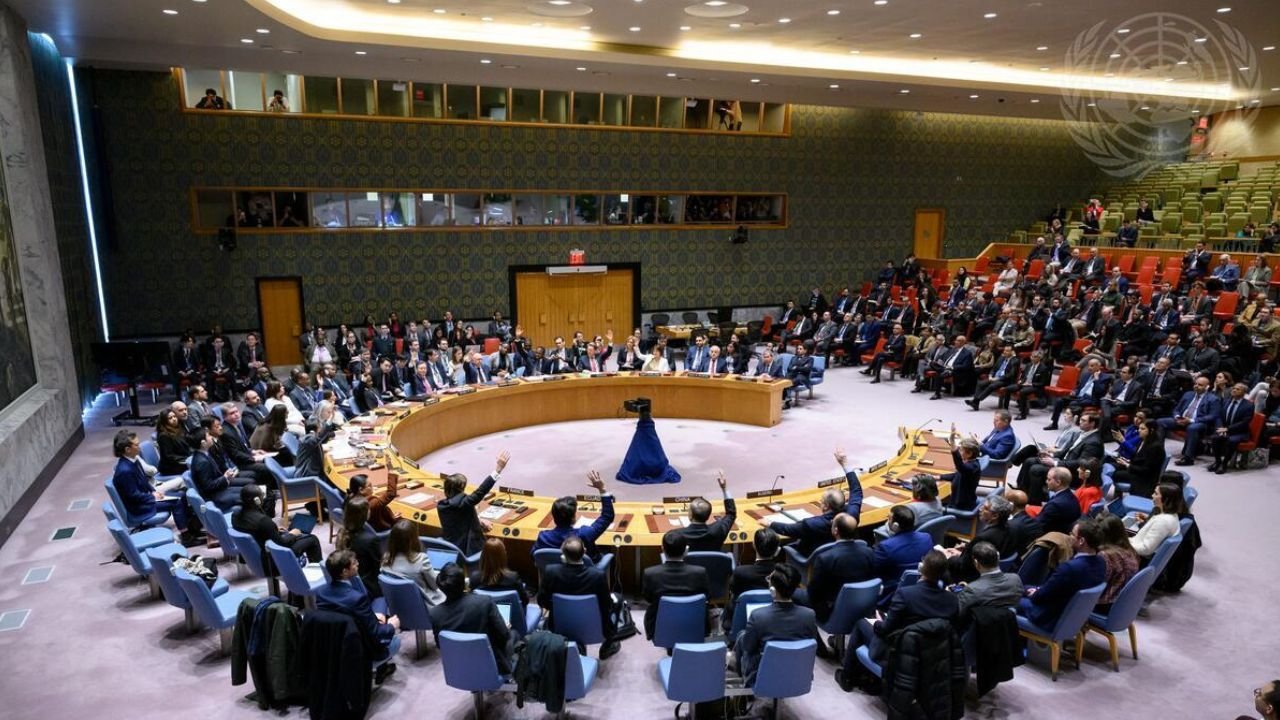
    It meant that the resolution, which demands an “immediate ceasefire” for the ongoing Muslim holy month of Ramadan that leads to a “lasting” truce, went through with all other 14 Security Council members voting yes.

    The resolution drew applause in the usually staid council and also demands that Hamas and other militants free hostages they seized, though it does not directly link a release to the ceasefire.

    The Gaza war broke out with Hamas’s unprecedented attack of October 7 which resulted in about 1,160 deaths in Israel, mostly civilians, according to an AFP tally based on official Israeli figures.

    Militants also seized about 250 hostages, of whom Israel believes around 130 remain in Gaza, including 33 presumed dead.

    Netanyahu’s failure to bring home the hostages has led to regular protests in Israel.

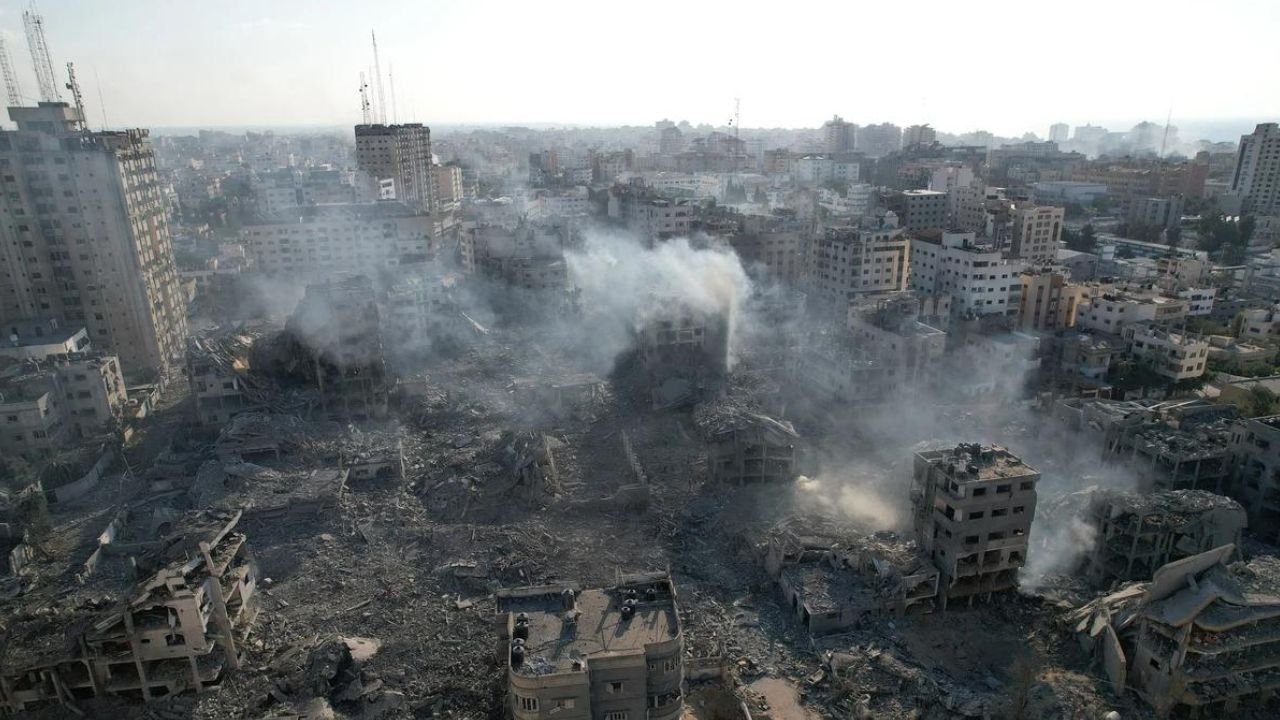
    Vowing to destroy Hamas and free the captives, Israel has carried out a relentless bombardment of the coastal territory and a ground invasion that began in Gaza’s north before moving southward.

    The health ministry in the Hamas-run Gaza Strip on Monday put the total Palestinian death toll at 32,333, most of them women and children.

    Hamas welcomed the Security Council resolution and said it was reaffirming its readiness to negotiate the release of hostages in exchange for Palestinian prisoners held by Israel.

    Member states are obliged to comply with resolutions passed by the Security Council, whose vote came while Israeli Defence Minister Yoav Gallant visited Washington.

    After the UN decision, Gallant said the war will go on.

    “We have no moral right to stop the war while there are still hostages held in Gaza,” he said.

    Tensions between the two allies have grown alongside US concerns about the humanitarian crisis in Gaza, where the UN says famine is imminent.

    Netanyahu’s determination to launch a ground operation in Rafah, the city on Gaza’s southern border where most of the territory’s population is sheltering, has become a key point of contention.

    Prior to the UN vote, US Vice President Kamala Harris told ABC TV that a Rafah invasion would be “a huge mistake”. Asked hether she would rule out “consequences” for Israel, Harris said: “I am ruling out nothing”.

    Before heading to Washington, Gallant said his focus would include “our ability to obtain platforms and munitions”.

    Hospital battles

    Troops and tanks have encircled Gaza City’s Al-Shifa Hospital, the territory’s biggest, for a week and more recently moved on Al-Amal Hospital in the main southern city of Khan Yunis.

    Israel has labelled its operations “precise operational activities” and said it has taken care to avoid harm to civilians, but aid agencies have voiced alarm about civilians caught up in the fighting.

    The Israeli military said it was battling militants around the two hospitals and reported around 20 militants killed around Al-Amal over the past day in close-quarters combat and air strikes.

    Palestinians living near Al-Shifa have reported hellish conditions, including corpses in the streets, constant bombardment and the rounding up of men who are stripped to their underwear and questioned.

    The Al-Shifa raid was in its eighth day and the military reported having detained a total of about 500 militants “affiliated with” Hamas and Islamic Jihad, another militant group.

    ‘We are suffering’

    Israel has signalled an extended presence at Al-Shifa which troops also raided in November, to an international outcry.

    At Al-Amal Hospital, the Palestinian Red Crescent said Israeli troops ordered staff and patients to evacuate, but the departing convoy got stuck due to debris on the road.

    The charity reported that Israeli troops opened fire on staffers who tried to clear the debris, wounding two — one of whom made it back to the convoy.

    Israel’s military did not immediately respond to a request for comment.

    The military said its Al-Amal operation included “raids on several terrorist infrastructure sites”, where they found explosive devices, rocket-propelled grenades and other military equipment.

    UN chief Antonio Guterres, on a visit to the Middle East, has pleaded for an end to the “non-stop nightmare” for the 2.4 million people trapped in Gaza’s worst-ever war and stalked by starvation.

    According to Gaza’s health ministry, at least 107 people were killed in a 24-hour period into Monday, and the Hamas government press office said more than 50 airstrikes rained down on the Gaza Strip.

    Israel’s armed forces gave a similar number and said its fighter jets and helicopters had struck about 50 targets.

    Food and water shortages have deepened the suffering, especially in northern Gaza where residents, mostly women and children, waited in line to fill up jerrycans and buckets in Jabalia.

    “We don’t even have food to give us the energy to go to collect the water — let alone the innocent children, women and the elderly,” said one man, Bassam Mohammed al-Haou.

  • Countries call for swift implementation of UN ceasefire vote

    Countries call for swift implementation of UN ceasefire vote

    The UN Security Council on Monday called for an immediate ceasefire in Gaza five months into the grinding war, despite Israel’s ally the United States abstaining.

    Here are some reactions to the resolution to halt fighting over the Muslim holy month of Ramadan with an aim for a “lasting” truce, which drew rare applause at the Security Council:

    UN Secretary-General Antonio Guterres called for swift implementation of a ceasefire after Israel voiced anger over the resolution.

    “Failure would be unforgivable,” Guterres wrote on X, formerly known as Twitter.

    Hamas welcomed the resolution to halt fighting in Gaza while saying it was ready to negotiate the release of hostages in exchange for Palestinian prisoners.

    “We also affirm our readiness to engage in an immediate prisoner exchange process that leads to the release of prisoners on both sides,” the militant group said.

    Israeli Prime Minister Benjamin Netanyahu’s office said the UN vote “hurts both the war effort and the effort to release the abductees”.

    “It gives Hamas hope that international pressure will allow them to accept a ceasefire without the release of our abductees,” the statement said. It also took aim at the US abstention, calling it a “clear retreat” from its earlier position.

    Hussein al-Sheikh, minister for civilian affairs of the Palestinian Authority which has partial administrative control in the Israeli-occupied West Bank, hailed the resolution in a post on X.

    “We call for a permanent cessation to this criminal war and Israel’s immediate withdrawal from the Gaza Strip,” he wrote.

    Following the vote, the United States said a ceasefire can “only” be implemented once Hamas begins releasing hostages it still holds.

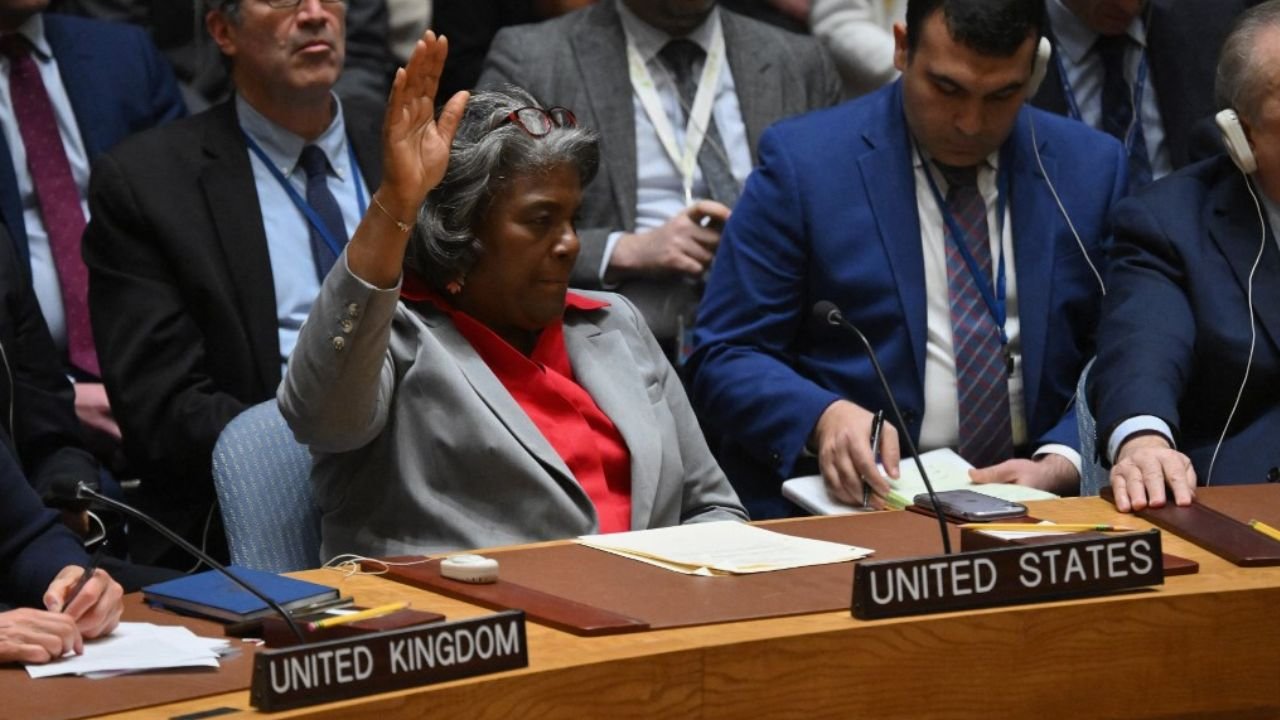
    “A ceasefire can begin immediately with the release of the first hostage,” US ambassador to the UN Linda Thomas-Greenfield said.

    After the United States vetoed previous drafts, National Security Council spokesman John Kirby told journalists that the US decision to abstain from Monday’s vote does not represent a “shift in our policy”.

    The Arab League’s Secretary-General Ahmed Aboul Gheit said the decision “comes late”.

    “The lesson now is to implement the decision on the ground, stop military operations and Israeli aggression immediately and completely,” he added.

    Top European Union officials welcomed the resolution, calling for a ceasefire and the unconditional release of all hostages.

    “Implementation of this resolution is vital for the protection of all civilians,” European Commission President Ursula von der Leyen wrote on X.

    The resolution “represents the first important and necessary step to stop the bloodshed,” the Egyptian ministry of foreign affairs said in a statement to the UN.

    The Brazilian government said it “hopes that the ceasefire will be implemented immediately, as stipulated by the resolution, and reiterated “the urgency of ensuring the effective entry of an expanded and regular flow of humanitarian aid into Gaza, as well as the release of all hostages”.

    France’s UN representative called for a sustained truce between Israel and Hamas beyond the ongoing month of Ramadan.

    “This crisis is not over,” said Nicolas de Riviere. “After Ramadan, which ends in two weeks, it will have to establish a permanent ceasefire.”

    German Foreign Minister Annalena Baerbock said she was “relieved by the adoption of the resolution”. “Every day counts,” she added.

    Baghdad’s foreign minister applauded the resolution in a statement and stressed “the importance for the parties to respect their obligations under international law”.

    Jordan’s foreign ministry expressed hope that the UN and international community would “take action to safeguard the two-state solution and ensure the establishment of an autonomous and sovereign Palestinian state”.

    Lebanese Prime Minister Najib Mikati hailed the “first stage in the process of ending Israeli aggression against the Gaza Strip.”

    He also called for a political solution “to end the conflict and give the Palestinians their rights”.

    Qatar said it hopes the resolution “represents a step towards a permanent cessation of fighting in the Strip”.

    The gas-rich emirate has been engaged in weeks of mediation between Israel and Hamas to secure a truce in Gaza and an exchange of hostages and prisoners.

    Foreign minister Naledi Pandor welcomed the resolution on public radio but stressed that “the ball is in the court of the Security Council”.

    Spanish Prime Minister Pedro Sanchez on X applauded the resolution, and said that “the realisation of two states, Israel and Palestine, living side-by-side in peace and security is the only realistic and viable solution for the region”.

    Outgoing Dutch Prime Minister Mark Rutte said the next step was “to stop the violence, free the hostages, immediately send in vastly more humanitarian aid to Gaza and find a lasting solution”.

    The country’s far-right leader, Geert Wilders, who swept to victory in recent polls, on X voiced support for Israel “against the dark forces of hate and destruction called Hamas”.

    Turkey called the resolution and prospective return of humanitarian access to Gaza “a positive step”.

    “We hope that Israel will comply with the requirements of this resolution without delay,” Turkish foreign affairs spokesman Oncu Keceli wrote on X.

    Chile’s foreign office said it was “necessary to progress the two state solution, in which Palestine and Israel can live in peace inside internationally recognised borders.”

    “I invite the world’s nations if Israel breaks this ceasefire to break diplomatic relations with this country,” said Colombian President Gustavo Petro on X.

    Amnesty International’s Secretary General Agnes Callamard said the resolution is “long overdue” and called for “an immediate and comprehensive arms embargo”.

    Human Rights Watch’s UN lead Louis Charbonneau called for Israel to halt “unlawful attacks”, for Palestinian armed groups to “immediately release all civilians held hostage”, and for the US and others to suspend “arms transfers to Israel”.

    Oxfam’s UN representative Brenda Mofya said the resolution should provide “much-needed respite from the relentless and devastating Israeli violence”.

  • UN expert accuses Israel of several acts of genocide in Gaza

    UN expert accuses Israel of several acts of genocide in Gaza

    A UN rights expert on Monday said there were “reasonable grounds” to determine that Israel has committed several acts of “genocide” in its war in Gaza, also warning of “ethnic cleansing”.

    Francesca Albanese, the UN special rapporteur on the rights situation in the Palestinian territories, said there were clear indications that Israel had violated three of the five acts listed under the UN Genocide Convention.

    “The overwhelming nature and scale of Israel’s assault on Gaza and the destructive conditions of life it has inflicted reveal an intent to physically destroy Palestinians as a group,” she said in a report, which was immediately rejected by Israel as an “obscene inversion of reality”.

    Albanese, an independent expert appointed by the UN Human Rights Council but who does not speak on behalf of the United Nations, said she had found “reasonable grounds to believe that the threshold indicating the commission of… acts of genocide against Palestinians in Gaza has been met”.

    The report, entitled “Anatomy of a Genocide”, listed those acts as: “killing members of the group; causing serious bodily or mental harm to the group’s members; and deliberately inflicting on the group conditions of life calculated to bring about its physical destruction in whole or in part”.

    Israel’s diplomatic mission in Geneva said the country “utterly rejects the report”, describing it as “simply an extension of a campaign seeking to undermine the very establishment of the Jewish State”.

    “Israel’s war is against Hamas, not against Palestinian civilians,” it said in a statement, slamming Albanese’s “outrageous accusations”.

    Israel has long been harshly critical of Albanese and her mandate, which the United States on Monday called “biased against Israel.”

    Washington is “aware” of Albanese’s report but has “no reason to believe Israel has committed acts of genocide in Gaza,” a US official told AFP.

    Last month Israel slapped a visa ban on her after she made comments denying that Hamas’s October 7 attack, which sparked the war in Gaza, was anti-Semitic.

    Israel’s relentless bombardment and ground offensive in Gaza has since killed more than 32,300 people, mainly women and children, according to the health ministry in Gaza.

    South Africa has already filed a complaint against Israel before the International Court of Justice, alleging its assault on Gaza amounts to a violation of the genocide convention.

    The court has yet to rule on the underlying issue, but earlier this year ordered Israel to do everything it could to prevent genocidal acts during its campaign and also to allow in humanitarian aid.

    In Albanese’s report, which she is due to present to the Human Rights Council on Tuesday, she maintained that Israel’s “genocidal acts” followed “statements of genocidal intent”.

    Statements by some senior Israeli officials spelling out an intent to forcibly displace Palestinians and replace them with Israeli settlers, she said, indicated that “evacuation orders and safe zones have been used as genocidal tools to achieve ethnic cleansing”.

    The report also found that Israel was treating all Palestinians and their infrastructure “as ‘terrorist’ or ‘terrorist-supporting’, thus transforming everything and everyone into either a target or collateral damage”.

    “In this way, no Palestinian in Gaza is safe by definition,” it said.

    “This has had devastating, intentional effects, costing the lives of tens of thousands of Palestinians.”

    The report also stressed that Israel’s mistreatment of the Palestinians had not begun on October 7.

    “Israel’s genocide on the Palestinians in Gaza is an escalatory stage of a longstanding settler colonial process of erasure,” it said.

  • Hamas welcomes China, Russia veto of US-backed Gaza resolution

    Hamas has reportedly shown “appreciation” as Russia and China vetoed a US-led draft resolution on a Gaza ‘ceasefire’ at the UN Security Council on Friday.

    The United States proposed a resolution endorsing “the urgent need for an immediate and enduring ceasefire” and, notably, condemning the October 7 attack carried out by Hamas for the first time.

    “We express our appreciation for the position of Russia, China and Algeria who rejected the biased American resolution of aggression against our people,” the Hamas said in a statement.

    They added that the draft consists of “misleading wording that is complicit” with Israel and “grants it cover and legitimacy to commit a genocidal war against the Palestinian people in the Gaza Strip.”

    On the other hand, prior to the vote, Russia’s ambassador to the UN, Vassily Nebenzia, urged members against endorsing the resolution, deeming it as “excessively politicized” and implying it endorsed Israeli military operations in Rafah, Gaza, where more than half of its 2.3 million residents sought shelter in camps to escape the Israeli offensive in the northern regions.

    Nebenzia asserted that several non-permanent Security Council members had crafted an alternative resolution, which he portrayed as a fair proposal, calling on all members to support it.

  • Planet ‘on the brink’ with new heat records likely in 2024: UN

    Planet ‘on the brink’ with new heat records likely in 2024: UN

    Global temperatures “smashed” heat records last year, as heatwaves stalked oceans and glaciers suffered record ice loss, the United Nations said Tuesday — warning 2024 was likely to be even hotter.

    The annual State of the Climate report by the UN weather and climate agency confirmed preliminary data showing 2023 was by far the hottest year ever recorded.

    And last year capped off “the warmest 10-year period on record”, the World Meteorological Organization said, with even hotter temperatures expected.

    “There is a high probability that 2024 will again break the record of 2023”, WMO climate monitoring chief Omar Baddour told reporters.

    Reacting to the report, UN chief Antonio Guterres said it showed “a planet on the brink”.

    “Earth’s issuing a distress call,” he said in a video message, pointing out that “fossil fuel pollution is sending climate chaos off the charts”, and warning that “changes are speeding up”.

    The WMO said that last year the average near-surface temperature was 1.45 degrees Celsius above pre-industrial levels — dangerously close to the critical 1.5-degree threshold that countries agreed to avoid passing in the 2015 Paris climate accords.

    “I am now sounding the red alert about the state of the climate,” Saulo told reporters, lamenting that “2023 set new records for every single climate indicator”.

    The organisation said many of the records were “smashed” and that the numbers “gave ominous new significance to the phrase ‘off the charts’.”

    “What we witnessed in 2023, especially with the unprecedented ocean warmth, glacier retreat and Antarctic sea ice loss, is cause for particular concern,” Saulo said.

    One especially worrying finding was that marine heatwaves gripped nearly a third of the global ocean on an average day last year.

    And by the end of 2023, more than 90 percent of the ocean had experienced heatwave conditions at some point during the year, the WMO said.

  • Minor improvement in human development ranking for Pakistan: Report

    Minor improvement in human development ranking for Pakistan: Report

    Pakistan has been ranked 161st out of 191 countries on the UN Human Development Index, scoring 0.544 points. This marks a slight improvement from 2023, when Pakistan was ranked 164th with 0.540 points, three places below its 2022 ranking.

    The report also highlights that Pakistan’s HDI rank remained steady at 161st globally from 2019 to 2021. The index comprises health, education, and income indicators, each ranging from 0 to 1.

    In South Asia, Sri Lanka leads at 73rd place with 0.782 points, followed by Bangladesh at 129th with 0.661 points, and India at 132nd with 0.633 points. Nepal ranks 143rd, while Afghanistan trails at 180th with 0.478 points, although it’s slightly above the bottom 10.

    Globally, South Sudan ranks last at 191st with 0.385 points, while Switzerland tops the list at 0.962 points, followed by Norway at 0.961 points.

    The report observes that while global development has returned to pre-pandemic levels, a growing gap between rich and poor countries persists. This rebound follows two years of decline, primarily due to the COVID-19 crisis which reversed five years of progress.

    Despite overall positive trends, inequality persists, with the poorest nations falling behind, exacerbating global polarisation.

    “The result is a dangerous gridlock that must be urgently tackled through collective action,” the United Nations warned in a post on social media.

    The report also recognizes that “rich countries experienced unprecedented development, yet half of the world’s poorest nations continue to languish.”

    The United Nations’ Human Development Index (HDI) combines economic and non-economic factors to measure a country’s prosperity, including life expectancy, educational attainment, and gross national income per capita.

    The report underscores a reversal in the trend of reducing inequalities between wealthy and poor nations, emphasising the need for collective action to address shared challenges and ensure people’s aspirations are met.

    Additionally, the report identifies a “democracy paradox,” wherein support for democracy coexists with endorsement of leaders who may sabotage democratic principles, increasing political polarisation and inward-looking policy approaches.

  • Over 95 Percent Of Sudanese Cannot Afford A Meal A Day: WFP

    Over 95 Percent Of Sudanese Cannot Afford A Meal A Day: WFP

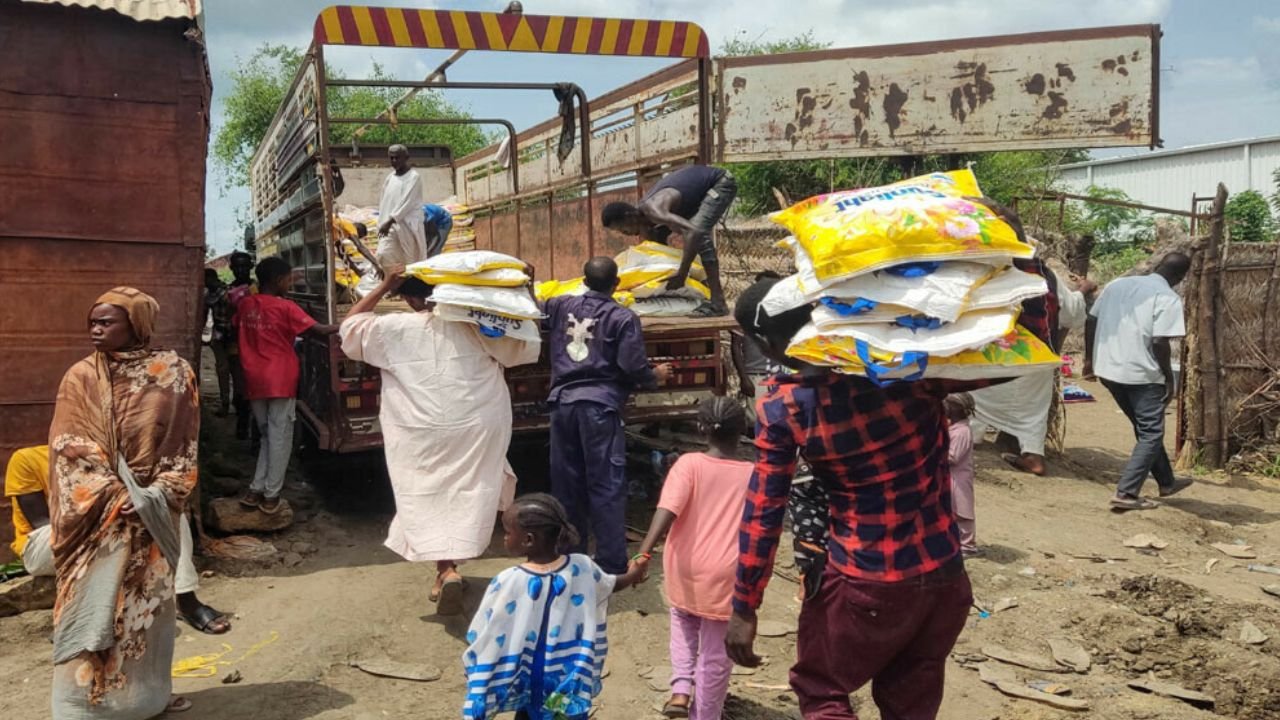
    Ten months into a war that has sent Sudan to the “verge of collapse”, the vast majority of its people are going hungry, the UN’s World Food Programme said Wednesday.

    “At this point, less than five percent of Sudanese can afford a square meal a day,” the WFP’s Sudan country director, Eddie Rowe, told reporters in Brussels.

    Since last April, Sudan has been gripped by fighting between the regular army and the paramilitary Rapid Support Forces, which has killed thousands and created what the United Nations calls “the world’s largest displacement crisis”.

    A combined 10.7 million people have been uprooted by the current war and previous conflicts, according to the UN.

    Nine million remain displaced within Sudan, where Rowe said a “lethal cocktail of continued conflict, stalled harvests and rampant and consistent displacement risks plunging millions more into a catastrophic humanitarian disaster.”

    Across Sudan, which the WFP says was already facing one of the world’s worst food crises before the war, 18 million people are facing acute food insecurity.

    Of those, Rowe said “close to five million are on the precipice of catastrophe” — enduring one of the worst emergency classifications the WFP uses, second only to famine.

    Aid groups have for months warned that as a result of hampered humanitarian access and severe underfunding, the spectre of famine looms over Sudan.

    But the same obstacles to aid delivery inhibit the ability to determine the extent of the catastrophe.

    According to Michael Dunford, WFP’s Eastern Africa regional director, there is a major issue in “the availability of the data to confirm one way or the other whether or not the thresholds (required to declare a famine) have been met”.

    With WFP only able to reach 10 percent of those in need, “there are large tracts of the country that we simply cannot access,” Dunford told reporters.

    Sudan’s most fertile regions could have helped ward off famine, if not for the fighting encroaching into the country’s agricultural heartlands.

    In December, a paramilitary advance brought the war to Al-Jazira state, just south of the capital Khartoum, which was set to produce the bulk of Sudan’s grains for the season.

    “Thousands of smallholder farms and even the large-scale schemes have been deserted, because people are on the move running away from the conflict,” Rowe said.

    “As we approach the hunger season,” he said, the crisis is only set to “further deteriorate”.

    The lean season, roughly from April to July, usually sees food prices run high as stocks dwindle ahead of the next harvest.

    With markets across the country already empty and an ongoing communications blackout hampering all transactions, Dunford says the future is bleak.

    “This is a country on the verge of collapse,” he said.

  • UN Security Council vote on Gaza faces threat of US veto

    UN Security Council vote on Gaza faces threat of US veto

    United Nations (United States) (AFP) – The UN Security Council will vote on a new draft resolution Tuesday calling for an immediate ceasefire in Gaza, despite threat of a third US veto on such a text.

    The document, prepared by Algeria, “demands an immediate humanitarian ceasefire that must be respected by all parties.”

    The vote comes as Israel prepares to move into the southern Gaza Strip city of Rafah, where some 1.4 million people have fled, as part of its mission to destroy “Hamas”.

    However it is facing increased pressure to hold off, including from its closest ally the United States.

    The draft resolution opposes the “forced displacement of the Palestinian civilian population.”

    It additionally demands the release of all Hamas hostages.

    Similarly to other previous drafts spurned by the United States and Israel, the new text does not condemn Hamas’s October 7 assault.

    That attack left about 1,160 people dead in southern Israel, mostly civilians, according to an AFP tally of official Israeli figures.

    Israel’s retaliatory campaign has killed more than 29,000 people in Gaza, mostly women and children, according to the latest count by the health ministry.

    The United States warned over the weekend that Algeria’s text was not acceptable, threatening to veto it.

    “We don’t believe that this Council product will help the situation on the ground,” US deputy ambassador to the UN Robert Wood said Monday.

    “If this resolution does come to a vote, it will not go forward.”

    According to Wood, the passage of such a ceasefire resolution would endanger ongoing delicate diplomatic negotiations which could see the release of hostages from Gaza.

    The United States instead began circulating an alternate draft, seen by AFP Monday.

    While that text does include the word “ceasefire” — which the United States has previously avoided, vetoing two drafts in October and December which used the term — it does not call for the end of hostilities to happen immediately.

    ‘Moral obligation’

    Echoing recent comments by President Joe Biden, the US draft supports a “temporary ceasefire in Gaza as soon as practicable, based on the formula of all hostages being released.”

    It also mentions concern for Rafah, stating that “a major ground offensive should not proceed under current circumstances.”

    There is no “deadline” for a vote on the American draft, a senior US official said Monday, adding there would be no “rush.”

    But even if there is no hurry, the US text “as it is… cannot pass,” one diplomatic source said, citing several issues around the phrasing of “ceasefire” and the risk that any text introduced to the 15-member body by the United States might face a veto from Russia.

    In any case, the mere fact the United States has introduced a counter-resolution is likely to “make Israel nervous,” Richard Gowan, an analyst at the International Crisis Group, told AFP.

    “The US is finally using the Security Council as a platform to signal the limits of its patience with the Israeli campaign,” Gowan said.

    Despite the specter of a US veto, Palestinian Ambassador to the UN Riyad Mansour had insisted on a vote days ago, saying that the Arab Group had been “more than generous to give our colleagues additional time.”

    According to Gowan, “We are now grinding towards a US veto that nobody really wants, but nobody can avoid,” noting that the vote will fall within a few days of the second anniversary of Russia’s invasion of Ukraine.

    “I am sure that Russia will use the opportunity (of a US veto) to accuse the US of having double standards when it comes to dealing with civilian suffering in Ukraine and the Middle East,” Gowan said.

    Russian UN Ambassador Vasily Nebenzya said it is “sad that we cannot come (up) with a ceasefire… and that only one delegation is preventing that.”

    Chinese representative Jun Zhang said the Security Council has a “moral obligation” to take action “to stop the killings,” pointing out that the United States may veto such a move but meanwhile they are “always calling for protection of human rights.”

  • Saudi Says Israel Must Be Held ‘Accountable’, After UN Court Rules

    Saudi Says Israel Must Be Held ‘Accountable’, After UN Court Rules

    Saudi Arabia on Friday welcomed the UN top court’s decision on Israel’s genocide against Palestinians in Gaza, and called for the international community to “hold Israel accountable” for “violations” of international law.

    In a statement, the kingdom’s Foreign Ministry also called for “more measures” to reach a ceasefire in Gaza and provide protection for the Palestinian people.