Tag: UN

  • UN migration agency needs $7.9 billion in 2024

    UN migration agency needs $7.9 billion in 2024

    The United Nations migration agency launched its first global annual appeal on Monday, requesting nearly $8 billion for this year alone to manage the growing scale of population displacement.

    The International Organization for Migration said it was seeking a total of $7.9 billion in 2024 to “save lives and protect people on the move, drive solutions to displacement, and facilitate safe pathways for regular migration”.

    “Irregular and forced migration have reached unprecedented levels and the challenges we face are increasingly complex,” IOM chief Amy Pope said in a statement.

    “The evidence is overwhelming that migration, when well-managed, is a major contributor to global prosperity and progress,” said Pope, who last October became the first woman to lead the organisation.

    “We are at a critical moment in time, and we have designed this appeal to help deliver on that promise,” she said.

    “We can and must do better.”

    IOM was founded more than 70 years ago, but only became a UN agency in 2016 as a smaller, parallel operation to the UNHCR, which focuses on refugees.

    It works in emergency situations, advocates for migrants’ rights, and sees humane and orderly migration as a benefit to people on the move and the societies they settle in.

    The agency said Monday that full funding of its appeal would allow it to serve almost 140 million people, including internally displaced people and the local communities that host them.

    It would also help IOM to expand its development work, aimed at helping prevent further displacement, it said.

    Breaking down the appeal, it said a full $3.4 billion of the requested funds would go towards saving lives and protecting those on the move.

    Another $2.7 would be used to work on solutions to displacement, including reducing the risks and impacts of climate change.

    The remainder would help facilitate regular pathways to migration and to help make IOM’s service delivery more effective.

    “This funding will address the large and widening gap between what we have, and what we need in order to do the job right,” Pope said.

    IOM said that its Missing Migrants Project showed that more than 60,000 people had died or disappeared during perilous migration journeys over the past nine years.

    “The consequences of underfunded, piecemeal assistance come at a greater cost, not just in terms of money but in greater danger to migrants through irregular migration, trafficking and smuggling,” it warned.

    Like a number of other UN agencies, IOM is calling for funds to be able to take a more longterm, preventative approach, instead of being forced to always respond in crisis mode.

    The agency said that properly funding its operations would help it streamline and optimise its response, and would effectively reduce the cost of crisis management.

    It also urged countries to recognise the benefits of migration.

    “Migration is a cornerstone of global development and prosperity,” it said, adding that “the 281 million international migrants generate 9.4 percent of global GDP”.

    “Well-managed migration has the potential to advance development outcomes, contribute to climate change adaptation, and promote a safer and more peaceful, sustainable, prosperous and equitable future.”


  • ‘We love life’: Gaza couple celebrate wartime wedding

    ‘We love life’: Gaza couple celebrate wartime wedding

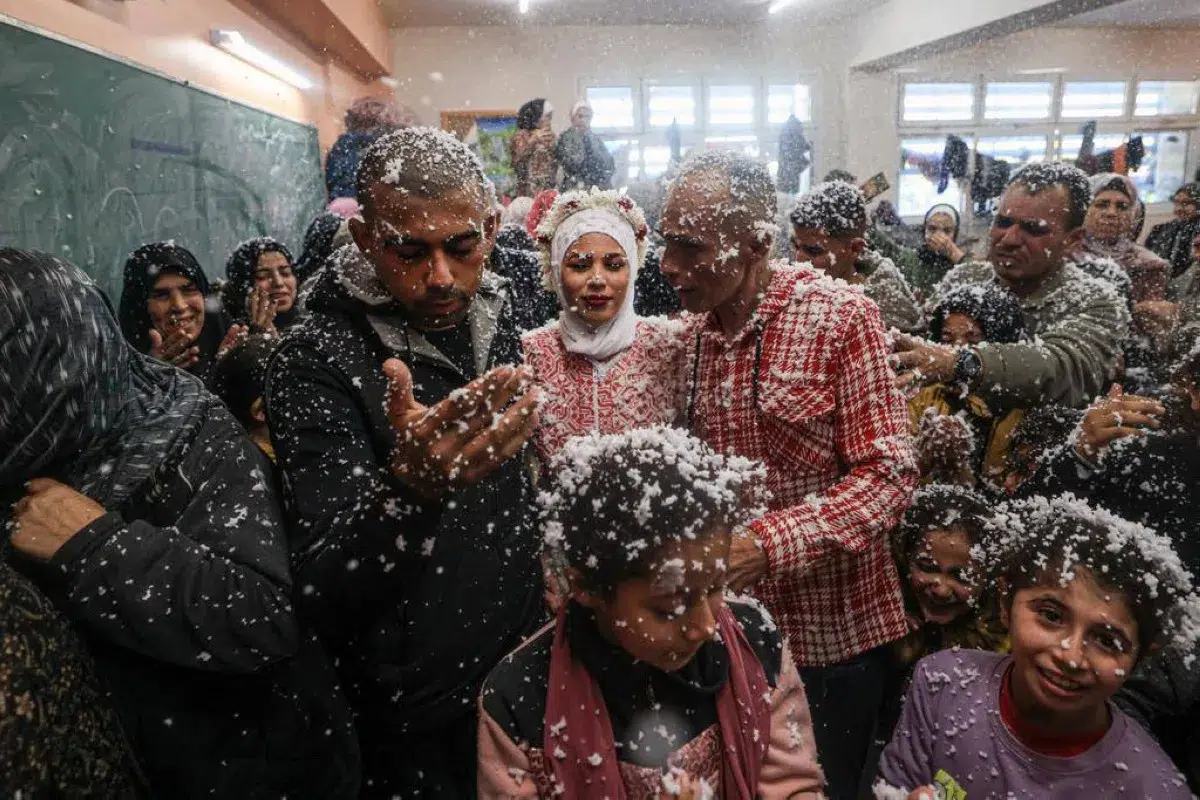
    Surrounded by family and friends, clapping and cheering, Gaza woman Afnan Jibril beams a brilliant smile on her wedding day, determined to celebrate even as war rages.

    “We are a people that love life, despite death, murders and destruction,” said her father, Mohamed Jibril.

    Relatives were gathered on Friday for the wartime wedding in a tiny room at an abandoned school building in the besieged Gaza Strip’s southern city of Rafah, near the frontier with Egypt.

    The city has suffered daily Israeli bombardment, and the families of both bride and groom are among hundreds of thousands of Palestinians who have fled the fighting further north.

    “The usual preparations for marriage are not possible, and traditional ceremonies are not feasible,” said the bride’s father. “However, clothes are available, although they are scarce and expensive.”

    Afnan, 17, donning a crown of flowers and pristine white dress with stark red embroidery, and her partner Mustafa Shamlakh, 26, want to make the most of their rare chance to celebrate.

    They dance and laugh as guests spray white mousse around the room.

    But eventually they have to face reality.

    Israel’s relentless military campaign, triggered by attacks by Palestinian militants, has killed at least 23,843 people, mostly women and children, in Gaza, according to the health ministry in the Hamas-run territory.

    The war began when Hamas militants launched an unprecedented attack on October 7, which resulted in about 1,140 deaths in Israel, mostly civilians, according to an AFP tally based on official figures.

    The newlyweds make up part of another grim tally — those displaced by the violence, which UN estimates put at 1.9 million Palestinians out of a total population in Gaza of 2.4 million.

    “The house where the groom was supposed to live was destroyed,” Ayman Shamlakh, the groom’s uncle, told AFP.

    As the war went on, both families felt there was nothing to be gained from waiting and they agreed to the marriage.

    After the school celebration, the couple head for a ceremony set to take place in a tent.

    As they dive into a waiting black SUV, surrounded by a massive crowd of well-wishers, it almost looks like any other wedding day.

    “We are all living through the same tragedy,” said Ayman Shamlakh. “However, we must continue to live, and life should go on.”

  • Israel accused at UN court of Gaza ‘genocide’

    Israel accused at UN court of Gaza ‘genocide’

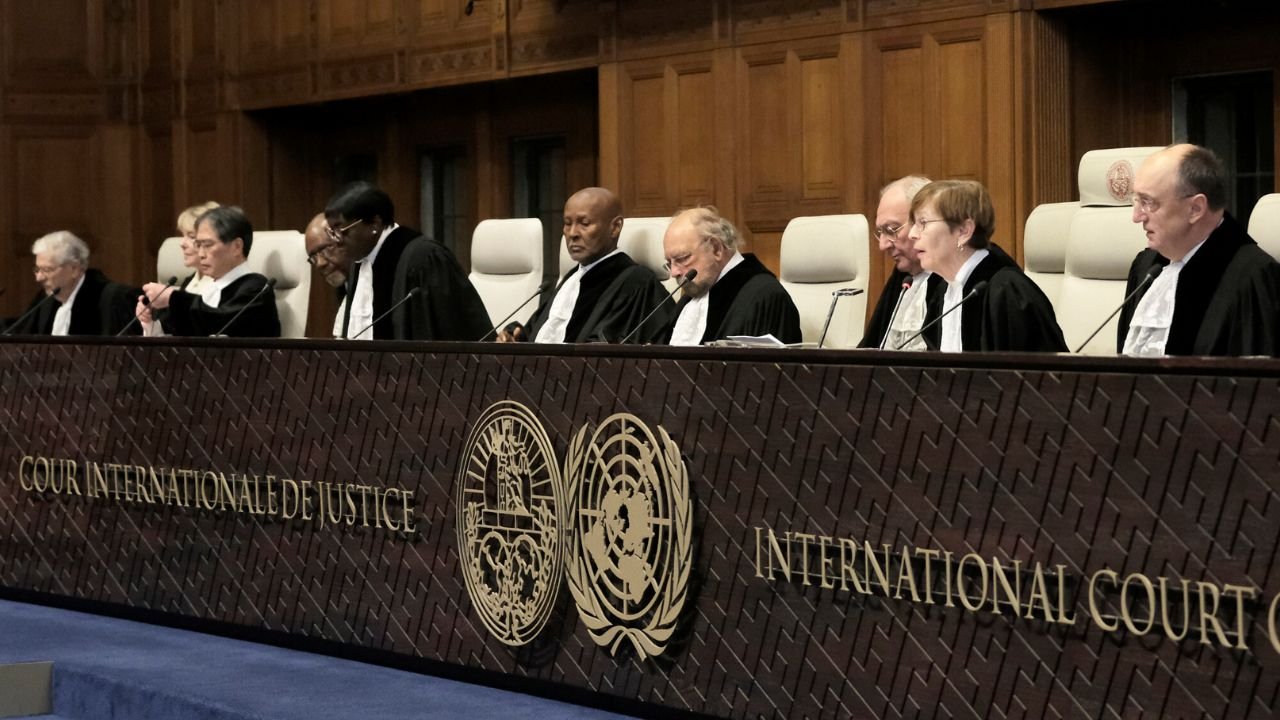
    South Africa on Thursday accused Israel of breaching the UN Genocide Convention, arguing that even the deadly October 7 Hamas attack could not justify such alleged actions, as it launched a landmark case at the top UN court.

    Pretoria has lodged an urgent appeal at the International Court of Justice (ICJ) to force Israel to “immediately suspend” its military operations in Gaza.

    Israel has dismissed the case as “atrocious” and “preposterous” and vowed to set out a robust defence on Friday.

    “No armed attack on a state territory, no matter how serious… can provide justification for or defend breaches of the convention,” said Pretoria’s Justice Minister Ronald Lamola.

    “Israel’s response to the October 7 attack has crossed this line and given rise to the breaches of the convention,” he added.

    The Gaza war erupted when Hamas launched its unprecedented attack, which resulted in about 1,140 people killed in Israel, mostly civilians, according to an AFP tally based on official figures.

    Israel has responded with a relentless military campaign that has killed at least 23,357 people, mostly women and children, according to Gaza’s health ministry.

    A world away from the death and destruction in Gaza and Israel, robed lawyers battled it out over technical legal arguments in the Peace Palace in The Hague.

    South Africa argues Israel is breaking its commitments under the UN Genocide Convention, a treaty signed in 1948 in the wake of the Holocaust.

    Top lawyer for South Africa Adila Hassim said Israel’s bombing campaign aimed at the “destruction of Palestinian life” and had pushed Palestinians “to the brink of famine”.

    “Genocides are never declared in advance, but this court has the benefit of the past 13 weeks of evidence that shows incontrovertibly a pattern of conduct and related intention that justifies a plausible claim of genocidal acts,” she said.

    As a fellow signatory to the treaty, South Africa can take Israel to the ICJ, which rules on disputes between countries and is often described as the “World Court”.

    The ruling African National Congress (ANC) has long been a firm supporter of the Palestinian cause, often linking it to its own historic struggle against the white-minority government, which had cooperative relations with Israel.

    South Africa has acknowledged the “particular weight of responsibility” of accusing Israel of genocide. It “unequivocally” condemned the Hamas attacks that sparked off the war in Gaza.

    ‘Atrocious and preposterous’

    Israel President Isaac Herzog has already hinted at his country’s likely defence against what he called an “atrocious and preposterous… claim”.

    “We will present proudly our case of using self defence… under international humanitarian law,” he said.

    Herzog said the Israeli army was “doing its utmost under extremely complicated circumstances on the ground to make sure that there will be no unintended consequences and no civilian casualties”.

    The United States is backing its ally Israel, with the State Department describing the charges as “unfounded”.

    “In fact, it is those who are violently attacking Israel who continue to openly call for the annihilation of Israel and the mass murder of Jews,” said State Department spokesman Matthew Miller.

    As it is an urgent procedure, the ICJ could rule in a matter of weeks.

    Its rulings are final and cannot be appealed. However, countries do not always follow the court’s verdicts — the ICJ has ordered Russia to stop its invasion of Ukraine, for example.

    But a court ruling against Israel would certainly increase political pressure on the country, with many speculating it could serve as a pretext for sanctions.

    Cecily Rose, assistant professor of public international law at Leiden University, noted the court did not have to rule on the fundamentals of the case at this stage — that issue will likely take years.

    “Instead, the court would only be evaluating whether there is a risk of irreparable prejudice to rights held under the Genocide Convention, in particular the right of the Palestinians in Gaza to be protected from acts that threaten their existence as a group,” Rose told AFP.

    Dutch police kept rival demonstrations apart in The Hague. Hundreds of pro-Israeli protesters waving flags marched through the streets while a smaller group of pro-Palestinian supporters brandished placards saying: “End Israel apartheid.”

    Pro-Israeli protester Ada Deyl, an 80-year-old pensioner, said: “I think it’s a shame that Israel — who is doing all the right things and is attacked by Hamas — is now facing a lawsuit.”

    On the other side, Zohar Janovitch, 40, alleged that Israeli leaders had “explicitly expressed their disregard for the lives of Palestinian civilians.”

  • Rotten food and cat hunting as famine hits Gaza

    Rotten food and cat hunting as famine hits Gaza

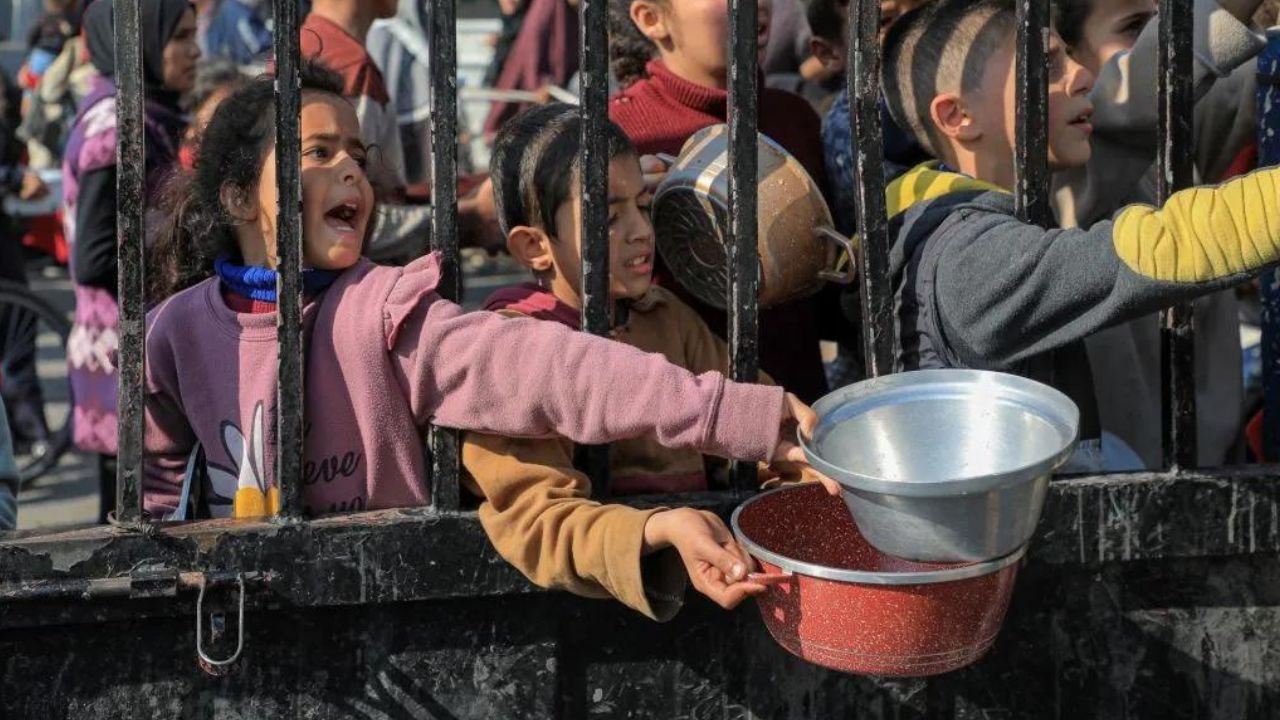
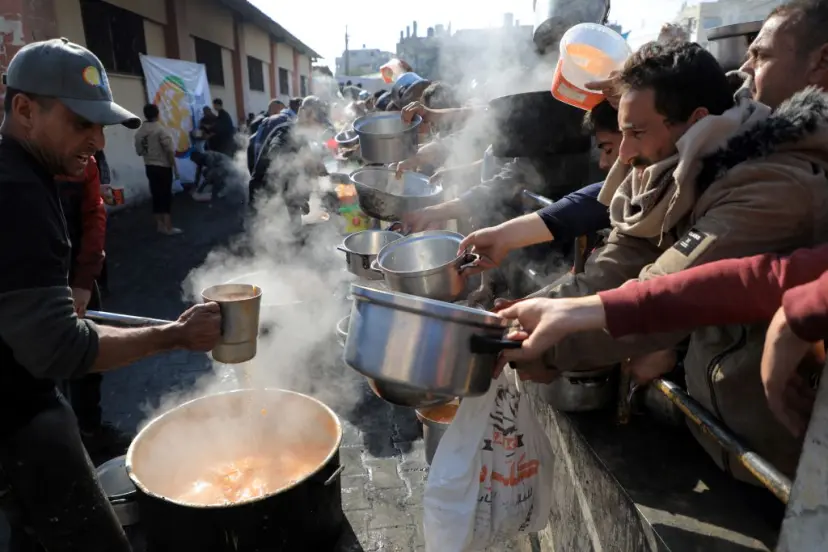
    As the war on Gaza extends into its 90th day, impending famine and starvation are haunting the besieged strip.

    According to an assessment of the integrated food security phase classification initiative, a UN-backed body that sets the international standard that determines the severity of the food crisis, food shortage in Gaza is solely a consequence of war. Before it began, about 150 to 180 food lorries entered Gaza every day. Since, the end of the “humanitarian pause” a month ago, only about 30 do so. They are blocked by Israeli bombardment, fighting on the ground, and by restrictions and inspections on the border with Egypt, imposed by the Israeli and Egyptian authorities, cites The Times.

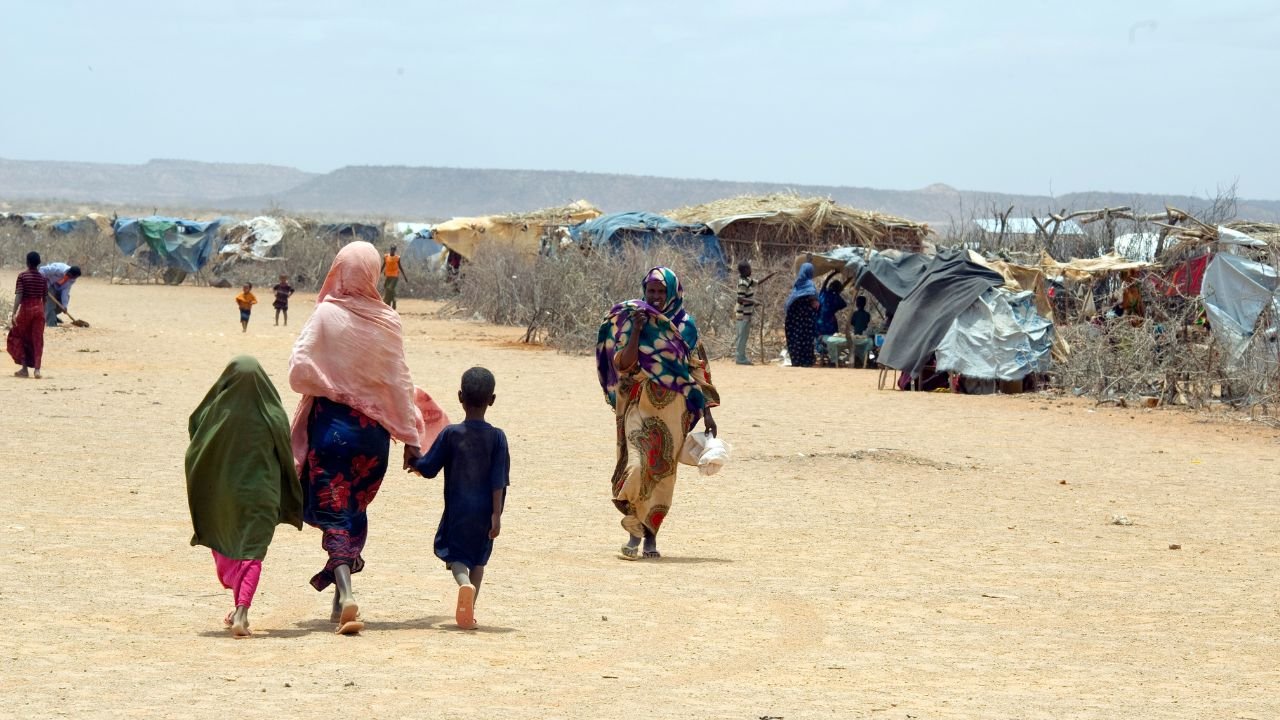
    More than a million people are displaced in Gaza but none is safe from hunger. It is rampant in Gaza, it is in the wasteland of al-Mawasi encampment in Gaza where handfuls of dirty flour are kneaded by mothers to make bread for their children. It is in the fires, stoked with plastic bottles, which produce nothing but choking black smoke. Children in Gaza no longer play but lie around, exhausted by hunger. It is in food that is rotten and makes you sick but is eaten just the same.

    Camellia Subeh talked to The Times who stated that her breasts no longer produce milk for her baby son.⁠ “My other sons keep saying, ‘Mum, I’m dizzy, I have a headache,” said the mother of five, sitting outside a shelter she built on the mud from scraps of plastic and wood. Subeh and her children left their home in northern Gaza weeks ago on the instructions of the Israel Defence Forces (IDF). They said this is a safe area. Perhaps it is safe from the bombs that have destroyed Gaza’s cities and towns but not from hunger, diseases, or thirst that will kill just the same as a bullet will. “This place is like a desert, all sand,” Subeh said. “We are so tired.” The Palestinian death toll in the Gaza Strip after nearly three months of war stands at 21,672, with more than 55,000 wounded, the territory’s health ministry said on Saturday.

    A 13-year-old, Muhammad al-Yaziji, told The Times, “I feel that this burden is very heavy for us. We became like beggars. We were not like that.”

    In an interview with the New Yorker, Arif Hussain, the chief economist at the United Nations World Food Program explains that according to a consensus-based analysis by Integrated Phase Classification, the entire population of 2.2 million people is in a food-security crisis or a worse situation implying a famine is coming because the conditions are “catastrophic”.

    Human Rights Watch drew from Israeli officials’ statements, interviews with people in the territory about the lack of food, and evidence of bombardment that has destroyed infrastructure and resources to accuse Israel in a December report of starvation as a war crime.

  • Pakistani Ambassador at UN lauded for Palestine resolution speech

    Pakistani Ambassador at UN lauded for Palestine resolution speech

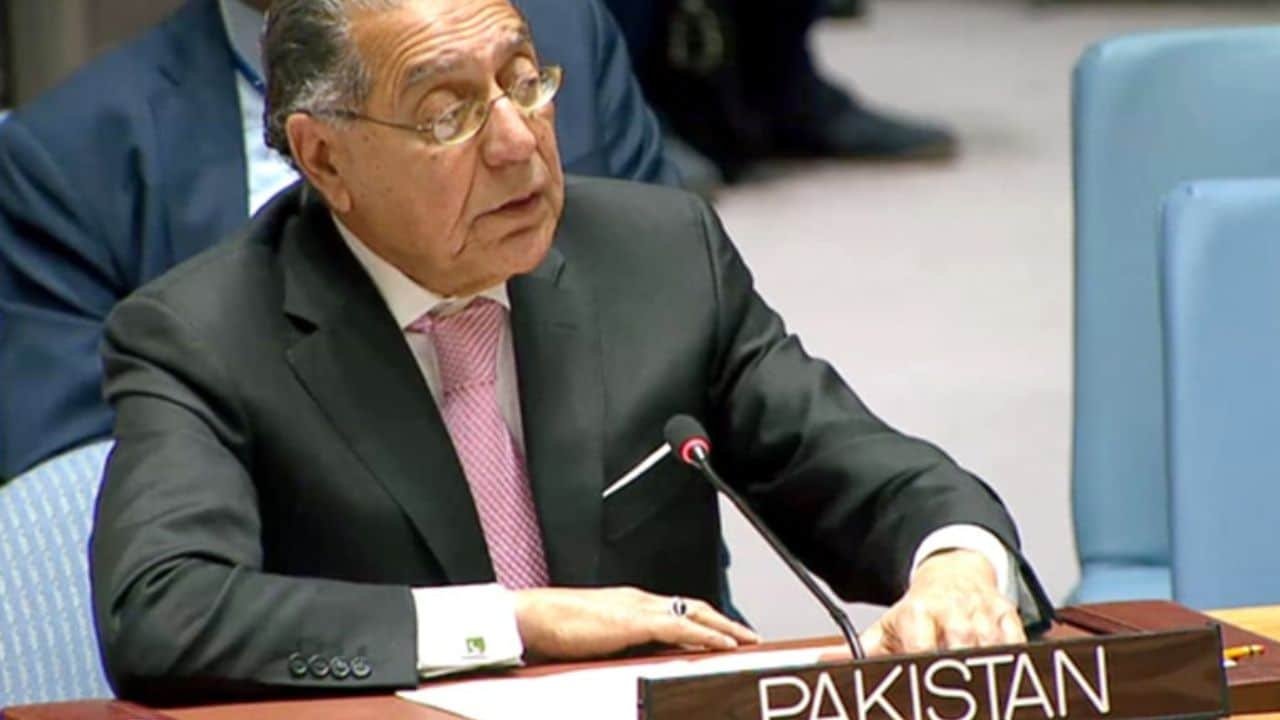
    Pakistani Ambassador to the United Nations, Munir Akram, delivered a strong statement on the war that is taking place in Gaza during the 10th Emergency Special Session on December 12.

    He expressed Pakistan’s allegiance to the resolution submitted by the Arab and Islamic countries proposing an immediate humanitarian ceasefire and release of all hostages. Ambassador Munir also criticised America, one of the permanent members, for vetoing that resolution. Calling out the friend of Israel, for proposing an amendment that “condemns one side while exonerating the other”. He called it “unfair and inequitable”.

    The Pakistani ambassador reminded the world that Israel has dropped 25,000 tons of explosives on Gaza which is nearly equivalent to the atomic bombs dropped on Hiroshima and Nagasaki. He stressed that “Israel’s goal is not to erase Hamas, this is a war against the Palestinian people, not just to erase people but to erase the entire idea of Palestine. It is the same as racial slaughter conducted by settler colonial power in the past.”

    Munir Akram ended the speech by calling out the UN that its duty should not be “to justify the genocide that is taking place.”

    Riyad Mansour, Palestinian Ambassador to the UN, especially thanked the Pakistani Ambassador for his stance and the effective speech by calling him a lawyer of the Palestinian cause in the tenth emergency session. He said that Ambassador Munir Akram shredded to pieces the amendments proposed in favour of perpetrators. He praised the Pakistani Ambassador stating that due to his efforts “even one of the opposing countries voted in favour of the resolution today”.

    Member states then adopted a resolution demanding an “immediate humanitarian ceasefire”, the immediate and unconditional release of all hostages and well as “ensuring humanitarian access”.

    It passed with a large majority of 153 in favour and 10 against, with 23 abstentions.

  • UN needs $46.4 billion for aid in ‘bleak’ 2024

    UN needs $46.4 billion for aid in ‘bleak’ 2024

    Geneva, Switzerland – The United Nations said Monday that it needed $46.4 billion next year to bring life-saving help to around 180 million people in desperate circumstances around the world.

    The UN said the global humanitarian outlook for 2024 was “bleak”, with conflicts, climate emergencies and collapsing economies “wreaking havoc” on the most vulnerable.

    While global attention focuses on the conflict raging in the Gaza Strip, the UN said the wider Middle East, Sudan and Afghanistan were among the hotspots that also needed major international aid operations.

    But the size of the annual appeal and the number of people it aims to reach were scaled back compared to 2023, following a decrease in donations.

    “Humanitarians are saving lives, fighting hunger, protecting children, pushing back epidemics, and providing shelter and sanitation in many of the world’s most inhumane contexts,” UN aid chief Martin Griffiths said in a statement.

    “But the necessary support from the international community is not keeping pace with the needs,” he said.

    The 2023 appeal was for $56.7 billion but received just 35 percent of that amount, one of the worst funding shortfall in years. It allowed UN agencies to deliver assistance and protection to 128 million people.

    With a few weeks left to go, 2023 is likely to be the first year since 2010 when humanitarian donations declined compared to the previous year.

    The UN therefore scaled down its appeal to $46.4 billion this time around, and will focus on those in the gravest need.

    72 countries

    Launching the 2024 Global Humanitarian Overview, Griffiths said the sum was nonetheless a “massive ask” and would be tough to raise, with many donor countries facing their own cost of living crises.

    “Without adequate funding, we cannot provide life-saving assistance. And if we cannot provide that assistance, people will pay with their lives,” he said.

    The appeal covers aid for 72 countries: 26 states in crisis and 46 neighbouring nations dealing with the knock-on effects, such as an influx of refugees.

    The five largest single-country appeals are for Syria ($4.4 billion), Ukraine ($3.1 billion), Afghanistan ($3 billion), Ethiopia ($2.9 billion) and Yemen ($2.8 billion).

    Griffiths said there would be 300 million people in need around the world next year — a figure down from 363 million last year.

    But the UN aims to reach only 180.5 million of those, with NGOs and aid agencies targeting the remainder — not to mention front-line countries and communities themselves who provide the first help.

    Climate impact

    The Middle East and North Africa require $13.9 billion, the largest total for any region in 2024.

    Beyond Syria, the Palestinian territories and Yemen, Griffiths also pointed to Sudan and its neighbours, and to Ukraine, Afghanistan, Venezuela and Myanmar as hotspots that needed sustained global attention.

    Ukraine is going through a “desperate winter” with the prospect of more warfare on the other side, he said.

    With the Gaza war between Israel and Hamas, plus Russia’s war in Ukraine, Griffiths said it was hard for the Sudan crisis to get the attention it deserved in foreign capitals.

    More broadly, Griffiths said climate change would increasingly impact the work of humanitarian aid workers, who would have to learn how to better use climate data to focus aid resources.

    “There is no doubt about the climate confronting and competing with conflict as the driver of need,” he said.

    “Climate displaces more children now than conflict. It was never thus before,” he said.

  • Israel strikes Gaza after failed UN ceasefire bid

    Israel strikes Gaza after failed UN ceasefire bid

    Israel pressed its offensive against Hamas in Gaza on Saturday after the United States blocked an extraordinary UN bid to call for a ceasefire in the two-month war.

    Hamas and the Palestinian Authority swiftly condemned the US veto as the Hamas-run health ministry put the latest death toll in Gaza at 17,487 people, mostly women and children.

    An Israeli strike on the southern city of Khan Yunis killed six people, while five others died in a separate attack in Rafah, the ministry said Saturday.

    Israel has vowed to eradicate Hamas over its unprecedented attack on October 7 when militants broke through Gaza’s militarised border to kill around 1,200 people and seize hostages, 138 of whom remain captive, according to Israeli figures.

    Vast areas of Gaza have been reduced to rubble and the UN says about 80 percent of the population has been displaced, with dire shortages of food, fuel, water and medicine reported.

    “It’s so cold, and the tent is so small. All I have are the clothes I wear, I still don’t know what the next step will be,” said Mahmud Abu Rayan, displaced from Beit Lahia in the north.

    A UN Security Council resolution that would have called for an immediate cease-fire was vetoed by the United States on Friday.

    US envoy Robert Wood said the resolution was “divorced from reality” and “would have not moved the needle forward on the ground.”

    Israeli Foreign Minister Eli Cohen said the cease-fire “would prevent the collapse of the Hamas terrorist organization, which is committing war crimes and crimes against humanity, and would enable it to continue ruling the Gaza Strip.”

    Hamas slammed on Saturday the US rejection of the cease-fire bid as “a direct participation of the occupation in killing our people and committing more massacres and ethnic cleansing.”

    Palestinian Prime Minister Mohammed Shtayyeh said it was “a disgrace and another blank cheque given to the occupying state to massacre, destroy and displace.”

    The veto was swiftly condemned by humanitarian groups, with Doctors Without Borders (MSF) saying the Security Council was “complicit in the ongoing slaughter.”

    Israel’s military said Friday it had struck 450 targets in Gaza over 24 hours, showing footage of strikes from naval vessels in the Mediterranean.

    The health ministry reported 40 dead near Gaza City in the north, and dozens more in Jabalia and the main southern city of Khan Yunis.

    Humanitarian Catastrophe

    Following two months of conflict and bombardment, UN chief Antonio Guterres said Friday “the people of Gaza are looking into the abyss.”

    “People are desperate, fearful and angry,” he said.

    “All this takes place amid a spiralling humanitarian nightmare.”

    Many of the 1.9 million Gazans who have been displaced by the war have headed south, turning Rafah near the Egyptian border into a vast camp.

    With the death toll of medical workers in the conflict mounting, more than a dozen World Health Organization member states submitted a draft resolution on Friday that urged Israel to respect its obligations under international law to protect humanitarians in Gaza.

    They called for Israel to “respect and protect” medical and humanitarian workers exclusively involved in carrying out medical duties, as well as hospitals and other medical facilities.

    Only 14 of the 36 hospitals in the Gaza Strip were functioning in any capacity, according to United Nations’ humanitarian agency OCHA.

    With the civilian toll mounting, US National Security Council spokesman John Kirby told reporters Friday that Washington believes Israel needs to do more to protect civilians in the conflict.

    “We certainly all recognize more can be done to… reduce civilian casualties. And we’re going to keep working with our Israeli counterparts to that end,” he said.

    The death toll also rose in the Israeli-occupied West Bank, where Israeli forces shot dead six Palestinians on Friday, the territory’s health ministry said.

    Israel said Friday it has lost 91 soldiers in Gaza.

    It said two others were wounded in a failed bid to rescue hostages overnight, and that “numerous terrorists” were killed in the operation.
    Hamas claimed a hostage was killed in the operation, and released a video purporting to show the body, which could not be independently verified.

    Hamas rocket parts, launchers and other weapons as well as a one-kilometer tunnel were found at Al-Azhar University in Gaza City, the army said, as it warned residents to move west.

  • In a rare move, UN secretary-general invokes Article 99 on Gaza

    In a rare move, UN secretary-general invokes Article 99 on Gaza

    The UN Secretary-General Antonio Guterres has invoked Article 99 of the UN Charter, calling on the Security Council to declare a ceasefire to put a stop to Israeli atrocities committed in Gaza.

    Invoking Article 99 is one of the few powers that the Charter gives the UN Secretary-General.

    In a letter written to the council’s president, Guterres cites the responsibility of the 15-member Security Council that has the obligation to maintain international peace and security, stating that the situation in Gaza and Israel “may aggravate existing threats to the maintenance of international peace and security.”

    He added that the humanitarian crisis in Gaza can have “potentially irreversible implications for Palestinians as a whole and for peace and security in the region.”

    UN Spokesperson Stéphane Dujarric explained that the move has been taken “given the scale of the loss of human life in Gaza and Israel, in such a short amount of time.”

    He described the use of Article 99 as a “dramatic constitutional move” made by Guterres in the hope that it would put more pressure on the Council – and the international community at large – to demand a ceasefire between the warring parties.

    “I think it’s arguably the most important invocation”, Dujarric told reporters at UN Headquarters, “in my opinion, the most powerful tool that he [the Secretary-General] has.”

  • 2023 set to be hottest year on record: UN

    2023 set to be hottest year on record: UN

    Geneva (AFP) – This year is set to be the hottest ever recorded, the UN said Thursday, demanding urgent action to rein in global warming and stem the havoc following in its wake.

    The UN’s World Meteorological Organization warned that 2023 had shattered a whole host of climate records, with extreme weather leaving “a trail of devastation and despair”.

    “It’s a deafening cacophony of broken records,” said WMO chief Petteri Taalas.

    “Greenhouse gas levels are record high. Global temperatures are record high. Sea level rise is record high. Antarctic sea ice is record low.”

    The WMO published its provisional 2023 State of the Global Climate report as world leaders gathered in Dubai for the UN COP28 climate conference, amid mounting pressure to curb planet-heating greenhouse gas pollution.

    United Nations chief Antonio Guterres said the record heat findings “should send shivers down the spines of world leaders”.

    The stakes have never been higher, with scientists warning that the ability to limit warming to a manageable level is slipping through humanity’s fingers.

    The 2015 Paris climate accords aimed to limit global warming to well below two degrees Celsius above pre-industrial levels — and 1.5C if possible.

    But in its report, the WMO said 2023 data to the end of October showed that this year was already around 1.4C above the pre-industrial baseline.

    ‘Not just statistics’

    The agency is due to publish its final State of the Global Climate 2023 report in the first half of 2024.

    But it said the difference between the first 10 months of this year and 2016 and 2020 — which previously topped the charts as the warmest years on record — “is such that the final two months are very unlikely to affect the ranking”.

    The report also showed that the past nine years were the hottest years since modern records began.

    “These are more than just statistics,” Taalas said, warning that “we risk losing the race to save our glaciers and to rein in sea level rise”.

    “We cannot return to the climate of the 20th century, but we must act now to limit the risks of an increasingly inhospitable climate in this and the coming centuries.”

    The WMO warned that the warming El Nino weather phenomenon, which emerged mid-year, was “likely to further fuel the heat in 2024”.

    That is because the naturally-occurring climate pattern, typically associated with increased heat worldwide, usually increases global temperatures in the year after it develops.

    The preliminary report also found that concentrations of the three main heat-trapping greenhouse gases — carbon dioxide, methane and nitrous oxide — reached record high levels in 2022, with preliminary data indicating that the levels continued to grow this year.

    Carbon dioxide levels were 50 percent higher than the pre-industrial era, the agency said, meaning that “temperatures will continue to rise for many years to come”, even if emissions are drastically cut.

    ‘Climate chaos’

    The rate of sea level rise over the past decade was more than twice the rate of the first decade of satellite records (1993-2002), it said.

    And the maximum level of Antarctic sea ice this year was the lowest on record.

    In fact, it was a million square kilometres less than the previous record low at the end of the southern hemisphere winter, the WMO said — an area larger than France and Germany combined.

    Meanwhile, glaciers in North America and Europe again suffered an extreme melt season, with Swiss glaciers losing 10 percent of their ice volume in the past two years alone, the report showed.

    Dramatic socio-economic impacts accompany such climate records, experts say, including dwindling food security and mass displacement.

    “This year we have seen communities around the world pounded by fires, floods and searing temperatures,” UN chief Guterres said in a video message.

    He called on the leaders gathered in Dubai to commit to dramatic measures to rein in climate change, including phasing out fossil fuels and tripling renewable energy capacity.

    “We have the roadmap to limit the rise in global temperature to 1.5C and avoid the worst of climate chaos,” he said.

    “But we need leaders to fire the starting gun at COP28 on a race to keep the 1.5 degree limit alive.”

  • Risk of famine in Gaza: World Food Programme

    Warnings of a possible famine in Gaza have been issued by the UN World Food Program (WFP), underlining that supplies are starkly inadequate to tackle the hunger levels reported by WFP staff in UN shelters.

    “It is highly likely that the population of Gaza, especially women and children are at high risk of famine if WFP is not able to provide continued access to food,” the WFP said in a statement on Tuesday.

    “The WFP delivered desperately needed food to more than 120,000 people in Gaza during the initial pause,” the statement read.

    “Thanks to the pause, our teams have been in action on the ground, going into areas we haven’t reached for a long time. What we see is catastrophic,” said Corinne Fleischer, the WFP’s director for the MENA and Eastern Europe Region.

    “Six days is simply not enough to provide all the assistance needed. The people of Gaza have to eat every day, not just for six days,” she added.

    The Israel-Gaza four-day truce was to end yesterday, but it has now been successfully extended for two more days in agreement to exchange more Israeli hostages from Gaza with Palestinian prisoners from Israel.

    Samer Abdeljaber, the WFP representative and country director in Palestine, reports that the program’s teams have seen “hunger, despair, and destruction” among people who have not received any aid for weeks.

    He further stated that the humanitarian pause has only provided a momentary relief, “which we hope will pave the way for long-term calm.”

    The humanitarian aid must continue, uninterrupted and without any hindrances, he added.