Tag: UNDP

  • Senator Sherry Rehman schools CDA Chairman on Twitter

    Senator Sherry Rehman schools CDA Chairman on Twitter

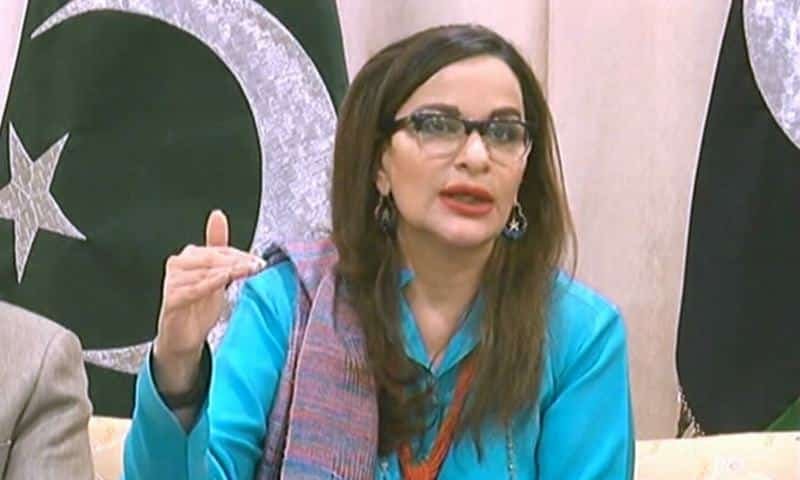
    Climate Change Minister Sherry Rehman is not one to hold back when it comes to calling out audacious ideas. Earlier this week, Capital Development Authority (CDA) Chairman Noor Ul Amin Mengal tweeted a suggestion for alleviating traffic congestion on the road to Daman e Koh and Peer Sohawa on Margalla Hills. He pondered planning a road from Peer Sohawa to Barri Imam and 3rd Avenue to make it a loop to facilitate traffic movement.

    Rehman clapped back today, reminding the Chairman of his domain of authority:

    Correcting the Chairman, Rehman stated that planning infrastructure through a Wildlife Board-protected green area is not under the CDA’s domain of authority. She reiterated that the plan is against Pakistan’s existing wildlife laws and goes against the country’s international commitments to preventing climate change. 

    Other Twitter users also chimed in with their opinions:

    Many users supported Rehman’s sharp response:

    Pakistan’s climate promise

    As part of UNDP’s Climate Promise, Pakistan intends to set a cumulative ambitious conditional target of an overall 50% reduction of its projected emissions by 2030, with a 15% reduction from the country’s own resources and a 35% reduction subjected to the provision of international grant finance.

    Cutting down trees in order to build concrete infrastructure stands decidedly against Pakistan’s Nationally Determined Contribution to the Climate Promise.

  • HIV spread in Sindh: Govt to launch mobile app for screening test

    HIV spread in Sindh: Govt to launch mobile app for screening test

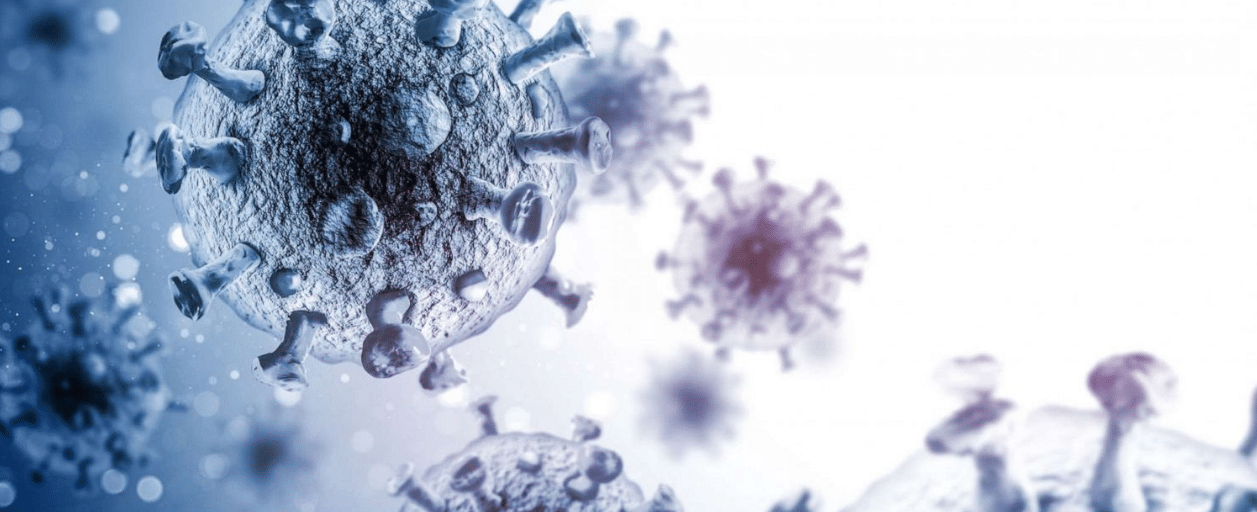
    Sindh government on Monday announced launching a mobile application for human immunodeficiency virus (HIV) screening test, Samaa has reported.

    Head of Communicable Disease Control Program of Sindh Health Department, Dr Ershad Kazmi, while addressing an awareness session on HIV at Karachi Press Club said that there are some people who want to get tested for HIV but want to keep their identity hidden.

    He said that this application is being launched for such individuals to get tested without revealing their identity.

    The UNAIDS research estimates that 0.21 million persons in Pakistan are HIV positive.

    According to Dr. Ershad, 19,766 of the 90,300 HIV-positive individuals in the country are registered in Sindh and are receiving free medical care from the government.

    1,500 transgender people were registered in Sindh through the UNDP HIV Program.

  • Pakistani elite consumes $17.4bn of economy: UNDP

    Pakistani elite consumes $17.4bn of economy: UNDP

    Economic privileges accorded to Pakistan’s elite groups, including the corporate sector, feudal landlords, the political class and the country’s powerful military, add up to an estimated $17.4 bn, or roughly 6 per cent of the country’s economy, a new United Nations (UN) report has found.

    The UN Development Programme’s (UNDP) National Human Development Report (NHDR) for Pakistan, which was released last week, focuses on issues of inequality in the South Asian country of 220 million people.

    “Powerful groups use their privilege to capture more than their fair share, people perpetuate structural discrimination through prejudice against others based on social characteristics, and policies are often unsuccessful at addressing the resulting inequity, or may even contribute to it,” says the report.

    Kanni Wignaraja, assistant secretary-general and regional chief of the UNDP has been on a two-week “virtual tour” of Pakistan to discuss the report’s findings, holding talks with Prime Minister Imran Khan and other top members of his cabinet.

    She says Pakistani leaders have taken the findings of the report “right on” and pledged to focus on prescriptive action. “[In our remarks in meetings] we focused right in on where […] the shadows are, and what is it that actually diverts from a reform agenda in a country,” she told Al Jazeera in an exclusive interview.

    “My hope is that there is strong intent to review things like the current tax and subsidy policies, to look at land and capital access.”

    The biggest beneficiary of the privileges – which may take the form of tax breaks, cheap input prices, higher output prices or preferential access to capital, land and services – was found to be the country’s corporate sector, which accrued an estimated $4.7 bn in privileges, the report says.

    The second and third-highest recipients of privileges were found to be the country’s richest 1 per cent, who collectively own 9 per cent of the country’s overall income, and the feudal land-owning class, which constitutes 1.1 per cent of the population but owns 22 per cent of all arable farmland.

    Both classes have strong representation in the Pakistani parliament. Wignaraja noted that this creates a paradox where those responsible for doling out the privileges were also those who were receiving them. The military was found to receive $1.7 bn in privileges, mainly in the form of preferential access to land, capital and infrastructure, as well as tax exemptions.

    The wide-ranging NHDR provides detailed data on deep-rooted inequality in Pakistan’s economy.

    While the richest 1 per cent held 9 per cent of the country’s income of $314.4 bn in 2018-19, the report found that the poorest 1 per cent held just 0.15 per cent. The UNDP has suggested Pakistan’s government take on increased spending that focuses on closing the gap between its Human Development Index (HDI) of 0.570 and that of other countries in the region.

    The UNDP has recommended policies that target spending on outcomes that provide both structural support for the country’s poor and on the infrastructure – such as education and healthcare – that would provide them further economic opportunities.

    “If I had just that one extra […] rupee, and you asked me where would I put it, I would put in girls education,” said Wignaraja. Pakistan ranks 153 out of 156 countries on the World Economic Forum’s Global Gender Gap Index with 32 per cent of primary-school-aged girls out of school.
  • Pakistan falls at 152 on UNDP’s human development index 2019

    Pakistan falls at 152 on UNDP’s human development index 2019

    Pakistan remains among the medium human development countries with its position falling from 151 to 152, according to the 2019 Human Development Index (HDI) released by the United Nations Development Programme (UNDP), Geo News reported

    According to the details, the UNDP’s Human Development Report (HDR) –launched on Monday in Colombia — gave Pakistan a score of 0.560.

    The score puts the country as the second last country among the Medium Human development countries. Solomon Islands is the only country behind Pakistan in the category.

    The HDI classifications are based on HDI fixed cutoff points. Countries which are below the cutoff points of less than 0.550 are categorised as low human development, while medium human development are categorised within the range of 0.550–0.699. Scores of 0.700–0.799 is for high human development and 0.800 or greater for very high human development.

    As per data, Pakistan’s life expectancy stands at 67; while the expected years of schooling was at 8.5 years, with the mean years of schooling standing at 5.2 and the country’s Gross National Income (GNI) per capita was $5,190.

    When the report was first published in 1990, Pakistan scored 0.404. The latest report gave the country a score of 0.560 which shows an overall increase in the score by 1.17%.

    However, the trend from 1990 till 2018 showed that Pakistan had steadily improved from being a low human development country to a medium development country.

    Speaking on the release of the report, Resident Representative of UNDP Pakistan Ignacio Artaza has stated, “The HDR shows us that inequality is not ‘natural’ or inevitable. However, governments, civil societies, and ordinary citizens need to work together and translate words into concrete actions to ensure that people all over the world can live their lives to their fullest potential”.