Tag: Unemployment

  • Pakistani-born British neither studying nor working: Government report

    Pakistani-born British neither studying nor working: Government report

    British government statistics from 2017 to 2019 reveal that British youth of Pakistani origin are dropping out of education.

    The British government collects data during the annual population survey. According to the report, among the British youth, the majority of young Pakistani origin ones are not studying.

    The survey revealed that this young lot is not part of any training program, nor are they employed.

    According to British government statistics, 12 per cent of Bangladeshis, 11.7 per cent of white British and 11.5 per cent of black British youth are not employed, nor attaining any education or training.

  • 98 percent of Pakistanis unhappy with country’s direction, survey

    98 percent of Pakistanis unhappy with country’s direction, survey

    Along with the country’s economy, restoring the declining confidence of Pakistani consumers is a big challenge for the caretaker government.

    Apsus Pakistan released the third quarter survey report of Consumer Confidence Index.

    According to the survey report, 98 per cent of Pakistanis are not happy with the country’s direction, while the number of Pakistanis who consider the direction to be correct has come down to merely 2 per cent.

    According to the report, Pakistanis are disappointed with the country’s economy and their own financial situation, 76 per cent of Pakistanis say the country’s economy is weak and 68 per cent say their financial situation is precarious.

    The survey also revealed that 66 per cent of Pakistanis are not optimistic about improvement in the country’s economic conditions, even in the next six months, while 60 per cent see their financial conditions becoming weaker in the future.

  • Economic crisis: 95 per cent of Pakistanis fear unemployment

    Economic crisis: 95 per cent of Pakistanis fear unemployment

    In Pakistan, 95 per cent of Pakistanis are worried about the possibility of unemployment, while only 5% are confident of job security.

    Apsus Pakistan’s new survey, based on public opinion, says that there has been a clear increase in the rate of Pakistanis claiming to be unemployed in the last one year.

    According to the survey, 95 per cent of Pakistanis are afraid of unemployment due to the country’s economic conditions, while only 5 percent are confident of job security.

    In the survey, 63 per cent said that they, or someone they know, lost their job; and 99 per cent claimed that it was difficult to buy daily necessities, while 99 per cent were not confident about buying a house or a car.

    About 96 per cent of Pakistanis expressed their inability to save and invest to meet their financial needs in the future.

  • PM Kakar highlights the positive aspect of Pakistanis going abroad for ‘better opportunities’

    PM Kakar highlights the positive aspect of Pakistanis going abroad for ‘better opportunities’

    The issue of emigration from Pakistan has gained significant traction as more than 450,000 Pakistanis have departed the country in pursuit of improved job prospects overseas during the first half of 2023. Caretaker Prime Minister Anwaar ul Haq Kakar addressed this pressing concern, emphasising the dual nature of this trend as both a challenge and an opportunity for the nation.

    Speaking to an audience at the University of Harvard’s interactive session in Islamabad, Prime Minister Kakar acknowledged the historic pattern of individuals leaving Pakistan in search of better livelihoods abroad. He highlighted the positive contributions that these expatriates make to the country through remittances, underscoring the integral role they play in supporting their families and contributing to Pakistan’s economy.

    Amid discussions about Pakistan’s desire for a constructive long-term partnership with the United States, the premier also turned the spotlight on the phenomenon of emigration. He stressed that the exodus of individuals seeking better opportunities was a recurrent trend and not exclusive to the present time. Prime Minister Kakar further asserted that the pursuit of a better life beyond national borders was a valid aspiration, echoing the sentiment that the success of these individuals, whether at home or abroad, was of paramount importance.

    Prime Minister Kakar’s address touched upon the challenges posed by high expenditures and limited resources in Pakistan. In this context, he emphasised that democracy served as a cornerstone of the nation’s strength and resilience. He commended the Pakistani populace for their ability to navigate crises with determination.

    The premier’s discourse extended to the issue of unemployment, which he identified as a concern shared by individuals both within the country and those who have sought opportunities abroad. However, Prime Minister Kakar also shed light on the positive aspects of this migration trend.

    “This is not only a challenge but also an opportunity, as these individuals bring benefits to the country through remittances,” Kakar said.

    “It is not wrong for them to go to other countries in search of better opportunities,” he said, adding that when individuals return to Pakistan, they bring not only financial assets but also valuable professional skills, enriching the country’s human capital.

    While the emigration trend remains a matter of significance, Prime Minister Kakar drew attention to the historical context. In the past, the country has witnessed varying levels of emigration, with the highest numbers recorded in 2015 and 2016. He underlined that this movement was a testament to individuals’ quest for better prospects and should be understood in that light.

  • Crisis on wheels: Pakistan’s automotive industry grapples with mass layoffs and 70% sales drop

    Crisis on wheels: Pakistan’s automotive industry grapples with mass layoffs and 70% sales drop

    The automotive industry in Pakistan is facing a severe setback as thousands of workers were laid off due to a decline in vehicle and spare parts sales. The government’s ban on raw material imports, coupled with the depreciation of the rupee and soaring inflation, has caused a significant strain on the industry. With foreign exchange reserves dwindling and the local currency hitting historic lows against the US dollar, the economic crisis has reached unprecedented levels.

    Pakistan finds itself in the midst of its most formidable economic crisis to date, as the State Bank of Pakistan’s foreign exchange reserves have plummeted to a mere $4 billion. This amount is barely sufficient to cover three weeks of imports, raising concerns about the country’s economic stability. The ban on raw material imports, implemented to prevent the outflow of US dollars, has caused a sharp decline in industrial output and triggered widespread layoffs and unemployment.

    Dollar crunch and inflation

    In the midst of the worsening dollar crunch, commercial banks have also halted the opening of letters of credit (LCs), leaving importers in a state of uncertainty regarding the provision of the necessary funds for already placed orders. This further exacerbates the challenges faced by the automotive industry, hindering its ability to procure essential raw materials and sustain production.

    The country is grappling with soaring inflation rates, which surpassed 36 per cent in April, the highest recorded since 1964. As a result, consumer purchasing power has diminished significantly, leading to a sharp decline in vehicle sales. Munir Karim Bana, Chairman of the Pakistan Association of Automotive Parts and Accessories Manufacturers (PAAPAM), laments the dire situation, stating that thousands of workers have been laid off, and production has ground to a halt. The closure of auto manufacturing plants has further exacerbated the industry’s challenges.

    Auto parts manufacturers are grappling with demurrage charges as raw materials worth billions of rupees remain stuck at the Karachi port. PAAPAM, responsible for supplying approximately 90 per cent of local vehicle parts, is bearing the burden of these charges. Furthermore, with production units closed, income streams have dried up, exacerbating the financial strain on the industry.

    Rana Ihsan Afzal, the coordinator to Prime Minister Shehbaz Sharif on commerce and industry, acknowledges that the automotive industry’s full efficiency may not be restored until the revival of the IMF bailout program. As a sector heavily reliant on imports and foreign currency, the automotive industry is particularly vulnerable to the country’s economic challenges. The delay in the staff-level agreement on the ninth review of the IMF bailout deal signed in 2019 has further hampered the industry’s prospects.

    Revival prospects and government assurance

    Amid the decline in sales and mass layoffs, the coordinator to the Prime Minister expressed his concern but assured that the government is tirelessly working to revive the economy. The coordinator acknowledges the temporary phase that necessitates import restrictions on the automotive industry to protect foreign exchange reserves. However, he remains optimistic that once reserves are replenished, the industry will experience a significant upturn.

    Pakistan’s automotive industry is facing a dire crisis, with plummeting sales, layoffs, and manufacturing plant closures. The ban on raw material imports, along with the economic challenges of soaring inflation and dwindling foreign exchange reserves, has pushed the industry to the brink. Despite the difficulties, the government is committed to revitalizing the sector and assuaging the concerns of manufacturers.

  • Pakistan’s inflation rate surges to an all-time high, reaching 38.9% in rural areas

    Pakistan’s inflation rate surges to an all-time high, reaching 38.9% in rural areas

    According to recent reports, the finance ministry’s expectations of high inflation were met due to market frictions caused by the relative demand and supply gap of essential items, exchange rate depreciation, and recent upward adjustment of administered prices of petrol and diesel. However, there was a monthly decline in the inflation rate, which dropped to 3.7 per cent in March compared to February.

    Despite this, the inflation situation has worsened significantly over the months, causing mass distress due to the high prices of almost every edible item. The core inflation rate, which excludes volatile energy and food prices, increased in March to 18.6 per cent in urban areas and 23.1 per cent in rural areas. Experts believe that Pakistan is now heading towards hyperinflation, where prices are out of control and expected to surge by 50 per cent.

    The Pakistan Bureau of Statistics (PBS) reported that the inflation rate in rural areas reached 38.9 per cent, while it surged to 33 per cent in the cities. Food inflation rose sharply to 50.2 per cent in rural areas and increased to 47.1 per cent in urban areas last month. Supply chain disruptions and weak checks have led to a substantial rise in the food inflation rate.

    Unfortunately, both the federal and provincial governments are unable to provide steady essential food supplies, and the prices of most consumer goods remain out of reach for the people. This surge in prices coincides with a significant economic slowdown, and poverty and unemployment levels are rising.

    A majority of the surge in prices was seen in rural areas where income levels were already low. The food group prices rose by 47.15 per cent in March compared to the same month last year. Both perishable and non-perishable food items witnessed unprecedented increases in prices.

    The Wholesale Price Index (WPI), which monitors prices in the wholesale market, also rose sharply to 37.5 per cent in March compared to 23.8 per cent in the same month last year. The inflation rate has remained above 20 per cent since June after the coalition government curtailed imports.

    The overall inflation rate recorded an increase in both urban and rural areas, with urban areas surging to 33 per cent in March, while rural areas soared to 38.9 per cent over the same month last year. In March last year, the inflation rate in urban areas was 11.9 per cent, while in rural areas, it stood at 13.9 per cent.

    The non-food inflation rate increased to 24.1 per cent in urban areas and 28.5 per cent in rural areas compared to 10.4 per cent and 12.5 per cent in the same month last year. Prices of non-perishable food items surged by 46.44 per cent on an annualized basis, and the prices of perishable goods surged by 51.81 per cent year-on-year.

  • ChatGPT’s impact on the job market: Which professions will be most affected?

    ChatGPT’s impact on the job market: Which professions will be most affected?

    The rise of artificial intelligence has led to concerns about job displacement and unemployment. As a large language model trained by OpenAI, ChatGPT is one such example of AI technology that has the potential to impact the workforce.

    In this article, we will explore the ways in which ChatGPT may affect jobs, and whether it is ultimately beneficial or detrimental for employees.

    What is ChatGPT?

    Before delving into the impact of ChatGPT on jobs, it is important to understand what it is and how it works. ChatGPT is a natural language processing model that uses deep learning techniques to generate human-like responses to text-based queries. It was developed by OpenAI and is based on the GPT-3.5 architecture, which enables it to understand and generate language with remarkable accuracy.

    ChatGPT can be used for a variety of purposes, including customer service, chatbots, and even creative writing. It has the ability to learn from large amounts of data, which means that it can continue to improve and become more accurate over time.

    Impact of ChatGPT on jobs

    The rise of AI technology has led to concerns about job displacement and unemployment, particularly in industries that rely heavily on manual labor or routine tasks. However, the impact of ChatGPT on jobs is more nuanced and depends on the specific industry and job type.

    To better understand the potential impact of ChatGPT on jobs, let’s take a closer look at some of the industries and job types that may be affected:

    Customer service

    One of the most obvious applications of ChatGPT is in customer service. Chatbots powered by ChatGPT can provide customers with quick and accurate responses to their queries, without the need for human intervention. This has the potential to reduce the number of customer service representatives needed, particularly for routine inquiries.

    Still, ChatGPT is not a complete replacement for human customer service representatives. While it can provide quick and accurate responses to routine inquiries, it may struggle with more complex or nuanced queries that require empathy and human judgment.

    Creative writing

    Another potential application of ChatGPT is in creative writing. ChatGPT has the ability to generate human-like responses to text-based prompts, which means that it can be used to write articles, scripts, and even novels.

    While this may seem like a threat to human writers, it is important to note that ChatGPT is not capable of original thought or creativity. It can only generate responses based on the data it has been trained on. Human writers will still be needed to create truly original and creative content.

    Data entry

    Data entry is a job that involves manually inputting data into a computer system. While this may seem like a mundane task, it is still a job that many people rely on for their livelihood. ChatGPT has the potential to automate some aspects of data entry, which may reduce the need for human data entry clerks.

    However, it may struggle with handwriting recognition, and may not be able to accurately input data from non-textual sources such as images or audio recordings.

    Benefits of ChatGPT for employees

    While there may be some potential job displacement due to the rise of ChatGPT, there are also several benefits for employees. Here are just a few:

    Quick and convenient support

    One of the most significant benefits of ChatGPT is that it provides quick and convenient support to employees. With ChatGPT, employees can quickly get answers to their questions without having to wait for a human representative. This can save employees a significant amount of time, enabling them to focus on their tasks and responsibilities more effectively.

    Improved productivity

    ChatGPT can also help to improve employee productivity. By providing fast and accurate answers to employee queries, ChatGPT can reduce the amount of time employees spend looking for information. This can free up more time for employees to focus on critical tasks, helping to improve productivity and efficiency.

    Enhanced learning and development

    ChatGPT can also be used as a tool for learning and development. By providing employees with access to a wealth of information and resources, ChatGPT can help to enhance employee knowledge and skills. This can be particularly useful for employees who are new to a job or those who are looking to expand their knowledge in a particular area.

    Increased accessibility

    Another benefit of ChatGPT is that it can increase accessibility for employees. With ChatGPT, employees can access information and support from anywhere and at any time. This can be particularly useful for remote workers or those who work outside of traditional office hours.

    Personalised assistance

    Finally, ChatGPT can offer personalised assistance to employees. By using machine learning algorithms, ChatGPT can learn about employees’ needs and preferences over time, providing more personalised support and assistance. This can help to improve the employee experience, leading to increased engagement and job satisfaction.


  • 32,000 job seekers fill stadium in Islamabad to take police force test

    32,000 job seekers fill stadium in Islamabad to take police force test

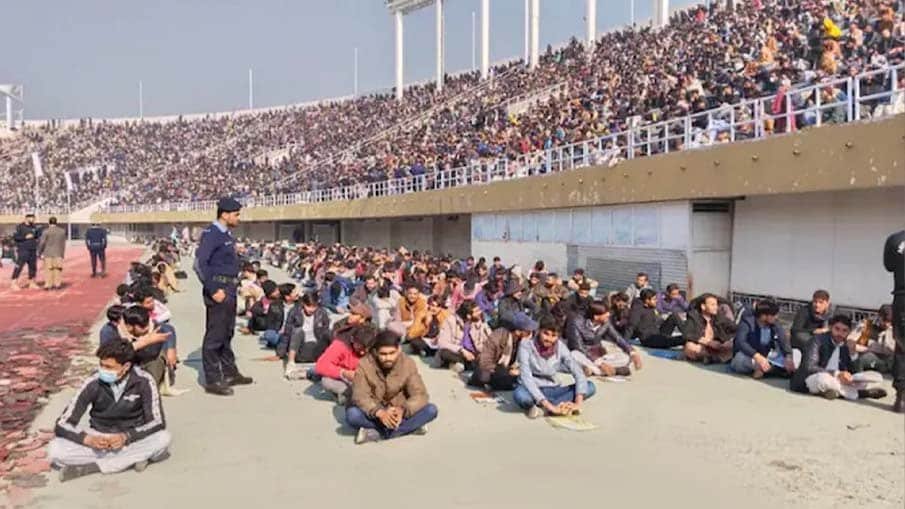
    Pakistan is facing serious financial troubles, and rising unemployment is just making matters worse for the country. Thousands of applicants can be seen seated on a stadium field to take a written test to be hired as constables by the Islamabad Police in a video that has recently surfaced on social media.

    For the written exam, which was held on Saturday at the Sports Complex in Islamabad, at least 32,000 applicants were forced to sit outside in the cold.

    For the 1,667 openings for police constables that were announced, more than 30,000 male and female applicants from all over Pakistan, according to Islamabad police, took the written test.

    The positions of police constables have been unfilled for the past five years.

    A new debate on how to increase employment in the nation has been ignited by the massive turnout at the Islamabad Police recruitment. Pakistan’s unemployment rate has peaked. The number of unemployed people is also steadily rising because there is so little hiring for government positions. Despite this, thousands of applicants are vying for open positions in the public sector.

    Over 31 per cent of the country’s youth are unemployed, according to a report published by the Pakistan Institute of Development Economics (PIDE) in 2022. There are 51 per cent girls and 16 per cent of boys among them, and many of them have professional degrees.

    Pakistan has approximately 60 per cent of its population under the age of 30, and its unemployment rate is currently 6.9 per cent. 

  • After Twitter, Meta reportedly planning ‘large-scale’ layoffs this week

    After Twitter, Meta reportedly planning ‘large-scale’ layoffs this week

    With plans to layoff thousands of employees this week, Facebook parent company Meta will join a growing list of digital companies that are reducing their workforces.

    As of September 30, Meta has over 87,000 people working for it across its various platforms, which include the social media sites Facebook and Instagram as well as the messaging service WhatsApp. According to WSJ, the social media business had reduced its ambitions to hire engineers by at least 30 per cent in June, and Mark Zuckerberg had advised staff to prepare for a slowdown in the economy.

    In his announcement of Meta’s dismal third-quarter results, CEO Mark Zuckerberg stated that the company’s headcount will not rise by the end of 2023 and might even decline significantly.

    “In 2023, we’re going to focus our investments on a small number of high-priority growth areas. So that means some teams will grow meaningfully, but most other teams will stay flat or shrink over the next year. In aggregate, we expect to end 2023 as either roughly the same size or even a slightly smaller organization than we are today,” Zuckerberg said on the last earnings call in late October.

    Profits for Meta dropped to $4.4 billion in the third quarter, a 52 percent year-over-year decline. The poor findings had a significant negative impact on Meta’s stock price, which dropped by 25 per cent in one day.

    Over the past year, the company’s market value has decreased to $600 billion.

    In a previous open letter to Mark Zuckerberg, Meta’s shareholder Altimeter Capital Management stated that the company needed to streamline by eliminating positions and capital expenditures. They also stated that investors had lost faith in Meta as a result of its increased spending and pivot to the metaverse.

    Owing to increased interest rates, rising inflation, and a European energy crisis, several technological businesses, including Microsoft Corp., Twitter Inc., and Snap Inc., have reduced workforce in recent months.

  • Beggar gifts PKR 234,000 motorbike to wife, both continue begging together

    Beggar gifts PKR 234,000 motorbike to wife, both continue begging together

    A beggar from Madhya Pradesh begged for four years and purchased a motorcycle worth Rs234,000 (INR90,000) for his wife.

    He spent all of his savings on the bike as his wife complained about a backache from sitting on the tricycle he owned earlier. This story is from Amarwara village, where the beggar, Santosh Sahu, expressed his love for his wife by purchasing a small motorcycle.

    Sahu is a disabled man who rides a tricycle and begs for money with his wife, Munni Sahu. Munni drags Sahu’s tricycle forward while the two beg.

    Munni would occasionally fall while attempting to push the tricycle due to the poor road conditions. As a result, Santosh decided to purchase her a moped.

    The pair begs for money at different spots from bus stops to mosques and temples, earning up to Rs1,000 (400 INR) per day. Santosh began saving money every day in order to purchase his wife’s dream bike. The couple is now back to their regular practise of begging in their freshly purchased motorcycle.