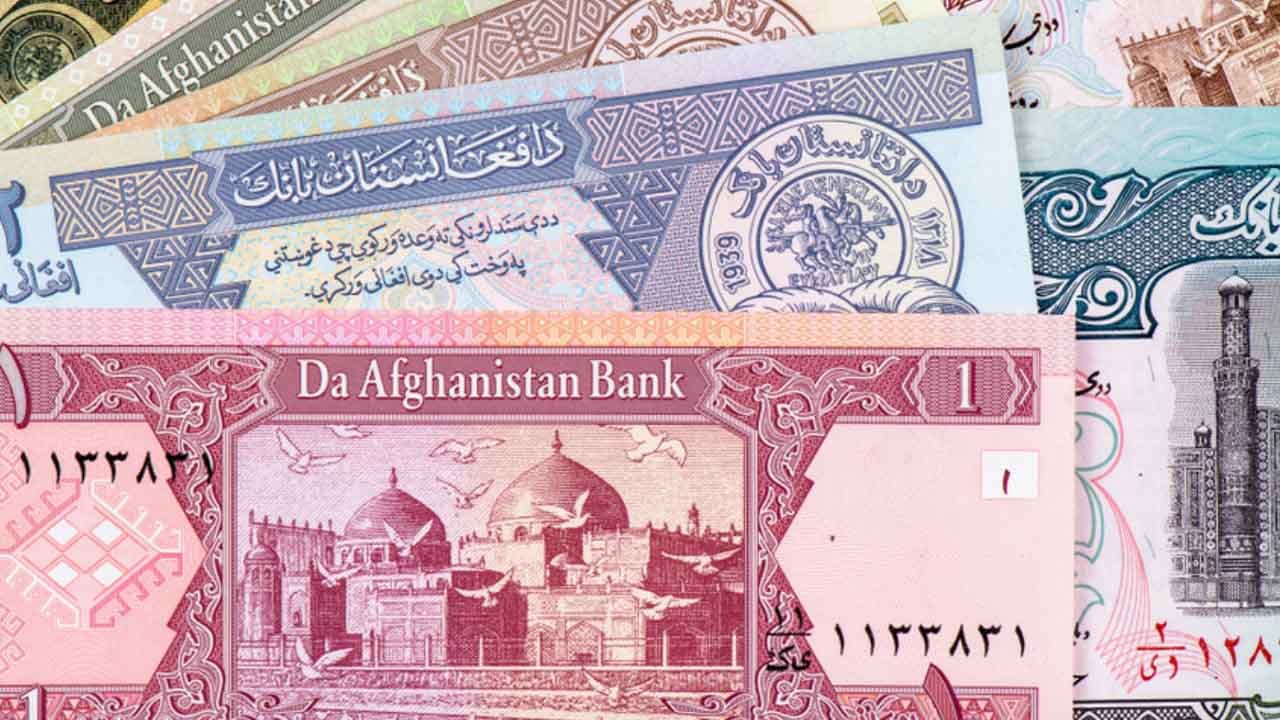
In the third quarter of 2023, the Afghani, the official currency of Afghanistan, has exhibited exceptional performance, marking itself as the standout currency in the global financial landscape. Its remarkable ascent against the US dollar, with a substantial 9 per cent surge since the commencement of July, stands as a testament to its resilience and strength.
This impressive trajectory positions the Afghani as the third-strongest performer among global currencies in 2023, trailing only behind the Colombian peso and the Sri Lankan rupee. This distinction underscores the Afghani’s resilience amid challenging economic circumstances.
In Afghanistan, the pivotal role of facilitating foreign currency transactions falls upon the numerous money exchange establishments known as “sarrafs.” These sarrafs are ubiquitous, dotting the landscapes of both urban centres and rural villages alike, serving as the lifeblood of currency exchange activities.
Among these financial hubs, the Sarai Shahzada market in Kabul takes centre stage as Afghanistan’s premier financial epicenter. It serves as a bustling hub where substantial sums of currency are traded daily, exemplifying the nation’s financial vitality. Remarkably, the central bank places no restrictions on these exchange transactions.
Due to stringent financial sanctions, a significant portion of funds flowing into Afghanistan from foreign nations now traverse through the age-old money transfer system known as Hawala. This venerable system plays a pivotal role in the operations of sarrafs, further cementing their significance in Afghanistan’s financial ecosystem.
It is noteworthy that the United Nations (UN) has identified Afghanistan’s dire need for approximately $3.2 billion in aid for the current year, with roughly $1.1 billion already disbursed. This underscores the critical importance of international assistance in alleviating the nation’s pressing humanitarian challenges.
A sombre backdrop to these financial dynamics is the fact that, just last year, the UN disbursed nearly $4 billion in aid as Afghanistan grappled with a dire famine that affected half of its 41 million citizens. This staggering statistic underscores the profound challenges faced by the Afghan population.
Since the Taliban’s resurgence in Kabul in August 2021, stringent currency controls have been imposed, disallowing the use of the US dollar and Pakistani rupee by locals and restricting online trading activities. While these measures have seemingly contributed to Afghanistan’s stability, the broader Afghan economy has suffered, with soaring unemployment rates exacerbating the nation’s humanitarian crisis.
Regrettably, a staggering 79 per cent of the population now languishes in poverty, with a distressing 44 per cent of the people unable to secure adequate nourishment. The plight of Afghanistan’s populace remains a pressing global concern, necessitating concerted efforts to address both immediate humanitarian needs and long-term economic stability.