Tag: united kingdom

  • 10 easiest European citizenships

    10 easiest European citizenships

    Many people from developing countries aspire to acquire citizenship in European states. Some countries offer relatively straightforward paths to citizenship, while others present significant challenges. Sweden stands out as the easiest country in Europe for obtaining citizenship, whereas Estonia and Latvia are the most challenging.

    A recent study by CIS analysed Eurostat immigration data from 2009 to 2021 to identify which countries have the highest and lowest rates of non-EU residents acquiring citizenship.

    The analysis revealed that the nine most challenging countries to obtain citizenship are located in Central Europe. Estonia ranks as the most difficult country for non-EU citizens to naturalise, with the lowest average acquisition rate—approximately one in 200 residents. Additionally, the acquisition rate for men in Estonia is lower at 0.58 percent compared to 0.69 percent for women.

    Latvia, the Czech Republic, and Lithuania also have acquisition rates of less than 1 percent for non-Europeans, contrasting sharply with the average of 3.56 percent across European countries. Austria, Liechtenstein, Slovakia, Slovenia, and Germany follow, granting citizenship to about one in fifty non-EU residents. Denmark, outside Central Europe, presents the next highest hurdle with an acquisition rate of 2 percent.

    Over the past decade, six of the ten most challenging countries have seen an increase in citizenship grants year-on-year, particularly Denmark, which experienced a notable rise. Germany’s acquisition rate remained stable, while Latvia, Lithuania, and Slovenia saw declines.

    Many countries implement various programs aimed at attracting foreigners, including opportunities for investment, as well as citizenship and tax benefits.

    Individuals seeking migration often favour Golden Visa and Golden Passport routes, terms that are sometimes used interchangeably despite minor distinctions.

    10 Easiest European Countries to Get Citizenship

    According to the report, Sweden ranks as the easiest country, with nearly one in ten (9.3 Perce) non-EU residents obtaining citizenship—more than double the EU average.

    Sweden boasts the highest acceptance rates for both genders, with women experiencing a slightly higher acceptance rate of 10.02 percent compared to 8.66 percent for men.

    Norway, the Netherlands, Portugal, and Iceland follow as the second to fifth easiest countries to acquire citizenship, with an acquisition rate of one in 25 (4 percent).

    Data shows that northern European countries generally have the highest citizenship acquisition rates, with Sweden, Norway, Iceland, and Finland leading the pack.

    In southern Europe, Portugal emerges as the easiest, while the Netherlands, Ireland, and the United Kingdom are the most accessible Western European states for citizenship. The UK ranks eighth, with nearly three in 50 (3.2 percent) residents granted citizenship.

    Poland and Croatia are the easiest countries in Central Europe for changing nationality, with acquisition rates of 4 percent and 3.9 percent respectively. Northern and Western Europe present the most accessible regions for nationality changes, with an acquisition rate of 5.9 percent compared to 1.9 percent in Central Europe and 3.6 percent in the South.
  • ‘Wife owns properties not only in Dubai but in UK as well,’ reveals Mohsin Naqvi

    ‘Wife owns properties not only in Dubai but in UK as well,’ reveals Mohsin Naqvi

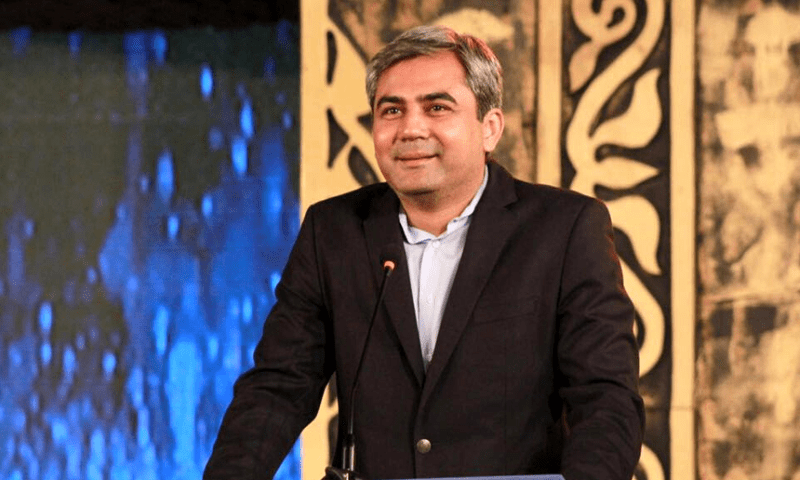
    Federal Interior Minister Mohsin Naqvi has said on Thursday that he and his wife declared their properties a decade ago. Naqvi, a media baron who became Punjab’s caretaker Chief Minister and now also holds the coveted position of Chairman, Pakistan Cricket Board (PCB), stressed that there is nothing new in the “Dubai unlocked” project. 

    Naqvi revealed that his wife not only owns properties in Dubai but also in the United Kingdom (UK).

    He gave a detailed response to the Dubai leaks in a press conference in Lahore after the leaked property records named several prominent personalities in Pakistan, including government officials, politicians, military generals, and other individuals.

    He also said that it is necessary for the national media to report about major developments, but portraying that someone owned property with illegal means is wrong.
    The former caretaker chief minister of Punjab also stated that he was not in any official position 10 to 12 years ago, but he had properties at that time as well.

  • Indian PM Narendra Modi congratulates Shehbaz Sharif

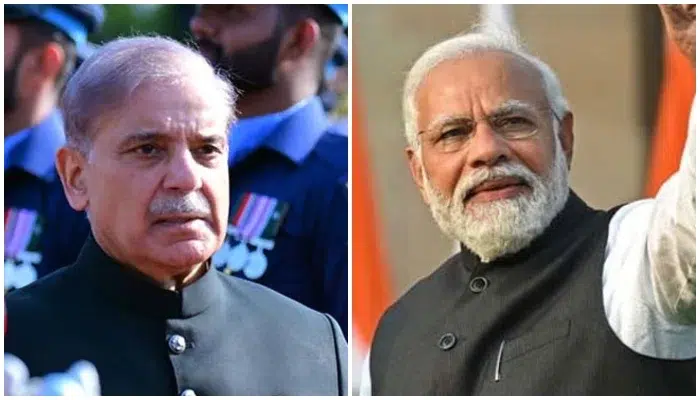
    Indian PM Narendra Modi congratulates Shehbaz Sharif

    Indian Prime Minister, Narendra Modi, congratulated Shehbaz Sharif on taking oath as the 24th prime minister of Pakistan.

    “Congratulations to @CMShehbaz on being sworn in as the Prime Minister of Pakistan,” read a short statement on the Indian prime minister’s official X handle.

    On Monday, President Dr Arif Alvi administered the oath to Shehbaz Sharif after he was elected as the 24th prime minister of Pakistan on Sunday by receiving 201 votes in the National Assembly (NA).

    Pakistan Muslim League-Nawaz (PML-N) president Shehbaz Sharif will serve the country as the Premier for the second time, after remaining the PM of Pakistan from April 2022 to August 2023.

    Various world leaders and diplomats, including Crown Prince and Prime Minister of Saudi Arabia Mohammed bin Salman, Turkey’s President Recep Tayyip Erdogan, Iran’s Ebrahim Raisi, Malaysian Prime Minister Anwar Ibrahim, United Kingdom Foreign Secretary David Cameron, US Ambassador to Pakistan Donald Blome, and others have also congratulated Shehbaz on taking the helm as the country’s chief executive.

  • Overseas remittances to Pakistan soar to $2.4 billion

    Overseas remittances to Pakistan soar to $2.4 billion

    The State Bank of Pakistan (SBP) revealed that the inflow of overseas workers’ remittances reached $2.4 billion in December 2023, marking a notable 5.4 per cent increase from the previous month’s $2.25 billion, according to data released on Wednesday.

    On a yearly basis, December’s remittances exhibited a robust growth of 13.4 per cent, totaling $2.1 billion compared to the same period in the previous year.

    These remittances continue to play a pivotal role in sustaining Pakistan’s external account, fostering economic activity, and supporting the disposable incomes of remittance-dependent households.

    Despite the December upswing, the cumulative workers’ remittances for July-December FY24 recorded a decline of 6.8 per cent Year-on-Year (YoY), amounting to $13.43 billion.

    This decrease amounted to $982.8 million compared to the $14.42 billion reported in the corresponding period of FY23.

    Saudi Arabia

    Overseas Pakistanis in Saudi Arabia led the remittance surge in December, contributing $577.6 million. This figure marked a 6 per cent increase from the previous month and over 9 per cent higher than the same month in the previous year.

    United Arab Emirates (UAE)

    Remittances from the UAE witnessed a marginal monthly increase of nearly 2 per cent, rising from $411.8 million in November to $419.2 million in December. Year-on-year, these remittances surged by almost 27 per cent.

    United Kingdom (UK)

    December saw an uptick in remittances from the United Kingdom, totaling $368 million—a 7.5 per cent increase compared to November 2023.

    European Union (EU)

    Remittances from the European Union demonstrated substantial growth, rising by 19 per cent YoY and 6 per cent on a monthly basis, reaching $284.9 million in December 2023.

    United States (US)

    Overseas Pakistanis in the United States sent $263.9 million in December 2023, reflecting an 8.5 per cent YoY increase.

    This breakdown underscores the significance of remittances from various regions, contributing to Pakistan’s economic resilience amid global challenges. 

    The upward trajectory in December bodes well for the nation’s economic prospects as it navigates through the fiscal year.

  • US-led coalition to patrol Red Sea against Houthi attacks

    US-led coalition to patrol Red Sea against Houthi attacks

    The United States on Monday announced a 10-nation coalition to quell Houthi missile and drone attacks on ships transiting the Red Sea, with Britain, France, Bahrain and Italy among countries joining the “multinational security initiative.”

    “Countries that seek to uphold the foundational principle of freedom of navigation must come together to tackle the challenge posed by this non-state actor,” US Defense Secretary Lloyd Austin said in a statement.

    Iran-backed Houthi rebels have escalated attacks on tankers, cargo ships and other vessels in the Red Sea, imperiling a transit route that carries up to 12 percent of global trade.

    The security coalition, Austin said, will operate “with the goal of ensuring freedom of navigation for all countries and bolstering regional security and prosperity.”

    It includes the United States, United Kingdom, Bahrain, Canada, France, Italy, Netherlands, Norway, Seychelles and Spain, Austin said.

    Yemen’s Iran-backed Houthi rebels said earlier they had attacked two “Israeli-linked” vessels in the Red Sea in solidarity with Gaza, as more companies halt transit through the troubled but vital waterway.

    The attacks on the Norwegian-owned Swan Atlantic and another ship identified by the Houthis as the MSC Clara are the latest in a flurry of maritime incidents that are disrupting global trade in an attempt to pressure Israel over its war against Hamas militants.

    In a statement, the Yemeni rebels said they had carried out a “military operation against two ships linked to the Zionist entity” using naval drones.

    They vowed to “continue to prevent all ships heading to Israeli ports… from navigating in the Arab and Red Seas” until more food and medicine is allowed into Gaza.

    But the Swan Atlantic’s owner, Norway’s Inventor Chemical Tankers, said in a statement the ship was carrying biofuel feedstock from France to Reunion Island.

    It said the vessel has “no Israeli link” and was managed by a Singaporean firm, adding that the Indian crew were unharmed and the vessel sustained limited damage.

    British oil giant BP became the latest to suspend transit through the Red Sea on Monday, while Taiwan shipping firm Evergreen said it was suspending its Israeli cargo shipments with immediate effect.

    Frontline, one of the world’s largest tanker companies, also said it was rerouting ships and would “only allow new business” that could be routed via South Africa’s Cape of Good Hope.

    That route is far longer and uses more fuel.

    The Red Sea attacks have forced insurance companies to significantly increase premiums on ships, making it uneconomical for some to transit through the Suez Canal.

    Italian-Swiss giant Mediterranean Shipping Company, France’s CMA CGM, Germany’s Hapag-Lloyd, Belgium’s Euronav and Denmark’s A.P Moller-Maersk — the latter accounting for 15 percent of global container freight — have all stopped using the Red Sea until further notice.

    The attacks have become “a maritime security crisis” with “commercial and economic implications in the region and beyond,” Torbjorn Soltvedt of analysis firm Verisk Maplecroft told AFP.

    Monday’s attack took place as the Pentagon chief visited Israel after a stop in Bahrain, home base of the US Navy’s Fifth Fleet.

    “In the Red Sea, we’re leading a multinational maritime taskforce to uphold the bedrock principle of freedom of navigation. Iran’s support for Houthi attacks on commercial vessels must stop,” Austin said at a news conference.

    On Saturday, a US destroyer shot down 14 drones in the Red Sea launched from rebel-controlled areas of Yemen, the US military said.
    Britain said one of its destroyers had also brought down a suspected attack drone in the area.

    Rebel spokesman Mohammed Abdul Salam said neutral Oman had launched mediation efforts to safeguard shipping using the waterway.

    “Under the sponsorship of our brothers in the Sultanate of Oman, communication and discussion continue with a number of international parties regarding operations in the Red Sea and Arabian Sea,” he said on X, formerly Twitter.

    The Gaza war broke out when its rulers Hamas launched an unprecedented attack on Israel on October 7, killing around 1,140 people and kidnapping some 250, according to an AFP tally based on official Israeli figures.

    Gaza’s health ministry says Israel’s military response has killed more than 19,450 people, mostly women and children.

  • 40 countries to hold elections in 2024, including Pakistan

    40 countries to hold elections in 2024, including Pakistan

    The new year is just over one month away and it is going to be the biggest election year in history yet.

    40 countries are scheduled to vote in 2024 across the globe which, as calculated by Bloomberg Economics, represent 41% of the world’s population and 42% of its global GDP.

    The marathon will begin with Taiwan in January and end with the US in November.

    Here are some of the prominent countries lined up for elections: Republic of the Congo, Democratic Republic of the Congo, Egypt, Gambia, and Libya in Africa; Brazil, Colombia, Mexico, Peru, the United States, and Venezuela in the Americas; Bangladesh, India, Indonesia, South Korea, Sri Lanka, Taiwan, Australia, and Pakistan in Asia and Oceania; Austria, Belarus, Belgium, the European Union, Finland, Germany, Ireland, Portugal, Russia, Spain, Turkey, Ukraine and the United Kingdom in Europe.

    There are, however, four elections that the world has eyes on — elections that are expected to alter geopolitics in the next decade.

    Russia will elect the new president in March who will govern until 2030, putting Russia-NATO relations at the forefront.

    In April-May, India will hold elections and as per analysts, Modi’s loss can push back investors.

    The European Union will conduct bloc-wide polls in June to appoint members of the European Parliament for the 2024-2029 which will be pertinent for the increasing friction between right-wing and left-wing policymakers on issues like immigration and Ukraine.

    The United States will hold legislative and presidential elections in November for 2025-2028, while everyone curiously waits whether Republicans will return to the White House or not.

  • UK Police confirms acid attack on Shahzad Akbar

    UK Police confirms acid attack on Shahzad Akbar

    The United Kingdom police have confirmed that Shahzad Akbar, a former adviser to ex-Pakistani Prime Minister Imran Khan, was attacked with acid at his residence on Sunday, as per Geo news.

    Hertfordshire police released a statement revealing that they were alerted by the ambulance service just before 4:45 pm on November 26.

    “It is believed an acidic solution was used. A 46-year-old man received hospital treatment and has now been discharged. Safety of any victim is paramount and we believe this is an isolated incident. Active enquiries are underway. Anyone who witnessed the incident or has any information which could assist with our investigation is asked to please contact police.”

    Both police sources and Akbar confirmed to Geo News that he had informed UK law enforcement authorities about feeling endangered two weeks ago, citing concerns that his new address in Royston was known to the Pakistani government.

    Imran Khan’s former advisor did so after receiving a letter from the Cabinet Division asking questions about his role in the £190 million NCA properties settlement case and Imran Khan and Bushra Bibi’s Al-Qadir Trust case.

    “I have been in touch with the UK agencies (Police, National Crime Agency (NCA), intelligence services) after my brother was arrested in Pakistan and kept in custody for many months. The letter two weeks ago came to my new address which was shocking for me because it was a clear message from the Pakistan govt that my location is known. So the police already knew about this matter.

    What was the need to send me a letter at my new address when letters were being served in Islamabad on my home address,” said Akbar.

    A source linked with the Pakistani government with full knowledge of the ongoing cases said it’s a legal requirement to serve papers to the accused’s known address. Akbar holds evidence and documents in the £190 million corruption case and he took away these state-owned papers and refused to cooperate with the inquiry, said the source claimed.

    The claim has been denied by Akbar.

    The case

    The incident took place in an area near London outside the former Pakistan Tehreek-e-Insaf (PTI) leader’s residence.

    He wrote, “Last evening I was attacked at my address in England (where I am living in exile with my family) by unknown assailant/s who threw acidic liquid at me. Thankfully my wife and children are safe, however I got some injuries but nothing life-threatening.

    Police and emergency services arrived instantly and house being protected now. I will not be intimidated nor bow down to those who are doing this.”

    Speaking to Geo News, Akbar said a delivery person came to his house and threw acid on him as soon as he opened the door. However, he said, most of the acid landed on the door and only a small amount landed on him.

    “My wife and children remained unharmed, only I got some injuries,” said the former PTI leader.

    Akbar told Geo News that he is currently living in a small village outside of London where he shifted about 1.5 months ago. He said that his new address had been leaked.

    The politician, who has been in self-exile in the UK, said that he was at home with his kids on Sunday when a delivery man wearing a helmet rang the doorbell.

    He said that as soon as he opened the door, the man threw acid on him from a bottle, adding that one side of his face and body were injured.

    He said that the suspect was dressed as a delivery boy and was traveling on a bike.

  • Shahzad Akbar allegedly attacked with acid in UK

    Shahzad Akbar allegedly attacked with acid in UK

    Former prime minister Imran Khan’s Assets Recovery Unit (ARU) head Shahzad Akbar has revealed in a tweet on X (formerly Twitter) that an unidentified man threw acid on his face at the front door of his home in the United Kingdom.

    The incident took place in an area near London outside the former Pakistan Tehreek-e-Insaf (PTI) leader’s residence.

    He wrote, “Last evening I was attacked at my address in England (where I am living in exile with my family) by unknown assailant/s who threw acidic liquid at me. Thankfully my wife and children are safe, however I got some injuries but nothing life-threatening. Police and emergency services arrived instantly and house being protected now. I will not be intimidated nor bow down to those who are doing this.”

    Speaking to Geo News, Akbar said a delivery person came to his house and threw acid on him as soon as he opened the door. However, he said, most of the acid landed on the door and only a small amount landed on him.

    “My wife and children remained unharmed, only I got some injuries,” said the former PTI leader.

    Akbar told Geo News that he is currently living in a small village outside of London where he shifted about 1.5 months ago. He said that his new address had been leaked.

    The politician, who has been in self-exile in the UK, said that he was at home with his kids on Sunday when a delivery man wearing a helmet rang the doorbell.

    He said that as soon as he opened the door, the man threw acid on him from a bottle, adding that one side of his face and body were injured.

    He said that the suspect was dressed as a delivery boy and was traveling on a bike.

  • SBP reports $112 million increase in workers’ remittances

    SBP reports $112 million increase in workers’ remittances

    In September 2023, Pakistan experienced a notable surge in workers’ remittances, marking a 5.3 per cent increase compared to August 2023.

    This uptick can be primarily attributed to a crackdown on the informal money transfer systems known as hawala and hundi.

    According to the State Bank of Pakistan (SBP), the country received remittances amounting to $2.206 billion in September 2023, up from $2.094 billion in August 2023, equating to a $112 million rise.

    The majority of remittance inflows for September 2023 were derived from several key sources, with Saudi Arabia contributing $538.2 million, the United Arab Emirates $400 million, the United Kingdom $311.1 million, and the United States of America $263.4 million.

    This increase in remittances can be linked to the fact that a substantial number of Pakistani expatriates resorted to using the Hawala/Hundi channels during the initial two months of the fiscal year, largely due to a significant disparity between official and unofficial exchange rates.

    Subsequently, strict enforcement measures against illegal currency dealers have curbed this volatility, leading to a gradual appreciation of the Pakistani rupee in both the interbank and open currency markets.

    In the last month, the rupee has rebounded by 9 per cent, recovering from its record low of 307.1 against the dollar on September 5. The crackdown on these illicit currency dealers has also contributed to the 5 per cent month-on-month increase in remittances for September.

    However, when examining the entire first quarter of fiscal year FY24, the overall home remittances to Pakistan have experienced a sharp decline of 20 per cent, totalling $1.57 billion. Home remittances for the July-September period of FY24 amounted to $6.33 billion, a decrease from $7.90 billion during the same period in the previous fiscal year, FY23.

    During this initial quarter, remittances from all major sources displayed a downward trajectory. Specifically, home remittances from Saudi Arabia decreased by 22 per cent to $1.516 billion for July–September in FY24, down from $1.946 billion in the equivalent period in FY23.

  • Faisalabad man murders female colleague in London

    Faisalabad man murders female colleague in London

    Muhammad Arslan has been jailed in the U.K for suffocating one of his female colleagues with a face mask and then hiding her body in a suitcase, Geo News reports.

    Arslan, 27, claimed to have forced a face mask into the mouth of 21-year-old Hina Bashir in order to “quieten” her after he confronted her over alleged nude photographs that had been sent out. The prosecution rejected his explanation as “elaborate and concocted”, asserting he had killed Hina out of anger and jealousy.

    Both Arslan and Hina had grown up together in the same village in Faisalabad. Arslan would try to approach Hina romantically, but she rejected his advances. Within months of her moving to the UK in November 2021, Arslan followed her.

    On the eve of July 11 last year, Hina and two of her friends visited Arslan’s shared flat in Ilford, east London, in order to collect some belongings she had left there while she was moving. Hina went up alone, and that was the last time her friends saw her alive, Geo reports.

    Arslan admitted manslaughter on the first day of his trial but denied murder and concealing Hina’s body. However, a jury at the Old Bailey found him guilty on all charges.

    Judge Richard Marks KC sentenced him to life imprisonment with a minimum term of 20 years for the murder and five years running concurrently for his heinous crime.

    The judge told Arslan: “I am satisfied…that your unrequited feelings for Hina boiled over and resulted in you taking hold of a facemask and forcing it into the back of her mouth which led to her collapse and ultimately to her death from asphyxiation.”

    He added that Arslan’s prime motivation was to save himself after killing Hina, hence the “campaign of lies” to conceal his crime, before disposing of her body in a “shocking and callous manner”. Arslan had hid her body in a suitcase overnight, before traveling to an industrial estate to hide the suitcase in undergrowth on the side of a lane, evidence reveals.

    The Judge declared it was apparent that Arslan had been “obsessed” with Hina, feelings clearly not reciprocated. He went on to say that he was extremely skeptical of the claim that he had been sent naked photos of Hina prior to the attack, as “no such photos were ever recovered”.

    In an interview with Geo, the victim’s father, Bashir Khan, stated, “even animals would treat my daughter better.”