Tag: United States

  • US, Israel warn of response to Iranian missile attack

    US, Israel warn of response to Iranian missile attack

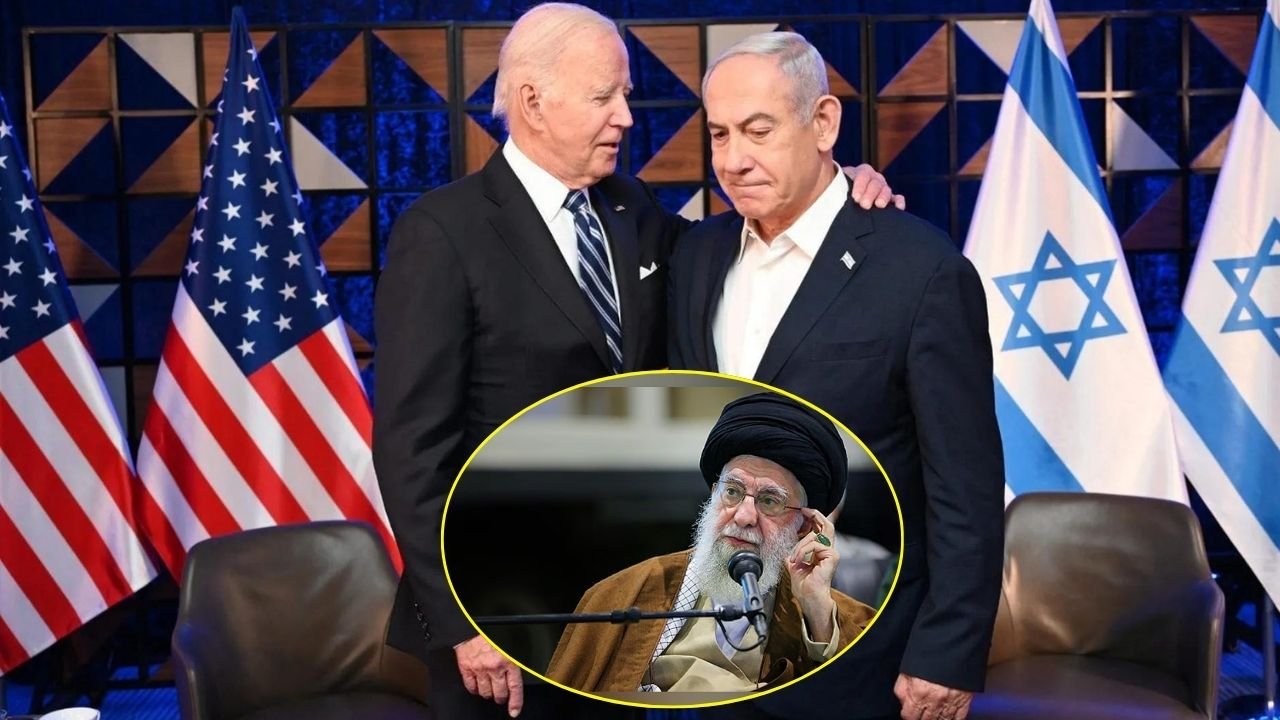
    The United States said it was discussing a joint response after Iran fired a barrage of missiles at Israel, warning Tehran of “severe consequences”.

    Israel vowed it would make Iran “pay” after the attack late Tuesday, with most of the missiles intercepted, and pledged to immediately strike “the Middle East powerfully”.

    Tehran, in turn, threatened to strike infrastructure across Israel if its territory was attacked.

    President Joe Biden said the United States was “fully supportive” of Israel after the missile attack, adding that he would discuss a response with Israeli Prime Minister Benjamin Netanyahu.

    Asked by reporters what the response towards Iran would be, Biden replied: “That’s in active discussion right now.”

    Missiles shot down

    Sirens sounded across Israel after Iran unleashed the missiles, most of which were intercepted by Israeli air defences or by allied air forces.

    Iranian state media reported 200 missiles were fired at Israel, including hypersonic weapons for the first time, which the Revolutionary Guards said had targeted “three military bases” around Tel Aviv and others elsewhere.

    Iran’s Foreign Minister Abbas Araghchi posted on social media platform X that Tehran’s “action is concluded unless the Israeli regime decides to invite further retaliation”.

    The Revolutionary Guards earlier said the attack was in response to Israel’s killing of Hezbollah leader Hassan Nasrallah last week, as well as the death of Hamas leader Ismail Haniyeh in a Tehran bombing widely blamed on Israel.

    Israeli medics reported two people lightly injured by shrapnel. In the occupied West Bank, a Palestinian was killed in Jericho “when pieces of a rocket fell from the sky and hit him”, the city’s governor, Hussein Hamayel, told AFP.

    It was Iran’s second direct attack on Israel after a missile and drone attack in April in response to a deadly Israeli air strike on the Iranian consulate in Damascus.

    ‘Severe consequences’

    US Defense Secretary Lloyd Austin slammed an “outrageous act of aggression” by Iran, while Biden’s National Security Advisor Jake Sullivan told reporters there would be “severe consequences”.

    Netanyahu said, “Iran made a big mistake tonight and will pay for it.”

    Iran reacted by threatening to fire “with bigger intensity” if its territory is attacked, with Major General Mohammad Bagheri warning Tehran would target “all infrastructure” in Israel.

    Following the missile barrage, Israeli military spokesman Rear Admiral Daniel Hagari vowed the air force “will continue to strike (tonight) in the Middle East powerfully”.

    The military subsequently announced it was bombarding Hezbollah targets in Beirut, with a Lebanese security source telling AFP that Israel had hit the city’s southern suburbs at least five times overnight.

    UN chief Antonio Guterres led international calls to stem the “broadening conflict in the Middle East”, saying in a statement: “This must stop. We absolutely need a ceasefire.”

    While Iran-backed groups across the region had already been drawn into the Gaza genocide, sparked after October 7, Tehran had largely refrained from direct attacks on its regional enemy.

    Iranian President Masoud Pezeshkian said his country had exercised its “legitimate rights” and dealt “a decisive response… to the Zionist regime’s aggression”.

    Israel, Iraq and Jordan — which lie between Iran and Israel — closed their airspace, as did Lebanon before reopening.

    US boosts forces

    The escalation came after the Israeli military said early Tuesday that troops had started “targeted ground raids” in south Lebanon, across Israel’s northern border.

    The move came despite growing calls for de-escalation after a week of air strikes that killed hundreds in Lebanon.

    Lebanon’s health ministry said later that the latest Israeli strikes had killed a further 55 people on Tuesday.

    Lebanon’s disaster management agency said 1,873 people had been killed since Israel and Hezbollah began trading cross-border fire after the Gaza genocide started a year ago.

    Iran has said Nasrallah’s killing would bring about Israel’s “destruction”, though its foreign ministry said Monday that Tehran would not deploy any troops to confront Israel.

    The Pentagon said Washington was boosting its forces in the Middle East by a “few thousand” troops.

    Deadly strikes on Gaza

    In Lebanon, the UN peacekeeping mission said the Israeli offensive did not amount to a “ground incursion”, and Hezbollah denied that any troops had crossed the border.

    There was no way to immediately verify the claims, which came as Israel struck south Beirut, Damascus and Gaza.

    Israel says it seeks to dismantle Hezbollah’s military capabilities and restore security to northern Israel, where tens of thousands have been displaced by nearly a year of cross-border fire.

    Hezbollah, which suffered heavy losses in a spate of attacks last month, said it targeted Israeli military bases on Tuesday.

    In Gaza, the civil defence agency said Israeli bombings killed 19 people on Tuesday.

    The Israeli military said troops opened fire Tuesday on “dozens” of Palestinians in central Gaza they saw as an “immediate threat”. At least some were hit, it added.

    While the death toll in Israel stands at 1205, more than 41,638 people in Gaza have been killed so far since last year.

    ‘Lost my home’

    Hezbollah began low-intensity strikes on Israeli troops a day after October 7, which triggered Israel’s devastating assault on Gaza.

    The escalating violence in Lebanon has killed more than 1,000 people since September 17, Health Minister Firass Abiad said.

    Lebanese Prime Minister Najib Mikati said there could be as many as one million people displaced from their homes in the country, with authorities registering almost 240,000 crossings into Syria since September 23.

    In central Beirut, Youssef Amir, displaced from southern Lebanon, said: “I have lost my home and relatives in this war, but all of that is a sacrifice for Lebanon, for Hezbollah”.

    Beirut resident Elie Jabour, 27, told AFP that despite opposing Hezbollah “politically… I support them defending the border”.

  • Regime change ‘America’ ki sazish hai, Shiekh Hasina

    Regime change ‘America’ ki sazish hai, Shiekh Hasina

    Bangladesh’s former Prime Minister (PM) Shiekh Hasina has accused the US of being involved in the regime change in Bangladesh.
    According to NDTV, before leaving the country, Hasina wanted to address the nation but couldn’t because protestors stormed her official residence.

    Hasina shared details of her undelivered speech with close associates in India.
    A letter accessed by NDTV reveals, “I resigned so that I did not have to see the procession of dead bodies. They wanted to come to power over the dead bodies of students, but I did not allow it’’.
    Hasina wrote that she could have remained in power if she had “surrendered the sovereignty of Saint Martin Island and allowed America to hold sway over the Bay of Bengal.”

    “I beseech the people of my land, please do not be manipulated by radicals.”

    It also further added: “Maybe if I had stayed in the country, more lives would have been lost. I have removed myself. You were my strength and did not want me, so I left. I have lost, but the people of Bangladesh have won, the people for whom my father and my family died’’.

  • World not ready for climate change-fueled wildfires: experts

    World not ready for climate change-fueled wildfires: experts

    The world is unprepared for the increasing ferocity of wildfires turbocharged by climate change, scientists say, as blazes from North America to Europe greet the northern hemisphere summer in the hottest year on record.

    Wildfires have already burned swathes through Turkey, Canada, Greece and the United States early this season as extreme heatwaves push temperatures to scorching highs.

    While extra resources have been poured into improving firefighting in recent years, experts said the same was not true for planning and preparing for such disasters.

    “We are still actually catching up with the situation,” said Stefan Doerr, director of the Centre for Wildfire Research at the UK’s Swansea University.

    Predicting how bad any one blaze will be — or where and when it will strike — can be challenging, with many factors including local weather conditions playing into calculations.

    But overall, wildfires are getting larger and burning more severely, said Doerr, who co-authored a recent paper examining the frequency and intensity of such extreme events.

    A separate study published in June found the frequency and magnitude of extreme wildfires appeared to have doubled over the past 20 years.

    By the end of the century, the number of extreme wildfires around the globe is tipped to rise 50 percent, according to a 2022 report by the UN Environment Programme.

    Doerr said humanity had not yet faced up to this reality.

    “We’re clearly not well enough prepared for the situation that we’re facing now,” he said.

    Climate change is a major driver, though other factors such as land use and the location of housing developments play a big part.

    Fires do not respect borders so responses have evolved between governments to jointly confront these disasters, said Jesus San-Miguel, an expert for the European Commission Joint Research Centre.

    The EU has a strong model of resource sharing, and even countries outside the bloc along the Mediterranean have benefited from firefighting equipment or financial help in times of need, San-Miguel said.

    But as wildfires become increasingly extreme, firefighting simply won’t be a fix.

    “We get feedback from our colleagues in civil protection who say, ‘We cannot fight the fires. The water evaporates before it reaches the ground,’” San-Miguel said.

    Wildfires have already burned swathes through Turkey as extreme heatwaves push temperatures to scorching highsMahmut BOZARSLAN

    “Prevention is something we need to work on more,” he added.

    Controlled burns, grazing livestock, or mechanised vegetation removal are all effective ways to limit the amount of burnable fuel covering the forest floor, said Rory Hadden from the University of Edinburgh.

    Campfire bans and establishing roads as firebreaks can all be effective in reducing starts and minimising spread, said Hadden, an expert on fire safety and engineering.

    But such efforts require funding and planning from governments that may have other priorities and cash-strapped budgets, and the return is not always immediately evident.

    “Whatever method or technique you’re using to manage a landscape… the result of that investment is nothing happens, so it’s a very weird psychological thing. The success is: well, nothing happened,” said Hadden.

    Local organisations and residents often take the lead in removing vegetation in the area immediately around their homes and communities.

    But not everyone is prepared to accept their neighbourhood might be at risk.

    ‘People don’t think that it will happen to them, but it eventually will,’ fire expert Jesus San-Miguel saidETIENNE TORBEY

    “People don’t think that it will happen to them, but it eventually will,” San-Miguel said, pointing to historically cold or wet climates like the US Pacific Northwest that have witnessed major fires in recent years.

    Canada has adapted to a new normal of high latitude wildfires, while some countries in Scandinavia are preparing for ever-greater fire risk.

    But how best to address the threat remains an open question, said Guillermo Rein from Imperial College London, even in places where fire has long been part of the landscape.

    Even in locations freshly scarred by fire, the clearest lessons are sometimes not carried forward.

    “People have very short memories for wildfires,” said Rein, a fire science expert.

    In July 2022, London witnessed its worst single day of wildfires since the bombings of World War II, yet by year’s end only academics were still talking about how to best prepare for the future.

    “While the wildfires are happening, everybody’s asking questions… When they disappear, within a year, people forget about it,” he said.

  • Who is the richest man on the planet?

    The American magazine Forbes has released its list of the richest people in the world for 2024.

    The list indicates that the number of billionaires around the world has reached an all-time high and their wealth has increased significantly over the past one year.

    141 more people became billionaires during the year and a total 2781 people are included in the list. The total wealth of these people is around fourteen thousand and two hundred billion dollars, which in comparison to 2023 is two thousand billion dollars higher. Two-thirds of billionaires got richer, with the world’s 20 richest people earning a combined total of $700 billion a year, according to Forbes. The highest number of billionaires in the world reside in the United States with 813, followed by China with 473, and India with 200.

    France’s Bernard Arnault has been named the world’s richest person in the 2024 list with assets worth $233 billion. This is the second year in a row that he has received the title, having topped last year’s list with $211 billion, his assets having increased by $22 billion in one year.

    Tesla and SpaceX owner Elon Musk is second on the list with $195 billion.

    Amazon founder Jeff Bezos came in third with a net worth of $195 billion, while Meta’s CEO Mark Zuckerberg came in fourth with $177 billion.
    India’s Mukesh Ambani was declared the 9th richest person in the world and the richest person in Asia with 116 billion dollars.

    The richest woman in the world is Francoise Bettencourt Meyers of France, who owns 99.5 billion dollars, while she is on the 15th place in the list of the richest people in the world.

    Alice Walton is the second richest woman in the world (21st overall) with $72.3 billion, while Julia Koch is the third (23rd overall) richest woman with $64.3 billion.

  • ‘Pakistan has credible evidence regarding Indian Agents orchestrating extra-territorial assassinations’, Foreign Secretary Syrus Qazi

    ‘Pakistan has credible evidence regarding Indian Agents orchestrating extra-territorial assassinations’, Foreign Secretary Syrus Qazi

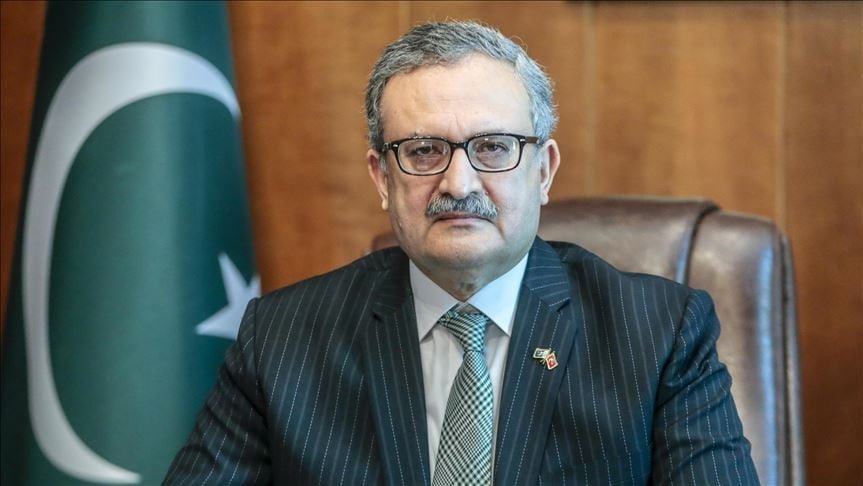
    In a press conference held on Thursday, Pakistan’s Foreign Secretary Syrus Qazi revealed what he termed as “credible evidence” linking Indian agents to the orchestrated killings of two Pakistani citizens on Pakistani soil.

    Qazi characterized the alleged actions as part of a “sophisticated and sinister” Indian campaign involving extra-territorial and extra-judicial assassinations.

    “These are killings-for-hire cases involving a sophisticated international set-up spread over multiple jurisdictions,” Qazi told reporters during a press conference in Islamabad.

    The strained relations between Pakistan and India, exacerbated by historical tensions and border disputes, took a hit with the arrest of spy Kulbushan Yadav in 2016 and the 2019 revocation of the special status of Indian Illegally Occupied Jammu and Kashmir (IIOJK). The move led to a freeze in diplomacy and trade between the two neighboring nations.

    Qazi’s statements come months after both Canada and the United States separately accused Indian agents of involvement in assassination attempts on their soil. While India rejected Ottawa’s allegations, it initiated an investigation into Washington’s claims.

    Providing details of the alleged Indian campaign, Qazi claimed that Indian agents utilized technology and safe havens on foreign soil to carry out assassinations in Pakistan.

    “They recruited, financed, and supported criminals, terrorists, and unsuspecting civilians to play defined roles in these assassinations,” he added.
    The foreign secretary blasted Indian media and social media accounts for their quick claims and glorification of the said killings as “successful retribution against ‘enemies’ of India” and projecting their capacity to carry out these illegal acts.
    “Potential assassins were recruited, using social media, talent spotters, and fake Da’esh accounts,” Qazi said.

    The Foreign Secretary criticized Indian media and social media accounts for glorifying the killings and projecting them as successful retribution against perceived enemies.

    He alleged that potential assassins were recruited through social media, talent spotters, and fake Da’esh accounts.

    Qazi focused on two specific cases during the press conference: the assassinations of Shahid Latif and Muhammad Riaz.

    Assassination of Shahid Latif
    Qazi said that on October 11, 2023, a group of criminals assassinated Latif outside a mosque in the city of Sialkot.
    A detailed investigation revealed that an Indian agent, Yogesh Kumar, based in a third country orchestrated the assassination through criminals and terrorists, he added.
    Going deeper into the details of the killing, the foreign secretary revealed that Kumar recruited Muhammad Umair, a labourer in that third country to act as a contact with local criminals in Pakistan to trace and assassinate Latif.
    The recruited local criminals were able to locate and trace Latif, however, the killers-for-hire were unable to carry out the execution, Qazi added.
    “After some failed attempts, Muhammad Umair was personally sent to Pakistan to carry out the assassination. Muhammad Umair organised a team of five target killers which after the first failed attempt on 9 October 2023, succeeded in assassinating Shahid Latif on 11 October 2023.”
    The foreign secretary further stated that the law enforcement authorities apprehended the target killers, including Umair, based on confessional statements and technical evidence, thwarting their bid to flee Pakistan on October 12, 2023.
    Qazi said that all those involved in reconnaissance and killing have been apprehended and are being tried in a court of law.
    He added that the FO also had evidence of transactions made in the process linking the entire chain to Indian agent Yogesh Kumar.
    Assassination of Muhammad Riaz
    Sharing the details of the second extra-territorial killing, Qazi said that another Indian agent was involved in killing of Pakistani national Muhammad Riaz. As per the foreign secretary, Riaz was assassinated in a mosque in Rawalakot during Fajr prayer on September 8, 2023.
    He said that the law enforcement agencies tracked and apprehended the killer, Muhammad Abdullah Ali, on September 15, 2023, while boarding a flight at Jinnah International Airport, Karachi.
    “Interrogation revealed that Muhammad Abdullah Ali was recruited and guided by Indian agents Ashok Kumar Anand and Yogesh Kumar. Indian agents utilised social media app Telegram to recruit Muhammad Abdullah Ali, who was asked to locate Muhammad Riaz,” Qazi revealed.
    He further stated that Ali received payments through the middlemen based in a third country, and he was also provided with weapons and ammunition.
    “After a failed attempt on September 7, 2023, Muhammad Abdullah Ali succeeded in killing Muhammad Riaz on September 8, 2023,” he added.
    Later, the law enforcement authorities apprehended the killer, his supporters and facilitators from various cities of Pakistan, and the case is being tried in a court of law.
    Qazi said that the investigators quickly identified the facilitators inside the country and in the third countries on the basis of confessional statements of Ali and technical evidence.
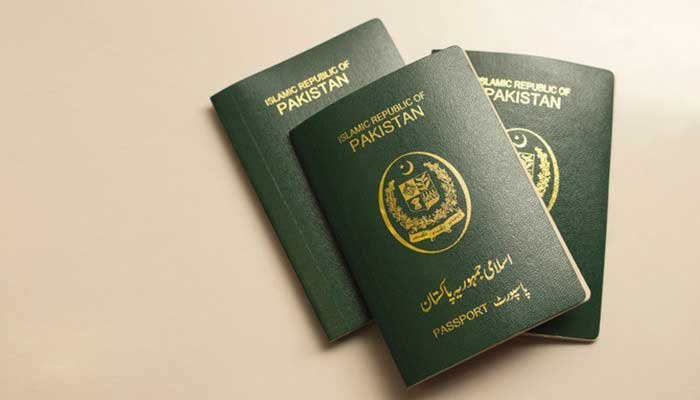
    “We have documentary, financial and forensic evidence of the involvement of the two Indian agents, who masterminded these assassinations. We are releasing the passport details of Yogesh Kumar and Ashok Kumar,” he added.
    per the foreign secretary, Pakistan had reached out to the governments of the relevant third countries in this regard.

    The Foreign Secretary asserted that Pakistan had evidence linking the entire chain of events to the Indian agents and called for international accountability for India’s “blatant violation of international law.”

    He emphasized that such actions not only violated Pakistan’s sovereignty but also breached the UN Charter.

    Concluding his remarks, Qazi demanded justice for the victims, their facilitators, and financiers involved in the alleged assassinations, reaffirming Pakistan’s commitment to protecting its people and securing its sovereignty.

    The accused Indian agents’ passport details were also disclosed, and Pakistan reportedly reached out to the relevant third countries regarding the matter.

  • Pakistani passport once again least powerful

    Pakistani passport once again least powerful

    Henley & Partners‘ Passport Index has published a list portraying the world’s travel access hierarchy.

    Top on the list of countries that encourage travelling are France, Germany, Italy, Japan, Singapore, and Spain, whose citizens can visit an astounding 194 destinations without requiring arduous visa procedures. This group of countries offer passport-to-plane experience, setting the bar high for unmatched worldwide mobility.

    With access to 193 locations, Finland, South Korea, and Sweden share second place. Many visa-free or visa-on-arrival options are available to their well-travelled inhabitants, providing access to a variety of cultures and environments.

    Austria, Denmark, Ireland, and the Netherlands take third place with access to 192 destinations. These nations serve as entry points to a wide range of travel opportunities.

    The long list goes on, honouring countries that place a high priority on global connection. Among the notable entries are the United States, Canada, Greece, Switzerland, and New Zealand, all of which provide their inhabitants with an abundance of travel options.

    On the other hand, the Passport Index identifies states with more limited travel options. Afghanistan, Syria, Iraq, and Pakistan are among the least accessible, offering their passport holders entry to just 34 countries that require no visa or one upon arrival.

    The London-based company, which offers residency and citizenship consultancy services, teamed together with the International Air Transport Association to create a unique ranking that takes into account passport holders’ access to countries without a visa or with one upon arrival.

  • Overseas remittances to Pakistan soar to $2.4 billion

    Overseas remittances to Pakistan soar to $2.4 billion

    The State Bank of Pakistan (SBP) revealed that the inflow of overseas workers’ remittances reached $2.4 billion in December 2023, marking a notable 5.4 per cent increase from the previous month’s $2.25 billion, according to data released on Wednesday.

    On a yearly basis, December’s remittances exhibited a robust growth of 13.4 per cent, totaling $2.1 billion compared to the same period in the previous year.

    These remittances continue to play a pivotal role in sustaining Pakistan’s external account, fostering economic activity, and supporting the disposable incomes of remittance-dependent households.

    Despite the December upswing, the cumulative workers’ remittances for July-December FY24 recorded a decline of 6.8 per cent Year-on-Year (YoY), amounting to $13.43 billion.

    This decrease amounted to $982.8 million compared to the $14.42 billion reported in the corresponding period of FY23.

    Saudi Arabia

    Overseas Pakistanis in Saudi Arabia led the remittance surge in December, contributing $577.6 million. This figure marked a 6 per cent increase from the previous month and over 9 per cent higher than the same month in the previous year.

    United Arab Emirates (UAE)

    Remittances from the UAE witnessed a marginal monthly increase of nearly 2 per cent, rising from $411.8 million in November to $419.2 million in December. Year-on-year, these remittances surged by almost 27 per cent.

    United Kingdom (UK)

    December saw an uptick in remittances from the United Kingdom, totaling $368 million—a 7.5 per cent increase compared to November 2023.

    European Union (EU)

    Remittances from the European Union demonstrated substantial growth, rising by 19 per cent YoY and 6 per cent on a monthly basis, reaching $284.9 million in December 2023.

    United States (US)

    Overseas Pakistanis in the United States sent $263.9 million in December 2023, reflecting an 8.5 per cent YoY increase.

    This breakdown underscores the significance of remittances from various regions, contributing to Pakistan’s economic resilience amid global challenges. 

    The upward trajectory in December bodes well for the nation’s economic prospects as it navigates through the fiscal year.

  • Imam shot dead outside mosque in New Jersey, suspect still at large

    Imam shot dead outside mosque in New Jersey, suspect still at large

    An imam who was shot Wednesday outside a mosque in New Jersey has died, the US state’s attorney general said, adding that the killing did not initially appear to be driven by “bias” or domestic terrorism.

    The shooting was reported at Masjid Muhammad-Newark at South Orange Avenue.

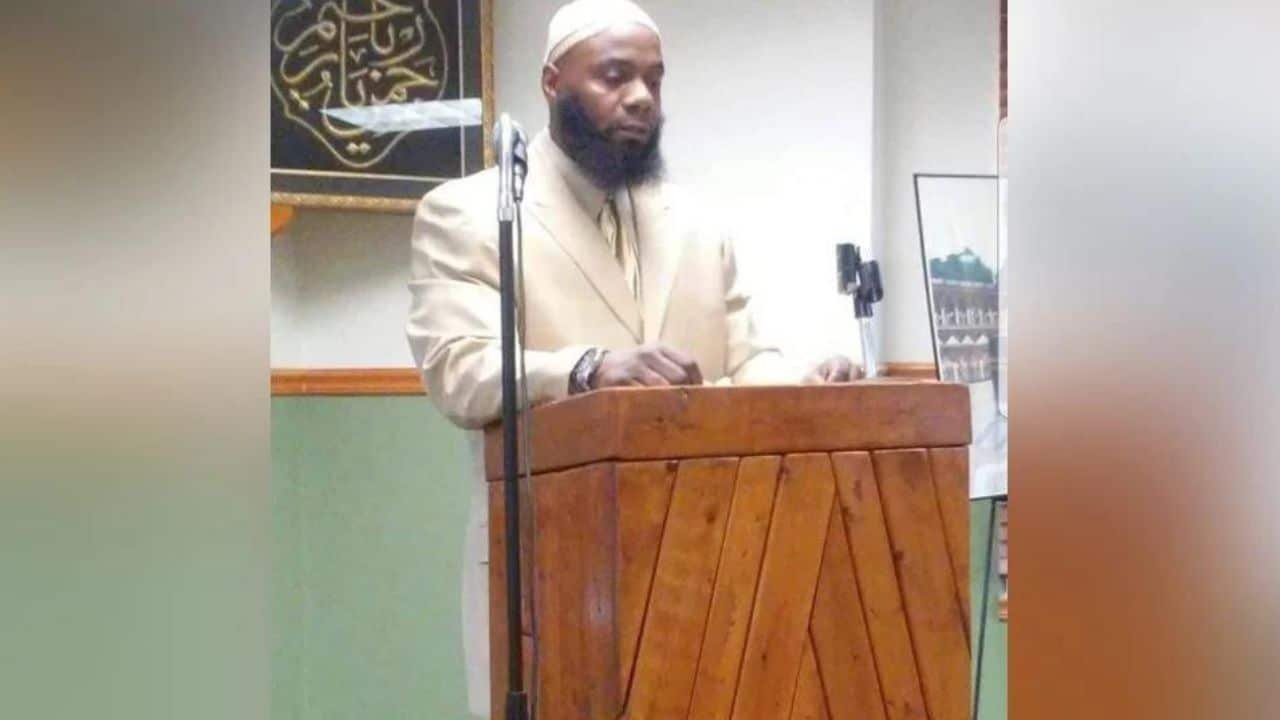
    Imam Hassan Sharif was shot multiple times near a mosque in Newark, just west of New York, before being taken to hospital where he later died, New Jersey Attorney General Matt Platkin said.

    “We do not yet know the motivation for this crime (but) the evidence collected thus far does not indicate that this was an act motivated by bias, or an act of domestic terrorism,” said Platkin.

    He added that “in light of global events, and with a rise in bias that many communities are experiencing across our state — particularly the Muslim community — there are many in New Jersey right now who are feeling a heightened sense of fear.”

    The state is home to 300,000 Muslim Americans, he said.

    Since the outbreak of the War on Gaza, there has been an increase in Islamophobic and anti-Semitic attacks across the United States.

    The Essex County prosecutor, Ted Stephens, confirmed Sharif was shot more than once, and that “it does not appear the imam was the victim of a bias crime or that this is related to terrorism.”

    “We are dedicated to bringing justice for the imam’s family,” said Stephens, who called it a “dastardly crime.”

    Famous Muslim scholar Dr. Omar Suleiman posted about the death of the Imam and paid tribute to him as a beloved Imam of the Newark Community.

    The United States Transportation Security Administration (TSA) earlier confirmed that Sharif had worked as a security screener at Newark airport since 2016.

    “We are deeply saddened to learn of his passing and send our condolences to his family, friends and colleagues,” said Lisa Farbstein, a TSA spokeswoman.

    Images published by the New Jersey chapter of the Council on American-Islamic Relations (CAIR) showed police vehicles deployed outside the Masjid Muhammad-Newark, a two-story yellow and green complex.

    In a statement, CAIR described Sharif as “a beacon of leadership and excellence.”

    “As always, and irrespective of this specific incident, we advise all mosques to keep their doors open but remain cautious, especially given the recent spike in anti-Muslim bigotry,” the organization said.

  • US judge begins to unseal Epstein contacts

    US judge begins to unseal Epstein contacts

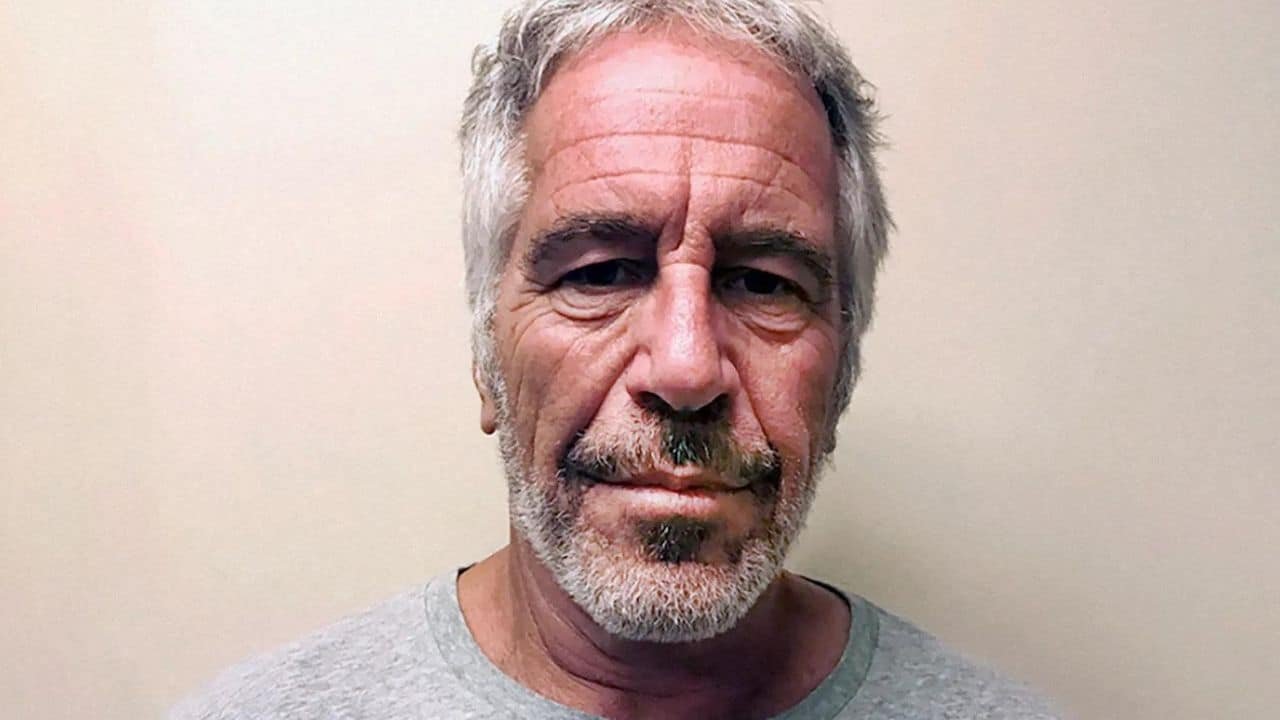
    A New York judge on Wednesday began to unseal the identities of people linked in court documents to Jeffrey Epstein, the US financier who killed himself in 2019 as he awaited trial for sex crimes.

    Notably included in the unsealed documents, which include almost 1,000 pages of depositions and statements, were former US presidents Bill Clinton and Donald Trump, who have not been accused of any wrongdoing in the case.

    The list of around 150 people includes a host of Epstein associates previously identified as John or Jane Does in a lawsuit brought against Epstein’s former mistress, Ghislaine Maxwell. It carries no allegation of complicity in Epstein’s crimes.

    The disclosure is part of a defamation proceeding between Maxwell, sentenced in 2022 to 20 years in prison, and a plaintiff against the duo, Virginia Giuffre.

    Last month a judge listed in a 50-page document some 180 cases — under pseudonyms — ordering that their identities be made public within 14 days of the order.

    Some individuals have objected to the disclosure of their identities in the case.

    Lawyers for one individual, “Doe 107”, wrote to the judge in the case arguing they could face victimization in their home country, and requested time to submit grounds for their name to remain sealed.

    Accomplices in sex crimes

    According to British media, Giuffre’s defamation claim against Maxwell, 62, dates back to 2016 and was settled the following year. But the Miami Herald then took legal action to access the file and investigate the Epstein network.

    A number of documents in the case were made public in 2019, days before Epstein hanged himself in prison while awaiting trial on sex trafficking charges.

    Maxwell and Epstein were a couple in the early 1990s before becoming professional collaborators and accomplices in sex crimes for almost three decades.

    Epstein, a financier with a powerful network in the United States and abroad, was himself accused of raping young girls, but his suicide by hanging in a New York prison in August 2019 halted his prosecution.

    Fabricated lists and doctored photos of Epstein have circulated in conspiratorial internet circles for years, fueling speculation about the financier’s potential associates.

    The anticipated release of names from court documents reignited that frenzy.

    Comedian Jimmy Kimmel threatened Aaron Rodgers with legal action after the American football star suggested the late night host could be on the list.

    It was a baseless allegation echoed across platforms such as X, where numerous posts also drew actor Tom Hanks into the fold.

  • US-led coalition to patrol Red Sea against Houthi attacks

    US-led coalition to patrol Red Sea against Houthi attacks

    The United States on Monday announced a 10-nation coalition to quell Houthi missile and drone attacks on ships transiting the Red Sea, with Britain, France, Bahrain and Italy among countries joining the “multinational security initiative.”

    “Countries that seek to uphold the foundational principle of freedom of navigation must come together to tackle the challenge posed by this non-state actor,” US Defense Secretary Lloyd Austin said in a statement.

    Iran-backed Houthi rebels have escalated attacks on tankers, cargo ships and other vessels in the Red Sea, imperiling a transit route that carries up to 12 percent of global trade.

    The security coalition, Austin said, will operate “with the goal of ensuring freedom of navigation for all countries and bolstering regional security and prosperity.”

    It includes the United States, United Kingdom, Bahrain, Canada, France, Italy, Netherlands, Norway, Seychelles and Spain, Austin said.

    Yemen’s Iran-backed Houthi rebels said earlier they had attacked two “Israeli-linked” vessels in the Red Sea in solidarity with Gaza, as more companies halt transit through the troubled but vital waterway.

    The attacks on the Norwegian-owned Swan Atlantic and another ship identified by the Houthis as the MSC Clara are the latest in a flurry of maritime incidents that are disrupting global trade in an attempt to pressure Israel over its war against Hamas militants.

    In a statement, the Yemeni rebels said they had carried out a “military operation against two ships linked to the Zionist entity” using naval drones.

    They vowed to “continue to prevent all ships heading to Israeli ports… from navigating in the Arab and Red Seas” until more food and medicine is allowed into Gaza.

    But the Swan Atlantic’s owner, Norway’s Inventor Chemical Tankers, said in a statement the ship was carrying biofuel feedstock from France to Reunion Island.

    It said the vessel has “no Israeli link” and was managed by a Singaporean firm, adding that the Indian crew were unharmed and the vessel sustained limited damage.

    British oil giant BP became the latest to suspend transit through the Red Sea on Monday, while Taiwan shipping firm Evergreen said it was suspending its Israeli cargo shipments with immediate effect.

    Frontline, one of the world’s largest tanker companies, also said it was rerouting ships and would “only allow new business” that could be routed via South Africa’s Cape of Good Hope.

    That route is far longer and uses more fuel.

    The Red Sea attacks have forced insurance companies to significantly increase premiums on ships, making it uneconomical for some to transit through the Suez Canal.

    Italian-Swiss giant Mediterranean Shipping Company, France’s CMA CGM, Germany’s Hapag-Lloyd, Belgium’s Euronav and Denmark’s A.P Moller-Maersk — the latter accounting for 15 percent of global container freight — have all stopped using the Red Sea until further notice.

    The attacks have become “a maritime security crisis” with “commercial and economic implications in the region and beyond,” Torbjorn Soltvedt of analysis firm Verisk Maplecroft told AFP.

    Monday’s attack took place as the Pentagon chief visited Israel after a stop in Bahrain, home base of the US Navy’s Fifth Fleet.

    “In the Red Sea, we’re leading a multinational maritime taskforce to uphold the bedrock principle of freedom of navigation. Iran’s support for Houthi attacks on commercial vessels must stop,” Austin said at a news conference.

    On Saturday, a US destroyer shot down 14 drones in the Red Sea launched from rebel-controlled areas of Yemen, the US military said.
    Britain said one of its destroyers had also brought down a suspected attack drone in the area.

    Rebel spokesman Mohammed Abdul Salam said neutral Oman had launched mediation efforts to safeguard shipping using the waterway.

    “Under the sponsorship of our brothers in the Sultanate of Oman, communication and discussion continue with a number of international parties regarding operations in the Red Sea and Arabian Sea,” he said on X, formerly Twitter.

    The Gaza war broke out when its rulers Hamas launched an unprecedented attack on Israel on October 7, killing around 1,140 people and kidnapping some 250, according to an AFP tally based on official Israeli figures.

    Gaza’s health ministry says Israel’s military response has killed more than 19,450 people, mostly women and children.