Tag: United States of America

  • ‘Extremely unfair to allege Pakistan supported Taliban’: PM Khan

    ‘Extremely unfair to allege Pakistan supported Taliban’: PM Khan

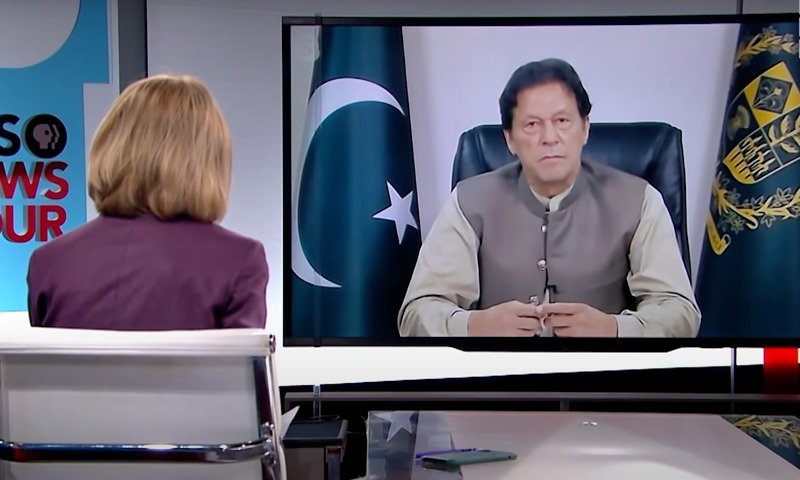
    In an interview with PBS Newshour, Judy Woodruff asked Prime Minister Imran Khan about Pakistan’s alleged military, intelligence, and financial support to Afghanistan.

    PM Khan replied, “I find this extremely unfair.”

    The premier added that when the Pakistani government decided to join the United States (US) war on terror, “we were devastated by that”. PM said that 70,000 Pakistanis died because of the US war in Afghanistan, even when “Pakistan had nothing to do with what happened” [in New York on September 11, 2001].

    Al Qaeda was based in Afghanistan at the time, and “there were no militant Taliban in Pakistan,” he said, maintaining that Pakistan was not involved in the 9/11 attacks.

    “We had nothing to do with it,” he repeated, regretting that the war in Afghanistan had resulted in a loss of $150 billion to Pakistan’s economy.

    PM further added that the US “really messed it up in Afghanistan”.

    Judy Woodruff asked PM Imran about claims of Taliban sanctuaries being present in Pakistan and a report about 10,000 fighters crossing the border to help the group in Afghanistan.

    “Judy, for a start, this 10,000 Taliban — or as the Afghan government says, Jihadi fighters — have crossed over, is absolute nonsense. Why don’t they give us evidence of this?” asked PM Imran.

    To a question about safe-havens, the premier questioned where the sanctuaries are located in Pakistan.

    “Taliban are not some military outfit. They are normal civilians. If there are some civilians in these camps, how is Pakistan supposed to hunt these people down? How can you call them sanctuaries?” asked PM Imran.

    “First of all, they tried to look for a military solution in Afghanistan when there was never one. And people like me, who know the history of Afghanistan and kept saying there isn’t a military solution, were called anti-American. I was called Taliban Khan,” said PM Imran.

    The prime minister further added, “I don’t know what the objective was in Afghanistan, whether there was to have some nation-building, democracy or liberate the women. Whatever the cause was, the way they went about it was never going to be the solution.”

    “When they finally decided there is no military solution, unfortunately, the bargaining power of the American or North Atlantic Treaty Organisation (NATO) forces had gone,” said the premier.

    “Once they had reduced the troops to barely 10,000 and when they gave the exit date, Taliban thought they had won,” said PM Imran. He added that it is difficult right now to ask the group to compromise or “force them” to take a political solution.

    “It’s very difficult to force them into a political solution because they [Taliban] think that they won,” said PM Imran.

    PM Khan further said, “Pakistan is hosting over three million Afghan refugees. And what we fear is that a protracted civil war would [bring] more refugees. And our economic situation is not such that we can have another influx.”

    “Secondly, the worry is that the civil war will flow into Pakistan because Taliban are ethnic Pashtuns. Now there are more Pashtuns on our side of the border than Afghanistan. And so the worry is if this goes on, the Pashtuns on our side will be drawn into it and that is also the last thing we want,” said PM Imran.
  • Our own people were involved in drone attacks says PM Khan

    Our own people were involved in drone attacks says PM Khan

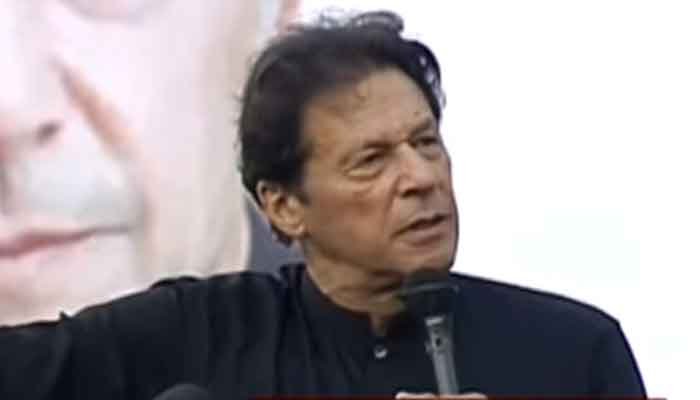
    Addressing an election rally in Kotli, Azad Kashmir, Prime Minister Imran Khan said, “Our ally, the one we considered our friend used to do drone attacks on our country. Drone attacks used to occur in Pakistan both during the tenure of Pakistan Muslim League-Nawaz (PML-N) supremo, Nawaz Sharif, and former President, Asif Ali Zardari’s time.

    They both used to condemn the attacks but deep with they had permitted for the attacks to occur. Why doesn’t any drone attack happen in my [PM Imran Khan] term.”

    “You should not blame the United States for the drone attacks, our own people were involved,” added the prime minister.

    PM Khan asked the people to question the Opposition as to what did they do for the betterment of their people while they were in power

    “Both PML-N and Pakistan People’s Party (PPP) both had five years in power, how much did these two parties advocate for the people of Kashmir internationally?” questioned PM Khan.

    Khan reiterated that ever since the Indian Prime Miniter Narendra Modi’s party, Bharatiya Janata Party (BJP) came into power, the people of Kashmir have gone through the most turmoil.

    “The ideology of Rashtriya Swayamsevak Sangh (RSS) being practiced by Modi is that of the Nazism, ‘borrowed by the German Nazi’,” said the PM.

    “India has the strongest lobby with Israel and our Prime Minister (Nawaz Sharif) was busy inviting Modi to weddings for his own benefit.

    Earlier during the day, Prime Minister Imran Khan had rubbished talk of him “wishing to turn Azad Jammu and Kashmir” into a new province of Pakistan.

    “I do not know where all this talk has sprung from,” he said, dismissing any notion of such an idea.

    “But what I want to make clear now, is that in 1948, there were two United Nations Security Council resolutions which granted the people of Kashmir the right to decide their own future. According to the UN resolutions, the people had to decide whether they want to join Hindustan or Pakistan.

    “I want to clarify to all of you today. InshaAllah, a day will come, when all the sacrifices made by the people of Kashmir, will not be wasted. God will grant you that right. There will be a referendum, InshaAllah.

  • ‘To blame Pakistan is extremely unfair’: PM Khan tells Ashraf Ghani

    ‘To blame Pakistan is extremely unfair’: PM Khan tells Ashraf Ghani

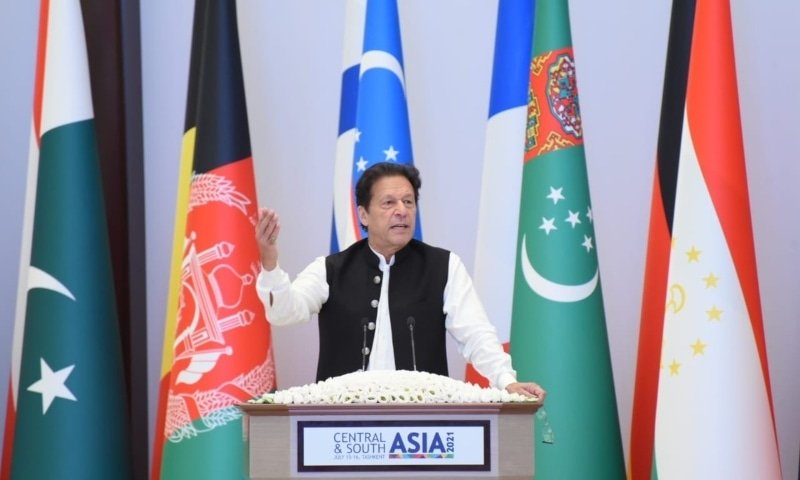
    Prime Minister Imran Khan on Friday countered Afghan President Ashraf Ghani’s claims about Pakistan’s “negative role” in the Afghan peace process and said, “To blame Pakistan for what is going on in Afghanistan I feel is extremely unfair.” PM Khan was addressing the international conference on “Central and South Asia Regional Connectivity: Challenges and Opportunities” during his two-day visit to Uzbekistan.

    “President Ghani, let me just say that the country that will be most affected by turmoil in Afghanistan is Pakistan. Pakistan suffered 70,000 casualties in the last 15 years. The last thing Pakistan wants is more conflict,” the premier said

    “To blame Pakistan for what is going on in Afghanistan, I feel, is extremely unfair,” said PM Khan.

    “Why would I come to Kabul if I was not interested in peace? The whole idea was that Afghanistan should have looked at Pakistan as a partner in peace. I feel really disappointed that we have been blamed for what is going on in Afghanistan.”

    “I repeat, the last thing we want is turbulence in Afghanistan,” said PM Khan.

    PM Khan added, “What is happening in Afghanistan is over two decades of conflict, deep divisions, and unfortunately the United States (US) seeking a military solution when there was no one. When there were 150,000 Nato troops in Afghanistan, the greatest military machine, that was the time to ask the Taliban to come on the table. Why were the Taliban to compromise when their existing date was given and with only a few thousand American troops left? Why would they [Taliban] listen to us, when they are sensing victory?”

    He said that he had a conversation with Uzbekistan President Shavkat Mirziyoyev about how all the neighbours in the region can help the Afghan peace process. 

    “All neighbours are interested in a peace settlement in Afghanistan. There are already three million Afghan refugees in Pakistan. We are petrified that will be another flow of refugees coming in. We do not have the capacity or the economic strength to bear another flow of refugees. So I can assure you again, if any country is trying its best of all the countries in the world, it’s Pakistan today.”

     Director-General Inter-Services Intelligence (ISI) Lt Gen Faiz Hameed Friday rejected the allegations of infiltration levelled by Afghan President Ashraf Ghani.

     Afghan president had levelled unsubstantiated accusations against Pakistan, saying that 10,000 fighters had crossed over into Afghanistan from Pakistan.

    “If talks fail, we will fight the Taliban,” said Ghani. “This is the last chance for peace,” he had said.

    DG ISI explicitly stated that these accusations against Pakistan are not true. In fact, infiltration is being done from Afghanistan, he added.

    “We want peace in the neighbouring country as a peaceful and stable Afghanistan is in the interest of Pakistan and other countries,” DG ISI said.

    He said that Pakistan is not supporting any group in Afghanistan. “We are interested in a negotiated settlement among all the Afghan groups,” added DG ISI.

  • Afghan Taliban want China’s friendship, say will not interfere in Chinese affairs

    After seizing about one-third of Afghanistan’s districts, the Taliban this week swept through the northeastern Badakhshan province, reaching the mountainous border with China’s Xinjiang region, reports The Wall Street Journal.

    These days, the Taliban go out of their way to ease China’s concerns, eager to secure Beijing’s acquiescence to their rule.

    “The Taliban want to show China goodwill,” said Qian Feng, head of research at the National Strategy Institute of Tsinghua University in Beijing. “They hope that China can play a more important role, especially after America pulls out its troops.”

    With the American military withdrawal nearly complete, China is also becoming increasingly powerful in the Central Asian states that border Afghanistan to the north.

    “We care about the oppression of Muslims, be it in Palestine, in Myanmar, or in China, and we care about the oppression of non-Muslims anywhere in the world. But what we are not going to do is interfere in China’s internal affairs,” said a senior Taliban official in Doha, Qatar.

    Another official, Taliban spokesman Suhail Shaheen, pointed out that the Islamist group pledged in the February 2020 Doha deal with Washington to not let the country’s territory be used against other nations and to not accept any refugees or exiles outside the framework of international migration law.

    “We will not allow anyone whether it is an individual or an entity — to use the soil of Afghanistan against the United States, its allies, or any other country, and that includes China,” Shaheen said.

    While caring about the plight of the Uyghurs of Xinjiang, the Taliban will seek to help their fellow Muslims through political dialogue with Beijing, he added. “We do not know the details. But if we have the details, we will show our concern,” he said. “If there are some problems with the Muslims, of course, we will talk with the Chinese government.”

  • National security briefing: key takeaways

    National security briefing: key takeaways

    A meeting of the National Security Committee was held on Thursday.

    Speaker National Assembly (NA) Asad Qaiser had summoned a session of the Parliamentary Committee on National Security on July 1 for an in-camera briefing on the latest regional situation in light of the US withdrawal from Afghanistan. Director-General of the Inter-Services Intelligence (ISI) Lieutenant General Faiz Hameed briefed the lawmakers. The army chief was also present at the briefing, which went on for about eight hours.

    According to senior journalist Fahd Husain, the major takeaway from the meeting was how the military and intelligence leadership emphasised that while ties with China were well built and thriving and could not be foregone, a strong relationship with the United States (US) would have to be maintained.

    A senior parliamentarian told Dawn that although there were clear indications of an impending “strategic reorientation” of the foreign policy because of the geo-political developments, it was also obvious that there was no desire for being seen “overtly pro-China”.

    Prime Minister Imran Khan’s absence too was a matter of varied significance. One member of the Opposition questioned the PM’s absence from the crucial juncture gathered, to which the army chief reportedly said that the Opposition did not want the PM to attend this briefing, hence his absence. Speaker Asad Qaiser said that his office had received a message that if PM came to the briefing, the Opposition would review its presence and involvement in the briefing. However, this claim was unequivocally denied by the Oppositon.

    Senior Journalist Saleem Safi, tweeted about the major higlights of the briefing stating that the Afghan Taliban and Tehreek-i-Taliban Pakistan (TTP) are one from within due to their ideological connection.

    Around 6,500 TTP fighters, currently based in Afghanistan, may reconnect with the Afghan Taliban in the event of the fall of Kabul. This concern is said to be based on the Afghan Taliban’s past track record of not taking on the TTP.

    According to reports, Pakistan Muslim League-Nawaz’s (PML-N) Shahid Khaqan Abbasi and later Pakistan People’s Party (PPP) chairperson Bilawal Bhutto raised the issue of Pashtun Tahafuz Movement (PTM) lawmaker Ali Wazir’s release. They were told that any criticism against the army will not be tolerated and Ali Wazir will have to apologise.

    When lawmaker Mohsin Dawar was stopped from talking by Speaker Asad Qaiser, army chief asked him to speak openly.

    Leader of the Opposition in the National Assembly Shehbaz Sharif and Bilawal Bhutto also spoke at the briefing, apart from a few other participants.

  • We accept the Chinese version on Uyghurs in Xinjiang: PM Khan

    We accept the Chinese version on Uyghurs in Xinjiang: PM Khan

    Prime Minister (PM) Imran Khan on Thursday said that the relationship between Pakistan and China is very deep. “It’s not just the governments, but it’s a people-to-people relationship.”

    “Whatever will happen…[the] relationship between our two countries, no matter what pressure is put on us, is not going to change,” PM Khan said in response to a question.

    Speaking to Chinese journalists as Beijing marked the centenary of the ruling Communist Party of China (CPC), the premier said the Chinese version about the treatment of Uyghur Muslims in Xinjiang was completely different from what was being reported in the western media.

    “Because of our extreme proximity and relationship with China, we actually accept the Chinese version,” added PM Khan.

    He said that it was hypocritical that while the Uyghur situation and Hong Kong were being highlighted, attention was not being given to the human rights violations in Indian-Occupied Kashmir.

    “It is hypocritical. There are much worse human rights violations taking place in other parts of the world such as in occupied Kashmir. But western media hardly comments on this,” he said.

    PM Khan praised the Communist Party. He said that until now, it was believed that electoral democracy is the best way to bring leaders on merit and hold them accountable.

    “But China’s process to hunt talent and then polish it is better than any electoral democracy.”

    PM Khan also praised President Xi for his success in the fight against poverty and corruption in China.

    “China has lifted 700 million people out of poverty in a few years, which is a great achievement. We want to further develop political, economic and trade relations between the two countries.”

    PM Khan said that Pakistanis are impressed by the Chinese president’s fight against corruption and consider him “a great politician of modern times”.

    “President Xi Jinping’s anti-corruption campaign is effective and successful.”

    PM Khan said that it is unfair of the US and western powers to expect countries like Pakistan to take sides. “Pakistan will not downgrade its relations with China.

    “The United States expects Pakistan to choose a side. This is not appropriate,” he added.