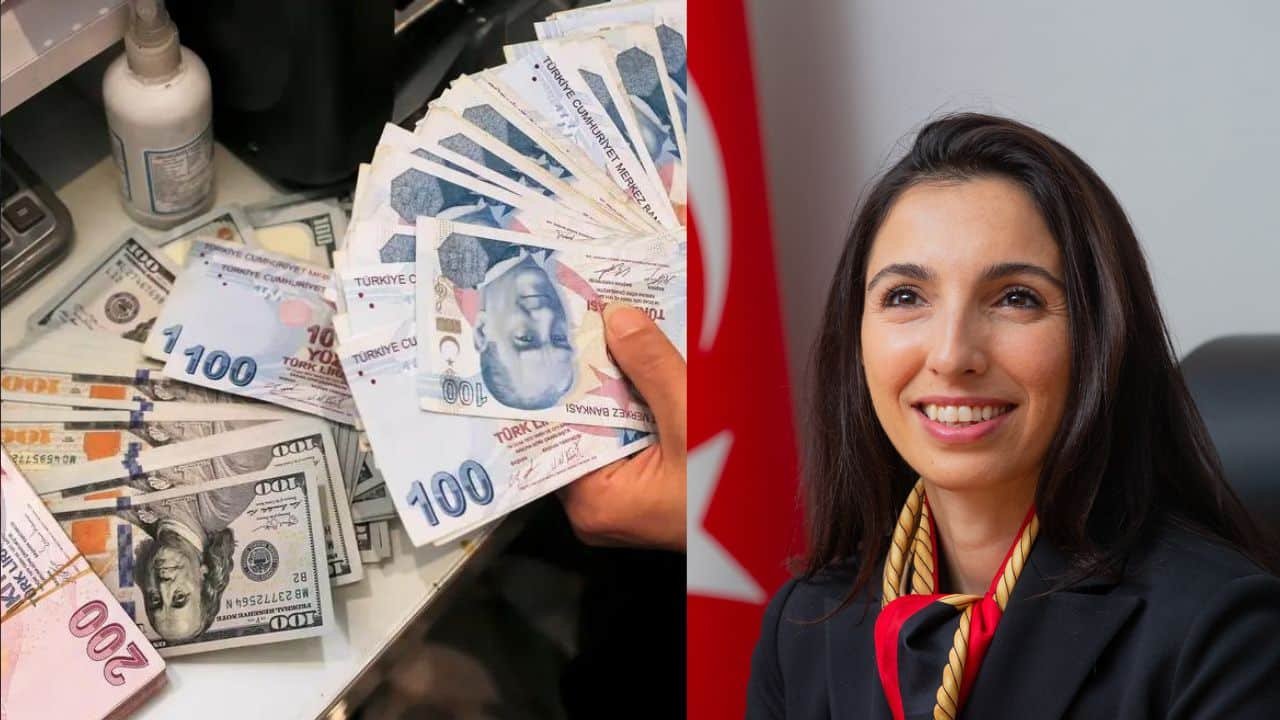
The new head of Turkey’s central bank has said she has been priced out of Istanbul’s property market by rampant inflation, leaving no choice for the former finance executive but to move back in with her parents.
“We haven’t found a home in Istanbul. It’s terribly expensive. We’ve moved in with my parents,” 44-year-old Hafize Gaye Erkan, who took up her post in June after two decades in the United States, told the Hurriyet newspaper.
Erkan previously worked at renowned firms including Goldman Sachs and First Republic Bank — and is now getting a crash course in the soaring prices that have seen many young people struggling to find lodgings.
“Is it possible that Istanbul has gotten more expensive than Manhattan?” she said.
Year-on-year inflation stood at 61 per cent in November as President Recep Tayyip Erdogan has allowed the lira currency to weaken while promising that a new team of economists with Wall Street experience would tackle years of economic crisis.
To quell growing anger, officials also capped rent increases at 25 percent — though experts say that has only amplified the housing tensions, as owners try to push out occupants, sometimes fraudulently, in order to set new and higher rents.
The central bank last month pushed up benchmark lending rates to 40 per cent in a bid to get inflation under control.
“We’re nearing the end of our monetary tightening measures,” Erkan told the paper.
Washington (AFP) – The United States said Tuesday it would refuse visas for extremist Israeli settlers behind a wave of violence against Palestinians in the West Bank, as it also asked Israel to do more to spare civilians in Gaza.
The visa measures amount to a rare concrete repercussion by the United States against Israelis in the nearly two-month-old war, in which President Joe Biden has nudged the US ally privately but also promised strong support.
“We have underscored to the Israeli government the need to do more to hold accountable extremist settlers who have committed violent attacks against Palestinians in the West Bank,” Secretary of State Antony Blinken said in a statement.
“As President Biden has repeatedly said, those attacks are unacceptable,” he said.
Blinken said the United States would refuse entry to anyone involved in “undermining peace, security or stability in the West Bank” or who takes actions that “unduly restrict civilians’ access to essential services and basic necessities.”
“Instability in the West Bank both harms the Israeli and Palestinian people and threatens Israel’s national security interests. Those responsible for it must be held accountable,” Blinken said.
State Department spokesman Matthew Miller said that dozens of settlers, who were not publicly named, would be affected. The visa ban also applies to their immediate family members.
Restrictions on entering the United States will not apply to extremist settlers who are US citizens.
Wave of violence
Hamas militants stormed out of Gaza into Israel on October 7, killing around 1,200 people, mostly civilians, and taking around 240 hostages, according to Israeli officials.
In response, Israel vowed to destroy Hamas and has carried out air strikes and a ground offensive that have killed around 15,900 people, mostly women and children, according to the Hamas-run health ministry.
Even though Hamas does not control the West Bank, some 250 Palestinians have been killed there by Israeli soldiers and settlers since October 7, according to a Palestinian government tally.
The Palestinian Authority holds limited autonomy in the West Bank where Palestinians have complained of impunity over attacks and harassment carried out by settlers, some of whom have been serving in the Israeli military as forces are shifted to Gaza.
Prime Minister Benjamin Netanyahu is in a coalition with far-right parties that strongly support Jewish settlement of lands seized in 1967, construction that is considered illegal under international law.
Blinken visited both Israel and the West Bank last week just as a pause ended between Hamas and Israel.
The State Department said that Israel has shown “improvement” in targeting its strikes in Gaza as it voiced concern about a repeat of the widespread bombing at the start of the war.
“We will continue to monitor what’s happening and will continue to press them to do everything they can to minimize civilian harm,” said Miller, the State Department spokesman.
The United States has also promised more than $100 million in humanitarian aid to the Palestinians but has faced strong criticism in much of the Arab world for its diplomatic and military support of Israel.
J Street, the left-leaning pro-Israel US group that is frequently critical of Netanyahu, praised the visa restrictions as an “important first step.”
It said that the Biden administration should specifically restrict two far-right ministers in Netanyahu’s cabinet, Minister for National Security Itamar Ben-Gvir and Finance Minister Bezalel Smotrich.
Before entering politics, Ben-Gvir hung a portrait in his living room of Baruch Goldstein, the US-born settler who killed 29 Palestinian worshippers at a mosque in the West Bank city of Hebron.
The Biden administration has returned to the traditional US and international position of opposing settlements, although until now its stance has largely been rhetorical.
Previous president Donald Trump switched course, with Blinken’s predecessor Mike Pompeo dropping objections to settlements and visiting one late in his term.
Binance boss Changpeng Zhao has become the most powerful cryptocurrency figure to fall in a two-year period chaotic even by the standards of the notoriously volatile industry.
Zhao stepped down as CEO of Binance — the largest crypto exchange in the world — after he and the company pleaded guilty on Tuesday to sweeping US money laundering violations and agreed to fines of more than $4 billion.
Here are three of the highest-profile crypto executives who have fallen foul of the law since last year:
Changpeng ‘CZ’ Zhao
Born in China in 1977, Zhao moved with his family to Canada in the 1980s and later got a degree in computer science from McGill University, according to his profile in the Bloomberg Billionaires Index.
Zhao Changpeng, chief executive officer of Binance, speaks during a Bloomberg Television interview in Tokyo, Japan, on Thursday, Jan. 11, 2018. The world’s biggest cryptocurrency exchange keeps getting bigger. Binance.com is adding “a couple of million” registered users every week, with 240,000 people signing up in just an hour on Wednesday, said Zhao. Photographer: Akio Kon/Bloomberg
He founded Binance in 2017 in Shanghai, and led the company’s explosive growth into the world’s biggest cryptocurrency exchange.
An outspoken celebrity in the crypto world with 8.7 million followers on X, Zhao became the richest known figure in the nascent industry. His net worth peaked at around $65 billion in 2022, according to a Forbes index.
With the prestige and wealth came increased scrutiny of Binance’s operations, as prominent crypto firms around the world began to buckle under a wave of criminal investigations.
The United States accused Zhao and Binance of multiple violations, including knowingly allowing transactions to militant groups such as the Islamic State and in barred jurisdictions such as North Korea and Iran.
On Tuesday, they pleaded guilty. The firm has agreed to total penalties of nearly $4.4 billion, while he will pay $50 million, according to court documents.
Zhao resigned as CEO of Binance and while he will reportedly retain his shares in the company, he has been banned from any involvement in its business. He is expected to face sentencing later.
Forbes listed his net worth as $10.2 billion as of Wednesday.
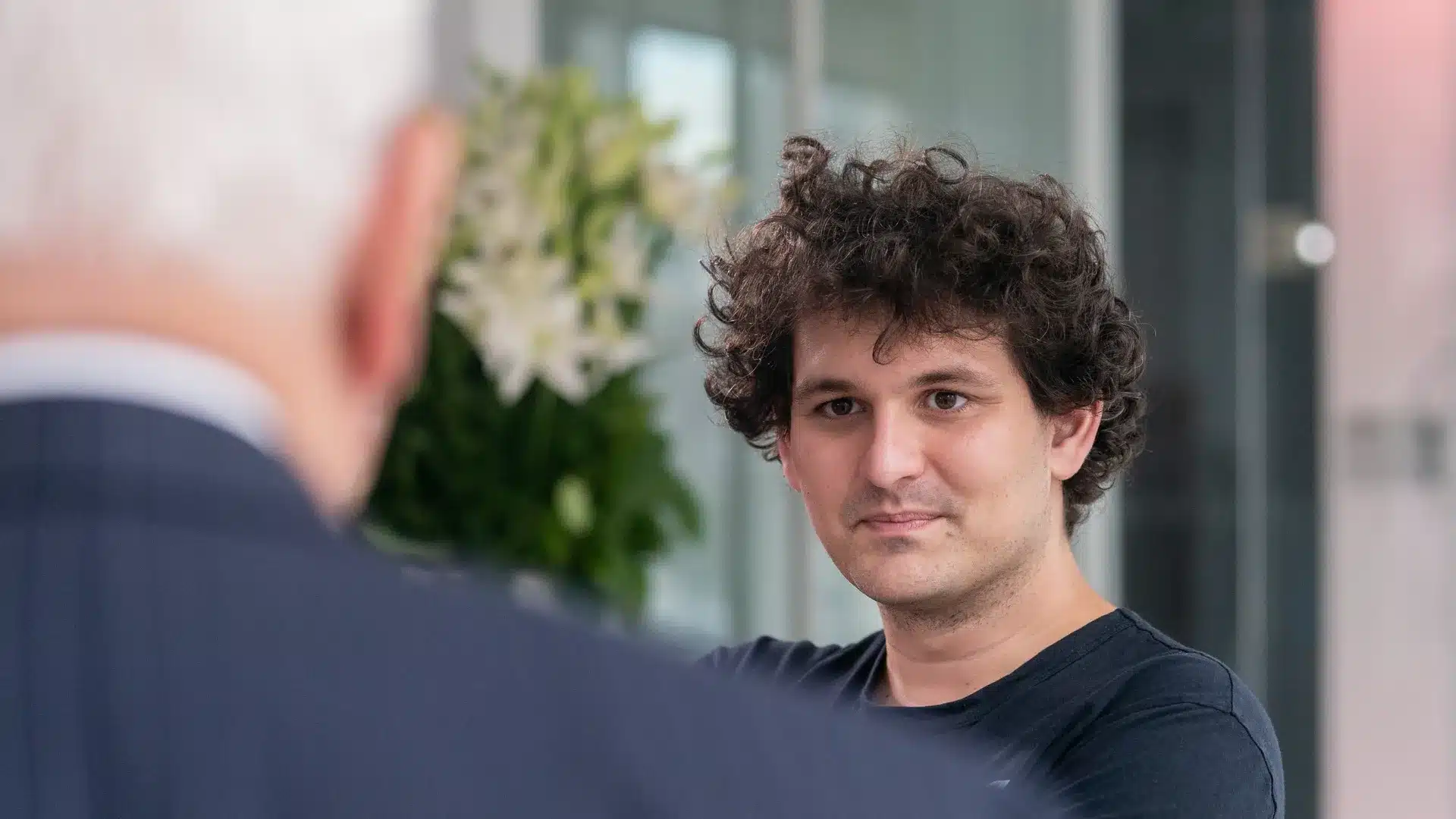
Sam Bankman-Fried
If Zhao was the richest and most powerful person in crypto, Sam Bankman-Fried was easily the most famous.
Born to Stanford University professors, Bankman-Fried graduated from MIT with a degree in physics.
In 2019, he founded FTX, which skyrocketed to become the world’s second-largest crypto exchange.
Along the way, Bankman-Fried built up his image as the unofficial ambassador for the cryptocurrency industry, with high-profile appearances in the media and even the US Congress.
At one point in 2022, he had a net worth of $24 billion, according to Forbes.
But he had been walking a dangerous path — his team used customers’ money for everything from buying posh real estate to covering risky moves by affiliate Alameda Research.
It all came crashing down when these moves were revealed in the media in November 2022. Within hours, rival CZ Zhao said Binance would sell all the FTX tokens it held.
It sparked a stunning collapse of FTX and Bankman-Fried’s empire, his fame turning to notoriety.
Arrested in the Bahamas in January, he was found guilty this month of what US prosecutors described as “one of the biggest financial frauds in American history”. He faces up to 110 years in prison.
During his trial, the 31-year-old admitted to making “mistakes” but denied trying to defraud anyone.
Do Kwon
South Korean entrepreneur Do Kwon co-founded Terraform Labs in 2018, developing the cryptocurrencies TerraUSD and Luna.
Do Kwon, co-founder and chief executive officer of Terraform Labs, poses in the company’s office in Seoul, South Korea, on Thursday, April 14, 2022. Kwon is counting on the oldest cryptocurrency as a backstop for his stablecoin, which some critics liken to a ginormous Ponzi scheme. Photographer: Woohae Cho/Bloomberg via Getty Images
The Stanford grad successfully marketed them as the next big thing in crypto, attracting billions in investments and global hype.
Media reports in South Korea described him as a “genius”.
But in May last year, the value of these currencies — marketed as “stablecoins” — plummeted, wiping out around $40 billion in investments and sending a shock wave through the rest of the industry.
It led to more than $500 billion in further losses on global crypto markets, industry data suggested.
Experts said Do Kwon — whose full name is Kwon Do-kyung — had marketed a glorified Ponzi scheme.
Brash and outspoken on social media, Do Kwon left South Korea before the collapse and spent months on the run.
He was arrested in Montenegro this year after being caught trying to catch a flight using fake Costa Rican travel documents.
He faces multiple criminal charges in the United States and South Korea.
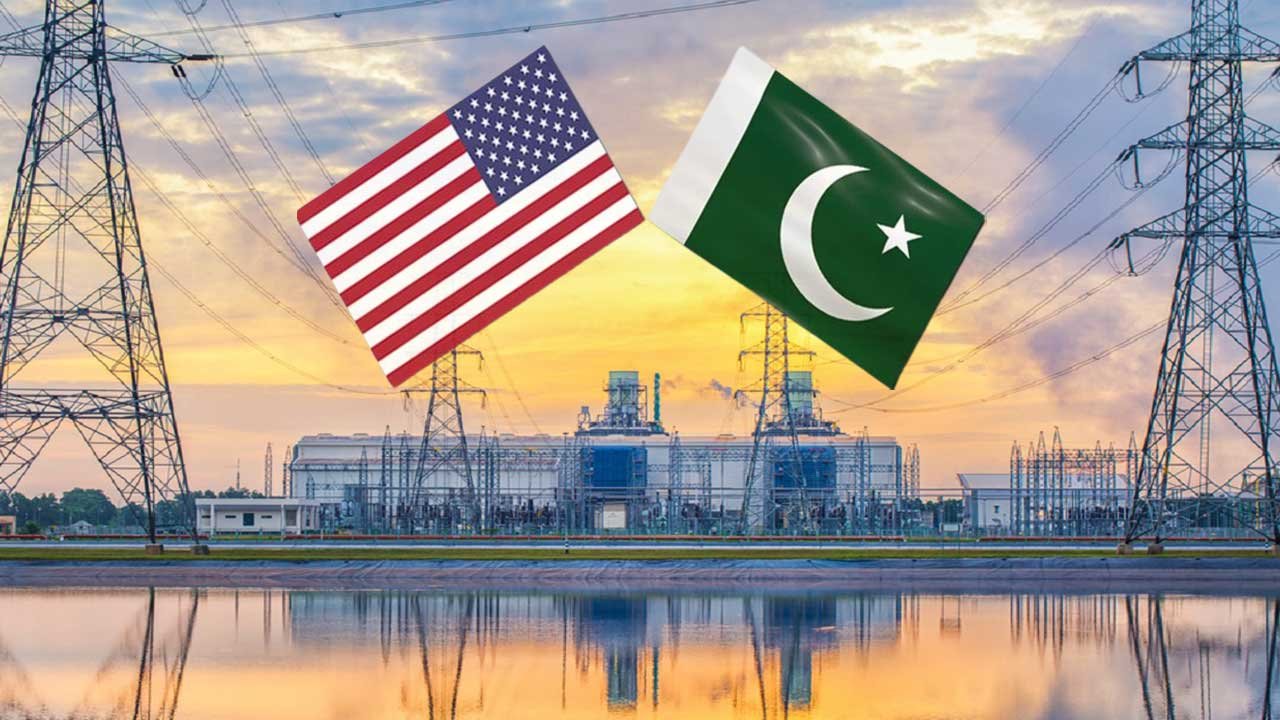
On Tuesday, Pakistan and the United States (US) reached a consensus to foster close collaboration in various facets of bilateral trade and investment, with the primary objective of amplifying economic cooperation between the two nations.
Dr Gohar Ejaz, Minister for Commerce and Industries, and Ambassador Katherine Tai, the US Trade Representative, convened a virtual meeting to assess the progress achieved subsequent to the 9th Pakistan-United States Trade and Investment Framework Agreement (TIFA) Council meeting held earlier in the year.
Ambassador Tai underscored the significance of Pakistan as a pivotal trading partner for the US, recognising the enduring engagement between both countries as an encouraging sign.
Minister Ejaz apprised Ambassador Tai of the government’s endeavours to enhance the business environment. He proposed the consideration of duty-free access for textile and garment exports to the US, given that Pakistan imports a substantial portion of its cotton from the United States.
Furthermore, Minister Gohar Ejaz recommended exploring opportunities for joint ventures in textile and industrial manufacturing to enhance bilateral trade.
The interim minister emphasised that the US serves as a prime destination for IT and ITeS exports from Pakistan, suggesting that both nations can reap mutual benefits from the immense potential in the field of information technology.
According to data released by the Census Bureau, the United State’s population is older than it’s ever been before, with a median age of 38, New York Times reports.
This is a steep rise considering the median age of 35 back in 2000 and 30 in 1980. Analysts are concerned that the U.=S ‘greying’, a term used to describe ageing populations, would pose challenges to the workforce, the economy and social programs.
An earlier study conducted in 2020 revealed that 1 in 6 Americans (so 17% of the entire country) were 65 or older. Much of the greying of the US stems from the post-World War II baby boom – which was the period of 1946 – 1964.
Experts point to low birthrates as the main driver of the nation’s rising median age. “It’s simple arithmetic,” said president of demographic data firm Social Explorer, Andrew A. Beveridge, in conversation with the New York Times. “Fewer kids are being born.”
Since the beginning of the Great Recession (2007-09), birthrates had never been quite the same as previous generations. Birthrates also saw a steep decline in the first year of the COVID-19 pandemic.
This trend of ageing populations due to declining birthrates is one observed on an international scale. Countries such as Japan and Germany have been attempting to tackle this issue for years, by introducing policies allowing skilled youth to naturalise more easily. In Japan, nearly 30% of its population is over 65 years old.
Experts believe that millennial women have been more likely to prioritise education and work in their 20s, leading them to marry far later and have fewer children. That would explain why newer generations in industrialised countries have been witnessing lower birthrates and ageing populations.
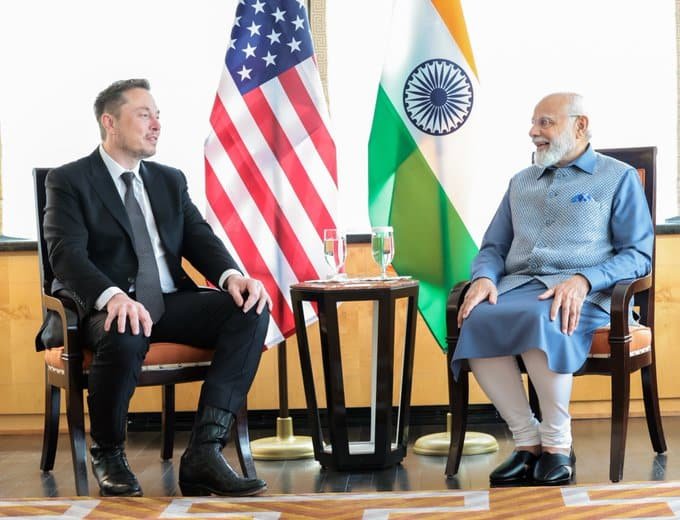
Indian Prime Minister Narendra Modi met with The Chief Executive Officer (CEO) of Tesla and the world’s richest man Elon Musk, in New York on Wednesday.
“Great meeting you today @elonmusk! We had multifaceted conversations on issues ranging from energy to spirituality,” Modi wrote in his tweet along with a picture of Musk.
“I am confident that Tesla will be in India and will do so as soon as humanly possible,” Musk told reporters after meeting Modi.
“We do not want to jump the gun on an announcement but I think it is quite likely that it will be a significant investment in our relationship with India,” he said. “I would like to thank the prime minister for his support and hopefully we will be able to announce something in the not so distant future.”
In a different statement, Musk as reported by Indian Express, said that he was a fan of Modi, and that “India has more promise than any large country in the world. He (PM Modi) really cares about India because he is pursuing us to make significant investments in India.”
India is great for solar energy investment, the American magnate said, describing his talks with the prime minister as “excellent.”
The Indian PM’s meeting with Twitter’s CEO comes a few days after Co-founder of Twitter, Jack Dorsey, in an interview with YouTube channel Breaking Points talked about censorship requests he received from the Indian government led by Prime Minister Narendra Modi.
A reporter asked for Musk’s reaction on Jack Dorsey’s statement to which he replied, “Twitter does not have any choice but to obey local governments”
“We will do our best to provide the freest speech that is possible under the rule,” he added.
To my ques on @jack's remarks on India, @elonmusk – We cannot apply America to Earth. Twitter didn't have a choice but to obey local govts. If we don't obey local laws then we will get shut down. We will do our best to provide the freest speech that is possible under the rule pic.twitter.com/n8NvWv436r
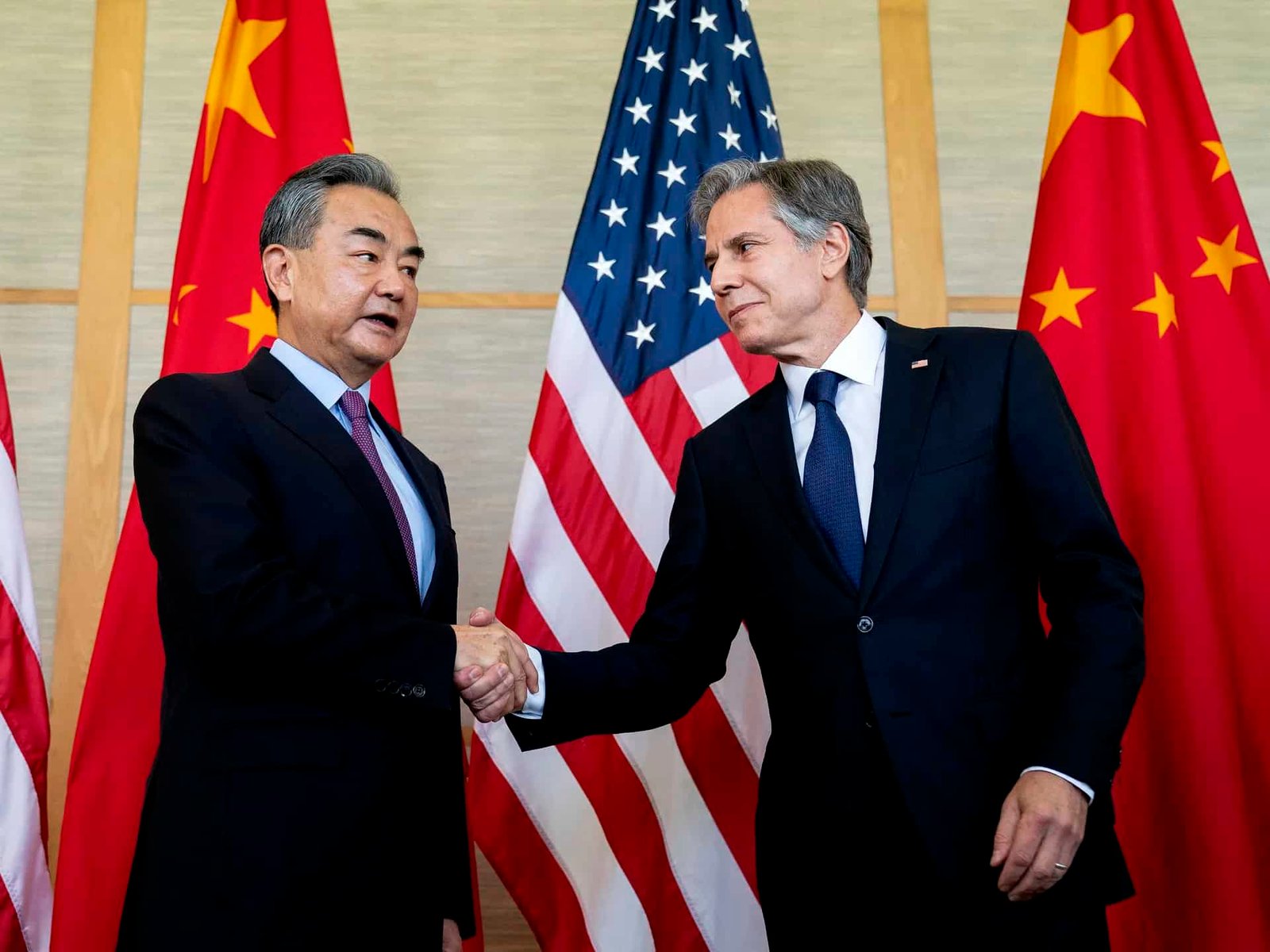
US Secretary of State Anthony Blinken met with Chinese officials during a rare trip to Beijing, as relations between the two superpowers continue to deteriorate. Blinken is the first man of his post to meet Chinese leader, Xi Jinping, since 2018. Both Blinken and Chinese Foreign Minister Qin Gang described the talks, held on Sunday, as “candid and constructive”.
Representatives of the two states ‘seemed to agree on little beyond keeping the conversation [of diplomacy] going’ as reported by Reuters. They did not appear to make concrete progress on disputes that include Taiwan, trade, human rights and fentanyl.
According to the State Department, Blinken stressed the “need to reduce the risk of misperception and miscalculation,” thereby underscoring the importance of open communication channels to manage their competition.
Describing the US-China relationship as being at its lowest point since diplomatic relations began, China’s top diplomat Wang Yi said the root cause was the United States’ incorrect perception of China.
“We must take a responsible attitude toward the people, history and the world, and reverse the downward spiral of US-China relations,” Wang was reported to have said during the meeting, as released in a statement by China’s foreign ministry.
Xi Jinping hails ‘progress’
On Monday, Blinken met with Chinese leader Xi Jinping. Their meeting could be instrumental in facilitating a summit between Xi and U.S. President Joe Biden later this year.
The visit reflects attempts from both states in ensuring disputes between the economic superpowers do not develop into outright conflict.
Xi praised the talks as “progress” between the two superpowers. Biden said he hoped to meet the Chinese leader again after their lengthy meeting in November, during the G20 summit in Bali, Indonesia.
“I’m hoping that, over the next several months, I’ll be meeting with Xi again and talking about legitimate differences we have but also how there’s areas we can get along,” Biden said, as reported by The Guardian.
It is likely that the two leaders will be in attendance at the next G20 summit, which is to be held in New Delhi in September. Xi is also invited to travel to San Francisco in November, to attend the Asia-Pacific Economic Cooperation forum.
Pakistan, which is facing a severe economic crisis and chronic energy shortages, has turned to Russia for oil imports. However, Pakistan’s petroleum minister, Musadik Malik, believes that the future of energy lies in diversification, particularly towards green energy sources.
During his visit to the United States, Malik confirmed that Pakistan had placed an initial order for Russian oil, which will arrive within a month, and based on the results, the country will assess how much to import in the future.
Pakistan, which imports 84 per cent of its petroleum products, mainly from Gulf Arab allies Saudi Arabia and the United Arab Emirates, has been transparent about its dealings with Russia. Malik stated that their initial dealings with Moscow were far less than those of other countries, particularly China and India, whose enthusiastic buying of Russian oil has cast a shadow over India’s warming relationship with Washington.
Malik spoke with US companies during his visit about buying shale liquified natural gas, upgrading Pakistani refineries and storage facilities, exploring offshore oil and gas and starting horizontal drilling, a method that Pakistan has not yet used.
However, he emphasized that his talks with the United States also included support for green energy sources, in line with Pakistan’s goal of generating 30 per cent of its electricity from renewables by 2030, including a plan for widespread solar power on rooftops.
Pakistan is one of the nations most vulnerable to climate change, with floods last year submerging one-third of the country. Geoffrey Pyatt, the assistant secretary of state for energy resources, has promised US backing for Pakistan’s renewable goals during his visit to the country.
According to France24, Malik also believes that the future of energy security lies in green energy sources. Although Pakistan’s share of Russian oil imports is small, it helps, and the country is open to cheaper sources of energy.
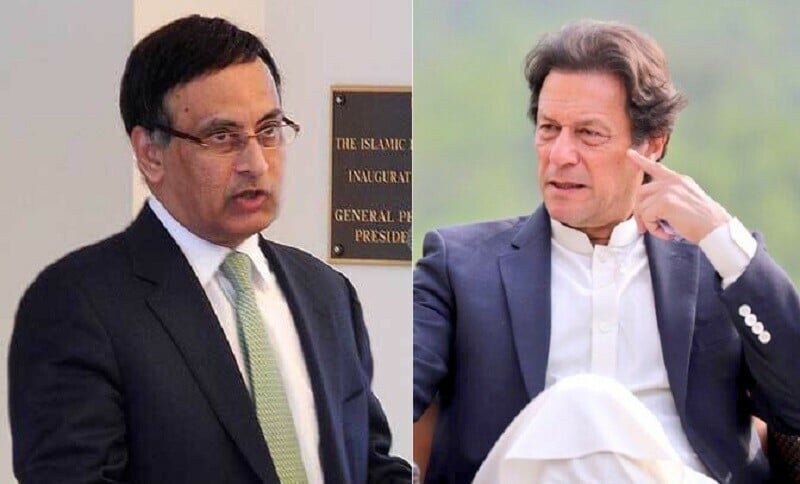
Husain Haqqani, a name we have often heard but most recently has been in limelight since Pakistan Tehreek-e-Insaf (PTI) Chairman Imran Khan blamed him for being a key figure behind the foreign conspiracy to remove him from power as prime minister.
So the question remains; who is Haqqani, and why is he the recent target of Khan’s blame game?
Who is Hussain Haqqani?
Haqqani is Pakistan’s former ambassador to the United States of America (USA), serving from 2008 to 2011. He currently serves as Director of South and Central Asia at Hudson Institute.
Haqqani was a central character in the Memogate controversy wherein, in May 2011, it was claimed that he played a central role in the drafting of a memo of a message from the Pakistan People’s Party (PPP) government which was seeking the Obama administration’s support to reign in the Pakistan military after the Osama bin Laden raid in Abbottabad. The controversy eventually led to Haqqani resigning as ambassador and significantly weakening the PPP government.
Why does Khan blame Haqqani for his ouster?
After one year of being ousted from power, Khan blamed Haqqani for conspiring with Gen Bajwa and removing his government.
Background:
In January, Khan accused former Chief of Army Staff (COAS) General (retd) Qamar Javed Bajwa of hiring the services of Haqqani for lobbying in the US while he was army chief. He also said Haqqani launched a campaign against him and had been promoting the former army chief in the US.
Last year in December, it was reported that a former CIA station manager in Islamabad, Robert Grenier, and Pakistan’s former ambassador to the US, Haqqani, were hired to lobby for PTI in Washington. Soon this information changed course and many PTI insiders claimed that these men were lobbying against their own government and played a key role in bringing it down.
According to media reports PTI officials in the US also claimed that both men — Grenier and Haqqani — were working for a senior figure in the military establishment. Dawn reported that the two men were hired to lobby by a Pakistani government official, Iftikhar Durrani, who had served as a special assistant to then-prime minister Imran Khan.
Journalist Waqas Ahmed claimed in December 2022 that Haqqani met a top Pakistani official in Dubai months before the PTI government was toppled, but the former ambassador denied the claim. The meeting which Ahmed reported was allegedly with the then COAS Gen Bajwa.
Backing Ahmed’s claims, PTI’s Senior Vice President Shireen Marzari said that the Haqqani-Bajwa files, now in public, clearly indicated that the whole project of regime change conspiracy was done covertly, and that “Haqqani was hired to undermine the PTI government.”
What does Haqqani say about Khan’s blame game?
The former ambassador has finally addressed the allegations on Geo News programme ‘Aaj Shahzeb Khanzada Kay Sath’. “It is stupid to say that I ended his [Imran Khan] government. I am neither a lobbyist nor have I received any payment in this regard. I have good relations with people in the US,” he said.
Stating firmly that the US does not need him to evaluate Imran Khan’s image, Haqqani said, “My research is related to the politics in Pakistan.”
Calling out Khan for having paranoid delusions, Haqqani said that the PTI chief says things without any proof and if he has evidence, he should very much bring it to light rather just blaming people.
“I don’t take U-turns like Khan sahib,” said Haqqani, adding that a lot of people contact think tanks in the US for research. He added that the role of lobbies, journalists and scholars are different from each other.
Pointing out that Khan even called him a traitor because of his stance, Hussain Haqqani stressed that the former Premier was removed from power through the votes of 174 members of the assembly and that he has “nothing to do with any of these MNAs”.
عمران خان اپنی گزشتہ سال کی تقریرصبح بھول جاتےہیں۔26سال سےاپنااینٹی امریکاامیج بناکرکہہ رہےہیں کہ حسین حقانی نےامریکاکوبتایاکہ عمران خان اینٹی امریکاہے۔دنیااسی لیےانکی عزت نہیں کرتی کیونکہ انہیں پتاہےکہ وہ بغیرثبوت جھوٹےالزامات لگاتےہیں۔حسین حقانی 1/2
In the last 26 years, Haqqani said Khan created his anti-American image, adding, “I did not stand on a container and swore at anyone, later asking for forgiveness.”
The former ambassador further said that Gen (retd) Bajwa and his organisation convinced the nation for many years that his opinion is “anti-Pakistan”.
“You [Khan] should accept the vote of no-confidence why are you dragging me into it,” asked Haqqani on the show. “I haven’t been to Pakistan for 11 years and if someone came to meet me then they should be questioned,” said Haqqani regarding the meeting with Gen Bajwa, adding that he himself was appearing on a Pakistani news channel after 11 years.
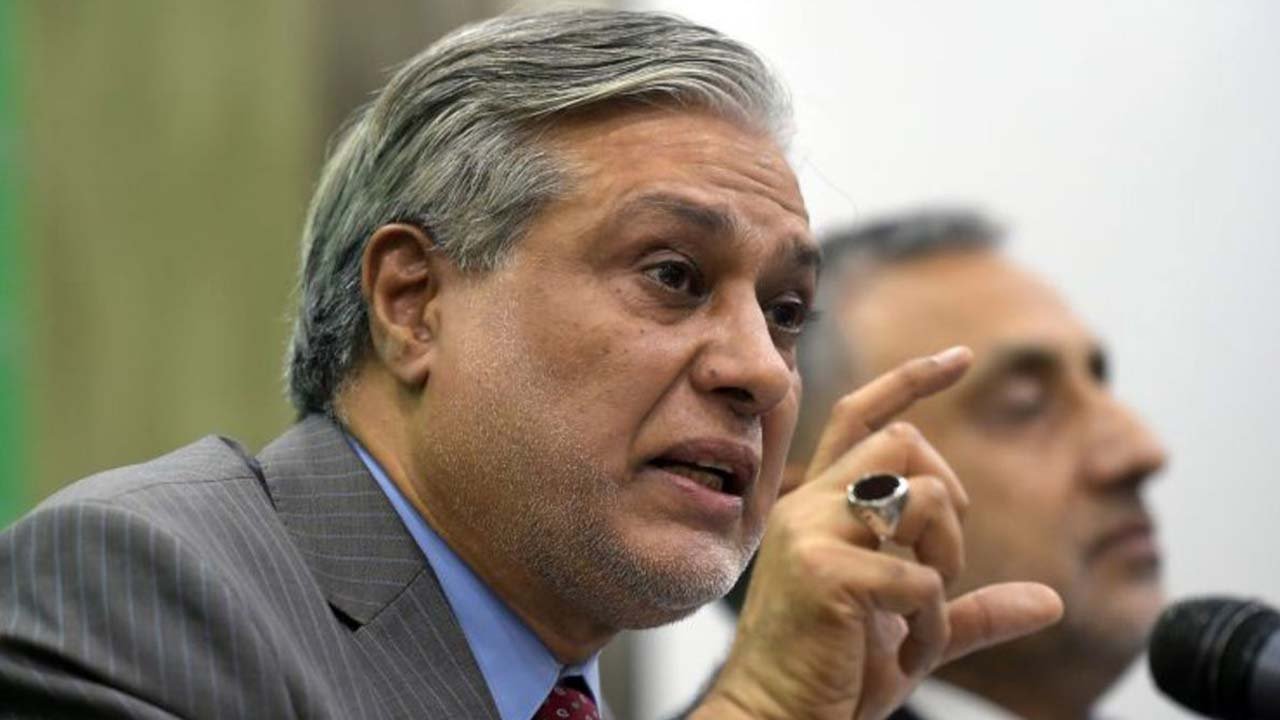
Finance Minister, Ishaq Dar, has cancelled his scheduled trip to the United States next week to meet with the International Monetary Fund (IMF) and World Bank. The reason cited for the pull-out is the “domestic state of affairs” in the country, as the deepening political uncertainty has made it difficult for Dar to attend the World Bank-IMF spring meetings that were supposed to take place in Washington from April 10 to 16.
Dar’s original plan was to address concerns about the government’s continuity, future economic plans, and bridging the trust deficit with multilateral lenders. However, with his withdrawal, the Minister of Economic Affairs, Sardar Ayaz Sadiq, will also not travel to the United States. The government will now be represented by Finance Secretary Hamed Yaqoob Sheikh and Economic Affairs Secretary Kazim Niaz at the WB-IMF spring meetings.
The decision by the finance minister to withdraw may also result in the cancellation of meetings with his Saudi Arabian counterpart and the UK state minister for development. Dar was supposed to begin his trip on Monday with a meeting with Nathan Porter, the IMF’s Mission Chief in Pakistan, which was critical as Pakistan and the IMF were no longer actively negotiating following the government’s decision to announce petrol subsidies.
Besides the IMF and WB, Dar was scheduled to meet with representatives from the three international credit rating agencies that had downgraded Pakistan. The finance ministry had also scheduled meetings with foreign commercial banks to persuade them to release loans.
However, the Pakistan delegation may still get to meet with IMF’s deputy managing director Antoinette Sayeh, who follows Pakistan closely. It is uncertain whether a meeting with Managing Director Kristalina Georgieva would take place or not. Some reports have cited diplomatic protocol issues that prevent low-ranking dignitaries from meeting presidents/directors/leaders of various multilateral institutions and finance ministers from various countries.