Tag: UNRWA

  • Austria to resume aid to UN agency for Palestinians

    Austria to resume aid to UN agency for Palestinians

    Austria said on Saturday that it will restore its funding to the UN agency for Palestinian refugees after suspending it over allegations that staff were involved with the Hamas.

    Israel alleged in January that some United Nations Relief and Works Agency (UNRWA) employees may have participated in the Hamas attacks on Oct. 7 that triggered the genocide in the Gaza Strip.

    In the weeks that followed, numerous donor states, including Austria, suspended or paused some $450 million in funding.

    Many, including Germany, Sweden, Canada and Japan, had since resumed funding, while others have continued to hold out.

    “After analysing the action plan in detail” submitted by UNRWA “to improve the functioning of the organization,” Austria has decided to “release the funds,” its Foreign Ministry said in a statement.

    A total of 3.4 million euros ($3.7 million) in funds have been budgeted for 2024, and the first payment is expected to be made in the summer, the statement said. 

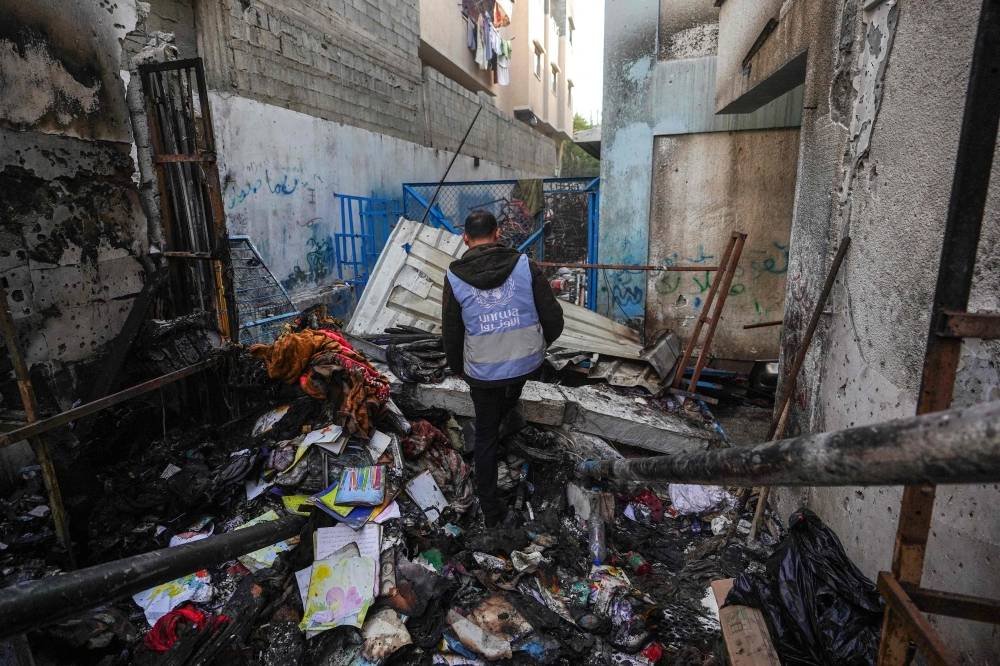
    An UNRWA staff member checks a burned area at a school housing displaced Palestinians that was hit during the ongoing conflict between Israel and Hamas, in Nuseirat in the central Gaza Strip on May 17, 2024. (Credit: AFP)

    “Some of the Austrian funds will be used in the future to improve internal control mechanisms at UNRWA,” it added.

    Austria said it will “closely monitor” the implementation of the action plan with other international partners, noting that “a lot of trust had been squandered.”

    The Alpine country said it has substantially increased support for the suffering Palestinian population in Gaza and the region since Oct. 7, making 32 million euros ($34.8 million) in humanitarian aid available to other international aid organizations.

    Israel’s has massacred at least 35,303 people, mostly civilians, according to data provided by the health ministry in the Gaza territory.

  • Want to help Gaza? Stream Macklemore’s song as many times as you can

    Want to help Gaza? Stream Macklemore’s song as many times as you can

    With his most recent song Hind’s Hall, rapper, Macklemore has once again entered the political sphere, endorsing rallies by American college students in favour of Gaza. The Seattle native shared the explosive song on social media and pledged to donate all streaming service profits to the United Nations Relief and Works Agency (UNRWA), which supports Palestinian refugees.

    Previously, the song was not available on big platforms like YouTube and Spotify but is now streaming on all platforms, ironically, with a warning that it may be inappropriate for some users. However, the description highlights that all the proceeds will go to the UN agency for relief work in Gaza.

    The song’s title originates from Columbia University student protestors who changed Hamilton Hall’s name to Hind’s Hall in honour of six-year-old Hind Rajab, who was cruelly slain by Israeli forces in Gaza. The song’s images combine video of police aggression against student demonstrators with tragic blasts in Gaza, a moving show of solidarity with the Palestinian people.

    He said, “When I was seven, I learned a lesson from Cube and Eazy-E. What was it again? Oh yeah, f**k the police.”

    The musician continues, criticising US diplomatic backing for Israel and President Joe Biden. He also states that he will not be voting for the incumbent in the next election.
    “Where do you draw the line for genocide? Destroying every college in Gaza and every mosque,” as well as “Forcing everyone into Rafah and dropping bombs.”
    He squarely blames Biden for the bloodshed, stating, “The blood is on your hands, Biden, we can see it all.”
    With over 2,000 students detained nationwide during a wave of pro-Palestinian demonstrations, including over 100 at Columbia University alone, the song’s release coincides with the protests. Last week, pro-Palestinian demonstrators took over a Columbia University building, intensifying a conflict with authorities who have started penalising students for failing to take down tents erected on the New York campus.

    One protestor screamed from within, “This building is liberated in honor of Hind, a six-year-old Palestinian child murdered in Gaza by the Israeli occupation forces funded by Columbia University,” and others outside repeated him.
    Minutes after the protesters gained access to the building, New York City police officers arrived outside the school gates in unmarked cars, the Columbia Spectator newspaper reported. It said police told the paper they would only enter school grounds if someone was injured.

  • How humanitarian aid reaches war-torn Gaza

    How humanitarian aid reaches war-torn Gaza

    Most aid bound for war-ravaged Gaza arrives overland from neighbouring Egypt but Israel and UN agencies clash on how much actually makes it inside the Palestinian territory.

    The volume of aid entering Gaza by road each day through the Rafah crossing from Egypt is insufficient, aid workers say, blaming rigorous Israeli inspections at least in part.

    With no truce in sight to pause the Israel-Hamas war, here is a look at how aid currently reaches Gaza and what alternatives are being weighed to alleviate the crisis in the besieged Palestinian territory.

    First stop: Egypt

    Most Gaza-bound goods arrive by sea in the Egyptian ports of Port Said or El-Arish.

    El-Arish is closer to Gaza but also smaller, and was quickly overwhelmed by the volume of shipments arriving, aid groups say.

    Israeli authorities, who have blockaded Gaza since Hamas took sole control of the Palestinian territory in 2007, require that all aid entering Gaza be inspected by them.

    The main inspection area for goods is Kerem Shalom in southern Israel, not far from the Rafah crossing.

    Another inspection area exists in Nitzana, on the Israeli-Egyptian border about 40 kilometres (25 miles) to the southeast.

    Long wait for trucks

    Before reaching the inspection areas, many aid trucks wait for days at the Egyptian side of the Rafah checkpoint.

    Once inspected, goods that are cleared to enter by Israel are unloaded from the mostly Egyptian trucks in the zone between Egypt and Gaza.

    The supplies are then loaded onto separate vehicles, driven by Gazans working for aid groups, for distribution inside the Palestinian territory.

    Cumbersome screenings are a major reason shortages are so glaring, aid workers say.

    Israel blames a lack of sufficient capacity on the Palestinian side to distribute the aid once it gets in.

    In recent days, Israel took issue with UN figures on the number of trucks entering Gaza, accusing UN Palestinian refugee agency UNRWA of counting only trucks it had processed, not those processed by Israel.

    Heading north

    For months, aid groups and foreign governments including top ally the United States have urged Israel to reopen border crossings into the north of Gaza, where the humanitarian crisis is most severe.

    Israel announced that six World Food Programme (WFP) aid trucks entered the north directly from its territory in early March, in what it described as a “pilot project”.

    The trial was not extended, however, and aid convoys bound for northern Gaza must travel the length of the territory negotiating battlegrounds, Israeli bombardments and mobs of desperate civilians.

    In March, the WFP said one of its convoys had been blocked by Israeli forces inside Gaza before it could reach the north.

    After turning back, the agency said the convoy was looted by a “crowd of desperate people”.

    According to Israeli authorities, 28 trucks reached northern Gaza on Wednesday.

    They were among 298 trucks that Israel said entered Gaza on Wednesday, still far below the number aid groups say is needed to sustain the territory’s 2.4 million people.

    Under pressure from the international community, Israel announced on April 5 that it would open a new crossing directly into northern Gaza, without specifying its exact location or when it would open.

    By air and by sea

    In a bid to get round the logjam, several Arab and European governments, later joined by Washington, began carrying out aid airdrops over Gaza, particularly the north.

    But the airdrops have proved controversial, with multiple deaths among civilians on the ground who were crushed by aid crates when parachutes failed to open, or drowned trying to reach others accidentally dropped in the sea.

    There has also been an attempt to establish a maritime aid corridor from the Mediterranean island of Cyprus but it has largely fizzled out after seven aid workers were killed by Israeli fire on April 1 as they unloaded food from the second flotilla to make the crossing.

    Even though the Cypriot government insists it has not given up on the aid corridor, no further crossings are currently planned after the US and Spanish charities behind the first two suspended their operations in the region.

    UN agencies have in any case said repeatedly that road convoys are the only practical way of meeting Gaza’s needs.
  • UN aid agency in Gaza hit by Israel, injuries reported

    UN aid agency in Gaza hit by Israel, injuries reported

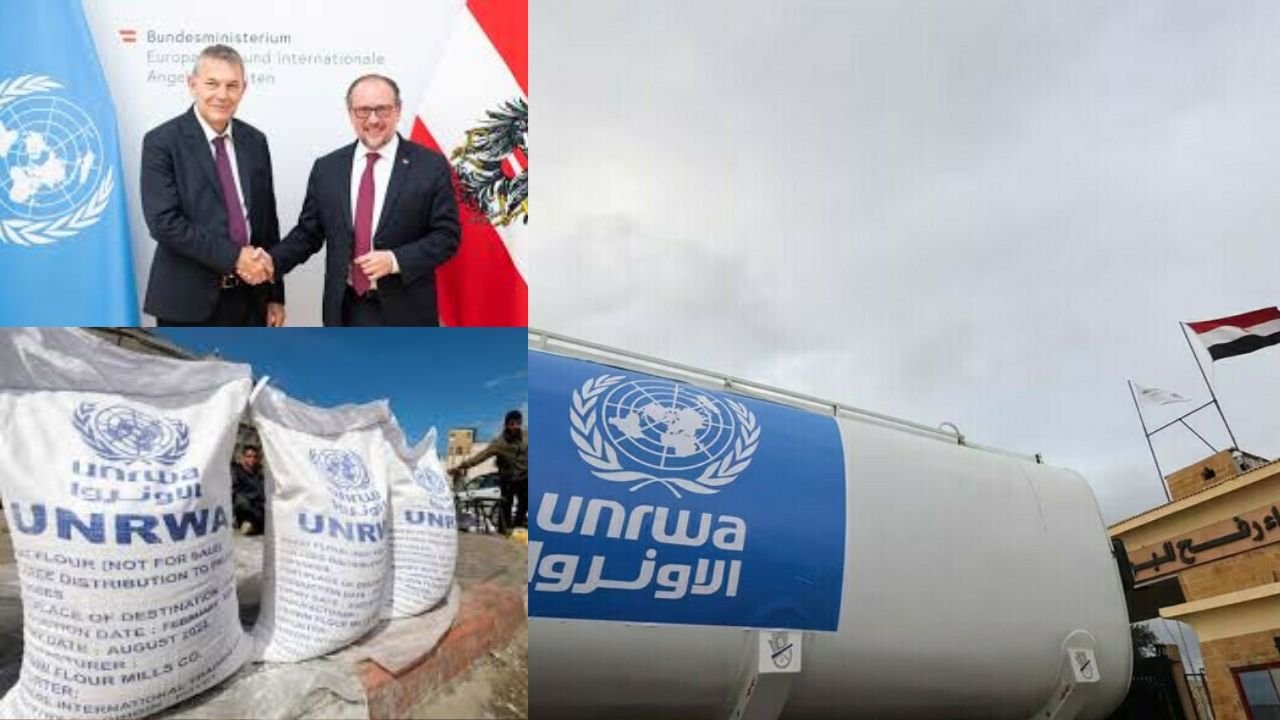
    The United Nations agency for Palestinian refugees said one of its aid warehouses in the war-ravaged Gaza Strip was “hit” on Wednesday, wounding scores of people.

    “At least one UNRWA staff member was killed and another 22 were injured when Israeli forces hit a food distribution centre in the eastern part of Rafah” in southern Gaza, the agency said in a statement.

    The health ministry in Gaza Strip earlier had said four people were killed in the “bombing of the warehouse”.

    Wednesday’s incident comes amid mounting concern about worsening humanitarian conditions in Gaza, where Israel has carried out military operations since October intended to eliminate the Hamas militant group.

    “Today’s attack on one of the very few remaining UNRWA distribution centres in the Gaza Strip comes as food supplies are running out, hunger is widespread and, in some areas, turning into famine,” said UNRWA chief Philippe Lazzarini.

    He also said the UN had shared coordinates of the facility with the Israeli army on Tuesday.

    An UNRWA spokeswoman said the facility was used “to distribute much-needed food and other lifesaving items to displaced people in southern Gaza”.

    At least 165 UNRWA employees have been killed since the beginning of the war on Gaza, Wednesday’s UNRWA statement said.

    “More than 150 UNRWA facilities were hit, some totally destroyed, among them many schools,” it said.

      ‘How can they bombard us?’ 

     An AFP photographer saw victims of the strike on Wednesday arriving at Al-Najjar hospital in Rafah, at least one of whom was identified by other people at the hospital as a UN employee.

    Witnesses said the strike compounded security fears in Rafah, which is overcrowded with 1.5 million mostly displaced people, further marring the normally festive Muslim fasting month of Ramazan which began on Monday.

    “It’s an UNRWA centre, expected to be secure,” said Rafah resident Sami Abu Salim.

    “Some came to work to distribute aid to the people in need of food during the holy month of Ramazan. Suddenly, they were struck by two missiles.”

    Hasan Abu Auda, displaced from Beit Hanoun in northern Gaza, said people had come to the warehouse “to sustain themselves for their daily meals”.

    “It’s Ramazan today,” he said. “How can they bombard us during the month of Ramazan?”

    Israel’s aggressive military campaign in Gaza has killed at least 31,272 people, mostly women and children, according to the health ministry in the Hamas-run territory.

    Gaza’s dire food shortages after more than five months of war have resulted in 27 deaths from malnutrition and dehydration, most of them children, the ministry says.

    Cumbersome Israeli security checks on all cargoes entering the territory slow down the delivery of aid, and some trucks are sent back when they are found to contain forbidden items, aid workers say.

    Israeli authorities say bottlenecks are caused by aid piling up on the Palestinian side as there are not enough trucks to distribute it.

  • Gaza needs food to be airdropped to prevent starvation

    Gaza needs food to be airdropped to prevent starvation

    The people in Gaza who have managed to escape death by Israeli strikes in a war that has been forced on them are now dying of hunger and starvation. Videos of bread made out of animal feed and kids collecting flour accidently spilled on the ground are making rounds on social media leading to the drive for the ceasefire taking momentum. As recently as February 20, the UN Food Agency put a pause on its deliveries in the North of Gaza until the conditions are in place that allow for safe distributions.

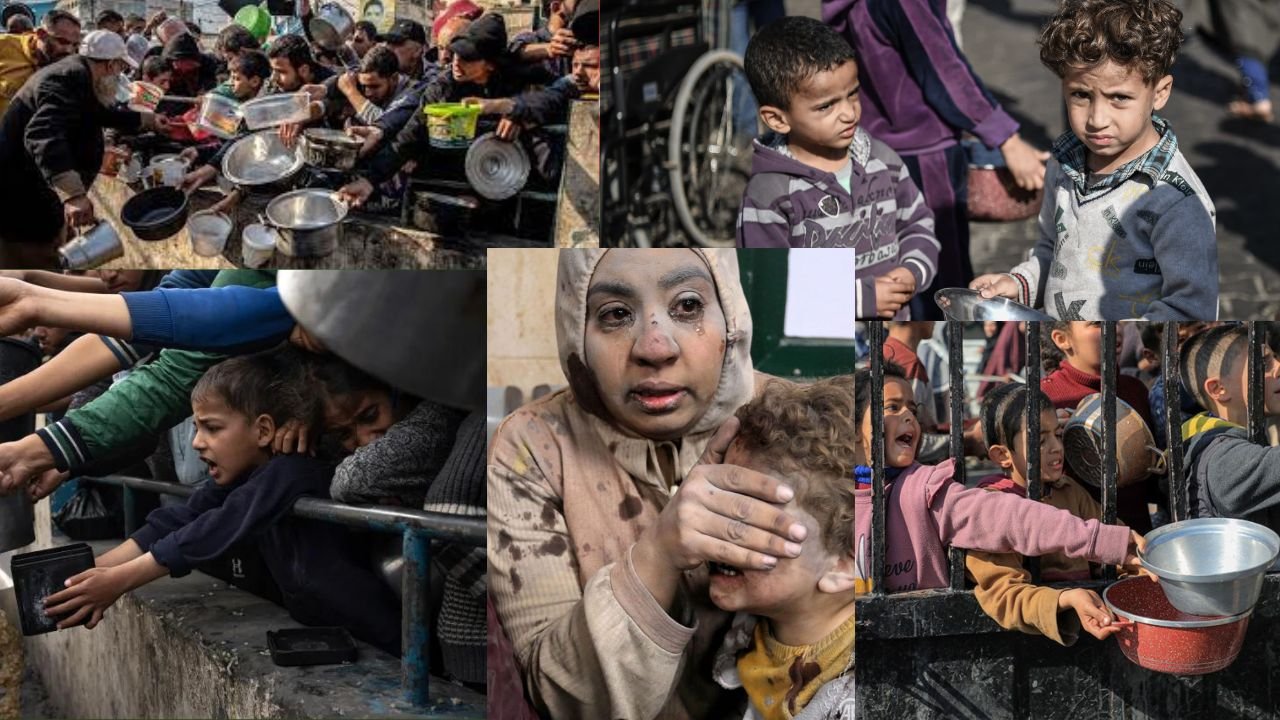
    Families in Gaza are forced to forage for scraps of food left by rats and eating leaves out of desperation to survive with nearly five months of war and rapidly declining aid supplies leaving all 1.1 million children in Gaza facing starvation, Save the Children said. 

    Hind Khoudary, the Palestinian Journalist in Gaza reporting from the ground, took to her Instagram to plead to the world to airdrop food in Gaza as people have started eating leaves and are making bread out of animal feed. “People are eating leaves and animal food. “I am calling the world and all the countries to Airdrop food to Gaza,” she said in an Instagram story.

    Ali Jadallah, a photojournalist from Gaza, shared how her mother, a dialysis patient, is suffering because of the food and health crisis in Gaza. Finding food in Gaza is the most difficult thing nowadays.

    Journalist Anas Ajmal reported how he has been searching for a meal but could not find one in days.

    “Gaza has become a place of death and despair,” stated the Secretary-General for Humanitarian Affairs Martin Griffiths.

    Videos of hundreds of desperate and hungry Gazans heckling the UNRWA aid truck emerged from the besieged strip. Many reports from Gaza have already been warning the global authorities of impending famine and loss of lives due to hunger.

    Back in December, Human Rights Watch had accused the Israeli government of intentionally starving civilians in Gaza as part of its offensive in the besieged Palestinian territory. “The Israeli government is using starvation of civilians as a method of warfare in the occupied Gaza Strip, which is a war crime,” the New York-based group charged in a report.

    Additionally, The Times posted a report about the famine-stricken conditions of the people of Gaza where a mother revealed how her breasts no longer produce milk because of long periods of starvation and how her children are suffering immensely. Explaining the food crisis the article explained how Gazans are forced to eat rotten food and hunt cats to fulfill their needs as famine hits Gaza.

    More than a million people are displaced in Gaza but none is safe from hunger. It is rampant in Gaza, it is in the wasteland of al-Mawasi encampment in Gaza where handfuls of dirty flour are kneaded by mothers to make bread for their children.

    It is in the fires, stoked with plastic bottles, which produce nothing but choking black smoke. Children in Gaza no longer play but lie around, exhausted by hunger. It is in food that is rotten and makes you sick but is eaten just the same. Bissan shared in one of her videos how people have been having the only bread they have with the salt.

    The last nail in the coffin has duly been the suspension of the aid program of the UN agency for Palestinian refugees. Established in 1949 following the first Arab-Israeli war, the agency provides services including schooling, primary healthcare, and humanitarian aid to Palestinians in Gaza, the West Bank, Jordan, Syria, and Lebanon. It is important to note that since the onset of the war on Gaza, Israeli authorities, including Prime Minister Benjamin Netanyahu, have accused it of fuelling anti-Israeli incitement – allegations it denies. UNRWA says it has provided aid to desperate people in Gaza and used its facilities to shelter those fleeing Israeli attacks. Meanwhile, the situation is getting worse with time.

    Time recently shared in an article, the hurdles around the idea of food airdrops in Gaza. “Some experts warn that humanitarian airdrops are not as simple as they sound. Aside from the cost of conducting them (up to seven times more than land transport, according to the U.N.’s World Food Programme), airdrops tend to be less efficient and more hazardous than other methods of providing humanitarian relief,” the article read.

    The biggest hurdle in Gaza’s case is the lack of safety in terms of the ongoing airstrikes of Israel and the damage it has done to the land of Gaza. Michel Schaffner, the head of air operations at the International Committee of the Red Cross, told TIME in an email that for this operation the specified land needs to be secure, large, and clean enough to be free of obstacles and people. “Once the cargo is on the ground, there need to be arrangements in place as regards who will collect it, where it will be stored, and how it will be distributed. … We do not do airdrops without these measures in place,” Time quotes him.

    Even though Israeli aggression is again the biggest opposing factor in this proposed solution, it is important to note that it is not a permanent solution to this problem, a ceasefire is.

    An Arabic saying implies that if someone dies of hunger, the neighbour should be charged with murder yet the whole world is watching a huge population dying of hunger and there is no action regarding that.

  • Israel alleges UN organisation involved in Oct 7 attack, funding suspended for agency

    Israel alleges UN organisation involved in Oct 7 attack, funding suspended for agency

    Australia and Canada have suspended their funding to the UN agency for Palestinian refugees, after Israel accused several employees of involvement in October 7 attacks by Hamas.

    Australian Foreign Minister Penny Wong said on Saturday she was “deeply concerned” by the allegations against the agency, UNRWA.

    “We are speaking with partners and will temporarily pause disbursement of recent funding,” she wrote on social media platform X.

    “We welcome UNRWA’s immediate response, including terminating contracts and launching an investigation, as well as its recent announcement of a full investigation into allegations against the organization,” she added.

    Canada’s International Development Minister Ahmed Hussen on Friday announced that Ottawa had “temporarily paused any additional funding to UNRWA while it undertakes a thorough investigation into these allegations”.

    “Canada is taking these reports extremely seriously and is engaging closely with UNRWA and other donors on this issue,” he wrote on X.

    “Should the allegations prove to be accurate, Canada expects UNRWA to immediately act against those determined to have been involved in Hamas’s terrorist attacks.”

    The moves come after the United States halted its funding to UNRWA on Friday, saying the allegations were against 12 employees who “may have been involved” in the Hamas attack that triggered the war in Gaza.

    The United Nations agency for Palestinian refugees says it has opened an investigation into some employees Israel alleges were involved in the October 7 attacks, and that it has severed ties with those staff members.

    “The Israeli authorities have provided UNRWA with information about the alleged involvement of several UNRWA employees in the horrific attacks on Israel on October 7,” Philippe Lazzarini, commissioner-general of the UN Relief and Works Agency for Palestine Refugees in the Near East (UNRWA), said on Friday.

    UN chief Antonio Guterres has pledged to conduct an “urgent and comprehensive independent review of UNRWA”.

    Established in 1949 following the first Arab-Israeli war, the agency provides services including schooling, primary healthcare and humanitarian aid to Palestinians in Gaza, the West Bank, Jordan, Syria and Lebanon.

    It is important to note that since the onset of the war on Gaza, Israeli authorities, including Prime Minister Benjamin Netanyahu, have accused it of fuelling anti-Israeli incitement – allegations it denies.

    UNRWA says it has provided aid to desperate people in Gaza and used its facilities to shelter those fleeing Israeli attacks.

    The agency’s shelters have also been repeatedly targeted by Israeli missiles during the war, despite pleas for safe passages to deliver humanitarian aid and assistance.