Tag: UNSC

  • UN Security Council seeks inquiry into mass graves in Gaza

    UN Security Council seeks inquiry into mass graves in Gaza

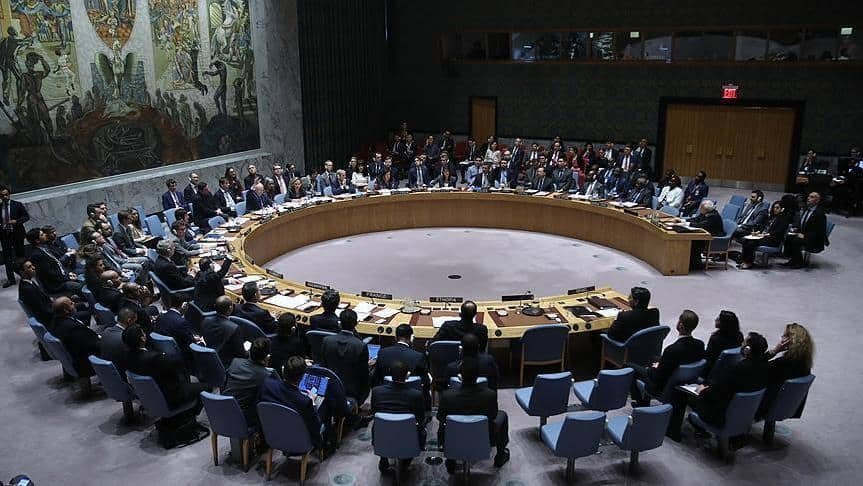
    The UN Security Council on Friday called for an immediate and independent investigation into mass graves allegedly containing hundreds of bodies near hospitals in Gaza.

    In a statement, members of the council expressed their “deep concern over reports of the discovery of mass graves, in and around the Nasser and Al-Shifa medical facilities in Gaza, where several hundred bodies, including women, children and older persons, were buried.”

    The members stressed the need for “accountability” for any violations of international law and called on investigators to be given “unimpeded access to all locations of mass graves in Gaza to conduct immediate, independent, thorough, comprehensive, transparent and impartial investigations.”

    Hospitals in the Gaza Strip have been repeatedly targeted since the beginning of the Israeli military operation in the Palestinian territory, following the October 7 attack.

    Israel has accused Hamas of using medical facilities as command centers and to hold hostages abducted during the initial attack.

    The World Health Organization (WHO) said in April that Al-Shifa, in Gaza City, had been reduced to an “empty shell,” with many bodies found in the area.

    The Israeli army has said around 200 Palestinians were killed during its military operations there.

    Bodies have reportedly been found buried in two graves in the hospital’s courtyard.

    The UN rights office in late April had itself called for an independent investigation into reports of mass graves at Al-Shifa and at the Nasser Medical Complex in Khan Yunis.

    Gaza officials said at the time that health workers at the Nasser complex had uncovered hundreds of bodies of Palestinians they alleged had been killed and buried by Israeli forces.

    Israel’s army has dismissed the claims as “baseless and unfounded.”

    The statement Friday from the Security Council did not say who would conduct the investigations.

    But it “reaffirmed the importance of allowing families to know the fate and whereabouts of their missing relatives, consistent with international humanitarian law.”

    Israeli genocide against Palestinians has killed at least 34,943 people in the Gaza Strip, mostly women and children, the health ministry in the Hamas-run territory said Friday.
  • UN Security Council vote on Gaza faces threat of US veto

    UN Security Council vote on Gaza faces threat of US veto

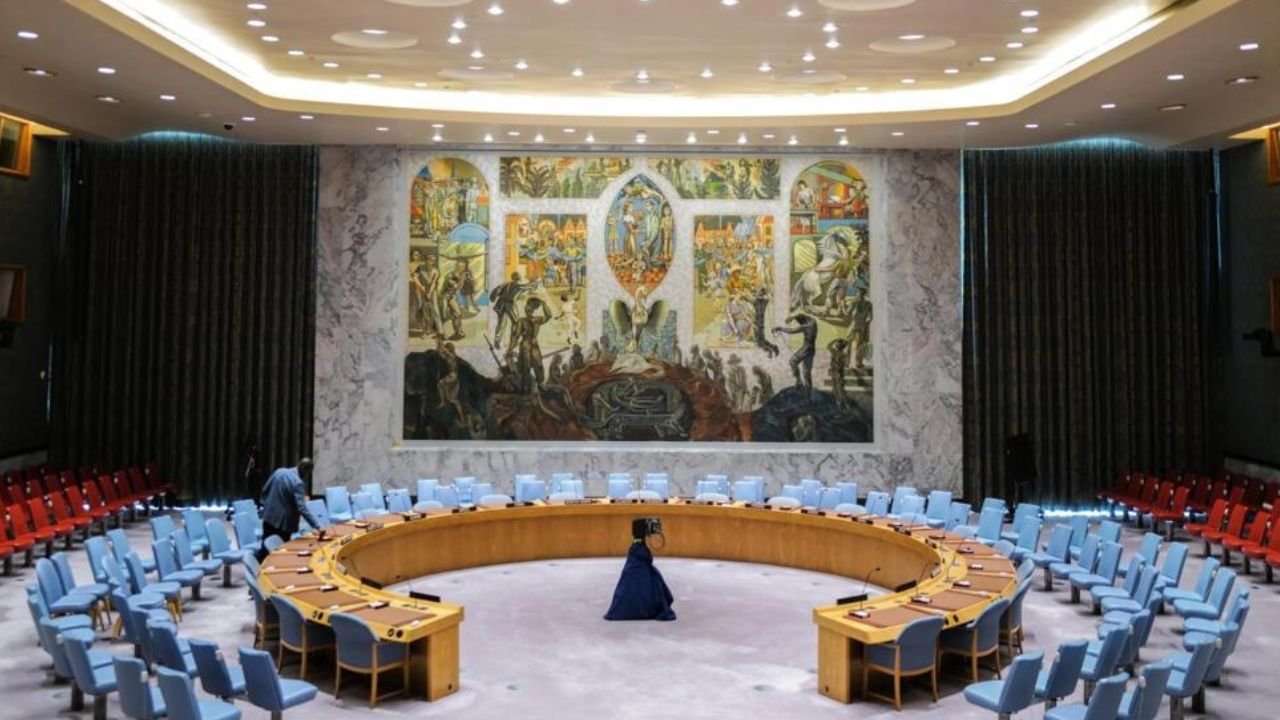
    United Nations (United States) (AFP) – The UN Security Council will vote on a new draft resolution Tuesday calling for an immediate ceasefire in Gaza, despite threat of a third US veto on such a text.

    The document, prepared by Algeria, “demands an immediate humanitarian ceasefire that must be respected by all parties.”

    The vote comes as Israel prepares to move into the southern Gaza Strip city of Rafah, where some 1.4 million people have fled, as part of its mission to destroy “Hamas”.

    However it is facing increased pressure to hold off, including from its closest ally the United States.

    The draft resolution opposes the “forced displacement of the Palestinian civilian population.”

    It additionally demands the release of all Hamas hostages.

    Similarly to other previous drafts spurned by the United States and Israel, the new text does not condemn Hamas’s October 7 assault.

    That attack left about 1,160 people dead in southern Israel, mostly civilians, according to an AFP tally of official Israeli figures.

    Israel’s retaliatory campaign has killed more than 29,000 people in Gaza, mostly women and children, according to the latest count by the health ministry.

    The United States warned over the weekend that Algeria’s text was not acceptable, threatening to veto it.

    “We don’t believe that this Council product will help the situation on the ground,” US deputy ambassador to the UN Robert Wood said Monday.

    “If this resolution does come to a vote, it will not go forward.”

    According to Wood, the passage of such a ceasefire resolution would endanger ongoing delicate diplomatic negotiations which could see the release of hostages from Gaza.

    The United States instead began circulating an alternate draft, seen by AFP Monday.

    While that text does include the word “ceasefire” — which the United States has previously avoided, vetoing two drafts in October and December which used the term — it does not call for the end of hostilities to happen immediately.

    ‘Moral obligation’

    Echoing recent comments by President Joe Biden, the US draft supports a “temporary ceasefire in Gaza as soon as practicable, based on the formula of all hostages being released.”

    It also mentions concern for Rafah, stating that “a major ground offensive should not proceed under current circumstances.”

    There is no “deadline” for a vote on the American draft, a senior US official said Monday, adding there would be no “rush.”

    But even if there is no hurry, the US text “as it is… cannot pass,” one diplomatic source said, citing several issues around the phrasing of “ceasefire” and the risk that any text introduced to the 15-member body by the United States might face a veto from Russia.

    In any case, the mere fact the United States has introduced a counter-resolution is likely to “make Israel nervous,” Richard Gowan, an analyst at the International Crisis Group, told AFP.

    “The US is finally using the Security Council as a platform to signal the limits of its patience with the Israeli campaign,” Gowan said.

    Despite the specter of a US veto, Palestinian Ambassador to the UN Riyad Mansour had insisted on a vote days ago, saying that the Arab Group had been “more than generous to give our colleagues additional time.”

    According to Gowan, “We are now grinding towards a US veto that nobody really wants, but nobody can avoid,” noting that the vote will fall within a few days of the second anniversary of Russia’s invasion of Ukraine.

    “I am sure that Russia will use the opportunity (of a US veto) to accuse the US of having double standards when it comes to dealing with civilian suffering in Ukraine and the Middle East,” Gowan said.

    Russian UN Ambassador Vasily Nebenzya said it is “sad that we cannot come (up) with a ceasefire… and that only one delegation is preventing that.”

    Chinese representative Jun Zhang said the Security Council has a “moral obligation” to take action “to stop the killings,” pointing out that the United States may veto such a move but meanwhile they are “always calling for protection of human rights.”

  • Modi accuses Pakistan of supporting cross-border terrorism at SCO Summit

    Modi accuses Pakistan of supporting cross-border terrorism at SCO Summit

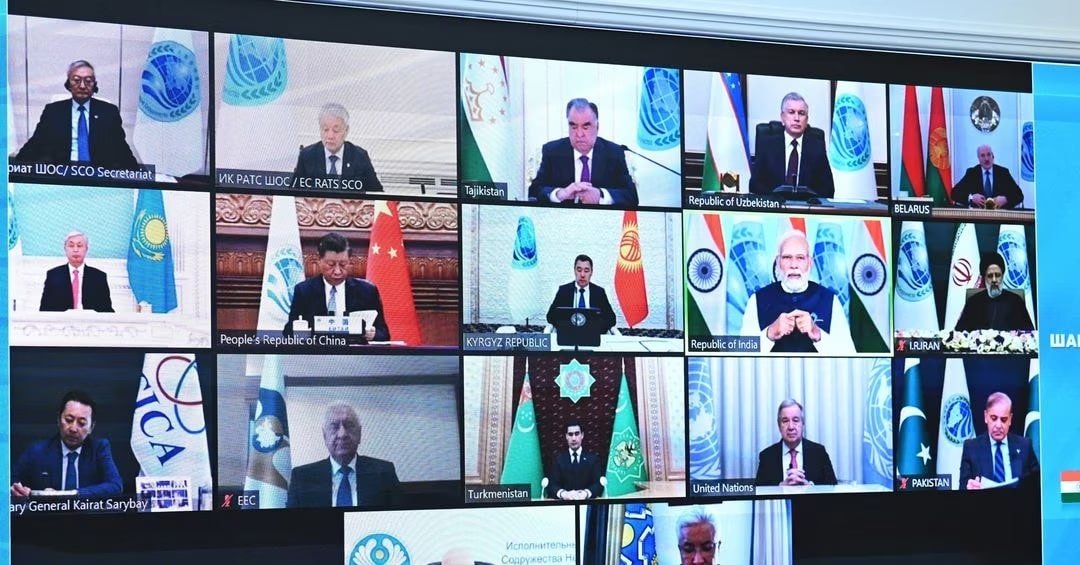
    This year, the Shanghai Cooperation Organisation’s (SCO) summit was hosted by India, where Indian Prime Minister Narendra Modi launched thinly veiled accusations against Pakistan, saying “some countries” are “terror havens“.

    Pakistan’s Prime Minister Shehbaz Sharif was in attendance, along with other SCO member countries leaders, such as Xi Jingping and Vladimir Putin.

    The SCO is a Eurasian political, economic and security organisation, which unites China, Russia, India, Kazakhstan, Kyrgyzstan, Pakistan, Tajikistan, Uzbekistan, and, as of yesterday, Iran. It’s currently the world’s largest regional bloc in terms of geographic scope and population.

    Addressing the online summit, Dawn reports Modi to have said, “Some countries use cross-border terrorism as an instrument of their policies, provide shelter to terrorists. SCO should not hesitate to criticise such nations. There should be no place for double standards on such serious matters.”

    India claims that a part of the China–Pakistan Economic Corridor passage passes through a ‘disputed’ region. Modi told leaders that “terrorism has become a major threat to regional and global peace. Dealing with this challenge requires decisive action. Regardless of its form or manifestation, we must unite in our fight against terrorism.”

    Pakistan PM Shehbaz Sharif responded in turn, saying that the SCO stands for observance of the UN principles of sovereignty, territorial integrity and people’s right to self-determination, considered a reference to the Kashmir dispute.

    “UNSC resolutions offer us a workable framework for the resolution of longstanding disputes in the region,” Dawn reported Shehbaz to have said. “These must be addressed immediately and settled amicably before it is too late.”

    Kashmir has been a contentious point between the two countries since partition, but especially since India abolished Articles 370 and 35A in 2019. These articles were decades-old and provided a measure of autonomy to the disputed Muslim-majority region.

    In the earlier SCO summit in May, Pakistan’s Foreign Minister Bilawal Bhutto criticised India’s decision to scrap the special status of the disputed region of Kashmir, saying New Delhi’s unilateral move in 2019 had undermined the possibility of holding talks between the neighbours.

    India has also accused Pakistan’s military of backing Kashmiri rebels, a claim Islamabad has denied.

  • UN Security Council condemns ‘heinous and cowardly’ terrorist attack in Peshawar

    The United Nations Security Council (UNSC) condemned the “heinous and cowardly” terrorist attack in Peshawar at a mosque on Friday (March 4). The attack was claimed by the Islamic State-Khurasan (IS-K).

    The statement on Sunday said that the UNSC members expressed their deepest sympathy and condolences to the victims and the Pakistani government.

    “I condemn the horrific attack on a mosque in Pesh­awar during Friday prayers. My condolences to those who lost loved ones, and my solidarity with the people of Pakistan,” UN Secretary Gene­ral António Guterres tweeted on Friday.

  • ‘The UN must take action on India’s war crimes: PM Khan expresses solidarity with Kashmiris

    ‘The UN must take action on India’s war crimes: PM Khan expresses solidarity with Kashmiris

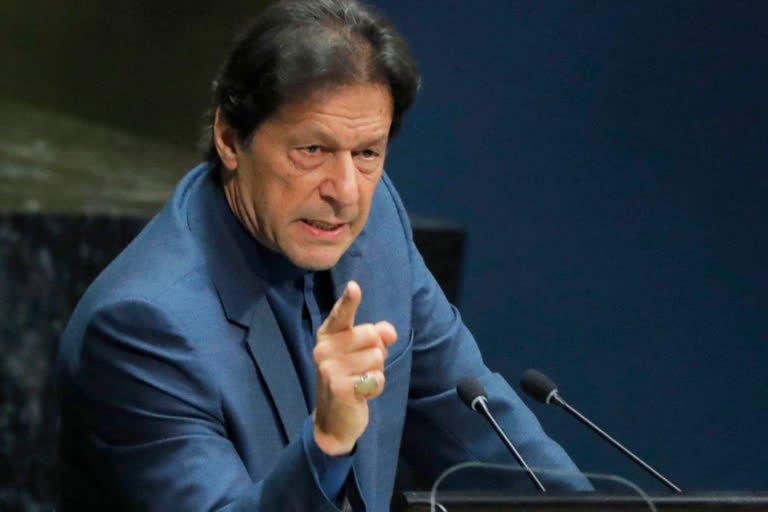
    Prime Minister (PM) Imran Khan on Wednesday berated the Narendra Modi-led Indian government for “brazenly” violating the United Nations Security Council (UNSC) resolutions on Jammu and Kashmir.

    PM Khan, expressing his solidarity with Kashmiris, took to Twitter and said the “UNSC commitment of a United Nations (UN)-supervised plebiscite in Kashmir remains unfulfilled” due to the attitude of the Modi government.

    He added that the international community, especially the UN, must take action against India’s war crimes and crimes against humanity in Indian Occupied Jammu and Kashmir.

    “Pakistan remains steadfast in its commitment to the just Kashmiri struggle for self-determination,” he added.

    In a separate message on the occasion, the prime minister, while reminding the world community that it cannot abandon its moral and legal responsibilities towards Kashmiris, said that durable peace in South Asia is contingent upon peaceful resolution of the Jammu and Kashmir dispute in accordance with international legitimacy.

    “While observing 5th of January as the Right to Self-Determination Day for the Kashmiris, we reiterate our commitment to uphold the fundamental human rights of the people of Jammu and Kashmir and pay homage to the Kashmiris’ just struggle spanning over more than seven decades,” he said.

    “We are commemorating this day to remind the world community that it cannot abandon its moral and legal responsibilities towards the Kashmiri people.”

  • UNSC adopts resolution to facilitate Afghanistan

    The United Nations Security Council (UNSC) members unanimously adopted a resolution to provide vital support to Afghanistan.

    The resolution states that “payment of funds, other financial assets or economic resources, and the provision of goods and services necessary to ensure the timely delivery of such assistance or to support such activities are permitted.”

    Such assistance supports “basic human needs in Afghanistan” and is “not a violation” of sanctions imposed on entities linked to the Taliban, added the resolution.

    The move came as Afghanistan faces an economic meltdown since the Taliban seized control of the country in August. The crisis has left nearly 23 million people facing acute food insecurity, according to the World Food Programme.

    “Humanitarian aid and life-saving assistance must be able to reach the Afghan people without any hindrance,” China’s UN (United Nation) Ambassador, Zhang Jun, said in a tweet on Monday.

    The decision has been made to limit the scope of the resolution to one year, which only suggests that this aims to satisfy Washington’s European allies.

  • ‘Kabul should avoid pointing fingers at Pakistan for its own failures’: Shah Mahmood Qureshi

    ‘Kabul should avoid pointing fingers at Pakistan for its own failures’: Shah Mahmood Qureshi

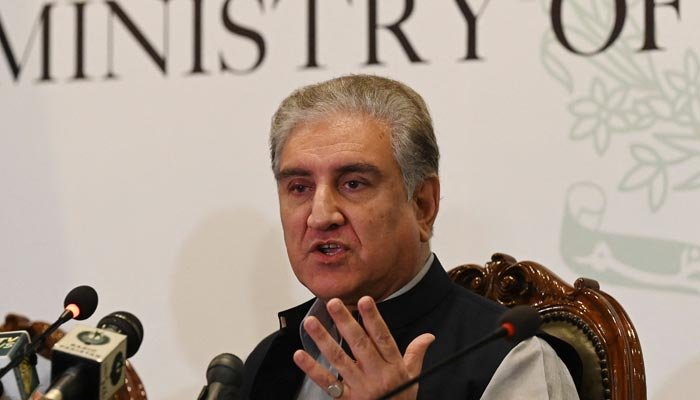
    Foreign Minister (FM) Shah Mahmood Qureshi asked the Afghan government to avoid pointing fingers at Pakistan for its own failures and look into its governance issues.

    In a press briefing at the Foreign Office (FO), he said Pakistan had repeatedly said it had no favourites in Afghanistan and saw all sides of the conflict as Afghans.

    “It is unfortunate to scapegoat Pakistan for the failures of others; the issues of governance and meltdown of Afghan National Defence Forces need to be looked into — and not just start pointing fingers at Pakistan.”

    “The time has come when the world wants answers to what has been achieved in Afghanistan in these past 20 years. The taxpayer in the United States (US), the United Kingdom (UK), and Europe wants to know who is responsible for no achievement. Pakistan will not be apologetic, as we are not accountable nor responsible for the trillions spent and nothing to show for it. No capacity building, no arms, where has everything gone?” remarked Qureshi.

    “Pakistan is against a forceful takeover of Afghanistan. Pakistan does not want a military takeover, as we do not support one. We speak of a political takeover. A military takeover will result in more bloodshed and the people of Afghanistan have suffered and this suffering should end. Leadership inside Afghanistan should rise to the occasion and avoid a military takeover. We urge all sides to show respect for human rights and international humanitarian laws,” said Qureshi.

    “We had made a request to be present there, but unfortunately, it was not accepted,” he said, adding that at the time of India assuming the United Nations Security Council (UNSC) presidency, Pakistan had asked it to operate objectively.

    However, India did not behave in a manner that was befitting of that responsibility, the foreign minister said. “India has been, in our view, in breach of its obligation as president of the Security Council.”

    Pakistan has been facilitating the peace process, and its role has been and will continue to be of a facilitator, the foreign minister said.

    “We cannot guarantee, we can only facilitate,” he said, noting it was up to the Afghans to decide their future, and now the world community was backing Pakistan’s narrative that there is no military solution in Afghanistan.

    While on the request of President Ashraf Ghani, intra-Afghan peace talks were postponed in Islamabad, Pakistan now looks forward to the August 11 peace talks of the troika consisting of Pakistan, China, and Russia with an aim of chartering a political way out for an Afghan-led peace process.

    “We reiterate the need for the effective use of available peace mechanisms,” Qureshi said, adding Pakistan has always stressed the need for talks.

  • U-turn: India admits Kashmir is disputed territory, not ‘internal matter’

    U-turn: India admits Kashmir is disputed territory, not ‘internal matter’

    Soon after the United Nations Security Council (UNSC) held its first-ever meeting over the Kashmir issue in almost 50 years, India has backtracked on its statement and admitted that Indian-occupied Kashmir (IoK) is disputed territory.

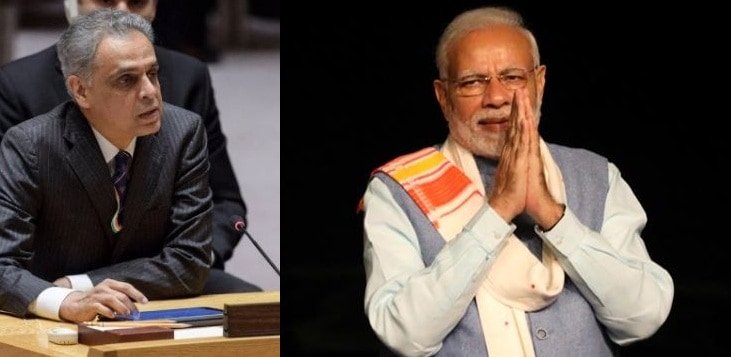
    According to The Express Tribune, facing a barrage of questions in a press briefing following the historic meeting at the UN headquarters on Friday, India’s envoy to the United Nations Syed Akbaruddin said that India was committed to the Shimla Agreement inked with Pakistan in 1972, which explicitly declares Kashmir as disputed between the two countries.

    Earlier, New Delhi had regularly blocked discussion on held Kashmir at the UN, saying it considers the matter an “internal affair”.

    “So let me begin by coming across to you and shaking your hand… as we’ve already extended our hand of friendship by saying we are committed to Shimla Agreement. Let us wait on that from the Pakistani side,” said the Indian ambassador while awkwardly reaching out to Pakistani journalists and shaking their hands.

    WATCH VIDEO:

    Responding to a question, he said: “In closed consultations at the UNSC, anyone, especially parties to the dispute, can try and throw in anything at the members of the Security Council. That’s the nature of the beast.”

    “We are ready to address these issues in a matter in which states who have normal approaches to international ties address them… and in our case, we are committed to Shimla Agreement,” he added.

  • Fact Check: Is the UNSC meeting on Kashmir crisis an emergency session?

    Fact Check: Is the UNSC meeting on Kashmir crisis an emergency session?

    Claim: United Nations Security Council is to convene in an emergency meeting on revoking Kashmir’s special status

    Fact: UNSC was to convene in a mostly informal, closed-door session and not in an emergency

    The United Nations Security Council (UNSC) will meet behind-closed-doors on Friday at the request of Pakistan and China to discuss India’s decision to revoke the special status of occupied Kashmir.

    However, contrary to earlier reports, the meeting is not an “emergency session”, but a consultation, which is mostly informal, closed-door and does not allow the participation of non-members, lawyer Reema Omer tweeted.

    In letters to the UN secretary general and the UNSC rotating chair for the month of August, Poland, Islamabad had sought an open discussion at the top-decision making forum, with a personal pitch from Foreign Minister Shah Mahmood Qureshi to his Polish counterpart Jacek Czaputowicz.

    What Pakistan has been granted at the UN is a “consultation”, not an “open” or a “closed meeting”.

    DIFFERENCE:

    Both open and closed meetings are formal meetings of the UNSC. Closed meetings are not open to the public and no verbatim record of statements is kept, instead, the UNSC issues a press release.

    Consultations, on the other hand, are informal meetings of the council members.

    Clarifying the situation further, Reema tweeted:

    While it is not a formal meeting, it is extremely rare for the UNSC to discuss Kashmir, which has been divided between Pakistan and India since independence from Britain in 1947.

    The last time there was a full UNSC meeting on the Himalayan region was in 1965.

    Verdict: MISLEADING