Tag: US dollar

  • Pakistani rupee falls to Rs233 per US dollar in the interbank market

    Pakistani rupee falls to Rs233 per US dollar in the interbank market

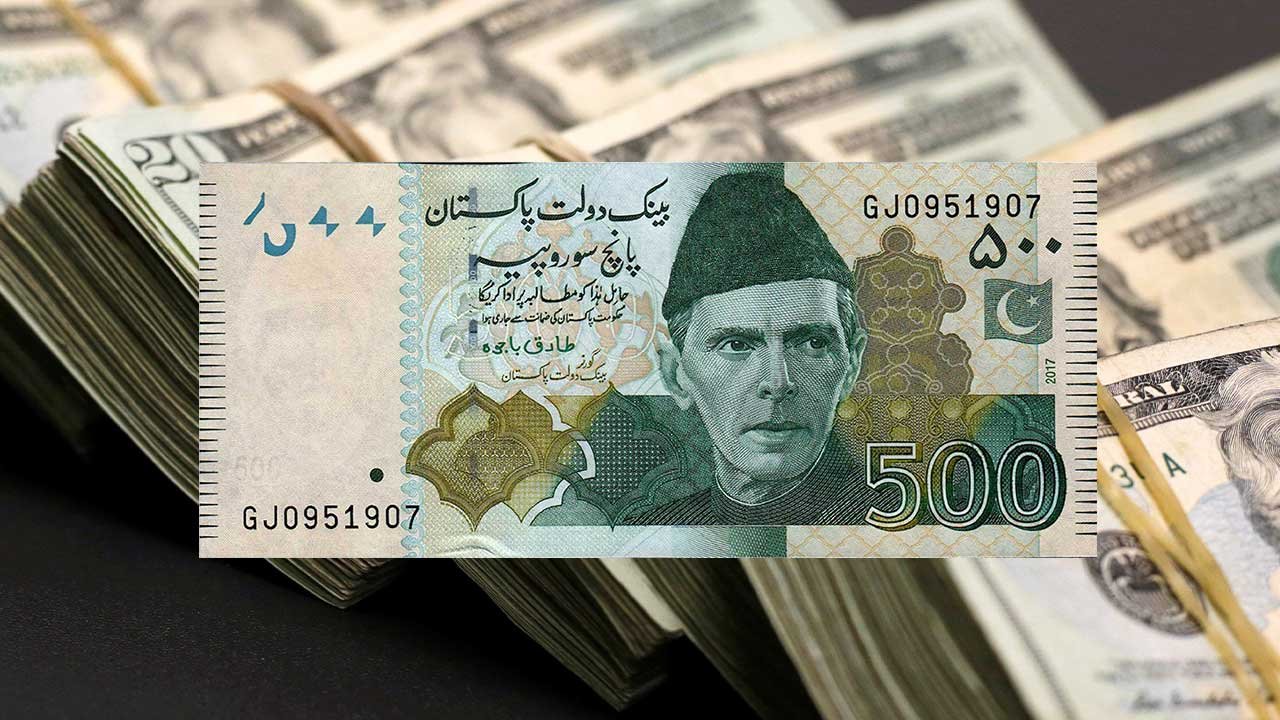
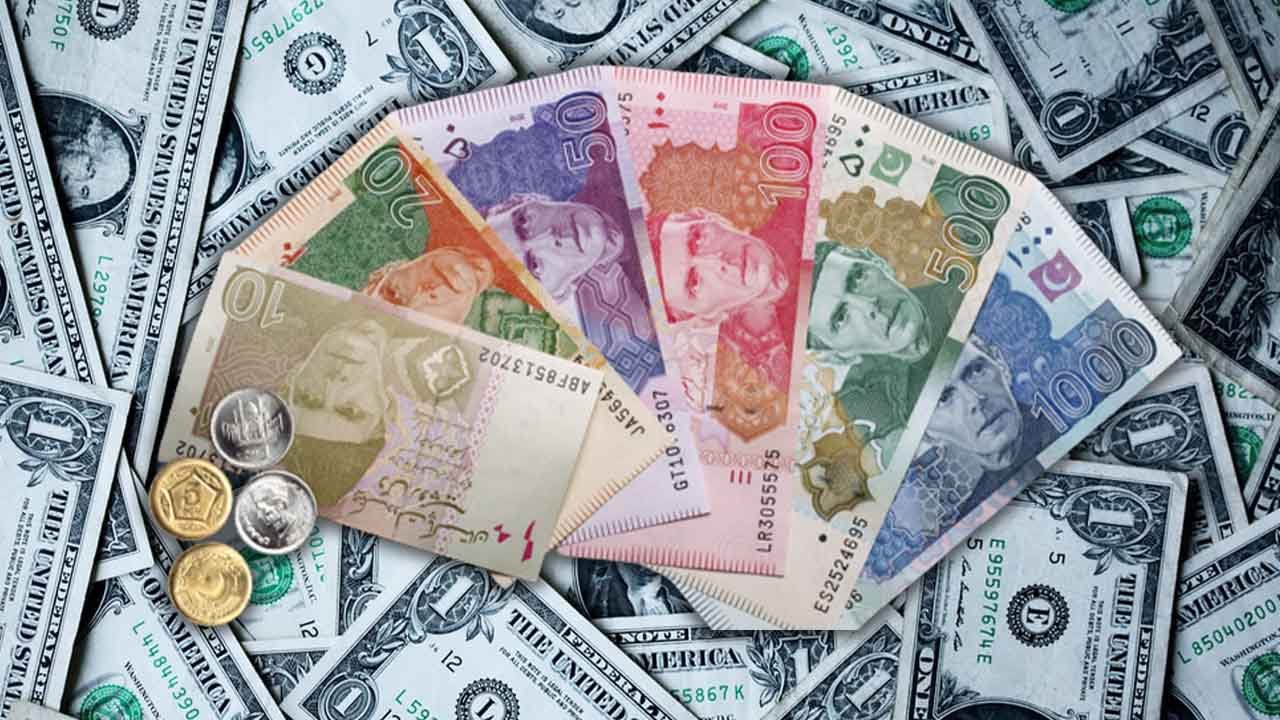
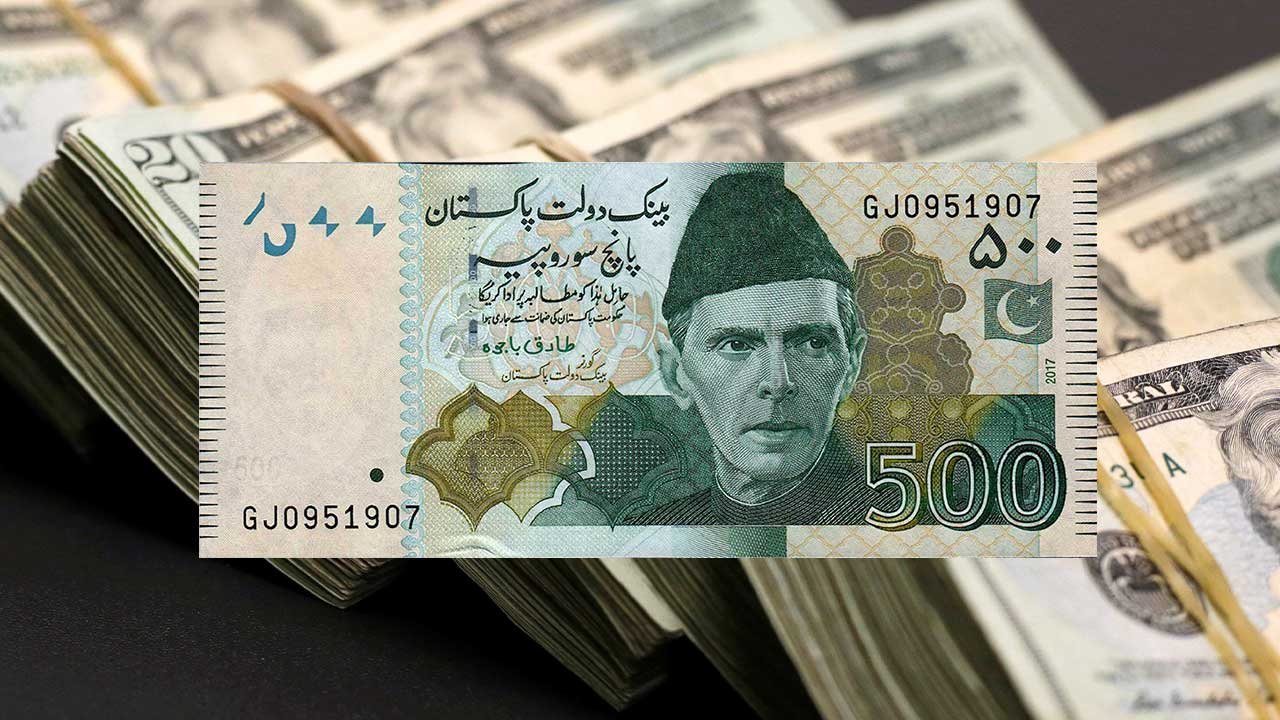
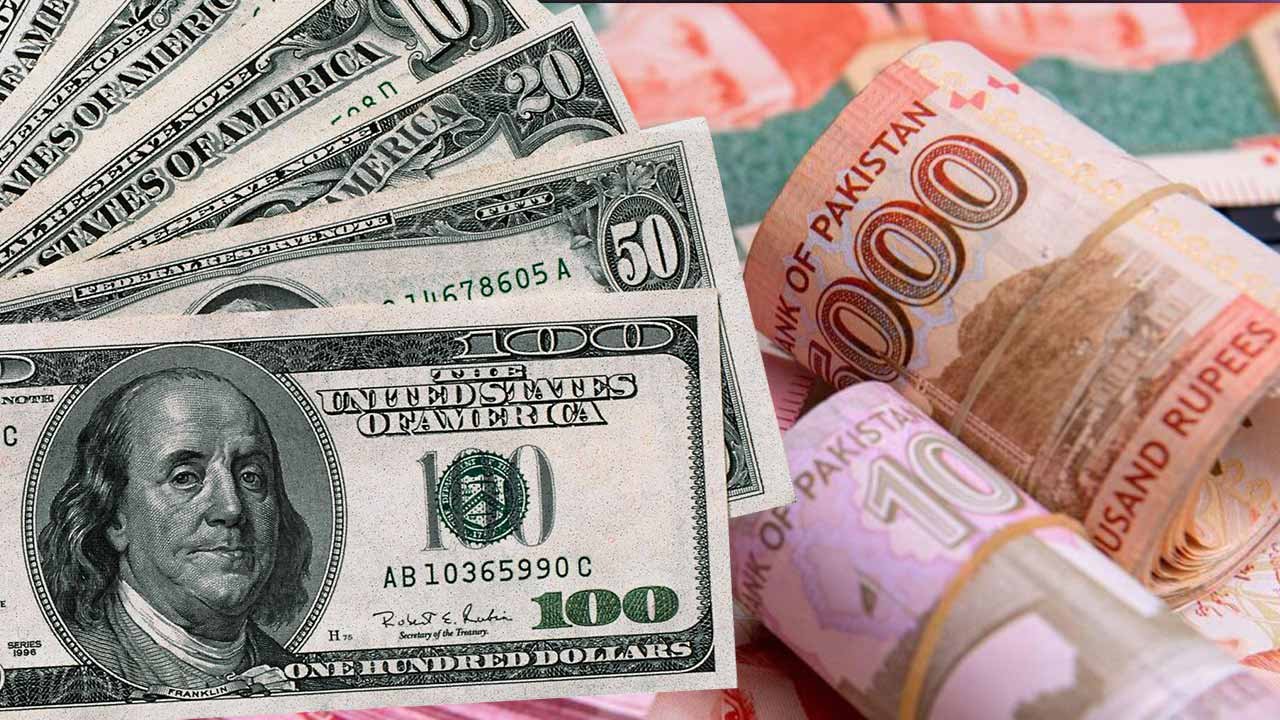
    The Pakistani rupee (PKR) continued to fall on Tuesday as the country’s political turmoil worsened, trading at Rs233 to the dollar in the interbank market.

    Today, the US dollar gained Rs3.12 versus the local currency, compared to the previous day’s finish of Rs229.88, which was an all-time high at the time.

    The local currency has been under pressure for the past week due to increased political tensions in the country following the July 17 by-elections in Punjab, which the PTI easily won. Also, the rupee has been one of the world’s worst performers, falling 30.2 per cent since the beginning of 2022.

    PKR had its worst week in more than two decades, ending on July 22, highlighting investor fear that a $1.2 billion loan tranche from the IMF approved last week could not be enough to alleviate the balance of payment crisis.

    Fears of Pakistan defaulting on its foreign repayments remain in the market, despite the central bank’s guarantee that the country would comfortably cover its funding obligations as long as an International Monetary Fund (IMF) loan programme remained in place.

    The rupee fell by nearly 8 per cent last week, the most in a single week since October 1998.

  • Hyundai-Nishat announces a hefty price hike following KIA

    Hyundai-Nishat announces a hefty price hike following KIA

    Hyundai-Nishat Motors raised the pricing of its Tucson variants by Rs1.1 million, citing the decline in the currency as the primary cause, following Lucky Motor Corporation’s price increases for its KIA-brand vehicles.

    After an increase of Rs1.1 million price increase for the c, the Hyundai Tucson FWD model is now offered for Rs6.89 million. The price of the AWD version has increased by Rs1.1 million to Rs7.39 million.

    According to a sales representative, the company would accept reservations upon full payment, and delivery is anticipated to occur in August and not take longer than 60 days.

    Prior to that, Lucky Motor announced an increase in the prices of its KIA-brand vehicles starting on July 19, with the rise reaching as high as Rs1.1 million.

    The corporation said that the ongoing depreciation of the rupee versus the dollar was to blame for their need to raise pricing.

    “Kia and Hyundai have taken the initiative to increase car prices but the rest of the automakers will follow too,” said Sunny Kumar, Research Analyst at Topline Securities.

    “The last pricing most of the carmakers did was when the dollar stood at Rs185. It has now crossed Rs225. The price hike was imminent and announcements from other automakers could be expected anytime now.”

    According to Brecorder, the CEO of Lucky Motor Corp, Asif Rizvi, acknowledged that the auto sector primarily employs imported materials and that localised parts also contain a large percentage of foreign components while speaking on the sidelines of the Peugeot 2008 launch in March.

  • ADB projects Pakistan’s economy to ‘recover slightly’ in FY23

    ADB projects Pakistan’s economy to ‘recover slightly’ in FY23

    In FY2023, Pakistan’s Gross Domestic Product (GDP) growth is expected to modestly improve due to structural changes, according to the Asian Development Bank (ADB).

    According to the bank’s most recent Asian Development Outlook Supplement, Pakistan’s GDP growth is predicted to decrease in FY22 (which ends on June 30, 2022), as a result of fiscal tightening measures taken to control rising demand pressures and contain external and fiscal imbalances.

    As the country’s inflation surged from 12.3 per cent in December 2021 to 21.3 per cent in June 2022, the bank slightly lowered Pakistan’s inflation for FY22 and dramatically for FY23.

    “In addition to the effects of elevated global energy and food prices, the government’s efforts to revive the stalled International Monetary Fund (IMF) programme has meant raising power tariffs and withdrawing subsidies in the oil and power sectors,” said ADB.

    In comparison to Sri Lanka, which boosted its policy rate by 950 basis points over the previous six months, the State Bank of Pakistan (SBP) has upped interest rates by 525 basis points since January 1. This also makes it one of the most active central banks in the region.

    The ADB also reduced its 2022 growth prediction for Asia and issued a warning that things could become worse as a result of the conflict in Ukraine and supply chain disruptions that are expected to drive up costs.

    Read more: Pakistani rupee plunges to Rs227 against US dollar at midday trading

    Although Covid-19’s effects had subsided, the region was now dealing with the consequences of Russia’s invasion of Ukraine, lockdowns in China, and aggressively raised interest rates, according to the Manila-based lender.

    The bank reduced its 2022 growth prediction to 4.6 per cent to reflect the decline in developing Asia, which runs from Kazakhstan in Central Asia to the Cook Islands in the Pacific.

    South Asia’s economy is anticipated to grow less than the projected rate of growth in the Asian Development Outlook 2022.

  • Pakistani rupee plunges to Rs227 against US dollar at midday trading

    Pakistani rupee plunges to Rs227 against US dollar at midday trading

    On Thursday, the rupee’s decline against the US dollar reached an all-time low of Rs227 in the interbank market.

    Experts blame the losses on political unrest and the fact that the dollar is bolstering against other currencies as well, according to DAWN. On Wednesday, the rupee had a closing value of Rs224.92.

    According to the Foreign Exchange Association of Pakistan (FAP), the local currency fell by Rs2.08 to Rs227 versus the US dollar when the session started today at 10:57 AM.

    According to experts, the country’s political unrest had reduced investor confidence, which had caused importers to worry and “unnecessarily” buy dollars from the market. He claimed that as a result, there was an increase in the interbank market’s demand for dollars.

    Furthermore, over the past week, the dollar’s value had increased against over 40 currencies, including the British pound and the Japanese yen, which had an impact on the local market’s use of the rupee, according to Bostan.

    After reaching Rs211.93 on June 22, the local currency climbed to Rs204.56 in the first week of July. When the country’s staff-level agreement with the international lender was reached on July 15, it briefly appreciated but again continued to depreciate against the US dollar.

  • Pakistani rupee hits new all-time low of Rs224 against US dollar

    Pakistani rupee hits new all-time low of Rs224 against US dollar

    Despite the International Monetary Fund’s (IMF) announcement that the multibillion-dollar loan programme would resume, the Pakistani rupee plunged to an all-time low against the US dollar on Tuesday, reaching Rs224 in the interbank market.

    Today, the local currency continued to lose value against the US dollar and lost another Rs8.80. In the interbank market on Monday, the rupee fell by Rs4.25 or 1.97 per cent against the US dollar.

    With ongoing political unrest and a bad macroeconomic environment, the currency has considerably depreciated.

    The State Bank of Pakistan (SBP) has begun to stifle the outflow of small dollar amounts of less than $100,000 in order to prevent a further decline in the reserves, putting numerous factories at risk of closure and financial penalties.

    According to the sources, Pakistan is using a variety of capital controls, including restrictive measures, to prevent a situation resembling default while the IMF takes its time approving and disbursing a $1.12 billion loan tranche.

    Resuming the loan programme will increase the nation’s ability to make international payments and unlock foreign currency inflows from other bilateral and multilateral sources as well.

    Additionally, China has extended its $2.3 billion loan to Pakistan and deposited it in the State Bank a few weeks ago. In line with the decline in the rupee, the Pakistan Stock Exchange (PSX) fell 770 points during Monday’s intraday trading. After “political and economic uncertainties in Pakistan,” the capital market came under fresh pressure, a specialist claimed.

    Finance Minister Miftah Ismail stated in an interview that the government would keep making difficult choices in an effort to save the economy and keep the nation from going bankrupt.

  • Pakistani rupee remains volatile as US dollar surpasses Rs211

    Pakistani rupee remains volatile as US dollar surpasses Rs211

    On Monday, the Pakistani rupee dropped sharply to a record low of over Rs211 against the US dollar in the interbank market, indicating that the currency remains highly volatile.

    The rupee’s latest devaluation against the US dollar is the result of panic buying by traders in response to reports that some financial institutions were out of foreign currency.

    According to the State Bank of Pakistan (SBP), the US dollar was available at Rs211.21 at 11:03 AM and had closed at Rs208.75 on Friday.

    It is worth noting that the Pakistani rupee has fallen for the seventh working day in a row, losing nearly Rs6, or more than 3 per cent, to date.

    Experts predict that the Pakistan rupee will continue to fall against the US dollar and other major currencies owing to concerns regarding the IMF’s $6 billion program’s restoration, the country’s expanding current account deficit, and dwindling foreign exchange reserves.

    The PKR which lost 32.5 per cent of its value in the current financial year 2021-22 is forecasted to remain under stress as the dollar is in high demand in the market due to economic crises.

    SBP appears helpless to stem the rupee’s speculative fall, as demand for the US dollar continues to rise due to quarter-end payment strain.

    Monetary specialists attribute the depreciation of the local currency to a widening trade deficit, political instability, and a drop in foreign direct investment. The currency expert believes that the positive news from the Financial Action Task Force (FATF) will help attract foreign investment, increasing the availability of the dollar.

    Traders expect the rupee to settle in a range of 195-200 per dollar until the end of the current fiscal year 2021-22 if the IMF deal is finalised.

    According to data compiled by Ismail Iqbal Securities, Pakistan’s currency has depreciated by 14.57 per cent against the dollar this year, making it one of the worst performers in the world.

    The worst-performing currency was the Sri Lankan rupee, which fell 43.9 per cent, followed by the Laotian Kip, which fell 24 per cent, the Turkish Lira, which fell 23.18 per cent, and the Ghana Cedi, which fell 22.33 per cent, according to the data.

  • Pakistani rupee falls to a new all-time low of Rs205 against the US dollar

    Pakistani rupee falls to a new all-time low of Rs205 against the US dollar

    In the interbank market today, the Pakistani Rupee (PKR) plummeted below its previous record low versus the US Dollar (USD).

    The local currency lost Rs1.30 in the interbank market today, depreciating by 0.63 per cent against the US dollar and closing at Rs205.16. During today’s open market session, the local currency reached an intraday high of Rs203.75 versus the US dollar.

    The PKR was trading between Rs206 to Rs208 against the US dollar in the evening. The rupee’s devaluation was in line with market expectations, with traders expecting the local currency to fall even lower if Pakistan fails to persuade the International Monetary Fund (IMF) on its fiscal year 2022-23 budget.

    The Financial Action Task Force (FATF) meeting in Berlin, which starts today, is another reason that is likely to have influenced the FX market. On the 15th and 16th of June, issues concerning Pakistan will be discussed.

    In today’s interbank market, the PKR reversed gains versus the majority of major currencies. It fell 22 paisas against the Canadian dollar (CAD), 34 paisas against the Saudi riyal (SAR), 35 paisas against the UAE dirham (AED), 62 paisas against the British pound sterling (GBP), and Rs1.25 versus the Euro (EUR).

  • Pakistani rupee gains ground for the third consecutive day

    Pakistani rupee gains ground for the third consecutive day

    Pakistani rupee (PKR) gained 60 paisas after closing in the inter-bank market on May 31, as a return of clarity on the economic front and a reduction in domestic political turmoil boosted it for the third consecutive day.

    According to the State Bank of Pakistan (SBP), the local currency closed at Rs198.46 after gaining 60 paisas (0.30 per cent) in the day. The local currency concluded at Rs199.06 on Monday, up 70 paisas, or 0.35 per cent, from its previous closing.

    On the other hand, oil prices, a key indicator of currency parity, rose on Tuesday as the EU decided to cut Russian oil imports, fueling fears of a tighter market already stressed for supply ahead of the peak summer driving season in the US and Europe.

    The appreciation arrived as European Union leaders decided to slash 90 per cent of Russian oil imports by the end of this year, breaking a deadlock with Hungary over the bloc’s heaviest sanctions against Moscow since the invasion of Ukraine.

    The rise in oil prices is another bad news for Pakistan, which has seen its import bill increase, putting strain on external payments while increasing market demand for dollars.

  • Pakistani rupee drops to Rs202 as market ambiguity extends

    Pakistani rupee drops to Rs202 as market ambiguity extends

    Pakistani currency slid to another historic low of Rs202 versus the US dollar on May 25 and lost ground in the interbank market.

    It fell 0.25 per cent against the US dollar today, closing at Rs201.92 after losing 51 paisas in the interbank market. During today’s open market session, the rupee hit an intraday low of Rs202.12 against the US dollar. In two weeks, the dollar has gained Rs15.23 against the rupee, and Rs18.98 since the new regime took power.

    The political situation in Pakistan also played a significant role in keeping the forex market on its toes, as players on both sides of the fence intensified their narratives against one another. Riots have broken out across the country after the month-old government shut down roads leading to Islamabad, where former Prime Minister Imran Khan’s party is planning a large rally calling for the removal of the incumbent and immediate general elections.

    International oil prices maintained Monday’s gains as concerns about tight global supply continued to outweigh short-term trade forecasts. Brent crude rose to $114 per barrel, while West Texas Intermediate (WTI) crude in the United States rose to $111.

    Today, the PKR fell further against the majority of the other major currencies in the interbank market. It fell two paisas against the Pound Sterling (GBP), 13 paisas against the Saudi Riyal (SAR), and 38 paisas against the Australian Dollar (AUD).

    In today’s interbank currency market, it gained 12 paisas against the Canadian Dollar (CAD) and 17 paisas against the Euro (EUR).

    It is worth noting that the PKR reported losses against the greenback for the fourteenth day in a row.

  • Pakistani Rupee drops to a new low of Rs195.74 against US dollar

    Pakistani Rupee drops to a new low of Rs195.74 against US dollar

    In today’s interbank market, the Pakistani Rupee (PKR) plummeted to another historical low versus the US Dollar (USD). It fell 0.80 per cent against the US dollar, closing at Rs195.74 after losing Rs1.56 in the interbank market.

    During today’s open market session, the local currency fell to an intraday low of Rs197 versus the US dollar. Since last week, the dollar has gained Rs9.06 against the PKR, and Rs12.81 since the new government took office on April 11, 2022.

    The local currency hit a new all-time low against the dollar on May 17, ahead of Pakistan’s preliminary consultations with the International Monetary Fund (IMF) in Doha on Wednesday (tomorrow) to revive the country’s stalled multibillion-dollar bailout package.

    On Tuesday, oil prices rose to their highest level in seven weeks, spurred by the European Union’s continued push for a ban on Russian oil imports, which may dangerously constrain supplies. Brent crude hit a high of $115, its best since March 28, while WTI crude in the United States rose 78 cents, or 0.7 per cent, to $114.98.